
I visited a food processing plant in Indonesia last year. The owner showed me his conveyor line. It kept stopping. Bearings were failing every few weeks. He was frustrated.
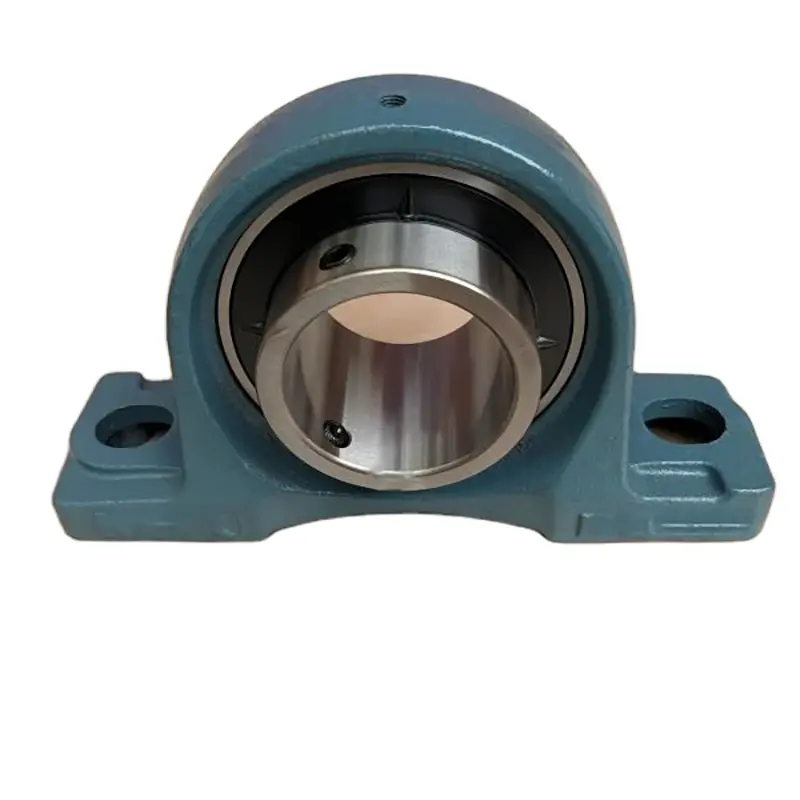
Pillow block bearings are perfect for small food machines. They are easy to mount. They handle light to medium loads well. And with the right seals and materials, they meet food safety standards.
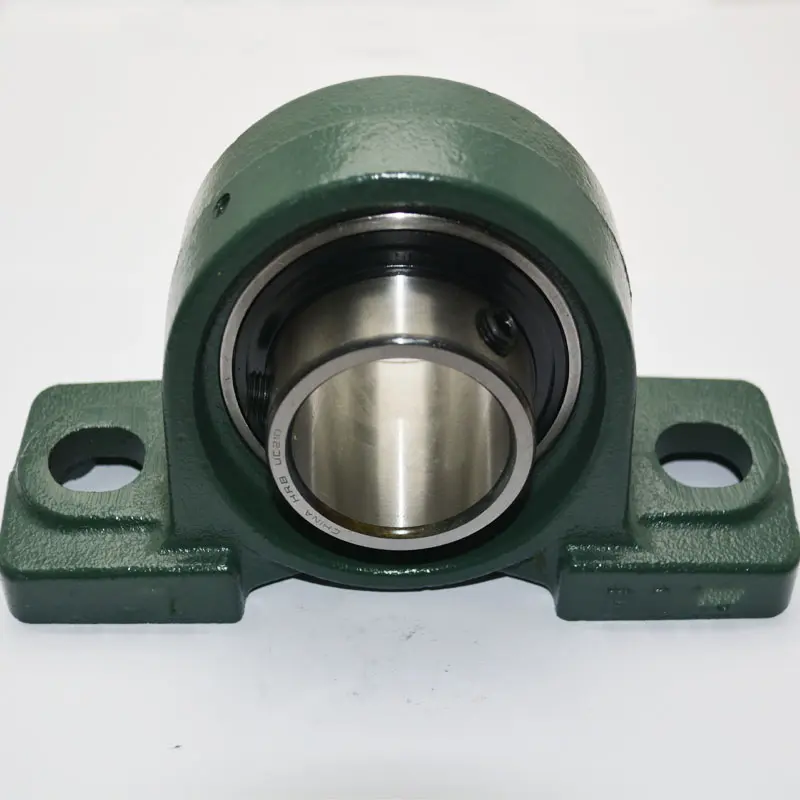
That plant in Indonesia had been using standard industrial bearings. They were not designed for food processing. Moisture and washdowns were killing them. We switched to food-grade pillow block bearings. The failures stopped.
In this article, I will share what I have learned about pillow block bearings for food processing. I will cover why they are ideal for small equipment. I will talk about material and sealing requirements. I will give you a selection guide. And I will share installation and maintenance tips.
Why Are Pillow Block Bearings Ideal for Small Food Processing Equipment?
A machine builder from Turkey once asked me why he should use pillow block bearings. He had been using standard deep groove bearings with separate housings. He thought that was fine.
Pillow block bearings are a complete assembly. The bearing and the housing come as one unit. That saves time. It also saves money. And it reduces the risk of installation errors.
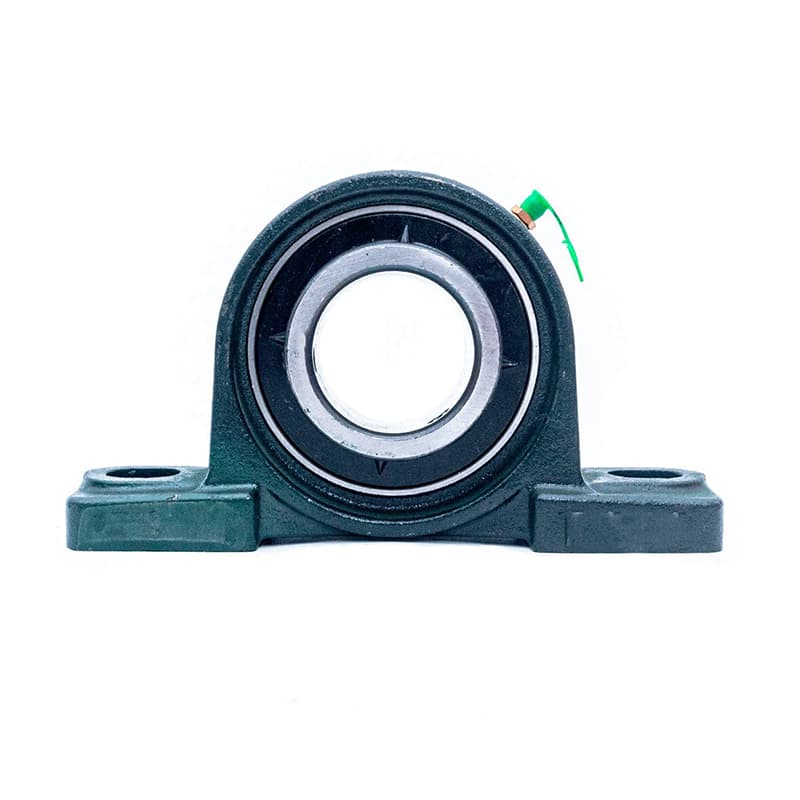
The first reason is ease of installation. Food processing machines are often small. They have tight spaces. A pillow block bearing mounts directly to the frame. You do not need to design a separate housing. You just bolt it on. That simplicity is valuable for small machine builders.
The second reason is alignment. Pillow block housings have a spherical outer surface. That surface allows for some misalignment. The bearing can tilt up to a few degrees. That tolerance is useful in food processing equipment. The machines get bumped. The frames shift slightly. The pillow block handles that without failing.
The third reason is maintenance. Pillow block bearings are easy to replace. You unscrew the bolts. You take off the old unit. You put on the new one. You tighten the bolts. You are done. That speed is important in food production. Downtime means lost product. Quick replacement reduces downtime.
The fourth reason is cost. Pillow block bearings are economical for small equipment. They are mass-produced. They come in standard sizes. You do not pay for custom designs. For small food processors and machine builders, that matters a lot.
The fifth reason is availability. You can find pillow block bearings in many sizes and styles. You can get them with different seals. You can get them with different housings. That variety means you can find exactly what you need.
Let me give you a comparison of pillow block bearings versus separate bearings for food equipment.
| Feature | Pillow Block Bearing | Separate Bearing + Housing |
|---|---|---|
| Installation time | Fast, bolt-on | Slower, need to assemble |
| Alignment tolerance | Good, self-aligning | Poor, requires precision |
| Replacement speed | Fast, one unit | Slow, need to disassemble |
| Cost | Lower, mass-produced | Higher, more parts |
| Sealing | Integrated, reliable | Depends on housing design |
| Availability | Wide range of sizes | Limited by housing availability |
I had a customer in Vietnam who made small meat processing machines. He used separate bearings and housings. Assembly took too long. He switched to pillow block bearings. His production time dropped by 20%. That was a big saving for his small factory.
For auxiliary drives, pillow block bearings are even more ideal. Auxiliary drives are secondary systems. They do not carry the main load. They run at lower speeds. They need reliability but not extreme precision. Pillow block bearings are perfect for that role.
What Material and Sealing Requirements Do Food Processing Bearings Need to Meet?
A customer from Bangladesh called me with a problem. His food conveyor bearings were rusting. He thought stainless steel bearings were too expensive. He asked if there was another way.
Food processing is a tough environment for bearings. There is moisture. There are cleaning chemicals. There is sometimes high temperature. And there is always the risk of contamination. The materials and seals must handle all of these.
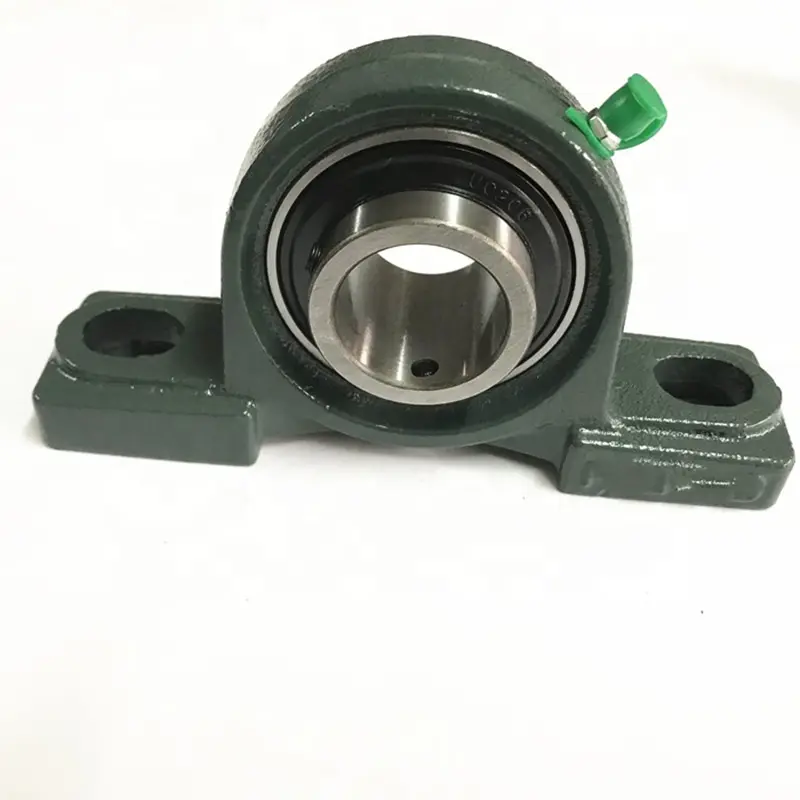
Let me start with the housing material. The standard housing is cast iron. That works for dry environments. But in food processing, moisture is everywhere. Cast iron rusts. Rust flakes can fall into the food. That is a safety risk.
For food processing, I recommend stainless steel housings. Stainless steel does not rust. It resists corrosion. It also handles washdown chemicals better. The most common grade is 304 stainless. For more aggressive environments, you can use 316 stainless.
The bearing material is also important. The bearing insert is usually made of bearing steel. But that steel must be protected. You need a coating or a treatment. Zinc plating is one option. But for food processing, I prefer a phosphate coating. It is food-safe. It also helps with the initial break-in.
The seals are the most critical part. Food processing machines are washed down with water and chemicals. The seals must keep water out. If water gets into the bearing, it will rust and fail.
There are different seal types. The most common is a single lip seal. That is okay for dry conditions. But for food processing, I recommend a double lip seal. It has two lips. The inner lip keeps the grease in. The outer lip keeps water and dirt out.
You also need a seal with a rubber material that resists food chemicals. Nitrile rubber is standard. But for food processing, I recommend FKM or silicone rubber. They resist more chemicals. They also handle higher temperatures.
The grease is another factor. Food processing grease must be food-grade. That means it is safe if it contacts the food. These greases use a special base oil and thickener. They also have different additives.
Let me summarize the requirements in a table.
| Component | Standard Option | Food Processing Option | Why |
|---|---|---|---|
| Housing | Cast iron | Stainless steel 304 or 316 | Corrosion resistance |
| Bearing insert | Standard bearing steel | Steel with phosphate coating | Corrosion and break-in protection |
| Seal type | Single lip | Double lip | Better water and dirt protection |
| Seal material | Nitrile | FKM or silicone | Chemical resistance |
| Grease | Standard lithium | Food-grade NSF H1 | Food safety compliance |
| Coating | None | Zinc or phosphate | Additional corrosion protection |
I also want to mention certifications. For food processing bearings, you need to meet certain standards. The most common is NSF H1 for lubricants. That means the grease is safe for incidental food contact. Some buyers also ask for FDA compliance. Check with your customer on what they need.
I had a customer in Egypt who made biscuits. His bearings were standard cast iron with standard seals. They failed every few months. The rust and moisture were too much. We switched to stainless housings with double lip seals and food-grade grease. Now his bearings last over two years.
Do not try to save money on materials in food processing. The cost of a failed bearing is higher than the cost of a better bearing. Contamination can shut down your line. It can also hurt your reputation. It is not worth the risk.
How to Select the Right Pillow Block Bearing for Your Specific Food Machine Application?
A machine builder from India came to me with a list of questions. He was designing a small fruit sorting machine. He needed bearings for the main conveyor. He also needed them for the sorting drum. He was confused by all the options.
Selecting the right pillow block bearing is not hard. You just need to go through a few key decisions. Each decision narrows down your choices.
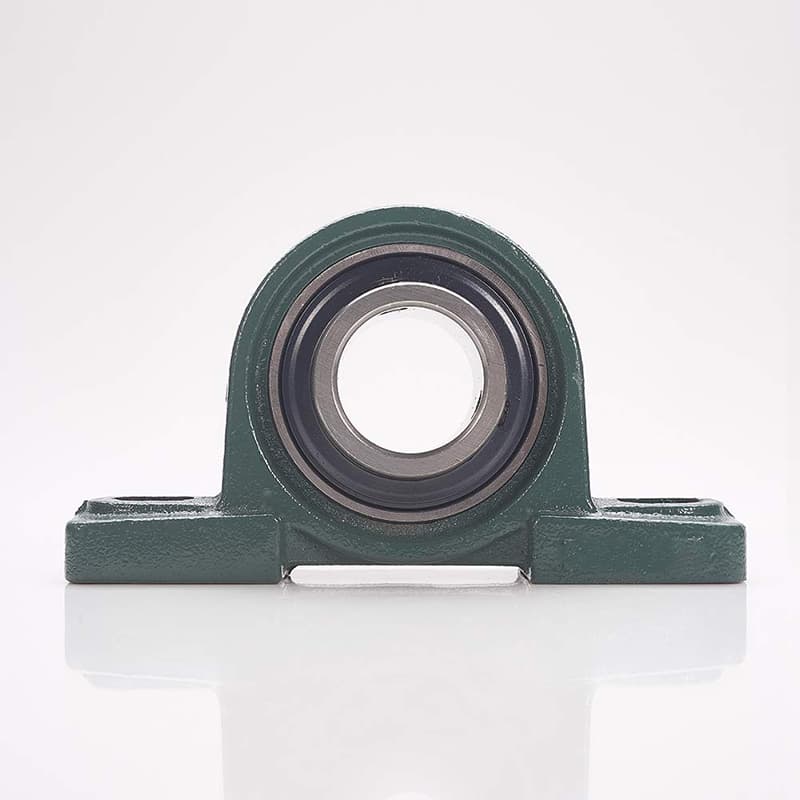
The first decision is the housing type. There are two main types. The standard pillow block has a two-bolt base. The larger one has a four-bolt base. For small food machines, two-bolt is usually enough. It is lighter and cheaper. Four-bolt is for heavier loads.
The second decision is the housing material. I covered this in the last section. For food processing, choose stainless steel. For auxiliary drives that are not exposed to moisture, cast iron is acceptable.
The third decision is the bearing type. Most pillow blocks use deep groove ball bearings. That is fine for most food applications. The loads are light to medium. Speeds are moderate. Deep groove ball bearings handle this well.
But some food machines have special needs. If you have a conveyor with high radial load, consider a spherical roller bearing insert. If you have a mixer with oscillating motion, consider a bearing with a wider clearance.
The fourth decision is the seal type. I covered this too. Choose double lip seals for wet environments. Choose single lip for dry areas. Also consider the seal material. FKM is better for chemical exposure.
The fifth decision is the locking method. The bearing must lock onto the shaft. There are different ways. The most common is a set screw. You tighten two screws against the shaft. That is simple and works well.
Another method is a locking collar. This is a split ring that you tighten with a wrench. It provides a stronger grip. It also does not damage the shaft as much. For food machines with smooth shafts, I recommend the locking collar.
The sixth decision is the clearance. Standard clearance works for most food machines. But if the machine runs hot, you need a larger clearance. The heat expands the bearing. The clearance must accommodate that expansion.
The seventh decision is the mounting base. Some pillow blocks have a flat base. Others have a raised base. The raised base allows for better alignment. It also lifts the bearing off the surface for easier cleaning.
Let me give you a selection checklist.
| Decision | Question to Ask | Food Processing Recommendation |
|---|---|---|
| Housing type | How much load? | Two-bolt for small machines |
| Housing material | Is there moisture? | Stainless steel for wet areas |
| Bearing type | Radial or combined load? | Deep groove for most applications |
| Seal type | Is there washdown? | Double lip with FKM rubber |
| Locking method | What is the shaft type? | Locking collar for smooth shafts |
| Clearance | Will the machine get hot? | Standard for normal, C3 for hot |
| Mounting base | Is cleaning important? | Raised base for better cleaning |
I have a customer in Brazil who makes fruit juice processing machines. He follows this exact selection process. He fills out a checklist for each machine. Then he orders the bearings. He told me he has not had a bearing issue in two years.
My advice is simple. Take the time to select right. Do not guess. Use the checklist. Talk to your supplier. They can help you match the bearing to your application.
What Are the Key Installation and Maintenance Tips for Food-Grade Pillow Block Bearings?
A maintenance manager from South Africa told me a story. He had installed a new pillow block bearing. It worked fine for a week. Then it started making noise. He tightened the bolts. The noise got worse.
He had made a classic mistake. He over-tightened the bolts. That distorted the housing. The distortion changed the bearing clearance. The bearing bound up. The noise was the sound of metal scraping.
Installation starts with the mounting surface. The base must be clean and flat. Use a straightedge to check flatness. The surface should be within 0.05 mm per 100 mm. If it is not flat, add shims.
The bolt torque is critical. Do not guess. Use a torque wrench. Check the manufacturer’s spec for the torque value. Usually it is around 20-30 Nm for M10 bolts. Over-tightening distorts the housing. Under-tightening lets the bearing move.
The shaft must be clean and free of burrs. Use a file or emery cloth to clean the shaft. Apply a thin layer of anti-seize compound. That prevents corrosion between the shaft and the bearing.
When you slide the bearing onto the shaft, do not use force. It should slide on with a light push. If it binds, check the shaft diameter. It might be too large. Use a dial gauge to measure the shaft.
Tighten the locking collar or set screws in the correct order. For set screws, tighten one screw to the spec. Then tighten the second screw. For locking collars, turn the collar with a spanner. Use a feeler gauge to check the gap. The gap should be even all around.
For food-grade bearings, the grease is a special step. Do not use standard grease. Use food-grade NSF H1 grease. Apply the right amount. Too much grease creates heat. Too little grease causes starvation. I recommend filling the bearing about one-third full.
Now let me talk about maintenance. Food processing machines run in a tough environment. You need a regular maintenance schedule.
The first maintenance task is visual inspection. Walk around the machine. Look at the bearings. Check for rust, cracks, or leaks. Leaking grease means the seals are failing. Rust means the housing or bearing is corroding.
The second task is temperature check. Use an infrared thermometer. Check the housing temperature. If it is more than 10 degrees Celsius above the ambient, you have a problem. The bearing may be misaligned. Or it may be over-greased.
The third task is vibration check. Use a vibration meter. Or just put your hand on the housing. A smooth vibration is normal. A rough vibration is a warning. It could be from wear, misalignment, or contamination.
The fourth task is lubrication. Food-grade grease degrades over time. It breaks down from heat and oxidation. You need to regrease the bearing. The schedule depends on the running hours. I recommend regreasing every 500 hours for food applications. That is about once a month for most plants.
The fifth task is cleaning. Food processing machines are washed down regularly. That water can get into the bearing. After the washdown, check the bearing. Look for water ingress. If the seal is not holding, replace it.
Let me put these maintenance tasks in a table.
| Task | Frequency | How to Check | What to Look For |
|---|---|---|---|
| Visual inspection | Daily | Walk around, look | Rust, cracks, leaks |
| Temperature check | Weekly | Infrared thermometer | Above ambient +10°C |
| Vibration check | Weekly | Hand or meter | Rough or rhythmic vibration |
| Regrease | Monthly (500 hours) | Grease gun with food-grade grease | Clean grease coming out |
| Post-washdown check | After each washdown | Visual and touch | Water ingress, seal condition |
| Alignment check | Every 6 months | Dial gauge or straightedge | Runout beyond 0.02 mm |
I want to tell you about a customer in Pakistan. He runs a spice grinding plant. His bearings were failing every few months. He was using standard grease. He was not checking temperature. He was not looking for water ingress.
We taught him this maintenance schedule. He started following it. His bearing life went from three months to over two years. That is the power of good maintenance.
Food-grade bearings cost more than standard ones. That is true. But they last longer in food environments. And they save you from the cost of contamination and downtime. The maintenance tips I shared are simple. Follow them, and your bearings will serve you well.
Conclusion
Pillow block bearings are the right choice for small food processing machines. Pick the right materials and seals. Install them carefully. And maintain them regularly. That is how you keep your food line running clean and efficient.