
A distributor from Pakistan called me last month. He had found a great deal on pillow block bearings. They were half the price of our standard ones. He wanted to switch. But he was worried about quality.
Choosing cost-effective bearings is about finding the best value for your specific application. It does not mean buying the cheapest option. It means matching the right bearing to the right job without sacrificing the critical reliability points.
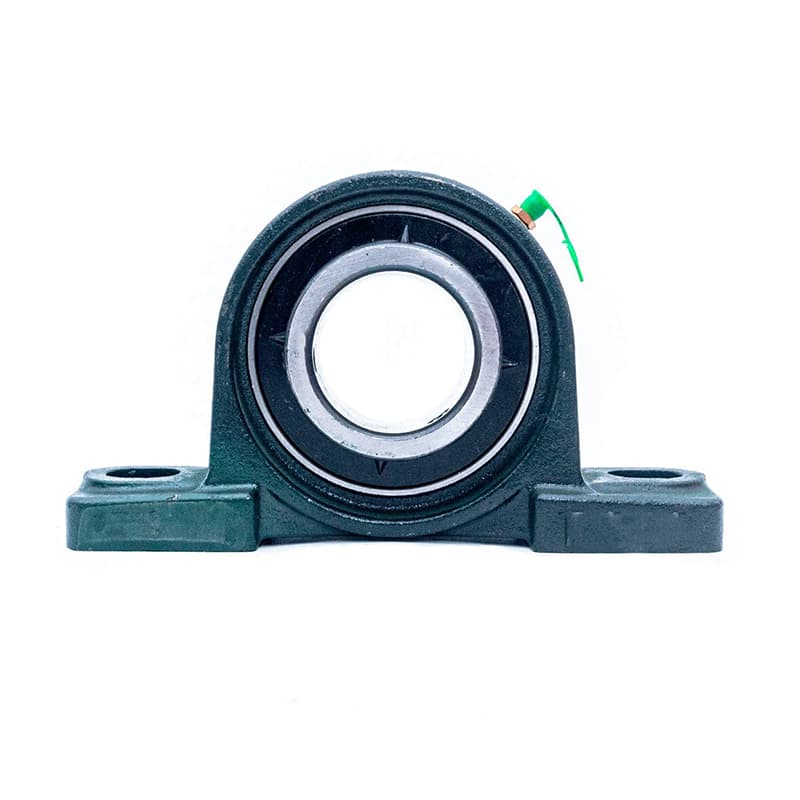
That distributor in Pakistan ended up buying a sample from me. I explained the differences. He saw how our bearings had better seals and better housing materials. He stuck with us because he knew the lower cost option would cost him more in returns and unhappy customers.
In this article, I will share my approach to buying pillow block bearings cost-effectively. I will explain what cost-effective really means. I will show you which applications need premium bearings and which can use economical ones. I will tell you what reliability indicators you must never compromise on. And I will help you choose a supplier who offers real value.
What Does "Cost-Effective" Really Mean in the Context of Pillow Block Bearings?
A buyer from India once told me that cost-effective means the lowest price per unit. He was wrong. He bought the cheapest bearings he could find. They failed within weeks. He paid more in shipping and replacement than he saved on the initial price.
Cost-effective is not the same as cheap. Cost-effective means getting the best total value over the life of the bearing. That includes the purchase price, the installation cost, the maintenance cost, and the cost of downtime.
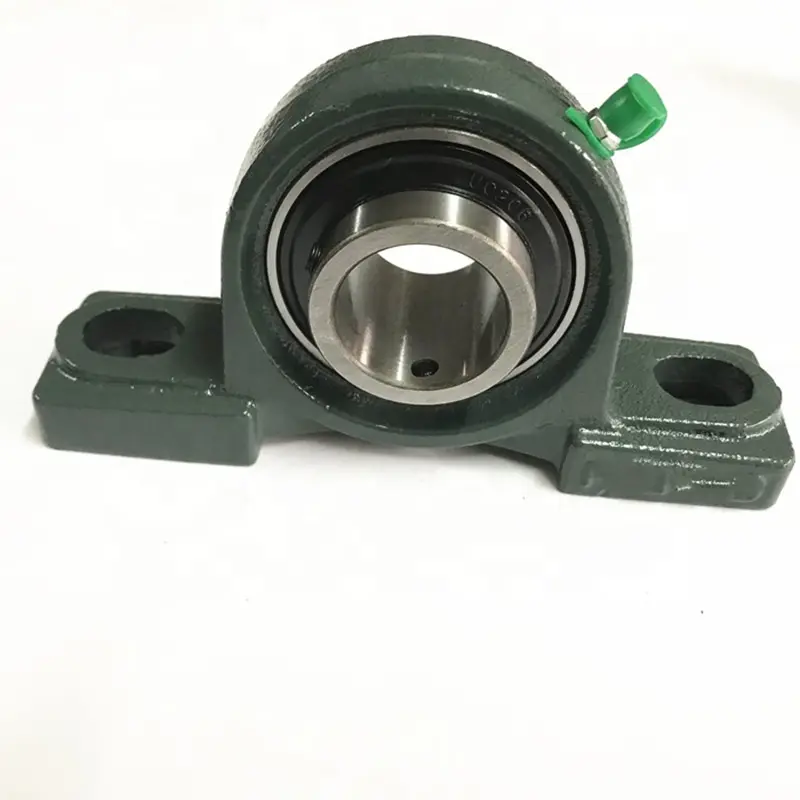
Let me break this down. The purchase price is the number on the invoice. That is what most people look at. But that number is only the beginning.
The installation cost is next. Some bearings are easy to install. They come with clear instructions. They fit the shafts perfectly. Others are difficult. They need special tools. They need extra labor. That adds cost.
The maintenance cost is another factor. Better bearings need less maintenance. They have better seals. They hold grease longer. They run cooler. All of that saves money over time.
The downtime cost is the biggest hidden factor. When a bearing fails, the machine stops. The production stops. The workers stand around. The delivery is delayed. For a food processing plant, that can cost thousands of dollars per hour. A bearing that costs a little more but lasts longer is always more cost-effective.
I also want to talk about the cost of failure. When a bearing fails, it can damage other parts. It can damage the shaft. It can damage the housing. It can even damage the product. That repair cost can be many times the cost of the bearing itself.
So cost-effective means looking at the full picture. It means asking these questions. How long will this bearing last? How often will I need to replace it? How much downtime will each failure cause? What is the risk of product contamination or damage?
Let me give you a table that shows the difference between cheap and cost-effective.
| Cost Factor | Cheap Bearing | Cost-Effective Bearing |
|---|---|---|
| Purchase price | Low | Moderate |
| Installation cost | Variable, may need extra work | Low, standard fit |
| Maintenance cost | High, frequent regreasing | Low, long grease life |
| Failure rate | High, unpredictable | Low, predictable |
| Downtime cost | High, frequent failures | Low, long service life |
| Total cost over 5 years | Very high | Lower |
I had a customer in Egypt who operated a spice grinding plant. He bought cheap pillow block bearings for a conveyor. They failed every two months. The plant shut down for a day each time. The lost production was ten times the cost of a good bearing.
He switched to our cost-effective bearings. They cost 40% more than the cheap ones. But they lasted over two years. In those two years, he had zero downtime from bearing failures. Which one was truly cost-effective? The answer is obvious.
Which Applications Can Use Economical Bearings and Which Require Premium Solutions?
A machine builder from Turkey asked me a practical question. He said, "I make all kinds of machines. Some are simple. Some are complex. Can I use the same bearing for all of them?"
No. That is the short answer. Different applications have different needs. Trying to use one bearing for everything is a mistake. You end up overpaying for simple applications or under-specifying for complex ones.
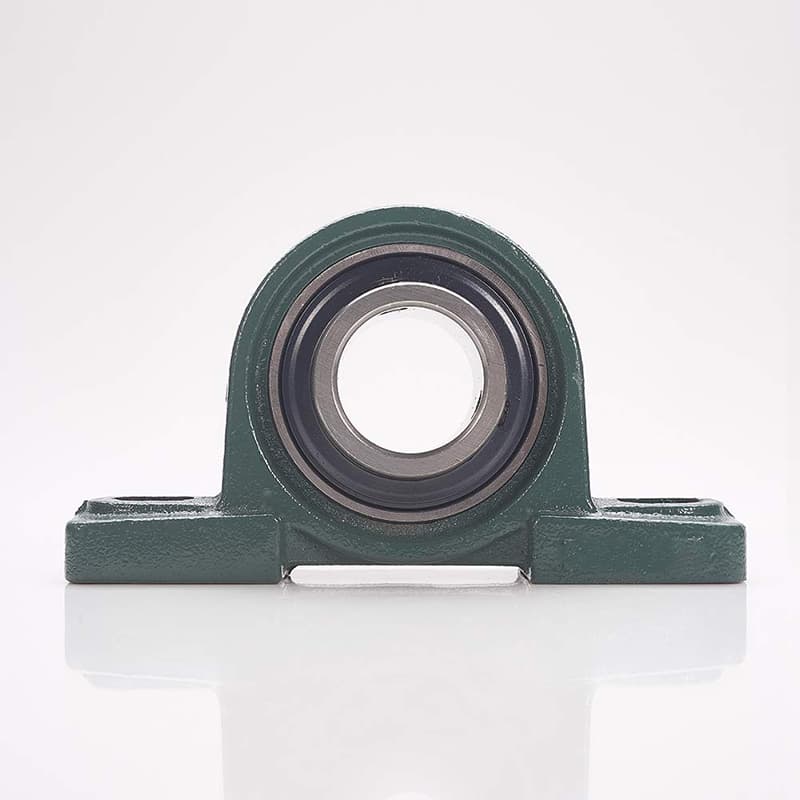
Let me classify applications into three tiers. Tier one is light-duty. These are simple machines with low loads and low speeds. They run in clean environments. They are not critical. A bearing failure causes minor inconvenience.
Tier two is medium-duty. These machines run continuously. They have moderate loads. They may have some vibration. They run in typical industrial environments. A bearing failure causes downtime.
Tier three is heavy-duty. These machines have high loads or high speeds. They run in harsh environments. They operate 24/7. A bearing failure causes major production loss. Safety may be a concern.
For tier one applications, you can use economical bearings. These are standard cast iron housings with standard deep groove ball bearings. They have single lip seals. They use standard grease. They are affordable and available.
For tier two applications, you need better bearings. Use ductile iron housings. Use sealed bearings with double lip seals. Consider a higher precision class. Use a better grease with corrosion inhibitors.
For tier three applications, you need premium bearings. Use stainless steel housings if there is moisture. Use heavy-duty bearings with enhanced lubrication. Use FKM seals for chemical resistance. Consider special coatings or treatments.
Let me give you examples of each tier.
| Tier | Application Examples | Bearing Recommendation | Why |
|---|---|---|---|
| Light-duty | Small fans, light conveyors, packaging machines | Standard cast iron, single lip seal | Load is low, failure is not critical |
| Medium-duty | Processing conveyors, mixers, dryers | Ductile iron, double lip seal | Continuous operation, moderate environment |
| Heavy-duty | Mixers, crushers, high-speed conveyors | Stainless steel, FKM seals | Harsh environment, high cost of failure |
I had a customer in Brazil who made fruit sorting machines. The main conveyor was medium-duty. It ran all day. It needed good bearings. But the auxiliary sorting belts were light-duty. They ran only when sorting was active.
He used our premium bearings on the main conveyor. He used our economical bearings on the auxiliary belts. He saved money without sacrificing reliability. That is smart purchasing.
The key is to understand your own applications. Do not over-specify. Do not under-specify. Match the bearing to the need. That is the first step to cost-effective buying.
What Are the Key Reliability Indicators You Should Never Compromise On?
A distributor from Russia once told me he wanted to reduce costs by cutting out some quality checks. He asked if we could skip the vibration test. I told him that was not a good idea.
There are some reliability indicators that you must protect. These are the things that separate a good bearing from a bad one. If you compromise on these, you are gambling with your reputation.
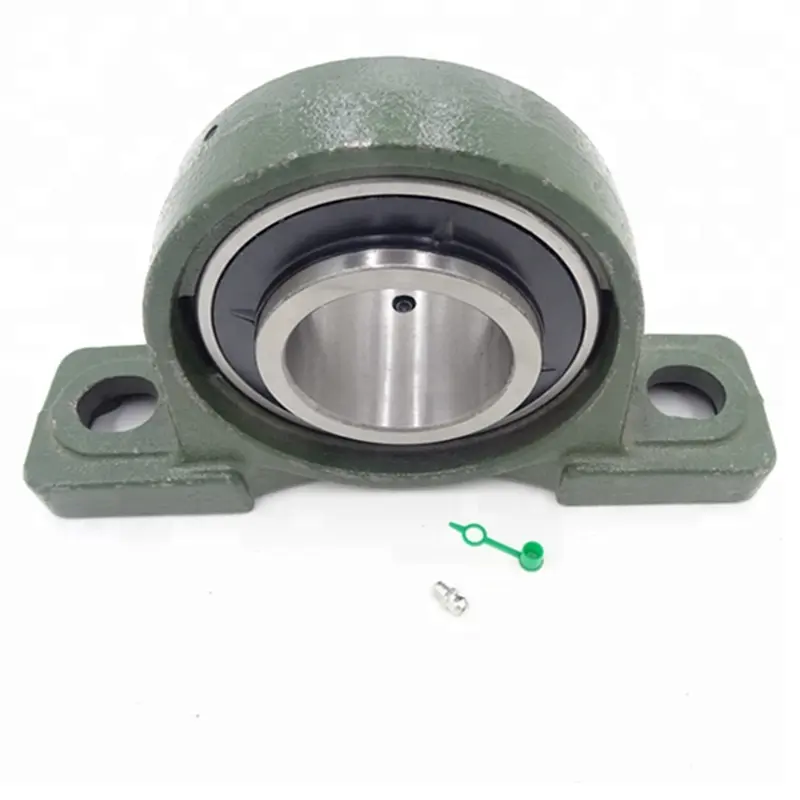
The first indicator is housing material quality. The housing must be sound. There should be no porosity. There should be no cracks. The material should be the grade specified. Cast iron should be ASTM A48 or equivalent. Ductile iron should be ASTM A536.
Cheap suppliers often use lower-grade materials. They may use recycled metal. That recycled metal has impurities. It is weaker. It can crack under load. Always ask for the material certificate.
The second indicator is bearing insert quality. The insert is the bearing itself. It must have the right steel. It must have the right hardness. The steel should be GCr15 or equivalent. The hardness should be HRC 60 to 64. Ask for the hardness test report.
The third indicator is seal quality. The seal keeps contamination out. It must be the right material. It must fit properly. It should not be loose or deformed. A cheap seal will leak. Contamination will enter. The bearing will fail.
The fourth indicator is dimensional accuracy. The bore and outer diameter must be within the specified tolerances. If the bore is too big, the bearing will slip. If it is too small, it will bind. The tolerance should be ISO class P0 or better. For critical applications, ask for P6.
The fifth indicator is the vibration level. Every bearing has some vibration. But it should be within a certain limit. A bearing with high vibration has internal issues. It may be out of round. It may have surface defects. It may have poor geometry.
The sixth indicator is the grease quality. For general use, use lithium-based grease. For food processing, use NSF H1 grease. The grease should be clean and uniform. It should not be separated or contaminated.
Let me put these indicators in a table.
| Reliability Indicator | What to Check | Minimum Standard |
|---|---|---|
| Housing material | Certificate of material | ASTM A48 (cast iron), ASTM A536 (ductile) |
| Bearing hardness | Hardness test report | HRC 60-64 |
| Seal quality | Visual inspection, fit test | No gaps, correct material |
| Dimensional accuracy | Inspection report | ISO class P0 or better |
| Vibration level | Vibration test report | ISO 15242 V2 or better |
| Grease quality | Data sheet, visual inspection | Clean, proper consistency |
I also want to mention the importance of batch consistency. A good supplier will have consistent quality from batch to batch. That means the reliability indicators are the same every time you order.
A bad supplier has variations. The quality is good sometimes and bad other times. You never know what you will get. That unpredictability is a risk. It is not worth the savings.
I had a customer in Vietnam who bought bearings from a low-cost supplier. The first batch was okay. The second batch was terrible. He had to deal with returns and customer complaints. He learned that the price was not worth the unpredictability.
How to Choose a Reliable Supplier Who Offers Good Value Without Cutting Corners?
A procurement manager from Bangladesh came to visit our factory. He had been buying from four different suppliers. He wanted to consolidate. But he was not sure how to pick the right one.
Choosing a supplier is more important than choosing the bearing. A good supplier will help you find the right product. A bad supplier will sell you whatever they have, even if it is wrong for your application.
The first thing to check is the supplier’s facility. Do they have their own factory? Or are they just a trading company? A real factory has control over the production process. A trading company just buys from whoever is cheapest that week.
If they have a factory, ask to visit it. See the production lines. See the inspection equipment. See the quality control process. If they do not have a factory, ask who makes their products. Then ask to visit that factory.
The second thing is their quality system. Do they have ISO 9001 certification? That is a good starting point. But it is not enough. Ask about their inspection procedures. Ask about their failure analysis process. A reliable supplier will have clear answers.
The third thing is their material sourcing. Where do they buy their steel? Do they buy direct from mills? Or do they buy from scrap dealers? Direct mill sourcing gives better consistency. Scrap sourcing can have impurities.
The fourth thing is their track record. How long have they been in business? Who are their customers? Can they give you references? Talk to other buyers. Ask about their experience with the supplier.
The fifth thing is their technical support. Can they help you with selection? Can they troubleshoot problems? A good supplier has engineers who can answer your questions. A bad supplier just takes orders.
The sixth thing is their communication. Do they respond quickly? Do they give clear answers? Communication is important. If they are hard to reach during the sales process, they will be even harder to reach after the sale.
Let me give you a supplier evaluation table.
| Criteria | What to Ask | Good Answer |
|---|---|---|
| Factory ownership | Do you own the factory? | Yes, we are the manufacturer |
| Quality certification | Do you have ISO 9001? | Yes, and we also have internal quality standards |
| Steel sourcing | Where do you buy steel? | We buy direct from top mills |
| Years in business | How long have you been doing this? | Over 10 years |
| Customer references | Can you share some? | Yes, here are three |
| Technical support | Can you help with application questions? | Yes, we have engineers on staff |
| Response time | How quickly do you respond? | Within 24 hours |
I also want to talk about price. A reliable supplier will have competitive prices. But they will not be the lowest. Be suspicious of the lowest price. There is usually a reason. It could be lower grade materials. It could be skipped inspections. It could be thinner housings.
A good supplier will be transparent. They will explain why their price is what it is. They will show you the quality. They will not hide behind vague statements.
I had a customer in South Africa who compared three suppliers. One was the cheapest. The other two were slightly higher. He visited all three factories. The cheapest had no quality control. The other two had full inspection lines. He chose one of the higher-priced ones. He knew the cheaper one would cost him more in the long run.
My advice is simple. Do not make price your only factor. Make it one factor among many. Combine price with quality, reliability, and service. That will lead you to a good supplier.
Conclusion
Cost-effective pillow block bearings are about matching the bearing to your application and protecting key reliability indicators. Choose a good supplier, and you will lower costs without lowering quality.
