
I visited a large automated warehouse in Germany last year. The conveyors never stopped. The sorters moved thousands of parcels per hour. And right in the middle of it all were pillow block bearings.
Pillow block bearings are the backbone of automated material handling. They support the rollers and shafts that move parcels from one point to another. With the right bearings, your warehouse runs smoothly.
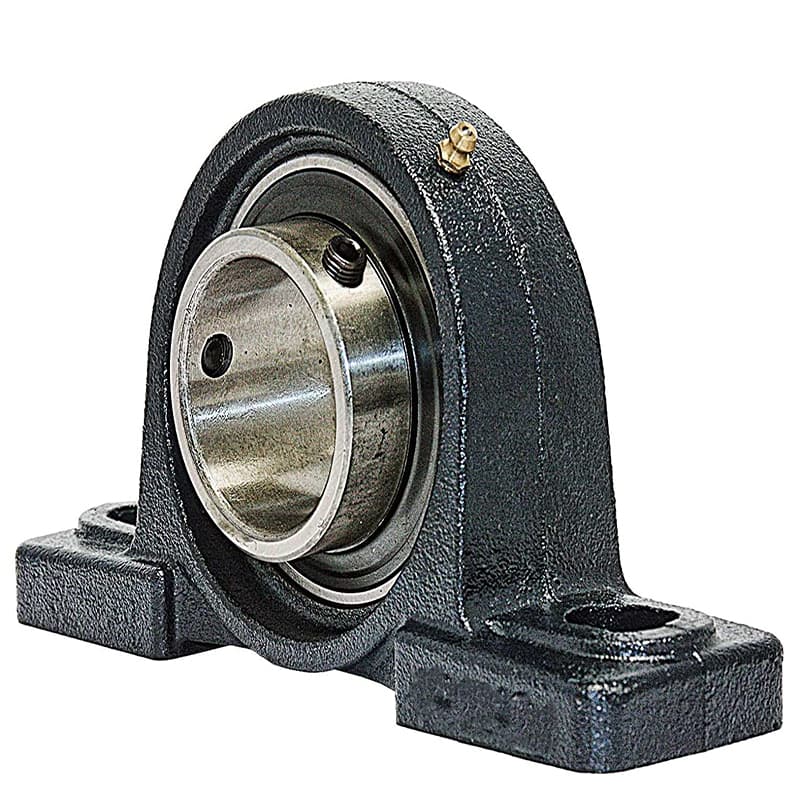
That German warehouse had over 500 pillow block bearings on their conveyors. They were running 24 hours a day, 6 days a week. They told me they never had a bearing failure in three years. That is the kind of reliability you need in logistics.
In this article, I will talk about pillow block bearings for automated warehouses and parcel handling. I will explain why they are essential. I will cover the load and speed demands. I will discuss sealing and corrosion resistance. And I will share the reliability features that keep high-throughput lines running.
Why Are Pillow Block Bearings Essential for Automated Warehouse Conveyors and Sorters?
A system integrator from India asked me a good question. He said, "I have many options for bearings. Why should I specifically choose pillow block bearings for my warehouse conveyors?"
The answer is about simplicity and reliability. Pillow block bearings are designed for easy installation. They come as a complete unit. You just bolt them onto the frame. You slide the shaft in. You tighten the locking collar. You are done.
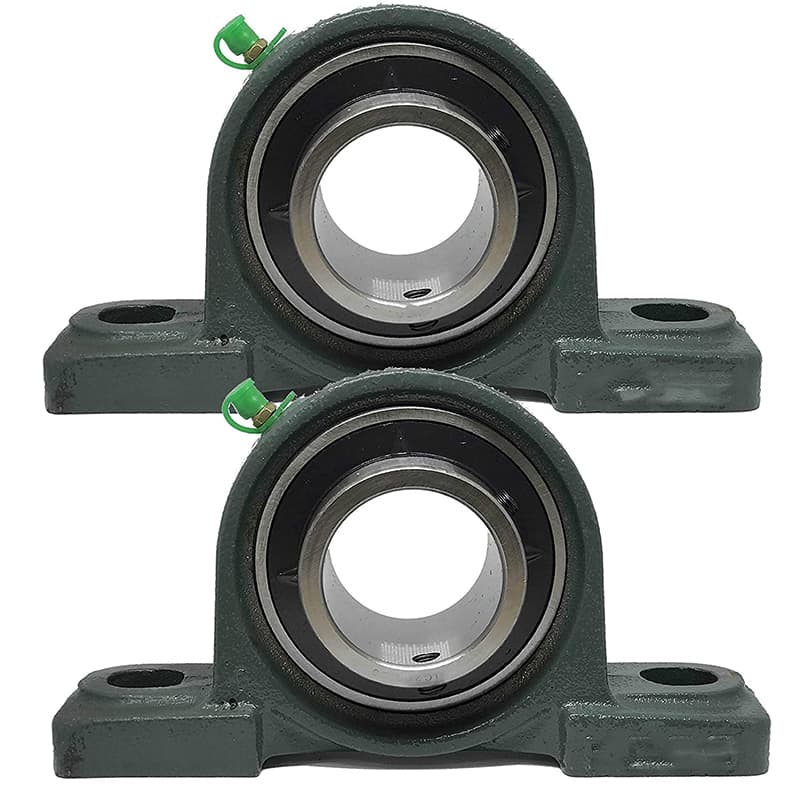
Automated warehouses have thousands of feet of conveyor. Each conveyor has many rollers. Each roller has two bearings. That means hundreds or thousands of bearings in one facility. Installation speed matters. Pillow block bearings save time.
The second reason is alignment. Conveyor frames are not always perfectly straight. They bend. They shift. They get bumped by forklifts. Pillow block bearings have a spherical outer surface. That allows some angular misalignment without causing problems.
The third reason is maintenance. In a warehouse, downtime is expensive. Every minute the conveyor stops, parcels do not move. Orders are delayed. Pillow block bearings are easy to replace. You unscrew the bolts. You take the old one off. You put the new one on. A trained maintenance person can do it in under 10 minutes.
The fourth reason is availability. Pillow block bearings are standard. You can find them in many sizes. You can get them with different seals. You can get them with different locking methods. That availability means you are not stuck waiting for a special order.
The fifth reason is cost. Warehouse conveyors use many bearings. The cost per bearing must be reasonable. Pillow block bearings are mass-produced. They are economical. Yet they provide reliable service under the typical loads of parcel handling.
Let me summarize the advantages in a table.
| Advantage | Why It Matters in Warehouses | Benefit |
|---|---|---|
| Easy installation | Fast assembly of conveyor systems | Reduced build time |
| Alignment tolerance | Frames are not perfectly straight | Fewer failures from misalignment |
| Quick replacement | Conveyors must stay running | Less downtime during maintenance |
| Wide availability | Standard sizes and styles | No waiting for special orders |
| Affordable cost | Many bearings needed per conveyor | Lower total system cost |
I also want to mention that many warehouse conveyors run at relatively low speeds. The loads are moderate. That is the sweet spot for pillow block bearings. They do not need the high precision of a spindle bearing. They do not need the extreme load capacity of a tapered roller bearing. They just need to run reliably for a long time.
So pillow block bearings are essential because they match the needs of the warehouse environment. Simple. Reliable. Available. Affordable. That is the combination that makes them the go-to choice.
What Load and Speed Demands Do Parcel Handling Lines Place on Bearings?
A maintenance manager from Indonesia told me his parcel handling line was having problems. The bearings were making noise. The rollers were not turning smoothly. He was confused. The loads did not seem that heavy.
The loads on parcel handling lines are not always high. But they are variable. Some parcels weigh a few grams. Others weigh 50 kilograms. That variation creates different loads on different parts of the conveyor. The bearings must handle all of it.
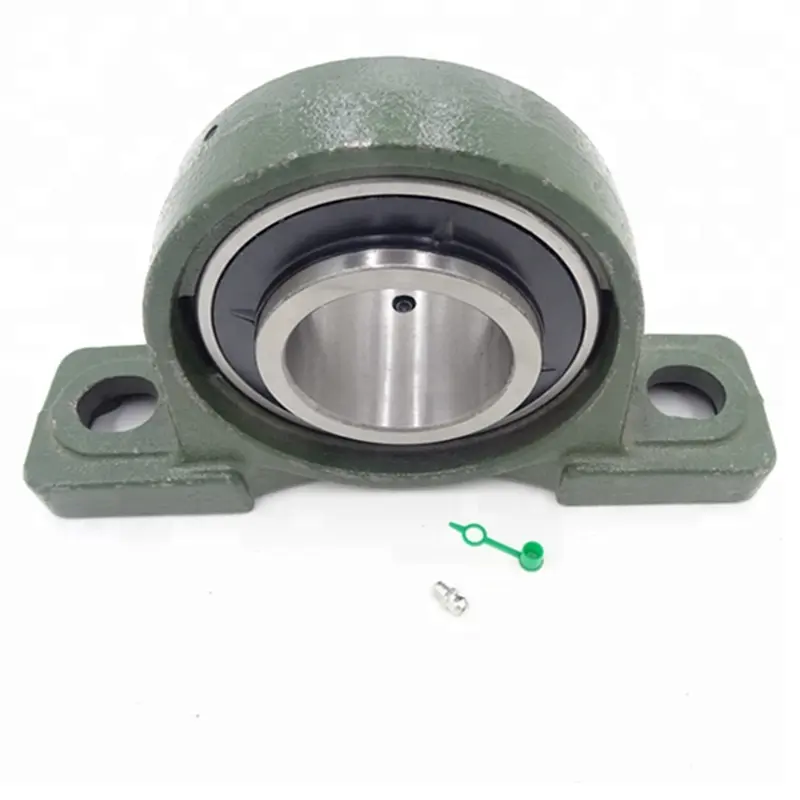
Let me talk about the loads. The first load is the weight of the parcel. That is a radial load. It presses down on the roller. The bearing supports that weight. For most parcels, the weight is low. A standard pillow block bearing can handle it easily.
But there is also impact. Parcels are dropped onto the conveyor. They are pushed onto sorter shoes. They are diverted from one belt to another. These actions create impact loads. The impact load is higher than the weight of the parcel. It can shock the bearing.
Then there is the load from the belt tension. The conveyor belt is tight. It pulls on the rollers. That pull creates an additional radial load. The belt must be tight enough to move the parcels. But not so tight that it overloads the bearings.
The speed is another factor. Parcel handling lines run at different speeds. Sorters run fast. They need to move many parcels quickly. That speed is usually between 1 and 2 meters per second. That is not high compared to industrial machinery. But the bearings still need to handle the rotation speed.
The important thing is the combination of speed and load. A bearing at high speed with light load is fine. A bearing at low speed with heavy load is also fine. But a bearing at high speed with heavy load and impact is stressed.
Let me give you a summary of the demands in a table.
| Factor | Typical Value | Effect on Bearing |
|---|---|---|
| Parcel weight | 0.1 to 50 kg | Varying radial load |
| Impact load | Up to 2x parcel weight | Shock stress on rolling elements |
| Belt tension | Moderate | Constant radial load |
| Conveyor speed | 0.5 to 2 m/s | Bearing rotation speed |
| Duty cycle | 24/7 operation | Continuous rotation, no rest |
I also want to mention the environment. Warehouses are not always clean. There is dust from cardboard boxes. There is dirt from pallets. There can be moisture from cleaning. These contaminants get into the bearing if the seals are not good.
So the bearing must handle variable loads, moderate speeds, some impact, and contamination. That is a demanding combination. But pillow block bearings with the right specifications can handle it.
I had a customer in Vietnam who operated a parcel sorting hub. His conveyors ran fast. The impact from parcels being diverted was high. He was using standard bearings with single lip seals. The bearings failed after six months. We switched to bearings with double lip seals and stronger cages. Now they last over two years.
How to Choose Bearings with the Right Sealing and Corrosion Resistance for Logistics Environments?
A warehouse owner from Brazil told me his bearings were rusting. His warehouse was not air-conditioned. The humidity was high. The bearings on the conveyors were showing rust marks within a year.
Sealing and corrosion resistance are often overlooked in warehouse conveyors. People think warehouses are clean and dry. That is not always true. Humidity, dust, and cleaning chemicals all attack the bearings.
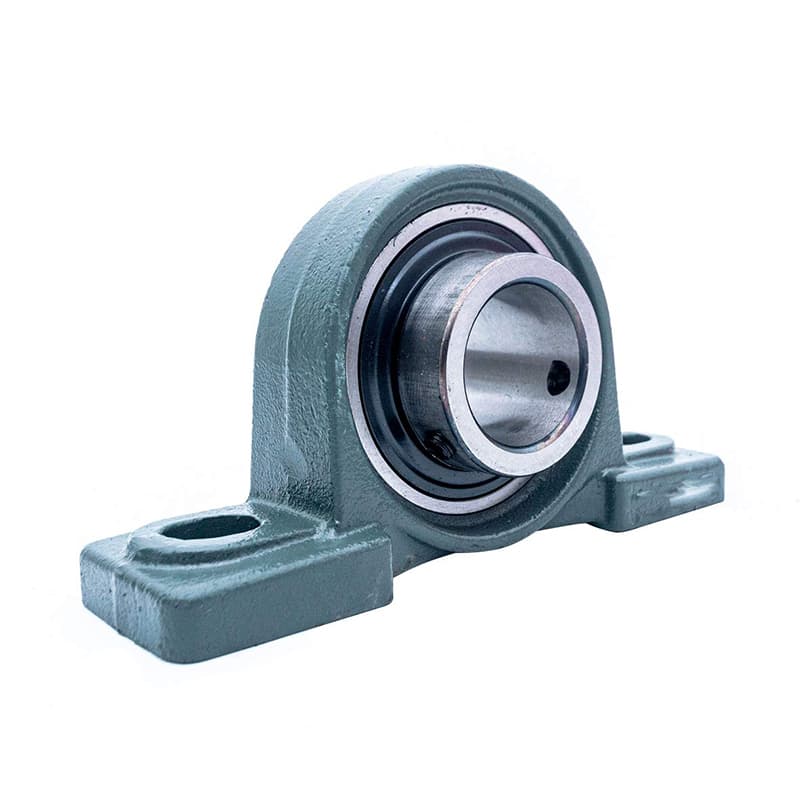
Let me start with sealing. The seal is the first line of defense. It keeps contamination out. It keeps grease in. A bad seal means a short life.
There are different seal types. Single lip seals are the most basic. They are fine for clean, dry environments. But warehouses have dust. Dust is small. It can get past a single lip seal. Once dust gets in, it acts like sandpaper. It wears the bearing.
Double lip seals are better. They have two lips. The inner lip keeps grease in. The outer lip keeps dust out. The outer lip also helps block moisture. For warehouse conveyors, I recommend double lip seals as the minimum.
The seal material also matters. Standard seals are made of nitrile rubber. It works for most environments. But if the warehouse uses cleaning chemicals, the nitrile can degrade. FKM rubber is more chemically resistant. It costs more. But it lasts longer.
Now let me talk about corrosion resistance. The housing is the outer part of the pillow block. Standard housings are cast iron. Cast iron rusts in humid conditions. The rust can flake off. Those flakes can fall onto the parcels. That is not good.
For humid warehouses, I recommend ductile iron or stainless steel housings. Ductile iron has better corrosion resistance than cast iron. It is also stronger. Stainless steel is the best for corrosion. It does not rust. But it costs more.
The bearing insert can also be coated. Zinc plating is a common option. It gives some corrosion protection. Phosphate coating is also good. It is less likely to flake.
The grease is the other factor. The grease must be moisture-resistant. Lithium-based grease is standard. But lithium absorbs some water. For humid environments, use a grease with a calcium-sulfonate thickener. It resists water washout better.
Let me give you a selection table.
| Feature | Standard Option | Better Option for Logistics | Why |
|---|---|---|---|
| Seal type | Single lip | Double lip | Keeps dust and moisture out |
| Seal material | Nitrile | FKM | Chemical resistance |
| Housing material | Cast iron | Ductile iron or stainless steel | Corrosion resistance |
| Bearing coating | None | Zinc or phosphate | Protects from corrosion |
| Grease type | Lithium | Calcium-sulfonate | Water resistance |
I had a customer in Bangladesh who operated a warehouse near the coast. The air was humid and salty. Standard cast iron bearings rusted within months. We switched to stainless steel housings with double lip FKM seals. The bearings now last over three years. The extra cost was justified by the longer life.
One more point. Consider the washdown frequency. Some warehouses are washed regularly to keep them clean. That washdown water can get into the bearings. If your warehouse has regular washdowns, choose bearings with higher sealing protection. Consider sealed-for-life bearings. They are pre-lubricated and sealed. They are designed to handle washdown environments.
What Are the Key Reliability Features That Reduce Downtime in High-Throughput Warehouses?
A logistics manager from Singapore told me his biggest problem was downtime. Every time a conveyor stopped, the sorting got backed up. The parcels piled up. The staff stood around. The orders were delayed.
In high-throughput warehouses, reliability is everything. You cannot afford to stop. Every minute of downtime costs money and reputation. So the bearings must have features that keep them running.
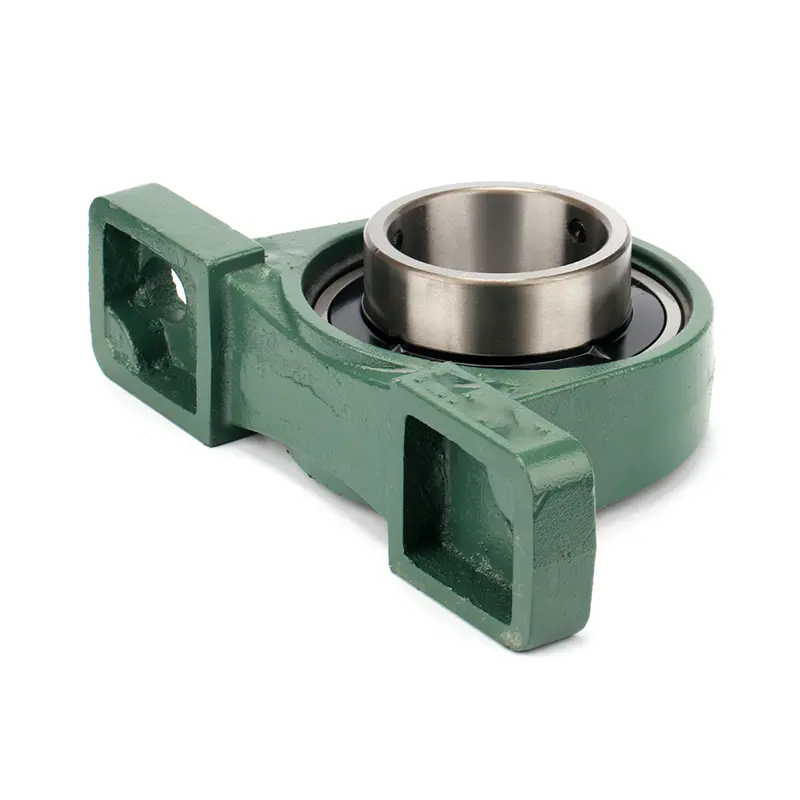
The first reliability feature is long grease life. In a busy warehouse, regreasing is a disruption. You have to stop the conveyor. You have to reach the bearing. You have to add grease. Then you start again. That takes time.
Bearings with long grease life need less maintenance. They have good seals that keep the grease in. They have good grease that does not break down quickly. Some bearings are sealed-for-life. They are designed to run without regreasing for the life of the bearing.
The second reliability feature is strong locking. The bearing must stay locked to the shaft. If the locking collar or set screw loosens, the bearing spins on the shaft. That wears the shaft. It also changes the alignment. The bearing fails.
Look for bearings with a reliable locking mechanism. A locking collar with a clamp is better than set screws for high vibration environments. The clamp spreads the clamping force evenly. It does not damage the shaft. It also stays tight longer.
The third reliability feature is a strong housing. The housing supports the bearing. It must be strong enough to handle the loads. It also must hold the bearing in place. A weak housing can crack. Or it can deform. That deformation changes the bearing clearance. The bearing binds.
Choose ductile iron housings for high-throughput warehouses. Ductile iron is stronger than cast iron. It can handle more load. It is also more impact-resistant.
The fourth reliability feature is accurate manufacturing. The bearing and housing must be made to tight tolerances. If the bore is too big, the bearing slips. If the outer diameter is too large, the bearing binds in the housing. Precision manufacturing ensures proper fit.
The fifth reliability feature is quality control. Every bearing should be inspected. The dimensions should be checked. The seals should be inspected. The vibration should be tested. Quality control catches defects before they reach your conveyor.
Let me put these features in a table.
| Reliability Feature | What to Look For | Benefit |
|---|---|---|
| Long grease life | Sealed-for-life design | Less maintenance, less downtime |
| Strong locking | Clamp-type locking collar | Stays tight, no shaft damage |
| Strong housing | Ductile iron housing | Handles shock and vibration |
| Accurate manufacturing | Tight tolerances | Proper fit, smooth operation |
| Quality control | Inspection reports | Consistent, defect-free bearings |
I had a customer in Turkey who operates a large e-commerce fulfillment center. They have over 10 kilometers of conveyor. They used to have bearing failures every few months. Each failure stopped a section of the conveyor.
We supplied them with bearings that had clamp-type locking collars and ductile iron housings. The bearings were sealed-for-life. The failure rate dropped significantly. They told us they saved over 100 hours of downtime in the first year.
Reliability is not just about the bearing. It is also about the supplier. A reliable supplier will provide consistent quality. They will stand behind their products. They will help you with any issues. Choose a supplier who treats your business as a partnership.
Conclusion
Pillow block bearings are essential for automated warehouses. Choose the right seals, materials, and reliability features. Match them to your load, speed, and environment. Your conveyors will stay running and your parcels will keep moving.
