
You want your machines to run stronger and longer. But bearing failures keep holding you back.
Our tapered roller bearings increase load capacity, extend service life, reduce downtime, and fit your exact needs. They handle heavy radial and axial loads together. That means your machinery runs smoother and produces more.
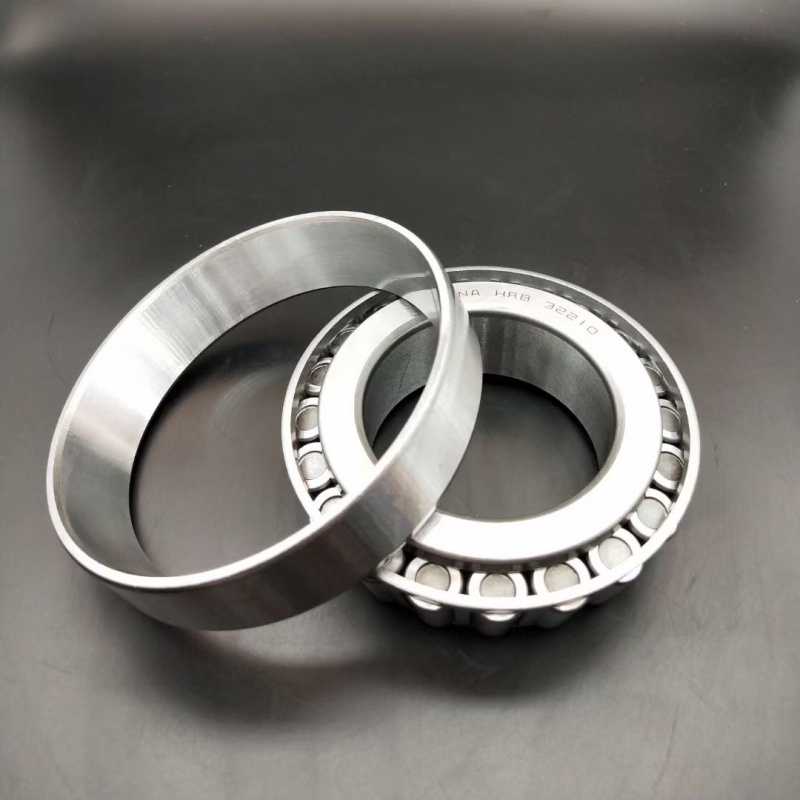
I have supplied bearings to factories in India, Russia, Brazil, and many other countries. Every customer asks the same question: what can your bearings really do for me? In this article, I will answer that question. I will show you how our tapered bearings improve load capacity, extend life, perform in key components, and solve special problems.
How Can Our Tapered Bearings Improve Your Equipment’s Load Capacity?
You put more weight on your machine. The bearings get hot. Then they fail. That is a common story.
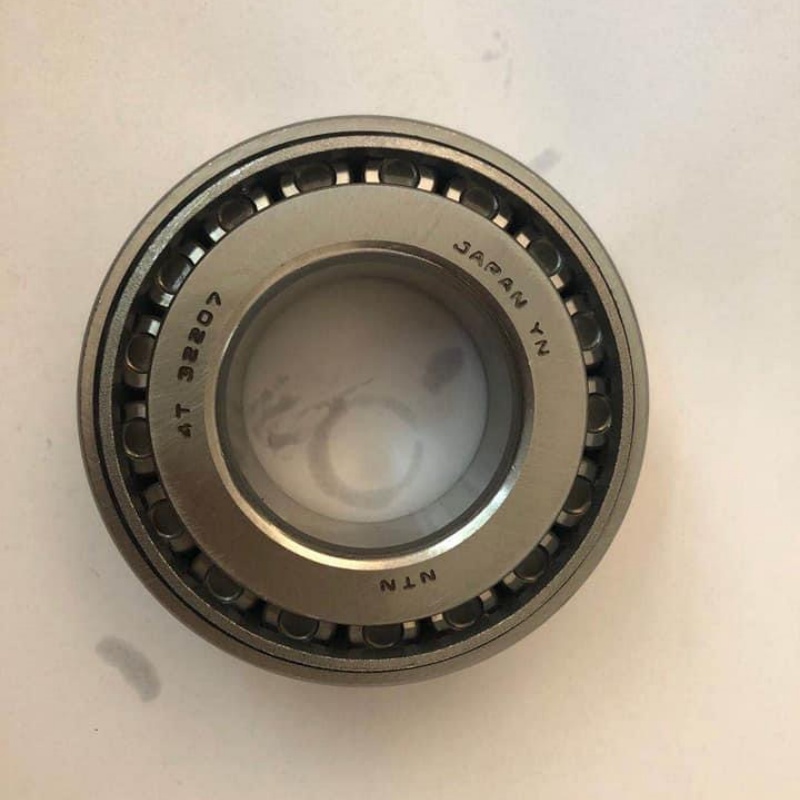
Our tapered bearings use larger rollers, optimized contact angles, and high-grade steel. This design increases the dynamic load rating by 15–25% compared to standard bearings of the same size. Your equipment can carry heavier loads without overheating or wearing out early.
The Science Behind Higher Load Capacity
Let me explain what load capacity means. Every bearing has a number called the dynamic load rating (C). This number tells you how much weight the bearing can carry while spinning. A higher number means longer life under the same load.
Our tapered bearings achieve higher C ratings in three ways.
1. Larger and Longer Rollers
A standard tapered bearing has rollers of a certain size. We increase the roller diameter and length without changing the overall bearing dimensions. How? By optimizing the internal geometry. We remove less material from the rings. That gives us more space for bigger rollers.
Bigger rollers mean more contact area. More contact area means lower pressure per square millimeter. Lower pressure means the bearing can take more load before the steel starts to deform. For example, our 32212 bearing has a 18% higher C rating than the industry standard. That extra margin keeps your machine running when you push it hard.
2. Optimized Contact Angle
The contact angle is the angle between the roller and the bearing axis. A steeper angle takes more axial load. A shallower angle takes more radial load. We adjust this angle based on your application.
For a gearbox that sees both types of load, we use a 20–25 degree angle. That gives you the best of both worlds. For a wheel hub with heavy side thrust, we go to 30 degrees. You get the exact load handling you need.
3. High-Grade Steel and Heat Treatment
Load capacity is not just about size. It is also about material strength. We use vacuum degassed GCr15 steel. This steel has very few impurities. Impurities create weak spots. Weak spots crack under load.
Our heat treatment gives the steel a uniform hardness of 59–61 HRC. The hardness goes all the way through, not just on the surface. That means the bearing resists both denting and cracking.
Here is a table showing load capacity improvements for common sizes:
| Bearing Series | Standard C Rating (kN) | FYTZ C Rating (kN) | Improvement |
|---|---|---|---|
| 30208 | 63 | 74 | +17% |
| 32212 | 130 | 158 | +21% |
| 30310 | 110 | 132 | +20% |
| 33114 | 142 | 170 | +19% |
I remember a customer from Turkey. He runs a conveyor system for heavy stone. The standard bearings on the drive drum failed every 4 months. The rollers were denting. He switched to our bearings with larger rollers and higher C rating. The same bearings are still running after 14 months. No dents. No failures.
So if your machines are overloaded or pushed hard, our tapered bearings give you the extra strength you need.
How Do They Extend Machine Operating Life and Reduce Downtime?
Downtime is expensive. Every hour your machine is stopped, you lose money. You want bearings that keep running.
Our tapered bearings extend operating life through better wear resistance, stable internal clearance, and superior fatigue strength. Field data from our customers shows an average increase of 40% to 80% in bearing life. That means fewer replacements and less unplanned downtime.
Three Ways We Fight Early Failure
Let me walk you through the specific improvements we have made.
1. Better Wear Resistance from Super-Finished Raceways
Wear happens when the roller slides against the raceway. Even with good lubrication, there is always some sliding. The rougher the surface, the faster the wear.
We super-finish our raceways. The final surface roughness (Ra) is 0.05 microns or less. That is about one third of a standard bearing’s roughness. The smooth surface reduces sliding friction. Less friction means less wear. Less wear means the bearing keeps its original geometry longer.
In a test we ran with a customer in Brazil, our bearings showed half the raceway wear after 5000 hours compared to the competitor’s product. That extra wear margin translates directly into longer life.
2. Stable Internal Clearance from Heat Stabilization
As a bearing runs, it gets warm. Heat makes the steel expand. If the internal clearance is too small, the bearing binds. Binding creates more heat. It is a bad cycle.
We use heat-stabilized steel for our tapered bearings. This means the steel has been heat treated to minimize dimensional change at elevated temperatures. Our bearings keep their clearance even when running at 120°C. Standard bearings might lose 20% of their clearance at that temperature.
For very hot applications (over 150°C), we offer a special heat stabilization grade. The steel is tempered at a higher temperature. It stays stable up to 200°C.
3. Higher Fatigue Strength from Clean Steel
Fatigue failure is when the metal gets tiny cracks from repeated stress. Over time, those cracks grow. Eventually the raceway spalls (flakes off).
The main cause of fatigue cracking is non-metallic inclusions in the steel. These are tiny bits of oxide or other impurities. They act as starting points for cracks.
Our steel has an oxygen content below 10 ppm. That is very clean. Fewer inclusions mean fewer starting points for cracks. The result is a much longer fatigue life. Our L10 life (the time before 10% of bearings fail) is typically 1.5 to 2 times longer than standard bearings.
Here is a comparison based on customer feedback across 5 years:
| Performance Metric | Standard Bearing | FYTZ Tapered Bearing |
|---|---|---|
| Average service life (hours) | 8,000 | 13,000 |
| Downtime events per year (due to bearing) | 3.2 | 1.1 |
| Replacement bearings per year (per machine) | 4 | 1.5 |
| Unplanned downtime cost (annual per machine) | $2,500 | $900 |
I have a customer in Russia. He runs a steel pipe mill. The bearings on his rolling line failed every 2 months. That meant 6 downtime events per year. Each downtime cost $3,000 in lost production. He switched to our heat-stabilized tapered bearings. The first set ran for 9 months. He now schedules bearing replacement every 8 months. No more unplanned stops.
So our bearings do not just promise longer life. They deliver it.
In Which Key Components Do Our Tapered Bearings Perform Best?
You have many machines. Each machine has many bearings. Not all bearings need the same performance. Our tapered bearings shine in specific places.
Our tapered bearings perform best in gearboxes, wheel hubs, conveyor drive drums, differentials, rolling mill stands, and heavy-duty axles. These components have high combined loads (radial plus axial) and need precise shaft positioning. That is exactly what tapered bearings are designed for.
Six Key Components and Why They Need Tapered Bearings
Let me go through each one.
1. Gearboxes (Industrial and Automotive)
A gearbox has shafts with gears. The gears push against each other. That creates both radial load (bending the shaft) and axial load (pushing the shaft sideways). Tapered bearings handle both at once.
In a gearbox, you usually mount two tapered bearings back-to-back. This setup controls the shaft position very accurately. That means the gears mesh perfectly. Less noise. Less wear. Longer gear life.
We have supplied tapered bearings for gearboxes in cement mixers, wind turbines, and agricultural equipment. The feedback is always the same: they run quieter and last longer.
2. Wheel Hubs (Trucks, Trailers, Heavy Vehicles)
A wheel hub bearing must take the weight of the vehicle (radial load) and the cornering forces (axial load). It also faces shock loads from potholes and bumps.
Our tapered bearings for wheel hubs use a steeper contact angle (28–32 degrees). This gives extra axial capacity for cornering. We also use a special seal design that keeps water and dirt out. For heavy trucks, we offer reinforced versions with larger rollers.
3. Conveyor Drive Drums
A conveyor drum has a shaft that supports the drum and drives the belt. The belt tension creates a high radial load. The drum weight adds more. Also, there is some axial load from belt misalignment.
Tapered bearings are ideal here because they can be adjusted to take up wear. As the bearing wears, you tighten the locknut. The clearance goes back to normal. This is much harder to do with deep groove ball bearings.
4. Differentials in Automotive Axles
A differential has pinion and side gears. The pinion shaft takes heavy thrust from the ring gear. Tapered bearings are the standard choice for pinion shafts. They provide the necessary axial stiffness.
Our differential bearings come with close-tolerance matched sets. You get the exact preload needed for quiet and efficient operation.
5. Rolling Mill Stands
Steel rolling mills have very high loads and moderate speeds. The rolls are heavy. The metal being rolled pushes back with huge force. Tapered bearings with large rollers and brass cages are common here.
We make specially heat-stabilized bearings for rolling mills. The steel keeps its hardness even when the roll gets hot. The brass cage resists shock loads and lasts much longer than pressed steel.
6. Heavy-Duty Axles (Construction and Mining)
Axles on loaders, dozers, and mining trucks see extreme loads. The bearings support the wheel and also take the driving torque. Tapered bearings with C4 clearance and reinforced cages are the best choice.
One of our mining customers in South Africa uses our bearings on haul truck axles. The original bearings lasted 4,000 hours. Ours last 9,000 hours. That is a big saving in maintenance costs.
Here is a quick selection table for these components:
| Component | Key Load Type | Recommended Tapered Bearing Feature |
|---|---|---|
| Gearbox | Mixed radial/axial, high speed | P5 precision, steel cage |
| Wheel hub | High axial, shock | Steep angle (30°), C3 clearance |
| Conveyor drum | Heavy radial, moderate axial | C3 clearance, good seals |
| Differential | High thrust, moderate speed | Matched pair, close tolerance |
| Rolling mill | Very high radial, high heat | Brass cage, heat stabilization |
| Heavy axle | Extreme loads, vibration | C4 clearance, reinforced rollers |
So if your machinery has any of these components, our tapered bearings are a perfect fit. They are designed for the job.
What Special Problems Can Customized Tapered Roller Bearings Solve for You?
You have a machine that is not standard. The bearings from the catalog do not fit right. Or they fail because your conditions are unique.
Customized tapered bearings solve problems like non-standard shaft sizes, unusual load directions, extreme temperatures, special clearance needs, and unique mounting constraints. We can modify bore diameter, outer diameter, width, contact angle, clearance, cage material, and even add lubrication features.
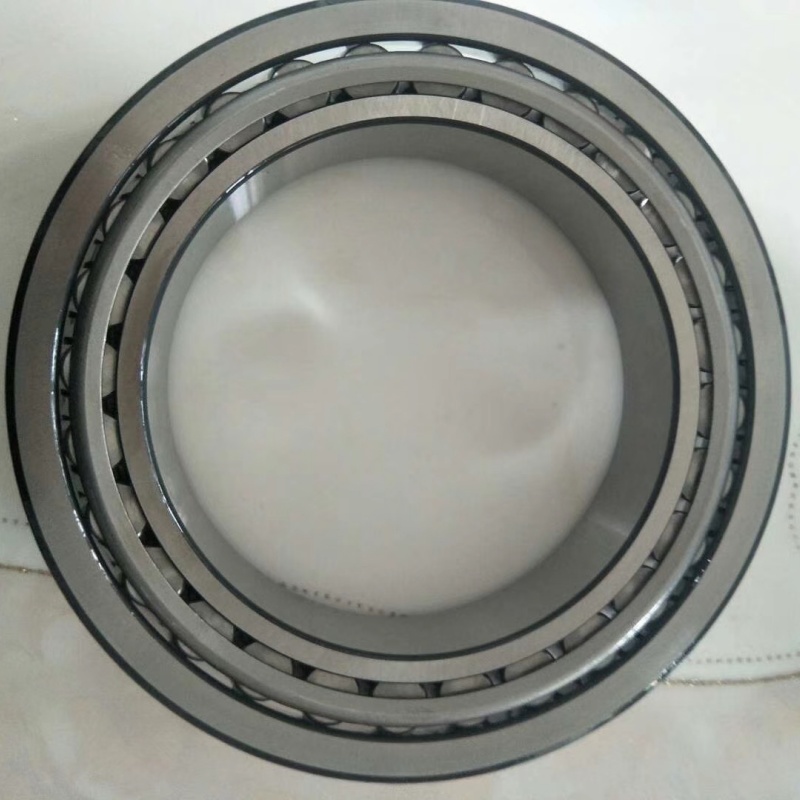
Five Custom Solutions We Have Delivered
Let me share real examples from my customers.
1. Non-Standard Bore Size for Worn Shafts
A customer in Pakistan had a textile machine from the 1980s. The shafts were worn down by 0.2 mm. Standard bearings were too loose. They would spin on the shaft and damage it more.
We made him bearings with a bore 0.2 mm smaller than standard. The bearings pressed onto the worn shafts perfectly. No more spinning. No more shaft damage. He saved the cost of replacing all the shafts.
2. Modified Contact Angle for Unusual Load Direction
A customer in India made a special packaging machine. The load on the bearing was mostly axial (thrust), with very little radial load. Standard tapered bearings have a 15–20 degree angle. That was not enough for his pure axial load.
We made him a bearing with a 35-degree contact angle. The axial capacity went up by 40%. The bearing ran cool and smooth. He stopped having failures.
3. Special Clearance for High-Heat Ovens
A customer in Egypt runs bakery ovens. The bearings are near the oven wall. The temperature at the bearing is 180°C. Standard bearings with C4 clearance still bound up because the steel expanded.
We used a special high-temperature steel grade and a non-standard clearance larger than C4. We also changed the cage to a heat-stabilized brass design. The bearings now run without binding. They have lasted over two years.
4. Corrosion-Resistant Coating for Marine Environment
A customer in Indonesia makes fishing boat winches. The bearings are exposed to salt water and salt spray. Standard bearings rusted in two weeks.
We made him bearings with a zinc-nickel coating on all surfaces. The coating is 15 microns thick and very hard. Salt water does not attack it. The bearings now last 18 months.
5. Lubrication Holes for Easy Regreasing
A customer in Brazil runs rock crushers. The bearings are hard to reach. He could not regrease them without stopping the machine. That cost him production.
We added lubrication grooves and three radial holes on the outer ring. He installed a grease line to the bearing housing. Now he can pump fresh grease while the crusher runs. The bearings last 3 times longer.
Here is a table of custom modifications we offer:
| Custom Request | What We Change | Typical Lead Time | Minimum Order |
|---|---|---|---|
| Non-standard bore (metric or inch) | Inner ring grinding | 2–3 weeks | 100 pieces |
| Non-standard OD | Outer ring grinding | 2–3 weeks | 100 pieces |
| Modified contact angle | Cone and cup geometry | 4–6 weeks | 500 pieces |
| Special clearance (C2, C3, C4, or custom) | Internal geometry | 2 weeks | No minimum |
| Special cage (brass, nylon, heavy steel) | Cage design | 3–4 weeks | 100 pieces |
| Corrosion coating (zinc, black oxide, etc.) | Surface treatment | 2 weeks | 100 pieces |
| Lubrication holes and grooves | Outer ring machining | 2 weeks | 100 pieces |
I have a customer in Vietnam. He buys standard bearings for most of his machines. But for his special drying kiln, he needs a custom bearing every year. He sends me a drawing. We make 200 pieces. He pays a small tooling fee once. After that, the price is only slightly higher than standard. He gets exactly what he needs.
So do not struggle with a bearing that almost fits. Tell me your problem. We will make a custom solution.
Conclusion
Our tapered bearings boost load capacity, extend machine life, and solve custom challenges. Tell us your needs. We will deliver.
