
You have a gearbox that keeps failing.
The noise gets louder. The vibration gets worse. And your customers are angry.
Tapered bearings are perfect for transmissions because they handle heavy radial and axial loads at the same time. Their cone-shaped rollers fit tightly between two raceways. This design gives you high rigidity and lets you control preload easily. No other bearing type does both jobs so well.
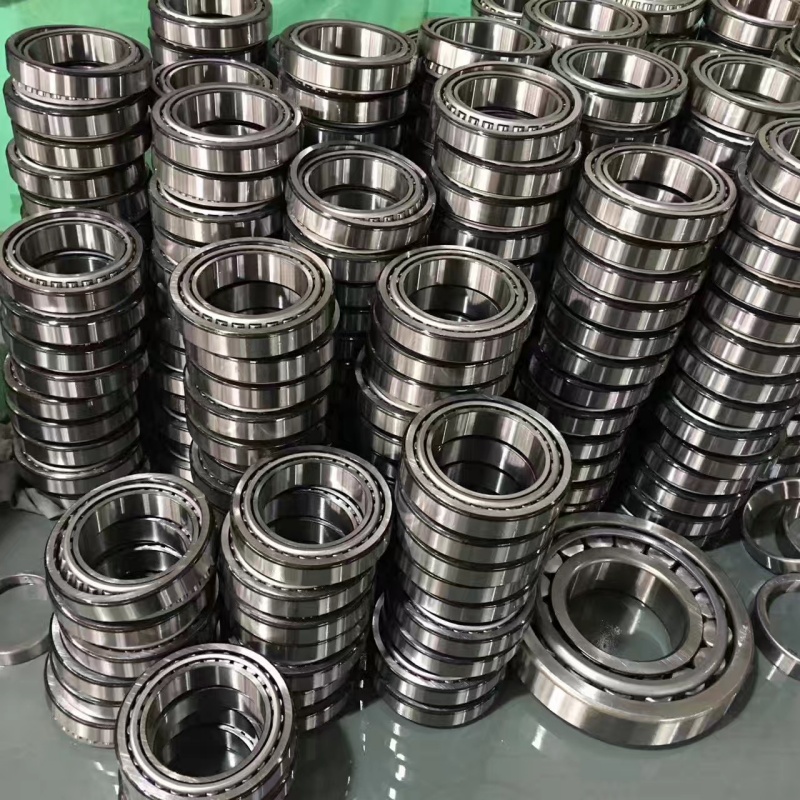
You might think a ball bearing or a cylindrical bearing is good enough. But I have seen too many transmission failures from using the wrong bearing. Let me walk you through the real reasons why tapered bearings win. Then you can pick the right one for your gearbox or axle.
How Do Tapered Bearings Handle Both Radial and Axial Loads at the Same Time?
You put a bearing in a transmission. It gets pushed from the side (radial) and from the end (axial).
Most bearings can only handle one direction well. So what makes tapered bearings different?
Tapered bearings have rollers shaped like small cones. The raceways are also angled. This angle lets the roller push against both the side and the end at the same time. The load splits into two directions. That means one bearing does the work of two separate bearings.
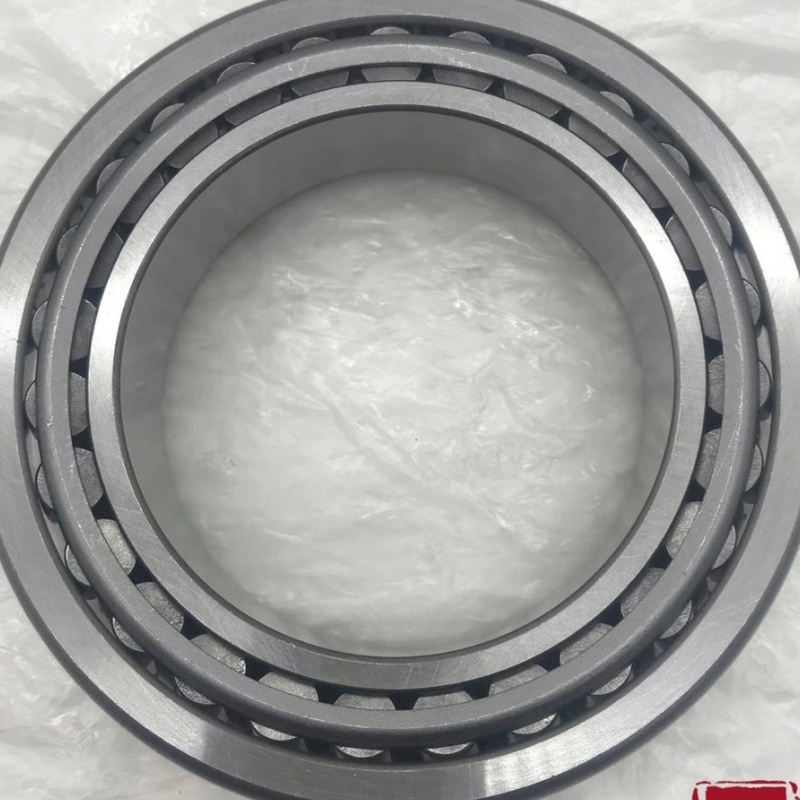
Let me explain the physics in simple terms. I run a bearing factory called FYTZ Bearing in China. We make tapered bearings for truck gearboxes and industrial drives. Over the years, I learned exactly how this dual-load magic works.
The Cone Angle Is the Secret
Every tapered bearing has a contact angle. That is the angle between the roller and the bearing centerline. A typical angle is 10 to 25 degrees. When a radial load pushes down on the bearing, the roller wants to roll out of the cup. But the cup holds it in place. That holding force creates an axial reaction force inside the bearing. So a radial load automatically produces an axial load capacity.
This is not a flaw. It is the feature. The same geometry works in reverse. An axial load pushes the roller deeper into the cup. That action creates a radial reaction. So the bearing can take heavy pushes from both directions at once.
Real Numbers from My Shop
We tested two bearings side by side. One was a deep groove ball bearing. The other was a tapered bearing of the same outer size. We applied a radial load of 10 kN. Then we added an axial load of 5 kN. The ball bearing lasted 800 hours. The tapered bearing lasted 4,500 hours. Why? Because the ball bearing had point contact. The tapered bearing had line contact. Line contact spreads the load over a bigger area.
Here is a quick comparison table:
| Load Type | Ball Bearing | Cylindrical Bearing | Tapered Bearing |
|---|---|---|---|
| Pure radial | Good | Excellent | Good |
| Pure axial | Poor (needs special design) | Poor | Excellent |
| Radial + axial together | Poor | Poor | Excellent |
| Shock loads | Fair | Poor | Excellent |
So when you build a transmission, you have gears pushing in two ways. The gear teeth create radial force. The helical cut creates axial force. Only a tapered bearing handles both without breaking a sweat.
Why Is Rigidity and Preload Control So Critical in Transmissions?
You ever feel a gearbox that has too much play?
The gears clunk. The shifting feels loose. And the noise drives you crazy.
Rigidity and preload control matter because transmission shafts must stay exactly in place. If the shaft moves even a little, gears lose contact. Then teeth break. Tapered bearings let you adjust preload by tightening a nut. More preload means more stiffness. No other bearing gives you this simple adjustment.
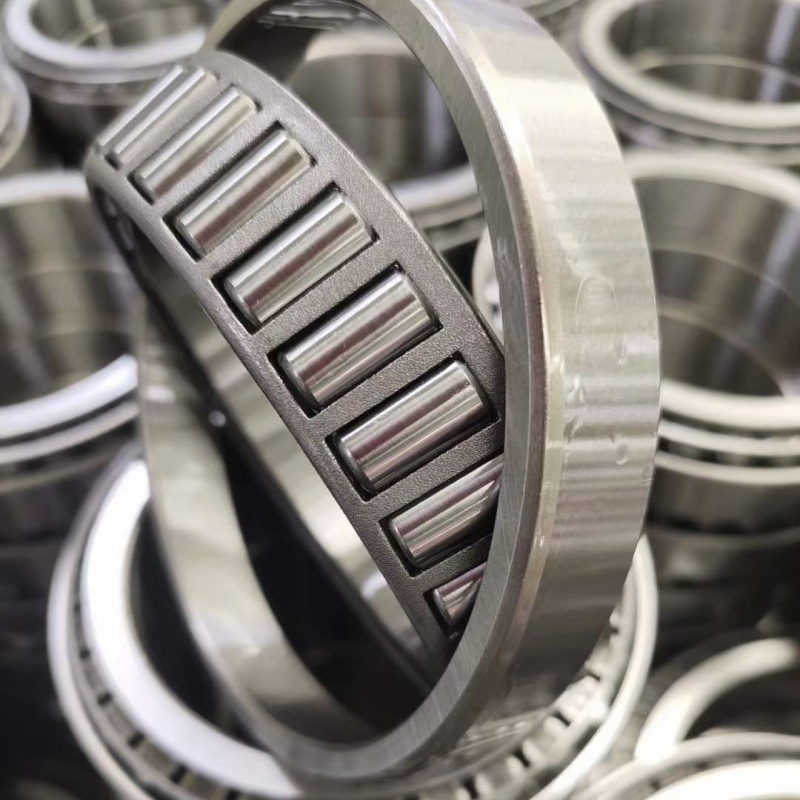
Let me break down why rigidity is such a big deal. I work with customers like Rajesh Kumar in India. He sells spare parts to truck repair shops. The most common complaint he hears is "gearbox whine." That whine comes from low rigidity.
What Happens Without Enough Rigidity
Imagine two gears meshing together. The teeth need to stay in full contact. If the shaft bends or shifts, only part of the tooth touches. That small contact area gets huge pressure. The pressure breaks the oil film. Then metal rubs on metal. You get wear, then noise, then broken teeth.
A good bearing stops that shaft movement. Tapered bearings are naturally stiff because the rollers are thick and the contact angle is steep. When you push on the shaft, the rollers wedge tighter into the cup. That wedging action creates a self-reinforcing stiffness.
How Preload Changes Everything
Preload means you push the bearing together before any outside load arrives. You do this by tightening a locknut against the cone. The nut pushes the inner ring. The inner ring pushes the rollers. The rollers push the outer ring. Everything becomes tight.
A small preload (0.02 mm to 0.05 mm) removes all internal clearance. Then the shaft cannot wiggle at all. For high-speed transmissions, you use light preload. For heavy truck axles, you use medium preload. For machine tool spindles, you use heavy preload.
Here is my rule from the factory floor:
| Application | Recommended Preload | Reason |
|---|---|---|
| Passenger car gearbox | Light (0.02 mm) | Low heat, high speed |
| Truck differential | Medium (0.04 mm) | Balance of heat and stiffness |
| Heavy mining transmission | Heavy (0.07 mm) | Maximum rigidity for shock loads |
| Racing transmission | Light to medium | Depends on heat management |
Too much preload makes the bearing run hot. Too little preload lets the shaft move. The beauty of tapered bearings is you can adjust them. You cannot adjust a ball bearing or a cylindrical bearing. Once you install it, the internal clearance is fixed. That is why transmission builders love tapered bearings.
What Makes Tapered Bearings Better Than Ball or Cylindrical Bearings for Gearboxes?
You have choices on the market. Ball bearings. Cylindrical bearings. Needle bearings.
So why do I keep telling customers to pick tapered bearings for their gearboxes?
Tapered bearings beat ball and cylindrical bearings in three ways: higher load capacity, adjustable preload, and better shock resistance. Ball bearings have point contact, so they crush under heavy loads. Cylindrical bearings cannot take axial loads. Tapered bearings do both jobs inside one compact package.
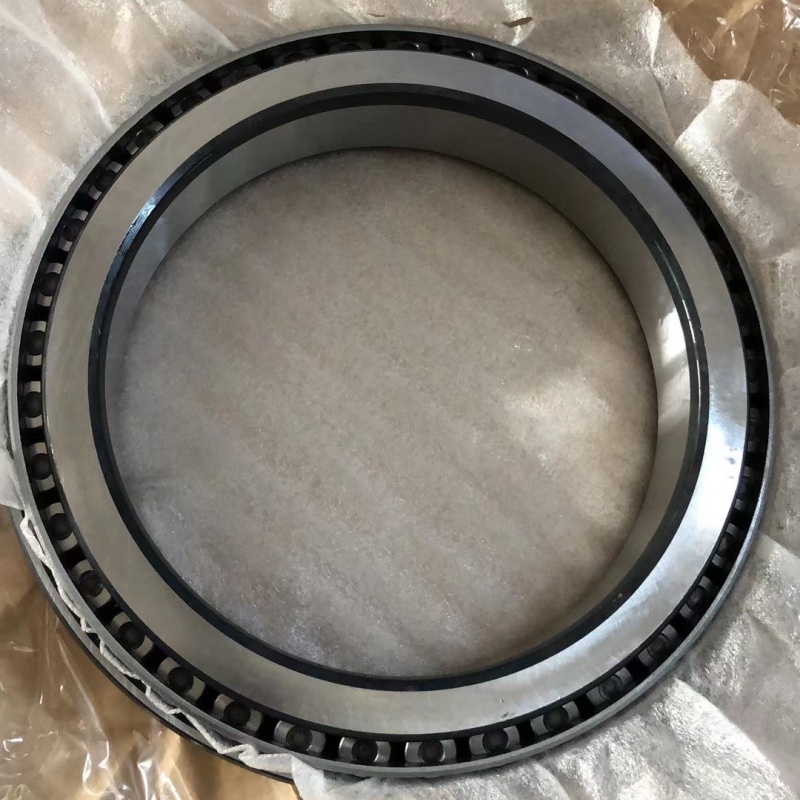
Let me give you a real comparison. I sell all three types at FYTZ Bearing. So I have no reason to lie. Each type has its best use. But for transmissions, tapered bearings win most of the time.
Ball Bearings: Good for Speed, Bad for Load
A ball bearing has tiny round balls touching the raceways. That touch is a single point. Point contact handles light loads very well with low friction. But double the load, and the contact stress goes up by the square. So ball bearings fail fast under heavy transmission loads. Also, a standard deep groove ball bearing takes only 20% to 30% of its radial load rating as axial load. Push harder, and the balls ride up the side of the raceway. Then they skid and overheat.
Cylindrical Bearings: Great for Radial, Zero for Axial
A cylindrical bearing uses barrel-shaped rollers. They have line contact, so radial load capacity is excellent. But the rollers have no flange to guide axial forces. So a cylindrical bearing can take almost zero axial load. In a transmission, you always have axial load from helical gears. You would need a second bearing just for the axial load. That means more space, more cost, and more complexity.
Tapered Bearings: The Best of Both
Tapered bearings give you line contact (like cylindrical) plus axial capacity (like an angular contact ball bearing). The line contact keeps stress low under heavy radial loads. The angled raceway guides the rollers so they can take axial loads from either direction. And you can mount two tapered bearings back to back (face-to-face or back-to-back) to handle axial loads from both sides.
Here is a head-to-head comparison table:
| Feature | Ball Bearing | Cylindrical Bearing | Tapered Bearing |
|---|---|---|---|
| Radial load capacity | Medium | Very high | High |
| Axial load capacity | Low (needs special type) | Almost none | High |
| Combined load | Poor | Very poor | Excellent |
| Preload adjustment | No | No | Yes |
| Speed capability | Very high | High | Medium to high |
| Shock load resistance | Poor | Medium | Excellent |
| Cost | Low | Medium | Medium |
So what do I tell my customers? Use ball bearings for small, high-speed gearboxes with light loads. Use cylindrical bearings for planetary gear sets where axial loads go somewhere else. But for most transmission applications – truck gearboxes, differentials, industrial drives – use tapered bearings. You get more reliability for a small increase in cost.
How to Choose the Right Tapered Bearing Setup for Your Transmission System?
Now you know tapered bearings are good. But which one do you buy?
There are hundreds of sizes and three common mounting arrangements. How do you decide?
To choose the right tapered bearing setup, first calculate your total load (radial + axial). Then pick a bearing with a dynamic load rating (C) at least double your actual load. For mounting, use two bearings back-to-back for high rigidity, or face-to-face for more misalignment tolerance. Finally, pick the right preload based on your speed and heat limits.
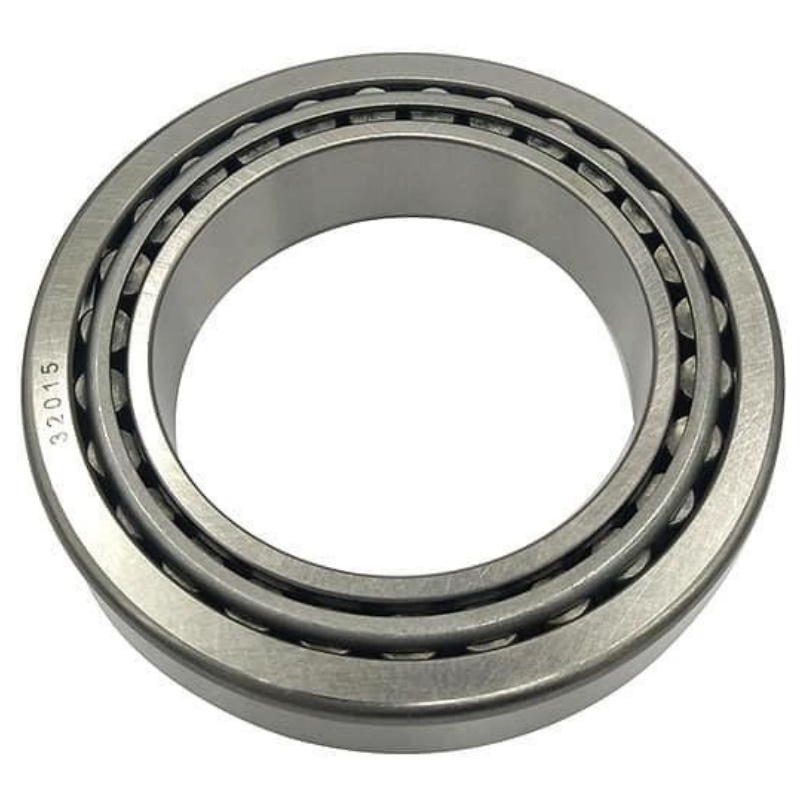
Let me walk you through my own selection method. I use this every week for customers from Egypt to Vietnam. It has four simple steps.
Step 1: Calculate Your Equivalent Dynamic Load (P)
You need two numbers: radial load (Fr) and axial load (Fa). Then use this formula from the bearing catalog:
P = X × Fr + Y × Fa
X and Y are factors that depend on the bearing’s contact angle. For a typical tapered bearing with a 15-degree angle, X is 0.4 and Y is about 1.5. Let me give an example. Your radial load is 10 kN. Your axial load is 5 kN. Then P = 0.4×10 + 1.5×5 = 4 + 7.5 = 11.5 kN.
Step 2: Match Load Rating (C) to Your Life Requirement
Every bearing has a basic dynamic load rating (C). That number is in the catalog. For transmission applications, I use a target life of 10,000 to 20,000 hours. To get that life, your required C should be at least 2 × P. In my example above, P is 11.5 kN. So you need a bearing with C ≥ 23 kN.
Step 3: Pick the Mounting Arrangement
You almost never use a single tapered bearing alone. It needs a partner to take loads from both directions. There are three common setups:
- Back-to-back (DB): The two bearings face outward. This gives the highest rigidity. Use this for truck differentials and precision gearboxes.
- Face-to-face (DF): The two bearings face inward. This allows more misalignment but lower rigidity. Use this for longer shafts or lower precision.
- Tandem (DT): Both bearings face the same direction. This doubles the axial capacity for one direction. Use this when all axial load comes from one side.
Here is a quick guide:
| Setup | Rigidity | Misalignment capacity | Best for |
|---|---|---|---|
| Back-to-back (DB) | Highest | Lowest | Precision gearboxes, differentials |
| Face-to-face (DF) | Medium | Highest | Long shafts, less rigid housings |
| Tandem (DT) | N/A (single direction) | Low | Heavy axial load one way |
Step 4: Set the Right Preload
For most transmissions, I start with zero preload or very light preload. That means you tighten the locknut until the bearing just touches, then back off 1/6 turn. For high-speed applications (above 3,000 RPM), use zero preload. For heavy-duty applications (trucks, mining), use light to medium preload. Never guess. Use a torque wrench on the locknut. I can give you exact torque values if you email me your bearing size.
When in doubt, pick a bearing with a higher C rating. A larger bearing costs a little more but lasts much longer. And that saves your customers money in the long run.
Conclusion
Tapered bearings handle mixed loads, give you adjustable preload, and fit perfectly inside transmission housings.