
Your machines carry big loads every day. But the bearings wear out too fast.
You replace them again and again. That costs time and money.
Heavy-load bearings with exceptional wear resistance use special steel, optimized heat treatment, and hard surface finishes. These features let the bearing handle high pressure without peeling or scratching. The result is longer life and fewer breakdowns for your crushers, conveyors, and presses.
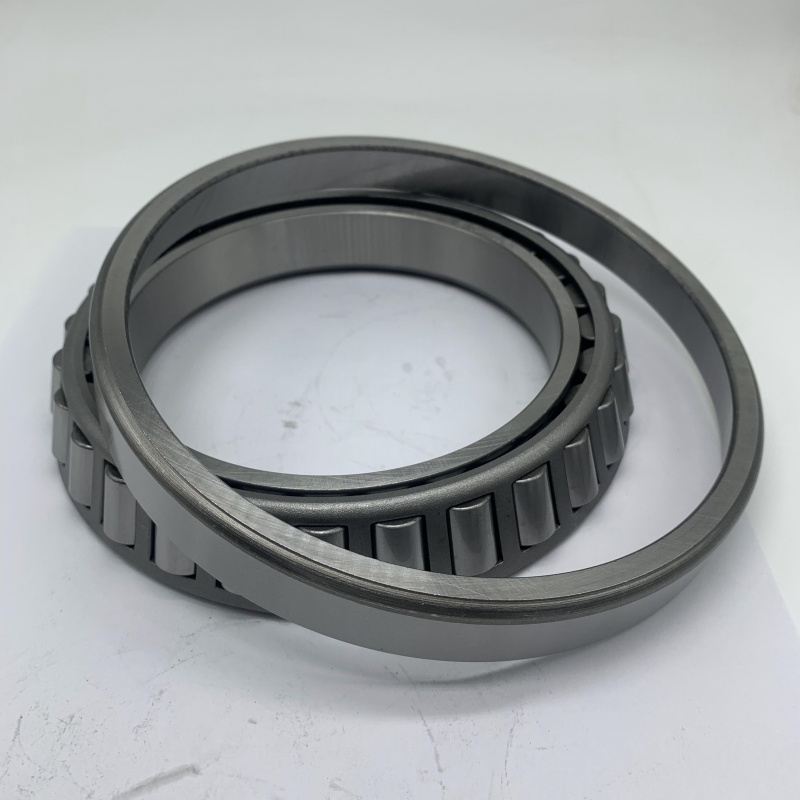
You might think all heavy bearings are the same. But I have seen cheap bearings fail in six months. Good ones last five years. The difference is wear resistance. Let me show you what really works. Then you can pick the right bearing for your toughest machines.
What Makes a Bearing Both Heavy-Load Capable and Highly Wear-Resistant?
You put a bearing under 50 tons of load. The rollers press hard into the raceways.
Without good wear resistance, the surface flakes off. So how do you get both strengths?
A bearing becomes both heavy-load capable and wear-resistant when you use through-hardened bearing steel with a fine grain structure and add a surface treatment like black oxide or coating. The core handles the pressure. The skin stops the wear. Two different features working together.

Let me explain the science the way I teach my factory team. I run FYTZ Bearing in China. We make bearings for mining and steel mills. Over ten years, I learned that wear resistance is not one thing. It is four things working together.
The Steel Makes the Base
Standard bearings use SAE 52100 chrome steel. That is good for normal loads. But for heavy loads with wear risk, I recommend case-hardened steel like 20CrMo or 20CrNiMo. These steels have a soft, tough core and a hard outer layer. The core absorbs shock. The hard layer resists scratching. For even better performance, we use vacuum degassed steel. This removes impurities that cause micro-cracks.
Heat Treatment Creates the Hard Shell
You can have the best steel. Without the right heat treatment, it is useless. For heavy-load wear resistance, we use carburizing or carbonitriding. These processes add carbon to the surface. Then we quench and temper. The result is a surface hardness of 60–64 HRC. The core stays at 35–45 HRC. So the bearing can take heavy pressure without cracking or wearing.
Surface Finish Reduces Friction
A smooth surface wears less. It is that simple. Our heavy-load bearings have a ground and super-finished raceway. The Ra value (roughness) is below 0.1 micrometers. A smooth surface lets oil stay between the roller and the raceway. That oil film stops metal-to-metal contact. And no contact means no wear.
Here is a table showing how each factor helps:
| Factor | What It Does | Effect on Wear Resistance |
|---|---|---|
| Case-hardened steel | Soft core + hard shell | Core absorbs shock, shell resists scratching |
| Carburizing heat treatment | Adds carbon to surface | Surface hardness 60–64 HRC |
| Fine grain structure | Fewer impurities | No weak spots for cracks to start |
| Super-finish raceway | Very smooth surface (Ra <0.1µm) | Oil film stays intact |
| Black oxide coating | Adds anti-wear layer | Reduces micro-welding under heavy load |
I have a customer in South Africa. He runs a gold mine. His old bearings lasted 4 months on the crusher. He switched to our carburized tapered bearings with super finish. Now he gets 18 months. That is the real value of wear resistance.
How Do Heavy-Load Wear-Resistant Bearings Perform in Mining, Construction, and Steel Mills?
You sell bearings to mines or construction companies. The work is dirty. The loads are huge.
So how do our bearings actually perform in these rough places?
In mining, heavy-load wear-resistant bearings last 3 to 5 times longer than standard bearings on crushers and screens. In construction, they handle shock loads from excavators and loaders without spalling. In steel mills, they survive extreme heat and scale contamination. Each industry needs a slightly different wear-resistant design.
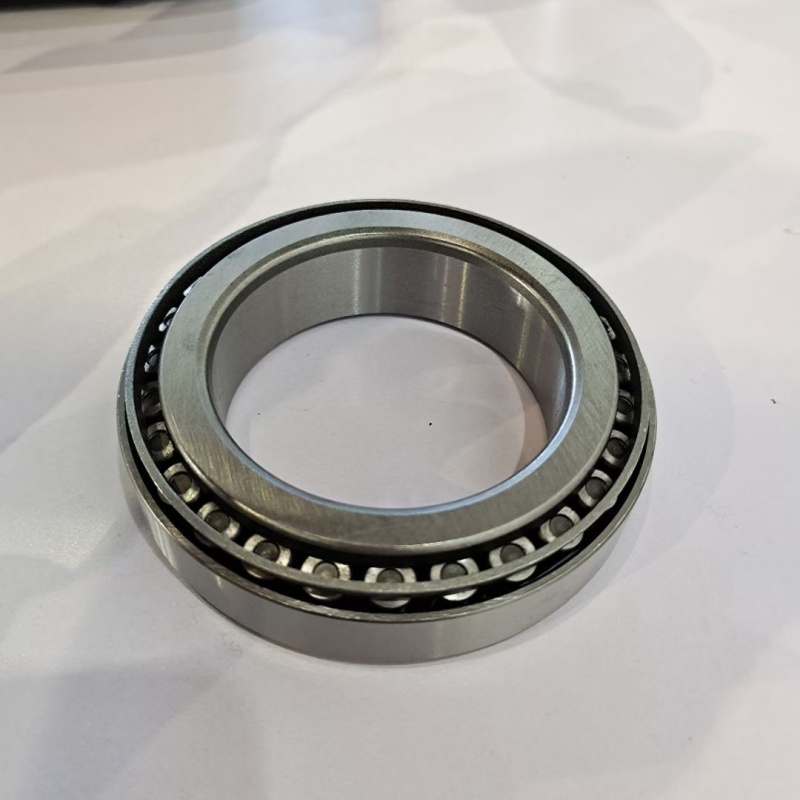
Let me give you real stories from my customers. I ship bearings to Turkey, Russia, Brazil, and India. Each market uses them differently.
Mining: Crushing Rock and Moving Ore
A cone crusher has huge forces. The eccentric shaft spins. The mantle crushes rock. The bearings inside see both heavy radial loads and shock from uncrushable objects (like steel bits). Standard bearings fail by spalling. The surface flakes off from repeated stress. Our wear-resistant bearings use carburized steel with a deep hardened layer (over 1.5 mm deep). Even if the surface starts to wear, the hard layer goes deep. We also add a special cage design that doesn’t break under shock.
One customer in Indonesia used to change bearings every 3 months on his vibrating screen. The screen shakes constantly. That shaking causes micro-motion between the roller and raceway. That micro-motion eats away the surface. He switched to our bearings with black oxide coating. That coating stops the micro-welding. Now he changes bearings every 14 months.
Construction: Excavators and Loaders
Construction machines work outside. Dust, sand, and water get inside the bearings. The loads come from digging and lifting. The worst wear comes from contamination. Dirt acts like sandpaper inside the bearing. For these applications, we use special seals and harder raceways (62 HRC). The hard surface makes it harder for dirt particles to scratch. Also, we recommend C4 internal clearance. That extra space lets the bearing run hot without expanding into the contamination.
A customer in Egypt has a fleet of wheel loaders. The kingpin bearings in the linkage failed every 8 months. We gave him a tapered bearing with a modified roller profile and a harder surface. That bearing is still running after 24 months.
Steel Mills: Heat and Scale
Steel mills are the toughest environment. The bearings run near red-hot steel. Temperatures can hit 150°C to 200°C. Also, tiny flakes of iron oxide (scale) get into the bearing. That scale is very hard. It grinds the raceways like a file. For steel mills, we use special heat-stabilized steel (dimensionally stable up to 200°C). We also add an extra-hard coating (TD coating or DLC) that resists the scale.
Here is a performance summary:
| Industry | Main Wear Risk | Our Wear-Resistant Feature | Typical Life Improvement |
|---|---|---|---|
| Mining crushers | Spalling from repeated stress | Deep carburized layer (1.5mm+) | 3x to 5x longer |
| Vibrating screens | Micro-motion fretting | Black oxide coating | 4x longer |
| Construction loaders | Dirt contamination | Hard raceway (62 HRC) + seals | 3x longer |
| Steel mills | Heat + hard scale | Heat-stabilized steel + TD coating | 2x to 3x longer |
Every industry is different. But the rule is the same. Good wear resistance pays for itself in fewer change-outs.
Why Do Surface Finish and Lubrication Matter More for Heavy-Load Wear Resistance?
You might focus on steel and heat treatment. But I see many failures from bad surface finish and poor lubrication.
Why are these two things so important for wear resistance?
Surface finish and lubrication matter more because heavy loads squeeze the oil film thin. A rough surface breaks the film. Then metal touches metal. That touch creates wear instantly. A smooth surface (Ra < 0.1µm) keeps the oil film intact even under 50 tons of pressure. Good lubrication with EP additives then forms a chemical layer that protects when the oil film gets too thin.
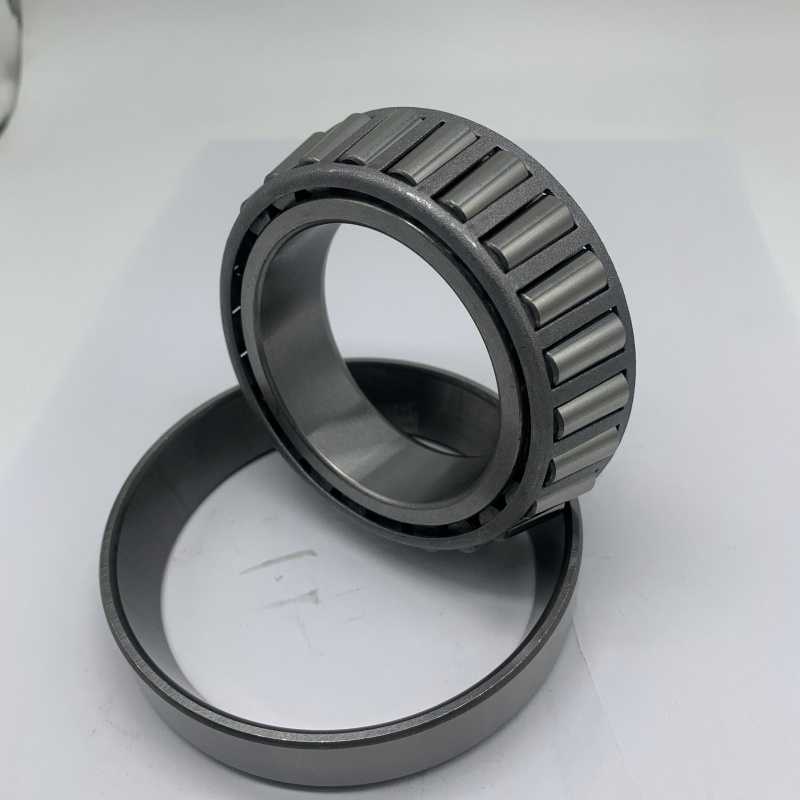
Let me go deep into this topic. I learned it the hard way. A customer in Brazil had bearings failing every two months. The steel was good. The heat treatment was correct. But the surface finish was standard (Ra 0.2µm). We changed to a super-finished bearing (Ra 0.05µm) with the same steel and same lube. The bearing life went from 2 months to 14 months. Only the surface finish changed.
How Surface Finish Affects the Oil Film
Under heavy load, the oil film gets very thin. A typical film thickness is 0.5 to 1 micrometer. That is thinner than a human hair. If the surface has peaks and valleys (roughness), the peaks poke through the oil film. Then metal touches metal. That contact generates heat. The heat thins the oil even more. Then more contact. This is a death spiral.
A super-finished surface has very low peaks. The ratio of film thickness to roughness (lambda ratio) goes above 2. That means the film is twice as thick as the peaks. So full separation happens. No metal contact. No wear.
Lubrication: The Second Line of Defense
Even with a smooth surface, heavy loads can still push through the oil film. That is where extreme pressure (EP) additives help. These additives contain sulfur or phosphorus. At high temperature and pressure, they react with the metal surface. They form a thin, soft chemical layer. This layer sacrifices itself instead of the bearing steel. So the bearing surface stays intact.
For heavy-load wear resistance, I always recommend:
- Viscosity: ISO VG 150 to 460 (thick oil for slow speeds)
- EP additives: Must have (check for GL-4 or GL-5 rating)
- Base oil: Mineral oil is fine. Synthetic oil for high heat (above 100°C)
- Filtering: Keep contamination below 100 microns (use filters)
Here is a simple matching table:
| Load Severity | Recommended Surface Finish (Ra) | Recommended Lubricant |
|---|---|---|
| Light to medium | < 0.2 µm | ISO VG 68, no EP needed |
| Heavy (continuous) | < 0.1 µm | ISO VG 150–220, with EP |
| Very heavy + shock | < 0.05 µm (super-finish) | ISO VG 320–460, with EP |
| High temperature (>100°C) | < 0.1 µm | Synthetic oil (PAO or PAG) with EP |
Do not ignore surface finish. Do not use cheap grease. I have seen too many good bearings die from bad lubrication and rough surfaces. A good bearing with a bad surface is not a good bearing.
How to Select the Right Heavy-Load Bearing for Maximum Wear Life in Your Equipment?
You want the longest possible life. But there are many options.
How do you pick the right bearing without overpaying?
To select the right heavy-load bearing for maximum wear life, first measure your actual contact pressure (not just load). Then choose a bearing with a surface hardness above 60 HRC. Next pick the right internal clearance (C3 or C4) for your heat. Finally match the lubricant viscosity to your speed. If you have contamination, add seals or a harder coating.
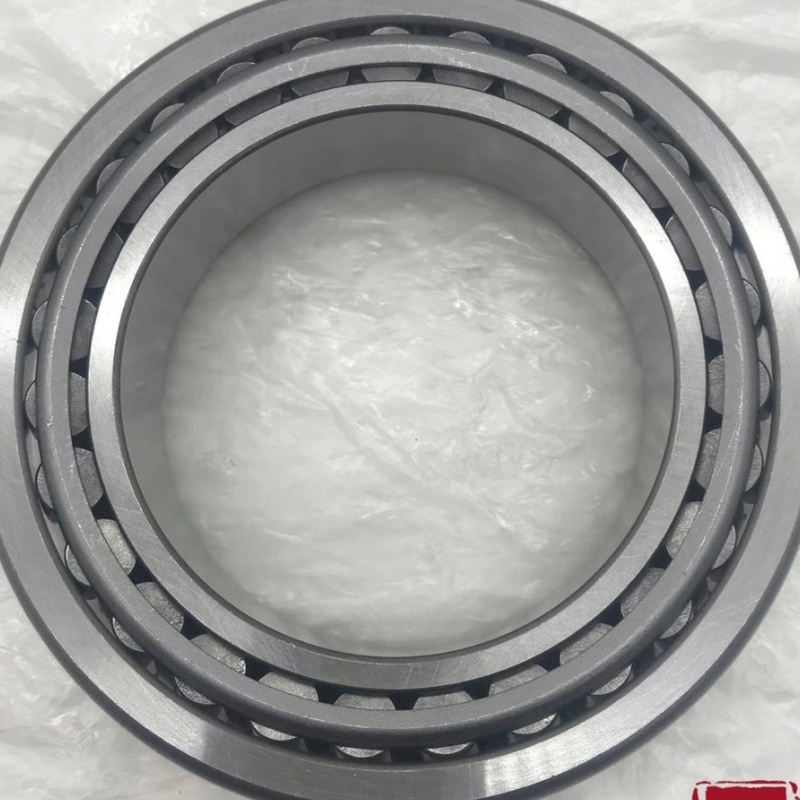
Let me give you my step-by-step method. I use this with customers like Rajesh Kumar in India. He stocks bearings for resale. He needs to give his buyers the right part the first time.
Step 1: Measure the Real Contact Pressure
Do not use the machine’s average load. Find the peak load. Then divide that by the projected contact area of the bearing. A typical heavy-load bearing can handle contact pressure up to 2,500 MPa. If your pressure is near that limit, you need a carburized bearing (not through-hardened). Carburized bearings handle higher pressure without cracking.
Step 2: Pick the Surface Hardness
For normal heavy loads (pressure under 1,500 MPa), 58–60 HRC is fine. For heavy loads with wear risk (pressure 1,500–2,000 MPa), go to 60–62 HRC. For extreme conditions (pressure over 2,000 MPa or contamination), pick 62–64 HRC with a coating. Coated bearings cost more. But they last 3x longer in dirty environments.
Step 3: Choose Internal Clearance
Heavy loads create heat. Heat expands the bearing parts. A standard C0 clearance may go to zero when hot. That means preload and more wear. So for most heavy-load applications, I recommend C3 clearance. For very hot or very shock-loaded machines, pick C4. Here is a simple rule: if your housing feels hot to touch (above 70°C), use C4.
Step 4: Match Lubricant to Speed and Load
Slow speed (<500 RPM) and heavy load needs thick oil (ISO VG 320–460) or grease NLGI 2 with EP. Medium speed (500–1500 RPM) needs ISO VG 150–220. High speed (>1500 RPM) with heavy load is rare. If you have that, use synthetic oil ISO VG 68–100 with EP.
Step 5: Add Wear-Resistant Features Only Where Needed
Not every bearing needs black oxide or super finishing. These features add 20% to 30% to the cost. So use them only when:
- The bearing fails from surface wear (peeling, scratching)
- The environment has contamination
- You need more than 2 years of life in a dirty place
Here is a selection table to help you decide:
| Your Operating Condition | Recommended Bearing Type | Special Features Needed? |
|---|---|---|
| Clean, moderate load, normal temp | Standard through-hardened (58–60 HRC) | No |
| Clean, heavy load, normal temp | Carburized (60–62 HRC) | No |
| Dirty, heavy load, normal temp | Carburized + black oxide or coating | Yes |
| Dirty, shock load, high temp | Carburized + C4 clearance + coating | Yes |
| Steel mill (heat + scale) | Heat-stabilized + TD/DLC coating | Yes |
When you are not sure, email me at sales@fytzbearing.com. Tell me your load, speed, temperature, and contamination level. I will give you a specific model number. I have done this for hundreds of buyers from Pakistan to Russia.
Conclusion
Heavy-load bearings with wear resistance need hard surfaces, smooth finishes, good lubrication, and the right clearance.