
You put a new bearing in a brick plant. Two months later, it is locked up. What went wrong?
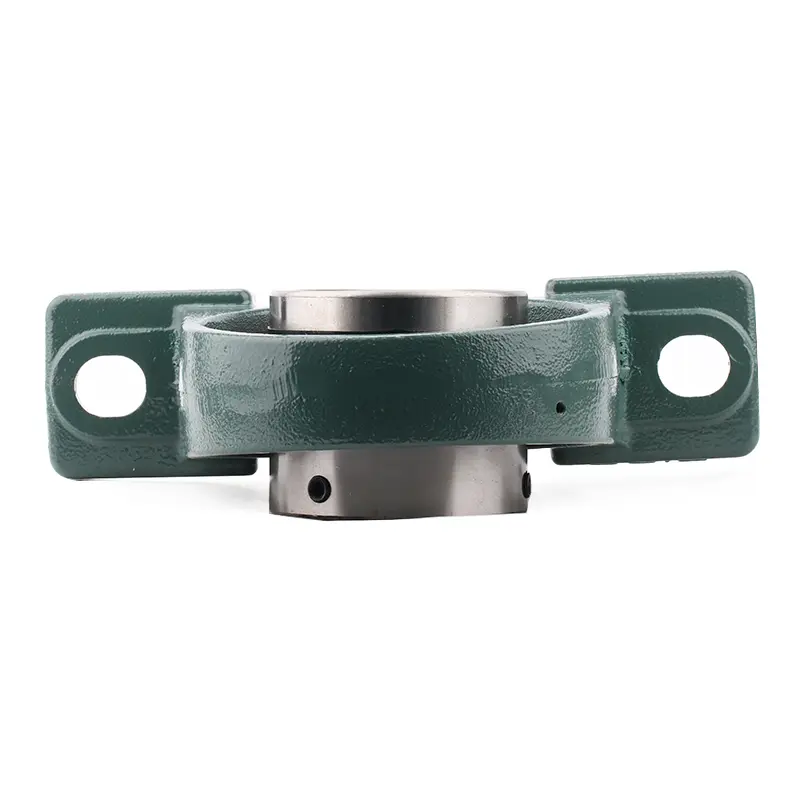
Brick plants destroy bearings faster because of three things: heavy dust, strong vibration, and constant shock loads. Standard bearings cannot handle these conditions. You need heavy duty pillow block bearings with cast iron housings and special seals.

I remember my first visit to a brick plant in India. The buyer showed me a pile of failed bearings. Twenty pieces in just three months. He thought the bearings were bad. But the real problem was something else. Let me explain what kills bearings in brick plants.
Why Brick Plants Destroy Bearings Faster Than Other Factories?
You think a factory is a factory. But brick plants are different. The dust alone is a killer. So why do bearings die so fast here?
Brick plants create fine red dust, strong vibration from block machines, and shock loads from heavy bricks. This mix gets into seals, dries out grease, and cracks housings. No other factory puts bearings through this much abuse.
Dive deeper Paragraph:
I get calls from brick plant owners in Egypt, Brazil, and Indonesia. They all say the same thing. "My bearings do not last." Let me break down why brick plants are so hard on bearings.
The dust problem
Brick dust is not like normal dust. It is very fine. It is also hard and sharp. When it gets into a bearing, it works like sandpaper. (https://www.machinerylubrication.com/Read/288/grease-contamination)
But here is the real problem. Brick dust contains silica. (https://www.osha.gov/silica-crystalline) Silica is harder than steel. When silica dust gets between the balls and the raceway, it cuts into the metal. You cannot stop this with standard seals. (https://www.skf.com/group/products/seals/principles-of-sealing)
I tested this in our factory. We ran two bearings side by side. One in clean air. One in brick dust. The brick dust bearing failed in one third of the time. (https://www.ntn-snr.com/support/technical-resources)
The vibration problem
Block machines vibrate. They vibrate a lot. That vibration does two bad things to bearings. (https://www.machinerylubrication.com/Read/296/vibration-analysis-bearings)
First, vibration loosens set screws. (https://www.engineeringtoolbox.com/set-screws-d_1436.html) When the set screw comes loose, the bearing spins on the shaft. The shaft wears down. Then you need a new shaft and a new bearing. (https://www.skf.com/group/products/rolling-bearings/principles/bearing-failure-and-how-to-prevent-it)
Second, vibration causes false brinelling. (https://www.ntn-snr.com/support/bearing-failure-analysis) That is a fancy word for a simple problem. When a bearing sits still but vibrates, the balls eat small dents into the raceway. These dents make noise. They also cause early failure. (https://www.timken.com/resources/bearing-damage-analysis/)
The shock load problem
Bricks are heavy. A single brick weighs 2 to 4 kilos. A pallet of bricks weighs over 1,000 kilos. When that pallet drops onto a conveyor, the bearing takes a shock load.
Standard bearings do not like shock loads. The balls can crack. The raceway can dent. The housing can break.
Comparing brick plants to other factories
| Condition | Car factory | Food factory | Brick plant |
|---|---|---|---|
| Dust level (https://www.machinerylubrication.com/Read/288/grease-contamination) | Low | Low | Very high |
| Vibration (https://www.machinerylubrication.com/Read/296/vibration-analysis-bearings) | Low | Low | High |
| Shock loads (https://www.skf.com/group/products/rolling-bearings/principles/loads) | Low | Low | High |
| Water (https://www.machinerylubrication.com/Read/301/water-contamination-oil) | Medium | High (washdown) | Low |
| Heat (https://www.skf.com/group/products/rolling-bearings/principles/operating-temperature) | Low | Medium | Medium to high |
As you can see, brick plants are unique. They have high dust, high vibration, and high shock loads all at the same time.
My advice for brick plant bearings
You cannot use standard bearings in a brick plant. Here is what you need:
- Cast iron housing (not pressed steel)
- Labyrinth seals (not rubber lip seals)
- Adapter sleeve locking (not set screws)
- Wider bearing for more load capacity
- Regular greasing once a week
I have a customer in Vietnam. He switched to our heavy duty pillow block bearings with labyrinth seals. His bearing life went from 3 months to 18 months. That is real saving.
The Best Bearing Housing Material for Block Machines Under Vibration?
You have a block machine. It shakes the whole building. Your bearing housings keep cracking. What material can take this abuse?
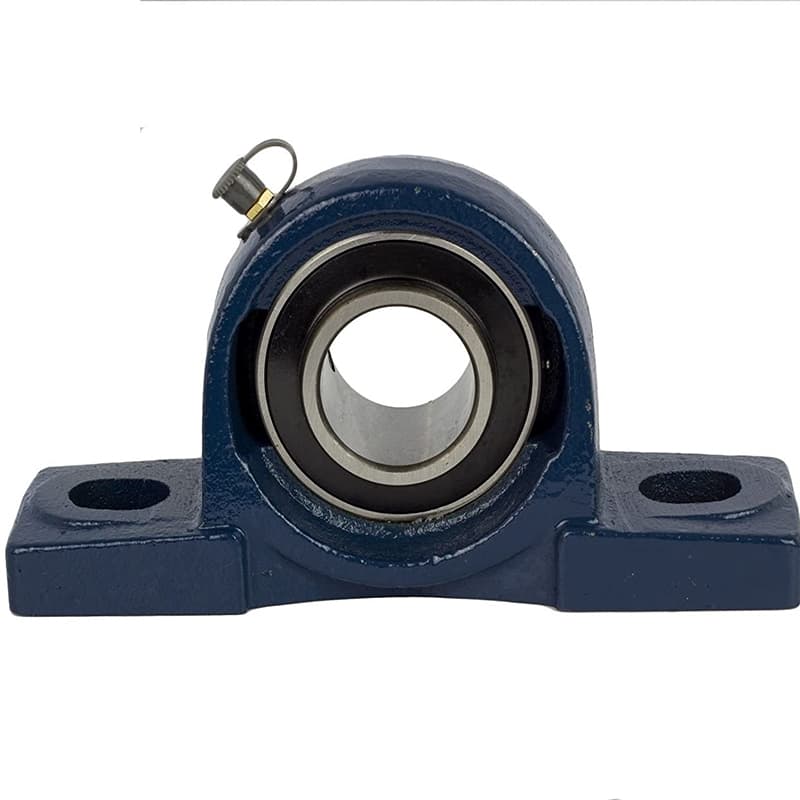
Cast iron is the best housing material for block machines under vibration. Pressed steel flexes and cracks. Cast iron stays rigid. For very high vibration, use ductile iron. It bends a little but does not break.
Dive deeper Paragraph:
A customer in Turkey called me last year. His block machine kept cracking pressed steel housings. He was replacing them every six weeks. I asked him to send me photos. The housings were bent like bananas.
Let me explain why housing material matters for vibration.
Pressed steel housings
These are made from sheet metal. They are stamped into shape. They are cheap and light.
Good for: Light duty, clean factories, low vibration
Bad for: Block machines, brick plants, any strong vibration
The problem with pressed steel is simple. It flexes. When the block machine vibrates, the housing moves. That movement changes the bearing alignment. The bearing gets side loaded. Then it fails.
I have seen pressed steel housings crack right down the middle. The two halves separate. The bearing falls out.
Cast iron housings (standard gray iron)
These are made by pouring molten iron into a mold. (https://www.britannica.com/technology/cast-iron) They are heavy and strong.
Good for: Most block machines, brick conveyors, medium vibration (https://www.machinerylubrication.com/Read/296/vibration-analysis-bearings)
Bad for: Extreme vibration, shock loads that can crack iron (https://www.skf.com/group/products/rolling-bearings/principles/loads)
Cast iron is rigid. It does not flex. The bearing stays aligned. That is good. But cast iron is also brittle. A big shock can crack it. (https://www.engineeringtoolbox.com/cast-iron-d_946.html)
Ductile iron housings
This is a special type of cast iron. It has a little bit of magnesium added. That changes the structure. The iron becomes less brittle.
Good for: High vibration, shock loads, heavy block machines
Bad for: Budget projects (costs more than standard cast iron)
Ductile iron bends a little before it breaks. That is perfect for block machines. The housing can absorb small shocks without cracking.
Stainless steel housings
These are made from stainless steel. They are very strong. They also do not rust.
Good for: Wet areas, washdown, corrosive environments
Bad for: Most brick plants (too expensive, not needed)
Quick comparison table
| Housing material | Rigidity | Shock resistance | Vibration resistance | Cost |
|---|---|---|---|---|
| Pressed steel (https://www.engineeringtoolbox.com/steel-properties-d_793.html) | Low | Low | Poor | Low |
| Gray cast iron (https://www.britannica.com/technology/cast-iron) | High | Medium | Good | Medium |
| Ductile iron (https://www.engineeringtoolbox.com/ductile-iron-d_945.html) | Medium-high | High | Very good | Medium-high |
| Stainless steel (https://www.engineeringtoolbox.com/stainless-steel-d_962.html) | High | High | Very good | High |
My recommendation for block machines
For most block machines, I recommend gray cast iron housings. They are strong enough. They cost less than ductile iron.
But if your block machine has very strong vibration, or if you keep cracking cast iron housings, then switch to ductile iron. It costs about 30% more. But it lasts much longer.
I remember a customer in Bangladesh. His block machines were old. They shook like crazy. He broke three cast iron housings in one month. He switched to ductile iron. The first housing is still running after eight months.
One more thing about mounting
Vibration loosens bolts. Check your housing bolts every week. Use locking washers or thread locker. A loose housing cracks faster than a tight one.
How to Choose Seals for Construction Material Lines Full of Dust and Mud?
You run a construction material line. Sand, cement, and mud are everywhere. Your bearing seals cannot keep them out. So which seal actually works?
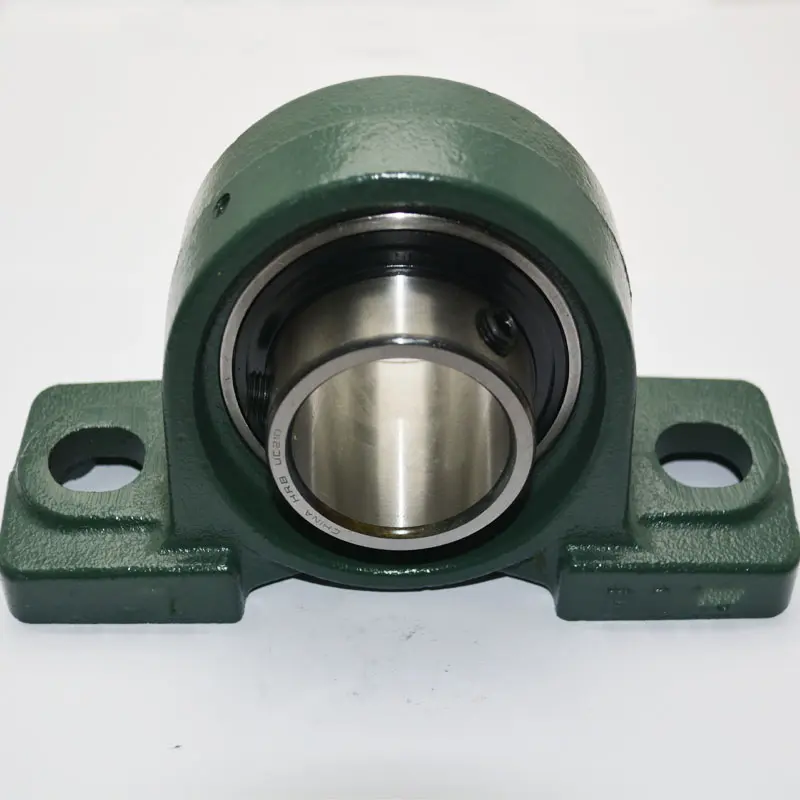
For dust and mud, choose a labyrinth seal with a felt ring. The labyrinth stops fine dust. The felt ring stops mud and water. Single lip seals will fail in days. Triple lip seals last weeks. Labyrinth with felt lasts months.
Dive deeper Paragraph:
I talk to concrete plant owners all the time. Their biggest headache is seals. They try one type. It fails. They try another. It also fails. They think all seals are useless.
The problem is not seals. The problem is picking the wrong seal for the job.
What makes construction dust so hard on seals?
Construction dust is not one thing. It is a mix of sand, cement, limestone, and dirt. Each one attacks the seal differently.
| Contaminant | What it does | How it gets in |
|---|---|---|
| Sand (https://www.machinerylubrication.com/Read/288/grease-contamination) | Grinds the rubber seal | Pushed in by shaft rotation (https://www.skf.com/group/products/seals/principles-of-sealing) |
| Cement powder (https://www.cement.org/cement-concrete-applications) | Hardens into a rock | Absorbs moisture and clogs everything (https://www.machinerylubrication.com/Read/301/water-contamination-oil) |
| Mud (https://www.machinerylubrication.com/Read/301/water-contamination-oil) | Dries and locks the seal | Splashes from wet ground |
| Fine limestone dust (https://www.britannica.com/science/limestone) | Flows like liquid | Goes through tiny gaps (https://www.skf.com/group/products/seals/principles-of-sealing) |
Standard rubber lip seals
These are the most common seals. They have one, two, or three rubber lips touching the shaft.
Single lip: Fails in days in construction dust
Double lip: Fails in one to two weeks
Triple lip: Fails in three to six weeks
Why do they fail? Because construction dust eats rubber. The sand grinds the lips down. The cement dries them out. Soon there is no lip left.
Labyrinth seals
These have no rubber lips. Instead, they have a long, twisting path. The shaft and housing have interlocking rings. Dust has to turn many corners to get inside.
Good for: Dry dust, sand, cement powder
Bad for: Mud, wet conditions, water
Labyrinth seals work very well for dry construction dust. But they are not good for mud. Mud can get stuck in the labyrinth path.
Labyrinth with felt ring
This is my top choice for construction material lines. It has a labyrinth path plus a felt ring. The labyrinth stops the dry dust. The felt ring stops the mud and water.
Good for: Mixed conditions (dust + mud), most construction sites
Bad for: Very wet conditions (felt gets soggy)
V-ring seals
These are rubber rings that press against the housing face. They spin with the shaft. They push dirt away from the bearing.
Good for: As an extra seal on top of another seal
Bad for: As the only seal
My seal recommendation by material type
| Material on your line | Best seal type | Why |
|---|---|---|
| Dry sand and cement (https://www.machinerylubrication.com/Read/288/grease-contamination) | Labyrinth (https://www.skf.com/group/products/seals/industrial-seals/labyrinth-seals) | No rubber to grind down |
| Wet mud and clay (https://www.machinerylubrication.com/Read/301/water-contamination-oil) | Labyrinth + felt (https://www.ntn-snr.com/support/technical-resources) | Felt stops mud |
| Mixed dry and wet | Labyrinth + felt (https://www.skf.com/group/products/seals/industrial-seals/labyrinth-seals) | Best of both |
| Very fine dust (https://www.britannica.com/science/dust) | Labyrinth with long path (https://www.skf.com/group/products/seals/principles-of-sealing) | More corners to turn |
| Pressure washing (https://www.machinerylubrication.com/Read/301/water-contamination-oil) | Contact seal with stainless steel (https://www.skf.com/group/products/seals) | Tightest barrier |
A real example from Egypt
A customer in Egypt runs a concrete block line. He used triple lip seals. They lasted four weeks. He switched to labyrinth seals with felt rings. They lasted eight months. He called me to say thank you.
One more tip
No seal works forever in construction dust. Plan to replace seals every six to twelve months. That is normal. Also add fresh grease every week. The grease pushes out old dirty grease and contaminants.
Load Rating vs. Speed: What Matters More for Brick Conveyors?
You look at a bearing catalog. You see load ratings and speed ratings. Which one should you focus on for brick conveyors? Both matter. But one matters much more.
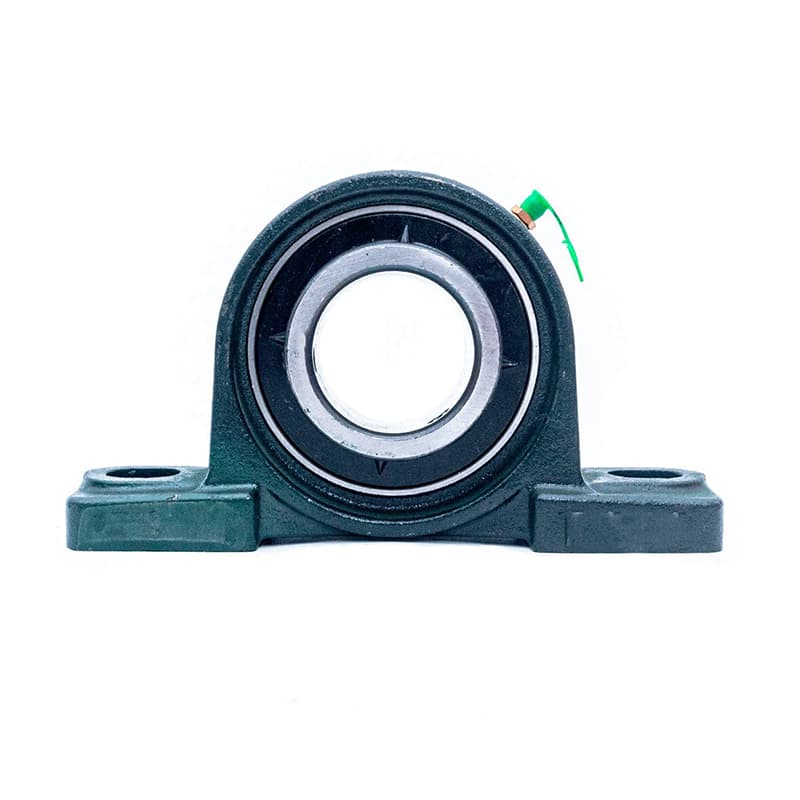
For brick conveyors, load rating matters more than speed. Brick conveyors run slow. But they carry heavy loads. Focus on dynamic load rating (C) and static load rating (C0). Ignore speed ratings for most brick plants.
Dive deeper Paragraph:
I see this mistake all the time. A buyer picks a bearing based on speed. He thinks faster is better. But brick conveyors are slow. They move at 10 to 30 meters per minute. Speed is not the problem.
The problem is load. Brick conveyors carry heavy pallets. Each pallet weighs hundreds of kilos. The bearing must support that weight all day, every day.
Load rating explained simply
Every bearing has two load ratings.
Dynamic load rating (C): This tells you how much weight the bearing can handle while spinning. This is the number you use for normal conveyor work.
Static load rating (C0): This tells you how much weight the bearing can handle when stopped. This matters for shock loads and starting torque.
Here is a simple rule. For brick conveyors, pick a bearing with a dynamic load rating that is at least double your actual load. That gives you a safety margin for shock loads.
Speed rating explained simply
Speed rating tells you how fast the bearing can spin before it overheats. Most pillow block bearings can handle 3,000 to 5,000 RPM.
But brick conveyors spin at 50 to 200 RPM. That is nothing. You are using maybe 5% of the speed rating. So do not worry about speed.
Comparing load and speed for brick plants
| Factor | Importance for brick conveyor | Why |
|---|---|---|
| Dynamic load rating (https://www.skf.com/group/products/rolling-bearings/principles/bearing-selection/bearing-life) | Very high | Heavy pallets create high radial loads (https://www.skf.com/group/products/rolling-bearings/principles/loads) |
| Static load rating (https://www.ntn-snr.com/support/technical-resources) | High | Shock loads when pallets drop (https://www.timken.com/resources/engineering-manual/) |
| Speed rating (https://www.skf.com/group/products/rolling-bearings/principles/speed) | Very low | Brick conveyors run slow |
| Limiting speed (https://www.skf.com/group/products/rolling-bearings/principles/speed) | Very low | You will never reach the limit |
How to choose the right load rating
Step one: Calculate your actual load. How much weight is on each bearing? For a conveyor with four bearings, divide the total weight by four.
Step two: Add a safety factor. For brick plants, I use a factor of 2 to 3. Brick plants have shock loads. Dust increases friction. Vibration adds stress.
Step three: Look up the dynamic load rating (C) in the bearing catalog. Pick a bearing where C is higher than your adjusted load.
A real example
A customer in Pakistan has a brick conveyor. Each pallet weighs 800 kilos. The conveyor has four bearings. Each bearing carries 200 kilos.
He adds a safety factor of 2.5 for shock loads. Each bearing needs a dynamic load rating of 500 kilos (200 x 2.5).
He picked a bearing with C = 1,200 kilos. That is more than enough. The bearings have been running for two years with no failure.
My advice for brick conveyor bearings
- Focus on load rating, not speed rating
- Use a safety factor of 2 to 3 for brick plants
- Pick a wider bearing for more load capacity
- Choose a bearing with a cast iron housing for shock loads
One more thing. Do not undersize your bearings. A bigger bearing costs more upfront. But a failed bearing costs more in downtime and labor. I always tell my customers to go one size up from what they think they need.
Conclusion
Brick plants need heavy duty bearings. Use cast iron housings. Pick labyrinth seals. Focus on load rating. Grease them every week.
