
You need a bearing that spins smooth and quiet. But most bearings you find are loose and noisy. Where do you get real precision?
High-precision rotational components are bearings and parts made to exact tolerances. They use precision classes like P5 and P6. These parts have tighter limits on size, runout, and noise. They cost more but last longer and run smoother.
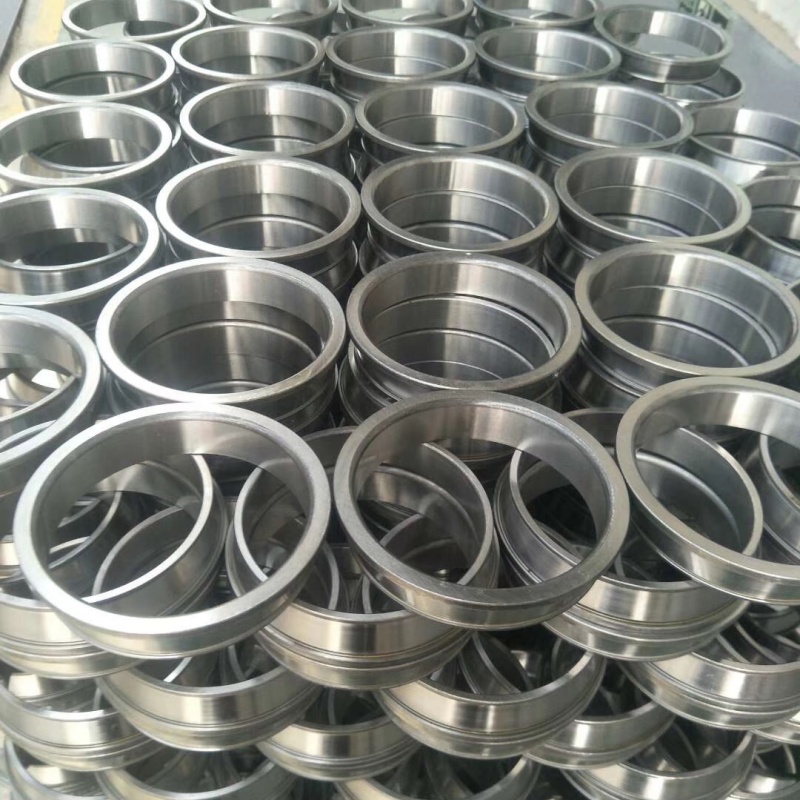
I have worked with bearing buyers for over ten years at FYTZ Bearing. One question comes up again and again. "Why do I need high precision? My machine runs fine with standard parts." Let me show you the real answer.
What Exactly Are High-Precision Rotational Components?
You see the words "high precision" on every bearing website. But what does that actually mean? Is it just marketing talk or something real?
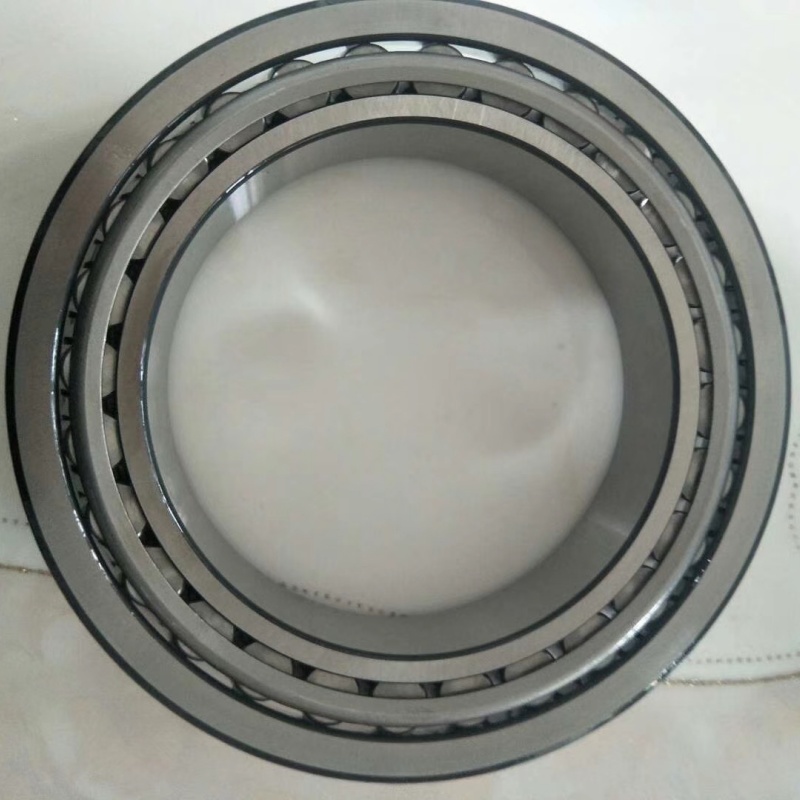
High-precision rotational components are parts made to stricter international standards. They have tighter bore tolerances, lower noise limits, and better roundness. The main classes are P0 (standard), P6 (better), P5 (high), and P4 (ultra high).
Dive deeper Paragraph:
A customer in Turkey called me last year. He bought standard bearings from a cheap supplier. His machines made noise. They vibrated. He thought the machine was bad. The real problem was the bearing precision.
Let me explain what precision means in bearing terms.
The basic idea of bearing precision
A bearing has several dimensions. The bore size. The outer diameter. The width. The roundness. The surface finish. (https://www.skf.com/group/products/rolling-bearings/principles/bearing-selection)
A standard bearing (P0) has allowed errors. (https://www.iso.org/standard/58891.html) For a 20mm bore, the error can be 0 to -0.010mm. That means the bore can be 20.00mm down to 19.99mm. That is fine for a fan or a conveyor.
A high precision bearing (P5) has tighter errors. (https://www.ntn-snr.com/support/technical-resources) For the same 20mm bore, the error is only 0 to -0.006mm. That is almost half the error. The bearing fits tighter on the shaft. It runs truer.
The different precision classes explained
Here is a simple breakdown of the main precision classes:
| Class | Old name | Error level | Best for | Cost level |
|---|---|---|---|---|
| P0 (Normal) (https://www.skf.com/group/products/rolling-bearings/principles/bearing-selection) | ABEC 1 (https://www.americanbearings.org/page/abec-scale) | Standard | Fans, conveyors, farm machines | Low |
| P6 (https://www.ntn-snr.com/support/technical-resources) | ABEC 3 (https://www.americanbearings.org/page/abec-scale) | Better than standard | Pumps, gearboxes, general industry | Low-medium |
| P5 (https://www.skf.com/group/products/rolling-bearings/high-precision-bearings) | ABEC 5 (https://www.americanbearings.org/page/abec-scale) | High | Machine tools, motors, spindles | Medium |
| P4 (https://www.skf.com/group/products/rolling-bearings/high-precision-bearings) | ABEC 7 (https://www.americanbearings.org/page/abec-scale) | Ultra high | Precision spindles, aerospace | High |
What gets measured for precision?
When we make a P5 bearing at FYTZ, we check many things. Here are the most important ones:
Bore tolerance: How close the inner hole is to the target size.
Outer diameter tolerance: How close the outside is to the target size.
Runout (inner and outer): How much the bearing wobbles when it spins. This is the most important for smooth running.
Width tolerance: How consistent the bearing height is.
Surface finish: How smooth the raceways are. Smoother means less noise.
Noise level: High precision bearings are tested for vibration and noise.
A real example from my work
A customer in Brazil makes electric motors. He used P0 bearings. His motors were noisy. Customers complained. He switched to P6 bearings. The noise dropped by 40%. He then tried P5 bearings on his high end motors. The noise dropped another 30%.
He paid 25% more for P5 bearings. But he sold his motors for 15% more. That is good business.
Do you need high precision?
Ask yourself these three questions:
- Does your machine need to run very quiet?
- Do you need very low vibration?
- Does the shaft spin over 5,000 RPM?
If you answer yes to any question, you need at least P6. For high speed or high value machines, go with P5.
Why Precision Class P5 and P6 Matter for Your Machinery?
You think standard bearings are good enough. But your machine vibrates. It makes noise. It wears out fast. Could the precision class be the problem?
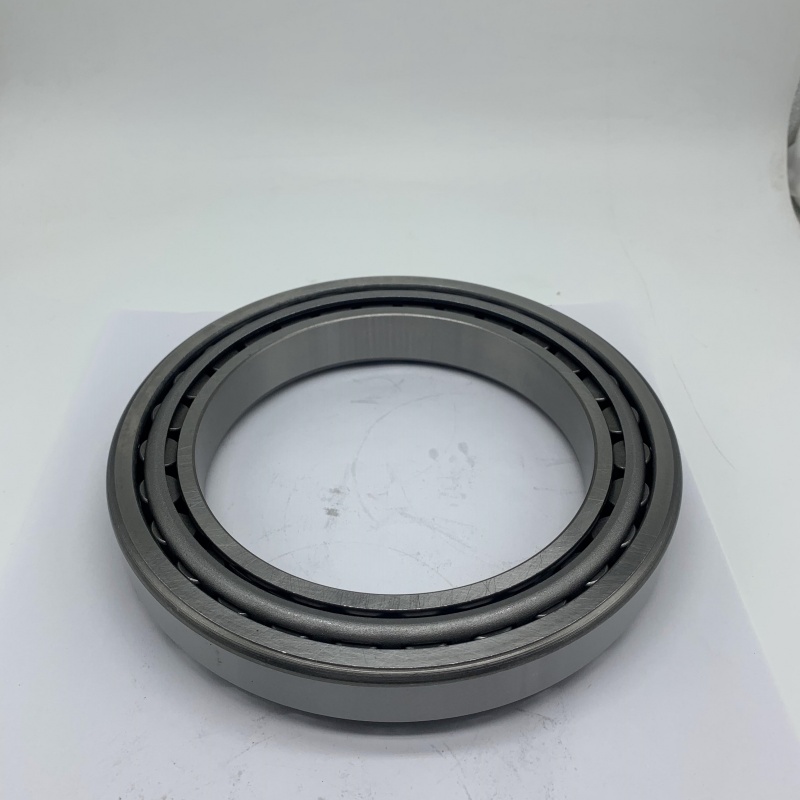
P5 and P6 matter because they reduce vibration and heat. Lower vibration means less noise and longer machine life. P5 bearings have 50% less runout than P0 bearings. That difference shows up in every rotation.
Dive deeper Paragraph:
I remember a customer in Indonesia. He imported standard bearings for his textile machines. The machines vibrated so much that the frames cracked. He blamed the machine maker. But the machine maker used P5 bearings in their factory tests. The problem was his cheap P0 bearings.
Let me show you why precision matters.
Runout is the real killer
Runout means the bearing is not perfectly round. When it spins, the shaft moves up and down. That movement is called runout.
For a P0 bearing, runout can be up to 0.010mm. For a P5 bearing, runout is only 0.005mm. That sounds small. But at 3,000 RPM, that tiny wobble becomes a big vibration.
Here is what runout causes:
| Problem | What happens | How it hurts |
|---|---|---|
| Vibration (https://www.machinerylubrication.com/Read/296/vibration-analysis-bearings) | Machine shakes | Other parts wear faster |
| Noise (https://www.skf.com/group/products/rolling-bearings/principles/noise-and-vibration) | Bearing makes sound | Poor work environment |
| Heat (https://www.machinerylubrication.com/Read/287/bearing-failure-causes) | Friction increases | Grease breaks down |
| Poor surface finish (https://www.engineeringtoolbox.com/surface-roughness-d_799.html) | Machined parts are rough | Product quality drops |
| Early failure (https://www.ntn-snr.com/support/bearing-failure-analysis) | Bearing dies young | More downtime |
Heat generation
A bearing that is not precise creates more friction. More friction creates more heat. Heat kills grease. Dry grease kills bearings.
I tested two bearings in our lab. Same size. Same load. Same speed. One was P0. One was P5. After one hour, the P0 bearing was 15°C hotter than the P5 bearing. That heat difference adds up over a 10 hour shift.
Noise levels
Many customers come to me for quiet bearings. They make medical devices, office equipment, or home appliances. Noise is a big deal for them.
P5 bearings are tested for noise. We put them in a soundproof room. We listen for any irregular sound. P0 bearings are not tested this way. They can be noisy and still pass.
Speed capability
Higher precision bearings can spin faster. Why? Because they have less internal friction and better roundness.
For a standard P0 bearing, the maximum speed is around 80% of the catalog limit. For P5, you can run at 100% of the limit. For high speed applications like spindles, you need P5 or even P4.
My advice for choosing precision class
What I tell my customers
Do not buy P5 for everything. It costs too much. But do not use P0 for precision work. It will fail fast. Match the precision class to your real need.
If you are not sure, start with P6. It is the best value for most machines. You get 70% of the benefit of P5 for only 15% more cost than P0.
Deep Groove Ball Bearings vs. Taper Roller Bearings for Precision Applications?
You need a precision bearing. But which type? Deep groove ball bearings and taper roller bearings both come in high precision. So how do you choose between them?
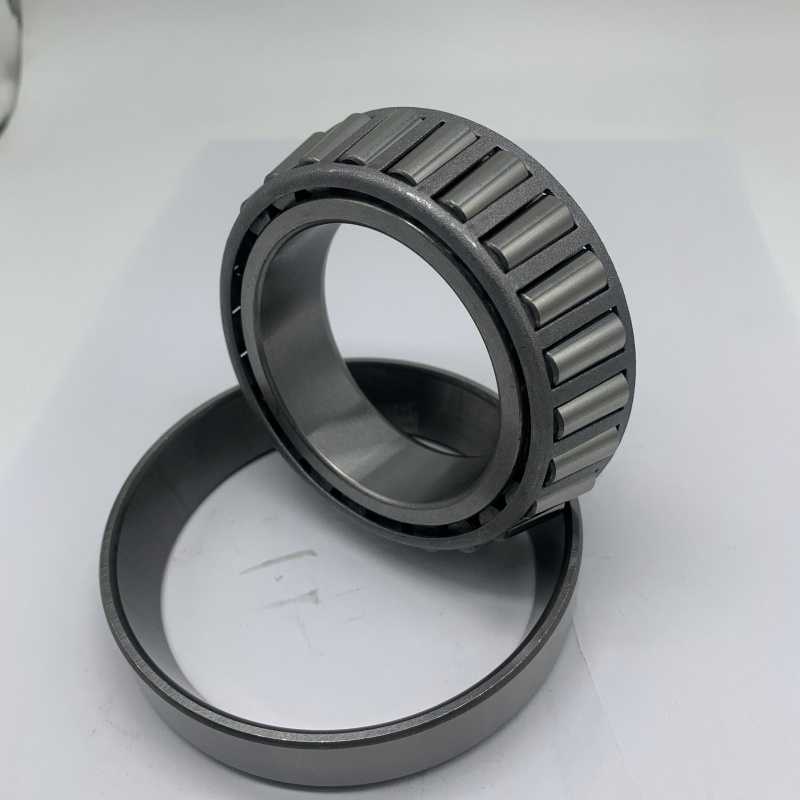
Deep groove ball bearings are best for high speed and low noise. Taper roller bearings are best for heavy loads and combined forces. For most precision applications under 5,000 RPM, deep groove ball bearings win. For gearboxes and wheels, taper rollers are better.
Dive deeper Paragraph:
A customer in Pakistan asked me this question last month. He makes gearboxes. He was using deep groove bearings. They kept failing. I asked him about the load. He had heavy axial loads. Deep groove bearings are not good for heavy axial loads. He needed taper roller bearings.
Let me explain the difference.
Deep groove ball bearings
These are the most common bearings in the world. They have simple round balls between two raceways.
Good for:
- High speed (up to 20,000 RPM or more)
- Low noise and low vibration
- Radial loads (pushing down on the shaft)
- Light to medium axial loads (pushing along the shaft)
Bad for:
- Heavy axial loads
- Shock loads
- Very stiff requirements
In precision classes P5 and P6, deep groove ball bearings are excellent. They run very quiet. They create little heat. I recommend them for motors, fans, pumps, and spindles.
Taper roller bearings
These bearings have tapered rollers and tapered raceways. The rollers touch the raceways along a line, not a point.
Good for:
- Heavy radial loads
- Heavy axial loads (in one direction)
- Combined loads (radial and axial at the same time)
- High stiffness (they do not flex much)
Bad for:
- Very high speed (they make heat)
- Reverse axial loads (you need two bearings back to back)
- Low noise (they are louder than ball bearings)
In precision classes, taper roller bearings are used for gearboxes, wheel hubs, and machine tool spindles that need high stiffness.
Comparison table
| Feature | Deep groove ball | Taper roller |
|---|---|---|
| Maximum speed | Very high NSK | Medium FTM |
| Noise level | Very low Schaeffler | Medium to high FTM |
| Radial load capacity | Good NSK | Excellent FTM |
| Axial load capacity | Light to medium NSK | Excellent (one way) FTM |
| Stiffness | Medium Schaeffler | High FTM |
| Cost (precision class) | Lower | Higher |
| Typical precision class | P5, P6, P4 | P5, P6 |
How to choose for your application
Choose deep groove ball bearings when:
- Your shaft spins over 5,000 RPM
- You need very low noise
- Your loads are mostly radial (weight pushing down)
- You have light or no axial loads
- You want lower cost
Choose taper roller bearings when:
- Your shaft spins under 3,000 RPM
- You have heavy axial loads (pushing along the shaft)
- You have both radial and axial loads at the same time
- You need high stiffness (no flexing)
- Your machine has gearboxes or wheels
A real example
I work with a customer in Russia. He makes precision machine tools. His main spindle uses P4 deep groove ball bearings. The spindle runs at 15,000 RPM. It needs low heat and low runout.
His gearbox uses P5 taper roller bearings. The gearbox runs at 2,000 RPM. It needs to handle high thrust loads from the gears. Taper roller bearings are perfect for this.
My simple rule
Ask one question. Do you have heavy axial (push) loads? If yes, look at taper roller bearings. If no, deep groove ball bearings are probably better.
For 80% of precision applications, deep groove ball bearings in P5 or P6 are the right choice. They are simpler, cheaper, and easier to find.
How to Verify Rotational Accuracy Before You Buy?
You see a bearing labeled "P5." But how do you know it is real? Anyone can print P5 on a box. How do you check before you spend your money?
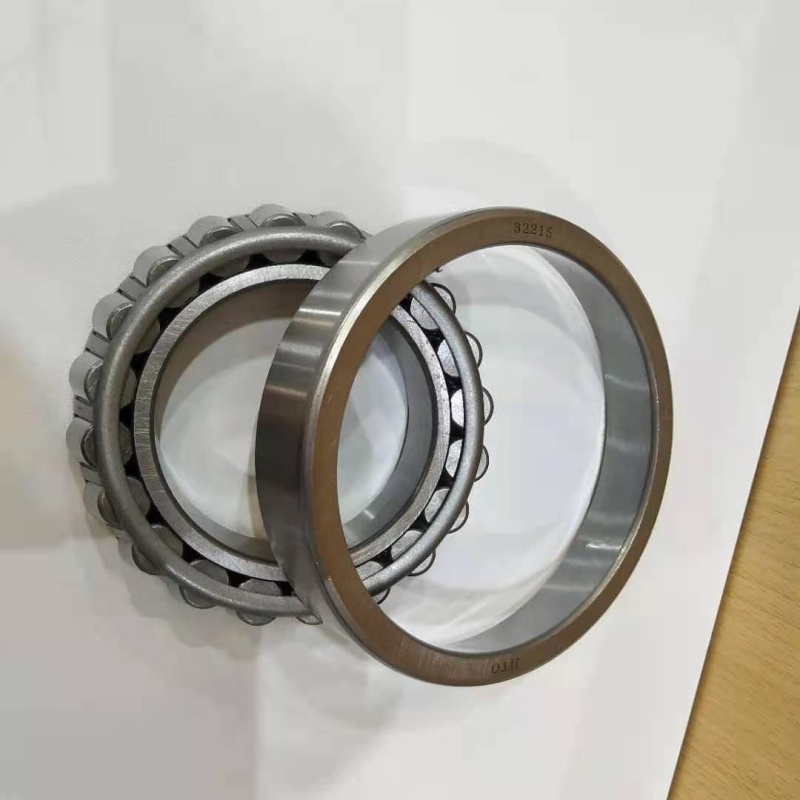
Ask for the inspection report. Check the bore tolerance, outer diameter tolerance, and runout numbers. Compare them to ISO standards. Also check the noise test results. Real P5 bearings come with real test data from the factory.
Dive deeper Paragraph:
I have seen fake precision bearings. A customer in India bought "P5" bearings from an online marketplace. They were actually P0 bearings in a fake box. He lost money and time.
Let me show you how to verify real precision.
Step 1: Ask for the inspection report
Every real precision bearing comes with an inspection report. This report lists the actual measurements from the factory.
Ask your supplier for this report before you pay. If they cannot provide it, walk away.
Here is what to look for on the report:
| Measurement | P0 standard | P6 standard | P5 standard | What to check |
|---|---|---|---|---|
| Bore tolerance (d) | 0 to -10 µm ISO 492 | 0 to -9 µm ISO 492 | 0 to -7 µm ISO 492 | Should be negative, not positive |
| Outer diameter (D) | 0 to -11 µm ISO 492 | 0 to -10 µm ISO 492 | 0 to -8 µm ISO 492 | Should be negative |
| Inner ring runout (Kia) | Max 10 µm SKF tolerances | Max 6 µm SKF tolerances | Max 4 µm SKF tolerances | Smaller is better |
| Outer ring runout (Kea) | Max 15 µm SKF tolerances | Max 10 µm SKF tolerances | Max 6 µm SKF tolerances | Smaller is better |
| Width tolerance | ±120 µm ISO 492 | ±100 µm ISO 492 | ±50 µm ISO 492 | Tight is good |
Step 2: Check the markings on the bearing
Real precision bearings have the precision class marked on them. Look for P5 or P6 on the bearing itself, not just the box.
But be careful. Fake bearings can also have fake markings. The marking is not proof by itself.
Step 3: Look at the surface finish
Hold the bearing under a bright light. Look at the raceways. A real P5 bearing has a very smooth, shiny surface. You should see no grinding marks.
A P0 bearing has a duller finish. You can often see spiral lines from grinding. That is normal for P0 but not acceptable for P5.
Step 4: Spin the bearing by hand
Hold the bearing in your hand. Spin the inner ring slowly. Feel for roughness or bumps.
A real precision bearing spins smooth. There is no gritty feeling. A cheap bearing often feels rough. That rough feeling means poor surface finish.
Step 5: Listen to the bearing
Put the bearing to your ear. Spin it faster. A P5 bearing makes a smooth, consistent sound. A P0 bearing might make a rattling or irregular sound.
I do this test every day at FYTZ. My ears can tell the difference in seconds. You can learn to do it too.
Step 6: Check the supplier
This is the most important step. Buy from a trusted supplier. At FYTZ Bearing, we test every precision bearing before it leaves the factory. We keep the inspection reports on file. We can send you a copy.
Ask your supplier these questions:
- Do you test every bearing or just random samples?
- Can you send me the actual measurement report for my batch?
- Do you have a noise tester in your factory?
- What is your return policy for bearings that do not meet spec?
Red flags to watch for
| Red flag | What it means |
|---|---|
| Price is too low (50% below market) | Likely fake or used bearings |
| No inspection report available | Factory does not test |
| Supplier cannot answer technical questions | They are just resellers |
| Long delivery time for "stock" items | They are sourcing after you order |
| No returns accepted | They know the quality is poor |
What I recommend to my customers
Buy a sample first. Order five pieces. Test them yourself. Measure the bore and outer diameter. Check the runout. Listen to them spin.
If the sample is good, then order the full quantity. This small test costs very little. But it saves you from getting a whole container of bad bearings.
At FYTZ, we welcome sample orders. We want you to see our quality before you buy big. That is how we build trust.
Conclusion
Precision bearings need real P5 or P6 grades. Check the inspection report. Match the type to your load and speed. Buy from a trusted factory.