
You buy a batch of bearings. They look fine. But after installation, the motor runs hot. The noise is loud. You check the rings. The bore is too small. The outer ring is not round. You lost time and money.
The key inspection items for deep groove ball bearing inner and outer rings are: bore diameter, outer diameter, and width tolerances (dimensional accuracy); roundness, radial runout, and wall thickness consistency (geometric precision); surface roughness, grinding marks, and visual defects (surface quality); and hardness, microstructure, and crack detection (material integrity).
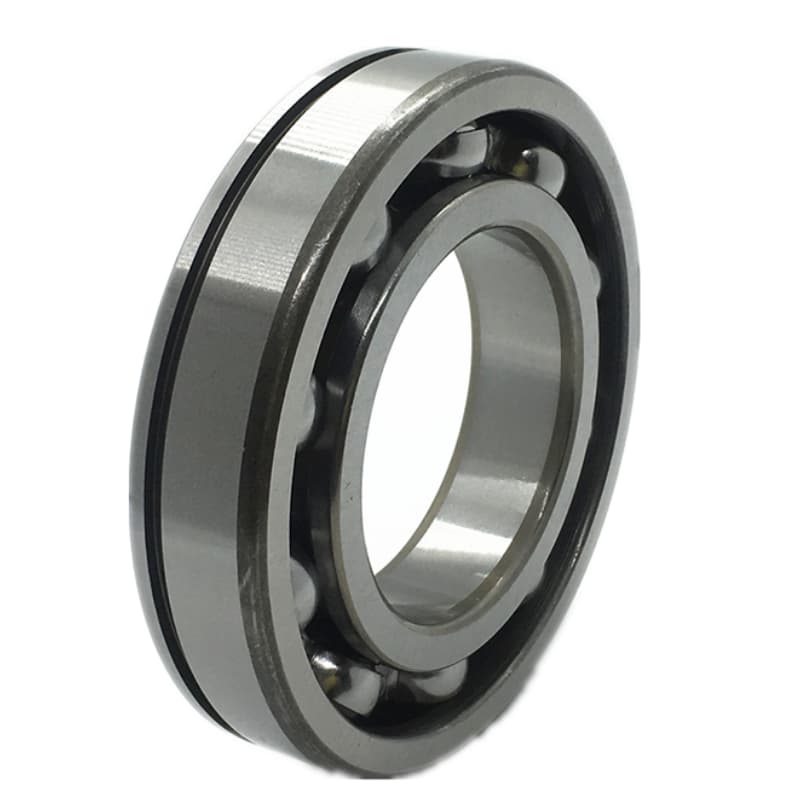
I am Leo from FYTZ Bearing. My factory has a full inspection lab. We check every batch of rings before assembly. I have seen too many bad rings from other suppliers. Let me show you what to check. This will help you avoid buying bad bearings.
What Is Dimensional Accuracy for Bearing Rings and Why Does It Matter?
You measure the bore of a bearing. It is supposed to be 20 mm. You measure 19.98 mm. That is too tight. The shaft will not fit. Or you have to hammer it in. Then the bearing is damaged before it even runs.
Dimensional accuracy for bearing rings means the bore (inner diameter), outer diameter, and width must be within specified tolerances (e.g., P0, P6, P5). For a 6204 bearing, the bore tolerance for P0 is 0 to −0.010 mm. If the bore is too small, the bearing will not mount. If too large, it will spin on the shaft and wear the shaft. Standard bearing‑tolerance tables show that P0‑class 6204 inner‑diameter tolerances are around 0 to −0.010 mm, and tight dimensional control is critical for proper fit and life [web:743][web:740].
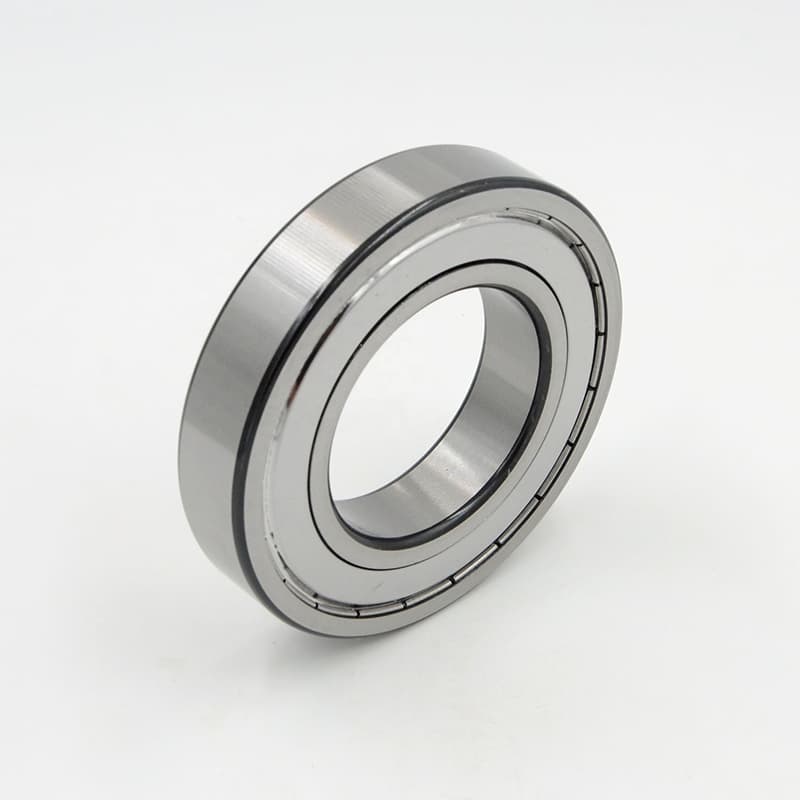
Let me explain the three critical dimensional checks.
Bore diameter (d). The inner ring must fit tightly on the shaft. For a rotating shaft, the fit is interference. That means the shaft is slightly larger than the bore. The bearing is pressed on. The bore tolerance is usually negative. For P0 class, the deviation is 0 to −10 microns for a 20 mm bore. For P5 class, it is 0 to −7 microns. Standard ISO 492 bearing‑tolerance tables show that for the 18–30 mm bore range, P0 bore deviation is 0/−10 μm and P5 is 0/−6 μm [web:754][web:755]. If the bore is larger than the upper limit (e.g., +5 microns), the bearing will be loose. The inner ring will spin on the shaft. That wears the shaft and the ring. The bearing will fail early. If the bore is too small (e.g., −15 microns), the bearing will be very hard to mount. You might crack the ring.
How to check: Use a bore gauge or a three‑point internal micrometer. For small bearings (under 50 mm), a plug gauge works. The plug gauge is a cylinder of exact size. If the plug gauge goes in smoothly, the bore is too large. If it does not go in at all, the bore is too small. You want a light press fit. Plug‑gauge‑style methods are commonly used in bearing‑tolerance checks to verify light press‑fit conditions [web:759][web:757].
Outer diameter (D). The outer ring fits into the housing. For a rotating shaft, the outer ring is usually a loose fit. The tolerance is also negative. For a 47 mm outer diameter (6204), P0 tolerance is 0 to -11 microns. If the outer diameter is too large, the bearing will not go into the housing. If too small, the bearing will move in the housing. That causes wear and noise.
Check with an external micrometer or a ring gauge. Measure in three places around the circumference. Take the average.
Width (B). The width is the thickness of the bearing. For a 6204, the width is 14 mm. The tolerance for P0 is 0 to -0.12 mm. That is 120 microns. So width is less critical than bore or outer diameter. But if the width is too large, two bearings next to each other may not fit in the housing. If too small, they will have end play.
Here is a tolerance table for a 20 mm bore bearing (6204):
| Parameter | Nominal (mm) | P0 tolerance (mm) | P5 tolerance (mm) |
|---|---|---|---|
| Bore (d) | 20.000 | 0 to -0.010 | 0 to -0.007 |
| Outer diameter (D) | 47.000 | 0 to -0.011 | 0 to -0.008 |
| Width (B) | 14.000 | 0 to -0.120 | 0 to -0.060 |
Always ask for the inspection report. It should list actual measured values. Do not accept a report that just says “pass.”
What Is Geometric Precision: Roundness, Runout, and Wall Thickness Consistency?
A ring can have the right bore size but still be bad. If the bore is oval, the bearing will not run smoothly. The balls will squeeze and release. That creates vibration.
Geometric precision means the ring is truly round (roundness), the raceway is concentric with the bore (radial runout), and the wall thickness is the same all around (wall thickness consistency). Poor geometric precision causes vibration, noise, and early bearing failure. Bearings with oval bores or out‑of‑round rings generate vibration‑like wear and fluting damage on the raceways [web:773][web:504]. It also reduces the bearing’s load capacity. Research and standards show that roundness error and radial runout directly worsen radial runout and reduce effective load capacity [web:774][web:775].
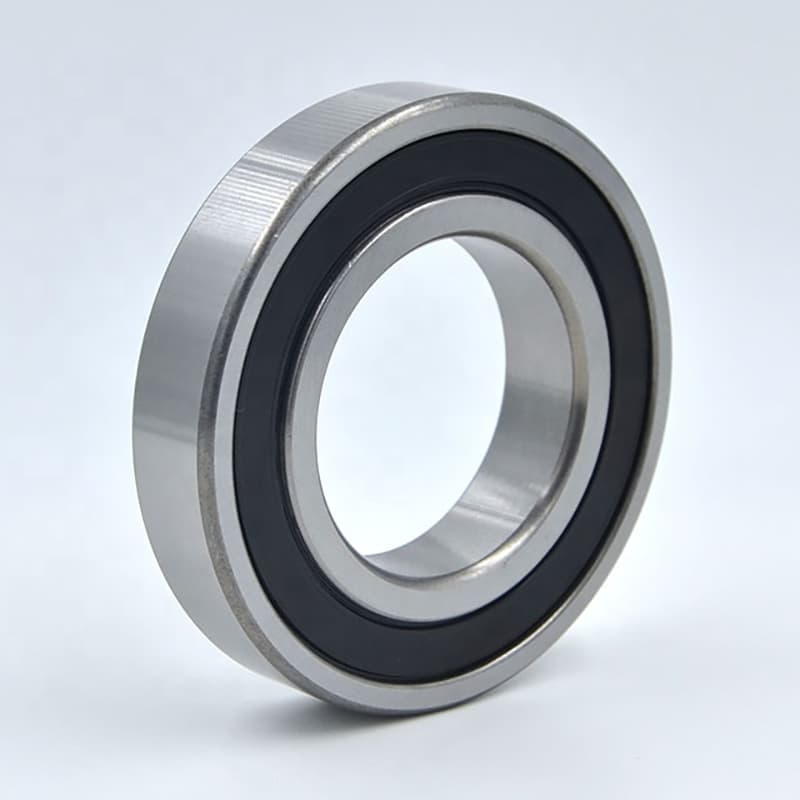
Let me explain each geometric inspection.
Roundness (circularity). A perfect ring is a perfect circle. But real rings have lobes. The roundness error is the difference between the smallest and largest radius. For a P0 bearing, roundness should be within about 3 to 5 microns for a 20 mm bore. For P5, within 2 microns. For P4, within 1 micron. Precision‑bearing tolerance standards tie roundness and radial runout to each class, with P5 and P4 requiring much tighter circularity than P0 [web:756][web:754]. You measure roundness with a roundness tester. The machine spins the ring and records the profile. A good roundness trace looks like a smooth circle with small waves. A bad trace has large lobes or flat spots. Roundness testers are standard in bearing‑quality control to check inner‑ and outer‑ring circularity [web:779][web:781].
Why roundness matters: An out‑of‑round inner ring will squeeze the balls when the high points align. That creates extra friction and heat. The bearing will make a wavy sound when you spin it. Roundness errors above a few microns increase contact stress and reduce bearing fatigue life [web:782][web:780]. I have seen bearings with 8‑micron roundness error fail in 1,000 hours. Good bearings with 2‑micron roundness lasted 10,000 hours.
Radial runout (Kia). This measures how much the raceway (where the balls roll) moves relative to the bore. If the raceway is off-center, the effective radial clearance changes as the bearing rotates. The balls get tighter and looser. That creates vibration. Radial runout is measured by mounting the inner ring on a precision spindle, then touching a probe to the outer ring raceway. The total movement (peak to peak) is the runout.
For P0 bearings, radial runout can be up to 15 microns. For P5, up to 8 microns. For P4, up to 4 microns. In a high-speed motor, runout above 10 microns will cause noticeable vibration.
Wall thickness consistency. The inner and outer rings are forged or machined. Then they are ground. The grinding process should remove material evenly. But if the grinding wheel is worn or the setup is wrong, one side of the ring may be thinner than the other. Uneven wall thickness causes the ring to flex under load. That creates stress points. The bearing may crack.
To check wall thickness, use a special fixture with two probes. Measure at four points 90 degrees apart. The difference should be less than 3% of the nominal wall thickness. For a 6204 inner ring (wall thickness about 4 mm), the variation should be under 0.12 mm. Ideally under 0.05 mm.
Here is a table comparing geometry specifications for different precision classes:
| Precision class | Roundness (max) | Radial runout (max) | Wall thickness variation (max) |
|---|---|---|---|
| P0 (normal) | 5 μm | 15 μm | 0.15 mm (for 4mm wall) |
| P6 | 3 μm | 10 μm | 0.10 mm |
| P5 | 2 μm | 8 μm | 0.05 mm |
| P4 | 1 μm | 4 μm | 0.03 mm |
What Is Surface Quality: Roughness, Grinding Marks, and Visual Defects?
You can measure size and roundness. But the surface finish is just as important. A rough raceway will wear the balls fast. Grinding marks can create noise. Visual defects like pits or cracks are obvious killers.
Surface quality for bearing rings includes raceway roughness (Ra value typically 0.05 to 0.2 μm for good bearings), absence of grinding burn or chatter marks, and no visible defects like rust, pits, scratches, or cracks. [Precision bearing‑manufacturing guides and raceway‑surface‑specification tables show that high‑quality bearing races usually have Ra values around 0.05–0.2 μm, while poorer surfaces are noticeably rougher](https://www.anebonmetal.com/cnc-turning-bearing-race-finish-requirements-surface-roughness-specification-and-burnishing-impact-on-pe …)[web:784][web:789]. Poor surface quality increases friction, noise, and wear. Studies show that higher roughness raises friction, wear, and vibration, and can reduce bearing durability under heavy‑load conditions[web:791]. It also reduces lubricant film life. Research indicates that suboptimal surface roughness suppresses elastohydrodynamic film thickness and increases the risk of metal‑to‑metal contact[web:788].
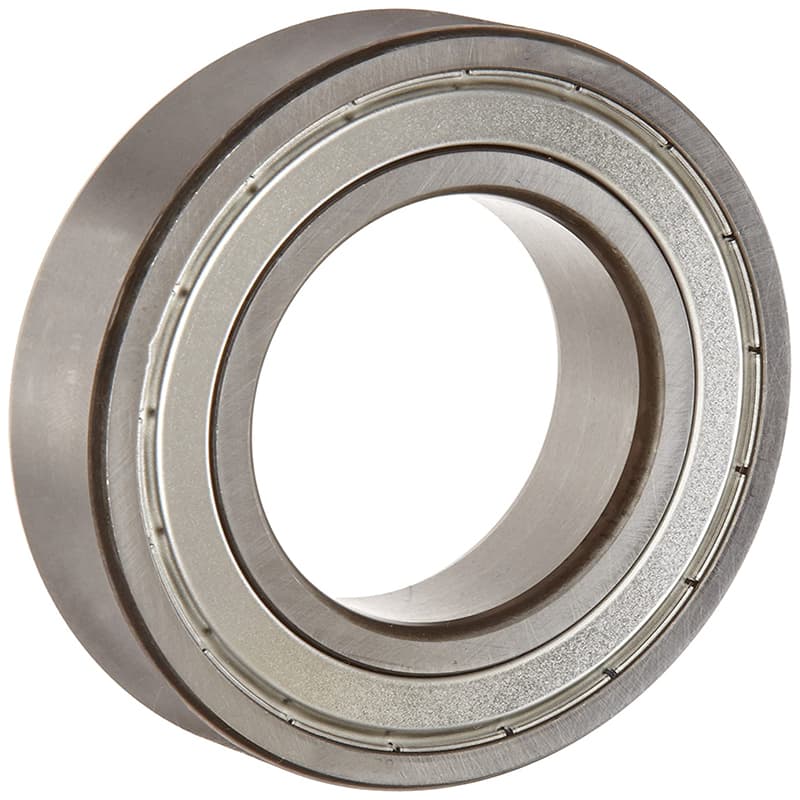
Let me explain how to inspect surface quality.
Surface roughness (Ra). The raceway must be smooth. The balls roll on it. If the surface is rough, the balls create friction. They also wear the raceway faster. For deep groove ball bearings, the raceway Ra should be between 0.05 and 0.2 micrometers. For precision bearings (P5 and above), Ra should be below 0.1 μm. General bearing catalogs and technical data indicate that high‑quality raceways are ground to very low Ra values, typically in the 0.05–0.2 μm range [web:795]. How to measure: Use a profilometer. A stylus drags across the raceway and records the height changes. Profilometers are standard tools for measuring Ra and other roughness parameters on bearing raceways [web:714]. A good raceway has consistent fine texture. A bad one has deep grooves or pits.
What happens if Ra is too high? The oil film cannot form properly. The balls make metal‑to‑metal contact. The bearing runs hot and gets noisy. I have seen bearings with Ra 0.4 μm fail in 2,000 hours. The same bearing with Ra 0.1 μm lasted 15,000 hours. Experimental and application data show that higher Ra increases friction and wear while lower Ra can dramatically extend life and support stable lubricant film formation [web:788].
Grinding marks. During manufacturing, the ring is ground with a grinding wheel. If the wheel is not dressed properly, it leaves marks on the surface. Some marks are fine and harmless. Others are too deep. Chatter marks are vibration marks. They look like a series of parallel lines or waves. Chatter marks create a whining noise when the bearing runs.
How to inspect: Use a magnifying glass or a microscope at 20x to 50x. Look for patterns. Also, run your fingernail across the raceway. If you feel any bumps or lines, the finish is too rough.
Visual defects – what to look for with your eyes. Rust is a common defect. Even a tiny rust spot will grow. The rust is abrasive. It will damage the balls. Pits are small holes in the steel. They come from bad forging or corrosion. Scratches can happen during handling. Cracks are the worst. They can be invisible to the naked eye. But a crack will grow and cause the ring to break.
Inspect each ring under good light. Use at least 10x magnification. Look for any discoloration, pitting, or lines. For cracks, use dye penetrant testing or magnetic particle inspection. At my factory, we do 100% visual inspection on all rings. We reject about 0.5% for visual defects.
Grinding burn. If the grinding wheel gets too hot, it can overheat the surface. The steel changes color (blue or brown). That is grinding burn. The burned area is softer or harder than the rest. It will wear unevenly. Grinding burn also reduces the steel’s fatigue life. How to check: Look for color changes. Also, use a nital etch test. A chemical solution is applied to the raceway. If there is burn, the color will be different. Good bearings have no grinding burn.
Here is a surface quality checklist:
| Surface feature | Acceptable condition | Unacceptable condition | Inspection method |
|---|---|---|---|
| Roughness (Ra) | 0.05–0.2 μm for P0, <0.1 μm for P5 | >0.3 μm | Profilometer |
| Grinding marks | Fine uniform pattern | Chatter marks, deep lines | 20× microscope, fingernail |
| Rust | None | Any rust spots | Visual, 10× magnifier |
| Pits | None | Any pits | [Visual](https://www.schaeffler.com/remotemedien/media/_shared_media/08_media_library/01_publications/schaeffler_2/publication/downloads_ … ) |
| Scratches | None or very fine (<0.01 mm deep) | Deep scratches | Visual, touch |
| Grinding burn | No blue/brown color | [Discolored areas](https://www.imq-gmbh.com/wp-content/uploads/2020/07/Forschung-im-Ingenieurwesen-03-2018_Seidel_Zoesch_Grinding%20burn%20inspecti … ) | [Nital etch or visual](https://www.schaeffler.com/remotemedien/media/_shared_media/08_media_library/01_publications/schaeffler_2/publication/downloads_ … ) |
What Is Material Integrity: Hardness, Microstructure, and Crack Detection?
The ring looks good. It measures right. But the steel is soft. Or it has hidden cracks. Then the bearing will fail under load. You cannot see this without testing.
Material integrity means the ring steel has the correct hardness (58-64 HRC for bearing steel GCr15), a uniform fine-grained microstructure (tempered martensite with small carbides), and no cracks or inclusions. Soft rings will dent under load. Hard but brittle rings will crack. Poor microstructure reduces fatigue life by 50% or more.
Let me explain each material inspection.
Hardness testing. Bearing steel (GCr15 or similar) must be heat treated. The hardness after quenching and tempering should be 58 to 64 HRC (Rockwell C). For deep groove ball bearings, 60-62 HRC is typical. If the hardness is below 58, the ring is too soft. It will dent when the balls roll on it. The dents cause noise and vibration. If the hardness is above 64, the ring is too brittle. It can crack under shock load.
How to test: Use a Rockwell hardness tester. Test on the end face of the ring or on the raceway. Do not test on the bore or outer diameter surface because that will leave a mark. For small rings, use a micro-hardness tester. At FYTZ, we test one ring per batch batch. We also test every ring when a customer orders high precision.
Microstructure analysis. This is a lab test. A small piece of the ring is cut, mounted, polished, and etched. Then you look at it under a microscope (200x to 500x). The good microstructure of bearing steel is tempered martensite with fine, evenly distributed carbides. The grain size should be fine (ASTM grain size 8 or finer). Bad microstructure includes: large grains, retained austenite (white areas), or carbide networks (clusters of carbides along grain boundaries). Poor microstructure reduces the bearing’s fatigue life dramatically. A bearing with bad microstructure may last only 1,000 hours instead of 20,000.
Most bearing buyers do not have a microscope. So you rely on the supplier’s certification. Ask for a microstructure photo from an independent lab. A good supplier will provide it.
Crack detection. Cracks can start from forging, machining, or heat treatment. Some cracks are visible. Many are not. The most common methods for crack detection are:
- Dye penetrant testing (PT). A red dye is sprayed on the ring. After a few minutes, the dye seeps into any cracks. Then a developer is applied. The cracks show as red lines. This works for surface cracks.
- Magnetic particle inspection (MT). The ring is magnetized. Iron particles are sprayed. They collect at cracks because the magnetic field leaks there. This is very sensitive for ferritic steel.
- Eddy current testing (ET). A probe with a coil passes over the ring. Cracks change the electrical impedance. This is automatic and fast. We use eddy current on every ring at FYTZ.
For normal buyers, you can do a simple check: after mounting the bearing, spin it and listen. A cracked ring makes a dull, thumping sound. But that is too late. Better to ask the supplier for their crack detection report.
Inclusion content. Steel has non-metal inclusions like oxides and sulfides. Too many inclusions act as stress risers. They start fatigue cracks. Inclusion content is rated by ASTM E45 methods. For good bearing steel, inclusion content should be low (A, B, C, D types all below 1.5). Most bearing buyers cannot test this. So choose a supplier who uses steel from a reputable mill (e.g., Ovako, Saarstahl, or Dongbei Special Steel). At FYTZ, we use only high-grade steel with certified inclusion ratings.
Here is a material integrity summary:
| Property | Acceptable range | Test method | What bad looks like |
|---|---|---|---|
| Hardness | 58-64 HRC (60-62 ideal) | Rockwell C | <58 = soft, >64 = brittle |
| Microstructure | Tempered martensite, fine carbides, ASTM grain size 8+ | Metallographic microscope | Large grains, retained austenite, carbide networks |
| Cracks | None | Dye penetrant, magnetic particle, eddy current | Any crack line |
| Inclusion content | A/B/C/D all <1.5 (ASTM E45) | Microscopic rating | Large dark spots or strings |
Conclusion
Check bore, outer diameter, width, roundness, runout, surface finish, hardness, and cracks. These eight items ensure your inner and outer rings are reliable.