
Your printing press stops in the middle of a big job. A bearing in the paper feed system seized. Now you miss the deadline. The customer is angry. You lose money.
For printing press motors and paper feed systems, deep groove ball bearings need high speed capability, continuous running durability, low vibration for print quality, and protection from paper dust and ink mist. Standard bearings fail quickly in this environment. Choose sealed bearings with P5 precision and special low-dust grease.
I am Leo from FYTZ Bearing. I supply bearings to printing press manufacturers and repair shops around the world. Printers are demanding machines. They run fast for long hours. They have paper dust everywhere. I have learned what works and what does not. Let me share my experience with you.
Why Do Printing Press Motors and Paper Feed Systems Demand High-Performance Bearings?
You might think a printing press is just another machine. But it is not. Print quality depends on smooth movement. A bad bearing causes misalignment. That makes blurry prints. Also, presses run for 16 hours a day, six days a week. They cannot stop.
Printing press motors and paper feed systems need high‑performance bearings because they run at high speed (up to 10,000 RPM for some motors), face continuous operation (often 24/7), and must have extremely low vibration to avoid print defects. Also, paper dust and ink mist are everywhere. Standard bearings will fail within months, while good bearings last years. [High‑precision bearings specifically designed for printing presses deliver high rigidity, low friction, and ultra‑low run‑out, which are essential for stable, high‑speed operation and blur‑free prints](https://www.schaeffler.com/remotemedien/media/_shared_media/08_media_library/01_publications/schaeffler_2/tpi/downloads_8/tpi_22 …)[web:669][web:672]. Manufacturers also highlight that special‑duty bearings for the printing and paper industries resist dust, maintain long life, and run for thousands of hours without unplanned stoppages[web:673][web:677].
Let me explain the three reasons printing presses are tough on bearings.
Print quality is extremely sensitive. A printing press puts ink on paper with precision. If a bearing in the motor or paper feed roller has even 0.01 mm of runout, the paper moves. The print becomes fuzzy or misaligned. For color printing, the different color layers must align perfectly. Any bearing vibration ruins the registration. So printing press bearings must have very high precision. I recommend P5 as a minimum. For high-end presses, P4 is better.
The environment is dirty in a special way. Paper dust is fine and light. It gets into everything. When paper dust mixes with oil or grease, it forms a paste. That paste grinds the bearing surfaces. Also, ink mist from the printing process floats in the air. Ink is sticky. It coats bearings and seals. It can harden and block movement. So the bearing seals must be very effective. But at the same time, the seals cannot add too much friction because the motor needs to start and stop quickly.
Continuous operation with no second chance. Most printing presses run for long shifts. A newspaper press runs 24/7. A commercial press might run 16 hours per day. During that time, the press cannot stop for bearing replacement. Changing a bearing often means stopping the whole press for hours. That is very expensive. So the bearings must last at least 20,000 to 30,000 hours. That is 2 to 3 years of continuous running. That is a long time for a high‑speed bearing. Industry bearing‑life references show that 20,000–30,000 hours is a common target for fans, conveyors, and printing equipment operated continuously [web:688].
A story from a customer in India. He runs a commercial printing shop. He had problems with paper feed roller bearings. The bearings would get noisy after 6 months. The paper would skew, causing misprints. He used standard 6204ZZ bearings. I recommended my FYTZ bearings with P5 precision, FKM double‑lip seals, and low‑dust polyurea grease. His bearings now last 2.5 years. The print quality is consistent. He has saved many service calls. Similar high‑precision, sealed bearings with low‑dust grease are used in printing and paper‑equipment bearing catalogs to extend life and reduce misregistration and service stops [web:673][web:680].
What Are the Critical Operating Conditions: High Speed, Continuous Running, and Paper Dust Exposure?
To choose the right bearing, you first need to understand what the bearing faces every day. Printing presses have three big challenges: high speed, long hours, and fine dust.
The three critical operating conditions are: high motor speeds (3,000 to 10,000 RPM for some press motors), continuous running (3,000 to 6,000 hours per year), and heavy paper dust and ink mist exposure. Each condition demands a specific bearing feature – high precision, long grease life, and effective sealing.
Let me break down each condition with practical advice.
High speed – not just motor speed. Printing press motors run at high speeds. A typical press motor runs at 1,500 to 3,600 RPM. But some servo motors for paper registration run at 5,000 to 10,000 RPM. Also, the paper feed rollers run at 300 to 1,000 RPM. So you have a range of speeds. For high-speed applications (above 5,000 RPM), choose bearings with polyamide or phenolic cages. Use low-viscosity synthetic grease (ISO VG 46 to 68). Also, the bearing precision must be P5 or better. A P0 bearing at 8,000 RPM will vibrate and heat up.
For lower speed rollers (300 to 1,000 RPM), you can use standard cages and CN clearance. But still use high precision because print quality matters. I have seen printing presses that use P5 bearings even on slow rollers. The extra cost is small compared to the cost of bad prints.
Continuous running – the life calculation. If a press runs 16 hours per day, that is about 5,840 hours per year (with 5 days per week, 52 weeks, minus holidays). A bearing with L10 life of 20,000 hours gives about 3.4 years of expected life. But in a printing press, the actual life is often shorter because of contamination and heat. So I aim for L10 life of 30,000 to 40,000 hours for critical bearings. That means choosing a bearing with a higher dynamic load rating (C). If the calculator says a 6203 is enough, I go up to a 6204. The larger bearing has more steel. It lasts longer.
Also, continuous running means the grease is under constant shear. The thickener breaks down over time. So choose a grease with good shear stability. Polyurea and lithium complex are better than simple lithium. I also recommend a grease change after 12,000 to 15,000 hours. That requires disassembling the bearing, cleaning it, and repacking. Not all presses allow that. So sometimes you just run the bearing to failure. That is why you want long life.
Paper dust – the silent killer. Paper dust comes from cutting and feeding paper. It is made of small paper fibers. These fibers are dry and light. They float in the air. Then they settle on everything. When they get into a bearing, they mix with the grease. The grease turns into a dark paste. The fibers act like tiny ropes. They wrap around the balls and cage. They increase friction. They also absorb oil from the grease, leaving dry thickener behind.
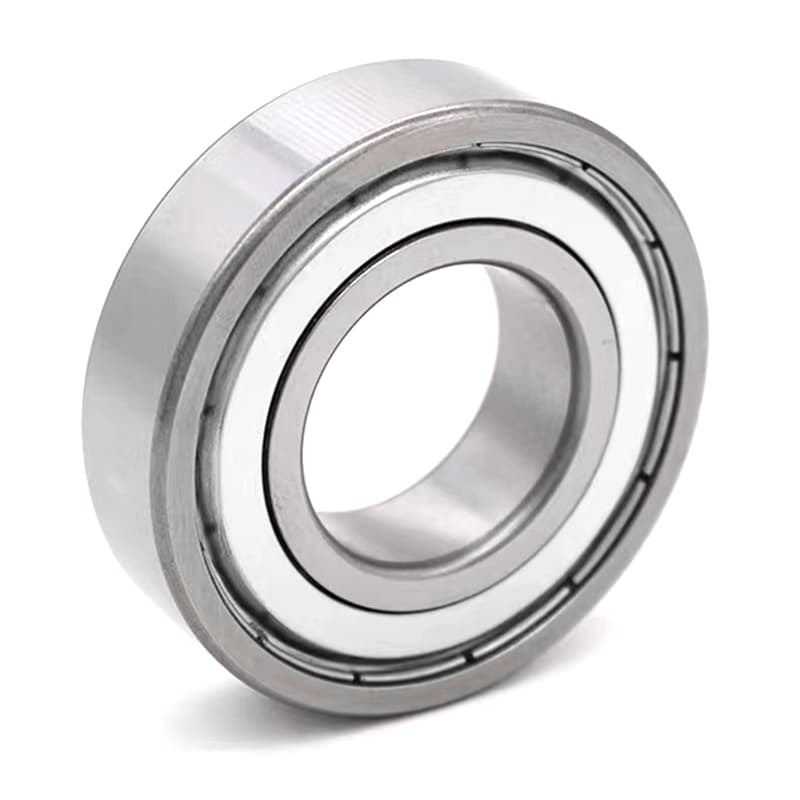
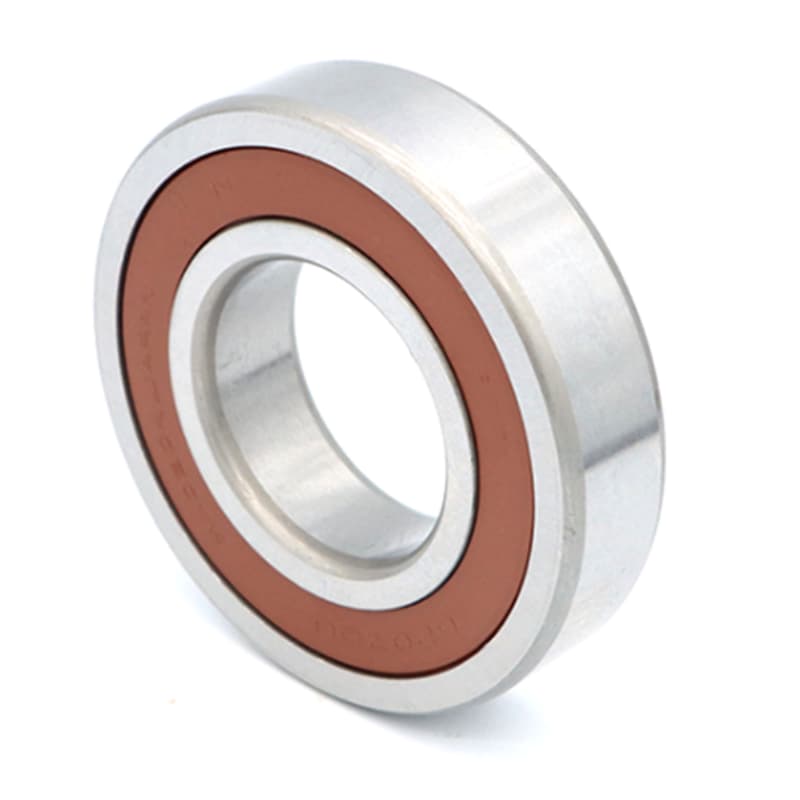
To fight paper dust, the bearing seal is critical. A ZZ shield (metal with a gap) is not enough. The dust will get through the gap. A single-lip rubber seal (RS) is better. A double-lip seal (2RS) is best. The two lips create a labyrinth that stops most dust. For very fine paper dust (like from coated paper), I recommend a seal with a PTFE coating. PTFE is slippery. Dust does not stick.
Also, the grease should be thick enough to resist dust intrusion. Use NLGI grade 2 or 2.5. Do not use NLGI 1 (too soft). The thick grease creates a barrier. When dust lands on the grease near the seal, it stays on the outside.
Here is a table matching operating conditions to bearing features:
| Operating condition | Typical range | Bearing feature needed | Why |
|---|---|---|---|
| Motor speed | 1,500 – 10,000 RPM | Polyamide or phenolic cage, low‑viscosity grease, P5 precision | Reduces centrifugal force and heat |
| Roller speed | 300 – 1,500 RPM | Standard cage, medium‑viscosity grease, P5 precision | Smooth paper movement |
| Continuous running | 5,000+ hours/year | High dynamic load rating (oversize bearing), long‑life synthetic grease | Extends replacement interval |
| Paper dust | Fine fibers everywhere | [Double‑lip rubber seals (2RS)](https://www.facebook.com/ublbearingsindia/posts/smooth-rotation-starts-here%EF%B8%8Fubl-ball-bearings-precision-engineered-for-h …), thick grease (NLGI 2‑2.5) | Keeps dust out |
| Ink mist | Sticky aerosol | Seals with PTFE coating, regular cleaning | Prevents sticking |
What Are the Bearing Requirements: Low Vibration, High Radial Load Capacity, and Contamination Resistance?
You need a bearing that does three things well. First, it must run smoothly without vibration. Second, it must carry the radial load from belts, rollers, and paper tension. Third, it must keep paper dust and ink out. Let me explain each one.
The three key bearing requirements for printing presses are: low vibration (below 45 dB, V2 or V1 noise class) to maintain print quality, high radial load capacity to handle belt tension and paper weight, and contamination resistance to survive paper dust and ink mist. [High‑precision bearings for printing machinery are specifically designed for low vibration, high radial load, and contamination resistance to avoid print defects](https://www.schaeffler.com/remotemedien/media/_shared_media/08_media_library/01_publications/schaeffler_2/tpi/downloads_8/tpi_22 …)[web:669]. A bearing missing any of these will cause print defects or early failure. Manufacturer handbooks also show that radial‑load capacity and contamination protection are critical factors for bearing life in printing and paper‑handling equipment[web:581][web:712].
Let me go deep into each requirement.
Low vibration – the print quality requirement. In printing, vibration is not just noise. It moves the paper. It moves the print head. It makes the ink spread unevenly. You can see the defect. The human eye is very sensitive. A vibration of just 0.5 microns at the roller can cause visible banding in solid areas.
To get low vibration, start with the bearing precision class. P5 bearings have radial runout of about 8 microns for a 20mm bore. P4 is about 4 microns. I recommend P5 for most printing presses. P4 for high-end presses. Also, the bearing noise class matters. V2 means low noise. V1 is even quieter. For printing presses, choose V2 as a minimum.
The balls must be round. Cheap bearings use Grade 25 or Grade 16 balls. High-precision bearings use Grade 10 or Grade 5. Grade 10 balls are round within 0.001 mm. That improves smoothness. At FYTZ, we use Grade 10 balls for our P5 precision bearings.
Also, the internal geometry matters. A bearing with a smooth race finish (low Ra value) creates less vibration. Look for bearings that specify race roughness. Below Ra 0.1 microns is good. Below 0.05 is excellent.
High radial load capacity. Printing press motors and rollers see significant radial loads. The motor might have belt tension pulling sideways. The paper feed rollers have the weight of paper stacks and tension from the paper pulling through. For a motor bearing, the radial load can be 200 to 500 N. For a roller bearing, it can be 500 to 1,000 N. So you need a bearing with enough dynamic load rating (C).
For a 6204 bearing (20mm bore), C is about 12.8 kN. That is more than enough for 1,000 N. The problem is not load capacity alone. It is life. Higher load reduces life. So for a roller that sees 800 N, use a 6205 or 6304. The larger bearing has a higher C rating, so the life is longer.
Also, note that printing presses have many start-stop cycles. Each start creates a moment of high friction. That wears the bearing faster than steady running. So choose a bearing with a good static load rating (Co) too.
Contamination resistance – the seal and grease combination. Paper dust is fine. It can get through gaps as small as 0.05 mm. So the seal must be a contact type. I recommend 2RS (double-lip rubber seal). The rubber touches the inner ring. That creates a barrier. For ink mist, the seal material matters. Standard NBR rubber can be attacked by the solvents in some inks. FKM (Viton) is better. It resists chemicals and stays flexible.
The grease must also resist contamination. Use a thickener that does not break down when mixed with dust. Polyurea is good. Also, the grease should have tackiness additives. Tacky grease sticks to the seal lips and forms an additional barrier.
Finally, the bearing outer ring can have a small groove or groove ring to trap dust before it reaches the seal. Some printing press bearings use a special "sealed for life" design. The bearing is filled with a precise amount of grease and then sealed permanently. You cannot regrease it. But it lasts for the life of the bearing. That is a good choice for hard-to-reach rollers.
Here is a requirements summary table:
| Requirement | Why it matters | How to get it | Recommended spec |
|---|---|---|---|
| Low vibration | Prevents print defects | [High precision, round balls, smooth races](https://www.schaeffler.com/remotemedien/media/_shared_media/08_media_library/01_publications/schaeffler_2/tpi/downloads_8/tpi_22 … ) | [P5 or P4, V2 or V1, Grade 10 balls](https://www.schaeffler.com/remotemedien/media/_shared_media/08_media_library/01_publications/schaeffler_2/tpi/downloads_8/tpi_22 … ) |
| High radial load capacity | Handles belt tension and paper weight | Larger bearing size, high C rating | C rating at least 3x actual load |
| Contamination resistance | Keeps paper dust and ink out | Double‑lip seals (2RS), FKM material, tacky polyurea grease | 2RS with FKM, NLGI 2, polyurea |
How Do You Select Seals and Grease for Paper Dust and Ink Mist Environments?
The seal and grease are your first defense against the harsh printing press environment. Get these wrong, and the bearing dies fast. Get them right, and the bearing lasts for years.
For paper dust and ink mist environments, use double-lip FKM seals (2RS) that resist chemicals and stay flexible. For grease, use a polyurea or lithium complex thickener with high tackiness, ISO VG 100-150 base oil, and NLGI grade 2 consistency. Also, choose a grease with low oil separation to avoid dripping on paper. Do not use standard mineral grease or ZZ shields.
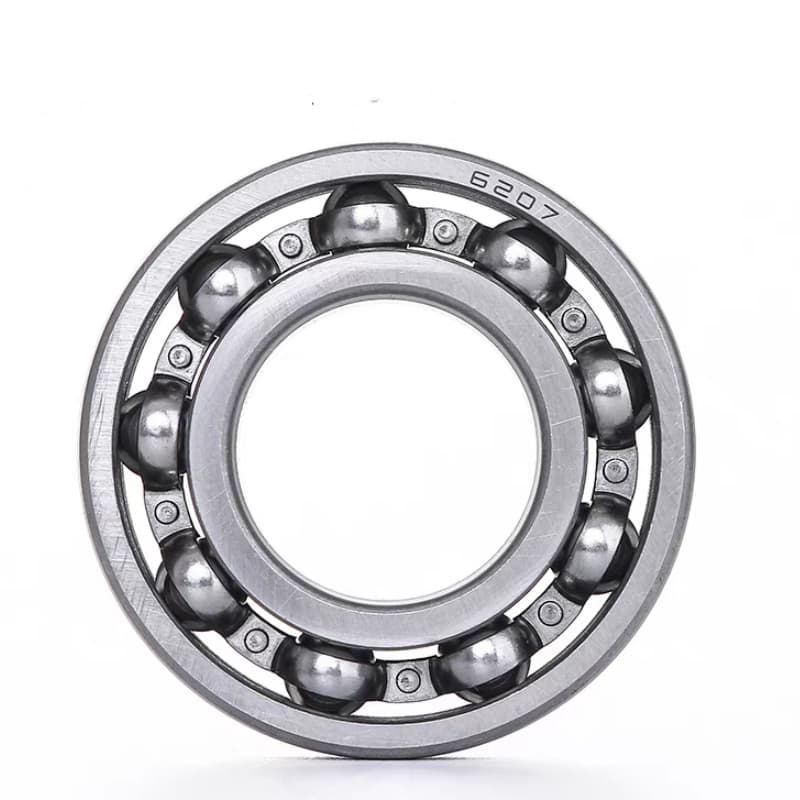
Let me explain the details of seal and grease selection.
Seal material – FKM vs. NBR. NBR is the standard rubber for bearings. It is cheap and works well in dry, clean environments. But printing presses have two problems. First, paper dust can be slightly abrasive. NBR wears faster. Second, ink solvents can attack NBR. The rubber may swell or crack. FKM (Viton) is much more resistant. It handles higher temperatures (up to 200°C) and resists chemicals. For printing presses, I always recommend FKM seals. The cost is about 20% higher. The life is often double or triple.
Seal design – single lip vs. double lip. A single-lip seal (RS) has one rubber lip touching the inner ring. It is good for general dust. A double-lip seal (2RS) has two lips. The second lip acts as a dust lip. It keeps larger particles out before they reach the main lip. For fine paper dust, the double lip is much better. I have tested both. The 2RS seal keeps out 5x more fine dust than a single RS. So choose 2RS.
Low-friction seals for energy saving. Printing presses have many rollers. Each bearing adds some friction. If you have 50 rollers, the total friction matters. Some manufacturers offer low-torque seals. These have a smaller contact area. They create less drag. But they may let in more dust. For paper feed rollers, I use standard 2RS. The friction is acceptable. For small high-speed rollers, I use a low-torque 2RS1 seal.
Grease selection – the contamination fighter. For paper dust, you need a tacky grease. Tackiness means the grease is sticky. It holds dust on the outside of the seal. The dust does not get pushed inside. Polyurea greases are naturally tacky. Lithium complex can also be formulated with tackifiers.
Base oil viscosity should be medium – ISO VG 100 to 150. Thinner oil (VG 46-68) may be too runny. It can leak past the seal or drip onto the paper. Thicker oil (VG 220) may be too stiff and cause churning. VG 100-150 is a good balance.
NLGI grade should be 2. Grade 2 is like peanut butter. It stays in place but is not too hard. Grade 3 would be too stiff for high-speed rollers. Grade 1 would be too soft and might leak.
Low oil separation is critical. Some greases release oil over time. That oil can drip out of the bearing. In a printing press, oil dripping on paper ruins the print. So choose a grease with low oil separation (less than 5% at 100°C by ASTM D6184). Polyurea greases generally have low oil separation.
A real story from a customer in Germany. He makes paper folding machines for print shops. He had problems with oil stains on paper. The oil came from the roller bearings. The bearings used a lithium complex grease with high oil separation. I recommended our FYTZ polyurea grease with low oil separation and FKM 2RS seals. The oil stains stopped. His customers were happy. He now buys all his printing bearings from me.
Here is a seal and grease selection table:
| Component | Standard choice (avoid) | Recommended choice | Reason |
|---|---|---|---|
| Seal material | NBR | FKM (Viton) | Resists ink solvents and abrasion |
| Seal design | RS (single lip) | 2RS (double lip) | Better dust protection |
| Seal type | Contact seals with high friction | Low‑torque contact seals (2RS1) for high‑speed rollers | Reduces energy loss |
| Grease thickener | Simple lithium | Polyurea or lithium complex | Better shear stability and tackiness |
| Base oil viscosity | ISO VG 220 or ISO VG 68 | ISO VG 100‑150 | Balance of flow and protection |
| NLGI grade | 1 or 3 | 2 | Right consistency for printing |
| Oil separation | High (>10%) | Low (<5%) | Prevents oil stains on paper |
| Grease fill percentage | 30‑40% | 20‑25% | Less churning, less leakage |
Conclusion
For printing presses, choose P5 precision bearings with FKM double-lip seals and tacky polyurea grease. This gives low vibration, long life, and no paper dust damage.