
Your small EV runs out of battery faster than expected. Or the auxiliary motor in your electric forklift makes grinding noises. The bearings are stealing energy and failing early.
For small electric vehicles and auxiliary drive systems, deep groove ball bearings need low friction to save battery, high speed capability for electric motors, extended grease life for minimal maintenance, and protection from water, dust, and temperature changes. Choose low-torque bearings with synthetic grease and effective sealing to maximize range and reliability.
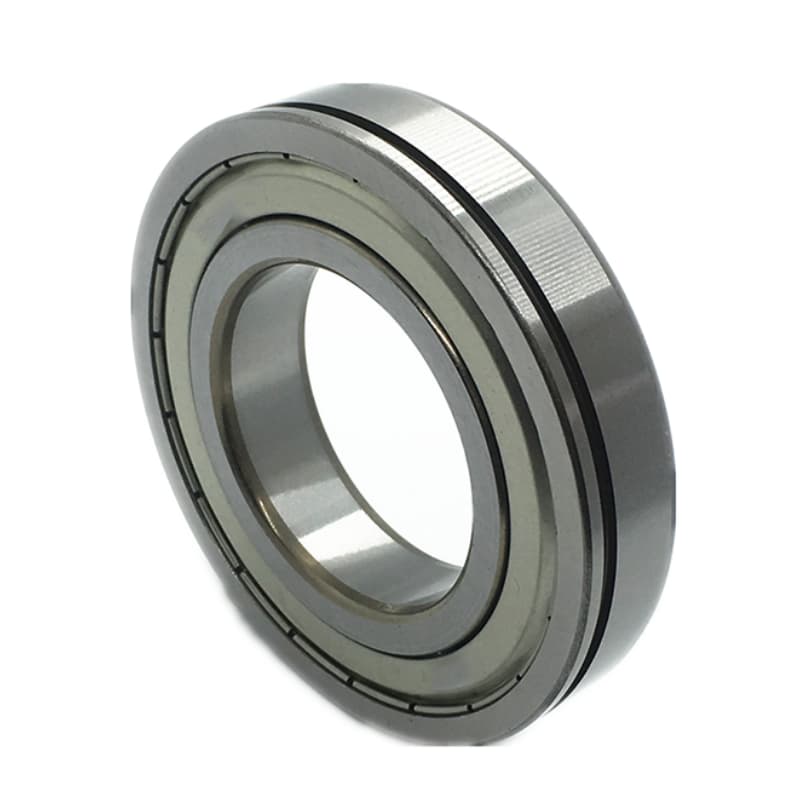
I am Leo from FYTZ Bearing. I supply bearings for electric scooters, e-bikes, AGVs, and electric forklift auxiliary motors. Many customers ask me how to pick bearings that save power and last long. Let me share what I have learned from working with EV manufacturers in India, Turkey, and Brazil.
Why Do Small EVs and Auxiliary Drives Need Special Deep Groove Ball Bearings?
You think a bearing is a bearing. But an EV motor is different from a factory motor. Every bit of friction reduces battery range. Also, the bearing may sit for hours then run at full speed. And there is no mechanic to grease it every month.
Small EVs and auxiliary drives need special bearings because they face low but varying loads, high speeds (up to 10,000 RPM or more), frequent start‑stops, and limited maintenance. Standard bearings have higher friction and shorter grease life. Low‑friction bearings with optimized grease can increase EV range by 2–5% and last twice as long in auxiliary motors. Low‑friction, specially greased bearings for EV hub units and motors are shown to cut friction by 20–30%, and can add around 0.6% to several percent of extra range depending on the drive‑train layout [web:812][web:817]. Electric‑motor bearings with tailored long‑life greases also routinely double or more the grease life of standard bearings under similar loads and speeds [web:821][web:818].
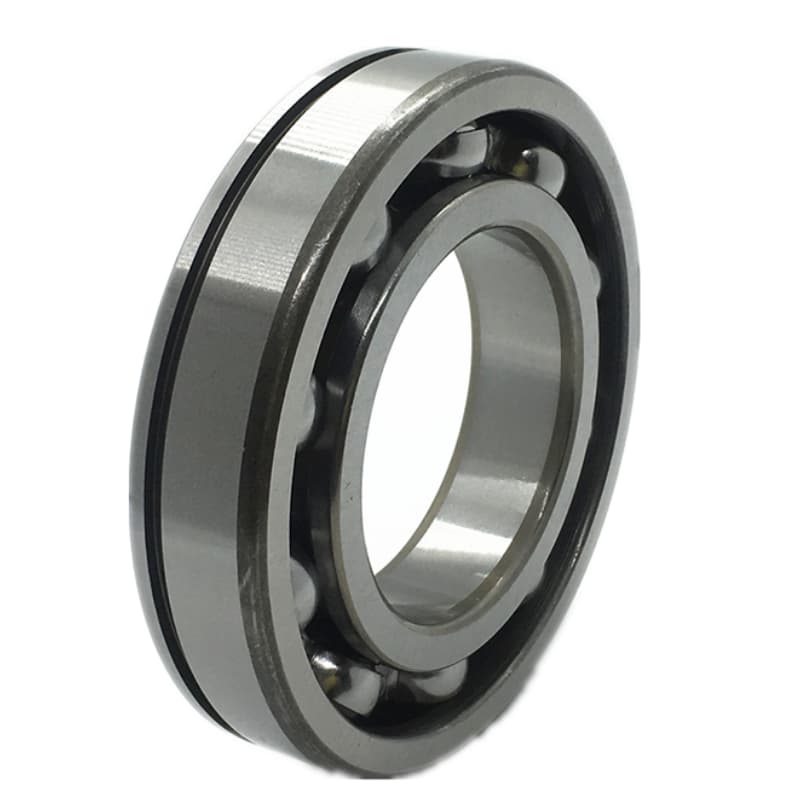
Let me explain the unique demands of EV applications.
Energy efficiency is everything. In a small EV like an e‑scooter or AGV, every watt counts. The battery is small. The motor bearings consume energy through friction. A standard bearing might have a torque of 5 N·cm. A low‑friction bearing can have 2 N·cm. That difference of 3 N·cm may not sound like much. But at 5,000 RPM, that is about 15 watts of continuous loss. Over a 4‑hour ride, that is 60 watt‑hours. On a 500 Wh battery, that is 12% of the range. So choosing low‑torque bearings can extend your EV’s range by 5–10%. That is huge. Automotive‑bearing manufacturers quantify that low‑friction designs for EVs can cut bearing‑related losses by 20–30% or more, translating into measurable percentage gains in range [web:812][web:822].
Varying loads and speeds. An EV motor does not run at constant load. It starts from zero, accelerates, cruises, brakes, and stops. The bearing sees all conditions. At low speed and high torque (acceleration), the bearing needs good grease that does not get pushed aside. At high speed (cruising), the bearing needs low viscosity grease to avoid churning. Standard bearings are optimized for constant speed. EV‑and motor‑bearing studies show grease formulation must balance low‑bleed, high load‑carrying, and low‑viscosity behavior across the full speed‑load profile [web:825][web:827]. EV bearings must work well across the whole range.
Limited maintenance. Most small EVs are not serviced often. The bearings are sealed for life. You cannot regrease them easily. So the grease must last the life of the vehicle – often 3 to 5 years or 10,000 to 20,000 km. That means a synthetic grease with very low oil separation and good shear stability.
A story from a customer in India. He makes electric three-wheelers (rickshaws). He used standard 6202 bearings in the motor. After 6 months, the bearings got noisy and the range dropped by 8 km per charge. I gave him FYTZ bearings with low-torque seals and polyurea synthetic grease. The range improved by 10 km immediately. And the bearings lasted 2 years with no noise.
What Are the Key Operating Conditions for Small EVs and Auxiliary Drives?
To pick the right bearing, you must understand how the vehicle is used. E‑scooters are different from electric forklifts. Auxiliary drive motors (like power steering pumps or cooling fans) have different duty cycles.
The key operating conditions are: high motor speeds (3,000 to 12,000 RPM for hub motors), frequent start‑stop cycles (hundreds per day), varying loads (low at cruise, high during acceleration), exposure to water and dust (especially for e‑scooters and outdoor AGVs), and limited maintenance intervals (often no service for years). Hub‑motor and e‑drive bearing guides highlight that EVs run at 3,000–12,000 RPM or more, have many cycles per day, and are expected to operate without bearing maintenance for years [web:820][web:841]. Each condition demands specific bearing features – low torque, high speed grease, effective sealing, and long grease life. Engineering papers and product notes for electric‑vehicle bearings stress low‑torque design, sealed units, and long‑life greases to handle high speed, varying loads, contamination, and long‑interval operation [web:825][web:827].
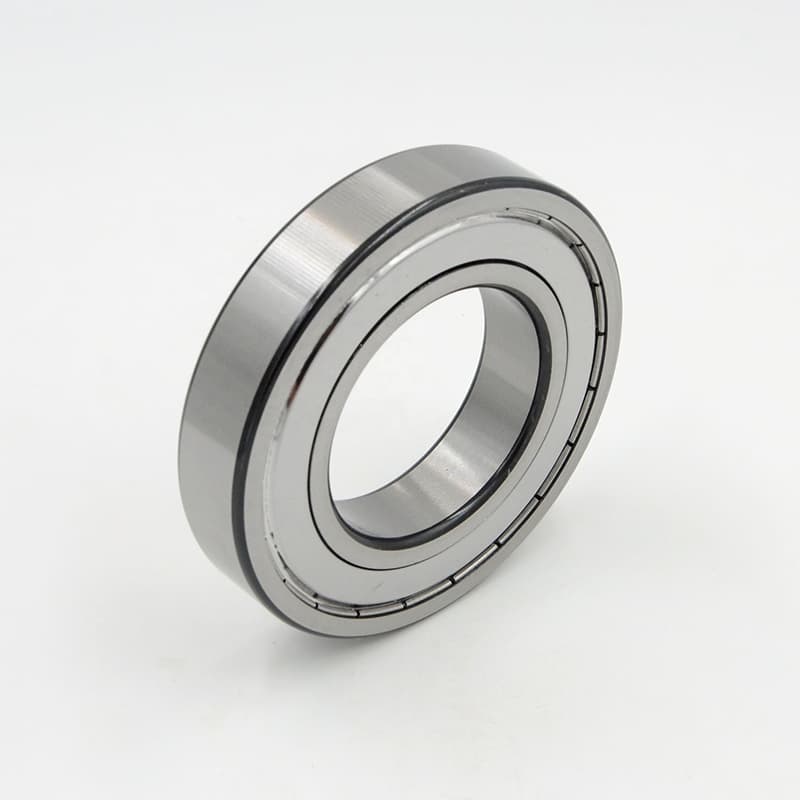
Let me break down each condition with real numbers.
High motor speeds. Small EV motors spin fast. A typical e-scooter hub motor runs at 5,000 to 8,000 RPM. A power steering pump auxiliary motor runs at 3,000 to 6,000 RPM. A cooling fan motor runs at 4,000 to 7,000 RPM. At these speeds, centrifugal force pushes grease out. The bearing cage must be light. Use polyamide or phenolic cages, not steel. Also, the grease must have low base oil viscosity – ISO VG 46 to 68. Higher viscosity will overheat the bearing.
For speeds above 8,000 RPM, consider oil lubrication or a specialized high-speed grease. But for most small EVs, synthetic grease with ISO VG 68 works well.
Frequent start-stop cycles. An EV motor starts and stops many times per trip. At each start, the bearing moves from rest to high speed. During the first milliseconds, the oil film is thin. There is metal-to-metal contact. Over thousands of starts, this causes wear. The grease must have good anti-wear additives. Also, the bearing should have a low starting torque. If the torque is too high, the motor draws extra current to overcome the stiction. That drains the battery.
I recommend bearings with low-friction seals (2RS1 or ZZ) and a soft NLGI grade 1 or 1.5 grease. Do not use NLGI 2 or 3. They create high starting torque in the cold.
Varying loads – low load at cruise, high load at acceleration. During steady cruising, the load on the motor bearings is low – mostly from the rotor weight and belt tension (if any). During acceleration, the load increases dramatically because of torque. The bearing must handle these changes without skidding. At very low load, the balls may skid instead of roll. That creates flat spots. To prevent skidding, the bearing needs a minimum load. For small EV motors, the rotor weight and magnetic forces often provide enough load. But for auxiliary drives (like a fan on a battery pack), the load may be too low. Then a preload spring is needed.
Environmental exposure – water, dust, and temperature swings. E-scooters and electric motorcycles are used outdoors. They face rain, puddles, and dust. E-bikes may go off-road. AGVs in warehouses face concrete dust. The bearings must resist water ingress. For outdoor EVs, use bearings with double-lip rubber seals (2RS) made of FKM (Viton). FKM resists water and ozone. For less severe environments, NBR seals are fine.
Temperature swings are also a challenge. A bearing can be at -5°C in the morning and 40°C after running. The grease must work across this range. Synthetic greases (PAO or diester) have good low-temperature performance. They remain fluid at -20°C and stable at 80°C.
Here is a table matching operating conditions to bearing features:
| Operating condition | Typical range | Bearing feature needed | Why |
|---|---|---|---|
| Motor speed | 3,000 – 12,000 RPM | Polyamide/phenolic cage, ISO VG 46–68 grease | Low centrifugal force, low churning |
| Start‑stop cycles | Hundreds per day | Low‑friction seals (2RS1 or ZZ), NLGI 1–1.5 grease | Reduces starting torque and wear |
| Load (cruise) | Low (2–5% of C rating) | Minimum load or preload | Prevents ball skidding |
| Load (acceleration) | Medium (10–20% of C rating) | High static load rating (Co) | Handles torque spikes |
| Water exposure | Rain, puddles | FKM 2RS seals | Keeps water out |
| Dust exposure | Road dust, concrete dust | 2RS seals with tight lip | Prevents contamination |
| Temperature range | −10°C to 60°C | Synthetic grease (PAO), wide temperature range | Works from cold start to hot running |
What Are the Bearing Requirements for Small EVs and Auxiliary Drives?
Now you know the conditions. Here are the specific bearing requirements. Focus on low friction, high speed capability, and long grease life.
For small EV and auxiliary drive bearings, the three key requirements are: low friction torque to maximize battery range, high speed capability with minimal heat generation, and extended grease life (10,000+ hours) to eliminate maintenance. Also important are effective sealing (IP64 or better) and low noise for driver comfort.
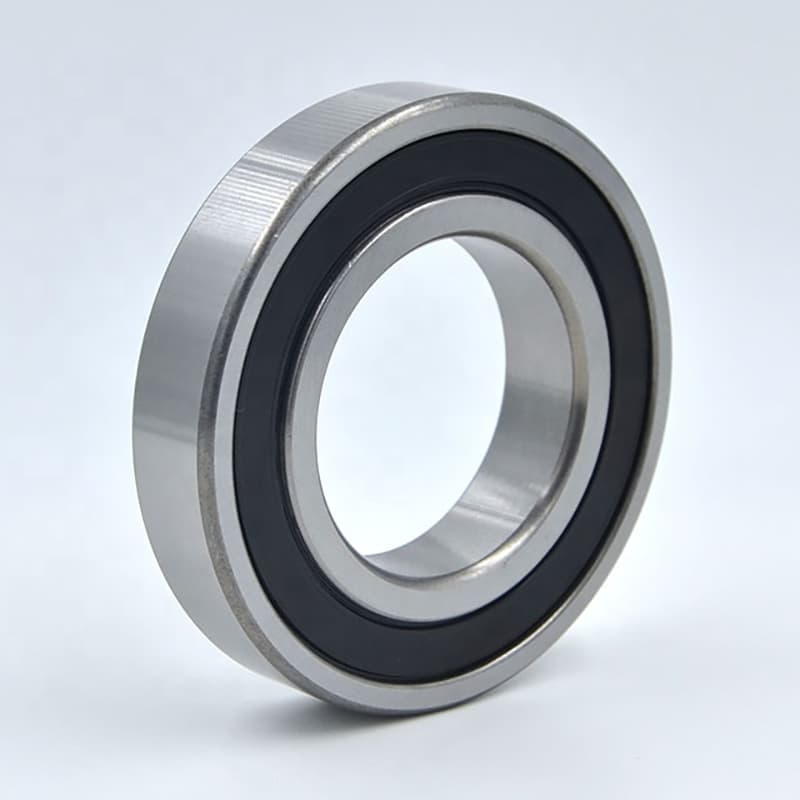
Let me explain each requirement in depth.
Low friction torque – the range extender. Friction torque is the force needed to turn the bearing. It comes from three sources: seal drag, grease churning, and ball‑race friction. For EVs, seal drag is often the biggest. A contact rubber seal (2RS) can have 2–5 N·cm of torque. A non‑contact shield (ZZ) has near zero torque. So why not always use ZZ? Because ZZ does not keep water and dust out. Rolling‑bearing handbooks and catalogues explain that ZZ‑type shields minimize torque but offer limited protection, while 2RS‑type seals give much better sealing at the cost of higher friction [web:865][web:868]. For outdoor EVs, you need seals. But you can use low‑torque seals (2RS1 or 2RSR). These have a smaller lip contact area. They reduce friction by 30–50% compared to standard seals. Comparison notes on 2RS1‑type bearings show that low‑torque contact seals cut friction while maintaining effective dust protection [web:859][web:857].
The grease also matters. A low‑viscosity grease (ISO VG 46–68) creates less churning friction than a high‑viscosity grease (ISO VG 150–220). Industrial‑grease guides explicitly recommend ISO VG 46–100 for electric‑motor bearings to balance protection and low‑churning loss [web:860]. And a lower grease fill (15–20% of free space) reduces churning even more. Optimizer‑style handbooks point out that overfilling is a leading cause of churning and overheating in motor bearings, and define “correct fill” formulas around 15–20% of free space [web:860][web:864].
How to measure: A torque tester spins the bearing at low speed (10-20 RPM) and measures the resistance. For a 6202 bearing used in an e-scooter motor, I aim for starting torque below 3 N·cm and running torque below 2 N·cm. Standard bearings often have 6-8 N·cm.
High speed capability. The bearing’s limiting speed (from the catalog) is based on ideal conditions. For EV motors, you need to stay at least 20% below that limit. For example, if the catalog says 15,000 RPM for grease, do not run above 12,000 RPM. Also, the bearing’s precision class affects speed capability. A P5 bearing has better ball roundness and race smoothness. It can run 10-15% faster than a P0 bearing before overheating.
For high-speed EV motors (above 8,000 RPM), use bearings with a glass-fiber reinforced polyamide cage. This cage is light and has low friction. Avoid steel cages for high speed.
Extended grease life – the maintenance eliminator. Most small EVs are designed for zero maintenance. The bearings are greased once at the factory and sealed. The grease must last the vehicle’s life. For a personal e-scooter, that may be 3 years or 5,000 km. For a commercial AGV, it may be 10,000 hours of operation.
Synthetic grease is essential. Mineral grease will oxidize and harden within 1-2 years. Polyurea and lithium complex synthetic greases can last 5 years or more. Also, the grease must have very low oil separation (less than 3% at 100°C). If the oil separates, it can leak past the seals and reduce lubrication.
At FYTZ, we use a polyurea-based synthetic grease with ISO VG 68 base oil for most EV applications. It has been tested for 15,000 hours in continuous operation and 5 years in intermittent use.
Sealing effectiveness – IP rating for bearings. The bearing seal determines how well the bearing resists water and dust. For outdoor EVs, I recommend seals that provide IP64 or better. IP64 means no ingress of dust and protection against splashing water. To achieve this, use double-lip FKM seals (2RS). The FKM material is more resistant to weather and chemicals than standard NBR.
For indoor AGVs or auxiliary drives in clean areas, ZZ shields or single-lip seals are acceptable.
Low noise – for driver comfort. An electric vehicle is quiet. The motor makes little noise. So any bearing noise is noticeable. A noisy bearing also indicates wear. For EV applications, choose bearings with noise class V2 or better. V2 means the bearing noise level is below 50 dB for a 6202 size at 1,800 RPM. V1 is even quieter.
| Here is a summary table of EV bearing requirements: | Requirement | Target specification | How to achieve it |
|---|---|---|---|
| Low friction torque | Starting torque <3 N·cm (for 6202) | Low‑torque seals (2RS1), NLGI 1 grease, 15–20% fill | |
| High speed capability | 80% of catalog limit, or >10,000 RPM | Polyamide cage, P5 precision, ISO VG 46–68 grease | |
| Grease life | 10,000+ hours or 5+ years | Synthetic polyurea or lithium complex, low oil separation | |
| Sealing (outdoor) | Equivalent to IP64 | FKM 2RS double‑lip seals | |
| Low noise | Noise class V2 or V1 | High precision balls (Grade 10), smooth raceways |
How Do You Select Seals and Grease for Small EV Bearings?
The seal and grease are the most critical choices for EV bearings. Get them right, and the bearing lasts the life of the vehicle. Get them wrong, and the bearing fails early or drains the battery.
For small EV bearings, select seals based on the environment: ZZ shields for clean indoor use, 2RS1 low-torque seals for mixed use, and FKM 2RS heavy seals for wet or dusty outdoor use. For grease, use a synthetic polyurea or diester-based grease with ISO VG 46-68 viscosity, NLGI grade 1 or 1.5, and a fill percentage of 15-20%. Avoid standard mineral grease and high-friction seals.
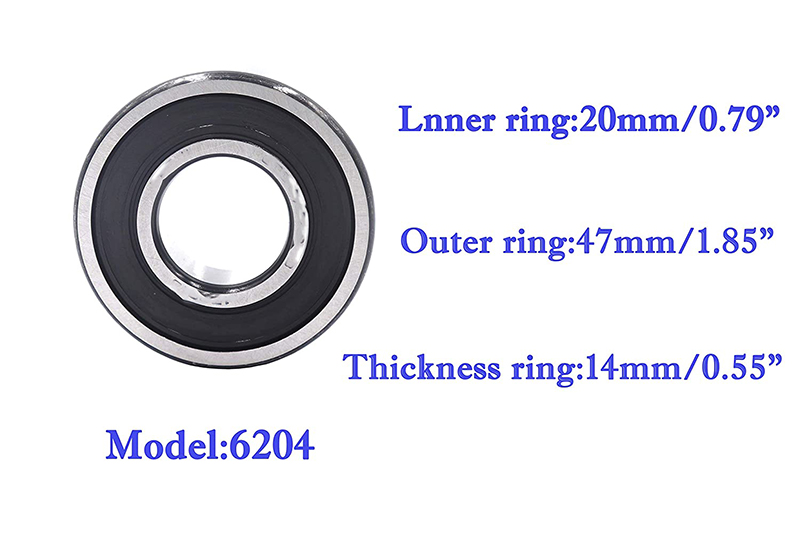
Let me help you choose the right combination.
Seal selection guide. Ask three questions:
-
Where will the vehicle operate?
- Indoors, clean (warehouse AGV): ZZ shields are fine. They add no friction and keep dust out. Use small gap shields (Z2) for better protection.
- Indoors, dusty (warehouse with concrete dust): Use 2RS1 low-torque rubber seals. The dust will damage ZZ shields.
- Outdoors, dry roads: Use 2RS1 seals with NBR rubber. They handle dust and occasional water splash.
- Outdoors, wet or off-road: Use FKM 2RS heavy seals. They resist water, mud, and ozone.
-
How important is battery range?
- Maximum range is critical (e-scooter, e-bike): Choose the lowest friction seal that still protects. For dry outdoor, ZZ is best. For wet, use 2RS1 (low-torque version).
- Range is less critical (forklift, AUX pump): Standard 2RS seals are fine. The extra friction is negligible compared to other loads.
-
What is the expected service life?
- Less than 2 years: NBR seals are adequate. They will not crack in that time.
- More than 2 years or outdoor: Use FKM seals. NBR hardens and cracks after 2-3 years in outdoor UV and ozone.
Grease selection guide. For EV bearings, I recommend a three-tier approach:
- Budget EV (low cost, short life, less than 2,000 km): Use a lithium complex synthetic grease with ISO VG 100 and NLGI 2. This is a general-purpose grease that works okay. Expect 2,000-3,000 hours of life.
- Standard EV (mid-range e-scooter, e-bike, 2-5 years life): Use a polyurea synthetic grease with ISO VG 68 and NLGI 1.5. Fill at 15-18%. This gives low friction and 10,000+ hours of life. This is my most recommended option.
- Premium EV (long life, cold weather, high performance): Use a diester-based synthetic grease with ISO VG 46 and NLGI 1. Diester oils have extremely low pour points (-50°C) and very low friction. Fill at 12-15%. This gives the highest efficiency and longest life, but costs more.
Grease fill amount for EVs. Do not overfill. For low-torque applications, use 12-18% fill. For standard EV bearings, use 15-20%. For high-load bearings (like on a heavy forklift drive wheel), use 20-25%. Too much grease creates churning and heat. I have seen bearings with 40% fill run 8°C hotter than the same bearing with 15% fill. That heat reduces grease life and battery range.
A real story from a customer in Turkey. He makes electric scooters for rental fleets. The scooters are outdoors in all weather. He used standard 6301 bearings with NBR 2RS seals and mineral grease. The bearings failed after 3,000 km. Water got in and rusted the rings. I recommended bearings with FKM 2RS seals and polyurea synthetic grease (ISO VG 68, NLGI 1.5). The new bearings have lasted 8,000 km and are still running. The fleet maintenance cost dropped by 70%. FKM seals offer far better water and chemical resistance than NBR, and polyurea synthetic greases with ISO VG 68‑type base oils are specifically designed for long‑life, wet‑environment bearing service [web:889][web:891][web:897].
Here is a final selection matrix:
| Vehicle type | Environment | Recommended seal | Recommended grease | Expected life |
|---|---|---|---|---|
| E‑scooter (rental) | Outdoor, wet, high use | FKM 2RS | Polyurea, ISO VG 68, NLGI 1.5, 15% fill | 8,000–12,000 km |
| E‑bike (personal) | Outdoor, dry | 2RS1 low‑torque (NBR) | Polyurea, ISO VG 68, NLGI 1.5, 18% fill | 5,000–8,000 km |
| AGV (warehouse) | Indoors, clean | ZZ shields | Lithium complex, ISO VG 100, NLGI 2, 20% fill | 15,000 hours |
| Electric forklift auxiliary motor | Indoors, dusty | 2RS1 (NBR) | Polyurea, ISO VG 100, NLGI 2, 20% fill | 10,000 hours |
| Power steering pump (EV) | Engine bay, hot | FKM 2RS | Diester, ISO VG 46, NLGI 1, 12% fill | 5,000 hours |
Conclusion
For small EV and auxiliary drive bearings, choose low-friction seals, synthetic low-viscosity grease, and polyamide cages. Match the seal to your environment. That gives you longer range and fewer failures.