
You pick a bearing. You install it. Two weeks later, it runs hot. The noise is loud. The grease is leaking out. You picked the wrong grease for your speed.
To match grease type with bearing speed, use low-viscosity synthetic grease for high speeds (above 3,000 RPM) and high-viscosity mineral grease for low speeds (below 1,000 RPM). Also match the thickener type – polyamide or lithium complex for high speed, simple lithium for low speed.
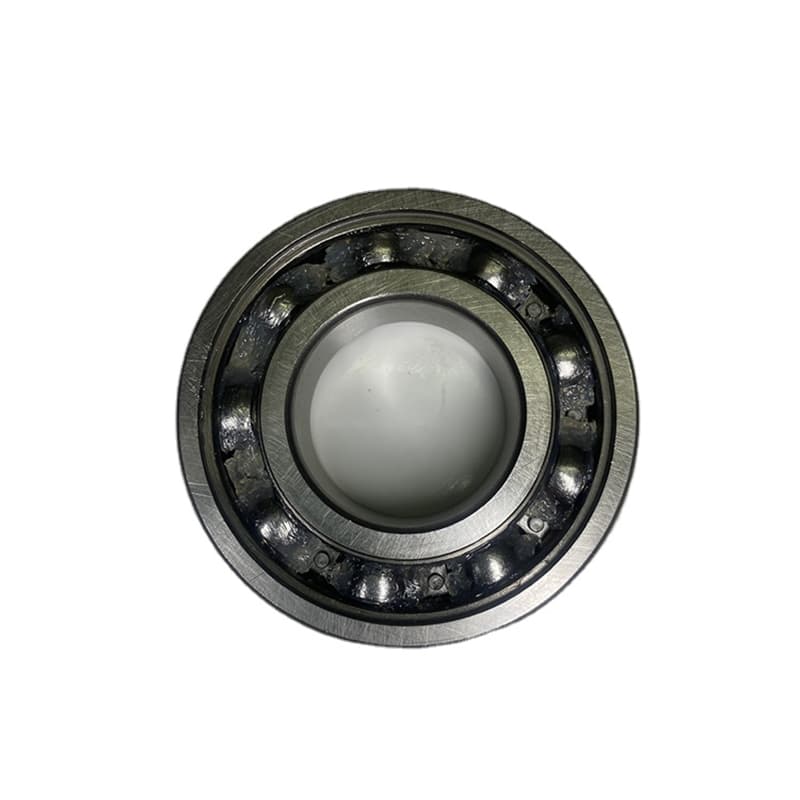
I am Leo from FYTZ Bearing. I sell bearings to factories and distributors around the world. One question I hear all the time is: “What grease should I use?” Most buyers ignore this. Then they have failures. I want to help you avoid that. Let me show you how to match grease to your bearing speed.
Why Is Grease Selection Critical for Bearing Speed Performance?
You might think all grease is the same. That is not true. Grease has two main parts: base oil and thickener. The base oil does the lubricating. The thickener holds the oil in place. At different speeds, these two parts behave very differently.
Grease selection is critical because at high speeds, the grease must flow quickly to form an oil film. At low speeds, the grease must stay thick enough to prevent metal-to-metal contact. The wrong grease will cause heat, wear, and early failure no matter how good your bearing is.
Let me explain the science in simple terms.
The oil film is everything.
A bearing works because the balls roll on a thin film of oil. That film separates the metal parts. Without it, you have metal on metal. That creates heat and wear. The oil film comes from the base oil in the grease. But the oil needs to get into the contact zone. At high speed, the oil must flow quickly. If it is too thick, it will not flow fast enough. The bearing will run dry for a split second each time a ball passes. That split second of dry running causes wear.
Speed changes the grease behavior. At low speed (below 1,000 RPM), the bearing turns slowly. The balls have time to push the grease aside. A thick grease works fine. But at high speed (above 5,000 RPM), the balls move very fast. They need a thin oil that flows back quickly after each ball passes. If the grease is too thick, it will churn. Churning creates heat. Heat makes the grease oxidize. Oxidized grease hardens and stops lubricating.
The wrong grease shortens bearing life dramatically. I have seen the same bearing with two different greases. One lasted 10,000 hours. The other failed at 1,000 hours. The only difference was the grease. So do not treat grease as an afterthought. It is a core part of the bearing system.
Real story from a customer. A customer in Pakistan bought my bearings for his textile spinning machine. The machine ran at 8,000 RPM. He used a standard mineral grease from a local shop. The bearings got hot and failed in three months. I sent him a sample of our high-speed synthetic grease. He cleaned the bearings, repacked them with the new grease, and ran the same machine. The bearings lasted 14 months. That is the power of matching grease to speed.
How Does RPM Affect Grease Behavior and Oil Film Formation?
You turn a bearing slowly. The grease sits in one place. You turn it fast. The grease moves around. It gets thrown to the sides. It heats up. It changes shape. RPM is not just a number. It changes everything about how the grease works.
As RPM increases, the grease experiences higher centrifugal force, more shear, and higher temperature. Centrifugal force pushes grease out of the bearing. Shear breaks down the thickener. Heat speeds up oxidation. So high-speed bearings need grease that resists all three: low oil viscosity for low shear, stable thickener, and high oxidation resistance.
Let me break down the three main effects of speed on grease.
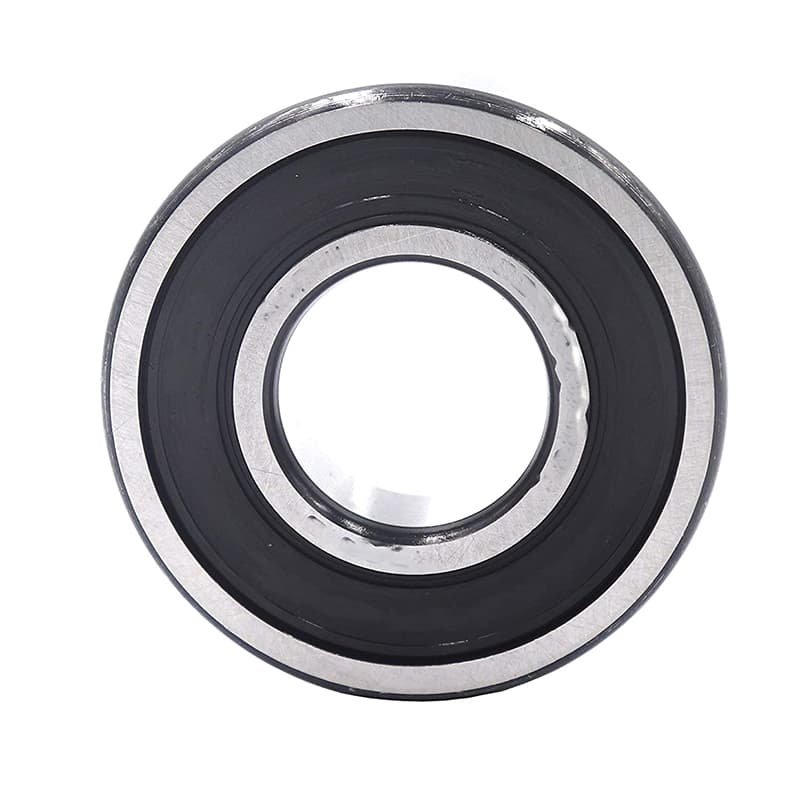
Effect 1: Centrifugal force throws grease out. When a bearing spins, the inner ring rotates. The grease near the inner ring gets thrown outward. At 10,000 RPM, the centrifugal force is huge. The grease tries to leave the bearing. The only thing keeping it inside is the seals or shields. That is why high‑speed bearings often use non‑contact shields (ZZ) instead of rubber seals. Rubber seals create drag. But they also keep grease in. With ZZ shields, some grease will escape. So you need a grease that stays in place even under high centrifugal force. A thick grease with a high yield point works better.
Effect 2: Shear breaks down the thickener. The thickener is like a sponge. It holds the oil. When the bearing spins, the balls and races shear the grease. That shearing action breaks the thickener fibers into smaller pieces. Over time, the thickener stops holding the oil. The oil leaks out. The bearing runs dry. High speed means more shear per hour. So for high‑speed bearings, you need a thickener that resists shear breakdown. Polyurea and lithium complex are good. Simple lithium soap breaks down faster.
Effect 3: Heat speeds up oxidation. Friction creates heat. Higher speed creates more heat. At 70°C, a good grease lasts 10,000 hours. At 100°C, the same grease lasts only 2,000 hours. Speed directly affects bearing temperature. So you have to choose a grease that can handle the expected temperature. Look at the dropping point. That is the temperature where the grease melts. For high-speed bearings, I want a dropping point above 180°C. For very high speed (above 10,000 RPM), I want above 200°C.
The oil film thickness changes with speed. The oil film is thicker at high speed because the balls pull more oil into the contact zone. But only if the oil can flow. At low speed, you need a thick oil to create a film. At high speed, a thin oil works fine. In fact, a thick oil at high speed creates too much drag. That drag heats the bearing. So the rule is: low speed = high viscosity oil. High speed = low viscosity oil.
Here is a table showing how speed changes grease requirements:
| Speed range (RPM) | Dominant effect | Grease requirement | Example application |
|---|---|---|---|
| Low (0‑1,000) | Gravity settling | High viscosity, simple thickener | Conveyor rollers, turntables |
| Medium (1,000‑3,000) | Moderate shear | Medium viscosity, lithium complex | Electric motors, fans |
| High (3,000‑6,000) | Centrifugal force + shear | Low viscosity, polyurea or lithium complex | Spindles, small pumps |
| Very high (6,000‑12,000) | Heat + oil separation | Very low viscosity, synthetic, polyurea | Machine tool spindles |
| Ultra high (>12,000) | Oil starvation risk | Oil mist or very light synthetic | Turbochargers, dental drills |
How Do You Match Grease Base Oil Viscosity to Your Bearing’s Operating Speed?
Base oil viscosity is the thickness of the oil inside the grease. You see numbers like ISO VG 68, 100, 150, 220. The higher the number, the thicker the oil. Picking the right number for your speed is the most important decision.
For low-speed bearings (below 1,000 RPM), use high viscosity oil (ISO VG 150 to 220) to create a thick protective film. For medium-speed bearings (1,000 to 3,000 RPM), use ISO VG 100 to 150. For high-speed bearings (3,000 to 6,000 RPM), use ISO VG 68 to 100. For very high speed (above 6,000 RPM), use ISO VG 32 to 68 or switch to oil lubrication.
Let me give you a simple method to pick the right viscosity.
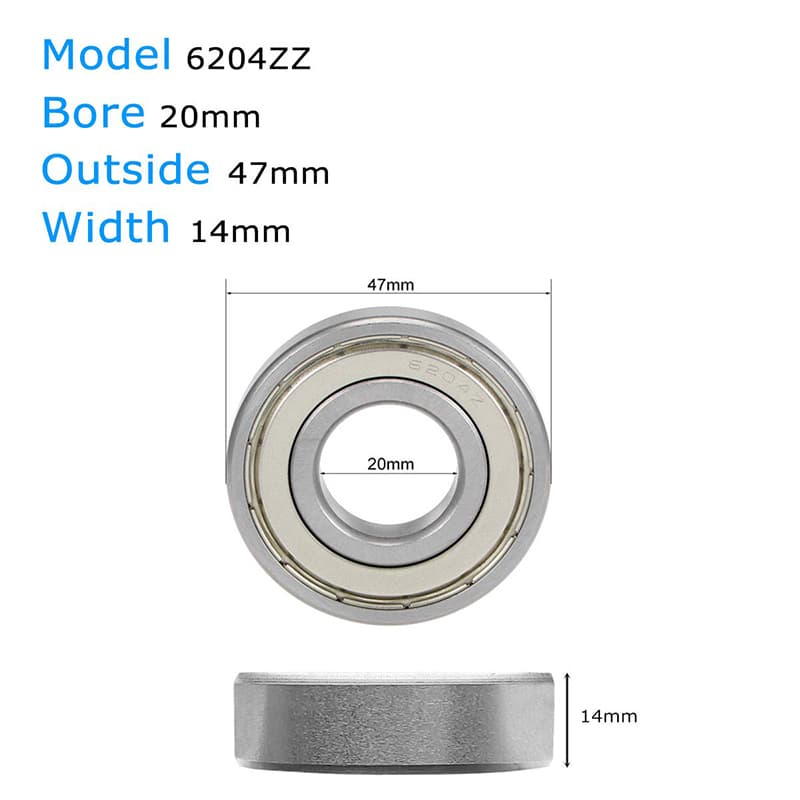
Step 1: Calculate your bearing’s speed factor. The speed factor is bore diameter in mm times RPM. For example, a 6204 bearing has a 20 mm bore. If it runs at 3,000 RPM, the speed factor is 20 x 3,000 = 60,000. This number helps you choose the right oil viscosity.
Step 2: Use the speed factor to find the required viscosity. Here is a simple guide: bearing speed‑factor (DN value) charts.
- Speed factor below 50,000: Use ISO VG 150 to 220
- Speed factor 50,000 to 100,000: Use ISO VG 100 to 150
- Speed factor 100,000 to 200,000: Use ISO VG 68 to 100
- Speed factor above 200,000: Use ISO VG 32 to 68
Step 3: Consider the temperature. The above numbers are for 70°C operating temperature. If your bearing runs hotter, the oil gets thinner. So you need to start with a thicker oil. For every 10°C above 70°C, go up one viscosity grade. For example, if your speed factor says ISO VG 68 but your bearing runs at 90°C, use ISO VG 100.
Why too thick is bad. Some buyers think thicker is always better. That is wrong. At high speed, a thick oil creates churning loss. The bearing fights the oil. That waste heat. I tested two 6204 bearings at 5,000 RPM. One had ISO VG 220 grease. The other had ISO VG 68 grease. The bearing with thick grease ran 8°C hotter. That temperature rise can halve grease life. So do not over‑viscosity.
Why too thin is also bad. At low speed, a thin oil does not make a strong film. The balls sink into the race. Metal touches metal. Wear happens fast. I saw a customer in Egypt use high‑speed grease on a slow conveyor. The bearings failed in 800 hours. I switched him to thick grease (ISO VG 220). The same bearings ran for 6,000 hours, illustrating the importance of matching ISO VG viscosity to speed and load.
Real story from my factory. We make bearings for a packaging machine company in Turkey. Their machines run at 4,500 RPM. They used to use a standard grease with ISO VG 150. Bearings lasted 4,000 hours. I suggested they switch to ISO VG 68 synthetic grease. The bearings now last 7,000 hours. The thinner grease reduced heat and wear. The customer saved money on bearing replacements.
Here is a quick viscosity-speed matching table:
| Operating speed (RPM) for a 20mm bore bearing | Recommended ISO VG (at 70°C) | Grease thickener type | Expected grease life |
|---|---|---|---|
| 500 | 220 | Simple lithium | 15,000+ hours |
| 1,500 | 150 | Lithium complex | 12,000 hours |
| 3,000 | 100 | Lithium complex or polyurea | 10,000 hours |
| 5,000 | 68 | Polyurea | 8,000 hours |
| 8,000 | 46 | Polyurea or ester | 5,000 hours |
| 12,000 | 32 | Ester (synthetic) | 3,000 hours |
How Do You Choose Between Low-Speed and High-Speed Grease Thickener and Consistency?
Base oil viscosity is one part. The thickener and the NLGI grade are the other parts. The thickener holds the oil. The NLGI grade tells you how hard or soft the grease is. Both matter for speed.
For low-speed applications (below 1,000 RPM), use NLGI grade 2 or 3 grease with a simple lithium thickener. For high-speed applications (above 3,000 RPM), use NLGI grade 1 or 2 grease with a polyurea or lithium complex thickener. The softer grease flows better at high speed.
Let me explain thickeners and NLGI grades.
What is a thickener? Think of the thickener as a sponge. The base oil is the water in the sponge. When you squeeze the sponge (shear), some water comes out. That water (oil) lubricates the bearing. Then the sponge sucks it back. Different sponges have different properties. Simple lithium soap is a common sponge. But at high speed, it breaks down faster. Polyurea is a stronger sponge. It resists shear and heat. Ester-based thickeners are for very high speed and high temperature. Grease thickeners as a “sponge” network and thickener types (lithium, polyurea, ester).
NLGI grade explained. NLGI stands for National Lubricating Grease Institute. They have grades from 000 (very soft, like cooking oil) to 6 (very hard, like a block of wax). Most bearing greases are NLGI 1, 2, or 3. NLGI 2 is like peanut butter. NLGI 3 is like cold butter. NLGI 1 is like soft butter. NLGI grade 1, 2, 3 consistency and general NLGI grading system.
- NLGI 1: Soft, flows easily. Good for high speed, cold weather, or central lubrication systems.
- NLGI 2: Medium, general purpose. Good for most bearings from 1,000 to 6,000 RPM.
- NLGI 3: Hard, stays in place. Good for low speed, high load, or vertical shafts.
Low‑speed choice (under 1,000 RPM). You want a hard grease that does not drip out. NLGI 3 is good. The thickener can be simple lithium. It is cheap and works fine at low speed. For very slow bearings (like turntables at 10 RPM), you can even use NLGI 4. That grease is almost solid. It will not leak out over years of slow rotation.
High‑speed choice (over 3,000 RPM). You want a softer grease that flows back quickly. NLGI 1 or 2 is best. Do not use NLGI 3 at high speed. It will churn and overheat. The thickener must resist shear. Polyurea or lithium complex are the best choices. They handle high speed without breaking down.
Very high speed (over 8,000 RPM). For these speeds, I use NLGI 1 with polyurea or ester thickener. Some manufacturers even use NLGI 0 or 00 for extremely high speed (like 20,000 RPM for small dental drill bearings). But those are special cases. For most industrial bearings, NLGI 1 is the softest you need.
A story from a customer in Brazil. He runs a juice packing line. The capping machine runs at 4,800 RPM. He used NLGI 2 grease with simple lithium thickener. The bearings lasted 3,000 hours. I suggested he switch to NLGI 1 with polyurea thickener and ISO VG 68 oil. The bearings now last 7,000 hours. The softer grease reduced churning. The stronger thickener resisted breakdown. High‑speed grease with polyurea and lower ISO VG improves bearing life.
Here is a complete speed‑grease matching table:
| Speed range (RPM) for 20mm bore | Base oil viscosity (ISO VG) | NLGI grade | Thickener type | Typical grease life (hours) |
|---|---|---|---|---|
| 0 – 500 | 220 | 3 | Simple lithium | 15,000+ |
| 500 – 1,000 | 150 – 220 | 2 – 3 | Lithium complex | 12,000 |
| 1,000 – 2,000 | 150 | 2 | Lithium complex | 10,000 |
| 2,000 – 3,000 | 100 – 150 | 2 | Lithium complex or polyurea | 8,000 – 10,000 |
| 3,000 – 4,000 | 100 | 1 – 2 | Polyurea | 7,000 – 8,000 |
| 4,000 – 6,000 | 68 – 100 | 1 – 2 | Polyurea | 5,000 – 7,000 |
| 6,000 – 8,000 | 46 – 68 | 1 | Polyurea or ester | 4,000 – 5,000 |
| 8,000 – 10,000 | 32 – 46 | 1 | Ester | 3,000 – 4,000 |
| 10,000 – 15,000 | 32 | 0 or 00 | Ester or oil mist | 1,000 – 2,000 |
See also general high‑speed bearing grease selection charts (ISO VG + NLGI) and polyurea vs lithium complex usage guidance.
Conclusion
Match grease viscosity and thickener to your bearing speed. Use low viscosity and soft grease for high speed. Use high viscosity and hard grease for low speed.