
Your refrigerator assembly line stops. A small bearing on a conveyor seized. Now 50 workers are waiting. Every minute of downtime costs you money and delays shipments to stores.
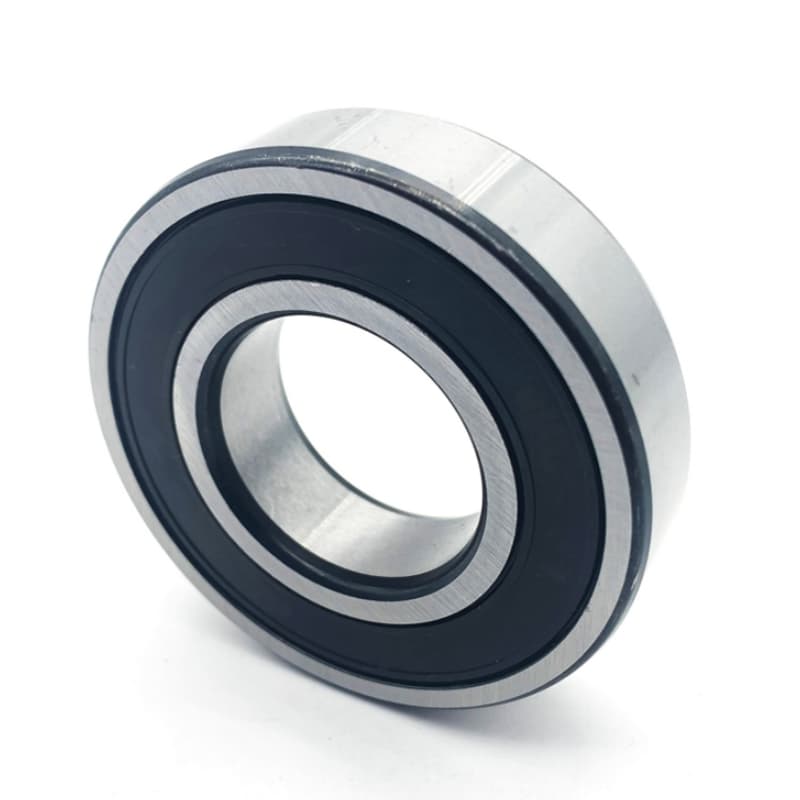
Deep groove ball bearings are used extensively in household appliance production lines. They support conveyors, assembly turntables, packaging machines, and robot arms. For these lines to run 24/7, bearings need low noise, high speed, long grease life, and protection from humidity and dust.
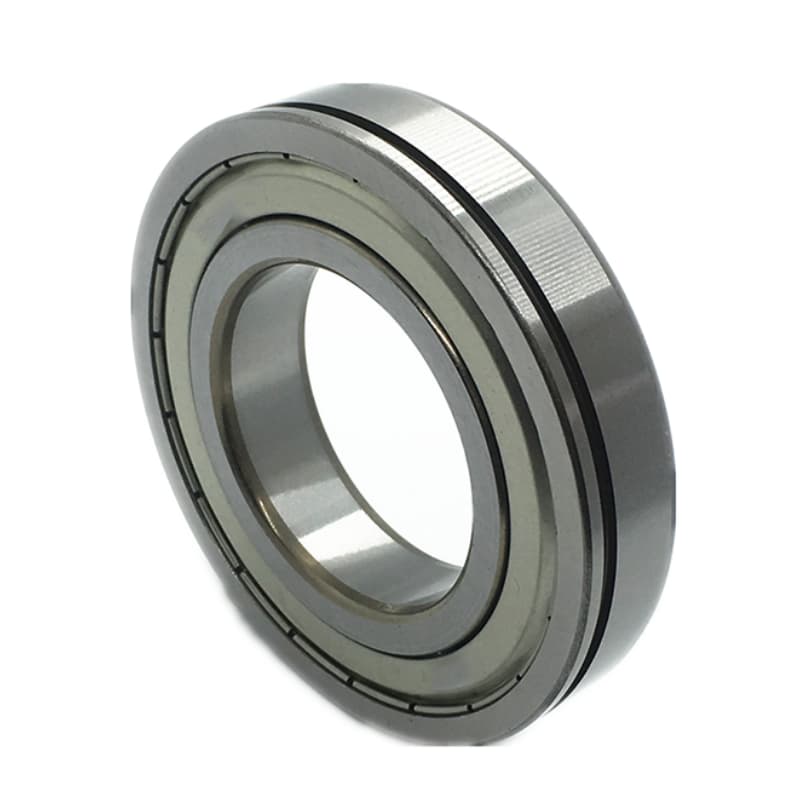
I am Leo from FYTZ Bearing. My factory makes bearings for many industries. One of my biggest customer groups is appliance manufacturers. They make refrigerators, washing machines, air conditioners, and ovens. Their production lines run fast and long. I have helped many of them choose the right bearings. Let me share what I have learned from these projects.
Why Do Household Appliance Production Lines Demand Reliable Deep Groove Ball Bearings?
You run a line that makes 500 refrigerators per shift. A bearing fails on a conveyor. The whole line stops. You lose 10 minutes to replace it. That is 80 refrigerators not made. That is lost revenue. Reliability is not a nice word. It is money.
Household appliance production lines need reliable bearings because they run continuously at high speed. They also have many start-stop cycles. And they operate in environments with dust, moisture, and temperature changes. A failed bearing stops the whole line and costs thousands of dollars per hour.
Let me explain why reliability is so critical in this industry.
High volume, low margin. Appliance manufacturing is a high-volume business. A refrigerator plant might make 2,000 units per day. Each unit has a small profit margin. So the plant needs to keep running every minute. If a bearing fails and the line stops for one hour, the plant loses about 80 units. That loss can wipe out the profit for the whole day. So bearing reliability directly hits the bottom line.
Many bearings in one line. A typical appliance assembly line has hundreds of bearings. There are bearings in conveyors, turntables, elevators, packaging machines, and robot arms. If each bearing has a 99% chance of lasting one year, then with 200 bearings, the chance of no failure is 0.99^200 = 13%. That is very low. So you need bearings with much higher reliability. I aim for 99.9% reliability per bearing. That gives a 82% chance of no failure in a year for 200 bearings. Still not perfect, but much better.
Start-stop cycles are hard on bearings. An appliance line does not run at steady speed. It starts and stops for each product. A conveyor might move, stop for assembly, move again. That is a start-stop cycle. Each cycle creates a moment of metal-to-metal contact before the oil film forms. Over a year, a bearing on a pick-and-place robot might see 500,000 start-stop cycles. That is like driving a car in city traffic instead of highway. The wear is much higher. So you need bearings with good grease and strong race material.
Noise matters for worker comfort and quality control. In an appliance factory, workers stand near the line for eight hours. If the bearings make noise, the noise level rises. That causes worker fatigue and complaints. Also, noisy bearings indicate internal wear. That wear will lead to failure. So appliance production managers often check bearing noise with a simple decibel meter. They want bearings running below 55 dB.
I have a customer in Indonesia. He makes air conditioner assembly lines. He used cheap bearings from a local trader. The bearings got noisy after three months. His workers complained of headaches. He also had quality issues because vibration from the bearings shook the assembly tools. He switched to my FYTZ bearings with P5 precision and low-noise grease. The noise dropped by 40%. His workers were happier. And his line ran for 18 months without a bearing change.
What Are the Common Applications of Deep Groove Ball Bearings in Appliance Production?
Second, use a shared quality checklist for every shipment. I send this to my long‑term clients before loading.
- Dimensions measured and recorded (send photo)
- Surface inspected (send photo)
- Heat numbers visible and match MTC
- Packaging intact
- Third-party inspection done (if requested)
The client checks the list. If something is missing, I fix it before shipping.
Third, track performance over time. Trust comes from consistency, not perfection.
| Shipment | Dimension Pass Rate | Surface Pass Rate | On‑Time Delivery | Overall Grade |
|---|---|---|---|---|
| 1 | 98% | 95% | Yes | A |
| 2 | 99% | 97% | Yes | A |
| 3 | 97% | 96% | Yes | A |
| 4 | 99% | 99% | Yes | A+ |
After four shipments of consistent performance, trust is strong.
Fourth, how to handle a quality miss in a long‑term partnership. When something goes wrong – and it will – the response matters more than the mistake.
| Supplier Response | Buyer Reaction |
|---|---|
| Deny the problem, argue about tolerance | Trust erodes, relationship damaged |
| Acknowledge, explain cause, replace at own cost | Trust preserved or even strengthened |
I follow the second path. My clients know I will make it right.
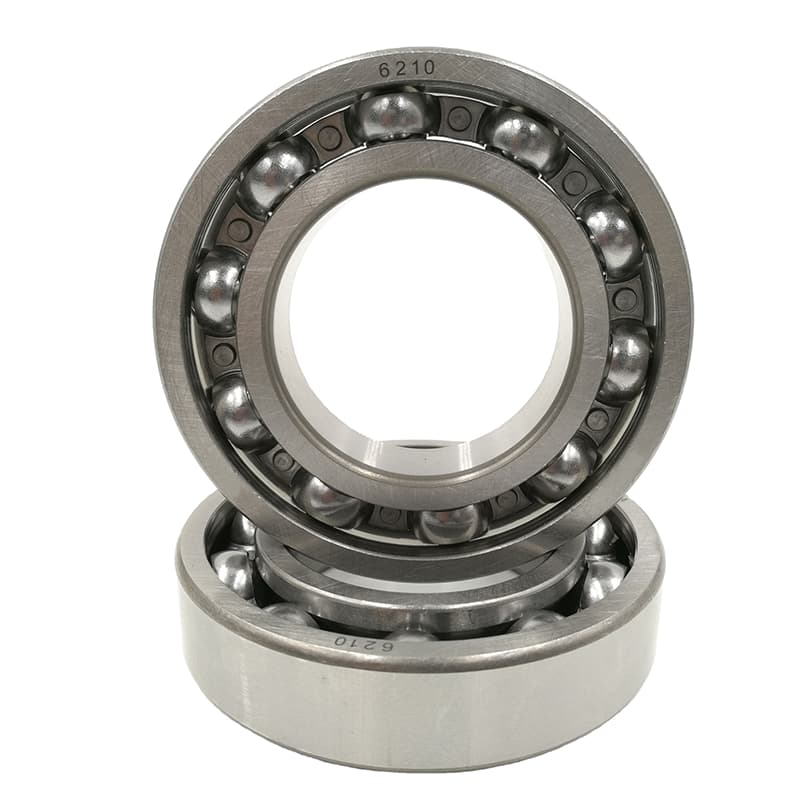
Let me describe each application in detail.
Belt conveyors. These are the backbone of any production line. A belt conveyor carries refrigerator shells from the stamping press to the assembly area. It moves washing machine tubs through the cleaning station. The bearings are in the conveyor rollers. Each roller has two deep groove ball bearings, one on each end. The rollers turn at low to medium speed – maybe 200 to 600 RPM. The load is moderate but continuous. For a conveyor that runs 20 hours per day, the bearings need to last at least 20,000 hours.
The biggest problem for conveyor bearings is contamination. In an appliance factory, there is dust from cardboard, grease from parts, and sometimes water from cleaning. So I recommend sealed bearings (2RS) with a rubber contact seal. The seal keeps dirt out and grease in. For a very dusty environment, I recommend adding a plastic cap on the roller end. That gives double protection. I also suggest using C3 internal clearance for conveyors that run continuously. The bearing heats up a little, and C3 gives room for expansion.
Assembly turntables. These are round tables that rotate slowly. Workers stand around the table. They put parts onto the rotating surface. The table turns at a constant low speed – maybe 5 to 10 RPM. The bearing is often a large-diameter, thin-section deep groove ball bearing. It supports the whole table and its load. The load is high because the table carries heavy appliances and multiple workers.
The key requirement here is low running torque and smooth rotation. If the bearing has high torque, the motor that turns the table will work harder. It may also cause jerky movement. That makes it hard for workers to place parts accurately. So for turntables, I recommend bearings with low‑viscosity grease and non-contact shields (ZZ) if the environment is clean. If there is dust, use low‑torque contact seals (2RS1). Also, the precision class should be at least P5. A P5 bearing runs with less runout, so the table stays level.
Packaging machines. At the end of the line, the finished appliance goes into a box. The packaging machine folds cardboard, applies tape, and puts the box on a pallet. This machine runs at high speed and has many moving parts. The bearings are in the tape heads, folding arms, and conveyor belts. The speed can be 2,000 to 4,000 RPM for some spindles. The loads are low, but the precision must be high. If a bearing has too much play, the tape head will miss the box.
For packaging machines, I recommend high-speed bearings with polyamide cages. The plastic cage is lighter than a steel cage. It reduces centrifugal force at high speed. Also, the grease should be a low-viscosity synthetic type (ISO VG 68 or 100). Do not overfill. Fill only 15% to 20% of the free space. Too much grease causes churning and heat. One more tip: use bearings with a noise rating of V2 or better. Packaging machines often run near office areas. Quiet bearings keep the noise level down.
Here is a summary table for these three applications:
| Application | Speed range | Main challenge | Recommended bearing features |
|---|---|---|---|
| Belt conveyor | 200-600 RPM | Contamination | 2RS seals, C3 clearance, standard grease fill |
| Assembly turntable | 5-50 RPM | Low torque, smooth rotation | ZZ shields or low-torque seals, P5 precision, low-viscosity grease |
| Packaging machine | 2,000-4,000 RPM | High speed, precision | Polyamide cage, low grease fill, V2 noise rating |
What Are the Key Performance Requirements: Low Noise, High Speed, and Long Grease Life?
You buy a bearing. It fits. It turns. But it makes a humming sound. Or it gets hot after two months. Or the grease dries out. These are performance problems. In appliance production, three things matter most: noise, speed, and grease life.
For appliance production lines, deep groove ball bearings must have noise below 55 dB for worker comfort, speed capability matching the machine (usually 2,000 to 6,000 RPM), and grease life of at least 10,000 hours to avoid frequent relubrication. Meeting these three requirements reduces downtime and improves product quality.
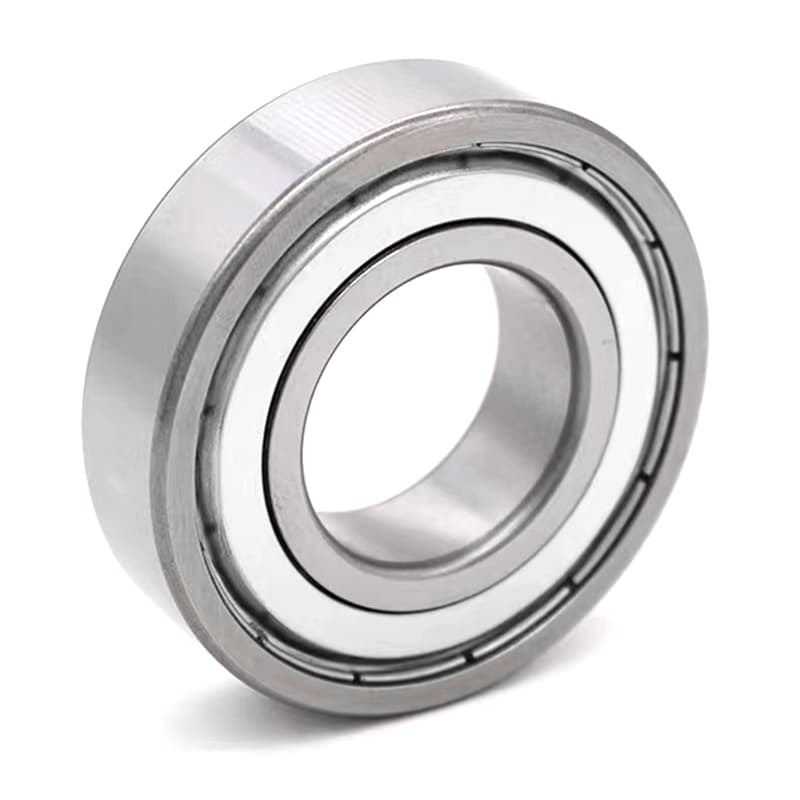
Let me break down each requirement with practical advice.
Low noise. Noise comes from three sources: raceway roughness, ball roundness error, and internal clearance mismatch. A noisy bearing has small surface defects. When the balls roll over them, they create vibration. That vibration becomes sound. The good news is that bearing manufacturers measure noise in a test. They give a grade like V3, V2, or V1. V1 is the quietest. For appliance production, I recommend V2 as a minimum. V1 is better for very sensitive areas like clean rooms.
You can test noise yourself without expensive tools. Hold the bearing in one hand. Spin the inner ring with your other hand. Put your ear close. A good bearing makes a smooth, consistent sound. A bad bearing makes a scratchy or clicking sound. Also, you can mount the bearing on a shaft and spin it with a drill. Listen for changes in pitch. This quick test catches most noisy bearings.
High speed. Speed capability is about the cage and the grease. A steel cage is strong but heavy. At high speed, the heavy cage creates centrifugal force. That force pushes the balls outward. This increases friction and heat. So for speeds above 3,000 RPM, I recommend a polyamide (plastic) cage. Polyamide is light. It does not deform the balls. Also, the grease must have a low base oil viscosity. Use ISO VG 68 or 100 for speeds from 3,000 to 6,000 RPM. For speeds above 6,000 RPM, oil mist lubrication is better than grease.
What is the maximum speed for a deep groove ball bearing in an appliance line? For a 6202 size bearing, the catalog limit with grease is about 18,000 RPM. But in real production, I never go above 12,000 RPM. That gives a safety margin. Also, remember that speed affects life. The L10 life formula divides by RPM. Doubling the RPM cuts the life in half. So if your machine runs fast, choose a larger bearing or a higher load rating to compensate.
Long grease life. This is a big problem in appliance lines. Many bearings are in hard-to-reach places. You cannot grease them every month. You need grease that lasts one or two years. Standard mineral grease might last 5,000 hours. That is about 7 months of 24/7 running. After that, the grease oxidizes and hardens. Then the bearing runs dry.
I recommend synthetic grease for long life. Synthetic base oils (PAO or ester) resist oxidation much better than mineral oils. They also work over a wider temperature range. For an appliance line that runs 20 hours per day, I aim for 15,000 hours of grease life. That is almost two years. To achieve that, use a grease with a high dropping point (above 200°C) and a thickener like polyurea or lithium complex. Also, fill the bearing with 25% to 30% of the free space. That gives enough grease without causing churning.
Here is a table showing how different grease types perform:
| Grease type | Base oil | Typical life @ 70°C (hours) | Max temperature | Cost level |
|---|---|---|---|---|
| Mineral (standard) | Mineral oil | 5,000 | 120°C | Low |
| Lithium complex (good) | Mineral or semi‑synthetic | 8,000‑10,000 | 150°C | Medium |
| Polyurea (better) | Synthetic (PAO) | 12,000‑15,000 | 180°C | Medium‑high |
| Ester‑based (best for high speed) | Synthetic ester | 10,000‑12,000 | 200°C | High |
For most appliance production lines, a good lithium complex or polyurea grease works well. Do not use the cheapest mineral grease. You will pay more in labor and downtime than you save on grease.
How Do You Select Bearings for Continuous Operation in High-Humidity or Dusty Environments?
Many appliance factories have challenging conditions. The washing machine assembly area has water and detergent. The refrigerator foam section has dust. The oven line has heat. You cannot put a standard bearing in these places and hope for the best.
For high-humidity environments, use stainless steel bearings or add rust-preventive coating. For dusty environments, use bearings with double-lip rubber seals (2RS) and fill with water-resistant grease. Also, consider adding external covers or labyrinth seals for extra protection.
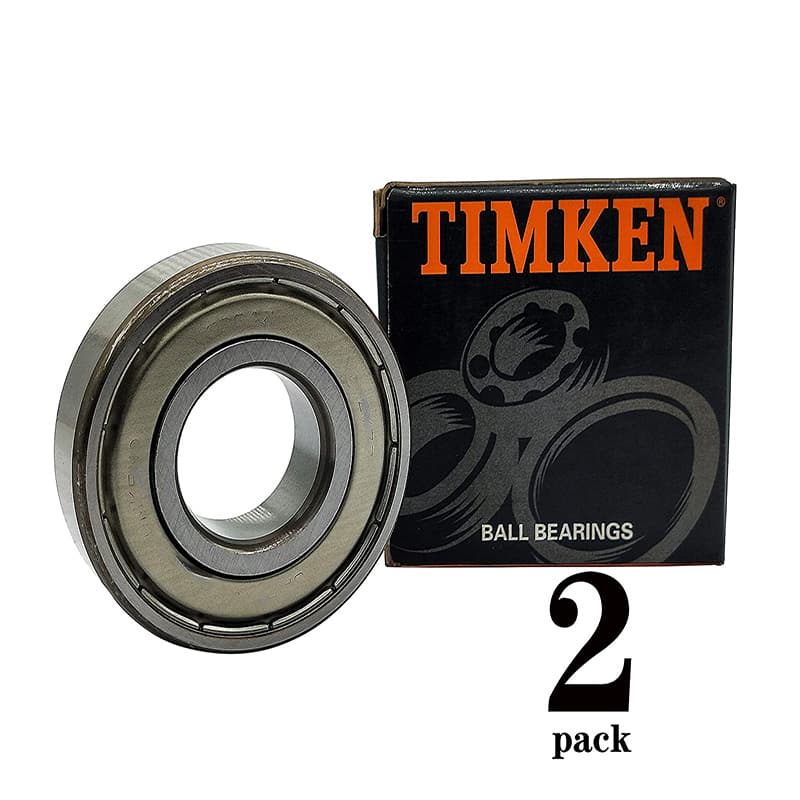
Let me give you specific solutions for each problem.
High-humidity – the rust problem. In a washing machine assembly line, water splashes. In a refrigerator line, condensation forms. Moisture gets into bearings. Then the steel races rust. Rust is abrasive. It grinds away the balls and races. The bearing fails quickly. I have seen a standard chrome steel bearing rust solid in two weeks in a wet area.
The first solution is to use stainless steel bearings. I recommend 440C stainless steel for races and balls. Stainless does not rust. It also has good hardness (about 58 HRC). The cost is about two to three times higher than chrome steel. But in a wet area, a chrome steel bearing might last one month, while stainless lasts three years. So stainless is cheaper in the long run.
The second solution is to keep the moisture out with sealing. Use bearings with double‑lip rubber seals (code 2RS). The two lips make a tight contact with the inner ring. Water cannot get in easily. Also, fill the bearing with a water‑resistant grease. Look for grease that passes the water washout test (ASTM D1264). Lithium complex and polyurea greases have good water resistance. Some specialty greases even have rust inhibitors added.
The third solution is to add external protection. Put a plastic cap over the bearing. Or use a bearing housing with a labyrinth seal. A labyrinth seal has multiple grooves. Water has to go through a long path to reach the bearing. This is more expensive but works well for very wet areas.
Dusty environments – the abrasive problem. In a refrigerator insulation foaming station, there is dust from the foam. In a wood cabinet line for ovens, there is wood dust. Dust is abrasive. It gets into the bearing and acts like sandpaper. The balls and races wear down fast.
The best solution is to use a bearing with high-quality contact seals. Not all rubber seals are the same. A standard seal (RS) has one lip. A double-lip seal (2RS) has two lips. The double lip creates a better barrier. Also, look for seals with steel inserts. The steel makes the seal stronger and keeps it in place. For very fine dust (like cement or toner powder), use a bearing with a PTFE-coated seal. PTFE is slippery. Dust does not stick to it.
Also, fill the bearing with thick grease. Use a grease with NLGI grade 2 or 3. Thicker grease resists dust intrusion. The dust sits on the grease surface instead of getting pushed into the bearing. Do not overfill, though. 30% fill is good. Too much grease causes heat.
Heat – another challenge. In an oven assembly line, the bearing near the baking chamber might see 80°C to 100°C. Standard grease melts at 120°C. But the grease also oxidizes faster at high heat. So for hot areas, use a high-temperature grease with a dropping point above 200°C. Also, use bearings with C3 or C4 internal clearance. The extra clearance allows for thermal expansion. If you use normal clearance (CN), the bearing may seize when it gets hot.
Here is a selection guide for different environments:
| Environment | Bearing material | Seal type | Grease type | Internal clearance |
|---|---|---|---|---|
| Normal dry and clean | Chrome steel (GCr15) | ZZ (shields) | Standard lithium | CN or C3 |
| Humid (washing area) | Stainless steel (440C) | 2RS (double‑lip) | Water‑resistant (polyurea) | CN |
| Dusty (foam/wood) | Chrome steel | 2RS with steel insert | Thick (NLGI 2‑3) | CN |
| Hot (near ovens) | Chrome steel (heat‑stabilized) | 2RS (high‑temp rubber) | High‑temp (dropping point >200°C) | C3 or C4 |
| Wet + dusty | Stainless steel | 2RS with PTFE coating | Water‑resistant + EP additives | CN |
I have a customer in South Africa. He makes electric ovens. The production line has a section where workers apply insulation material. The area is dusty. He used standard ZZ shielded bearings. The dust got in through the small gap. The bearings failed every two months. I suggested he switch to 2RS bearings with double-lip seals and a thicker grease. Now the bearings last 12 months. He saved eight bearing changes per year. That is a lot of labor cost.
Conclusion
Pick the right bearing for each station: sealed for dust, stainless for wet areas, low-noise for worker comfort, and long-life grease for continuous running. That keeps your line moving.