
Your supermarket freezer fan starts making a grinding noise. The motor is hot. The food is warming up. A small bearing failure just cost you thousands in spoiled products.
For commercial refrigeration fan motors, deep groove ball bearings must handle low temperatures, continuous running, and moisture exposure. They need low starting torque, quiet operation, and special grease that stays fluid at -20°C. Standard bearings will fail fast in a freezer.
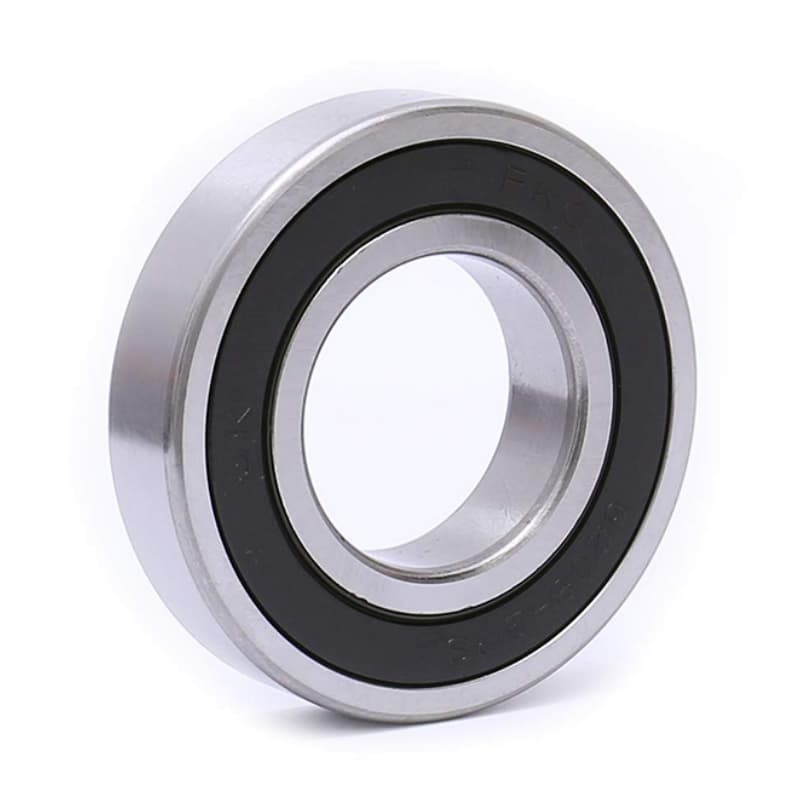
I am Leo from FYTZ Bearing. My factory makes bearings for all kinds of motors. One of my biggest customer groups is commercial refrigeration. They build fans for supermarket freezers, cold storage rooms, and refrigerated trucks. These fans run 24/7 in cold and wet conditions. I have learned a lot about what works and what breaks. Let me share that knowledge with you.
Why Do Commercial Refrigeration Fan Motors Need Special Deep Groove Ball Bearings?
You might think a fan motor is a fan motor. The same bearing works everywhere. That is not true. A fan on an air conditioner runs in a warm, dry room. A fan in a freezer runs at -10°C with ice forming on the blades. The bearing sees very different conditions.
Commercial refrigeration fan motors need special bearings because standard grease freezes at low temperatures. The seals become brittle. Moisture gets in and rusts the races. The fan runs continuously for years without maintenance. A normal bearing will seize or get noisy within months in a freezer environment.
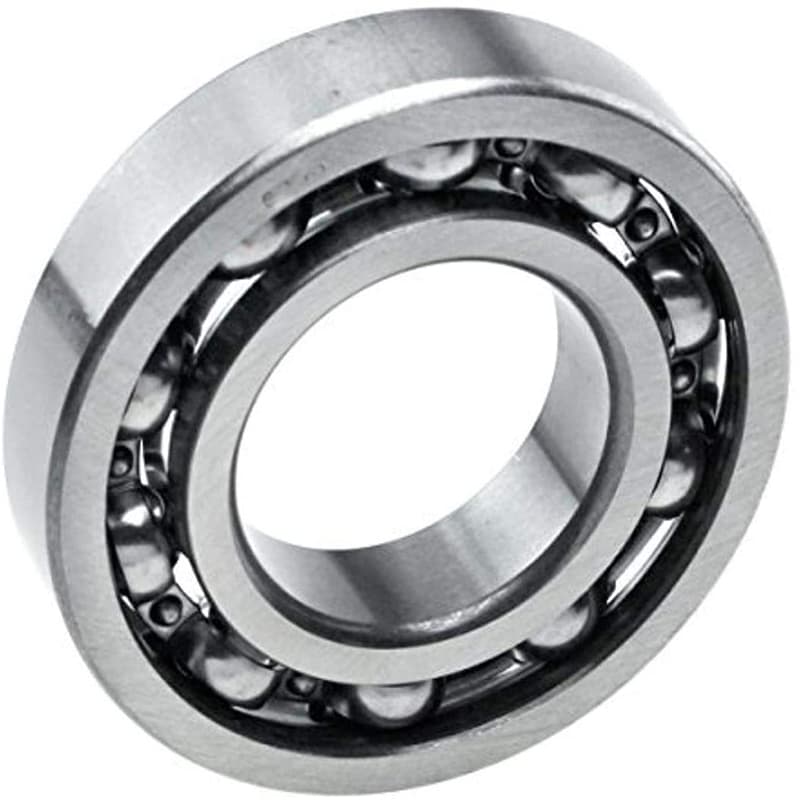
Let me explain the three big problems with standard bearings in cold storage.
Problem 1: Grease freezes or thickens. Most standard greases are made for room temperature. At 0°C, they start to thicken. At -10°C, they become like soft wax. At -20°C, they are almost solid. When the grease is solid, the bearing cannot turn. Or it turns with high torque. The motor works harder and draws more current. The motor can overheat or burn out. I have seen this many times. A customer in Russia bought standard bearings for freezer fans. At -15°C, the fans would not start. The motor hummed but the fan did not turn. The grease was too thick. Standard greases thicken at low temperature, increasing friction torque and causing start‑up failure [web:311][web:307].
Problem 2: Moisture gets in and freezes. A freezer is humid. Every time someone opens the door, warm wet air rushes in. That moisture condenses on cold surfaces. It gets into the bearing. Then it freezes. Ice crystals form inside the bearing. Ice is hard and sharp. It scratches the races and balls. Once ice forms, the bearing makes noise and wears out fast. Even if the ice melts later, the damage is done. Moisture and freeze‑thaw cycles in cold environments accelerate wear and corrosion inside sealed bearings [web:320][web:326].
Problem 3: Seals become brittle. Rubber seals are made of nitrile (NBR) or fluorocarbon (FKM). At low temperatures, rubber loses its flexibility. It gets hard and cracks. A cracked seal lets moisture and dirt in. It also lets grease out. So after a few months in a freezer, a standard seal fails. Then the bearing is open to the environment. NBR and FKM seal performance in low‑temperature environments explains why NBR can crack and let contamination enter.
A real story from my customer in India. He supplies fan motors for cold storage rooms. He used to buy standard 6202 bearings with normal grease and NBR seals. The motors worked fine in his warehouse at 25°C. But when he installed them in a cold storage at -5°C, half of them failed within three months. The bearings made noise. Some seized. He lost that customer. Then he came to me. I gave him bearings with low‑temperature grease and FKM seals. He tested them for six months. No failures. He now buys all his refrigeration bearings from me.
What Are the Key Operating Conditions: Low Temperature, Continuous Running, and Moisture Exposure?
A refrigeration fan motor works in a tough environment. You need to understand these three conditions. Then you can pick the right bearing.
The three key operating conditions are: low temperature (often -10°C to -25°C), continuous running (8,000+ hours per year), and high moisture (condensation and occasional water spray). Each condition puts a different stress on the bearing. You need a bearing that handles all three at the same time.
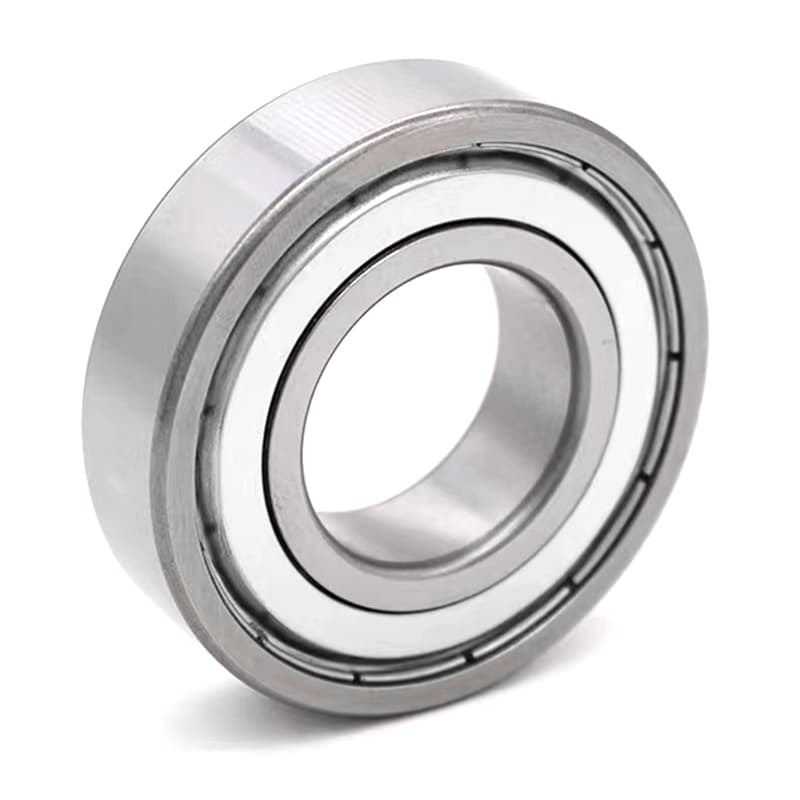
Let me break down each condition and its effect on bearings.
Low temperature – what really happens inside the bearing. At low temperatures, the steel contracts. The internal clearance gets smaller. A bearing with normal clearance (CN) at room temperature might end up with negative clearance (interference) at -20°C. That means the balls are squeezed between the races. The bearing will have high friction and may seize. So for cold environments, I recommend C3 or even C4 internal clearance. The extra space allows for steel contraction. Low-temperature effects on bearing internal clearance explain how contraction reduces clearance and increases friction.
Also, low temperature changes the grease. The base oil becomes more viscous. The thickener becomes harder. The grease’s dropping point is not important here. What matters is the low-temperature torque. Good low-temperature grease has a low pour point. That is the temperature where the oil stops flowing. Look for grease with a pour point below -30°C. That ensures the grease will still work at -20°C. Pour point and low-temperature lubricant performance provide guidance on selecting suitable low-temperature greases.
Continuous running – the wear factor. A supermarket freezer fan runs 24 hours a day, 365 days a year. That is 8,760 hours per year. A normal bearing might be rated for 20,000 hours L10 life. That is only 2.3 years. So you need a bearing with longer life. For refrigeration fans, I aim for L10 life of at least 50,000 hours. That is almost 6 years. To get that life, choose a bearing with a higher dynamic load rating (C). A larger bearing or a higher series (like 63xx instead of 62xx) gives more life.
Continuous running also means the grease never rests. It is under constant shear. So the grease must have good shear stability. The thickener should not break down over time. Polyurea and lithium complex thickeners are better than simple lithium for long‑term continuous running.
Moisture exposure – the rust and ice risk. In a cold storage room, moisture is everywhere. When the fan runs, it pulls in cold air that is near 100% humidity. Ice can form on the fan blades. That ice can melt and drip into the motor. The bearing must resist water. The seal is the first defense. For refrigeration, I recommend double‑lip rubber seals (2RS) made of FKM (fluorocarbon) rubber. FKM stays flexible down to -20°C. It also resists water better than NBR.
The steel also matters. Standard chrome steel (GCr15) can rust. In a wet environment, use bearings with a rust‑preventive coating. Some manufacturers offer zinc or manganese phosphate coating. Better yet, use stainless steel bearings (440C) for very wet areas. The cost is higher, but the life is much longer.
Here is a table showing how each condition affects bearing choice:
| Operating condition | Effect on bearing | Required bearing feature |
|---|---|---|
| Low temperature (-10°C to -25°C) | Steel contracts, grease thickens | C3 or C4 clearance, low‑temp grease (pour point <-30°C) |
| Continuous running (24/7) | Fatigue wear, grease shear | High dynamic load rating (long L10 life), shear‑stable thickener |
| Moisture exposure | Rust, ice damage, seal cracking | FKM double‑lip seals, rust‑resistant coating or stainless steel |
What Are the Bearing Requirements: Low Torque, Quiet Operation, and Long Grease Life at Low Temperatures?
You have a fan motor. The fan blade is heavy. The motor is small. You need the bearing to turn easily. You also need it to be quiet because the fan is in a store where customers shop. And you need the grease to last for years because you cannot regrease a fan motor easily.
For refrigeration fan motors, bearings need low starting torque so the motor can start in the cold. They need low running noise (below 50 dB) for customer comfort. And they need grease life of at least 30,000 hours at low temperature so the fan runs for years without service.
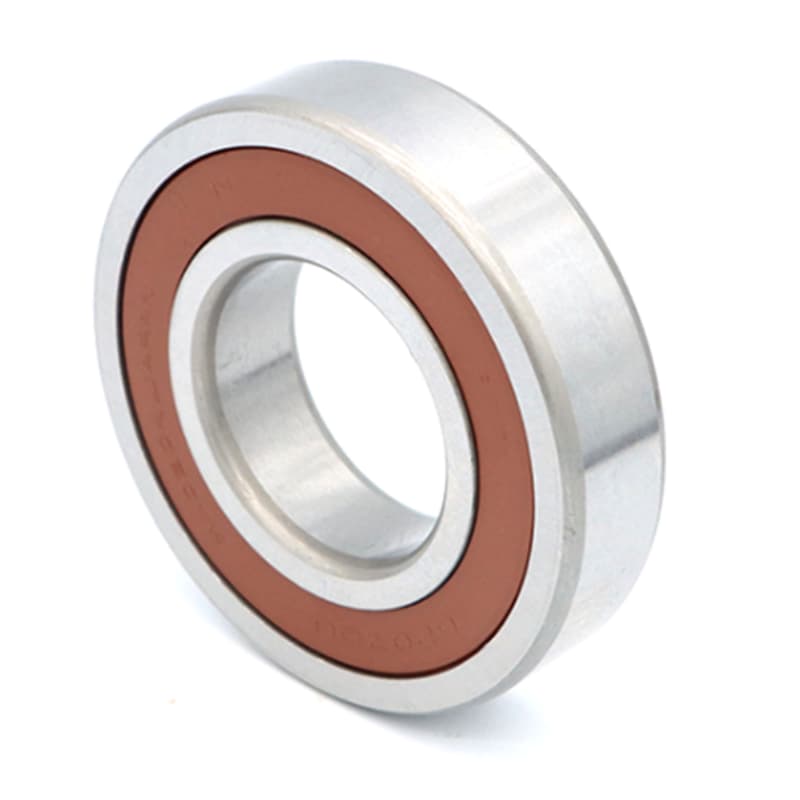
Let me explain how to meet each requirement.
Low starting torque – why it matters so much in the cold. Starting torque is the force needed to get the bearing turning from a stop. In a warm room, a good bearing might have 0.5 N·cm of starting torque. At -20°C, that same bearing might have 5 N·cm of starting torque. Ten times higher. That is because the grease is thick. The motor must overcome that torque. If the motor is small, it may not be able to start. The fan will hum but not spin. Then the motor overheats and burns out.
To keep torque low at low temperatures, use a grease with a low base oil viscosity. For refrigeration, I recommend ISO VG 32 to 68. Thinner oil stays fluid. Also use a soft NLGI grade 1 or 1.5 grease. Do not use NLGI 2 or 3. They are too hard in the cold. Also reduce the grease fill to 15% to 20% of the free space. Less grease means less resistance.
Quiet operation – a must for supermarkets. A noisy fan in a grocery store is a problem. Customers notice. Store managers complain. Noise comes from bearing defects. The most common defect in cold bearings is false brinelling. That happens when the motor vibrates while stopped. The balls wear small flat spots on the races. When the fan starts, it makes a thumping noise.
To prevent false brinelling, use a bearing with a good anti-wear grease. Some greases have special additives that protect the race surface during vibration. Also, use a bearing with a polyamide (plastic) cage. Plastic cages are lighter and cause less vibration than steel cages. For very quiet operation, choose bearings with noise class V2 or better. I tell my customers to ask for V2 as a minimum for refrigeration fans.
Long grease life at low temperature. This is the hardest requirement. Grease life is usually measured at 70°C. But at low temperature, the chemistry is different. Oxidation is slower, so that is good. But the grease can separate. The base oil can freeze out of the thickener. The thickener can become brittle.
I recommend synthetic grease for low-temperature applications. Synthetic base oils (PAO or diester) have pour points below -50°C. They stay fluid. For thickener, use polyurea or lithium complex. Avoid simple lithium soap. It gets hard in the cold. A good low-temperature grease should last 30,000 to 40,000 hours in a refrigeration fan. That is 3.5 to 4.5 years. After that, you replace the fan or the motor.
Here is a table of recommended bearing features for refrigeration fan motors:
| Requirement | Recommended specification | Why this works |
|---|---|---|
| Low starting torque | ISO VG 32-68 oil, NLGI 1, 15-20% fill | Thin oil and soft grease reduce cold resistance |
| Quiet operation | Noise class V2 or V1, polyamide cage, anti-wear additives | Less vibration, less false brinelling |
| Long grease life | Synthetic base oil (PAO or diester), polyurea thickener | Resists cold thickening and oil separation |
| Internal clearance | C3 or C4 | Compensates for steel contraction in cold |
| Seals | FKM (Viton) double-lip (2RS) | Stays flexible at -20°C, keeps moisture out |
How Do You Select Seals and Grease for Refrigeration Environments?
You have the right bearing. But if you pick the wrong seal or the wrong grease, the bearing will still fail. These two parts are the most important for refrigeration.
For refrigeration environments, use FKM (fluorocarbon) rubber seals, not standard NBR. For grease, use a synthetic low-temperature grease with ISO VG 32-68 base oil, NLGI grade 1, and a pour point below -30°C. Also use rust inhibitors and anti-wear additives.
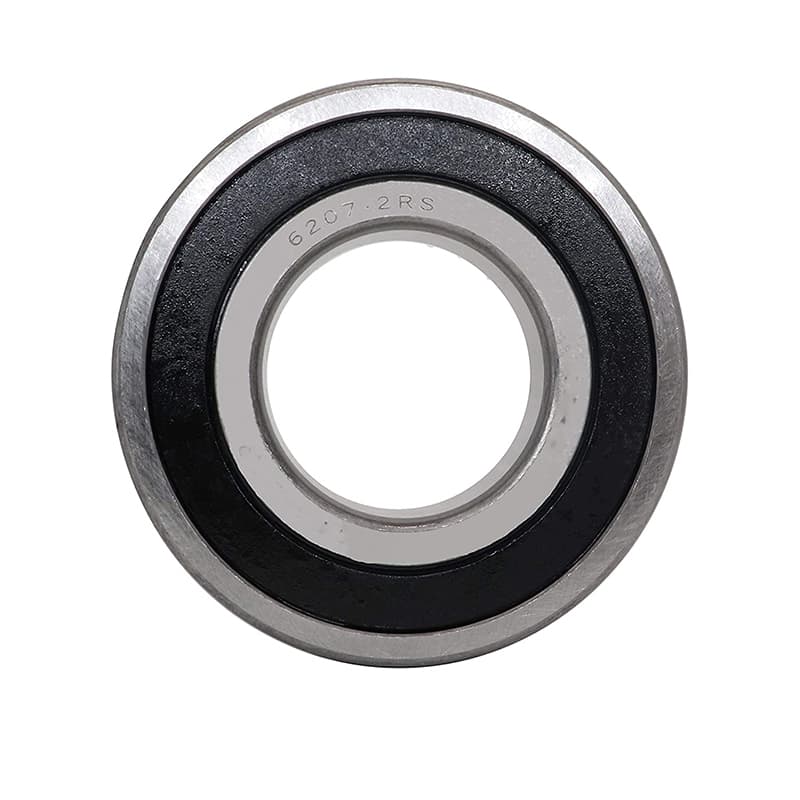
Let me give you a step-by-step selection guide.
Seal selection – FKM vs NBR. NBR (nitrile rubber) is cheap. It works well from -30°C to +100°C. But at low temperatures, it gets hard. At -15°C, NBR starts to lose flexibility. At -25°C, it becomes brittle and can crack. FKM (fluorocarbon) is more expensive. But it stays flexible down to -20°C. Some special FKM grades go to -30°C. FKM also resists water and many chemicals better than NBR. For refrigeration fans that run at -5°C to -15°C, I always recommend FKM seals. The extra cost is small compared to a bearing failure.
Also, look at the seal design. A single‑lip seal (RS) has one lip touching the inner ring. A double‑lip seal (2RS) has two lips. The second lip acts as a dust or moisture barrier. For refrigeration, use 2RS. The double lip keeps moisture out better. Some manufacturers offer a low‑torque 2RS seal. That design has a smaller contact area. It gives better sealing but with less friction. That is ideal for fan motors.
Grease selection – what to look for on the data sheet. When you buy grease, look for four numbers:
- Base oil viscosity at 40°C. For refrigeration, choose 32 to 68 cSt. Lower is better for cold start.
- Pour point. This is the temperature where the oil stops flowing. Choose a pour point below -30°C. Some synthetic greases have pour points below -50°C.
- Low-temperature torque. This is measured in N·cm at a specific temperature (like -20°C). Look for a grease with low starting torque (under 10 N·cm at -20°C for small bearings).
- Water washout resistance. This is a test (ASTM D1264). It measures how much grease washes away with water. Look for less than 10% washout. That means the grease stays in place even if water gets on it.
Rust inhibitors are essential. In a wet environment, moisture will get past even the best seal eventually. The grease should have rust inhibitors. These chemicals protect the steel surface. Without inhibitors, a small amount of water can cause rust within days. Most good low‑temperature greases have rust inhibitors. But check the data sheet. It should say "rust protected" or "corrosion inhibited." Low‑temperature greases with rust and corrosion inhibitors provide this protection even in cold, humid conditions [web:404][web:317].
How much grease to put in. Many bearing factories put 30% to 40% grease fill for standard applications. For refrigeration, use less. I recommend 20% to 25% fill. Why? Because cold grease takes up less volume, but the bearing still needs space. Too much grease creates high starting torque. Also, when the motor warms up a little (from its own heat), the grease expands. So a lower fill prevents overpressure and seal damage. Grease fill amount has a direct impact on temperature and friction in bearings [web:412][web:221].
A real story from a customer in Egypt. He supplies fan motors for refrigerated trucks. The trucks go from +30°C outside to -18°C inside the freezer compartment. The bearings see huge temperature swings. He used standard bearings with NBR seals and mineral grease. The seals cracked. The grease hardened. The fans failed every 4 months. I gave him bearings with FKM seals and polyurea‑based synthetic grease (ISO VG 46, pour point -45°C). The bearings now last 18 months. He saved five replacement cycles per truck per year.
Here is a summary table for refrigeration seal and grease selection:
| Component | Standard choice (bad for refrigeration) | Recommended choice (good for refrigeration) | Reason |
|---|---|---|---|
| Seal material | NBR (nitrile) | FKM (fluorocarbon) | FKM stays flexible in cold, resists moisture |
| Seal type | Single-lip (RS) | Double-lip (2RS) | Double lip keeps moisture out better |
| Base oil viscosity | ISO VG 150-220 | ISO VG 32-68 | Thin oil for low starting torque |
| Pour point | -15°C to -20°C | Below -30°C (ideally -40°C) | Ensures fluidity at operating temperature |
| Grease consistency (NLGI) | 2 or 3 | 1 or 1.5 | Softer grease for cold flow |
| Water washout | >15% | <10% | Grease stays in place when wet |
| Rust inhibitors | Not always present | Must be present | Protects against condensation |
| Grease fill percentage | 30-40% | 20-25% | Prevents high torque and seal damage |
Conclusion
Use FKM double-lip seals and low-temperature synthetic grease with thin oil. Choose C3 clearance and soft NLGI 1 grade. That keeps your refrigeration fan motors running for years.