
Your small pump keeps breaking down or running hot? That wastes your time and money.
But the problem often starts with one small part – the bearing.
Deep groove ball bearings lower friction, handle both radial and axial loads, and operate with very little noise. That directly makes pumps run longer and more reliably.
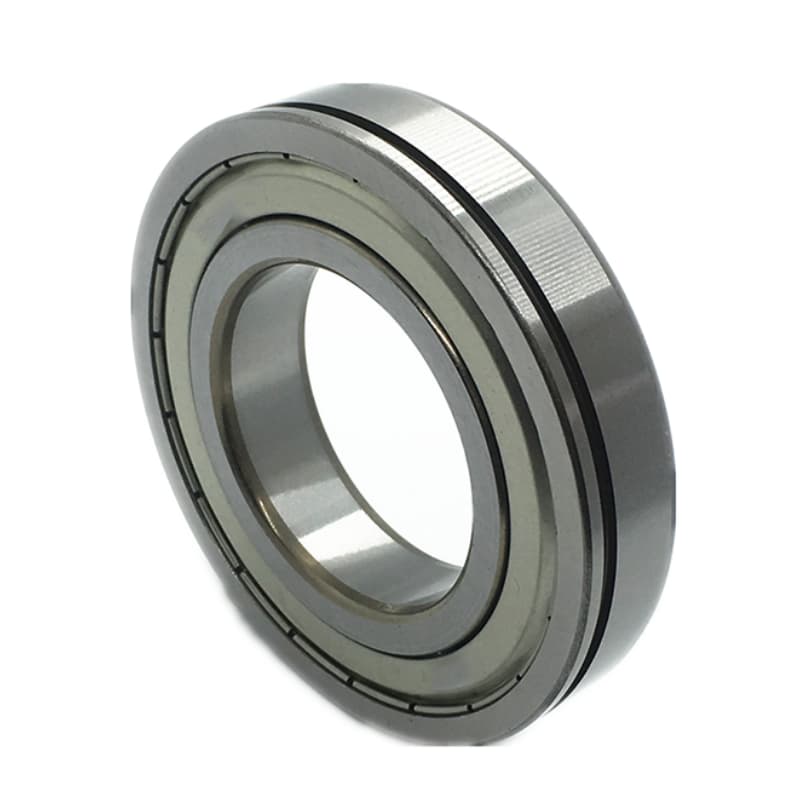
You may think all bearings are the same. But from my work with distributors like Rajesh in India, I see big differences in real performance. Let me walk you through the four most important things you need to know. I will share my own factory experience and what my customers actually ask me.
What Are the Key Benefits of Deep Groove Ball Bearings in Pump Applications?
Does your pump feel like it eats too much electricity or gets noisy after a few months? That usually points to a bad bearing choice.
Deep groove ball bearings solve these problems without any complicated changes. https://www.skf.com/group/products/rolling-bearings/ball-bearings/deep-groove-ball-bearings
They give you low running friction, smooth high-speed operation, combined load support, and quiet movement. https://www.skf.com/group/products/rolling-bearings/ball-bearings/deep-groove-ball-bearings All of these are exactly what a small pump needs. https://www.airebearings.co.uk/product-category/bearings/deep-groove-ball-bearings/
1. Energy Efficiency and Lower Heat
Deep groove ball bearings have very little internal friction. https://blog.nskamericas.com/reducing-friction-energy-consumption-with-deep-groove-ball-bearings Their balls roll between two smooth raceways. That simple design wastes almost no energy. https://evolution.skf.com/bearings-that/ A pump that runs on a 1 HP motor can save 5–10% electricity just by switching from a plain bearing or an old worn bearing. https://www.nsarbearings.com/deep-groove-ball-bearings-benefits/ I once helped a customer in Egypt who made irrigation pumps. He replaced his old sleeve bearings with our deep groove ball bearings. His power bill dropped by 12% in the first month. Plus his pumps ran much cooler. https://www.skf.com/binaries/pub12/Images/PUB%20BU_P2%206692_3%20EN_E2%20DGBB%20brochure_LoResSingles_tcm_12-234805.pdf
2. Handling Speed and Load Together
Small pumps often run at 2,000 to 6,000 RPM. https://www.acorn-ind.co.uk/p/skf/single-row-deep-groove-ball-bearings/6000-skf/ At that speed, many bearing types overheat or vibrate. Deep groove ball bearings stay stable because they have a high speed rating. https://www.thebearingcompany.co.uk/category/quality-bearing-for-sale/ball-bearings/deep-groove-ball-bearing/ They also take both radial load (from the pump shaft weight) and axial load (from fluid pressure or impeller thrust). https://www.linkedin.com/pulse/frequently-asked-questions-centrifugal-pump-bearings-kelly-liu-dwrzc For example, a centrifugal water pump pushes the impeller forward. That creates an axial force. A deep groove ball bearing can handle that easily, while a simple roller bearing cannot. https://www.youtube.com/watch?v=o97VmJayv3s
3. Quiet Operation Matters a Lot
Noise is not just annoying. It often means early damage. In hospitals, labs, or residential water systems, a noisy pump gets rejected quickly. https://water.viomi.com/blogs/hydration-lab/reducing-pressure-pump-noise-in-home-water-systems Deep groove ball bearings from a good factory have precision grinding on the raceways and high-quality steel balls. That gives very low vibration levels. https://www.acorn-ind.co.uk/bearings/ball-bearings/deep-groove-ball-bearings/ At FYTZ Bearing, we check every batch for noise using a vibration meter. https://www.nsk.com/eu-en/products/bearings/ball-bearings/deep-groove-ball-bearings/ We offer P5 and P6 precision grades. https://groove-ballbearing.com/bearing-precision-grades-p4-and-p5.html These are perfect for quiet-running pumps. https://www.acorn-ind.co.uk/bearings/ball-bearings/deep-groove-ball-bearings/
4. My Own Factory Experience
I run a bearing factory in China called FYTZ Bearing. https://fytzbearing.com/about-us/ We make deep groove ball bearings for pump makers in Turkey, Russia, Brazil, and India. https://fytzbearing.com/deep-groove-ball-bearing-buyers-guide-for-industrial-importers/ One of my regular buyers in Indonesia told me: “Your bearings last twice as long as the cheap ones I used before.” That is because we control the whole process – from raw steel to final inspection. https://fytzbearing.com/about-us/ We do not skip heat treatment or use low-grade grease. https://winstonengineering.com/how-to-select-the-right-lubricant-for-pump-bearings/ For pump applications, I always recommend a C3 internal clearance. https://fytzbearing.com/c3-clearance-deep-groove-ball-bearings-when-to-use-them/ It gives room for heat expansion. Also go for a good seal, which I will explain later. https://www.pumpsandsystems.com/pump-bearings-shaft-seals-boost-performance
Quick comparison table – Why choose deep groove ball bearings over other types for pumps?
How to Select the Right Bearing Size and Clearance for Fluid Systems?
You pick a bearing that looks right. But after three months, it fails. Why? Because size and internal clearance are not just about matching the shaft diameter.
Many buyers skip this step and pay for it later. https://www.northridgepumps.com/article-342_8-reasons-bearing-failure
Select bearing size based on shaft diameter, housing bore, load rating (C and C0), and operating temperature. https://axisbearing.com/factors-when-sizing-a-ball-bearing/ Then choose the right internal clearance – usually C3 for pumps that run warm or have a steel shaft and aluminum housing. https://baartgroup.com/how-to-determine-bearing-shaft-and-housing-fit/
Step 1 – Measure Your Shaft and Housing Accurately
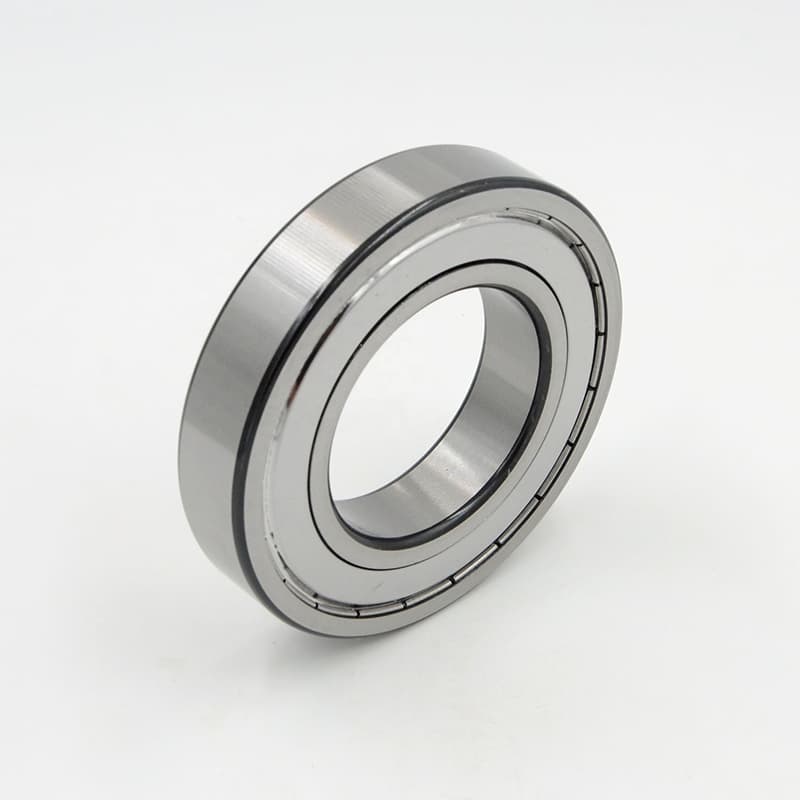
Do not guess. Use a digital caliper. https://kapent.com/how-to-determine-bearing-shaft-and-housing-fit/ Measure the shaft where the bearing sits. Then measure the housing bore. The bearing inner diameter should match the shaft with a slight interference fit (tight but not forced). https://www.smbbearings.com/technical/bearing-shaft-housing-fit.html The outer diameter should fit the housing with a transition or slight clearance fit. https://baartgroup.com/how-to-determine-bearing-shaft-and-housing-fit/ For example, a 20mm shaft usually needs a 6204 bearing (20mm bore). But check the exact tolerance class – we use ISO tolerance class P0 for general pumps, or P6 for higher precision. https://www.sanyabearing.com/news/what-are-the-key-differences-between-po-p6-p5-and-p4-tolerance-classes-for-chrome-steel-deep-groove-ball-bearings/
Step 2 – Calculate the Loads
Every pump has a certain radial load (weight of the rotor + belt tension if any). https://www.nbcbearings.com/what-is-axial-load-and-radial-load/ And an axial load (thrust from the impeller). https://www.nbcbearings.com/what-is-axial-load-and-radial-load/ Add them up. Then look at the bearing’s basic dynamic load rating (C) from the catalog. https://www.skf.com/group/products/rolling-bearings/principles-of-rolling-bearing-selection/bearing-selection-process/bearing-size-selection/basic-dynamic-load-rating-c The rule of thumb: the bearing’s C rating should be at least 2–3 times the actual load you expect. https://reliabilitysolutions.net/articles/bearing-load-rating/ For a small pump with 300 N total load, pick a bearing with C rating above 600 N. I always tell my distributors: “Do not undersize the bearing just to save 50 cents. You will lose a customer.” https://www.smbbearings.com/technical/bearing-load-rating.html
Step 3 – Choose the Right Internal Clearance
Clearance means the tiny gap between the balls and the raceways when the bearing is not mounted. https://www.aubearing.com/the-ultimate-guide-to-measuring-bearing-clearance/ Standard clearance is CN (normal). But for pumps, I strongly recommend C3 (larger than normal). https://fytzbearing.com/c3-clearance-deep-groove-ball-bearings-when-to-use-them/ Why? Because pumps run warm – maybe 60 to 100°C. https://www.hendersonbearings.co.uk/quality-branded-pfi-c3-clearance-sealed-ball-bearing-choose-size.html The inner ring expands faster than the outer ring because it sits on a hot shaft. That expansion eats up the internal clearance. https://www.linkedin.com/posts/mona-ahmadi-9478a0b3_bearing-reliability-bearings-activity-7396229608695734273-hr6g If you start with CN, it can become negative. Then the bearing drags, heats up more, and seizes. https://www.coolenbearings.com/tech/rolling-bearings/internal-clearance/bearing-internal-clearance I have seen this happen with a customer in Pakistan. He used CN clearance on a hot water circulation pump. The bearings failed in two weeks. We shipped C3 replacements, and they lasted two years. https://www.northridgepumps.com/article-342_8-reasons-bearing-failure
Step 4 – Check Speed Limits
The bearing catalog gives a grease speed limit and an oil speed limit. https://www.toolgrit.com/tools/bearing-speed-limit-checker For small pumps, you usually run below 80% of the grease limit. https://www.wwdmag.com/home/article/10918520/to-grease-or-not-to-grease-that-is-the-question If your pump runs at 5,000 RPM, make sure the bearing’s grease limit is above 6,000 RPM. https://pulsarlube.com/html/_skin/seil/files/Bearing%20Lubrication.pdf Our FYTZ deep groove ball bearings use high-quality lithium grease that works well up to 10,000 RPM for small sizes. https://www.findling.com/fileadmin/Inhalt/Datenbl%C3%A4tter/Schmierstoffe/FYH_LITHIUM_COMPLEX_GREASE_GUIDE.pdf
Example: Choosing a bearing for a 2 HP clean water pump
| Parameter | Value | Bearing choice |
|---|---|---|
| Shaft diameter | 25 mm | Bore = 25 mm |
| Housing bore | 52 mm | OD = 52 mm (bearing 6205) |
| Operating temp | 75°C | C3 clearance |
| Radial load | 400 N | Dynamic load rating C = 14 kN (6205) → safe |
| Speed | 3,600 RPM | Within limit |
| Seal needed? | Yes, wet environment | 2RS (rubber seal) |
What Material and Sealing Options Are Best for Corrosive or Wet Environments?
Water or chemicals get inside your bearing. Then rust starts. Then noise and failure follow. That is a classic problem in fluid handling.
You can stop this by choosing the right bearing material and the right seal type. https://www.bdsbearing.com/blog/guide-to-bearings-seals-types-functions-and-applications
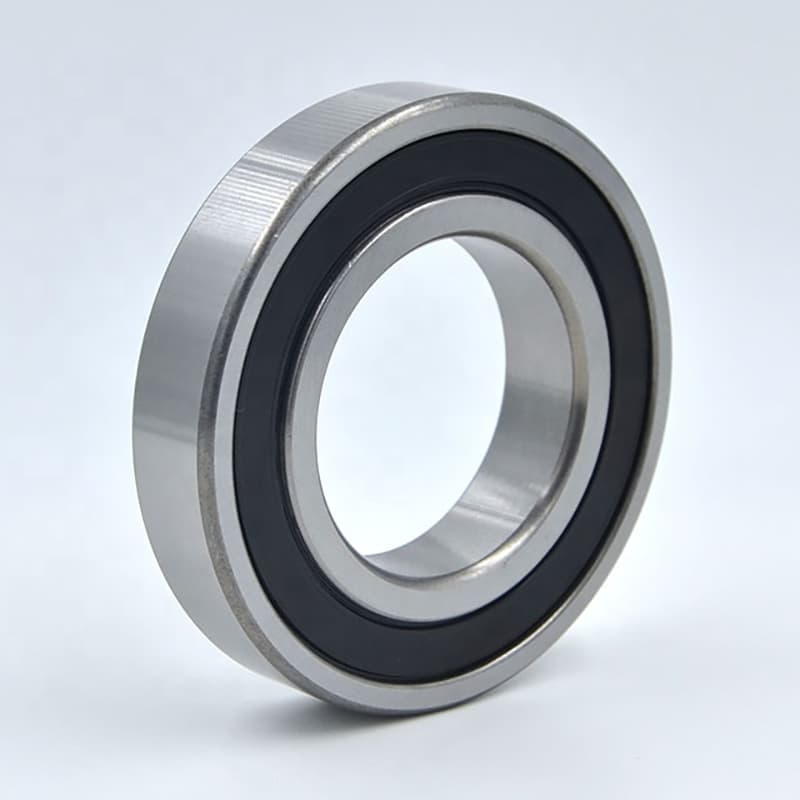
For clean water: chrome steel + rubber seal (2RS). https://pibsales.com/bearings/the-different-types-of-bearing-seals/ For corrosive fluids or washdown areas: stainless steel rings or ceramic balls. https://www.smbbearings.com/stainless-steel-vs-ceramic-bearings Always add a good seal – contact seals work best for wet pumps. https://bywbbearing.com/what-are-the-different-types-of-bearing-seals/
Bearing Materials Explained
Most deep groove ball bearings use chrome steel (GCr15 or SUJ2). It is strong, hard, and cheap. But it rusts easily. For a pump that moves clean water at room temperature, chromed steel with a good seal works fine – because the seal keeps water out. However, if the pump handles salty water, acid, or if the machine gets washed with high-pressure spray, you need better materials.
- Chrome steel (standard) – Low cost, high load capacity. Not rust-proof. Use only with effective sealing and dry storage.
- Stainless steel (AISI 440C) – Rust resistant, good for food processing or marine pumps. Slightly lower load capacity than chrome steel. Costs more but lasts much longer in wet conditions.
- Hybrid ceramic (Si3N4 balls + stainless steel rings) – Best for aggressive chemicals or very high speed. Very low friction. Expensive, but some pharmaceutical or chemical pump buyers ask for it.
- Coated bearings (zinc or black oxide) – A middle option. My factory can add a thin anti-corrosion coating on normal steel. It helps a lot for occasional moisture.
I remember a buyer from Brazil. He imported bearings for pool pumps. The pumps were next to swimming pools, always splashed with chlorinated water. He first bought cheap chrome steel bearings with metal shields (ZZ). Half of them rusted within three months. I suggested switching to chrome steel with 2RS rubber seals plus a thin rust-preventive oil. The failure rate dropped to under 2%.
Sealing Choices – Do Not Get This Wrong
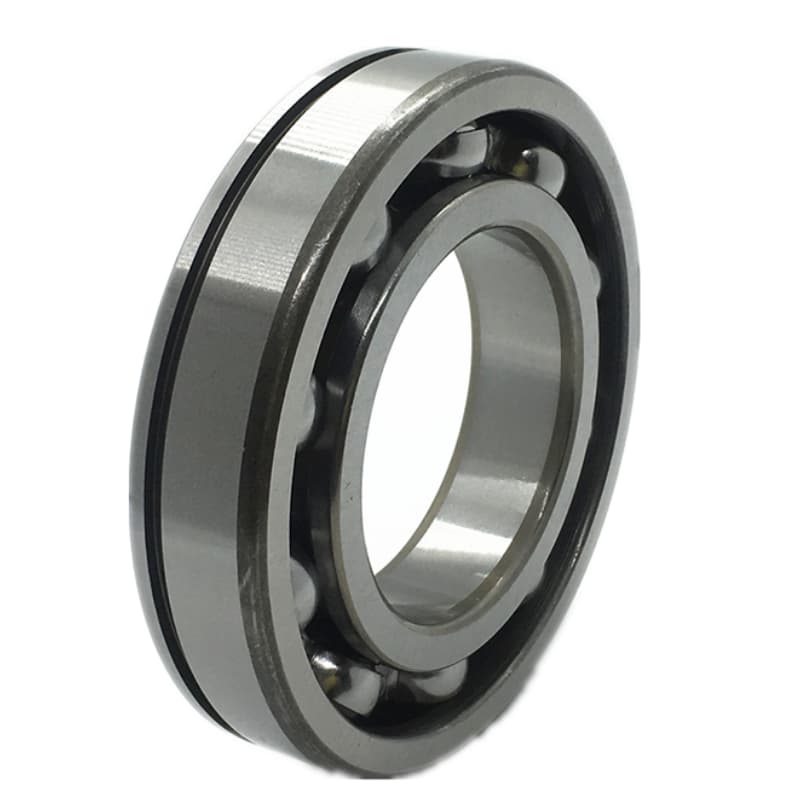
A seal keeps lubricant in and dirt/water out. https://www.bdsbearing.com/blog/guide-to-bearings-seals-types-functions-and-applications For pumps, you almost never want an open bearing (no seal). https://www.bdsbearing.com/blog/guide-to-bearings-seals-types-functions-and-applications You have three main sealing levels:
| Seal code | Type | Protection | Speed limit | Best for |
|---|---|---|---|---|
| ZZ / 2Z https://www.jvbbearing.com/the-ultimate-6202-bearing-showdown-2z-vs-2rs-vs-2rz-vs-zz/ | Metal shield | Low – stops big particles only | Highest | Dry pumps, fans, low humidity |
| 2RS / 2RSH https://pibsales.com/bearings/the-different-types-of-bearing-seals/ | Rubber contact seal | High – stops water and fine dust | Medium | Water pumps, pressure washers, outdoor equipment |
| 2RZ https://www.smbbearings.com/firebrick/ckeditor/plugins/upload/Uploads/Documents/SMB213_Shields_and_seals_guide.pdf | Rubber non-contact | Medium – some water resistance | High | When you need speed plus moderate protection |
For small pumps, I always tell my customers: pick 2RS. https://blog.pgnbearings.com/comparing-open-zz-and-2rs-bearings/ The small drag from the rubber seal is worth the protection. Only use ZZ if the pump runs very dry and fast (above 8,000 RPM) and never sees moisture. https://www.jvbbearing.com/the-ultimate-6202-bearing-showdown-2z-vs-2rs-vs-2rz-vs-zz/
My Practical Advice for Distributors
When you talk to your pump-making clients, ask them two questions: “What fluid does the pump move?” and “Is the pump ever washed down with a hose?”
- Clean water, indoor use → Chrome steel + 2RS is fine. https://www.smbbearings.com/what-are-corrosion-resistant-bearings
- Dirty water or high humidity → Same, but remind them to store bearings in a dry place before assembly. https://www.smbbearings.com/what-are-corrosion-resistant-bearings
- Corrosive fluids (acids, salt water) → Stainless steel rings + 2RS or coated rings. https://www.smbbearings.com/what-are-corrosion-resistant-bearings
- Food or pharmaceutical → Stainless steel with food-grade grease (we can supply that). https://www.bearing-news.com/food-grade-bearings/
At FYTZ Bearing, we keep stainless steel deep groove ball bearings in stock for sizes 6200 to 6206. https://www.skf.com/group/products/rolling-bearings/ball-bearings/deep-groove-ball-bearings/stainless-steel-deep-groove-ball-bearings We also offer P5 precision for quiet pumps. https://groove-ballbearing.com/bearing-precision-grades-p4-and-p5.html Just email me at sales@fytzbearing.com if you need a custom seal or material.
What Are Common Failure Modes in Small Pumps and How Can You Prevent Them?
Your pump starts squeaking. Then it vibrates. Then the shaft stops turning. That costs you a service call and an angry customer.
Most of these failures are avoidable. You just need to know what kills the bearing first.
The top four failures are: contamination (dirt or water getting in), poor lubrication, fatigue spalling (metal flakes coming off), and wrong mounting. Each one has a clear prevention method.
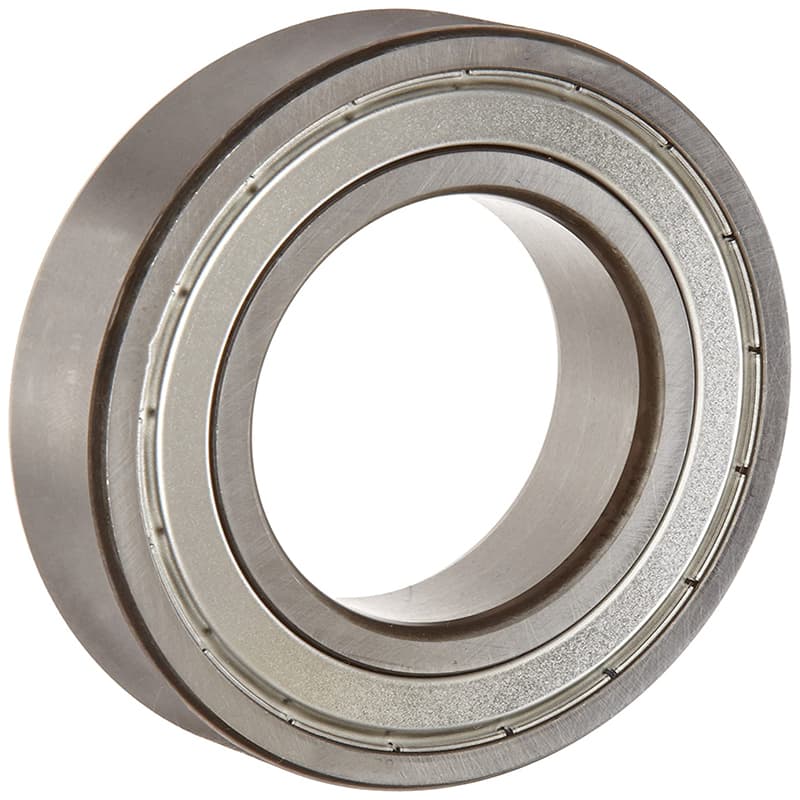
Failure 1 – Contamination
This is the number one killer for pumps. Water, dust, or sand enters through a bad seal or during assembly. Once inside, the particles grind the raceways and balls. You will see dark grey grease and a rough feeling when you turn the bearing by hand.
Prevention:
- Always use a contact seal (2RS) for fluid handling.
- Keep the bearing in its original package until the moment you press it onto the shaft.
- Clean the shaft and housing with a lint-free cloth before mounting.
- Do not use compressed air to blow dust near an open bearing.
I once visited a distributor in Vietnam. He showed me a pile of failed bearings from water pumps. The grease looked like mud. The seals were all metal shields (ZZ). He switched to 2RS rubber seals, and the return rate went down by 80%.
Failure 2 – Lubrication Problems
Too little grease causes metal-to-metal contact. Too much grease causes overheating. Also, some greases break down at high temperature or wash away in water.
Prevention:
- Use factory-pre-greased bearings. At FYTZ, we fill the right amount (25–35% of free space).
- For pumps that run above 80°C, ask for high-temperature grease (like lithium complex or polyurea).
- Do not wash the bearing in solvent before mounting – that removes the factory grease.
A customer in Turkey used to buy open bearings and pack grease himself. His workers often put too much grease. The bearings ran hot and failed. Now he buys our pre-greased 2RS bearings. The problem disappeared.
Failure 3 – Fatigue Spalling
Eventually, every bearing wears out. The metal under the surface gets tiny cracks from repeated stress. Then small flakes (spalls) come off. You will hear a grinding noise and feel vibration.
Prevention:
- Pick a bearing with a higher load rating (C) than needed. That gives a longer calculated life (L10 life). https://baartgroup.com/how-to-determine-approximate-l10-bearing-life/
- Use P6 precision if the pump runs fast – better geometry spreads the load evenly. https://www.sanyabearing.com/news/what-are-the-key-differences-between-po-p6-p5-and-p4-tolerance-classes-for-chrome-steel-deep-groove-ball-bearings/
- Keep the shaft and housing aligned. Misalignment adds extra stress and kills bearings much faster. https://www.godiva-bearings.co.uk/bearing-misalignment/
I calculate L10 life for my customers all the time. https://vibromera.eu/calculators/bearing-load/ For a small pump running 8 hours a day, a properly sized bearing should last 3 to 5 years. https://vibromera.eu/calculators/bearing-load/ If it fails earlier, check the load or alignment. https://www.ritbearing.com/blog/archive/common-causes-of-bearing-failure-volume-1/
Failure 4 – Wrong Mounting Damage
Hammering the bearing onto the shaft? That dents the raceways. Pressing on the outer ring to install the inner ring? That also causes damage. Also, heating a bearing with a torch changes the steel hardness.
Prevention:
- Use a mechanical press. Apply force only to the ring that is being mounted.
- For tight fits, heat the bearing evenly in an oven to 100–110°C – never more.
- Do not drop bearings or hit them.
One of my Indian distributors, Rajesh, once had a customer who used a hammer and a steel pipe to install bearings. Rajesh sent me a photo of a cracked inner ring. I made a simple instruction sheet for him to share. Now his customers use a proper press kit, and the warranty claims dropped sharply.
Quick reference table – Failure modes and what to do
| Failure sign | Likely cause | Your action |
|---|---|---|
| Rusty grease, brown color | Water ingress https://www.acorn-ind.co.uk/insight/five-signs-that-you-should-replace-your-bearings-before-its-too-late/ | Upgrade to 2RS seal + stainless steel if severe |
| Dark, burnt grease | Overheating or too much grease https://blog.emersonbearing.com/blog/common-causes-of-bearing-failure-and-how-to-avoid-them | Check clearance (use C3) and reduce grease fill |
| Grinding noise, rough feel | Contamination or spalling https://www.northridgepumps.com/article-342_8-reasons-bearing-failure | Clean assembly area; use sealed bearings |
| Cracked ring | Hammer installation https://cnsourcetech.com/bearing-installation/ | Train workers; use a press or induction heater |
Conclusion
Deep groove ball bearings make small pumps more efficient, quieter, and longer-lasting – if you pick the right size, clearance, material, and seal.
