
Picking the wrong bearing can break your machine. Especially when heavy radial loads push it to the limit.
To select spherical roller bearings for high radial loads, check the dynamic and static load ratings first. Then match cage material, lubrication, and mounting method to your real working conditions. I always start with the load calculations.
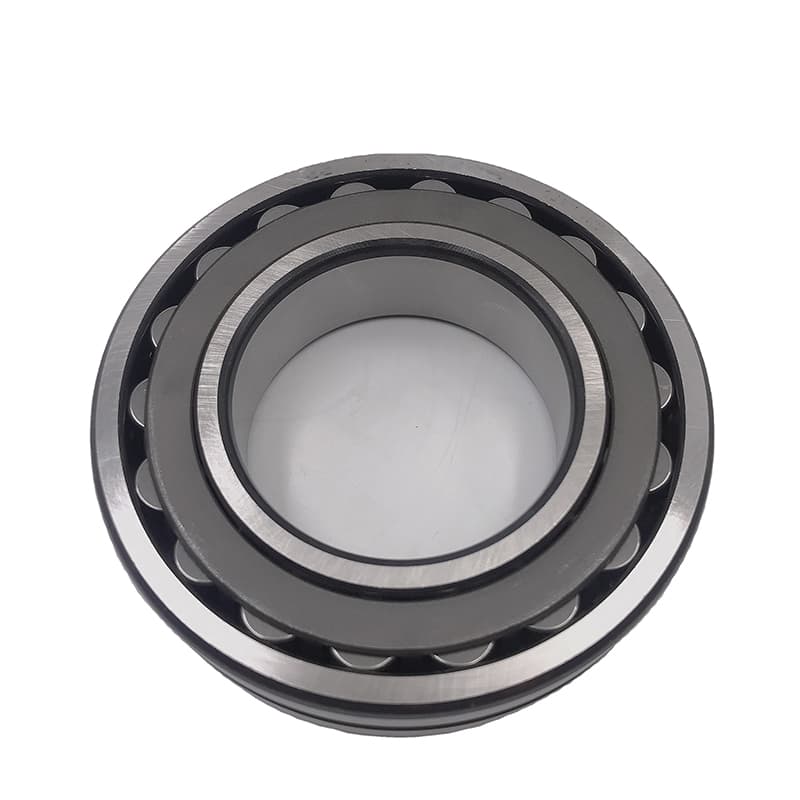
You might think all spherical roller bearings are the same. But after 15 years in this business, I have seen too many customers pick the wrong one. Let me walk you through the key steps. I promise these tips will save you from early failures and unplanned downtime.
Understanding Radial Load Ratings: Dynamic vs. Static Load Capacity
Many buyers ignore static load rating. Then their bearing crushes under heavy shock loads. Do not make that mistake.
Dynamic load rating (C) handles rotating loads. Static load rating (C0) applies when the bearing stops or moves very slowly. For high radial load applications, you need both numbers correct.
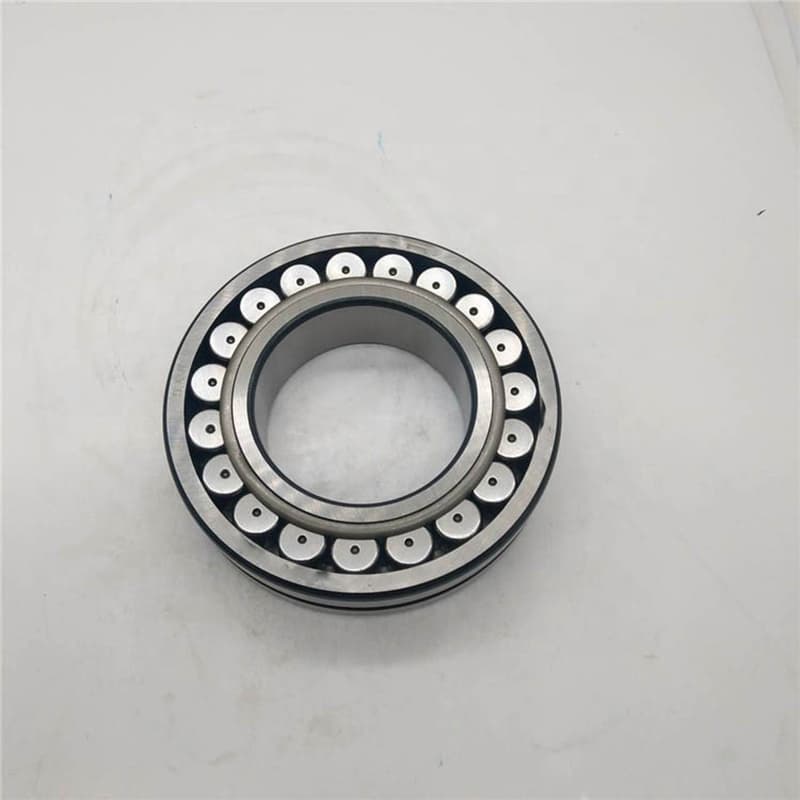
Let me break this down into simple terms. I talk with procurement managers like Rajesh every week. He once ordered 500 spherical roller bearings for a steel plant conveyor. The bearings worked fine for two months. Then three of them failed at the same time. What went wrong? He only looked at the dynamic load rating.
So here is the real difference:
Dynamic Load Rating (C)
This number tells you how long the bearing can spin under a certain load. It is measured in Newtons or kN. The higher the C value, the longer the bearing life. But there is a catch. Dynamic rating assumes perfect conditions. No shock loads. No misalignment. Clean lubrication. Real life is never that clean.
Static Load Rating (C0)
This number matters when the bearing stops moving or moves very slowly. Think of a crane that holds a heavy load without rotating. Or a vibrating screen that shakes but does not spin fast. Static load can deform the rolling elements and raceways permanently. That is plastic deformation. Once that happens, the bearing is dead.
How I Calculate the Right Rating for High Radial Loads
I use a simple rule from my factory days. For high radial load applications, I always check both ratings.
| Condition | Use This Rating | Safety Factor |
|---|---|---|
| Continuous rotation, steady load | Dynamic (C) | C/P ≥ 1.5 to 2.5 |
| Starts and stops, some shocks | Both C and C0 | C0/P0 ≥ 1.0 |
| Heavy shocks, low speed | Static (C0) | C0/P0 ≥ 2.0 |
| Crane or hoist holding position | Static (C0) | C0/P0 ≥ 2.5 |
Here is my own experience. For a briquette machine customer in Indonesia, I recommended a spherical roller bearing with C0 = 450 kN. The machine stops every 30 seconds to push out the briquette. Static load at that moment is 210 kN. That gives a ratio of 2.14. Safe and reliable. The customer still buys from me three years later.
So do not skip static rating. And do not assume your load is purely radial. Some axial load always comes with it. That leads us to the next point about design features.
Key Design Features That Enhance High Radial Load Performance
Not all spherical roller bearings handle heavy radial loads well. Some designs fail fast. Others run for years. You need to know the difference.
Three design features matter most: the number of roller rows, the internal clearance, and the raceway geometry. Double-row designs with asymmetrical rollers give the best radial load capacity.
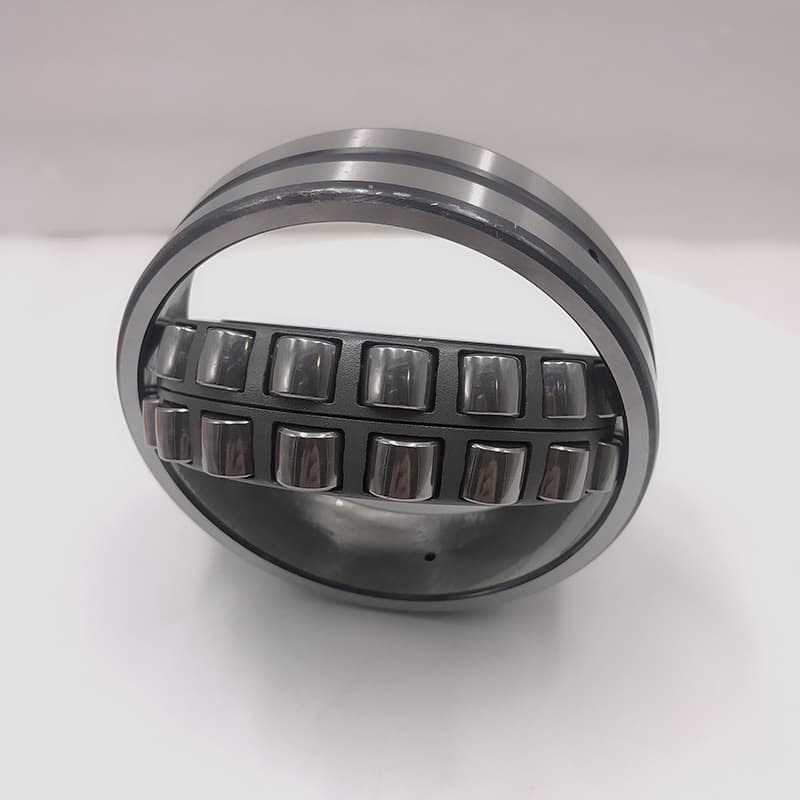
I remember a customer from Turkey. He runs a large quarry. His crusher bearings kept dying every three months. He sent me photos of broken cages and spalled raceways. I asked for his bearing part number. It was a standard 223 series. But the problem was not the series. It was the internal design.
Let me explain what works and what does not.
Number of Roller Rows
Most spherical roller bearings have two rows of symmetrical rollers. That is the standard. But for extreme radial loads, you want asymmetrical rollers. Asymmetrical means the two rows have different contact angles. One row handles most of the radial load. The other row takes the axial load. This design increases the load zone. More rollers share the force. So each roller sees less stress.
Internal Clearance (C3, C4, or C5)
This is a big one. Many buyers pick the wrong clearance. Standard clearance (CN) is for normal temperatures and light loads. For high radial loads, you need increased clearance. Why? Because heavy loads flatten the rollers slightly. The bearing ring expands. If clearance is too small, the bearing locks up. Heat builds. Then failure.
My rule of thumb:
- C3 clearance for moderate radial loads and normal temperatures (up to 80°C)
- C4 clearance for heavy radial loads, shocks, or higher temperatures (80–120°C)
- C5 clearance for extreme loads or large temperature differences
For Rajesh in India, summer temperatures in Mumbai can hit 45°C. If his machines run all day, bearing temperature goes to 90°C. I always recommend C4 for his applications.
Raceway Geometry and Roller Profile
This is where cheap bearings fail. A good spherical roller bearing has a logarithmic profile on the rollers. That means the roller surface is not a perfect straight line. It curves slightly at the ends. This reduces edge stress. Edge stress is the enemy. It causes premature spalling.
I test this in my own factory. We have a full inspection line. We measure each batch of bearings for profile accuracy. Our P5 and P6 precision bearings all use optimized raceway geometry. That is why many European and Russian customers trust us.
Table of Design Features vs. Performance
| Design Feature | Poor Choice | Good Choice for High Radial Load |
|---|---|---|
| Roller profile | Straight line | Logarithmic with crowning |
| Internal clearance | CN or C2 | C4 or C5 |
| Roller symmetry | Symmetrical | Asymmetrical |
| Number of rows | Single-row | Double-row |
Choosing the right design features can double your bearing life. I have seen it happen. A Brazilian customer switched from a standard bearing to our C4 clearance asymmetrical design. His conveyor idlers now last 14 months instead of 6. That is real savings.
Selecting Cage Materials & Lubrication for Heavy-Duty Conditions
A strong bearing can still fail fast. Usually because of the cage or the grease. These parts matter more than you think.
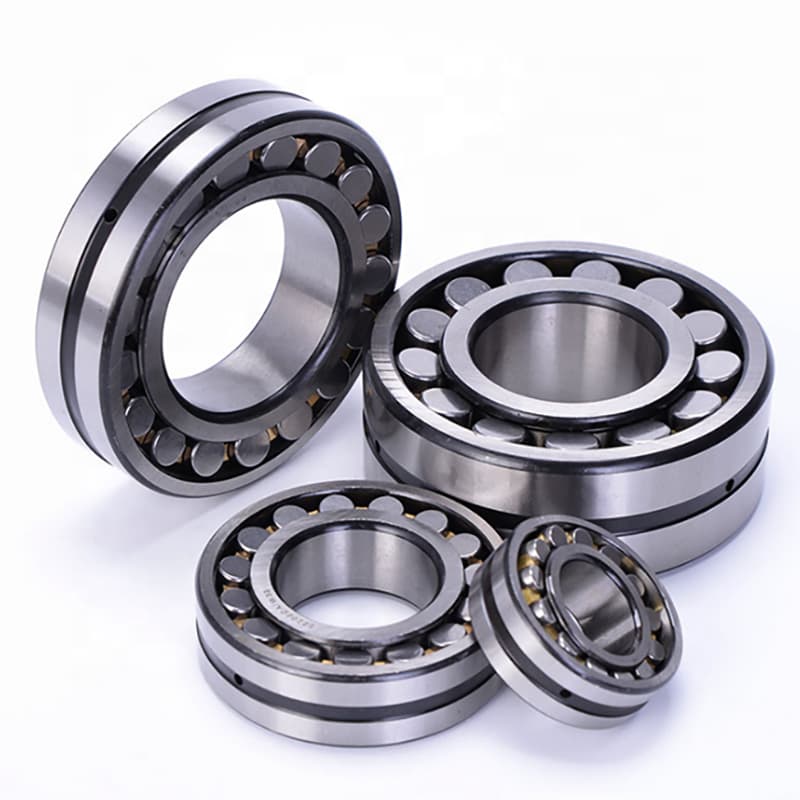
For heavy-duty radial loads, use brass or steel cages instead of polyamide. Choose high-viscosity grease with EP additives. And re-lubricate more often than standard charts suggest.
Dive deeper paragraph:
I will tell you a short story. A distributor in Pakistan bought 200 spherical roller bearings for textile machines. The bearings had polyamide cages. They worked fine for six months. Then ten cages cracked. Why? The machines had high vibration and occasional shock loads. Polyamide is tough, but it gets brittle over time with temperature cycles.
So let me help you pick the right cage and lubrication.
Cage Material Selection
Brass cages (machined or stamped)
Brass is my top recommendation for high radial loads. It handles shock loads well. It runs at higher temperatures (up to 250°C). It does not get brittle. But brass costs more. For B2B buyers, the extra cost pays back in longer life. I use machined brass cages for all our spherical roller bearings for steel mills and mining equipment.
Steel cages (riveted or welded)
Steel is even stronger. It works for very heavy loads and high speeds. But steel is heavy. It can cause more friction. And it does not absorb vibration like brass. I recommend steel only for the most extreme cases, like large crushers or marine applications.
Polyamide (PA66) cages
Polyamide is light and cheap. It works for normal loads and clean conditions. But avoid it for high radial loads with shocks. Also avoid it above 120°C. And never use it with aggressive chemicals. I only sell polyamide cages to customers with light-duty applications and low budgets.
Lubrication Strategy for Heavy Radial Loads
Most bearing failures come from bad lubrication. Not from the bearing itself. Here is what I tell my customers.
Oil vs. Grease
- Grease is easier and cheaper. Use it for most high radial load applications if speed is moderate.
- Oil is better for very high speeds or high temperatures. Oil also cleans better. But oil systems cost more.
Viscosity Selection
For high radial loads, you need high base oil viscosity. I recommend ISO VG 150 to 460. The heavier the load, the higher the viscosity. A simple check: viscosity ratio κ ≥ 2. If κ is below 1, you get metal-to-metal contact. That means rapid wear.
EP Additives
Extreme pressure (EP) additives are not optional. They create a sacrificial film on the metal surfaces. This film prevents welding and scoring under heavy loads. Look for greases with lithium complex thickener and EP additives.
Re-lubrication Intervals
I see many people following the standard charts. Those charts assume light to moderate loads. For high radial loads, cut the interval in half.
| Load Condition | Standard Interval | My Recommendation |
|---|---|---|
| Light radial | 2000 hours | 2000 hours |
| Moderate radial | 1000 hours | 800 hours |
| High radial load | 500 hours | 250 hours |
| High radial + shocks | 300 hours | 150 hours |
One more tip. When you re-grease, push out the old grease. Do not just add new grease on top. Old grease collects dirt and metal particles. Those particles act like sandpaper.
In my factory, we test lubrication life on a custom rig. That is why we can give specific advice for each customer. For Rajesh in India, I would ask for his working temperature and speed first. Then I recommend a specific grease type and schedule.
Real-World Application Examples & Mounting Best Practices
Even the best bearing fails if you mount it wrong. I have seen million-dollar machines stop because of one small mounting mistake.
For high radial loads, use a shrink fit or hydraulic nut for mounting. Check shaft and housing tolerances carefully. Never hammer the bearing directly. That creates false brinelling.
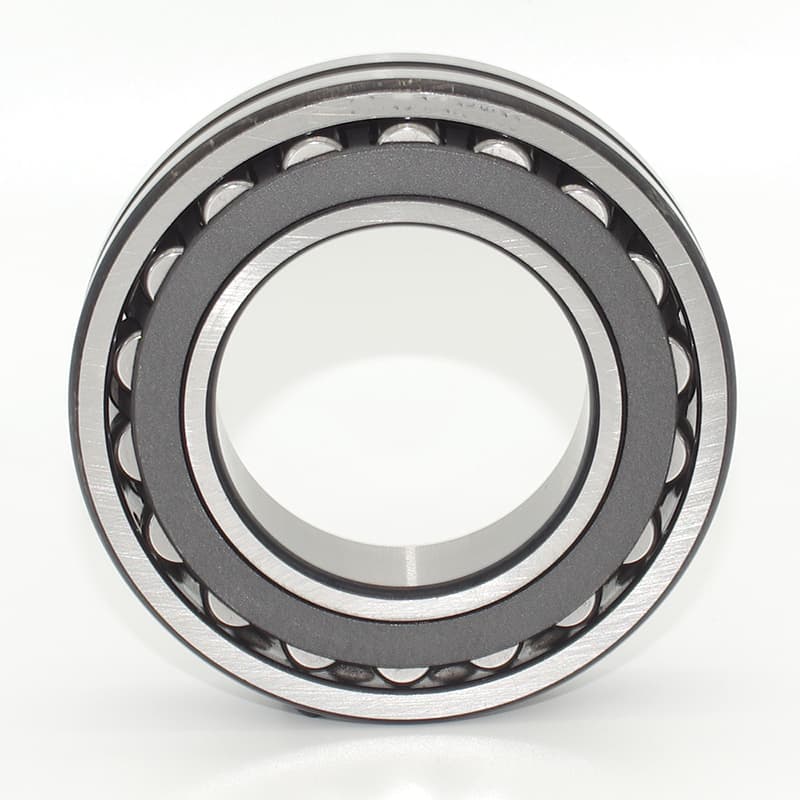
Let me share two real examples from my customers. Then I will give you mounting steps that work.
Example 1: Conveyor Roller in a Coal Power Plant (Egypt)
A customer in Egypt runs a coal power plant. His conveyor rollers carry tons of coal every hour. The radial load is massive. He used to replace bearings every 4 months. He sent me the failed bearings. I saw deep spalls on the inner ring.
After checking his mounting process, I found the problem. His workers hammered the bearings onto the shaft. That dented the raceways. Those dents created stress points. Under heavy radial load, the dents grew into cracks.
I sold him our spherical roller bearings with C4 clearance and brass cages. Then I told him to switch to a hydraulic mounting method. Now his bearings last 14 months. He orders from me every year.
Example 2: Vibrating Screen in a Russian Quarry
A Russian distributor inquired about bearings suited for vibrating screens, which endure high radial loads and relentless vibration.
Recommended Features
These bearings incorporate specialized designs to handle such demanding conditions.
- C5 internal clearance: Accommodates thermal expansion and vibration, preventing preload issues common in high-vibration setups. help.bdsbearing
- Machined brass cage: Provides superior shock resistance and roller guidance compared to stamped cages, enhancing durability under impact. gruponbi
- Nitrided raceways: Boost surface hardness and wear resistance, ideal for contaminated, high-stress environments. nsk
Supporting Resources
For detailed specs, refer to NTN’s guide on spherical roller bearings for vibrating screens, which covers VS-series options matching your recommendations. NSK’s quarrying bearings catalog also details nitrided treatments and brass cages for similar applications. help.bdsbearing
We also added a special grease with high viscosity and EP additives. The bearings worked for two full seasons. The distributor now sends me new customers from Russia and Kazakhstan.
Mounting Best Practices for High Radial Load
I cannot stress this enough: mounting is where most DIY errors happen. Follow these steps for reliable installation, especially under high radial loads and vibration.
Step 1: Check Shaft and Housing Tolerances
Shaft tolerance for high radial loads: h6 or j6. Housing tolerance: P7 or N7. If the fit is too loose, the bearing spins on the shaft, wearing it down; if too tight, the bearing ring expands, reducing internal clearance. bearing.co
Step 2: Clean Everything
Even a tiny piece of dirt under the bearing ring creates a high spot, leading to ring deformation and cracks under radial load. I always say: clean twice, mount once. Use lint-free cloths and approved solvents for thorough preparation. efox
Step 3: Use the right mounting method
| Shaft Size | Recommended Method | Tool Needed |
|---|---|---|
| Small (<100mm) | Mechanical press | Press tool |
| Medium (100-200mm) | Oil injection | Hydraulic pump |
| Large (>200mm) | Induction heater or shrink fit | Heater or dry ice |
Never hammer directly on the bearing. Use a mounting tool that contacts only the tight-fitting ring. For inner ring mounting (shaft fit), push only on the inner ring. For outer ring mounting (housing fit), push only on the outer ring. nsk
Step 4: Check after mounting
Spin the bearing by hand. It should turn smoothly with no sticking. Listen for grinding sounds. If it feels rough, stop and check alignment.
Step 5: Add the right amount of grease
Too little grease causes metal-to-metal contact. Too much grease causes churning and overheating. For high radial loads, fill 30-40% of the free space inside the bearing. For slow speeds, up to 60% is okay. hchbearing
I train my customers on these steps. Sometimes I make short videos for them. Good mounting doubles the bearing life. That is not marketing talk. I have the data from my factory tests.
Conclusion
Pick the right load ratings, design features, cage, grease, and mounting method. That is how you get long life under high radial loads.
