
You run an OEM assembly line. Your machines need thousands of bearings each month. One bad batch can stop your whole production. To source deep groove ball bearings for OEM assembly lines, you need a supplier with ISO and IATF certifications, consistent batch quality, flexible lead times, and the ability to customize shields, grease, and tolerances. Low price alone is a trap.
I have supplied bearings to OEMs in Turkey, Russia, and Brazil for years. Let me walk you through what really matters. You will learn how to pick a supplier that delivers every time. ## What Quality Certifications Should You Demand from Your Deep Groove Ball Bearing Supplier? Certifications are not just paper. They tell you if a factory follows real quality systems. Many cheap suppliers have no certifications. Or they have fake ones. You should demand ISO 9001[^1] as the minimum. For automotive or high-precision OEM lines, ask for IATF 16949[^2]. Also check for ISO 14001[^3] (environmental) and test reports[^4] from independent labs like SGS[^5] or TÜV[^6].
### ISO 9001 – The Basic Standard ISO 9001 means the factory has a quality management system. They document their processes. They do internal audits. They track defects. This is the minimum you should accept. I have visited many bearing factories in China. The ones without ISO 9001 are usually small workshops. They have no inspection equipment. They mix scrap steel. Their bearings fail fast. Do not buy from them. At FYTZ, we have held ISO 9001 for over a decade. We also have a full inspection lab. Every batch gets tested for dimensions, hardness, and noise. ### IATF 16949 – For Automotive and High-Volume OEMs IATF 16949 is the automotive quality standard. It is tougher than ISO 9001. It requires advanced product quality planning (APQP), failure mode effects analysis (FMEA), and statistical process control (SPC). If you are making electric motors, power tools, or car parts, you need IATF 16949. This standard forces the supplier to control variation. Each batch of bearings will be nearly identical to the last. I had a customer in India who made ceiling fans. He used bearings from a non-certified supplier. The noise level varied wildly. Some fans were quiet. Some rattled. He switched to an IATF-certified supplier. The noise became consistent. His warranty claims dropped by 60%. Here is a table of certifications and what they mean for you: | Certification | What It Requires | Best For | Risk of Fake Certificates | |—————|——————|———-|—————————| | ISO 9001 | Basic quality system | General industry | Medium – check with certifier | | IATF 16949 | Automotive-level controls | High-volume, consistent quality | Low – harder to fake | | ISO 14001 | Environmental management | Green supply chains | Medium | | ISO 45001 | Worker safety | Ethical sourcing | Medium | | SGS / TÜV test report | Third-party lab verification | Any OEM | Low – verify report number | ### How to Verify a Certificate Is Real Many suppliers show you a certificate. But it might be fake or expired. Do not just look at the PDF. Here is what I do: 1. Ask for the certificate number and the certifying body (like TÜV, SGS, BSI, or DNV). 2. Go to that certifier\’s website. Search for the company name. 3. Check the expiry date. Most certificates are valid for three years. 4. Ask for the latest audit report. A good supplier will share it. I once had a customer in Pakistan who showed me a certificate from a fake registrar. The font was wrong. The logo was wrong. The supplier had never been audited. Do not fall for that. ### Test Reports – The Proof Is in the Numbers Certifications are good. But test reports are better. Ask your supplier for a batch test report. It should include: – Dimensions (bore, outer diameter, width, chamfer) – Radial internal clearance – Vibration level (V3, V4, etc.) – Hardness (HRC) – Material analysis (chemical composition) A serious supplier will give you these reports for every batch. At FYTZ, we provide them automatically. If a supplier hesitates, walk away. — [^1]: Understanding ISO 9001 can help you ensure your supplier maintains a quality management system. [^2]: Explore IATF 16949 to see how it ensures high-quality standards in automotive manufacturing. [^3]: Learn about ISO 14001 to ensure your suppliers are committed to environmental management. [^4]: Knowing what to expect in test reports can help you assess the quality of bearings effectively. [^5]: Discover how SGS certification can provide assurance of quality through third-party verification. [^6]: Understanding TÜV certification can help you choose reliable suppliers with verified quality. ## How to Balance Cost and Performance When Buying Bearings for High-Volume Assembly? Every OEM wants a low price. But the cheapest bearing often costs the most in the long run. You need to find the sweet spot. To balance cost and performance, calculate the total cost of ownership (TCO)[^1]. Include failure rate[^2], warranty claims[^3], and production downtime[^4]. A bearing that costs 20% more but lasts twice as long saves you money. For high-volume assembly, consistency is worth paying for.
### The False Economy of Cheap Bearings I see this mistake all the time. An OEM buys a bearing for $0.50 instead of $1.00. They save $0.50 per unit. But the cheap bearing fails 5% of the time in the field. Each failure costs $50 in warranty service. For 100,000 units, that is 5,000 failures × $50 = $250,000. The saving on bearings was only $50,000. So they lost $200,000. Let me put this in a table: | Bearing Option | Price per Bearing | Failure Rate (first year) | Warranty Cost per Failure | Total Warranty Cost per 100k units | Total Bearing Cost | Overall Cost | |—————-|——————-|—————————|—————————|————————————-|——————–|—————| | Cheap | $0.50 | 5% | $50 | $250,000 | $50,000 | $300,000 | | Good | $1.00 | 0.5% | $50 | $25,000 | $100,000 | $125,000 | | Premium | $1.50 | 0.1% | $50 | $5,000 | $150,000 | $155,000 | The good bearing saves $175,000 compared to the cheap one. The premium bearing saves $145,000 compared to cheap but costs more than good. So the good bearing is the best balance. ### How to Calculate Your Own TCO You can do this yourself. Gather these numbers: – C = bearing price per piece – F = expected failure rate (ask your supplier or test) – W = your warranty cost per failure (labor, shipping, replacement part) – Q = annual quantity Total cost = (C × Q) + (F × Q × W) Run this for three different bearing grades. Pick the one with the lowest total cost. I helped a customer in Brazil who made agricultural sprayers. He used cheap bearings that failed 8% in the first year. His warranty cost was $40 per failure. He bought 50,000 bearings. Cheap cost $0.60 each. Total cost = ($0.60×50k) + (0.08×50k×$40) = $30k + $160k = $190k. He switched to a better bearing at $1.10 with 1% failure. New total = ($1.10×50k)+(0.01×50k×$40)=$55k+$20k=$75k. He saved $115,000 per year. ### Performance Factors Beyond Failure Rate Price and failure rate are not the only things. Also consider: – Noise level – If your product is a quiet fan or a medical device, low noise bearings cost more but are necessary. – Torque – Low torque bearings save energy. For battery-powered products, this matters a lot. – Grease life – For sealed bearings, grease life[^5] determines product life. A bearing with better grease costs more but prevents early failures. Do not just look at the purchase price. Look at the total impact on your product. — [^1]: Understanding TCO helps you make informed decisions about bearing purchases, ensuring long-term savings. [^2]: Calculating failure rates is crucial for assessing the reliability of bearings and minimizing warranty costs. [^3]: Exploring warranty claims can help you understand potential costs and improve your product\’s reliability. [^4]: Learn how to minimize production downtime to enhance efficiency and reduce overall costs in your operations. [^5]: Understanding grease life can help you choose bearings that last longer and perform better in your products. ## What Lead Time and Inventory Strategies Work Best for OEM Assembly Lines? OEM assembly lines[^1] cannot stop. You need bearings on time, every time. But keeping too much inventory ties up your cash. The best strategy is a combination: forecast your monthly needs[^2], set a safety stock[^3] of 2-4 weeks, use a supplier with a local warehouse[^4] or fast sea/air options, and sign a year-long agreement with fixed pricing and lead time[^5]s.
### The Cost of Running Out Running out of bearings is a disaster. Your assembly line stops. Workers stand idle. You pay overtime to catch up. You might lose a customer. I had a customer in Turkey who made washing machines. His bearing supplier delayed a shipment by three weeks. He ran out of 6203 bearings. His line stopped for two days. The loss was $50,000. He switched to FYTZ with a guaranteed 15-day lead time. Here is a table of inventory costs and shortage costs: | Inventory Level | Holding Cost (per year) | Risk of Stockout | Cost of Stockout (per incident) | |—————–|————————-|——————|———————————-| | 1 week | Low | High | Very high | | 2 weeks | Medium | Medium | High | | 4 weeks | Medium-high | Low | Medium | | 8 weeks | High | Very low | Low | You need to find your balance. Most OEMs choose 3-4 weeks of safety stock. ### Forecasting – The Key to Smooth Supply You cannot just call your supplier when you are low. You need a forecast. Share your production plan for the next 3-6 months. Update it every month. A good supplier will use your forecast to reserve raw materials and production slots. At FYTZ, we ask our OEM customers for a rolling 3-month forecast. Then we guarantee delivery within the agreed lead time. Here is what a simple forecast looks like: | Month | Bearing 6204 | Bearing 6205 | Bearing 6306 | |——-|————–|————–|————–| | Jan | 10,000 | 5,000 | 2,000 | | Feb | 12,000 | 5,000 | 2,500 | | Mar | 11,000 | 6,000 | 2,000 | | Apr (forecast) | 10,000 | 5,500 | 2,200 | Send this to your supplier every month. They will love you for it. ### Supplier Location and Logistics A supplier in the same country is best. But many OEMs buy from China. If you buy from China, plan your logistics carefully. – Sea freight – Cheapest but slow (30-45 days). Order 2 months ahead. – Air freight – Fast (5-7 days) but expensive. Use for emergencies only. – Local warehouse – Some Chinese suppliers have warehouses in Turkey, Russia, or Brazil. This gives you 2-3 day delivery. Ask your supplier. I have a customer in Russia who keeps 4 weeks of stock in his own warehouse. He also has a consignment stock agreement with me. I keep 2 weeks of stock at a local forwarder. He pays only when he takes the bearings. That way, he never runs out and does not pay for extra inventory. ### The Annual Contract – Lock in Price and Lead Time Do not buy month to month. Sign a one-year contract. Lock in the price. Lock in the lead time. This protects you from market price spikes. I offer all my OEM customers a fixed price for 12 months. I also give a volume discount. The more they commit, the lower the price. This works for both sides. — [^1]: Explore this link to understand effective strategies for optimizing OEM assembly lines and ensuring smooth operations. [^2]: Discover techniques for accurate forecasting to enhance your supply chain efficiency. [^3]: Learn about safety stock levels to prevent stockouts and maintain efficient inventory management. [^4]: Find out how local warehouses can improve delivery times and reduce inventory costs. [^5]: Explore the significance of lead time in optimizing supply chain processes and reducing costs. ## How to Verify Bearing Consistency Across Multiple Batches and Production Runs? Consistency is everything for OEMs. Your product must work the same every time. If bearing dimensions or noise vary, your assembly line will have problems. To verify consistency, ask for capability indices (Cpk > 1.33)[^1] on critical dimensions. Test samples from every batch. Measure bore, outer diameter, radial clearance, and noise. Keep a record. Reject any batch that falls outside your agreed limits.
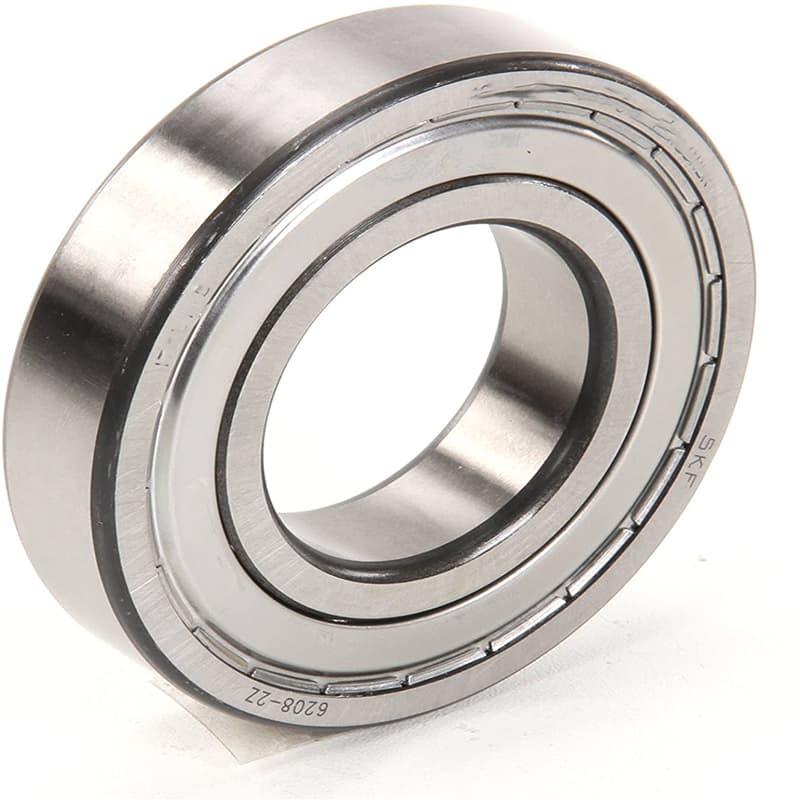
### The Problem of Batch-to-Batch Variation Even a good factory can have variation. Different heat treatment batches. Different grinding wheels. Different grease lots. You need to catch these variations before they reach your line. I remember a customer in Vietnam who assembled electric motors. He bought 10,000 bearings from a supplier. The first 5,000 were fine. The next 5,000 had a bore that was 5 microns too small. His assembly press broke two shafts. He lost a day of production. The supplier had changed their grinding process without telling him. Do not let this happen to you. ### What to Measure and What Limits to Set Here are the key characteristics you should check on every batch: | Characteristic | Typical Tolerance (P0 grade) | Cpk Requirement | Measurement Tool | |—————-|——————————|—————–|——————| | Bore diameter (d) | 0 to -10 microns | >1.33 | Air gauge or micrometer | | Outer diameter (D) | 0 to -10 microns | >1.33 | Micrometer | | Width (B) | 0 to -120 microns | >1.00 | Caliper | | Radial internal clearance | C3: 13-28 microns (for 6204) | >1.33 | Clearance gauge | | Vibration (V4 level) | Velocity: under 50 µm/s | Pass/fail | Vibrometer | | Noise (Anderon) | Under 30 dB | Pass/fail | Sound tester | Ask your supplier for a Cpk report. Cpk above 1.33 means the process is capable. Above 1.67 is excellent. Below 1.00 is poor – reject that supplier. ### Incoming Inspection – Your Responsibility Even with a good supplier, you should do incoming inspection[^2]. Sample size depends on batch size. Use this table from AQL (Acceptable Quality Level): | Batch Size | Sample Size | Accept (0 major defects) | Reject (1 major defect) | |————|————-|————————–|————————-| | 1,000 – 8,000 | 50 | 0 | 1 | | 8,001 – 22,000 | 80 | 0 | 1 | | 22,001 – 110,000 | 125 | 0 | 1 | Major defects are wrong dimensions, rust, cracks, or noisy operation. If you find one major defect, reject the whole batch. I have a customer in India who does this for every container he receives. He catches problems early. His supplier (not FYTZ) has learned to ship only good batches. ### The First Article Inspection (FAI)[^3] For a new supplier or a new bearing size, do a First Article Inspection. This is a complete measurement of all dimensions and characteristics on 5-10 pieces from the first production run. Compare to the drawing. Every dimension must pass. I provide FAIs for all new OEM customers. It takes one day. It gives them confidence. You should demand the same. ### Keep a History – Track Your Suppliers Over time, you will see patterns. Some suppliers are consistent. Some are not. Keep a spreadsheet of batch test results[^4]. If a supplier has three good batches in a row, you can reduce your inspection sampling. If they have a bad batch, increase sampling. This is called supplier rating[^5]. It works. I have seen OEMs reduce their inspection cost by 50% by trusting good suppliers and auditing poor ones. — [^1]: Understanding Cpk indices is crucial for ensuring product consistency and quality in manufacturing. [^2]: Incoming inspection is vital for catching defects early and ensuring only quality materials are used. [^3]: FAI is essential for verifying new suppliers and ensuring product specifications are met from the start. [^4]: Tracking batch test results helps identify supplier performance and maintain product quality over time. [^5]: A supplier rating system can significantly improve quality assurance and reduce inspection costs. ## Conclusion Source bearings from certified suppliers. Balance cost with total ownership. Plan inventory with forecasts. Verify every batch. That is how you keep your OEM line running.