
Your conveyor motor keeps failing. The bearing makes noise. The line stops. You lose money every hour.
Deep groove ball bearings in conveyor drive motors need to handle constant radial loads, moderate speeds, and heat buildup. Proper load rating, internal clearance (C3), and high-temperature grease can double or triple bearing life.
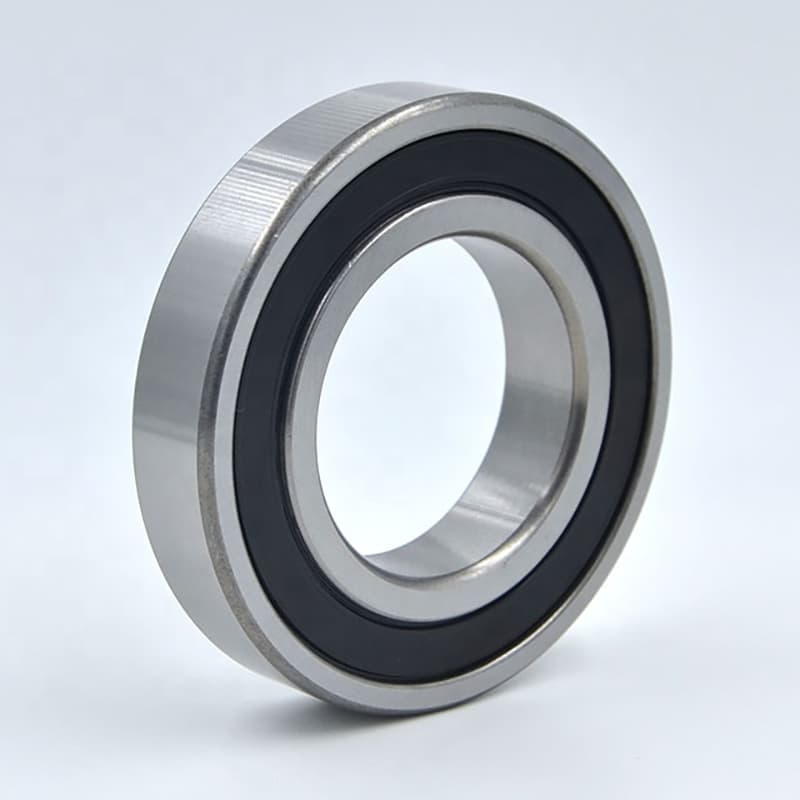
I have supplied bearings for thousands of conveyor motors in mining, warehousing, and food processing. Let me walk you through the key factors. You will learn how to pick bearings that last.
What Load Conditions Do Conveyor Drive Motors Place on Deep Groove Ball Bearings?
Conveyor motors look simple. But the loads on their bearings are not constant. You have starting torque, running load1, and sometimes shock loads2.
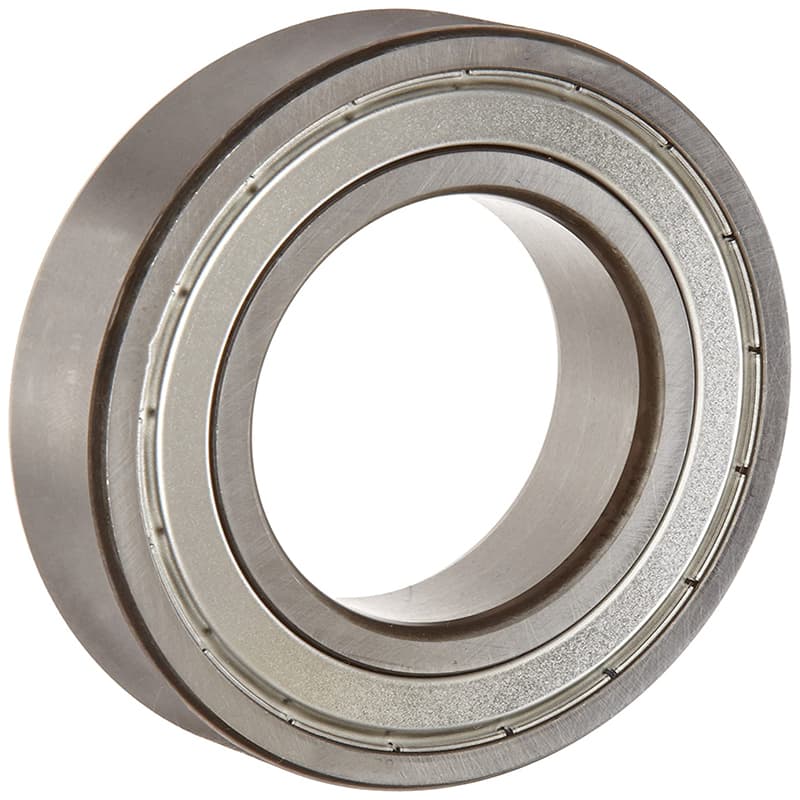
Conveyor drive motors put a steady radial load on the bearing from the belt tension and rotor weight. They also see higher loads during startup because the motor must overcome belt friction and material weight. Deep groove ball bearings3 handle these loads well, but you must calculate the actual load correctly.
The Three Load Phases of a Conveyor Motor
A conveyor motor goes through three different load phases. Each phase affects the bearing differently.
Phase 1 – Startup Load. When the motor starts, it must overcome static friction. The belt is tight. The material on the belt is heavy. The startup current can be 5-6 times higher than running current. That means the torque is much higher. The bearing sees a short but high load. This load can cause denting if the bearing is too small.
I had a customer in Indonesia who used 6204 bearings on a long belt conveyor. The motor started under full load every time. The bearings failed after three months. We switched to a 6205 bearing (larger size). The bigger bearing handled the startup shock. It lasted two years.
Phase 2 – Running Load. Once the conveyor runs, the load becomes steady. The belt slides over the idlers. The motor spins at constant speed. The bearing sees a stable radial load. This is where deep groove ball bearings shine. They are made for steady radial loads.
Phase 3 – Stop and Re-start. Some conveyors stop and start many times per hour. Each start puts a stress cycle on the bearing. The grease film gets squeezed out during the stop. Then the next start happens with less lubrication4. This is called boundary lubrication. It wears the bearing faster.
Here is a table of typical loads for different conveyor types:
| Conveyor Type | Startup Frequency | Load Type | Recommended Bearing Margin |
|---|---|---|---|
| Continuous (24/7) | Low (once per shift) | Steady | 10-20% over calculated load |
| Intermittent (batch) | Medium (5-20 per hour) | Cyclic | 25-40% over calculated load |
| High-start (sortation) | High (over 50 per hour) | Shock + cyclic | 50%+ over calculated load |
| Inclined (uphill) | Medium | High steady + startup | 30-50% over |
How to Calculate the Actual Bearing Load
Many buyers just guess. Do not guess. Use this simple method.
The bearing in a conveyor motor supports two things:
- The rotor weight (Wr)
- The belt tension force (T)
The total radial load Fr = Wr + T (if the belt pulls down on the shaft).
For a typical 5 kW motor with a 6204 bearing:
- Rotor weight = 3 kg = 30 N
- Belt tension = 150 N
- Total Fr = 180 N
The dynamic load rating (C) for a 6204 bearing is about 12,800 N. So the load ratio Fr/C = 180/12800 = 0.014. That is very low. So why do bearings fail? Because of misalignment5, poor lubrication, or heat – not just load.
But for heavy-duty conveyors, the belt tension can be much higher. A 50 kW motor might have 2,000 N of belt tension. Then Fr = 2000 + 100 = 2100 N. For a 6208 bearing with C = 29,100 N, ratio = 0.07. Still low. So load alone is rarely the killer. The real problems are heat and clearance.
Misalignment – The Hidden Load
Conveyor motors often get misaligned. The motor shaft couples to the gearbox or drive pulley. If the coupling is off by even 0.5 mm, the bearing gets an extra bending load. That load can be as high as the radial load itself.
I saw a customer in Brazil with a motor that kept eating bearings every two months. The motor and gearbox were misaligned by 0.8 mm. We realigned them. The same bearing lasted 18 months. Always check alignment before blaming the bearing.
So the lesson is: conveyor motor loads are usually low. But startup shocks, misalignment, and heat cause most failures.
How Does Operating Temperature Affect Bearing Life in Continuous-Duty Conveyors?
Conveyor motors run for hours or days without stopping. Heat builds up. That heat kills bearings.
Every 10°C increase in bearing operating temperature1 cuts the bearing life2 in half. Continuous-duty conveyor motors often run at 70-90°C. At 90°C, a bearing that would last 100,000 hours at 50°C lasts only 12,500 hours. You must manage heat with the right clearance and grease.
[^2]](https://sdycbearing.com/wp-content/uploads/2025/12/Deep-Groove-Ball-Bearing-71.jpg)
Where Does the Heat Come From?
Three sources of heat affect your conveyor motor bearings.
1. Motor heat. The motor windings get hot. That heat travels through the shaft and housing. The bearing absorbs it. A motor running at full load might have a winding temperature of 100°C. The bearing might reach 80°C even without its own friction.
2. Bearing friction. No bearing is 100% efficient. Friction from rolling and sliding creates heat. At high speeds, this heat is significant. For a 6204 at 3,000 rpm, friction power is about 10-20 watts. That heats the bearing.
3. Ambient heat. If the conveyor is in a hot place – near a furnace, in a desert, or inside a closed building – the ambient temperature adds to the problem.
I had a customer in Egypt with a conveyor in a cement plant. The ambient temperature was 45°C. The motor ran at full load. The bearing temperature3 was 95°C. Their bearings lasted 4 months. We switched to a bearing with C4 clearance4 and a high-temperature grease5. The temperature dropped to 85°C. Life went to 12 months.
The Arrhenius Rule – How Heat Kills Life
Bearing life follows the Arrhenius rule6. For every 10°C increase, life drops by half. Here is a table:
| Bearing Temperature | Life Relative to 50°C | Example Life (L10) |
|---|---|---|
| 50°C | 100% | 100,000 hours |
| 60°C | 50% | 50,000 hours |
| 70°C | 25% | 25,000 hours |
| 80°C | 12.5% | 12,500 hours |
| 90°C | 6.25% | 6,250 hours |
| 100°C | 3.1% | 3,100 hours |
You see the pattern. A motor that runs at 90°C will eat bearings very fast. So your goal is to keep the bearing below 70°C if possible.
How to Measure and Lower Bearing Temperature
You cannot manage what you do not measure. Put a temperature sensor on the motor housing near the bearing. Or use an infrared thermometer during maintenance.
If the bearing is too hot, try these fixes:
| Problem | Solution |
|---|---|
| Bearing clearance too small | Switch from CN to C3 or C4 |
| Grease too thick or too much | Reduce fill to 30-40% of free space |
| Grease wrong type | Use high-temperature grease (synthetic) |
| Misalignment causing friction | Realign motor and driven shaft |
| Overload | Check belt tension, reduce if possible |
| Poor ventilation | Clean motor cooling fans, add external blower |
I remember a customer in Vietnam with a conveyor that ran 24/7. His bearing temperature was 85°C. We changed the grease to a synthetic polyurea with a higher base oil viscosity. The temperature dropped to 72°C. Then we changed the bearing clearance from C3 to C4. The temperature dropped to 68°C. The bearing life went from 6 months to 24 months.
So temperature is your enemy. Fight it with clearance and grease.
Which Internal Clearance – CN, C3, or C4 – Is Best for Conveyor Motor Bearings?
Internal clearance is the space inside the bearing. In a hot motor, the shaft expands. That expansion takes up clearance. If you start with too little clearance, the bearing will clamp up and seize.
For most continuous-duty conveyor motors, C3 clearance1 is the best choice. For motors that run very hot (over 80°C) or have heavy interference fit2s, use C4 clearance3. CN clearance is only for cool-running or low-duty motors.
[^4]](https://sdycbearing.com/wp-content/uploads/2025/12/Deep-Groove-Ball-Bearing-66.jpg)
How Interference Fits and Heat Change Clearance
When you mount a bearing on a motor shaft, you use an interference fit. The shaft is slightly bigger than the bearing bore. This prevents the inner ring from spinning on the shaft. But it also expands the inner ring. That expansion reduces the internal clearance5.
Then the motor runs. The shaft gets hot. It expands more. That takes up even more clearance.
The final running clearance = initial clearance – fit reduction – thermal expansion6.
If that final number is zero or negative, the bearing runs tight. It will overheat and fail.
Let me give you a real calculation. A 6204 bearing with CN clearance has 5-20 microns of radial clearance (average 12.5). A typical interference fit on a 20 mm shaft is 10 microns. That reduces clearance by about 8 microns (because expansion is half of the fit for radial clearance). So after mounting, clearance drops to 4.5 microns. Then the motor heats up to 70°C. The shaft expands. That takes away another 6 microns. Now the clearance is -1.5 microns. Negative! The bearing is preloaded and will run hot.
With C3 clearance (13-28 microns, average 20.5), after mounting and heating, the final clearance is 20.5 – 8 – 6 = 6.5 microns positive. That is good.
Here is a table showing final clearance for different options:
| Bearing Clearance | Initial Range (microns) | After Mounting | After 70°C heat | Final | Verdict |
|---|---|---|---|---|---|
| CN (normal) | 5-20 | -8 → 0-12 | -6 → -6 to +6 | 0 to 6 (too low) | Risky |
| C3 | 13-28 | 5-20 | -1 to +14 | 1-14 (good) | Best |
| C4 | 20-33 | 12-25 | 6-19 | 6-19 (safe) | For very hot |
When to Use C4
Use C4 for:
- Motors that run above 80°C continuously
- Shafts with heavy interference fits (over 0.025 mm per 10 mm of bore)
- Aluminum housings that expand faster than steel
- High-speed motors (over 5,000 rpm)
I had a customer in Russia with a conveyor in a steel mill. The motor was near a hot furnace. The bearing temperature was 95°C. C3 bearings failed after 3 months. We switched to C4. They lasted 12 months.
A Simple Rule for Conveyor Motors
- If your motor is standard, runs at room temperature, and you are not sure, choose C3.
- If your motor runs hot (touch the housing – if you cannot hold your hand on it for 5 seconds, it is over 60°C), choose C4.
- If your motor is small (under 1 kW) and runs cool, CN may work.
I personally recommend C3 as the default for all conveyor drive motors. It covers most situations. Only go to C4 when you have high heat.
Why Does Lubrication Selection Matter More for Conveyor Motors Than Other Applications?
Conveyor motors run for long hours. They do not get daily attention. The grease inside the bearing must last for months or years.
Lubrication matters more for conveyor motors because they are often sealed-for-life bearings. You cannot regrease them easily. The grease must resist high temperature, oxidation, and mechanical shearing for thousands of hours. Choose a high-quality synthetic grease1 with polyurea thickener2 and a base oil viscosity3 of ISO VG 100-150.
The Problem with Standard Grease
Many bearings come with a standard lithium grease. That grease works for a fan in an office. But for a conveyor motor running 24/7 at 70°C, it fails in 3-6 months. The oil separates. The thickener hardens. The bearing runs dry.
I saw this in a warehouse in India. Their conveyor motors used bearings with standard grease. After 4 months, the bearings got noisy. We opened one. The grease was hard and cracked. It looked like old candle wax. We replaced the bearings with the same size but with a high-temperature polyurea grease. Those bearings ran for 18 months quietly.
What to Look for in Conveyor Motor Bearing Grease
Here are the key properties:
| Property | What to Look For | Why |
|---|---|---|
| Thickener | Polyurea or lithium complex | High thermal stability, long life |
| Base oil viscosity | ISO VG 100-150 (for 1,500-3,600 rpm) | Good film thickness at operating temperature |
| NLGI grade4 | 2 or 3 (3 for larger motors) | Stays in place, does not leak |
| Dropping point | Above 200°C | Grease does not melt |
| Operating temperature range | -30 to 150°C | Works in all conditions |
| Oxidation stability | Low pressure drop (ASTM D942) | Lasts years without hardening |
I recommend polyurea grease for most conveyor motors. It lasts 2-3 times longer than lithium grease at high temperatures. It also resists water better.
Sealed Bearings – You Cannot Regrease
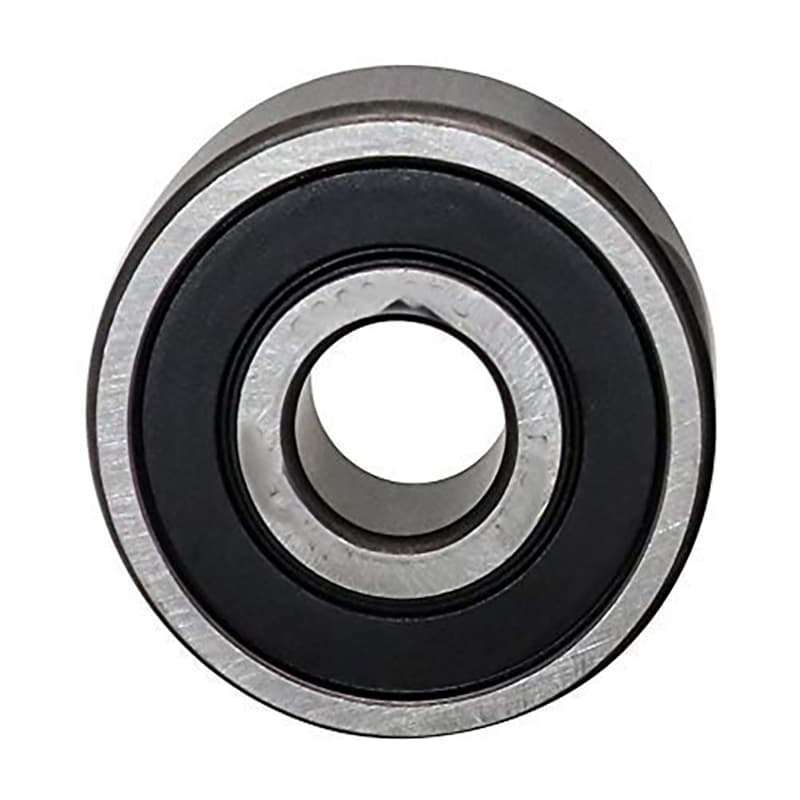
Most small conveyor motors use sealed bearings5 (2RS). You cannot add grease later. So the grease inside must last the entire bearing life. That is why you cannot compromise.
A good sealed bearing for a conveyor motor should have:
- Polyurea or high-quality lithium complex grease
- Fill level of 25-35% of free space (too much grease creates heat)
- Low-noise tested (if motor is for quiet environment)
I have a customer in Turkey who makes conveyor motors. He used to buy cheap bearings with unknown grease. His warranty claims were high. He switched to our FYTZ bearings with polyurea grease and a controlled fill. His warranty claims dropped by 70%.
When to Use Open Bearings with Regreasing
For large conveyor motors (over 30 kW), you often have open bearings with regreasing fittings. That is better because you can refresh the grease. But you need a schedule.
A good regreasing schedule6 for a conveyor motor:
- Normal conditions: every 6-12 months
- Hot or dusty conditions: every 3 months
- Use a grease gun with measured shots – do not overgrease
How much grease? Use this formula: G = 0.005 × B × D
Where B = bearing width (mm), D = bearing outer diameter (mm). For a 6206 bearing (B=16, D=62), G = 0.005 × 16 × 62 = 5 grams. That is about 2-3 pumps from a hand gun.
I tell my customers: less is more. Overgreasing creates heat and can blow out seals.
The Cost of Wrong Grease
Let me give you a real comparison. A customer in Brazil had 100 conveyor motors. Each motor used two 6205 bearings. He used cheap bearings with standard grease. The bearings lasted 6 months. Each bearing cost $2. He spent $400 per year on bearings. But his labor cost to change them was $50 per motor per change. That is $5,000 per year. Total $5,400.
He switched to better bearings with polyurea grease. Each bearing cost $4. They lasted 24 months. He spent $800 on bearings over two years. Labor was $2,500 over two years (one change instead of four). Total $3,300 for two years, or $1,650 per year. He saved 70% on his bearing-related costs.
So spending more on grease and quality pays back fast.
Conclusion
For conveyor drive motors, choose C3 clearance, polyurea grease, and check your operating temperature. That will double or triple your bearing life.
-
Explore this link to understand the benefits of high-quality synthetic grease for enhancing conveyor motor performance. ↩ ↩ ↩ ↩
-
Learn about polyurea thickener and how it improves lubrication in high-temperature applications. ↩ ↩ ↩ ↩
-
Discover the significance of base oil viscosity in ensuring optimal lubrication for conveyor motors. ↩ ↩ ↩ ↩
-
Find out how NLGI grade affects grease performance and longevity in conveyor motor applications. ↩ ↩ ↩
-
Explore the advantages of sealed bearings in conveyor motors and why they are preferred for longevity. ↩ ↩ ↩ ↩
-
Learn how to create an effective regreasing schedule to maintain conveyor motor performance. ↩ ↩ ↩