
Your motors keep failing. Your fans make noise. Your pumps leak. You spend too much on repairs and replacement parts.
You can reduce maintenance costs by up to 50% when you pick the right deep groove ball bearing. The correct load rating, seal type, and internal clearance lower failures and extend bearing life.
I have sold deep groove ball bearings to factories and distributors all over the world. Many buyers only look at the price. But the real money goes to downtime and labor. Let me show you how to pick bearings that save you cash.
What Hidden Costs Come from Choosing the Wrong Deep Groove Ball Bearing?
You see a cheap bearing. You buy it. Six months later, it fails. You pay for a new bearing, plus labor, plus lost production. That cheap bearing cost you ten times its price.
The hidden costs1 include unplanned downtime2, overtime labor3, emergency shipping fees, and damage to other parts like shafts or housings. Wrong bearings also increase energy bills4 because they run hot and create extra friction.
Downtime – The Biggest Cost of All
I remember a customer in Pakistan. He ran a textile mill. He bought cheap 6204 bearings for his spinning frames. Each bearing cost $0.80. The good ones cost $2.50. He thought he saved $1.70 per bearing.
Then the cheap bearings started failing every three weeks. Each failure stopped a spinning frame for two hours. The mill lost $500 per hour in production. After six months, he had paid $12,000 in downtime. Plus he bought new bearings again and again.
He finally switched to our FYTZ bearings. They lasted 18 months. The upfront cost was higher. But his total cost dropped by 70%.
Here is a table of hidden costs you might forget:
| Cost Type | Example Amount | How Often It Happens |
|---|---|---|
| Lost production | $200 – $5,000 per hour | Every failure |
| Overtime for mechanics | $50 – $150 per hour | After-hours failures |
| Emergency freight | $100 – $1,000 per order | When no spare in stock |
| Damaged shaft or housing | $200 – $2,000 | When bearing seizes |
| Extra power consumption | 5-15% higher energy bill | Every day bearing runs hot |
Do you see why the purchase price is the smallest number?
Labor and Rework Costs
Changing a bearing is not free. You pay a mechanic. You might need a crane or special tools. You lose time that could be used for other work.
I have a customer in Indonesia who runs a food packaging line. He uses 6206 bearings on conveyor rollers. He tried a cheap brand. The bearings felt rough after two months. He had to replace all 40 bearings on the line. That took two mechanics a full shift. Labor cost: $400. Bearing cost: $120. He spent $520 to save maybe $80 on the bearing purchase.
If he had bought better bearings, they would have lasted two years. No labor. No rework.
The Energy Bill Surprise
A bearing that runs rough or has high friction needs more power. The motor works harder. It pulls more current. You pay for that every day.
I tested this in my own workshop. I took two 6304 bearings. One was a cheap, low-quality bearing. One was our FYTZ bearing with good finish and proper grease. I put them in a small electric motor with a power meter. The cheap bearing made the motor draw 15% more power at the same speed.
Over one year of continuous running, that 15% extra power costs real money. For a 5 kW motor, 15% is 0.75 kW. At 10 cents per kWh, that is $657 per year. Just for one motor. Multiply that by 100 motors in a factory. You see the problem.
So choosing the wrong bearing hits your budget in ways you never expected.
How Do Load Ratings and Speed Limits Affect Your Maintenance Budget?
Many buyers pick a bearing by size only. They see a 6205 and buy any 6205. But load ratings vary between brands and grades.
Load ratings1 tell you how much weight the bearing can carry. Speed limits2 tell you how fast it can spin. If you exceed either number, the bearing fails early. This forces you to replace it more often, raising your maintenance budget.
Dynamic Load Rating (C)3 – The Life Calculator
Every deep groove ball bearing has a dynamic load rating C. This number is in Newtons or pounds. It tells you the load that gives the bearing a life of one million revolutions.
Here is the basic rule: If you double the load, the bearing life drops by a factor of eight. That is a big drop. For example:
| Load Change | Life Change |
|---|---|
| 100% of C | 1,000,000 revolutions |
| 110% of C | ~680,000 revs (32% less) |
| 130% of C | ~300,000 revs (70% less) |
| 150% of C | ~150,000 revs (85% less) |
I had a customer in Turkey who made agricultural fans. He used 6204 bearings. The actual load on the bearing was 30% higher than the bearing’s C rating. His fans failed every four months. We switched to a 6205 bearing (larger size, higher C rating). The load dropped to 70% of C. The bearing life went up to two years. He paid $0.50 more per bearing. He saved hundreds in warranty service calls.
Static Load Rating (C0)4 – The Shock Absorber
Static load rating C0 matters for machines that start and stop a lot, or that see sudden impacts. If you exceed C0 even once, you dent the raceway. The bearing will never run smoothly again.
I see this in conveyor systems. A heavy box drops onto the belt. The impact transfers to the bearing. If the bearing has a low C0, it gets brinelled. The bearing makes noise and vibrates. You have to replace it.
Always check the static load rating. For applications with shocks, use a bearing with a C0 that is at least double the expected peak load.
Speed Limits – Grease and Heat
Every bearing has a speed limit. For grease-lubricated deep groove ball bearings5, the limit is usually around 60-80% of the oil-lubricated speed. If you run faster than the limit, the grease gets too hot. It flows out or burns. Then the bearing runs dry.
I had a customer in Brazil with a high-speed wood router6. He used standard 6202 bearings with standard grease. The router ran at 20,000 rpm. The bearing speed limit was 14,000 rpm. The bearings failed every two weeks. We gave him high-speed 6202 bearings with a special polyurea grease and a smaller cage. The new bearings lasted eight months.
Here is a quick guide:
| Application Type | Choose | Avoid |
|---|---|---|
| High load, low speed | Larger bearing, steel cage | Small bearing, polyamide cage |
| High speed, low load | Smaller bearing, light cage, special grease | Standard grease, stamped steel cage |
| Shock loads | High C0 rating, brass cage | Low C0 rating, polyamide cage |
So do not just match the size number. Match the load and speed to the bearing’s real ratings.
Which Seal Types Save You the Most Money in Dusty or Wet Environments?
Seals are cheap. Bearing failure is expensive. Yet many buyers skip seals or pick the wrong type. That mistake costs them big money.
In dusty or wet environments, contact rubber seals (2RS)1 save the most money. They keep contaminants out. This makes the bearing last 3 to 5 times longer than open bearings2 or metal shields. The extra seal cost pays back in weeks.
Open Bearings (No Seal) – Only for Clean Rooms
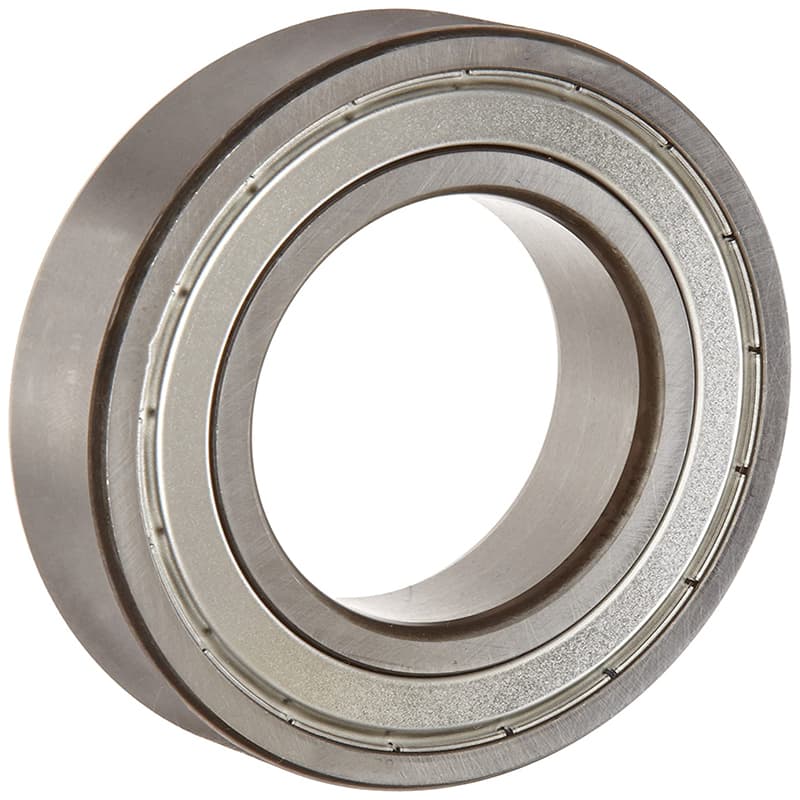
Open bearings have no seal or shield. The rolling elements are exposed. They are cheap and run cool at high speeds. But they let in everything – dust, water, chemicals.
I never recommend open bearings for industrial machinery unless the bearing is inside a clean gearbox with oil bath. For motors, fans, pumps, or conveyors, open bearings are a disaster.
I saw a food factory in Vietnam use open bearings on a washdown conveyor. Water and detergent got inside. The bearings rusted in one week. They switched to 2RS bearings3. No more rust.
Metal Shields (ZZ or 2Z) – Good for Dry Dust
Metal shields (usually stamped steel) have a small gap between the shield and the inner ring. They keep out large particles. But fine dust and moisture can still enter.
ZZ bearings are fine for indoor, dry, clean environments. For example, a bearing inside a computer fan or a small electric motor in an office. But for a cement plant or a farm, ZZ is not enough.
I have a customer in Egypt who uses ZZ bearings on textile spinning machines. The cotton dust is fine and fluffy. It gets past the metal shield. The grease turns into a black paste. The bearings last six months. I told him to try 2RS. He did. The bearings lasted two years.
Rubber Seals (2RS) – The Best Protection
2RS bearings have two rubber seals. The seal lip touches the inner ring. This makes a tight barrier. Dust, water, and most chemicals stay outside.
The downside is speed. Rubber seals create more friction than metal shields. So 2RS bearings have lower speed limits4. But for most industrial machines running under 5,000 rpm, this is not a problem.
I had a customer in Russia with snow blowers. The bearings got wet and frozen. Open bearings failed in one month. 2RS bearings with a special low-temperature grease lasted the whole winter season.
Here is a comparison table:
| Seal Type | Protection Level | Speed Limit | Cost | Best For |
|---|---|---|---|---|
| Open | None | Highest | Lowest | Clean oil bath |
| ZZ (metal shield) | Low (dry dust only) | High | Low | Indoor, clean |
| 2RS (rubber seal) | High (dust and water) | Medium | Medium | Outdoor, wet, dirty |
| 2RS with PTFE lip | Very high (chemicals) | Low | High | Fertilizer, acid |
How to Choose the Right Seal – A Simple Flow Chart
Ask yourself three questions:
- Is there water or high humidity? If yes, choose 2RS.
- Is there fine dust (cement, flour, carbon)? If yes, choose 2RS.
- Does the machine run over 5,000 rpm? If yes, test if 2RS can handle the speed. If not, use ZZ but plan for more frequent replacement.
For most of my customers in India, Brazil, and Indonesia, I recommend 2RS bearings as the default. The extra protection is worth the small speed loss.
Why Does Internal Clearance Matter for Long-Term Reliability and Lower Costs?
Internal clearance1 is the extra space inside the bearing. Many people ignore it. But it decides if your bearing survives temperature changes and tight fits.
Internal clearance matters because heat expands the shaft and housing. If the clearance is too small, the bearing clamps up and seizes. If it is too big, the bearing gets noisy and loses precision. The right clearance lowers failures and keeps your machines running.
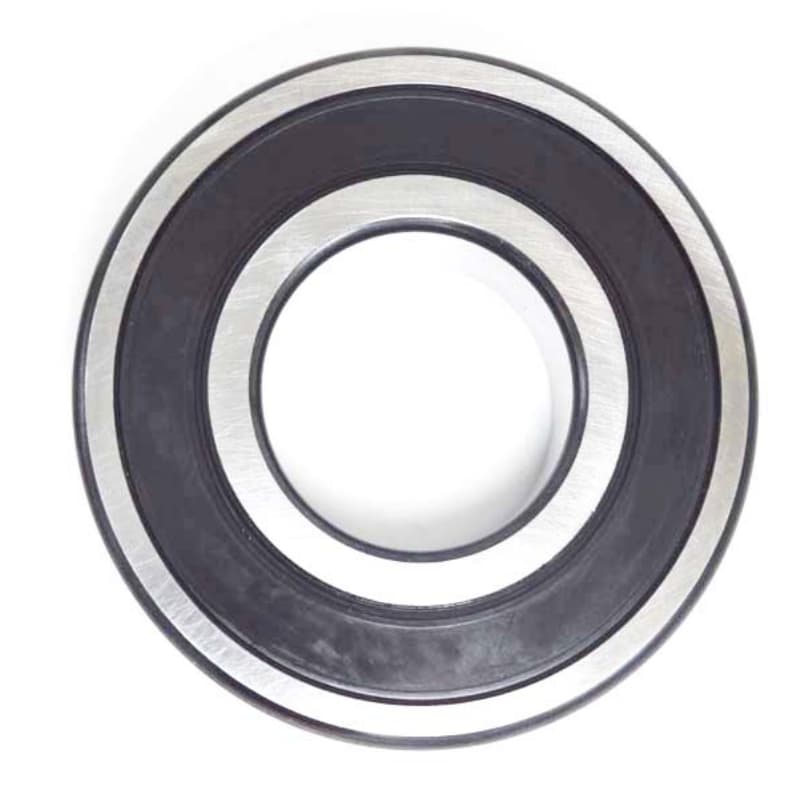
Normal Clearance (CN)2 – When to Use It
CN is standard clearance. It works for most normal conditions: room temperature, light to medium loads, steel shaft and housing.
But CN can be too small when you have interference fits3. A tight fit on the shaft stretches the inner ring. That reduces the internal clearance. If the reduction is big enough, the bearing has zero clearance. Then it runs hot and fails.
I saw this in a fan assembly in Bangladesh. The factory pressed a 6308 bearing onto a shaft with an interference fit of 0.06 mm. The inner ring expanded. The clearance dropped from CN to near zero. The fan ran for one hour then seized. We switched to a C3 clearance bearing. The same fit gave a small remaining clearance. The fan ran fine.
C3 Clearance4 – The Safe Choice for Most Industrial Machines
C3 clearance is larger than CN. It is the most popular choice for electric motors, pumps, fans, and conveyors. Why? Because these machines have interference fits and temperature changes.
When a motor runs, the shaft gets hot. The shaft expands. That expansion takes up some of the C3 clearance. The final running clearance becomes close to CN. Perfect.
I recommend C3 as the default clearance for almost all deep groove ball bearings in industrial use. Only use CN if you know for sure that the fits are loose and the temperature is stable.
C4 Clearance5 – For High Heat or Big Fits
C4 is even larger. Use it when you have very high operating temperatures (over 100°C), or very heavy interference fits, or aluminum housings that expand more than steel.
I had a customer in South Africa with a furnace fan. The fan ran at 180°C. The shaft was steel. The housing was cast iron. We used a C4 clearance bearing. The CN or C3 would have seized from thermal expansion. The C4 gave enough space.
Here is a simple selection guide:
| Operating Condition | Recommended Clearance |
|---|---|
| Room temp, loose fits, light load | CN |
| Room temp, normal interference fits, moderate load | C3 |
| Hot (80-120°C), interference fits | C3 or C4 |
| Very hot (120-180°C), heavy fits | C4 |
| Very high speed (over 70% of limit) | CN or C3 (but check) |
| Heavy shock loads | C3 or C4 (to leave space for misalignment) |
How to Check If You Have the Wrong Clearance
You do not need special tools. Just listen and feel.
- If the bearing runs hot (over 70°C by touch) and the grease melts out, the clearance may be too small.
- If the bearing makes a rattling noise when running at low speed, the clearance may be too big.
- If the bearing seizes after a few hours of running, the clearance is definitely too small.
I remember a customer in Turkey who kept getting bearing seizures6 on a conveyor drum. He used CN bearings. The drum shaft had a heavy interference fit. We switched to C3. No more seizures. He saved thousands in downtime.
So do not ignore clearance. It is a small detail with a big impact on reliability.
Conclusion
Pick the right deep groove ball bearing. Match load, speed, seal, and clearance to your machine. You will cut maintenance costs by half.
-
Understanding internal clearance is crucial for ensuring bearing longevity and optimal performance in machinery. ↩ ↩ ↩ ↩
-
Normal Clearance (CN) is standard for many conditions; explore its uses and limitations in bearing selection. ↩ ↩ ↩ ↩
-
Understanding interference fits is crucial for proper bearing selection and machine reliability. ↩ ↩ ↩ ↩
-
C3 clearance is essential for many industrial applications; learn why it’s the preferred choice for reliability. ↩ ↩ ↩ ↩
-
C4 clearance is vital for high-temperature applications; discover its benefits for your machinery. ↩ ↩
-
Preventing bearing seizures is key to reducing downtime; find out how to avoid this costly issue. ↩ ↩