
Your machines work around water, chemicals, or salt spray. You see rust on your bearings every few weeks. You are tired of replacing them.
For corrosive workplaces, stainless steel deep groove ball bearings resist rust much better than chrome steel bearings. But chrome steel handles higher loads. Your choice depends on whether corrosion or load is your bigger problem.

I have sold both types to food factories, chemical plants, and marine equipment users. Let me help you pick the right one. You will save money and downtime.
What Makes Chrome Steel Bearings Fail in Corrosive Environments?
Chrome steel is strong and hard. But it hates water. Put it in a wet place, and it starts rusting right away.
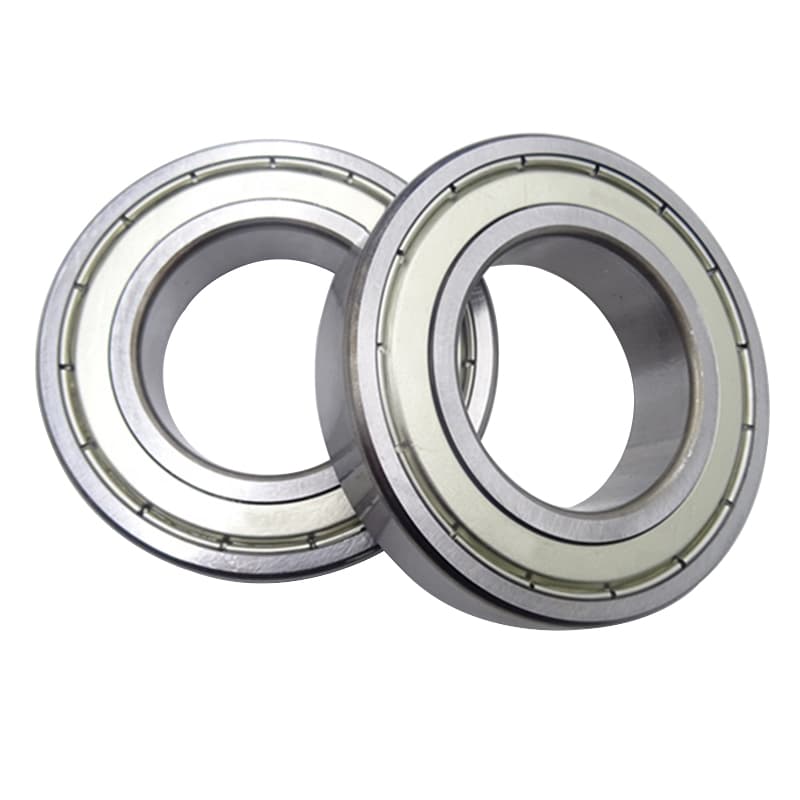
Chrome steel bearings fail in corrosive environments1 because the steel contains iron. Water and oxygen turn that iron into iron oxide – rust. Rust pits the raceway and balls. The pits create rough surfaces, noise, heat, and finally seizure.
The Chemistry of Rust – Simple but Destructive
Chrome steel (usually GCr15 or 52100) has about 1.5% chromium and 1% carbon. The rest is iron. That iron loves to react with oxygen. Add water or moisture, and you get rust. Rust takes up more space than steel. So it pushes against the balls and raceways. The bearing gets tight. Then it fails.
I remember a customer in Bangladesh. He ran a fish processing plant. He used chrome steel 6204 bearings on a conveyor that got washed with water every day. The bearings rusted solid in two weeks. He showed me one. The rust had pushed the seals out. The bearing would not turn at all.
Where Chrome Steel Fails Fast – A Table
| Environment | How Fast Chrome Steel Fails | Typical Life |
|---|---|---|
| Clean, dry indoor | Very slow | 5+ years |
| High humidity (over 80%) | Medium | 6-12 months |
| Occasional water splash | Fast | 1-3 months |
| Constant water spray | Very fast | 1-4 weeks |
| Salt water or sea air | Extremely fast | Days to 2 weeks |
| Chemical vapors (acid, ammonia) | Fast | 1-3 months |
You see the pattern. Water and chrome steel do not mix.
The Pitting Problem
Rust does not just make the bearing ugly. It creates pits. A pit is a small hole in the raceway. The ball rolls over that pit and hits an edge. That edge creates a stress point. A crack starts. The crack grows. Then a piece of the raceway flakes off. This is called spalling.
I had a customer in Indonesia with a water pump. He used a chrome steel 6305 bearing. The pump handled clean river water, but there was always some moisture inside. After four months, the bearing made a grinding noise. I opened it. The raceway had dozens of small pits. The balls were pitted too. The bearing was trash.
So if you have water or high humidity, chrome steel will let you down.
How Do Stainless Steel Bearings Resist Rust and Chemicals?
Stainless steel has a secret weapon – chromium1. A lot more of it than chrome steel. That chromium forms a thin, invisible layer on the surface. That layer stops rust.
Stainless steel bearings resist rust because they contain at least 13% chromium. The chromium reacts with oxygen to make a passive film2 of chromium oxide. This film seals the steel from water and chemicals. Even if you scratch it, the film reforms.
[^3] mechanism](https://sdycbearing.com/wp-content/uploads/2025/12/Deep-Groove-Ball-Bearing-97.jpg)
The Two Main Types of Stainless for Bearings
Not all stainless steels are the same. For deep groove ball bearings, you mostly see two grades.
440C stainless steel3 has high hardness (HRC 58-60). It is magnetic. It resists rust better than chrome steel but not as well as 316. It works for most food and medical applications.
316 stainless steel4 is softer (HRC 22-28). It is not magnetic. It resists salt water and chemicals very well. But it cannot take high loads because it is soft.
I also see 304 stainless for low-load bearings. But 304 is even softer. So most bearing makers use 440C for load-carrying bearings and 316 for extreme corrosion where load is low.
Here is a comparison:
| Material | Chromium % | Hardness (HRC) | Corrosion Resistance | Load Capacity | Magnetic |
|---|---|---|---|---|---|
| Chrome steel (GCr15) | 1.5% | 60-64 | Poor | High | Yes |
| 440C stainless | 16-18% | 58-60 | Good | Medium-high | Yes |
| 316 stainless | 16-18% | 22-28 | Very good | Low | No |
How the Passive Film Works
The chromium oxide layer is only a few atoms thick. But it is very stable. Water cannot get through it. Salt water cannot get through it. Even mild acids have a hard time.
I had a customer in Egypt who made bottled water. The filling machines got sprayed with chlorinated water every day. He switched from chrome steel to 440C stainless bearings. The rust stopped completely. The bearings lasted three years instead of three months.
But there is a catch. Strong acids or chlorides can break down the passive film. That is why 440C can still rust in salt water over a long time. For marine applications, you might need 316 stainless or even special coatings.
The Load Trade-Off
You cannot have everything. 440C stainless has lower load capacity5 than chrome steel. The dynamic load rating (C) for a stainless bearing is about 15-20% lower than the same size in chrome steel. Why? Because stainless steel is slightly softer and has different metallurgy.
I saw a customer in Turkey who used 440C bearings on a heavy conveyor. The load was high. The stainless bearings failed by spalling after eight months. Chrome steel bearings lasted 24 months on the same machine. But the chrome steel bearings rusted from occasional washdowns. He had to choose between rust and load. He chose a hybrid solution: chrome steel bearings with better seals and more frequent greasing.
So stainless is not always the answer. You must check your load first.
Which One Handles Higher Loads – Chrome Steel or Stainless Steel?
If your machine pushes hard, you need strength. Chrome steel1 wins this round clearly.
Chrome steel handles 15-30% higher loads than stainless steel in the same bearing size. Chrome steel also has higher fatigue strength2. So for heavy machinery, conveyors, and presses, chrome steel is the better choice. Only switch to stainless if corrosion is killing you.
Hardness and Rolling Contact Fatigue
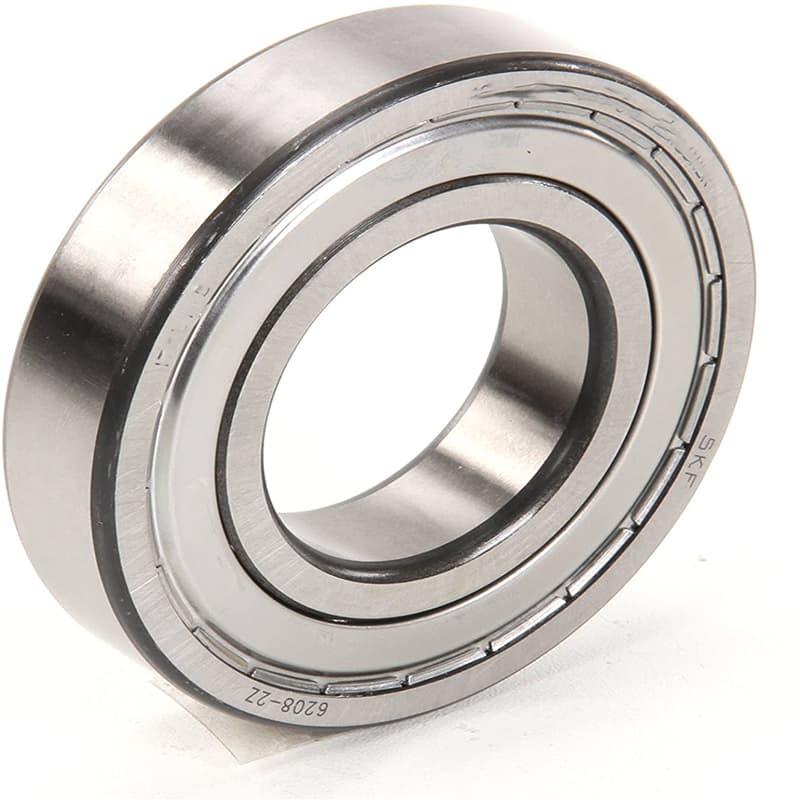
Bearings fail by fatigue. The balls roll over the raceway millions of times. Each roll puts stress on the steel. After enough cycles, tiny cracks start under the surface. The cracks grow until a piece of metal breaks off. That is spalling.
Harder steel resists this fatigue better. Chrome steel at HRC 60-646 is very hard. 440C stainless at HRC 58-60 is still hard but a bit less. 316 stainless at HRC 22-28 is much softer.
Let me show you a real example. I have a customer in India who runs a steel rolling mill. He uses 6210 bearings on guide rollers. The load is very high. He tried 440C stainless bearings. They lasted only 2 months before spalling. Chrome steel bearings last 12 months. The stainless ones could not handle the heavy rolling pressure.
Here is a table of load capacity reduction3 for stainless:
| Bearing Size | Chrome Steel Dynamic Load Rating (kN) | 440C Stainless Rating (kN) | Reduction | 316 Stainless Rating (kN) |
|---|---|---|---|---|
| 6204 | 12.8 | 10.5 | 18% | 3.5 |
| 6206 | 19.5 | 16.0 | 18% | 5.2 |
| 6308 | 40.5 | 33.0 | 19% | 11.0 |
| 6310 | 61.8 | 50.0 | 19% | 16.5 |
You see that 316 stainless loses about 70-75% of load capacity. So only use 316 for very light loads like food handling or instruments.
Impact and Shock Loads
Chrome steel also handles sudden impacts better. The higher hardness means it resists denting. A stainless bearing can get a dent from a shock load. That dent then creates noise and vibration.
I had a customer in Vietnam with a rock crusher. He tried 440C stainless bearings on an idler pulley. A rock hit the pulley. The bearing got a brinell mark. Within a week, it was noisy. He went back to chrome steel.
When to Accept Lower Load for Corrosion Resistance
Sometimes you have no choice. If the environment is very corrosive, chrome steel fails so fast that even its higher load capacity does not matter.
Think of a food washing line. The bearings get sprayed with hot water and detergent. Chrome steel rusts in two weeks. 440C stainless lasts a year. Even though the stainless has lower load capacity, the load is light anyway. So stainless wins.
For a heavy conveyor in a dry cement plant, chrome steel wins. No water, just dust. Chrome steel handles the load and dust seals keep out the dirt.
So the answer is: chrome steel for heavy loads in dry or sealable environments. Stainless for light to medium loads in wet or chemical environments.
How to Choose the Right Bearing Material for Your Specific Corrosive Workplace?
You have to look at your own situation. There is no one-size-fits-all. Let me give you a simple decision process.
First, measure your actual load. Second, identify the corrosive agent1 – water, salt, acid, or chemical. Third, check if you can use seals to protect a chrome steel2 bearing. Fourth, compare the total cost over three years6, not just the purchase price.
Step 1: Calculate Your Load Percentage
Take the bearing’s dynamic load rating (C) from the catalog. Calculate your actual load (P). Find the ratio P/C.
- If P/C is less than 0.15 (light load), you can use 440C stainless3.
- If P/C is 0.15 to 0.30 (medium load), 440C stainless may work. Check carefully.
- If P/C is over 0.30 (heavy load), you need chrome steel.
I have a simple worksheet I give my customers. You can make your own.
Step 2: Identify the Corrosive Agent
Different agents need different materials.
| Corrosive Agent | Chrome Steel | 440C Stainless | 316 Stainless4 | Special Notes |
|---|---|---|---|---|
| Fresh water (occasional) | Poor | Good | Very good | Use seals |
| Fresh water (constant) | Very poor | Good | Very good | 440C with seals works |
| Salt water / sea air | Extremely poor | Fair | Very good | 316 needed for long life |
| Mild acids (pH 5-6) | Poor | Good | Good | Rinse after exposure |
| Strong acids (pH <4) | Very poor | Fair | Good | 316 or ceramic |
| Alkalis (soap, detergent) | Fair | Good | Very good | 440C usually fine |
| Chlorine / bleach | Very poor | Poor | Good | 316 or special |
I had a customer in Russia who made pickled vegetables. The brine (salt and vinegar) destroyed chrome steel in days. 440C lasted a few weeks. 316 lasted two years. He chose 316.
Step 3: Can You Seal Chrome Steel Away from the Corrosion?
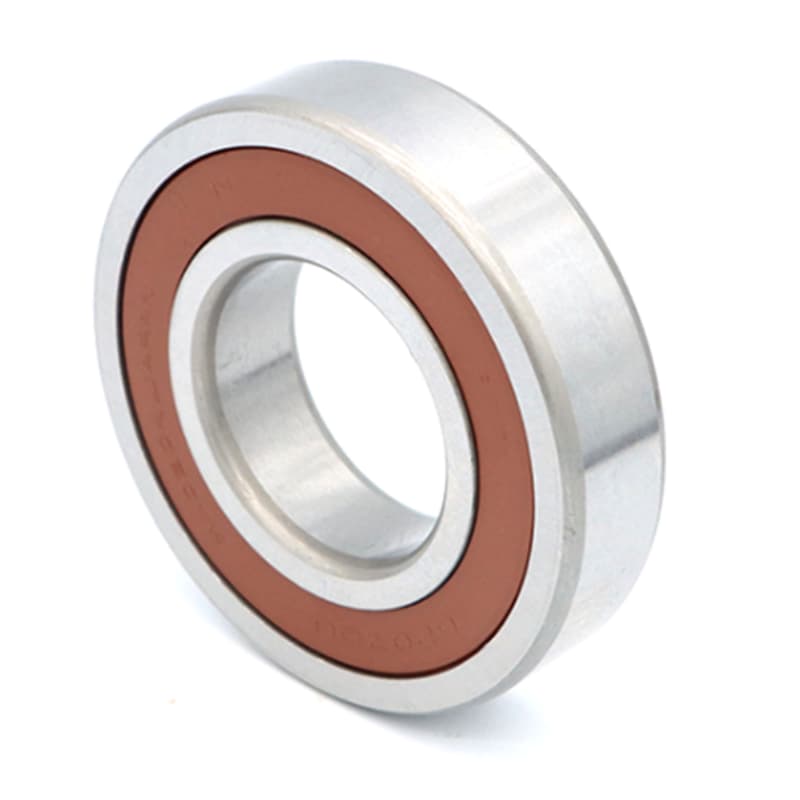
Before you buy expensive stainless bearings, ask if you can keep the corrosion out. A good seal – like a 2RS rubber seal5 – can protect a chrome steel bearing very well.
I remember a customer in Brazil with a sugar mill. The environment was humid and sugary. He used chrome steel bearings with 2RS seals and a heavy grease. He regreased every week to push out any moisture. The bearings lasted 18 months. Stainless bearings would have cost three times more and lasted maybe 24 months. Not worth it.
So try sealing first. Only move to stainless if the corrosion gets past your seals.
Step 4: Calculate Total Cost Over Three Years
Do not just look at the bearing price. Look at how many you will buy in three years, plus labor.
Let me give you an example for a 6204 bearing in a wet food plant:
| Option | Bearing Price | Life (months) | Bearings needed in 3 years | Total bearing cost | Labor cost (10 changes) | Total cost |
|---|---|---|---|---|---|---|
| Chrome steel + 2RS | $2.00 | 2 | 18 | $36 | $450 (9 extra changes) | $486 |
| 440C stainless + 2RS | $8.00 | 12 | 3 | $24 | $50 (1 change after 1 year, then 2 more) | $74 |
| 316 stainless + 2RS | $15.00 | 24 | 1.5 (buy 2) | $30 | $25 | $55 |
You see the cheap chrome steel costs the most in the long run. The stainless options cost less overall because you change them fewer times.
So do the math for your own numbers. You might be surprised.
Conclusion
Chrome steel for heavy loads and dry places. Stainless for wet or chemical areas. Do the math on total cost. Then choose.
-
Understanding corrosive agents helps in selecting the right bearing material for durability. ↩ ↩ ↩ ↩
-
Explore the benefits of chrome steel bearings to see if they fit your application needs. ↩ ↩ ↩
-
Learn about 440C stainless steel’s applications and why it might be suitable for your environment. ↩ ↩ ↩
-
Discover why 316 stainless steel is often the best choice for harsh conditions. ↩ ↩
-
Learn about 2RS rubber seals and how they can enhance the lifespan of bearings. ↩ ↩
-
Find out how to accurately assess the long-term costs of different bearing materials. ↩ ↩