
You run a busy port or a bulk cargo terminal. One morning, a conveyor stops. You have no spare bearing. Your whole operation waits for days.
To build a reliable spare parts plan for spherical roller bearings, you first list every bearing size and location. Then you set a safety stock for critical ones. You store them properly and reorder based on hours or condition. This cuts downtime by over 80%.
I have helped dozens of bearing distributors and port operators in India, Brazil, and Indonesia fix their spare part chaos. Many keep too much of the wrong bearings. Others keep nothing. Let me show you a simple system that works.
Why Do You Need a Dedicated Spare Parts Plan for Spherical Roller Bearings?
Most maintenance managers think they can order a bearing when one fails. That idea never works. Lead times from China or Europe take weeks. Your machine sits idle. You lose money every hour.
A dedicated spare parts plan1 saves you from unplanned downtime. It lowers your total cost because you stop emergency freight charges. It also helps you avoid buying wrong bearings in a panic.
[^2]s](https://sdycbearing.com/wp-content/uploads/2025/12/Spherical-Roller-Bearings-19-1.jpg)
The Real Cost of Not Having a Plan
Let me give you a real example. A cement plant in Egypt called me last year. Their main bucket elevator broke down. The bearing was a 22220 spherical roller bearing. They had no spare. They asked me for air freight. The bearing itself cost $80. The air freight cost $450. The plant lost 12 hours of production. That loss was $15,000.
If they had kept one spare in their store, they would have spent only $80 and 30 minutes of changeover time.
I see this story repeat everywhere. Port operators in Vietnam. Steel mills in Turkey. Sugar mills in Pakistan. They all think "it won’t happen to me." But it does happen.
Three Hidden Costs You Forgot
Many buyers only look at the bearing price. But a broken bearing creates three more costs:
| Cost Type | Example Amount | Who Pays |
|---|---|---|
| Production loss | $5,000 – $50,000 per hour | Your company |
| Emergency shipping | $200 – $2,000 per bearing | Your maintenance budget |
| Extra labor overtime | $50 – $200 per hour per mechanic | Your operations |
A spare bearing on your shelf costs maybe $100. That is cheap insurance.
Why Spherical Roller Bearings Need Special Attention
Not all bearings are the same. Deep groove ball bearings are everywhere. You can buy them at any local shop. But spherical roller bearings are bigger and less common. Many local suppliers do not stock them. The sizes vary a lot – from 22205 up to 23280. If you need a 22328, your local dealer might not have it.
I know this because I ship bearings from my factory in China to over 15 countries. Even a big distributor in Mumbai might only stock the top 10 sizes. Your machine might use size number 15. So you must plan ahead.
I tell my customers: treat spherical roller bearings like a fire extinguisher. You hope you never need it. But when you do, you need it right now.
How to Identify Which Bearing Models Are Critical for Your Spare Stock?
You cannot stock every bearing size. That would cost a fortune. So you need a smart way to choose. Focus on the bearings that stop your whole line.
Start by making a list of every spherical roller bearing in your plant. Then mark the ones where failure stops production. For those, you keep at least one spare. For non-critical machines, you can share spares or wait for normal delivery.
Step 1: Make a Complete Bearing Map
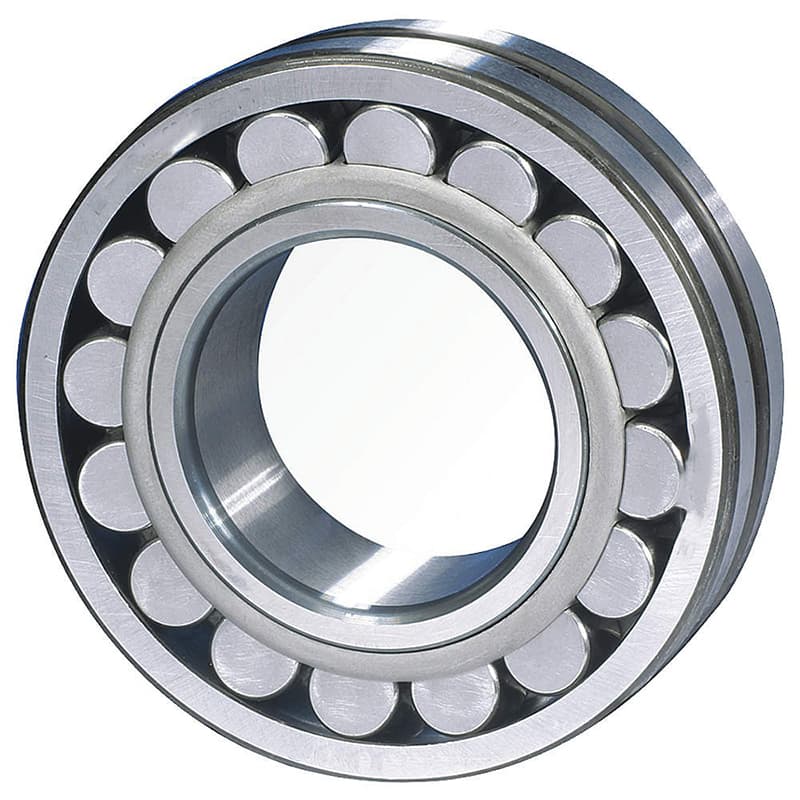
Walk through your entire facility. Write down every machine that uses spherical roller bearings1. For each bearing, record these details:
- Bearing designation (example: 22318, 22224, 23132)
- Machine name and location (example: Shiploader boom, main conveyor tail pulley)
- Quantity per machine (one or two bearings)
- Operating hours per day
- Past failure history2 (how often does it break?)
I learned this lesson from a customer in South Africa. He had a stacker with four spherical roller bearings. He only kept spares for the two visible ones. The other two were inside a gearbox. When those failed, he had no idea what size they were. He had to open the gearbox first, then order. That took ten days.
Do not be that person. Make the map before anything breaks.
Step 2: Rank Bearings by Criticality
Use a simple A-B-C system. I will show you how.
| Criticality Level | Definition | Action |
|---|---|---|
| A (Critical) | Failure stops the whole plant. No bypass possible. | Keep 2 spares on shelf. |
| B (Important) | Failure slows down production but does not stop it fully. | Keep 1 spare. |
| C (Normal) | Machine has a backup. Or repair can wait 2-3 weeks. | No spare needed. Order as needed. |
How do you decide? Ask yourself one question: If this bearing fails at 2 AM on a Sunday, can my plant still run? If the answer is no, that bearing is an A.
I had a Russian customer with a ship unloader. It had eight spherical roller bearings. Only two were critical – the ones on the main lifting drum. The others were on secondary conveyors. He stocked spares for the two critical ones. That saved him $8,000 in inventory cost.
Step 3: Check for Shared Sizes Across Machines
Sometimes you get lucky. One bearing size might be used on five different machines. That means you only need one spare for all five. But be careful – if those five machines run at the same time, one spare might not be enough.
Here is a simple table to help you decide:
| Number of Machines Using Same Size | Total Bearings in Use | Minimum Spare Quantity |
|---|---|---|
| 1 | 2 | 1 |
| 2 | 4 | 1 or 2 (based on failure rate) |
| 3-5 | 6-10 | 2 |
| 6+ | 12+ | 3 |
I always tell my distributor customers like Rajesh in Mumbai: help your end users make this list. They will trust you more. And they will buy more bearings from you.
What Is the Right Safety Stock Quantity for Each Bearing Size?
People often ask me: "How many spares should I keep?" My answer is never a fixed number. It depends on lead time1, failure rate, and cost.
The right safety stock2 = (average monthly failures × lead time in months) + 1 extra for unexpected spikes. For critical bearings, keep 2 extras. For expensive and slow-moving sizes, keep 1 or share with a nearby plant.
The Simple Math Formula
Let me give you a formula that works for most port and bulk handling operations.
Safety Stock = (D × L) + Z
Where:
- D = average number of bearings you replace per month
- L = lead time from supplier to your door (in months)
- Z = a safety buffer (usually 1 or 2)
Example: You replace two 22320 bearings every month on average. Your supplier in China takes 1.5 months to deliver by sea. So D×L = 2 × 1.5 = 3. Then add Z = 1. Total safety stock = 4 bearings.
But wait. That seems high. You can lower it if you have a faster supplier. My factory FYTZ can ship by air in 7 days. Then lead time is 0.25 months. 2 × 0.25 = 0.5. Plus Z = 1. Total = 1.5, so you keep 2 bearings.
That is the power of a short lead time. You keep less money in inventory.
When to Keep More Than One Spare
Some situations need extra spare3s. Here is my checklist:
| Condition | Add Extra Spare |
|---|---|
| Bearing runs 24/7 near max load | Yes (+1) |
| Environment is very dusty or wet | Yes (+1) |
| Machine has no vibration monitoring | Yes (+1) |
| Supplier is far away (over 3 months lead time) | Yes (+2) |
| Bearing is very expensive (over $500) | No (share instead) |
| You have a second machine that can borrow the spare | No (share) |
I remember a coal terminal in Indonesia. They had one 23148 bearing on a critical conveyor. Lead time from Europe was 4 months. They kept three spares. That seemed like a lot. But that bearing failed twice in one year. Each failure cost $50,000 in lost production. The three spares cost $2,100. Smart math.
The "Share Spares" Strategy for Small Plants
Not every factory can afford many spares. If you are a small repair shop or a small port, talk to your neighbors. Share a common stock. Keep the bearings in a central location. Everyone pays a small fee.
I saw this work in Vietnam. Three cement plants were 20 km apart. They all used the same 22228 bearings. They bought a pool of 10 bearings together. Each plant paid one third. When one plant needed a bearing, they took from the pool and reordered a replacement. No plant ever waited more than one day.
This only works if you trust your neighbors. And if you use common sizes.
How to Store Spherical Roller Bearings to Prevent Damage During Long Wait Times?
You bought the spares. Good. But then you throw them on a dirty shelf. Six months later, you open the box. The bearing is rusty. The grease is hard. You just wasted your money.
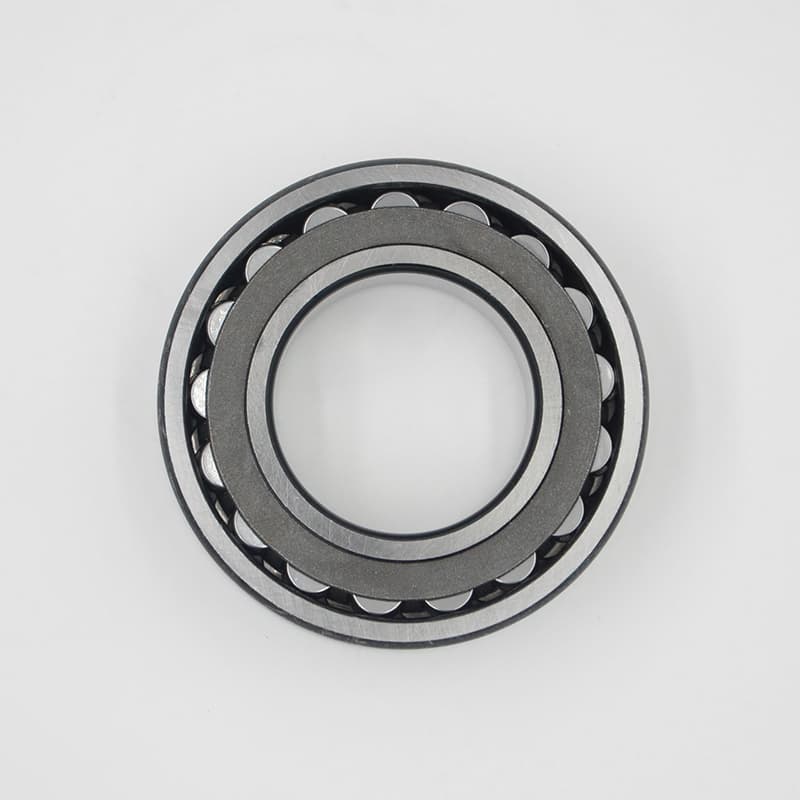
Store spherical roller bearings1 in a clean, dry room. Keep them in their original boxes. Lay them flat, not on their side. Do not remove the anti-rust oil2. Rotate the stock so older bearings get used first. Check them every three months.
The Four Killers of Stored Bearings
I have inspected many warehouses. I always find the same four problems.
| Killer | What Happens | Prevention |
|---|---|---|
| Moisture | Rust forms on raceways and rollers. | Keep humidity below 60%3. Use dehumidifier. |
| Vibration | False brinelling creates dents. | Store away from generators or presses. Lay flat. |
| Dust | Dirt gets inside the box. Later it damages the bearing. | Keep boxes closed. Store in cabinets. |
| Heat | Grease separates. Rubber seals harden. | Keep temperature between 10°C and 30°C. |
I once visited a customer in Pakistan. He stored his spare bearings next to a welding machine. The welding sparks and dust covered the boxes. When he opened a 22324 bearing, the raceway had pitting. The dust had entered through a small tear in the box. He lost a $200 bearing for no reason.
How to Store Different Types of Spherical Roller Bearings
Open bearings (without seals) are the most sensitive. They have exposed raceways. You must keep the anti-rust coating intact. Never touch the bearing with bare fingers. Your sweat causes rust.
Sealed bearings (2RS) are safer. The rubber seals keep dust out. But moisture can still enter through the seal lips over time. So you still need a dry room.
Large bearings (over 300 mm outer diameter) need special care. Lay them flat on a wooden pallet. Never stand them on the edge. The weight can deform the rings.
Here is my simple storage checklist:
- Keep bearings in original box until use.
- Do not open the plastic wrap.
- Store on a shelf at least 30 cm above the floor.
- Keep away from outside walls (where condensation happens).
- Label each box with purchase date.
- Use FIFO – first in, first out4.
The Six-Month Inspection Routine
You cannot just buy spares and forget them. Set a reminder every six months. Open one box from each size. Look for:
- Any orange or brown spots (rust)
- Grease that looks hard or separated
- Any dents or marks on the rings
- Any smell of burnt oil (means old grease)
If you see rust on a new bearing, do not use it. Send it back to your supplier. At FYTZ, we coat every bearing with high-quality anti-rust oil. We pack them in VCI paper and plastic bags. But even that lasts only 2-3 years in bad storage.
I recommend rotating your stock every 12 months. If a bearing has been sitting for one year, use it in a non-critical machine. Then buy a fresh spare. That keeps your spare stock young and healthy.
Conclusion
Build your spare parts plan today. List critical bearings, set safety stock, store them right. One spare can save you weeks of downtime.
-
Explore this link to learn essential storage practices that can extend the life of your spherical roller bearings. ↩ ↩ ↩ ↩
-
Discover the importance of anti-rust oil in preserving bearings and preventing rust damage. ↩ ↩ ↩
-
Understanding humidity control can help you prevent rust and extend the lifespan of your bearings. ↩ ↩
-
Explore the FIFO method to ensure efficient use of your bearings and minimize waste. ↩