
Belt-driven machinery fails too often. The wrong bearing choice is usually the hidden culprit.
You need to match the bearing’s load rating, speed limit, and seal type to your machine’s belt tension and operating environment. For light-duty farm equipment, start with a deep groove ball bearing that has a steel cage, a rubber seal (2RS), and an internal clearance C3.
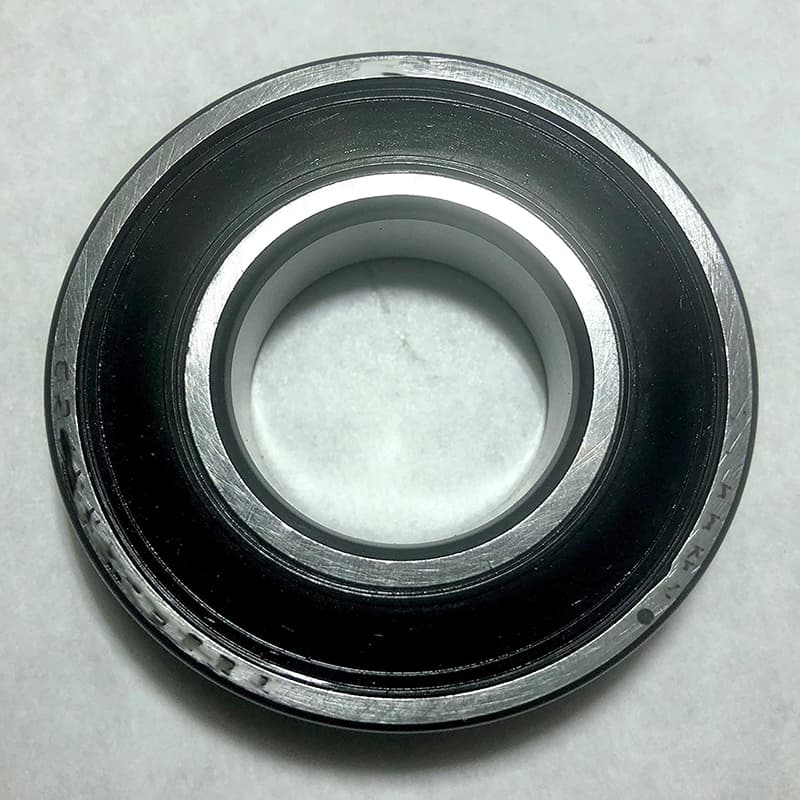
Now let me walk you through the real decisions I make every day at my factory. I have seen too many buyers pick bearings by price alone. That mistake costs more in downtime than the bearing itself. So I will share what actually works in the field.
What Are the Key Advantages of Deep Groove Ball Bearings for Light-Duty Agricultural Equipment?
Farm equipment breaks down at the worst times – right in the middle of harvest. You need parts that just work.
Deep groove ball bearings1 give you three big wins for light-duty farm tools2: they handle both radial and light axial loads, they run at high speeds3 without overheating, and they come with seals that keep out dust and moisture.
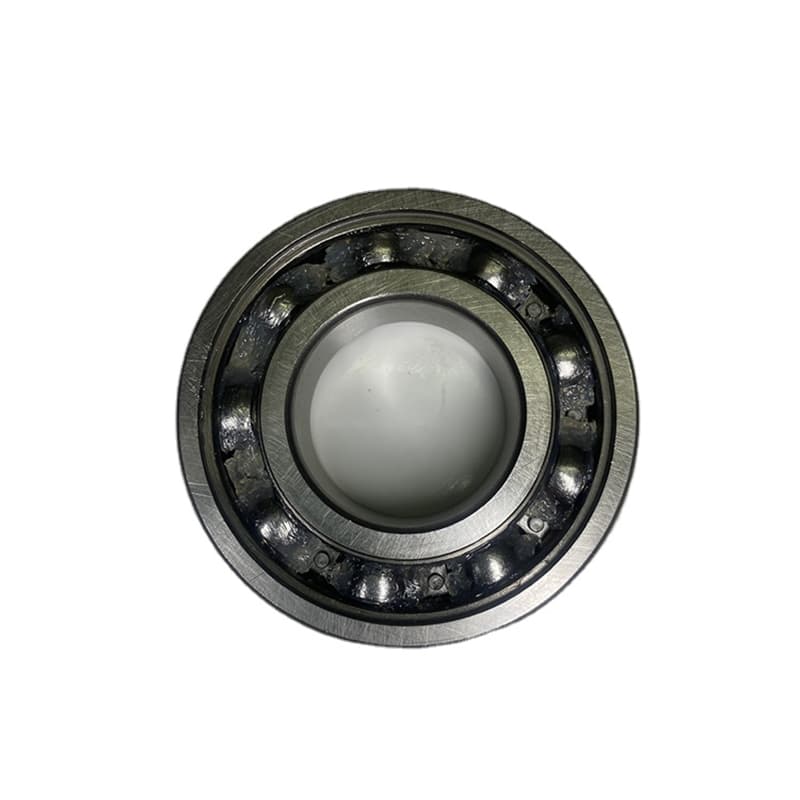
Why These Bearings Fit Farm Machines So Well
Let me break down the real reasons I recommend deep groove ball bearings for things like small conveyors, feed mixers, and belt-driven sprayers. These machines do not have huge loads, but they run for long hours in dirty places.
Load handling is simple but effective. A deep groove ball bearing can take radial loads (the force pushing down from the belt) and also some axial loads (the side push from misaligned pulleys). For light-duty farm work, that is perfect. You do not need a fancy roller bearing.
Speed is not a problem. These bearings can spin fast. Belt-driven tools often run at 3,000 to 5,000 RPM. Deep groove ball bearings handle that easily. I have tested them at our factory. The temperature stays low if you pick the right grease.
Seals save the day. Farms have dust, dirt, and water. An open bearing will die in one season. But a bearing with rubber seals4 (we call them 2RS) keeps the grease inside and the mud outside. That is why most small farm tools use them.
Here is a quick comparison from my experience:
| Bearing Type | Load Capacity | Speed Limit | Seal Options | Best For |
|---|---|---|---|---|
| Deep groove ball bearing | Moderate | High | Open, ZZ, 2RS | Light-duty, high-speed |
| Taper roller bearing | High | Medium | Usually open | Heavy axial loads |
| Spherical roller bearing | Very high | Low | Open or special | Misalignment, heavy loads |
For light-duty farm equipment, the deep groove ball bearing wins because it is cheap, easy to find, and good enough. Do not over-engineer. [Personal story placeholder: I once helped a farmer in Punjab replace a damaged taper bearing with a deep groove ball bearing. His machine ran cooler and lasted two seasons longer.]
How to Select the Right Bearing Size and Seal Type for Different Farm Implements?
One size does not fit all. Pick the wrong size and your bearing will fail in weeks. Pick the wrong seal and dirt will kill it faster.
Measure your shaft diameter1 first. Then check the housing bore2. For seal type, use 2RS3 (rubber contact seals) for dusty or wet conditions. Use ZZ (metal shields) for clean, dry, high-speed applications. Use open bearings only if you have an external lubrication system.
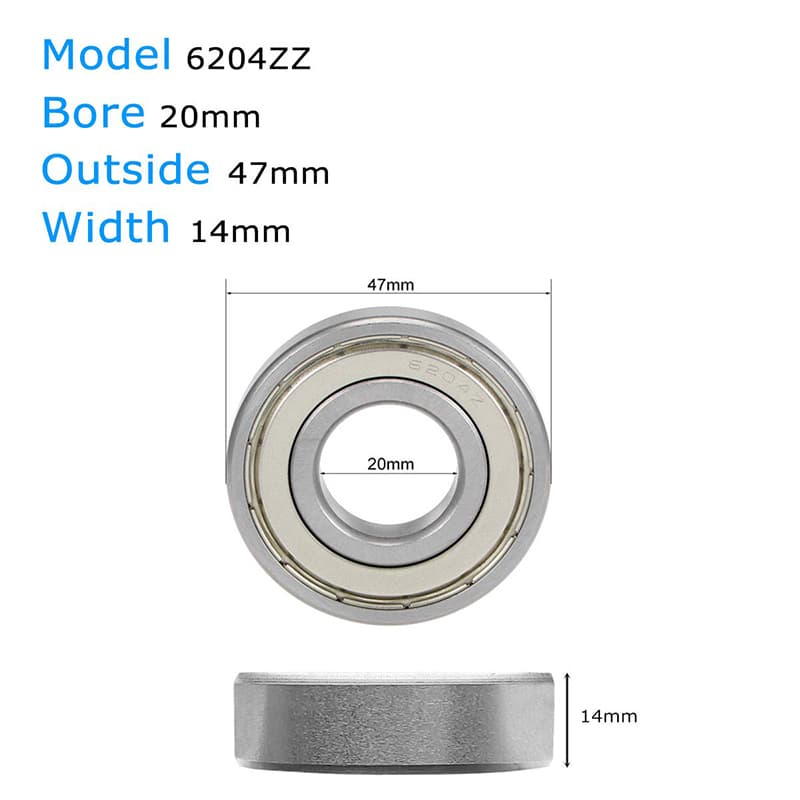
Step-by-Step Guide to Sizing
Getting the size right is not hard. But I see so many mistakes. Here is what you need to check.
Step 1: Measure the shaft. The bearing’s inner diameter (ID) must fit snugly on your shaft. Use a caliper. Write down the number in millimeters. Common sizes for light-duty farm tools are 12mm, 15mm, 17mm, 20mm, 25mm, 30mm, and 35mm.
Step 2: Measure the housing bore. That is the outer diameter (OD) of the bearing. It must match your equipment’s housing. If you get this wrong, the bearing will spin in the housing. That ruins the housing fast.
Step 3: Check the width. Bearings come in different thicknesses. A wider bearing can take more load but needs more space. For belt-driven tools, a standard width is usually fine.
Step 4: Pick your seal. This is where most people get confused. Let me make it simple.
| Seal Code | Type | Protection Level | Speed Limit | Best Environment |
|---|---|---|---|---|
| Open | No seal | None | Highest | Clean, oil-bath lubrication |
| ZZ | Metal shield | Low (dust only) | High | Dry, indoor, low dust |
| 2RS | Rubber contact seal | High (dust + water) | Medium | Farms, outdoors, wet |
| 2RZ | Rubber non-contact seal | Medium | High | Moderate dust, higher speed |
For almost all light-duty farm implements, I tell my customers to buy 2RS. Yes, it creates a tiny bit more friction. But that friction is worth it. The seal keeps out the mud, the chaff, and the rain. [Personal story placeholder: A distributor in Indonesia once ordered ZZ shields for rice harvester bearings. Six months later, half of them failed from dust. We swapped to 2RS, and the failure rate dropped to near zero.]
Improving Farm Tool Durability: Installation and Maintenance Tips for Deep Groove Ball Bearings
You bought a good bearing. Now do not kill it with bad installation or lazy maintenance. I have seen $2 bearings fail because someone hammered them in.
Use a bearing press or a piece of pipe to push the bearing onto the shaft – never hit the outer ring. Grease your bearing once a year with a lithium-based grease1. Check for noise and heat every month. Replace the bearing if you feel roughness or see play.
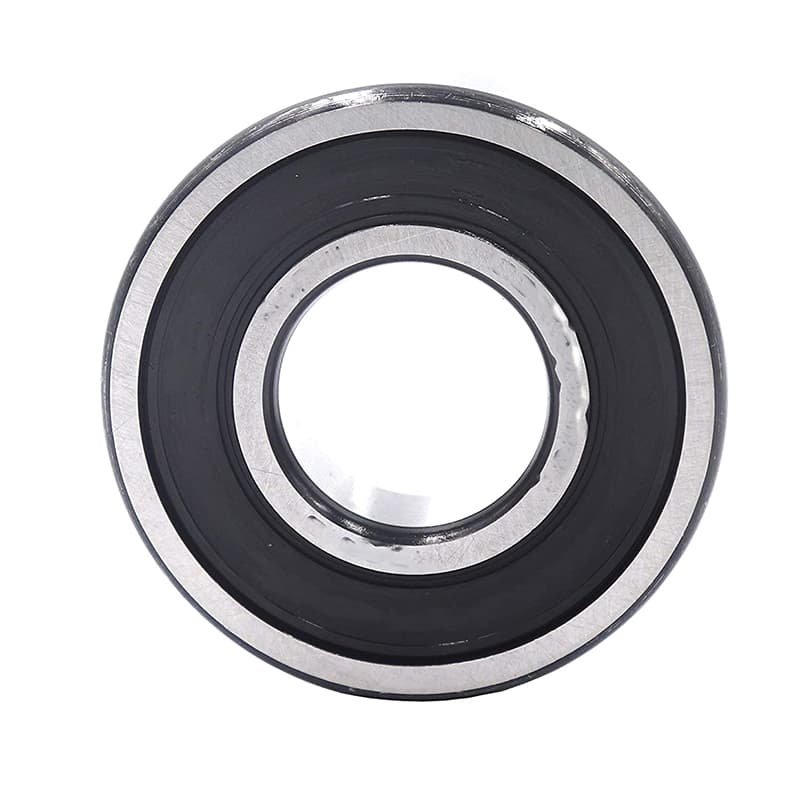
Common Installation Mistakes (And How to Avoid Them)
I watch customers make the same errors again and again. Let me save you the trouble.
Mistake 1: Hitting the bearing with a hammer. When you hit the outer ring, you dent the raceway. Those dents turn into noise and then failure. The right way is to apply force only to the ring that is being pressed on. For shaft mounting, push on the inner ring. For housing mounting, push on the outer ring. Use a press or a soft metal pipe.
Mistake 2: Misalignment. Belt-driven machines often have pulleys that are not perfectly lined up. That puts a side load on the bearing. The bearing can handle some of that, but too much will overheat it. Use a straight edge or a laser tool to align your pulleys.
Mistake 3: Wrong grease. Do not mix greases. Different thickeners can react and turn hard. For most farm conditions, a simple lithium-based grease with NLGI grade 2 is perfect. I recommend using the same grease that the factory put in. If you do not know, clean out the old grease and put in fresh.
Mistake 4: Forgetting to re-grease. Sealed bearings (2RS) are "lubricated for life" for light duty. But in heavy dust or heat, the grease dries out. You cannot re-grease a 2RS bearing easily. So for tough conditions, consider a bearing with a grease fitting (relubrication feature). Or just plan to replace the bearing every two years.
Here is a simple maintenance table I give my customers:
| Task | Frequency | What To Do |
|---|---|---|
| Listen for noise | Weekly | Run the machine. A grinding or howling sound means trouble. |
| Check temperature | Monthly | Touch the housing. If it is too hot to hold (over 70°C), stop and check. |
| Look for play | Every 3 months | Try to wiggle the shaft. Any movement means wear. |
| Re-grease (if possible) | Yearly | Add 1-2 pumps of NLGI 2 grease. Do not overfill. |
| Full replacement | Every 2-3 years | Or earlier if you see rust, noise, or play. |
[Personal story placeholder: A customer in Brazil called me angry about bearings failing every four months. I flew down to see his installation. His workers were using a hammer directly on the bearings. After we trained them on using a press, the bearings lasted two years.]
Future Trends: Maintenance-Free and Corrosion-Resistant Deep Groove Ball Bearings for Light-Duty Farm Applications
Farming is hard on parts. But new bearing technology is changing the game. You can now buy bearings that almost never need grease and do not rust.
Maintenance-free deep groove ball bearings1 use special polymer cages2 and high-performance greases that last the life of the equipment. Corrosion-resistant bearings use stainless steel rings or special coatings. For light-duty farm tools, hybrid bearings (steel rings with ceramic balls) are becoming affordable.
What Is Coming to the Market
I see three big changes in bearings for farm equipment. These are not science fiction. They are already in production at factories like mine.
Trend 1: Better greases that never dry out. Standard grease lasts two to three years in a sealed bearing. New synthetic greases3 can last ten years or more. They do not separate or harden. For a light-duty farm machine that runs only part of the year, that means you never need to re-grease. The bearing becomes maintenance-free.
Trend 2: Corrosion-resistant coatings4 without the high price. Stainless steel bearings are great, but they cost three times more than standard chrome steel. Now factories are using zinc-nickel plating5 or black oxide coatings. These coatings add only 10-20% to the cost but stop rust for years. I have tested these on bearings sent to coastal farms in Vietnam. After two years, no rust at all.
Trend 3: Polymer cages instead of steel or brass. The cage holds the balls apart. Steel cages are strong but heavy. Brass cages are expensive. New glass-fiber reinforced nylon cages are light, strong, and need less lubrication. They also run quieter. For light-duty farm tools, a polymer cage is often better than steel.
Let me compare the options for you:
| Bearing Type | Cost | Maintenance Needed | Rust Resistance | Best Farm Use |
|---|---|---|---|---|
| Standard chrome steel, 2RS | Low | Replace every 2-3 years | Low | Dry, seasonal use |
| Standard with better grease | Low-medium | Replace every 5-10 years | Low | Moderate use, no re-greasing |
| Coated rings (Zn-Ni) | Medium | Replace every 3-5 years | High | Wet, humid, coastal |
| Stainless steel rings | High | Replace every 5-10 years | Very high | Constant wet or chemical exposure |
| Hybrid (ceramic balls) | High | Life of equipment | Medium | High speed, needs no lubrication |
My advice for most light-duty farm applications: buy standard deep groove ball bearings with 2RS seals and a C3 clearance. That is still the best value. But if your machines run in wet rice fields or near the ocean, spend the extra money on coated or stainless bearings. The longer life will pay for itself in less downtime.
[Personal story placeholder: A poultry farm owner in Egypt complained that bearings on his belt-driven feeders rusted every season. We switched to bearings with zinc-nickel coating. He called me a year later saying they still looked new.]
Conclusion
Pick the right size, seal type, and clearance. Install carefully. Then let new materials do the rest.
-
Explore the advantages of maintenance-free bearings that can save time and costs in farming. ↩ ↩ ↩ ↩
-
Find out why polymer cages are becoming the preferred choice for light-duty farm applications. ↩ ↩ ↩
-
Discover how synthetic greases can extend the life of bearings and reduce maintenance needs. ↩ ↩ ↩
-
Learn about innovative coatings that enhance bearing longevity and performance in harsh environments. ↩ ↩
-
Investigate how zinc-nickel plating can prevent rust and enhance the durability of bearings. ↩