
Compact machines break down more often than you think. The wrong bearing choice is usually the reason.
Deep groove ball bearings are widely used in compact industrial equipment because they handle high speeds, take both radial and light axial loads, fit into small spaces, and come in many seal and lubrication options that need little maintenance.
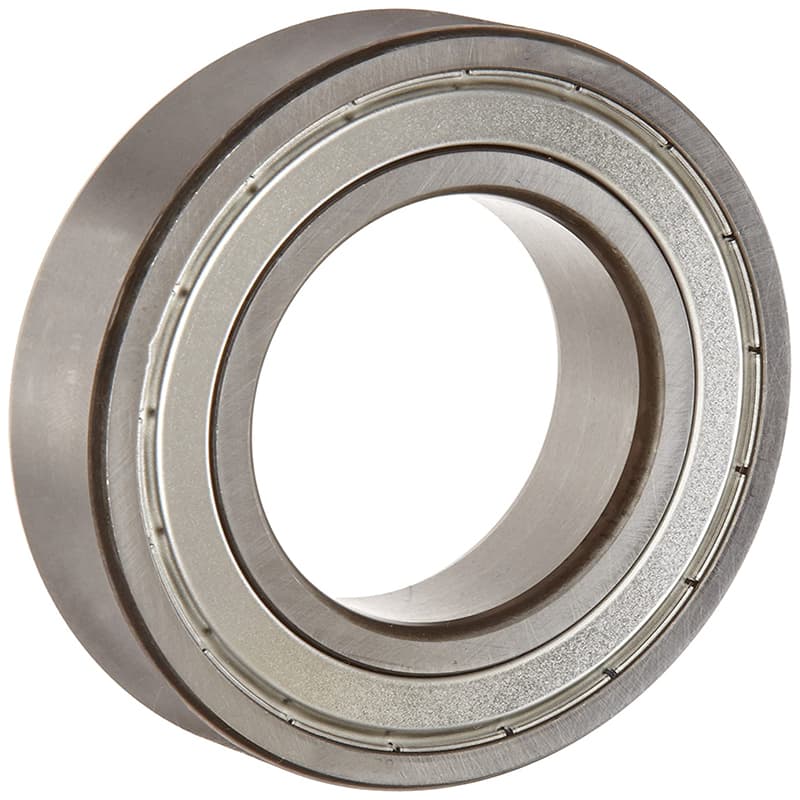
Now let me explain why I recommend these bearings to my customers every single day. I run a bearing factory. I see what works and what fails. Compact equipment needs reliable parts. Deep groove ball bearings deliver that reliability without costing too much.
How Do Deep Groove Ball Bearings Handle Both Radial and Axial Loads in Tight Spaces?
Compact machines have very little room inside. You cannot put a big bearing in there. But you still need a bearing that can take forces from different directions.
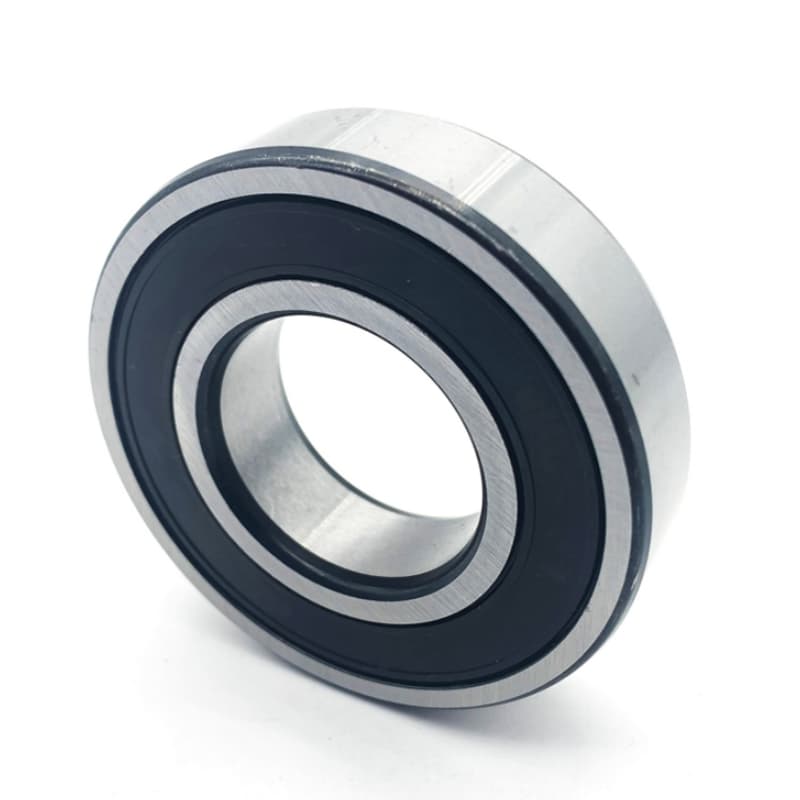
Deep groove ball bearings1 handle radial loads2 (forces straight down from a belt or gear) and axial loads3 (forces pushing sideways from misalignment) at the same time. The deep grooves in the rings hold the balls in place. This design lets the bearing manage moderate axial loads from both directions without extra parts.
How the Design Works in Small Spaces
Let me break down the engineering behind this. It is not magic. It is geometry.
The deep groove shape is the key. A standard ball bearing has grooves on the inner and outer rings. These grooves are deeper than other bearing types4. The balls sit inside these grooves. When a radial load pushes down, the balls roll along the bottom of the groove. That is simple. But when an axial load pushes sideways, the balls contact the side walls of the grooves. The deep groove gives a bigger contact angle. That means the bearing can take about 30% to 50% of its radial load rating as an axial load.
Two-way axial load handling. Some bearings can only take axial load from one direction. Deep groove ball bearings can take axial load from both directions. That is because the grooves are symmetric. So a compact machine does not need two separate bearings for left and right thrust. One deep groove ball bearing does the job.
What happens in a tight space? Imagine a small conveyor motor. The shaft has a pulley on one end. That pulley pulls the belt. The pull creates a radial load. At the same time, the belt might not be perfectly aligned. That creates a small axial load. A deep groove ball bearing sits in a housing that is maybe 30mm wide. It handles both forces. A cylindrical roller bearing would need more space. A taper roller bearing would need two bearings back-to-back. You just do not have that room.
Here is a quick comparison from my factory tests:
| Bearing Type | Radial Load Capacity | Axial Load Capacity | Space Needed | Best For |
|---|---|---|---|---|
| Deep groove ball bearing | Medium | Medium (both directions) | Small | Mixed loads, tight spaces |
| Cylindrical roller bearing | High | None | Medium | Pure radial loads |
| Taper roller bearing | High | High (one direction) | Large | Heavy axial loads |
| Angular contact bearing | Medium | High (one direction) | Medium | High-speed axial loads |
For compact industrial equipment, the deep groove ball bearing wins because it does two jobs in one small package. [Personal story placeholder: A customer in Turkey was building a small packaging machine. He had only 25mm of width for the bearing. He first tried a needle roller bearing, but it failed from axial load. I sent him a deep groove ball bearing 6204. It ran for two years without trouble.]
Which Seal and Lubrication Options Work Best for Compact Industrial Equipment?
Seals and grease are often afterthoughts. That is a big mistake. In compact equipment, you cannot easily re-grease a bearing. The machine might be sealed shut.
For compact industrial equipment, the best seal is a non-contact rubber seal (2RZ)1 or a metal shield (ZZ) depending on the dust level. The best lubrication is a high-quality lithium grease with NLGI grade 22 that lasts 5 to 10 years. Do not use open bearings unless you have an external oil system.

Matching the Seal to Your Environment
I see customers pick the wrong seal all the time. Let me make this simple for you.
Step 1: Ask yourself about dirt and water. Is your equipment in a clean factory or a dusty workshop? Will it ever see water splashes?
- Clean and dry: Use ZZ (metal shield). It gives low friction and high speed. But it does not stop fine dust.
- Light dust: Use 2RZ (non-contact rubber seal). It has a small gap. It stops most dust but adds very little friction.
- Dust or water: Use 2RS (contact rubber seal)3. It touches the inner ring. It stops everything. But it creates more friction and heat. For compact equipment that runs all day, 2RS might run too hot.
Step 2: Think about speed. Rubber seals create drag. At 10,000 RPM, a 2RS bearing can overheat. For high-speed compact machines like small electric motors, use ZZ or 2RZ.
Step 3: Pick the grease. The factory puts grease in sealed bearings. You cannot change it. So the grease must last the life of the bearing. For most compact industrial equipment, a lithium-based grease with NLGI grade 2 is standard. But I recommend asking for a synthetic grease4 if your machine runs hot or runs 24/7. Synthetic grease lasts two to three times longer.
Here is a seal comparison table I use with my distributors:
| Seal Code | Type | Friction | Dust Protection | Water Protection | Speed Limit | Best Use Case |
|---|---|---|---|---|---|---|
| Open | No seal | None | None | None | Highest | Oil bath systems |
| ZZ (metal shield) | Non-contact | Low | Low | None | High | Clean, dry, indoor |
| 2RZ (rubber non-contact) | Non-contact | Medium | Medium | Low | High | Light dust, moderate speed |
| 2RS (rubber contact) | Contact | High | High | High | Medium | Dusty or wet conditions |
My personal rule for compact equipment: Use 2RZ for 80% of cases. It is the best balance. Use ZZ only for very clean environments like electronics assembly. Use 2RS only when you know dust or water is a real problem. [Personal story placeholder: A fan manufacturer in Brazil used 2RS bearings on all his small fans. The fans overheated and failed. I told him to switch to 2RZ. The fans ran cooler and lasted twice as long.]
Why Are Deep Groove Ball Bearings More Cost-Effective Than Other Bearing Types for Light-Duty Applications?
Budget is always a concern. My customers ask me this every week. Why not use a cheaper bearing? Why not use a fancier bearing?
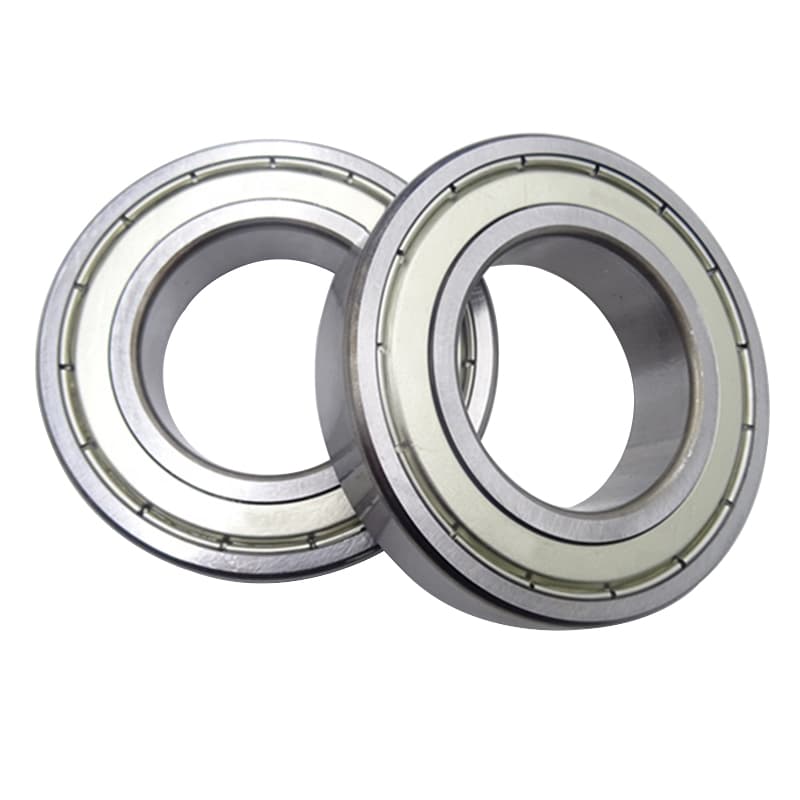
Deep groove ball bearings1 are more cost-effective because they have the lowest manufacturing cost per piece, they fit many different machines so you can buy in bulk, and they last long enough for light-duty work. You do not pay for extra capacity you will never use.
Breaking Down the Real Costs
Let me show you the numbers. I run a factory. I know what each bearing type costs to make.
Manufacturing cost2 is lower. Deep groove ball bearings are the most common bearing in the world. Factories make millions of them every day. The tooling is paid off. The production lines are fast. A standard 6204 deep groove ball bearing costs about 30% less than a similar size angular contact bearing. It costs 50% less than a taper roller bearing. For a machine that needs 100 bearings per year, that difference adds up fast.
Inventory cost3 is lower. Because deep groove ball bearings work in so many applications, you can stock one part number for many machines. A distributor like my customer Rajesh can buy 10,000 pieces of a popular size like 6202. He then sells them to conveyor builders, pump repair shops, and small motor factories. With other bearing types, you need many different part numbers. That ties up your money in inventory.
Maintenance cost4 is lower. A deep groove ball bearing with 2RS seals is maintenance-free for years. You do not pay a mechanic to grease it. You do not buy special grease. You just run it until it fails, then replace it. For light-duty applications5, that might be 10,000 to 20,000 hours. Compare that to a taper roller bearing that needs regular re-tightening and re-greasing. The labor cost alone makes the deep groove bearing cheaper.
Replacement cost6 is lower. When a deep groove ball bearing fails, it usually fails slowly. You hear noise first. You have time to plan the replacement. When a taper roller bearing fails, it can lock up and damage the shaft or housing. That repair costs much more than just the bearing.
Here is a simple cost comparison for a typical light-duty conveyor:
| Cost Item | Deep Groove Ball Bearing (6204-2RS) | Taper Roller Bearing (30204) |
|---|---|---|
| Bearing price (USD) | $2.50 | $4.80 |
| Inventory holding (per year) | Low (one part number) | Higher (need matched sets) |
| Installation time (minutes) | 5 | 15 (requires setting clearance) |
| Re-greasing frequency | Never (sealed) | Every 6 months |
| Typical life (hours) | 15,000 | 20,000 |
| Total 5-year cost | $2.50 + $0 labor | $4.80 + $30 labor + grease |
The deep groove ball bearing wins for light-duty work. [Personal story placeholder: A pump repair shop in Egypt was using cylindrical roller bearings on small water pumps. The bearings cost three times more. The pumps ran the same. I convinced them to try deep groove ball bearings. They saved $12,000 in the first year.]
What Installation and Maintenance Tips Help Extend Bearing Life in Confined Machinery?
Tight spaces make installation harder. You cannot see what you are doing. You cannot easily check the bearing after it is inside.
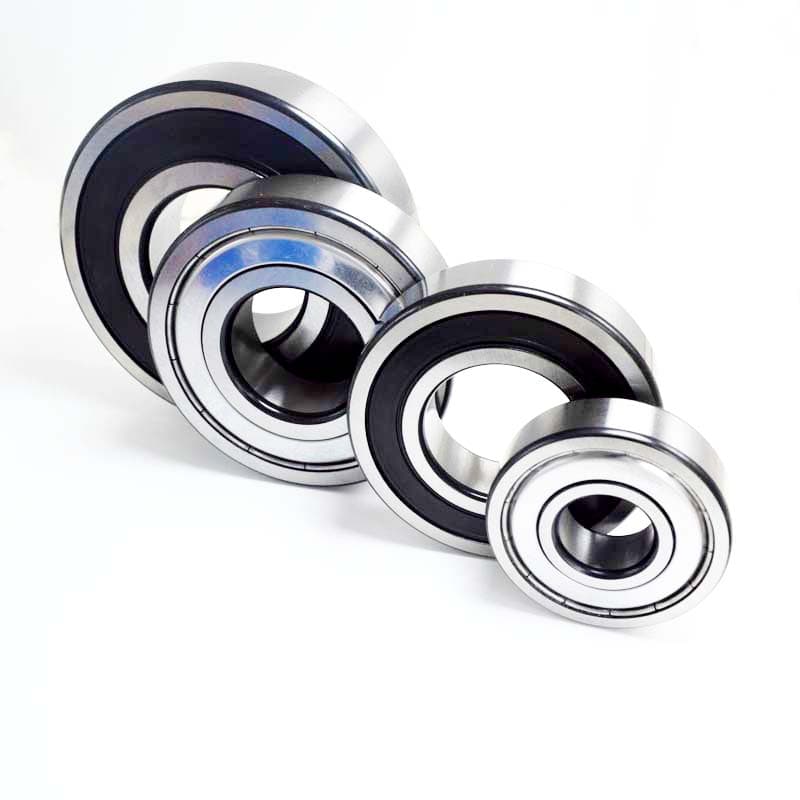
Use a press or a piece of pipe to push the bearing onto the shaft. Never hit the outer ring. For tight spaces, heat the bearing to 100°C before mounting. Use a bearing heater1 or an oven. Check for noise and temperature monthly. Replace the bearing if you feel any roughness when you turn the shaft by hand.
How to Install in Tight Spaces Without Damaging the Bearing
I have watched so many good bearings die from bad installation. Let me give you the exact steps I teach my customers.
Step 1: Clean everything. The shaft, the housing, and your hands. A tiny grain of sand inside a bearing will cause failure. For compact equipment2, there is no room for error.
Step 2: Measure the shaft and housing. Use a caliper. The shaft should be 0 to -0.01mm for normal fit. The housing should be 0 to +0.01mm for a tight fit. If your shaft is too big, the bearing will have no internal clearance. It will overheat and seize.
Step 3: Use the right mounting force. For shaft mounting, push only on the inner ring. For housing mounting, push only on the outer ring. Use a bearing press3 if you have one. If you do not, use a piece of pipe that contacts only the correct ring. Never use a hammer directly on the bearing. Even a small dent in the raceway will make noise and shorten life.
Step 4: Heat the bearing for tight fits. Sometimes the shaft is too big for a press fit. Then you can heat the bearing to 100°C (212°F) in an oven or a bearing heater. The inner ring expands. It slides onto the shaft easily. When it cools, it shrinks and locks tight. Do not heat above 120°C. That changes the steel’s hardness.
Step 5: Check the clearance after mounting. For compact equipment, you usually want C3 internal clearance4. That means a little extra space inside the bearing for heat expansion. After you mount the bearing, try to turn the inner ring by hand. It should turn smoothly with no rough spots.
Step 6: Listen for noise after first run. Run the machine for 10 minutes. Then put a screwdriver against the housing and put your ear on the handle. That is a poor man’s stethoscope. A healthy bearing sounds like a smooth rumble. A damaged bearing sounds like grinding or clicking.
Here is a maintenance checklist5 I give to my customers:
| Task | Frequency | How To Do It | Warning Sign |
|---|---|---|---|
| Listen for noise | Monthly | Use a stethoscope or screwdriver | Grinding, clicking, howling |
| Check temperature | Monthly | Touch the housing near the bearing | Too hot to hold (>70°C) |
| Check for play | Every 3 months | Try to wiggle the shaft | Any visible movement |
| Re-grease (if relube type) | Yearly | Add 1-2 pumps of NLGI 2 grease | Do not overfill |
| Full replacement | When noise appears | Remove and press on new bearing | Roughness when turned by hand |
One extra tip for compact equipment: Use a bearing with a C3 clearance. Standard clearance (CN) is fine for normal machines. But compact equipment often runs hot because air cannot flow around the bearing. The heat makes the shaft expand. That expansion eats up the internal clearance. C3 gives you extra room for that expansion. I have seen bearings seize in two hours without C3. With C3, they run for years.
[Personal story placeholder: A machine builder in Vietnam kept having bearing failures on his small grinders. The machines were so tight that the bearings had no room to expand. I told him to switch to C3 clearance. The failure rate dropped by 80%.]
Conclusion
Deep groove ball bearings fit tight spaces, handle mixed loads, and save you money. Just pick the right seal and install carefully.
-
Explore how a bearing heater can simplify installation and improve bearing life in tight spaces. ↩ ↩ ↩ ↩
-
Understand the unique challenges and solutions for bearing use in compact machinery. ↩ ↩ ↩ ↩
-
Discover the benefits of using a bearing press for proper installation and longevity of bearings. ↩ ↩ ↩ ↩
-
Learn why C3 internal clearance is crucial for preventing bearing failures in compact machinery. ↩ ↩ ↩ ↩
-
Get insights into essential maintenance tasks to extend the life of your bearings. ↩ ↩
-
Understanding replacement costs can help you choose the right bearing for your application and budget. ↩