
You pick the wrong bearing. The shaft wobbles. The machine breaks down. Your customer blames you.
To match pillow block bearings with shaft size and load requirements, first measure the shaft diameter accurately, then identify radial vs axial load directions, then select the correct bore tolerance and load rating. Always leave a safety margin of 20% on load capacity.
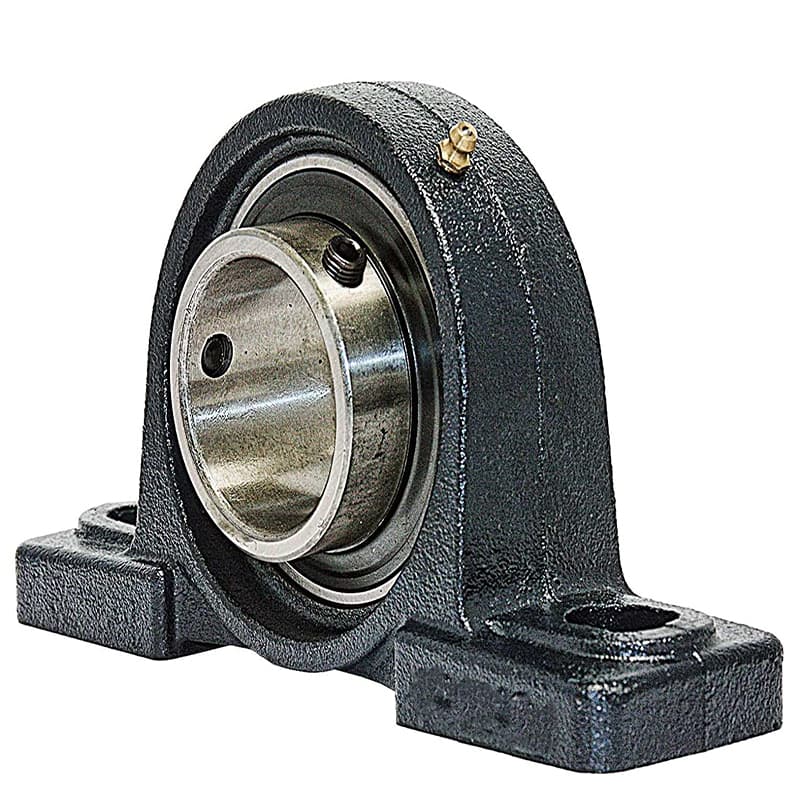
I have seen too many procurement managers order bearings just by guessing the shaft size. One customer in Pakistan ordered 500 units of UCP207. The shaft was 35.2mm, not 35mm. Every bearing was loose. He lost a whole container. Let me show you the right way.
How to Measure Your Shaft Correctly for Pillow Block Bearing Fit?
You cannot match a bearing without the right shaft measurement. A small error ruins the fit.
Use a digital caliper to measure the shaft diameter at three points: near the shoulder, in the middle, and at the end. Take the average. Then measure the shaft ovality1 by checking two directions 90 degrees apart. The difference must be under 0.02mm for a good fit.
[^2] measuring shaft diameter at three different positions](https://sdycbearing.com/wp-content/uploads/2025/12/Pillow-Block-Bearing-11.jpg)
The Right Tools and the Right Method
Many workshops use a steel ruler or a tape measure. That is not good enough. A ruler has errors of 0.5mm. A bearing bore tolerance2 is 0.01mm. You see the problem.
Here is what you need.
| Tool | Accuracy | Why You Need It |
|---|---|---|
| Digital caliper (0-150mm) | ±0.02mm | Measures shaft diameter and ovality |
| Micrometer (25-50mm range) | ±0.001mm | For precision shafts in high-speed machines |
| Go/No-go gauge3 | Fixed size | Quick checking on assembly lines |
I keep a digital caliper on my desk at FYTZ Bearing. When a customer calls me with a shaft size, I ask for three numbers. The shaft diameter at the bearing seat. The shaft material. The surface finish.
The Three Most Common Measurement Mistakes
I have visited factories in Vietnam and Indonesia. I see the same errors again and again.
Mistake 1: Measuring a dirty shaft4. Dirt or old grease adds thickness. You measure 35.10mm. The real shaft is 34.95mm. You order a bearing that is too loose.
The fix: Clean the shaft with a rag and solvent. Then measure.
Mistake 2: Measuring only one spot. Shafts wear unevenly. The area near the shoulder might be smaller than the middle because of previous bearing movement.
The fix: Measure at three positions. Use the smallest reading. That is your real shaft size.
Mistake 3: Ignoring shaft ovality1. A worn shaft is not perfectly round. It might measure 35.00mm in one direction and 34.92mm in the other.
The fix: Measure twice at the same spot, rotating the shaft 90 degrees between measurements. If the difference is over 0.02mm, the shaft needs machining or replacement.
I remember a textile mill in Turkey. They kept replacing bearings every two months. I flew there with my caliper. The shaft was oval by 0.08mm. The bearing was rocking side to side. We turned the shaft on a lathe. The same bearings lasted two years.
What Shaft Size Matches Which Bearing Bore?
Here is a quick reference table I give to all my distributor customers like Rajesh.
| Shaft Diameter5 (mm) | Standard Bearing Bore (mm) | Tolerance Class |
|---|---|---|
| 16.98 – 17.00 | 17 | h6 (normal) |
| 19.98 – 20.00 | 20 | h6 |
| 24.98 – 25.00 | 25 | h6 |
| 29.97 – 30.00 | 30 | h6 or j6 |
| 34.97 – 35.00 | 35 | j6 for tight fit |
Do not assume a 20mm shaft is exactly 20.00mm. Most cold-drawn shafts are 19.98mm to 20.00mm. That is fine. But if your shaft is 19.95mm, the bearing will slip. You need a bearing with a smaller bore or a shaft repair.
Understanding Radial vs. Axial Load in Pillow Block Selection?
Load direction decides which bearing housing and internal design you need. Get this wrong, and the bearing fails in weeks.
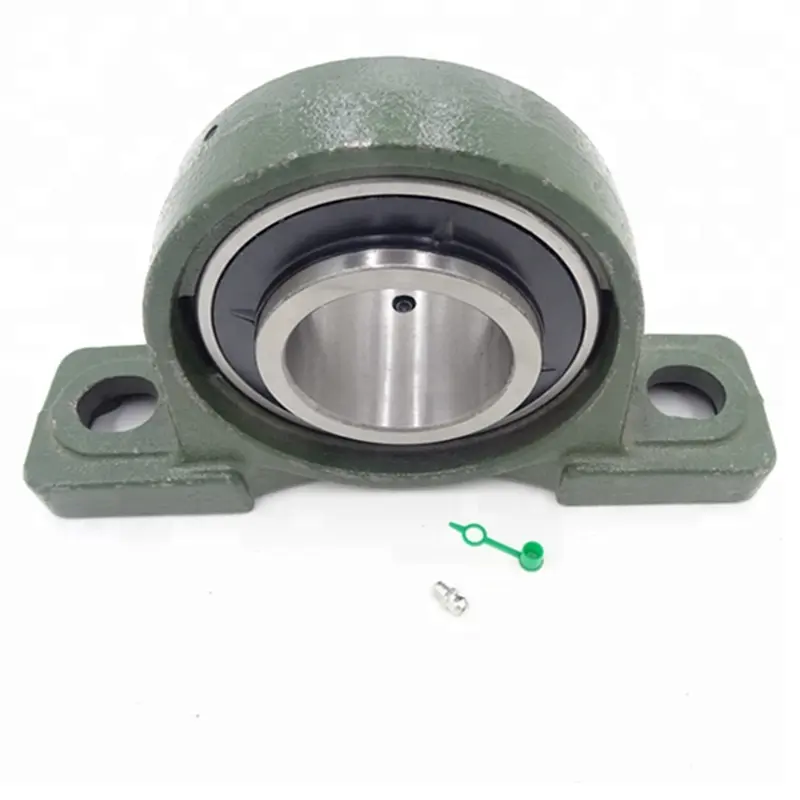
Radial load1 pushes down through the shaft. Axial load6 pushes along the shaft. Pillow block bearings2 handle high radial loads but low axial loads. For mixed loads, use a spherical roller bearing pillow block or add a thrust bearing.
Radial Load: The Main Job of a Pillow Block
A standard pillow block bearing (UCP series) is built for radial loads. The load pushes straight down from the shaft into the housing base.
Think of a conveyor belt. The belt pulls down on the roller shaft. That is radial load. The bearing handles it easily.
But here is the catch. The radial load has a direction. The strongest part of a pillow block housing is the base. The weakest part is the top cap. So you should always mount the bearing so the main radial load points toward the base, not toward the cap.
I learned this from a fan manufacturer in Brazil. They mounted pillow blocks upside down. The fan weight pulled up on the cap bolts. Bolts broke. Fans fell. We flipped the bearings. Problem solved.
Axial Load: The Hidden Danger
Axial load pushes along the shaft. A standard deep groove ball bearing inside a pillow block can handle only about 20% of its radial rating as axial load.
For example, a UCP208 bearing has a radial rating of 29,000N. Its axial rating is only about 5,800N. That is not much.
If your machine has a screw conveyor or a fan with thrust, the shaft pushes sideways. That axial load can destroy the bearing cage.
The fix: Use a bearing with a higher axial capacity. That means:
- A pair of angular contact ball bearings inside a special pillow block housing (rare)
- A spherical roller bearing pillow block (good for 30% axial load)
- Or add a separate thrust bearing on the shaft next to the pillow block
I supply many bearings to screw conveyor manufacturers in Egypt. They always need axial load handling. I give them spherical roller bearing pillow blocks. Those units have a brass cage and a different internal design. They last three times longer.
How to Calculate Your Combined Load
Most machines have both radial and axial loads at the same time. You need a simple way to check if your bearing is strong enough.
Here is the rule I use. It is not perfect for engineers, but it works for procurement.
- Write down the radial load in Newtons (N).
- Write down the axial load in Newtons.
- If axial load is more than 25% of radial load, you need a special bearing.
- If axial load is more than 50% of radial load, a standard pillow block will fail fast.
I had a customer in South Africa with a grape sorting machine. The radial load was 2,000N. The axial load was 1,200N (60%). He used standard UCP bearings. They failed every month. We switched to a spherical roller bearing pillow block. No failures in two seasons.
Matching Bearing Bore Tolerance to Shaft Diameter and Material?
The shaft material and its surface hardness change how tight the bearing fit1 should be. Soft shafts need looser fits. Hard shafts can take tighter fits.
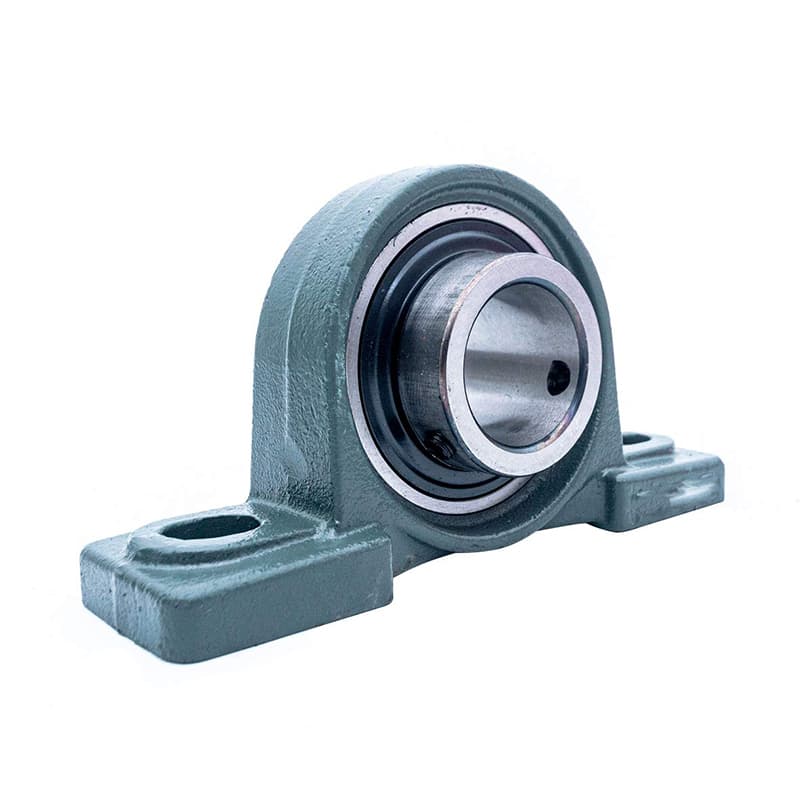
For a standard steel shaft (hardness HRC 25-35), use an h6 tolerance fit6. For a stainless steel or soft mild steel shaft, use a j6 or k6 tighter fit. For a plastic or aluminum shaft, add an adapter sleeve2 or keyway because the material will compress under the bearing.
The Tolerance Table You Need
I keep this table on my phone. It helps me answer customer questions fast.
| Shaft Material | Shaft Hardness | Recommended Fit | Bearing Bore Tolerance |
|---|---|---|---|
| Carbon steel (C45) | HRC 30-35 | h6 (normal) | 0 to -0.010mm |
| Stainless steel (304) | HRC 20-25 | j6 (tighter) | -0.005 to -0.015mm |
| Mild steel (low carbon) | HRC 10-15 | k6 (press fit) | -0.010 to -0.020mm |
| Aluminum alloy | HB 60-80 | Use adapter sleeve | N/A |
| Plastic (nylon/delrin) | Soft | Use keyway + locking collar3 | N/A |
Why does material matter? Because soft materials deform under the bearing inner ring. The inner ring expands slightly when you tighten the locking collar. That expansion can crack a plastic shaft or crush an aluminum shaft.
I learned this the hard way. A customer in India made packaging machines with aluminum shafts. He used standard steel-shaft bearings. The set screw crushed the aluminum. The bearing spun loose. We switched to a bearing with a split locking collar and a wider inner ring. That spread the pressure. No more crushing.
When to Use a Loose Fit vs a Tight Fit
Most buyers think tight is always good. That is wrong.
Loose fit (h6): The shaft slides into the bearing by hand. You need this for long shafts that expand with heat. The bearing can float a little.
Tight fit (j6 or k6): You need a press or a hammer to install the bearing. Use this for short shafts, high vibration machines, or soft shaft materials.
Very tight fit (m6): Only for shafts that never need removal. This fit can damage the bearing if you force it.
I always ask my customers one question. "Will this machine run 24 hours a day or only 8 hours?" For 24-hour operation, heat expansion is bigger. So I recommend an h6 loose fit. For 8-hour operation, a j6 tight fit works better.
A Real Example from a Russian Customer
A factory in Russia made wood cutting machines. The shaft was 30mm stainless steel. They used a UCP206 bearing with h6 fit. The bearing slipped on the shaft after three months.
I asked for photos. The shaft had galling marks4. Stainless steel is sticky. It does not slide smoothly. The h6 fit was too loose for stainless.
We changed to a j6 fit (tighter). The bearing inner ring was 29.99mm instead of 30.00mm. The customer used a bearing heater to install it. The bearing never slipped again.
Using Dynamic and Static Load Ratings to Avoid Bearing Failure?
Load ratings look like confusing numbers in a catalog. But they are simple once you know what they mean.
Dynamic load rating (Cr)1 tells you how long the bearing will last under a spinning load. Static load rating (Cor)6 tells you the maximum load it can handle when stopped. Pick a bearing where your actual load is below 80% of Cr and below 50% of Cor for safety.
Breaking Down the Numbers
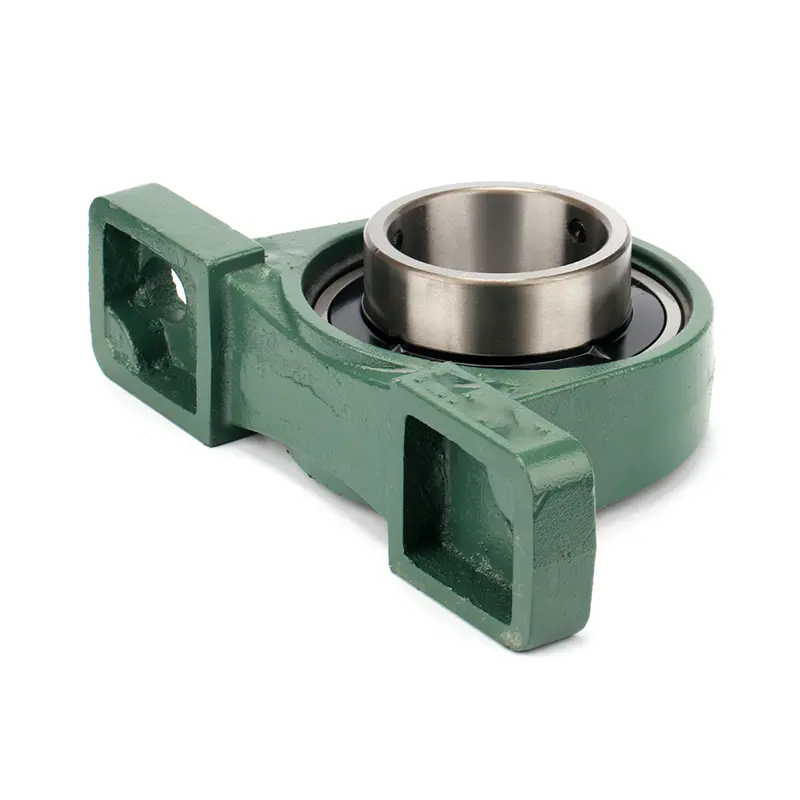
I will use a real example from our FYTZ catalog. Take the UCP204 pillow block bearing2.
- Dynamic load rating Cr = 12,800 N
- Static load rating Cor = 6,400 N
What do these numbers mean in real life?
Cr = 12,800 N means that if you put a constant 12,800 N radial load on this bearing while it spins at 3,000 RPM, the bearing will last exactly 1 million revolutions. That is only about 5.5 hours at 3,000 RPM. So you never run a bearing at its full Cr rating.
Cor = 6,400 N means that if you put a 6,400 N load on the bearing when it is not moving, the inner ring or balls will start to deform permanently. That deformation causes vibration later.
The Safety Margin Rule
I learned this rule from a bearing engineer in Germany. He said: "Always leave a 20% safety margin on Cr and 50% on Cor."
So for the UCP204 bearing above:
- Safe dynamic load = 12,800 N x 0.8 = 10,240 N
- Safe static load = 6,400 N x 0.5 = 3,200 N
If your machine has a radial load of 11,000 N, the UCP204 is too small. You need the next size up (UCP205 with Cr = 14,000 N).
How Load Affects Bearing Life (The Cube Rule)
Here is the most important thing I tell my customers. Bearing life changes with the CUBE of the load3.
If you double the load, the life drops to 1/8 (12.5%). If you reduce the load by 20%, the life doubles.
Let me give you an example.
| Actual Load as % of Cr | Expected Life Compared to Catalog Rating |
|---|---|
| 100% | 1x (base) |
| 80% | 2x |
| 60% | 4.6x |
| 50% | 8x |
So picking a bearing that is slightly bigger gives you much longer life. The extra cost is small. The benefit is huge.
I always tell procurement managers like Rajesh: "Order the next size up if you have space. A UCP205 costs only 15% more than a UCP204 but lasts four times longer under the same load."
A Story from an Indonesian Cement Plant
A cement plant used pillow block bearings on a bucket elevator. The shaft was 35mm. The load was about 15,000 N. They used UCP207 bearings (Cr = 25,700 N). The load was 58% of Cr. That is safe. But the bearings failed every 8 months.
I visited the plant. The problem was shock loads. Every time the bucket scooped cement, the load spiked to 30,000 N for a split second. That spike exceeded the static rating (Cor = 15,400 N). The inner ring was getting tiny dents.
We switched to UCP208 bearings (Cr = 29,000 N, Cor = 17,800 N). The load spikes were still above Cor, but the bigger bearing had more mass to absorb the shock. The bearings lasted 2 years.
The lesson? Look at peak loads, not just average loads.
Conclusion
Match pillow block bearings by measuring shaft size correctly, understanding load directions, choosing the right bore tolerance, and using load ratings with a 20% safety margin.
-
Understanding dynamic load ratings is crucial for selecting the right bearings to ensure longevity and performance. ↩ ↩ ↩ ↩ ↩
-
Get detailed specifications of the UCP204 to ensure it meets your application needs. ↩ ↩ ↩ ↩
-
Discover the cube rule to understand how load variations impact bearing lifespan and performance. ↩ ↩ ↩
-
Understanding galling can help prevent damage and improve the performance of stainless steel components. ↩ ↩
-
Find resources that explain how to accurately determine shaft diameter for optimal bearing fit. ↩
-
Learn about static load ratings to avoid permanent deformation and ensure your bearings operate effectively. ↩ ↩ ↩