
Small shafts break standard bearings. Your OEM equipment stops working. Customers get angry.
Yes, small shaft applications need special pillow block bearings because standard units are too heavy and create misalignment. You need compact housings, precision locking, and proper load ratings for shafts under 25mm.
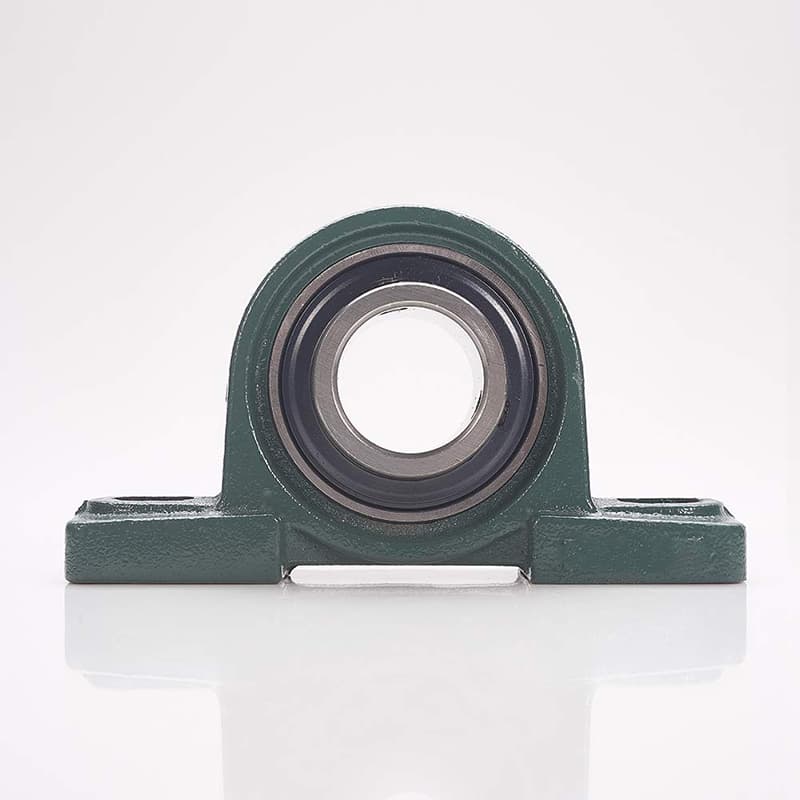
You might think a bearing is a bearing. I used to think that too. Then I saw a food packaging machine in Indonesia fail because the wrong pillow block damaged a 12mm shaft. Let me show you what works.
Why Small Shaft Applications Need Special Pillow Block Bearings?
Most buyers grab the cheapest bearing from a catalog. That is a big mistake for small shafts.
Small shafts flex more than large shafts. They also spin faster in many OEM machines. Standard pillow block bearings have heavy housings that put too much stress on thin shafts. Special small shaft bearings1 have lighter housings and tighter internal clearances.
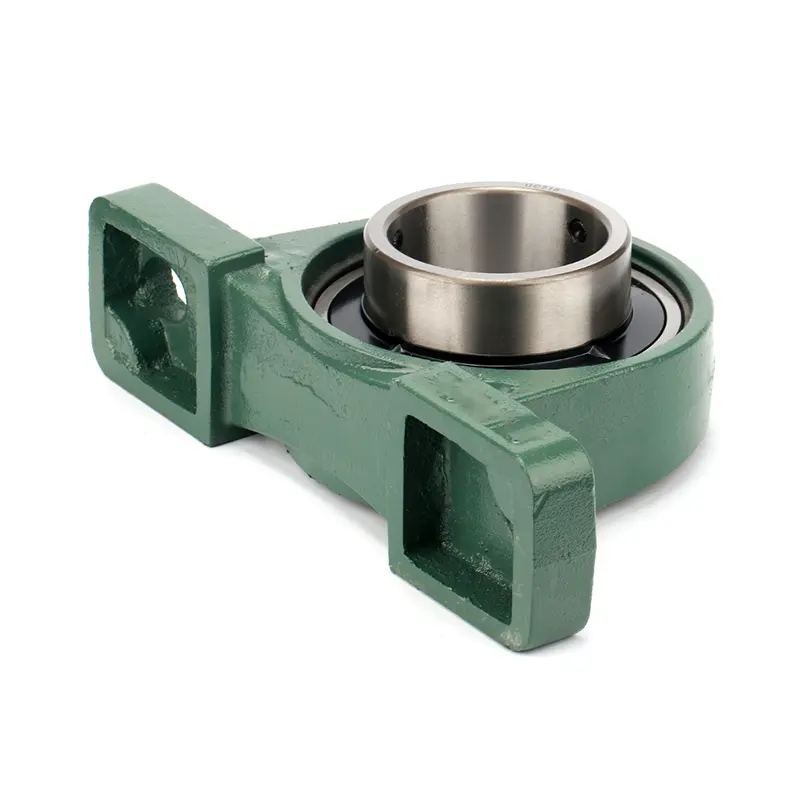
The Three Problems with Standard Bearings on Small Shafts
I have supplied bearings to OEM manufacturers in Vietnam and Pakistan. They often call me after a trial fails. Let me break down what goes wrong.
| Problem | Why It Happens | The Real Cost |
|---|---|---|
| Shaft bending | Heavy cast iron housing adds weight and leverage | Shaft wobbles. Bearing loses alignment. Machine jams. |
| Locking failure | Set screws are too large for small shafts | Screws strip the shaft surface. The bearing spins on the shaft. |
| Heat buildup | Small shafts spin faster. Standard clearance is too loose | More vibration. More heat. Grease breaks down fast. |
I remember a customer in India. He made textile winding machines. He used a standard UCP204 pillow block on a 15mm shaft. The shaft was only 300mm long. After two weeks of running at 4000 RPM, the shaft had deep grooves under the set screws. The bearing housing cracked from vibration. He lost 50 machines in the field.
We switched to a special light-series bearing with a concentric locking collar. The collar grabs the shaft evenly. No more grooves. No more cracks.
Why Speed Changes Everything
Here is something many engineers miss. Small shafts often run at higher RPM than large shafts. A 50mm shaft might turn at 1500 RPM. A 15mm shaft in the same machine might turn at 5000 RPM.
Higher speed means more centrifugal force. Standard pillow block bearings have a larger internal clearance (C3 or C4). That clearance works fine for slow speeds. But at high speeds, the balls rattle inside the raceway. That rattle creates heat. Heat expands the bearing. Expansion reduces clearance. Then the bearing seizes.
For small shaft high-speed applications, I always recommend CN (normal) clearance or even C2 (reduced clearance). You also need a lighter cage material like polyamide instead of steel. Steel cages are heavier. They add more centrifugal load.
I learned this from a fan manufacturer in Egypt. They used standard bearings on small shafts for exhaust fans. The fans ran at 6000 RPM. Bearings failed every three months. I gave them a custom bearing with C2 clearance2 and a nylon cage. Two years later, no failures.
Key Design Features to Look for in OEM Pillow Block Bearings?
You cannot guess when choosing bearings for small shafts. You need to check specific design details.
Look for three key features: a lightweight housing1 (aluminum or thermoplastic), a positive locking method2 (eccentric collar or concentric clamp), and a precision grade of P53 or better. Avoid set screws on shafts under 20mm.
[^4] on small pillow block bearing](https://sdycbearing.com/wp-content/uploads/2025/12/Pillow-Block-Bearing-9.webp)
Housing Material Showdown
I sell both cast iron and thermoplastic pillow blocks. Each has a job.
| Housing Material | Weight | Strength | Cost | Best For |
|---|---|---|---|---|
| Cast iron (standard) | Heavy | High | Low | Large shafts, low speed, rough environments |
| Aluminum | Medium | Medium | Medium | Small shafts, medium speed, OEM equipment |
| Thermoplastic (PBT/PA66) | Very light | Low to medium | Low to medium | Very small shafts, high speed, food or chemical industry |
For small shaft OEM equipment, I push customers toward aluminum or thermoplastic. Why? Because the bearing is often part of a moving assembly. Weight matters. A heavy cast iron housing adds inertia. The motor has to work harder to start and stop.
One of my clients in Brazil makes automated packaging lines. Each machine has 40 small pillow blocks on 12mm shafts. Switching from cast iron to aluminum cut the total moving weight by 8 kilograms. That let them use a smaller motor. They saved $200 per machine.
Locking Methods: The Right Choice for Small Shafts
This is where most buyers get lost. Let me make it simple.
-
Set screw locking: Bad for small shafts. The screw digs into the shaft. It creates a stress point. The shaft can crack or wear down. Only use this for shafts over 30mm with low vibration.
-
Eccentric locking collar: Good for small shafts. You turn the collar. It locks onto the shaft with even pressure. No digging. No stress points. Works well for shafts from 10mm to 25mm.
-
Concentric clamp (split collar): Best for small shafts. Two halves clamp around the shaft with screws. Even pressure all around. Zero shaft damage. Perfect for high precision applications. But it costs more.
I always tell my distributor customers like Rajesh: stock eccentric locking collar bearings for small shafts. They are the sweet spot between cost and performance. Your customers will thank you.
How to Match Bearing Size and Load Capacity for Compact Equipment?
You cannot just match the shaft diameter. Load direction and space limits change everything.
First calculate the radial load and any axial load. Then pick a bearing with a dynamic load rating (Cr)1 at least 20% higher than your actual load. For compact equipment, choose narrow series bearings (UCFL or UCPA2) instead of standard UCP.
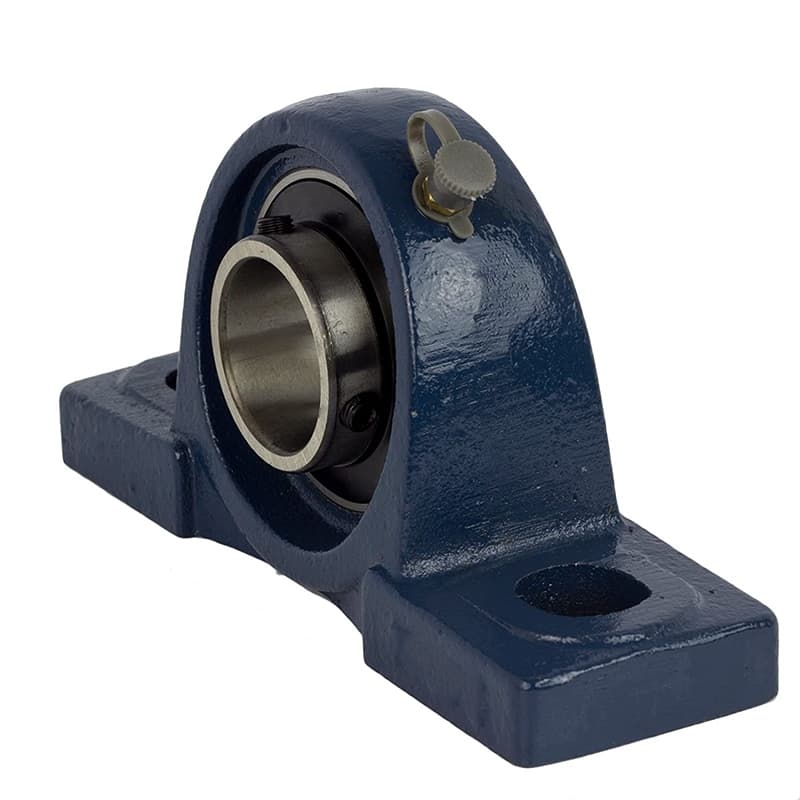
Load Ratings Explained Without Math
I keep this simple for my customers. Every bearing has two numbers.
-
Dynamic load rating (Cr): How much force the bearing can handle while spinning. Pick a bearing with Cr at least 1.2 times your maximum expected load.
-
Static load rating (Cor): How much force it can handle when stopped. This matters for equipment that sees shock loads during startup.
For small shafts in OEM equipment, the loads are usually light. The bigger problem is space. The equipment is compact. You cannot fit a standard UCP housing.
Housing Styles for Tight Spaces
Here are three compact housing styles3 I recommend.
| Housing Type | Shape | Best Use | Space Saved |
|---|---|---|---|
| UCFL (Flange) | Square with 2 or 4 bolt holes | Mounting on a flat plate | Very good |
| UCPA (Pillow block with take-up) | Standard shape but narrower | Conveyors and light duty | Good |
| UCFC (Round flange) | Circular flange | Round frames or tubes | Excellent |
I worked with an OEM in Turkey. They made small agricultural sprayers. The pump shaft was 17mm. They had only 40mm of space on the frame. A standard UCP204 needs 127mm width. That would not fit. We used a UCFL204 flange bearing. The flange is only 90mm wide. It fit perfectly. The sprayer went into production.
A Mistake I See in 30% of Orders
Buyers pick a bearing based only on shaft size. A 20mm shaft needs a UCP204 or similar. That is correct for the bore. But they forget about the housing bolt holes.
The UCP204 has bolt holes 111mm apart. The UCFL204 has bolt holes 99mm apart. If your machine frame has pre-drilled holes at 99mm, you cannot use a UCP. You must use the UCFL.
I always ask my customers for a drawing or a photo of the mounting surface. Do not guess. Send me the dimensions. I will match the bearing to your existing holes. That saves you from drilling new holes or making adapter plates.
Common Mounting Mistakes and How to Avoid Them in OEM Assembly?
I have seen the same mounting errors for ten years. They are easy to fix once you know them.
The most common mistake is over-tightening the set screw or locking collar1. Another big one is misaligning the two bearings on a long shaft2. Use a torque wrench3 and a straight edge to avoid both.
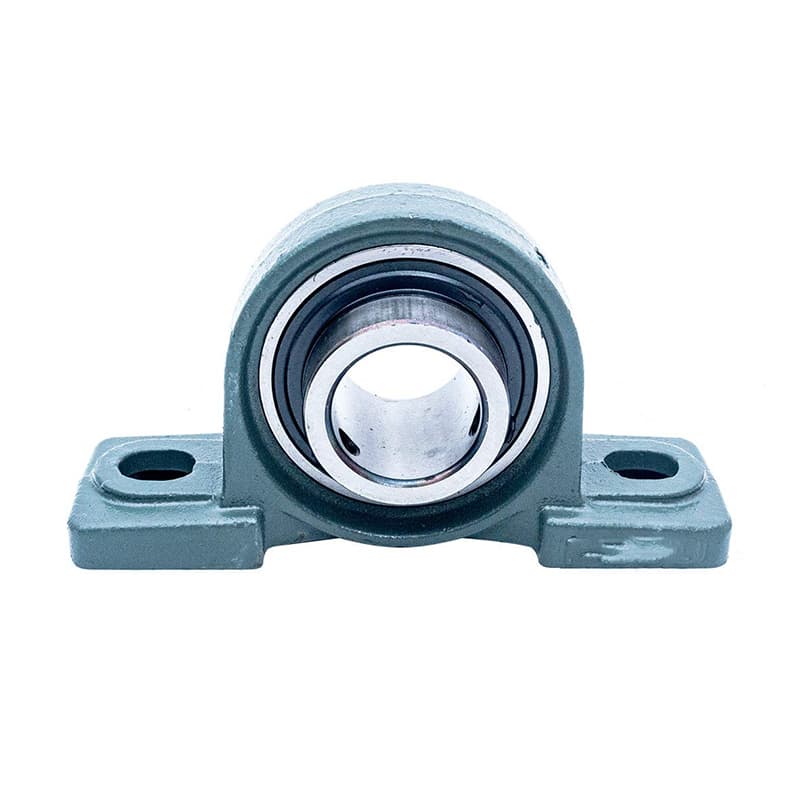
Mistake #1: Over-Tightening the Locking Collar
Many assembly workers think tighter is better. It is not.
When you over-tighten an eccentric collar, you deform the inner ring. The inner ring becomes egg-shaped instead of round. The balls cannot roll smoothly. You hear a grinding noise. The bearing fails in weeks.
The fix: Use a torque wrench. For a 12mm to 20mm shaft, tighten the collar set screw to 3 to 5 Nm. That is about finger tight plus a half turn with a small wrench. Then lock the set screw with thread locker.
I watched a factory in Bangladesh assemble 100 conveyor rollers. They used a big wrench on every eccentric collar. 40 of those bearings failed within one month. I showed them the right torque. The next batch had zero failures.
Mistake #2: Misalignment Between Two Bearings on One Shaft
A long shaft needs two pillow blocks. If the blocks are not aligned, the shaft bends. The bearings fight each other.
You can test this by hand. After mounting both bearings, spin the shaft with your fingers. It should turn freely. If you feel resistance or a tight spot, the bearings are misaligned.
The fix: Mount one bearing first. Tighten it fully. Then put the shaft through. Mount the second bearing loosely. Slide it along the shaft until it sits naturally. Then tighten the second bearing while the shaft is spinning slowly. This is called "run-in mounting4." It works every time.
Mistake #3: Forgetting Shaft Expansion
Metal gets longer when it heats up. A 500mm long steel shaft grows about 0.3mm when it goes from 20°C to 60°C. That does not sound like much. But it is enough to push the bearing against the housing.
The fix: Make one bearing "fixed" and the other "floating." The fixed bearing stops the shaft from moving axially. The floating bearing lets the shaft slide a little. For small shafts, you can use a standard pillow block as the floating bearing. Just leave 0.5mm of end play on the shaft.
I learned this from an OEM customer in South Africa. They made conveyor systems for mines. Their bearings kept failing because the long shafts expanded in the sun. We changed the design to one fixed and one floating bearing. The failures stopped.
A Quick Mounting Checklist for Your Assembly Line
Print this out and put it next to your workbench.
- Clean the shaft. Remove all rust, dirt, and old grease.
- Check the shaft diameter with a caliper. It must be within 0.02mm of the bearing bore.
- Apply a thin layer of anti-seize on the shaft (for stainless shafts only).
- Slide the bearing onto the shaft by hand. Do not hammer.
- Tighten the locking collar to the torque spec (3-5 Nm for small shafts).
- Mount the housing bolts. Use washers. Tighten in a cross pattern.
- Spin the shaft by hand. It must feel smooth.
- Add grease through the fitting. Two pumps only. Too much grease causes overheating.
Conclusion
Choose compact pillow block bearings with proper locking and alignment for small shafts in OEM equipment. Avoid set screws. Control torque. Keep one bearing floating.
-
Understanding the consequences of over-tightening can help prevent costly bearing failures in your assembly process. ↩ ↩ ↩ ↩
-
Proper alignment is crucial for smooth operation; learn techniques to ensure your bearings are correctly positioned. ↩ ↩ ↩ ↩
-
A torque wrench ensures precise tightening, preventing damage and extending the life of your components. ↩ ↩ ↩
-
Learn about run-in mounting techniques to enhance the performance and longevity of your assemblies. ↩