
I once met a production manager from a large mining equipment company. He told me he had tried bearings from seven different suppliers. Six of them failed within the first year. Only one supplier consistently delivered bearings that lasted. He said, "Trust is not about promises. It is about results."
Global manufacturers trust heavy-duty bearings that meet international quality standards (ISO, DIN, ASTM), offer consistent precision and heat treatment, provide customized solutions for specific applications, and come from suppliers with reliable supply chains. Trust is built on proven performance, not marketing claims.
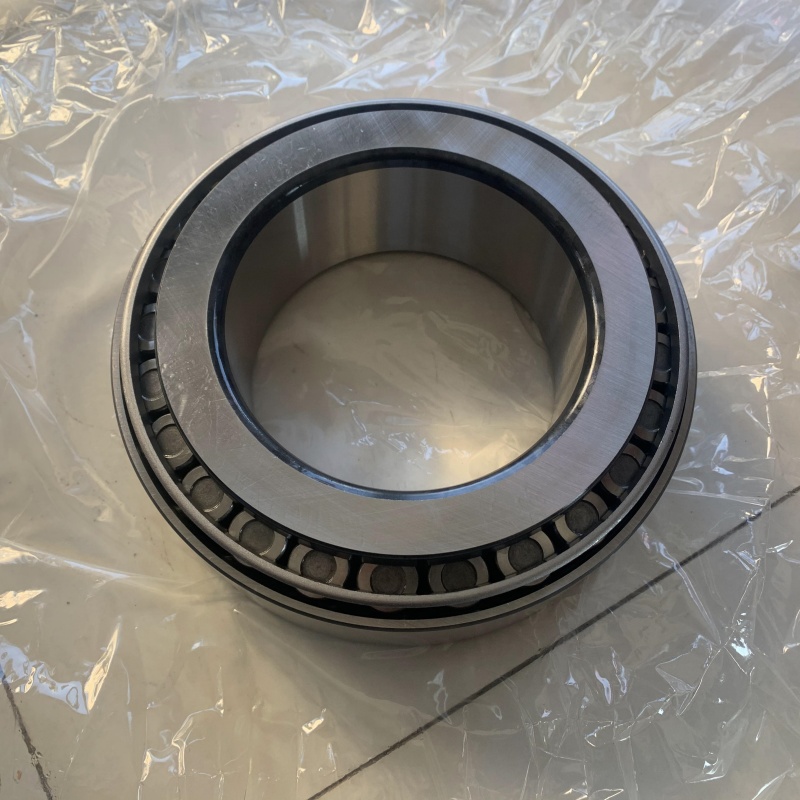
I run a bearing factory in China. We export to over ten countries. I have worked with manufacturers from Turkey, Russia, Brazil, and India. Every one of them has the same question: "Why should I trust your bearings?" That is a fair question. The answer is not simple. It is a combination of quality standards, technical precision, customization capability, and supply chain reliability. In this article, I will walk you through exactly what global manufacturers look for. I will also show you how our factory meets those expectations.
What Quality Standards Do Global Manufacturers Require from Heavy-Duty Bearing Suppliers?
A buyer from Germany once rejected an entire container of bearings from a Chinese supplier. The bearings measured correctly. They looked fine. But they did not meet the DIN standard he had specified. The supplier had used a different standard and assumed it would be acceptable. That was a costly assumption.
Global manufacturers require bearings that comply with ISO 492 (dimensional tolerances), ISO 281 (load ratings), and industry-specific standards like DIN 620 or ABMA. They also demand ISO 9001 or IATF 16949 certification for quality management systems. Without these, you are not even in the running.
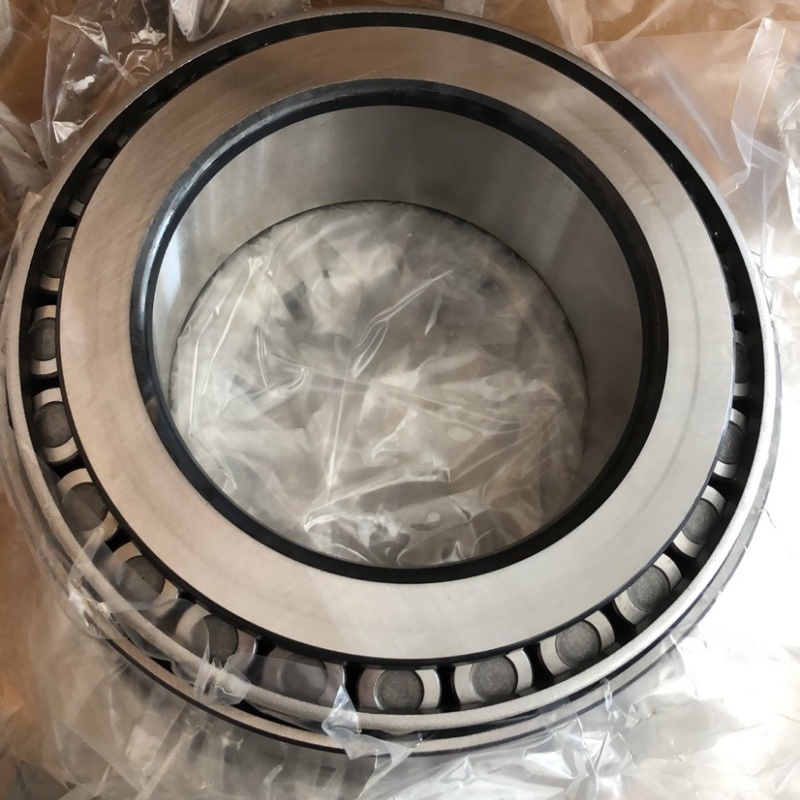
Dimensional Standards – ISO 492 and DIN 620
Every bearing has a set of dimensions. The inner diameter, outer diameter, and width must fall within a specific tolerance range. These tolerances are defined in international standards. ISO 492 is the most common. It covers tolerances for radial bearings. DIN 620 is the German standard. It is stricter in some areas.
Global manufacturers check these tolerances carefully. They do not accept "close enough." They want bearings that are within the specified tolerance class. If you claim P6 precision, the bearing must meet P6 tolerances. Not P0. Not somewhere in between.
I always recommend that buyers specify the exact standard and tolerance class in their purchase contract. This removes any ambiguity. If a supplier cannot meet that standard, they should say so upfront.
Load Ratings – ISO 281
The load rating is a promise. It tells the manufacturer how much weight the bearing can carry and how long it will last. But not all suppliers calculate load ratings the same way. Some use optimistic numbers. Others use conservative numbers.
ISO 281 is the standard for calculating basic dynamic load ratings (Cr) and basic static load ratings (Cor). It is the most widely accepted method. Global manufacturers expect to see load ratings calculated using this standard. If a supplier uses a different method, the numbers are not comparable.
I suggest that buyers ask for the calculation method. If the supplier cannot tell you, that is a red flag. A serious supplier will show you the data.
Quality Management – ISO 9001 and IATF 16949
Certifications matter. They show that the supplier has a systematic approach to quality. ISO 9001 is the basic requirement. It covers the entire quality management system. IATF 16949 is the automotive standard. It is stricter and includes additional requirements for process control and continuous improvement.
Here is a comparison of common quality certifications:
| Certification | Scope | What It Means for Bearings |
|---|---|---|
| ISO 9001 | Basic quality management | Supplier has documented processes |
| IATF 16949 | Automotive quality (stricter) | Supplier has advanced process control |
| ISO 14001 | Environmental management | Supplier considers environmental impact |
| ISO 45001 | Occupational health and safety | Supplier has safe working conditions |
Material Standards – ASTM and EN Standards
The steel used in bearings must meet specific chemical and mechanical properties. In the US, ASTM A295 is the standard for bearing steel. In Europe, EN 10027 is used. These standards define the alloy composition, the cleanliness level, and the heat treatment requirements.
Global manufacturers check these standards. They want to know that the steel comes from a reputable mill. They also want to see test reports that confirm the steel meets the standard. I always provide these reports to my international clients. It builds trust quickly.
So here is my simple rule: if you want to be trusted by global manufacturers, start with the standards. Meet ISO 492 for dimensions. Use ISO 281 for load ratings. Get ISO 9001 certification. Use steel that meets ASTM or EN standards. These are the basics. They are not optional.
How Do Precision and Heat Treatment Affect Bearing Performance in Heavy-Duty Applications?
A client from Indonesia once sent me a failed bearing. It had been in a conveyor system for six months. The raceway had spalled. The balls were pitted. He thought it was a lubrication problem. But when I examined the bearing, I saw something different. The steel had not been heat-treated properly. The hardness was only HRC 56. That was too soft for heavy loads.
Precision and heat treatment are the two most critical factors that determine bearing performance in heavy-duty applications. Precision controls the fit and smoothness. Heat treatment controls the hardness and durability. Together, they decide whether a bearing lasts for years or fails in months.

Precision – Why It Matters for Heavy Loads
Heavy-duty applications put large forces on bearings. Those forces are transmitted through the balls to the raceways. If the bearing has poor precision, the load is not distributed evenly. Some balls carry more weight than others. Those overloaded balls wear out faster.
Precision class P6 gives you tighter tolerances than standard P0. That means the balls and raceways are more uniform. The load is spread more evenly. The bearing lasts longer. For heavy-duty applications, I always recommend P6 as a minimum. For very demanding applications, P5 is even better.
The difference in cost between P0 and P6 is small – about 5-8%. The difference in life is significant – often 30-50% longer. That is a good return on investment.
Heat Treatment – The Science of Hardness
Bearings need to be hard. But they also need to be tough. If a bearing is too hard, it is brittle. It can crack under shock loads. If it is too soft, it wears out quickly. The right balance is HRC 60-64 for standard bearing steel.
Heat treatment is the process that achieves this hardness. It has several steps:
- Austenitizing: The steel is heated to a high temperature (about 840°C). This changes the crystal structure.
- Quenching: The steel is cooled quickly in oil or water. This traps the structure in a hard state.
- Tempering: The steel is reheated to a moderate temperature (about 160-200°C). This reduces brittleness while keeping most of the hardness.
If any of these steps are done incorrectly, the bearing will not perform well. In our factory, we control the temperature precisely. We also test every batch for hardness and microstructure.
Retained Austenite – The Hidden Factor
In a previous article, I mentioned retained austenite. This is the soft structure that remains after heat treatment. It affects dimensional stability. If the retained austenite is too high, the bearing can change size over time. That is bad for heavy-duty applications where clearances are critical.
For heavy-duty bearings, I recommend a retained austenite level below 5%. This gives good stability. Standard bearings often have 10-15% retained austenite. That is fine for light-duty applications. But for heavy loads, it is a risk.
Here is a table that summarizes heat treatment choices:
| Heat Treatment Level | Retained Austenite | Operating Temp | Best For |
|---|---|---|---|
| Standard (S0) | 10-15% | Up to 120°C | Light-duty, intermittent |
| Stabilized (S1) | <5% | Up to 150°C | Heavy-duty, continuous operation |
| High-temp (S2) | <3% | Up to 200°C | High-temperature applications |
Case Hardening – When You Need It
Some heavy-duty bearings are made from case-hardened steel. This steel has a hard outer layer (the case) and a tough inner core. The case resists wear. The core resists cracking. This combination is ideal for applications with shock loads and impacts.
Case-hardened bearings are more expensive. They also take longer to manufacture. But for applications like mining equipment, crushers, and heavy conveyors, they are worth the cost. I always ask my clients about their load profile before recommending case-hardening.
My practical advice for heavy-duty applications: use P6 precision as your baseline. Choose heat-stabilized bearings (S1) for continuous operation. Ask for retained austenite below 5%. And consider case hardening if you have shock loads. These choices will dramatically extend your bearing life.
Why Do Global Manufacturers Prefer Customized Bearing Solutions Over Standard Options?
I worked with a manufacturer in Brazil who made agricultural equipment. He used standard bearings from a catalogue. But his equipment had a unique design. The standard bearing fit, but just barely. There was a small gap. That gap allowed dirt to enter. The bearings failed every planting season. He switched to a custom bearing with a slightly modified seal. The failure stopped.
Global manufacturers prefer customized bearing solutions because standard bearings often do not fit their specific design requirements perfectly. Customization allows for optimized dimensions, specialized seals, specific grease types, and targeted heat treatment – all of which improve performance and reduce total cost of ownership.
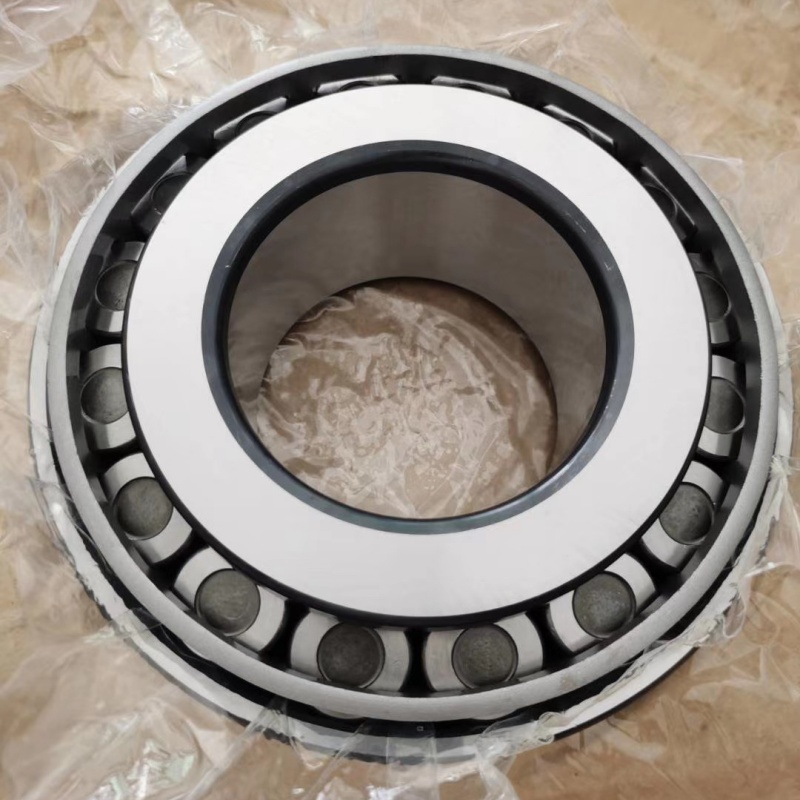
When a Standard Bearing Is Not Enough
Standard bearings are designed for general use. They work for most applications. But they are not perfect for any application. They are a compromise.
Global manufacturers often have unique requirements. Their equipment operates in specific environments. Their designs have specific space limitations. Their customers demand specific performance levels. A standard bearing might be too wide, too heavy, or too noisy.
Customization solves these problems. You can change the width to fit a smaller housing. You can add a special seal to keep out dust. You can use a specific grease that works at low temperatures. These changes are small, but they make a big difference.
Types of Customization We Offer
Here are the most common types of bearing customization that I see:
| Customization Type | What It Changes | When to Use |
|---|---|---|
| Dimensional modification | Width, outer diameter, or inner diameter | When the standard size does not fit your housing |
| Seal modification | Different seal material or design | When you need better protection from dust, water, or chemicals |
| Grease customization | Special grease for specific temperatures or loads | When standard grease fails in your environment |
| Heat treatment adjustment | Different hardness or stability | When you have shock loads or high temperatures |
| Cage design change | Different cage material or geometry | When you need higher speed or lower noise |
| Marking and packaging | Custom branding or special packaging | When you want your own brand on the bearing |
The Cost of Customization – Is It Worth It?
Custom bearings cost more than standard bearings. The tooling costs are higher. The production time is longer. The minimum order quantity is larger. But the benefits often outweigh the costs.
Here is why. A custom bearing fits perfectly. It does not have the small compromises that cause early failure. It lasts longer. That means less downtime, fewer warranty claims, and happier customers. Over the life of the equipment, the custom bearing saves money.
I saw this with a client in Turkey. He made industrial fans. He switched from a standard bearing to a custom bearing with a modified seal and a high-temperature grease. The bearing cost 15% more. But his warranty claims dropped by 60%. He saved far more than the extra bearing cost.
How Customization Builds Brand Loyalty
When a manufacturer uses a custom bearing, they are not just buying a part. They are building a partnership. The supplier invests time and engineering into the customization. The manufacturer relies on that supplier for their production. This creates a relationship that goes beyond price.
I always tell my clients: if you use a custom bearing, you have an advantage. Your competitors cannot buy the same bearing from the catalogue. Your equipment is different. Your performance is better. That is a competitive edge.
So here is my advice: do not settle for a standard bearing if it does not fit perfectly. Discuss your requirements with your supplier. Ask about customization options. A small investment in customization can lead to a big improvement in performance and reliability.
How Does a Reliable Supply Chain Protect Your Heavy-Duty Bearing Production Schedule?
A manufacturer in Egypt ordered bearings from a supplier in China. The supplier took the order. But they did not have the steel in stock. They waited to order the steel until after receiving the deposit. Then the steel mill had a delay. The bearings were shipped three months late. The manufacturer lost a major order because their equipment was not ready.
A reliable supply chain protects your production schedule by ensuring that raw materials are in stock, production lines are dedicated to your order, quality inspections happen on time, and shipping is arranged in advance. Any break in this chain can delay your entire manufacturing process.
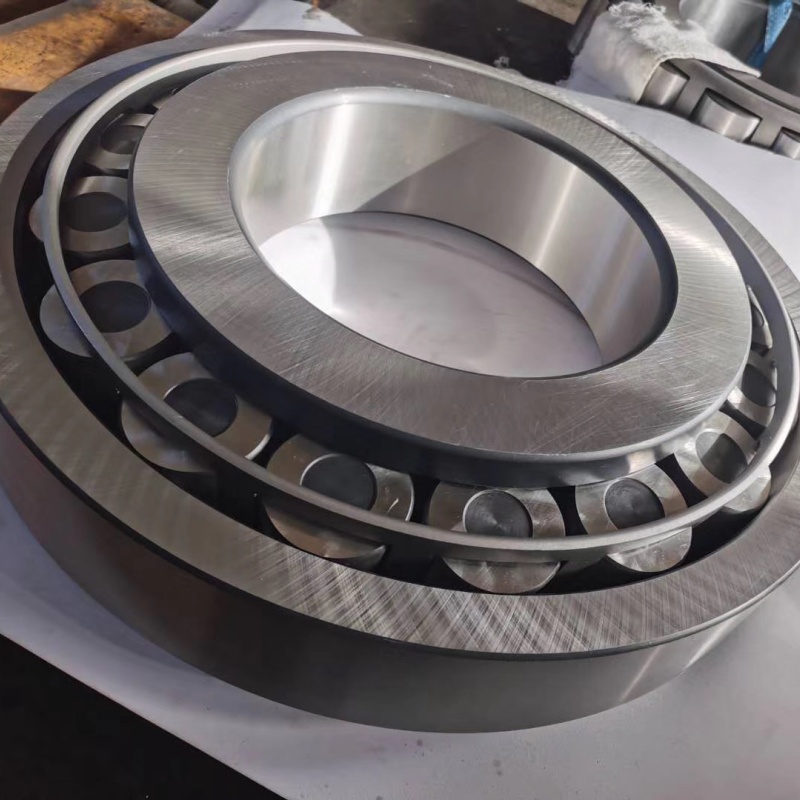
Raw Material Inventory – The Starting Point
Every bearing starts with steel. If the supplier does not have steel, they cannot make bearings. The steel must be ordered from a mill. That takes time – often 2-4 weeks. If the supplier waits until they receive your order to buy steel, you are already delayed.
A reliable supplier keeps an inventory of steel for their most common sizes. They order ahead of demand. They have a buffer. When you place your order, they can start production immediately.
I ask my clients to check the supplier’s steel inventory before placing an order. Ask: "Do you have steel for my size in stock?" If the answer is no, ask how long it will take to get it. That gives you a realistic timeline.
Production Line Scheduling – Your Order in the Queue
Most bearing factories have multiple production lines. Some lines are dedicated to specific sizes. Others are general-purpose. The production schedule determines when your order will be made.
A reliable supplier gives you a clear production schedule before you pay the balance. This schedule shows the start date and the completion date. It is not a guess. It is based on their actual capacity.
I recommend asking the supplier: "When will my order go onto the production line?" The answer should be a specific date. "Soon" is not good enough. "We will start next Tuesday" is a real answer.
Quality Inspection – The Non-Negotiable Step
Bearings must be inspected before they are packed. This includes dimensional checks, noise tests, and visual inspections. These inspections take time. If the schedule does not include time for inspection, the supplier will either rush the inspection or skip it.
A reliable supplier builds inspection time into their production schedule. They also have a dedicated quality team that does this work. In our factory, we have a separate inspection department. They do not report to production. They are independent. This ensures that quality is not sacrificed for speed.
Shipping Preparation – The Final Step
After inspection, the bearings must be packed. Then they must be loaded onto the container. Then the container must be delivered to the port. Each of these steps takes time.
A reliable supplier arranges shipping in advance. They book the container. They coordinate with the freight forwarder. They prepare the export documentation. When the bearings are ready, the shipment is not delayed by paperwork.
Here is a table that shows a reliable supply chain timeline:
| Step | Time Required | What Happens |
|---|---|---|
| Raw material stock | Already done | Steel is in the warehouse |
| Production | 2-3 weeks | Bearings are made on dedicated line |
| Quality inspection | 2-3 days | Every batch is tested |
| Packaging | 2-3 days | Bearings are packed for export |
| Shipping | 1-2 weeks | Container books, freight arranged |
| Total lead time | 3-4 weeks | Reliable and predictable |
What Happens When the Chain Breaks
Every step in this chain is important. If the supplier does not have steel, production is delayed. If the production line is busy with another order, your order is delayed. If the inspection finds problems, correction takes time. If the shipping is not booked, the container sits at the factory.
The cost of a break in the supply chain is high. Delayed delivery means delayed production. Delayed production means delayed sales. Delayed sales means lost revenue.
I have seen this happen many times. That is why I encourage my clients to ask about the supply chain before they place an order. A transparent supplier will show you their process. A good supplier will have backups for each step.
So here is my recommendation: treat the supply chain as part of your decision. Ask about steel inventory. Ask about production scheduling. Ask about inspection time. Ask about shipping preparation. A reliable supply chain is not an accident. It is designed that way.
Conclusion
Global manufacturers trust heavy-duty bearings that meet international standards, deliver consistent precision and heat treatment, offer customized solutions, and come from reliable supply chains. Trust is earned through proven performance – and our factory has been earning that trust for years.