
I remember a buyer from Egypt who ordered three containers of bearings from a new supplier. He saved 5% on the unit price. But when the shipment arrived, half the boxes had rust spots. The supplier refused to take responsibility. That 5% saving turned into a 30% loss.
A practical checklist for buying deep groove ball bearings in large quantities covers supplier verification, quality consistency, cost transparency, and production capacity. Use this checklist to avoid costly mistakes and secure a reliable supply chain for your business.
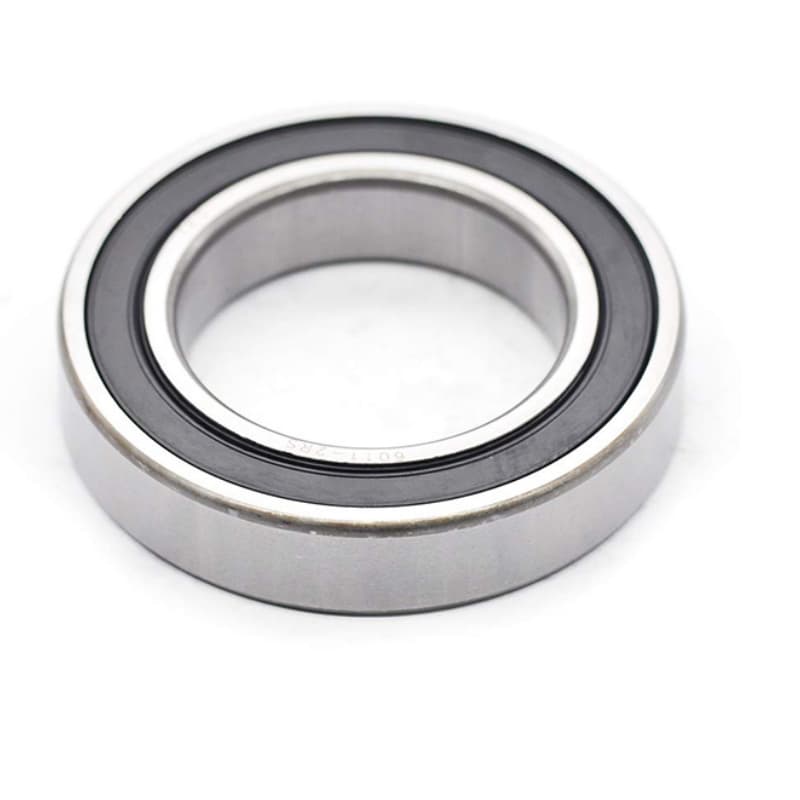
I run a bearing factory in China. I export to over ten countries. I talk to buyers like you every single day. They tell me their biggest fears about bulk orders. What if the quality drops between batches? What if the supplier cannot deliver on time? What if there are hidden charges I did not plan for? These fears are real. But they are also avoidable. In this article, I will give you a simple, practical checklist. Use it before you sign any large-volume contract. It will save you money, time, and a lot of stress.
What Should You Verify Before Signing a Large-Volume Bearing Contract?
A distributor from Brazil once told me he signed a contract with a Chinese supplier based on a WeChat conversation. He did not visit the factory. He did not ask for certificates. He just trusted the salesperson. The first container arrived on time. The second container came two months late. The third container had bearings that looked different from the first batch. The supplier said, “We changed the design to save costs.” He had no legal recourse because his contract had no quality specifications.
Before signing a large-volume bearing contract, you must verify the supplier’s legal status, production license, quality certifications, factory audit results, and sample test reports. Also check their financial health and their references from other buyers in your region.
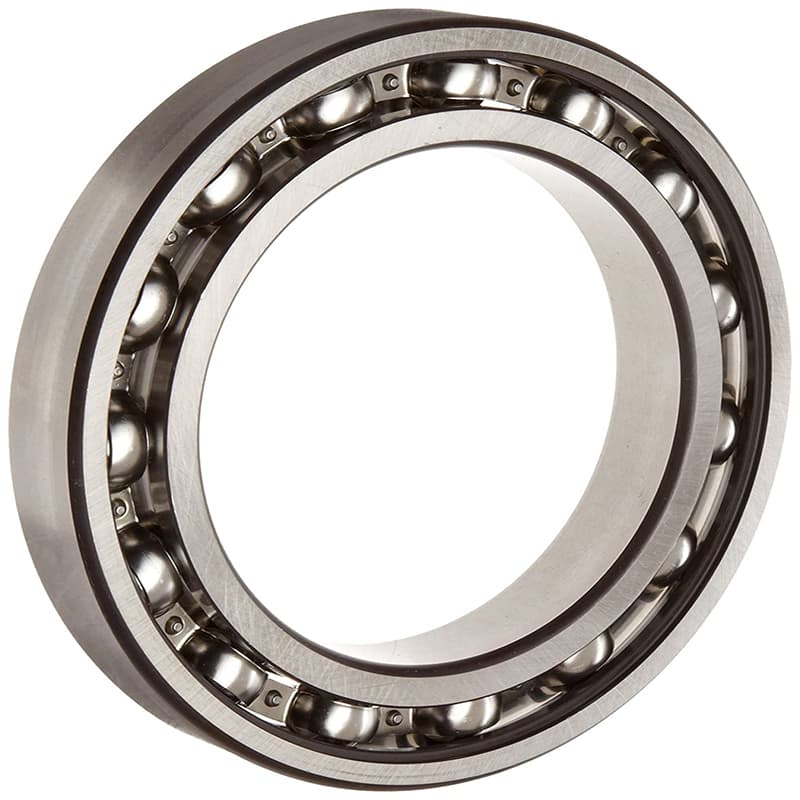
Verify the Supplier’s Legal and Operational Status
This is the first step. You need to confirm that the supplier is a real company, not a trading middleman posing as a factory. Ask for their business license. Check the registration date. A company that has been in business for less than three years is a risk. Ask for their factory registration certificate. This shows they actually have a production facility.
I also recommend checking their export history. Ask for a list of their recent export shipments. You can cross-check this with customs data if you have access. A supplier with a consistent export record to multiple countries is more reliable than one who only started exporting last year.
Check Quality Certifications and Standards
Certifications are not just pieces of paper. They show that the supplier has a quality management system in place. The most common certification for bearing factories is ISO 9001. This covers basic quality management. If the supplier also has IATF 16949, that is even better. That standard is for the automotive industry and has much stricter requirements.
But do not just look at the certificate. Check the scope. Some suppliers have ISO 9001 that covers only sales and distribution, not manufacturing. That is a red flag. You want a certificate that covers the entire production process – from incoming raw materials to final inspection.
Here is a quick reference table for certifications:
| Certification | What It Covers | Relevance for Bearings |
|---|---|---|
| ISO 9001 | Basic quality management | Minimum requirement for any supplier |
| IATF 16949 | Automotive quality (stricter) | High-quality supplier, good for consistent batches |
| ISO 14001 | Environmental management | Shows responsible manufacturing |
| ISO 45001 | Occupational health and safety | Shows mature factory operations |
Request and Review Sample Test Reports
Before you sign any contract, request samples. Not just one piece – request enough samples to do a proper test. For a bulk order, I recommend asking for 10-20 pieces. Test them yourself. Check the dimensions, the runout, the noise, and the hardness.
Also ask for the supplier’s in-house test reports for those samples. Compare them with your own test results. If they match, that is a good sign. If they do not, you have a problem. I have seen many cases where the supplier’s report looks perfect, but the actual samples fail. Do not trust the report alone. Trust your own measurements.
Check References from Other Buyers
Ask the supplier for references from other importers in your country or region. Call those references. Ask about their experience. Was the quality consistent? Did the supplier deliver on time? How did they handle problems?
If the supplier refuses to give references, that is a red flag. A good supplier with happy customers will be proud to share their names. I always give references to my new clients. It builds trust and saves time.
So here is my contract checklist: verify the business license and factory registration, check the scope of quality certifications, request samples and test them yourself, and call references. These four steps take time. But they are much cheaper than fixing a bad order later.
How Can You Ensure Consistent Quality Across Multiple Batches and Containers?
A customer from Vietnam ordered bearings from a supplier. The first batch was good. He placed a second order. The second batch had dimensional variations. He complained. The supplier said, “This is within tolerance.” But it was not within his tolerance. His assembly line had to stop and adjust. He lost two days of production.
To ensure consistent quality across multiple batches, you need batch traceability, a clear sampling plan (AQL), incoming inspection protocols, and a quality agreement that defines acceptable deviations. These tools give you control over every shipment.
Batch Traceability – Know What You Are Getting
Every bearing should have a traceable batch number. This number connects the bearing to the production date, the raw material batch, and the inspection records. Without traceability, you cannot track problems to their source.
Before you place a bulk order, ask the supplier: “What is your batch traceability system?” A good supplier will show you the markings on the box or the inner packaging. They will also have a record that links the batch number to the production parameters. I also recommend that you specify in the contract: “All bearings must be marked with a traceable batch number.” This makes it easier to handle any quality complaints.
Define Your Sampling Plan – AQL Standards
You cannot inspect every bearing in a 50,000-piece order. That would take too long. So you use sampling. The most common standard is AQL (Acceptable Quality Limit) from ISO 2859. For bearings, I recommend a sampling level of AQL 1.0 for critical parameters (dimensions, runout, noise) and AQL 2.5 for non-critical parameters (packaging, appearance).
What does AQL 1.0 mean? It means that in your sample, you accept a maximum of 1% defective pieces. If you find more than that, you reject the whole batch. This gives you a consistent standard for every shipment.
Here is a simple AQL guide for bearing imports:
| Parameter Type | Example | Recommended AQL | What It Means |
|---|---|---|---|
| Critical | Bore diameter, runout, noise | 1.0 | 1 defect per 100 pieces allowed |
| Major | Hardness, seal integrity | 1.5 | 1.5 defects per 100 pieces allowed |
| Minor | Packaging damage, surface marks | 2.5 | 2.5 defects per 100 pieces allowed |
Establish an Incoming Inspection Protocol
Before you accept any shipment, you need a standard way to check the bearings. This is your incoming inspection protocol. It should cover:
- Visual inspection: Look for rust, nicks, dents, and packaging damage.
- Dimensional check: Measure bore, outer diameter, and width. Use the same method every time.
- Functional check: Spin the bearing. Listen for noise. Check for smoothness.
- Grease check: If you specified a grease type, confirm it is correct.
I recommend documenting the results of every incoming inspection. Keep a log. This log becomes your evidence if you need to make a claim.
Include a Quality Agreement in Your Contract
Do not assume that the supplier knows your quality standards. Write them down. Put them in the contract. This is called a quality agreement. It defines:
- Acceptable tolerances for all dimensions
- Acceptable vibration and noise levels
- Acceptable packaging standards
- The inspection procedure and AQL level
- What happens if a batch is rejected
This agreement protects both sides. The supplier knows exactly what you expect. You have a legal basis to reject non-conforming products. I have seen many disputes avoided simply because both parties had a signed quality agreement.
Here is my advice: quality consistency does not happen by accident. It requires clear specifications, traceability, a defined sampling plan, and a written quality agreement. Put these in place before your first bulk order. You will get the same quality every time.
What Are the Hidden Costs in Large Bearing Orders That You Might Overlook?
I once quoted a price to a client in South Africa. He said it was too high. He found another supplier who offered a lower unit price. He placed the order. Six weeks later, he called me. The supplier had charged him an extra $2000 for freight insurance. Then there was a $1500 port handling fee. Then customs held his shipment because the commercial invoice had the wrong classification. He ended up paying more than my original quote.
Hidden costs in large bearing orders include packaging and palletizing, freight insurance, payment terms (LC fees), customs duties, storage fees for early shipments, and quality inspection costs. These can add 10-20% to your total landed cost.
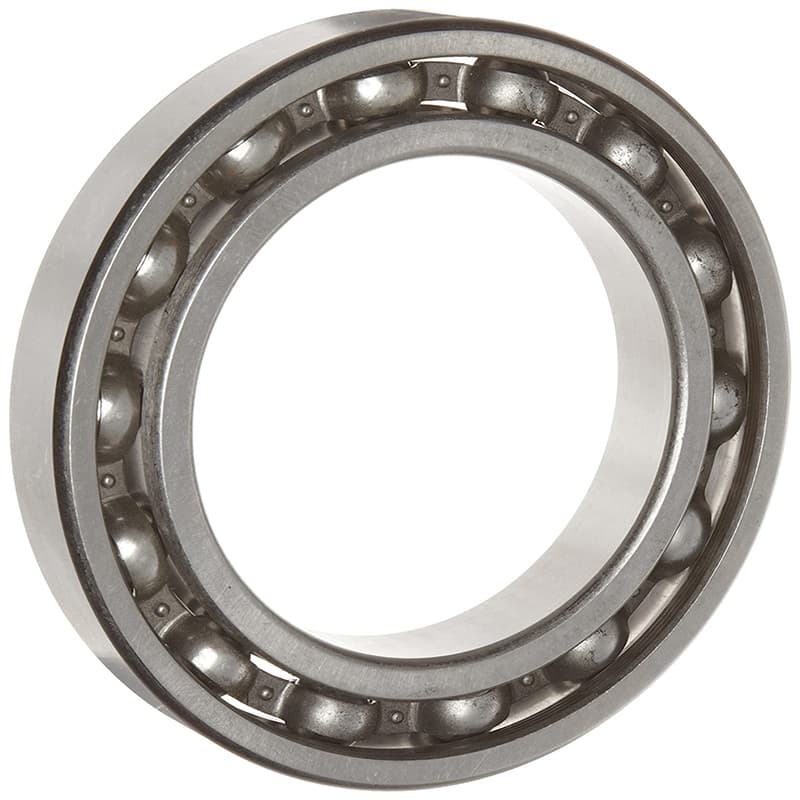
Packaging and Palletizing Costs
Bearings are heavy. A container of bearings can weigh over 20 tons. That means packaging is important. You need boxes that protect the bearings from rust and physical damage. You need pallets that can be stacked and moved by forklift.
Some suppliers include basic packaging in their price. But many charge extra for export-grade packaging. This includes VCI (vapor corrosion inhibitor) paper, plastic inner bags, and sturdy outer cartons. These materials cost money. If you do not ask, the supplier might use cheaper packaging to save cost. Your bearings could arrive rusty.
I recommend specifying the packaging in your contract. Write down: “Each bearing must be packed in VCI paper, sealed in a plastic bag, and placed in a five-layer carton. Pallets must be shrink-wrapped and have corner protection.” This protects your investment.
Freight and Insurance
The unit price you negotiate is usually EXW (Ex Works) or FOB (Free On Board). That does not include the ocean freight, insurance, or port charges. These costs can vary a lot.
For a bulk order, I advise getting a freight quote from multiple forwarders. Do not just use the supplier’s recommended forwarder. Get three quotes. Also ask about insurance. Marine insurance costs about 0.2-0.5% of the cargo value. It is worth paying. I have seen containers lost at sea. Without insurance, that is a total loss.
Payment Terms – LC Fees and Interest
Many Chinese suppliers ask for 30% deposit and 70% against the bill of lading. If you use a Letter of Credit (LC), there are bank fees. These are usually 0.5-1.5% of the LC amount. That adds up for a large order.
If you use T/T (telegraphic transfer), there are wire fees. They are smaller but still add to your cost. Also consider the timing. If you pay early, you lose the interest on that money. If you pay late, you might get a surcharge. I recommend negotiating payment terms that work for your cash flow. For regular customers, I offer 50% deposit and 50% balance after quality inspection – that gives the buyer some security.
Here is a table of typical hidden costs in a bulk bearing order:
| Cost Category | Typical Range | Notes |
|---|---|---|
| Export packaging (VCI, cartons, pallets) | 2-5% of order value | Often excluded in unit price |
| Ocean freight (40ft container) | $2,000 – $4,000 | Varies by route |
| Marine insurance | 0.2-0.5% of cargo value | Optional but recommended |
| LC bank charges | 0.5-1.5% of LC value | For LC payments |
| Customs clearance (destination) | $300 – $800 | Plus duties and VAT |
| Incoming quality inspection | $200 – $500 | If you use a third party |
| Port storage (if shipment is early) | $50 – $200 per day | Avoidable with proper planning |
Customs Duties and VAT
Do not forget about import duties. These are based on the harmonized system code for bearings (usually 8482.10 for deep groove ball bearings). Duties vary by country. In India, the basic customs duty for bearings is about 10-15%. On top of that, there is GST (Goods and Services Tax) of 18%. These are not supplier costs. But they are costs you must pay. Include them in your total budget.
Also check if your country has anti-dumping duties on bearings from China. Some countries, like India and the US, have anti-dumping orders. That can add another 10-30% to your cost. I always tell my clients to check with their customs broker before placing a large order.
Third-Party Inspection Fees
If you want to ensure quality before shipping, you might hire a third-party inspection company. Companies like SGS and Bureau Veritas offer this service. They send someone to the supplier’s factory. They inspect the goods before they are packed. This costs around $300-600 per day, plus travel expenses.
This sounds like an extra cost. But in my experience, it saves money. A third-party inspection catches problems before they are shipped. That avoids returns, delays, and disputes. I recommend this for any order over $50,000. It is a small price for peace of mind.
So here is my rule: when you get a price quote, ask the supplier to break it down into unit price, packaging cost, and freight cost. Then add your own estimates for customs, insurance, and inspections. That gives you the true landed cost. Use that number to compare suppliers, not the unit price alone.
How Do You Evaluate a Supplier’s Production Capacity and Lead Time Reliability?
A customer from Turkey told me he had a great supplier. The prices were low. The samples were good. But when he placed his first bulk order for 80,000 bearings, the supplier said they could not start production for six weeks. They had taken other orders. His order was delayed by two months. He lost his peak season sales.
To evaluate production capacity and lead time reliability, you must check the supplier’s monthly output, raw material inventory, production line utilization, and their track record on past delivery performance. Do not rely on promises alone – get real numbers.
Check Their Monthly Production Capacity
Every factory has a maximum output. A supplier might have a capacity of 500,000 bearings per month. But if they are already producing 450,000 for other customers, they only have 50,000 left for you. If you need 100,000, they cannot deliver on time.
Ask the supplier: "How many pieces of this specific bearing size do you make per month?" Ask them: "What is your current production load?" A transparent supplier will tell you the truth. A salesperson who just says "We can handle it" without giving numbers is taking a risk with your order.
I also recommend asking about their production scheduling. Do they have a dedicated line for your bearing size? Or do they switch between sizes frequently? Frequent changeovers cause delays. A supplier with a dedicated line for your size is more reliable.
Raw Material Availability
Bearings need steel. Steel needs to be ordered from a mill. If the supplier does not have steel in stock, they need to order it. That adds 2-4 weeks to the lead time.
Ask the supplier: "Do you have raw material in stock for my order?" If yes, ask them: "How many tons?" For a large order, you want to see that the steel is already in the warehouse. I keep at least one month of steel stock for my main sizes. That way I can start production immediately after receiving a deposit.
Their Track Record on Delivery
Do not just ask "Can you deliver in 30 days?" Ask "What was your average delivery performance last year?" A supplier with 90% on-time delivery is a risk. A supplier with 98% on-time delivery is more reliable.
You can also ask for a delivery performance report. Some suppliers track this. If they do not, that is a sign that they may not prioritize punctuality. I suggest calling their references and asking specifically: "Did they deliver on time? Were there any delays?" This is the most honest answer you will get.
Here is a capacity and lead time evaluation table:
| Factor | What to Ask | Good Answer | Red Flag |
|---|---|---|---|
| Monthly capacity | "How many pieces per month?" | Clear number | "We can handle any order" |
| Current load | "What % of capacity are you using?" | Below 80% | "We are fully booked" |
| Steel stock | "Do you have raw material in stock?" | Yes, with tonnage | "We will order after deposit" |
| Production lead time | "What is your production schedule?" | 2-3 weeks for our size | 6-8 weeks |
| Delivery track record | "What was your on-time rate last year?" | Above 95% | "I don’t have that data" |
Backup Plan for Emergencies
What happens if the supplier has a breakdown? What if their power goes out for a week? A reliable supplier has a backup plan. They have relationships with other factories. They can subcontract part of your order if needed.
Ask the supplier: "If your production line stops, what is your backup plan?" The supplier who has a clear answer is the supplier you can trust. The supplier who says "That never happens" is either too confident or not being honest.
Get a Written Production Schedule
Before you make the final payment, ask the supplier to send you a production schedule. This should show the dates for:
- Raw material arrival
- Production start and finish
- Assembly and testing
- Packaging
- Inspection
- Shipment
Review this schedule. Check if it is realistic. If it seems too tight, ask for a buffer. A good production schedule has 3-5 days of contingency built in. This shows the supplier has planned for the unexpected.
Here is my final advice on capacity and lead time: do not assume your order will be prioritized. Ask the specific questions. Get the specific numbers. Write the delivery date into the contract with a penalty clause for late delivery. That gives you legal protection and gives the supplier a real incentive to deliver on time.
Conclusion
A practical checklist for bulk bearing purchases covers supplier verification, quality consistency, hidden costs, and production capacity. Follow these steps before signing your next large order and you will avoid the common pitfalls that cost importers time and money.