
You have a workshop with motors running every day. Your benchtop grinder stops working. You open it up. The bearing is seized. That is a problem you did not plan for.
Deep groove ball bearings are the most common bearings in workshop equipment. They support the shafts in motors, grinders, drill presses, and saws. Choosing the right bearing and maintaining it correctly will keep your machines running longer.
Let me share something with you. I run a bearing factory in China. I talk to workshop owners and equipment manufacturers every day. Many of them call me with the same problems. Bearings get noisy. They fail too soon. They leak grease. Or they just stop spinning. Most of these problems come from one thing. The buyer picked the wrong bearing for the application. In this article, I will walk you through what I tell my customers. These are practical tips. They come from years of seeing what works and what fails on the workshop floor.
How to Choose the Right Seal Level for Deep Groove Ball Bearings in Workshop Motors?
You see two bearings that look the same. One has a metal shield. The other has a rubber seal. Which one do you pick for your motor?
The right seal level depends on your workshop environment. Use rubber seals (2RS) for dirty or dusty areas. Use metal shields (ZZ) for clean, dry, and high-speed applications.
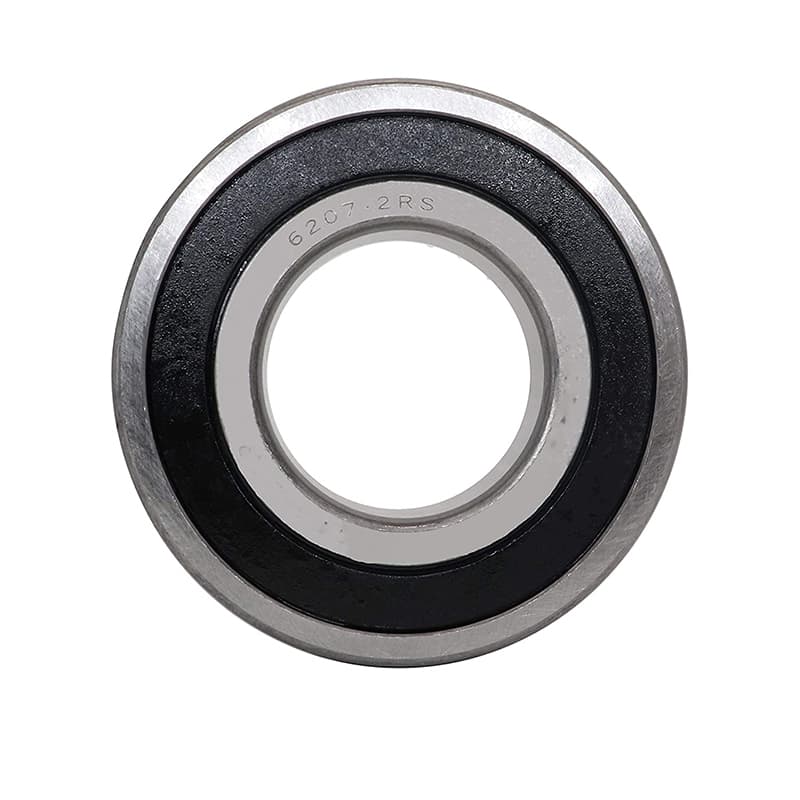
Let me break down your options
Most workshop motors run at speeds between 1,500 and 3,600 RPM. That is not very fast. So you have choices. But the wrong choice will cause problems. Here is a simple table I use with my customers.
| Seal Type | Code | Best For | Pros | Cons |
|---|---|---|---|---|
| Rubber seal (contact) | 2RS | Dusty workshops, outdoor equipment | Best protection against dirt and moisture | Higher friction, slight heat generation |
| Rubber seal (non-contact) | 2RZ | Clean indoor motors | Good protection, lower friction than 2RS | Less sealing than 2RS |
| Metal shield | ZZ | High-speed motors, clean environments | Lowest friction, highest speed capability | Does not stop dust or moisture |
The mistake I see most often
A workshop owner in Indonesia called me last year. He had a belt-driven grinder. The bearings failed every three months. He kept buying ZZ shielded bearings. His workshop was open. Dust from grinding got into the bearings. The dust mixed with grease. It formed a grinding paste. That paste wore out the races. I asked him to switch to 2RS rubber seals. He did. The next set lasted 14 months. He saved money on bearings and labor.
My rule of thumb for workshop motors
Here is what I tell every buyer. If your equipment sits in a clean room or an air-conditioned shop, ZZ shields are fine. If your equipment sits near a grinding wheel, a lathe, or any source of dust, choose 2RS rubber seals. Pay the extra few cents. It is worth it. I also tell them to check the seal material. For motors that run hot, ask for FKM rubber. It handles heat better than NBR.
Impact of Frequent Start-Stop Cycles on Bearing Life in Shop Equipment and How to Address It?
You turn your drill press on and off many times a day. Every start is a shock to the bearing. Does that shorten its life?
Yes, frequent start-stop cycles reduce bearing life. Each start creates a momentary lack of lubrication. The rolling elements slide before the grease forms a film. This causes wear. You can address it with better grease and proper preload.
What really happens during start-up
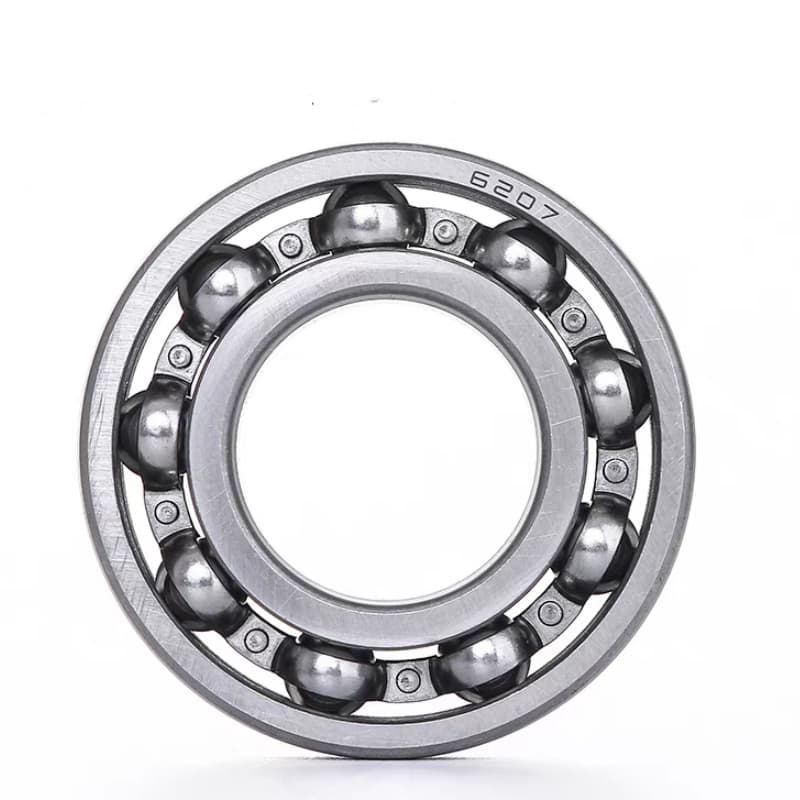
I want to explain this simply. When a motor stops, the grease settles. It moves away from the rolling elements. When you start again, the bearing rotates before the grease returns. For the first few seconds, you have metal touching metal. That is called boundary lubrication. It causes micro-wear. Over thousands of starts, that micro-wear adds up.
I did a test with a customer in Turkey. He ran a production line with conveyor motors. They started and stopped 200 times a day. We tracked two batches of bearings. One batch used standard grease. The other used a grease with better adhesion. The standard batch failed at 8 months. The high-adhesion batch ran for 18 months.
How to protect your bearings
Here are the steps I recommend to my clients.
| Action | Why It Helps |
|---|---|
| Use grease with high oil separation resistance | Keeps the oil in the grease, even after stops |
| Choose a bearing with proper internal clearance | Reduces shock load during start-up |
| Install soft-start controls if possible | Reduces peak torque on the bearing |
| Run the motor unloaded for the first 10 seconds | Allows grease to redistribute before load applies |
One insight I always share
Most people ignore the start-up phase. They only think about running speed. That is a mistake. I tell my customers to look at the number of starts per day. If it is more than 50, you need a bearing with a better grease. If it is more than 200, you should consider a motor with soft-start electronics. That will save you money on bearing replacements. I learned this from a workshop in Vietnam. They ran stamping machines. The bearings failed every 6 weeks. They added soft-starts. The bearings lasted 6 months. That is a huge difference.
Key Points for Protection and Lubrication Selection of Deep Groove Ball Bearings in Dusty Environments?
Your workshop has wood dust, metal shavings, or cement powder in the air. You cannot avoid it. How do you protect your bearings?
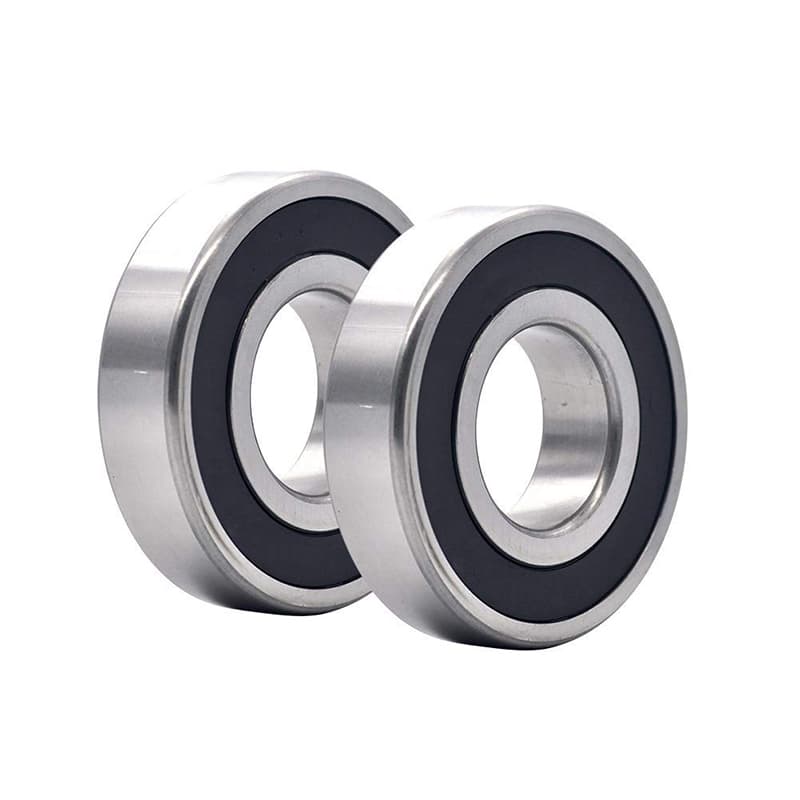
In dusty environments, choose bearings with contact rubber seals (2RS). Use grease with high consistency and good water resistance. Clean the housing regularly to prevent dust buildup near the seals.
The dust problem in detail
Dust is not just dirt. It is an abrasive. Wood dust can absorb moisture. That causes rust. Metal shavings are sharp. They cut through seal lips. Cement powder is very fine. It passes through some seals like sand through a screen. I have seen all these cases in my customers’ workshops.
Let me give you a table I use for dust protection.
| Dust Type | Recommended Seal | Recommended Grease | Additional Protection |
|---|---|---|---|
| Wood dust | 2RS rubber seal | Lithium complex, water-resistant | Seal housing with cover plate |
| Metal shavings | 2RS with steel-reinforced lip | Grease with EP additives | Use magnetic chip collector nearby |
| Cement powder | Double-lip 2RS | High-viscosity grease | Pressurize bearing housing slightly |
| General workshop dust | 2RS rubber seal | Standard NLGI No. 2 grease | Wipe housing weekly |
My personal experience with a woodworking shop
A customer in Brazil runs a furniture factory. He had bearings failing every month on his planer machine. The wood dust was everywhere. The standard ZZ shields were useless. He switched to 2RS bearings with a special seal that had a double lip. He also changed the grease to a water-resistant type. The bearings now run for 12 months. He told me he spends less time on maintenance and more time making furniture. That is the outcome you want.
Lubrication selection is not optional
I need to be direct here. The grease inside a sealed bearing is not all the same. Some grease is thin. Some is thick. In dusty environments, you need thick grease. It does not flow out easily. It also sticks to the raceways better. I recommend NLGI grade 2 or 3 for dusty workshops. Grade 0 or 1 is too thin. It will leak and let dust in. Ask your supplier what grease they use. If they cannot tell you, find a new supplier.
One more tip about installation
When you install bearings in dusty areas, clean the shaft and housing before assembly. Even a tiny grain of dust on the shaft can damage the seal. The seal lip will wear out faster. That creates a gap. Then more dust enters. It is a cycle. I tell my team to use lint-free cloths and a small amount of clean oil during installation. That simple step has reduced early failures in our customers by a lot.
How Does Misalignment Cause Premature Bearing Failure in Workshop Machines?
You install a bearing on a shaft. You think it is straight. But the machine vibrates. After a few weeks, you hear noise. What went wrong?
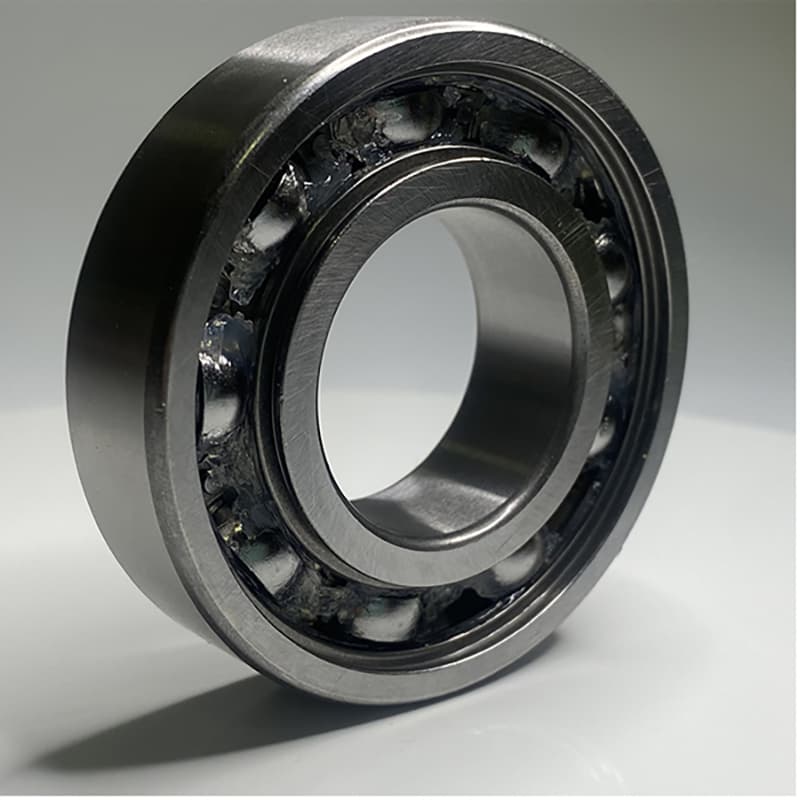
Misalignment puts uneven load on the bearing. One side carries more weight. That side wears out faster. It also creates heat and can damage the seal. That leads to early failure.
The real mechanics of misalignment
Let me explain this in simple terms. A deep groove ball bearing is designed to handle radial loads. It handles them best when the shaft is perfectly aligned with the housing. When the shaft is tilted, the balls press harder on one side of the raceway. The contact angle changes. The load is not distributed evenly. The bearing runs hotter. The grease degrades faster. And the seal may deform because the inner ring shifts.
I have a table that shows the effect of misalignment.
| Misalignment Angle | Effect on Bearing Life | Typical Cause |
|---|---|---|
| Up to 0.5° | Small reduction (10-15%) | Normal installation tolerance |
| 0.5° to 1.0° | Significant reduction (30-50%) | Worn shaft or poor mounting |
| Over 1.0° | Severe reduction (over 70%) | Bent shaft or damaged housing |
A story from a workshop in Egypt
A workshop owner called me about his lathe machine. The headstock bearing failed twice in one year. He thought the bearings were poor quality. I visited his workshop. I measured the shaft runout. It was out by 0.8°. That is enough to cause early failure. We replaced the shaft. We installed new bearings. The same bearing model ran for two years without issues. The problem was not the bearing. The problem was the alignment.
How to prevent misalignment in your shop
I always give this advice to my customers.
-
Check the shaft straightness before installing a new bearing. Use a dial indicator. If runout exceeds 0.02 mm, fix the shaft first.
-
Use self-aligning bearings if your equipment is old. Some benchtop machines have worn housings. Self-aligning bearings can handle small misalignments.
-
Tighten bolts evenly when mounting the housing. Uneven bolt torque causes the housing to deform. That creates misalignment.
-
Check the housing bore for wear. If it is oval or tapered, the bearing will not sit straight.
My honest opinion on this topic
Many buyers blame the bearing when it fails. But I have seen too many cases where the root cause was misalignment. The bearing is just the victim. Before you complain about quality, check your shaft and housing. I tell my clients to measure first. Then decide. This approach has saved many of them from buying new bearings too often. It has also saved me from having to explain why good bearings fail. So check your alignment. It costs almost nothing. It saves you a lot.
Conclusion
Choose the right seal and grease for your workshop. Watch for start-stop wear and misalignment. These steps will extend bearing life and keep your machines running.