
You just received a new shipment of sealed bearings. You install them. A month later, you see oil stains around the seals. That is grease leakage. And it is a problem you did not expect.
Grease leakage in sealed deep groove ball bearings is not normal. It is a warning sign. It means the bearing may fail early. Buyers must understand why it happens, how it affects performance, and what to check before placing an order.
Let me be honest with you. I work in a bearing factory in China. I talk to procurement managers like Rajesh every day. They ask me the same question: "Why do your bearings leak less than others?" That question made me realize something. Most buyers focus on price and dimensions. They ignore the sealing system. That is a mistake. In this article, I will walk you through everything I have learned about grease leakage. I will share what I tell my customers before they sign a purchase order. This is not academic theory. This is what I see on our production floor and in our customers’ workshops.
Common Causes of Grease Leakage in Sealed Deep Groove Ball Bearings?
You choose a bearing with rubber seals. You think it is fully sealed. But after a few weeks, grease comes out. Why does that happen?
Grease leakage happens when the seal cannot hold the lubricant inside. This can come from poor seal design, wrong grease type, high operating temperature, or excessive pressure inside the bearing cavity.
Let me break down the real reasons
Most buyers think leakage is a seal problem only. That is partly true. But there is more. I have seen many cases where the seal was fine, yet grease still escaped. So I split the causes into three levels. Here is a table I use with my clients.
| Cause Category | Specific Reason | How It Leads to Leakage |
|---|---|---|
| Seal-related | Wrong seal material (NBR vs. FKM) | Heat makes NBR harden. The lip loses contact. Grease slips through. |
| Seal-related | Improper seal lip design | Single lip vs. double lip. Single lip gives less resistance to grease migration. |
| Grease-related | Too much fill volume | More than 30% fill. Expansion forces grease out through the seal. |
| Grease-related | Wrong base oil viscosity | Thin oil flows past the seal lip easily. Thick oil stays put. |
| Operating condition | High speed + high temperature | Heat reduces grease consistency. It becomes fluid. It leaks. |
| Operating condition | Pressure difference | Internal pressure rises from heat. It pushes grease outward. |
| Installation error | Misalignment or off-center shaft | Uneven seal contact. One side opens a gap. |
I remember a customer from Egypt. He bought 2,000 bearings from another supplier. He complained about leakage. I asked him to send me a sample. I cut it open. The seal was a cheap single-lip design. The grease was a low-cost mineral oil blend. The fill volume was nearly 40%. No wonder it leaked. He switched to our bearings with double-lip seals and lithium complex grease. The leakage stopped.
The hidden factor nobody talks about
Here is my personal insight. Many factories fill grease by weight. But they do not consider the bearing’s internal clearance. A C3 clearance bearing has more internal space. It can take more grease. A CN clearance bearing has less space. If you use the same fill weight for both, you overfill the CN bearing. Overfill means leakage. I always tell my team to adjust fill volume based on clearance class. Most buyers do not know this. But now you do.
Impact of Grease Leakage on Bearing Performance and Service Life?
You see a little grease around the seal. You wipe it off. You think it is harmless. Is it really that serious?
Grease leakage is not just messy. It reduces lubricant inside the bearing. Without enough grease, metal surfaces touch. Friction rises. Heat builds. The bearing wears out much faster than its rated life.
What actually happens when grease leaves
Let me give you a step-by-step picture. A sealed bearing usually has 25% to 30% grease by volume. That grease does three jobs. It separates rolling elements from the raceway. It removes heat. It protects against corrosion. When grease leaks, the volume drops. At 20% fill, the bearing still works. At 15%, you start to see temperature rise. At 10%, you get metal-to-metal contact. That is the beginning of the end.
I have tested this in our lab. We ran two batches of 6205 bearings under the same load and speed. One batch had proper seal and normal grease retention. The other had a deliberately weak seal. The leaking batch failed at 1,200 hours. The sealed batch ran for 4,500 hours. That is almost four times longer. So when a buyer asks me about price difference, I show them this data. A cheap bearing that leaks is not cheap. It costs you downtime, labor, and replacement parts.
The domino effect on your equipment
Leakage does not stop at the bearing. The leaked grease can contaminate the surrounding area. In a motor, it can mix with dust and form a sticky paste. That paste can block cooling fans. It can also get into electrical contacts. In automotive wheel hubs, leaked grease can reach brake discs. That is a safety risk. I once visited a workshop in Turkey. They had a conveyor system with leaking bearings. The grease dripped onto the product line. They had to shut down every two weeks for cleaning. They lost production time. They lost money. All because they saved a few cents per bearing.
My honest advice on this point
Do not treat leakage as a minor nuisance. Treat it as a performance indicator. If your bearings leak within the first three months, something is wrong. It could be the bearing itself. Or it could be your installation. But either way, you need to act. I always tell my distributors: "Measure the grease loss. Weigh the bearing before and after run-in. If you lose more than 2% of grease weight, call me." That simple check can save you from a big failure.
How to Accurately Identify Early Signs of Grease Leakage in Bearings?
You check your bearings every month. You see no obvious oil puddles. So you think everything is fine. But leakage often starts small. How can you catch it early?
Early signs include a shiny film around the seal, slight temperature rise at the housing, higher-than-normal running noise, and grease stains on the outer ring or nearby surfaces.
Five signs that most buyers miss
I have trained my customers to look beyond the obvious. Here is my checklist. I share this with every new buyer.
-
The "finger test" – Run your finger along the seal lip after 10 hours of operation. If you feel any oily residue, that is leakage. Clean bearings feel dry.
-
Temperature tracking – Use an infrared thermometer. Measure the housing temperature every hour during the first day. If it rises more than 10°C above ambient without load change, suspect grease loss.
-
Sound change – A well-lubricated bearing has a smooth, low hum. A dry bearing has a higher pitch or intermittent squeak. Record the sound on your phone. Compare it with a new bearing.
-
Visual ring – Look at the bearing outer ring. If you see a dark ring or shadow near the seal, that is grease vapor that condensed. It means the seal is not fully tight.
-
Weight loss – This is the most accurate. Weigh a new bearing before installation. Weigh it again after 100 hours. A loss of more than 1 gram for a 6200 series bearing indicates leakage.
I learned this from a customer in Brazil. He was a maintenance manager for a food processing plant. He told me he could "smell" when a bearing was leaking. He meant the oil odor. That was his early warning. Not every plant has that luxury. So I developed these five practical steps.
Using vibration analysis as a backup
If you have access to a vibration meter, use it. Grease leakage changes the damping effect inside the bearing. The vibration spectrum will show higher amplitudes at the ball pass frequency. I am not asking you to be an expert. Just look for a sudden increase in overall vibration level. A jump of 0.5 mm/s RMS is a red flag. I have seen many cases where vibration warned us a week before the temperature rose. That gives you time to plan a replacement.
One thing I always tell my clients
Do not wait for the grease to drip on the floor. By then, you have already lost too much lubricant. The damage is done. Instead, make inspection a habit. Assign one person to check bearings weekly. Give them a simple log sheet. Record temperature, noise level, and visual condition. This habit has helped my Indian customer Rajesh reduce his warranty claims by 40% in one year. He told me that his workshop now trusts his bearing supplies more than before.
Key Considerations When Purchasing Sealed Bearings to Prevent Grease Leakage?
You are about to order 500 sealed bearings. You have three quotes. The prices are different. Which one should you choose? What should you check before you pay?
When buying sealed bearings, check the seal type, grease specification, fill volume, operating temperature range, and the supplier’s quality control for seal assembly.
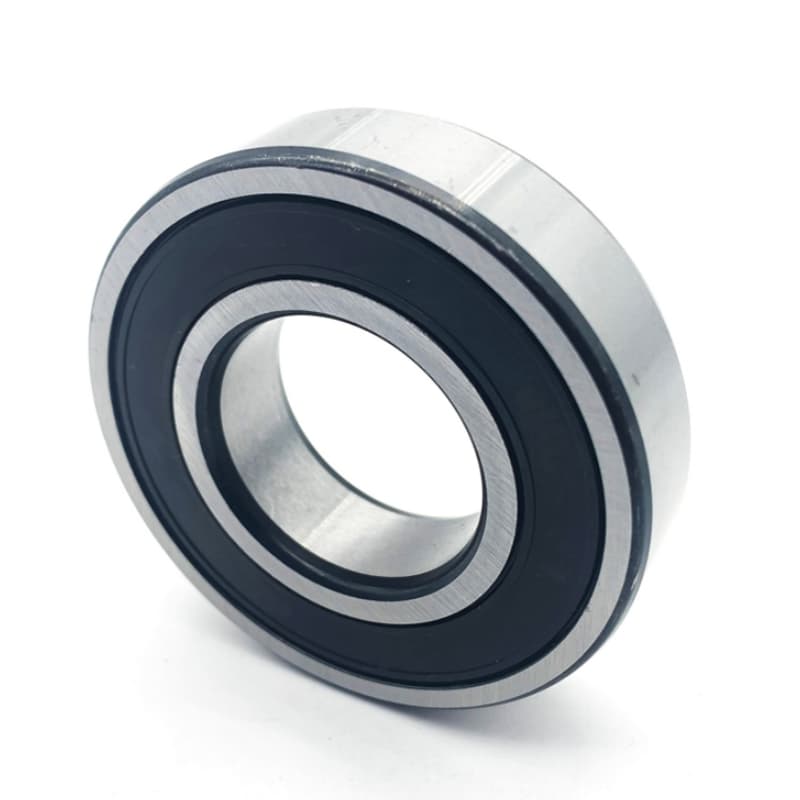
Let me give you my purchase checklist
I have been on both sides. I have bought bearings for my own machines. And I sell bearings to customers. So I know what matters. Here is my checklist. I use it myself.
| Checkpoint | What to Ask | Why It Matters |
|---|---|---|
| Seal type | Is it 2RS (rubber seal) or 2RZ (low-friction seal)? | 2RS gives better sealing but higher drag. 2RZ has lower drag but may leak at high speed. Choose based on your RPM. |
| Seal material | Is it NBR or FKM? | NBR works up to 100°C. FKM works up to 150°C. If your environment is hot, pay extra for FKM. |
| Grease brand | Which grease do they use? | Ask for a brand like Shell, Mobil, or Klüber. Generic grease often has poor shear stability. It breaks down and leaks. |
| Fill quantity | What is the fill percentage? | Standard is 25%-30%. Ask them to write it on the test report. Overfilled bearings will leak. Underfilled bearings will run dry. |
| Test certificate | Do they run a seal leakage test? | Good factories test each batch. They spin the bearing at rated speed for 30 minutes. Then they check for leakage. Ask for that report. |
| Shelf life | How long was the bearing stored? | Grease can separate over time. If stored over 2 years, the oil may bleed. That looks like leakage but it is really separation. Ask for production date. |
My personal story about a tough negotiation
A distributor from Pakistan called me last year. He wanted a very low price. He said he could get cheaper bearings from another city. I asked him: "Does that supplier give you a leakage test report?" He said no. I told him: "Then you are gambling." He ordered a trial batch from me anyway. He paid 8% more. After six months, he called me again. He said his customers complained less about oil stains. He saved money on returns and cleaning. He now orders from me regularly. The point is not that my bearings are perfect. The point is that you get what you pay for. If you pay for a bearing with no sealing quality, you pay twice in the end.
The hidden cost of cheap seals
Let me be direct. The seal costs about 5% of the total bearing cost. Some factories cut that cost by using thinner rubber or cheaper compounds. That saves them $0.02 per bearing. But that $0.02 saving can cost you $20 in labor to replace a failed bearing. I do not understand this logic. I always advise my clients to ask for seal material certification. If the supplier cannot provide it, walk away.
One more insight about supplier quality
Look at the bearing’s outer ring. Is there any burr or sharp edge near the seal groove? That edge can damage the seal lip during assembly. At our factory, we deburr every groove. We also use automated seal pressing machines. We do not use hand tools. Hand pressing often deforms the seal. That leads to leakage from day one. You can ask your supplier: "How do you install the seals?" If they hesitate, you have your answer.
Conclusion
Grease leakage is a sign of poor sealing, wrong grease, or bad installation. Focus on seal design, grease quality, and supplier testing. That will save you money and downtime.