
I have walked into many factories where old machines still run strong. But their bearings are tired, noisy, and close to failure. Retrofitting can give them new life.
Retrofitting with modern deep groove ball bearings improves machine accuracy, reduces energy consumption, and extends equipment life. The key is choosing the right bearing specification for the changed operating conditions, not just copying the old part number.
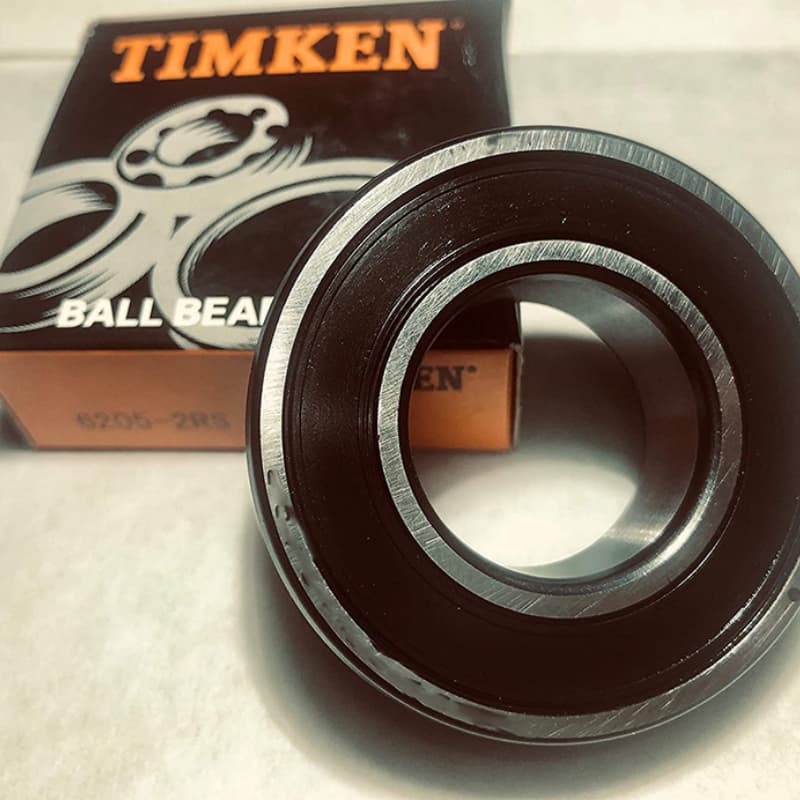
You might think that replacing a bearing is simple – just order the same number and fit it. But I have learned that retrofitting an old machine is very different from building a new one. The housings are worn. The shafts have marks. The loads might have changed over the years. If you ignore these factors, your new bearing will fail faster than the old one. Let me walk you through four key questions that I discuss with every customer who plans a retrofit or a major replacement project.
1. Why Should You Consider Retrofitting Your Old Machinery with New Deep Groove Ball Bearings?
I often meet plant managers who say: "If it is not broken, do not fix it." But waiting for a breakdown is expensive. Retrofitting before failure gives you control over downtime and cost.
Retrofitting with high-quality deep groove ball bearings reduces vibration by up to 30%, lowers operating temperature, and improves production precision. It also cuts energy losses from friction, which saves electricity bills over the long run.
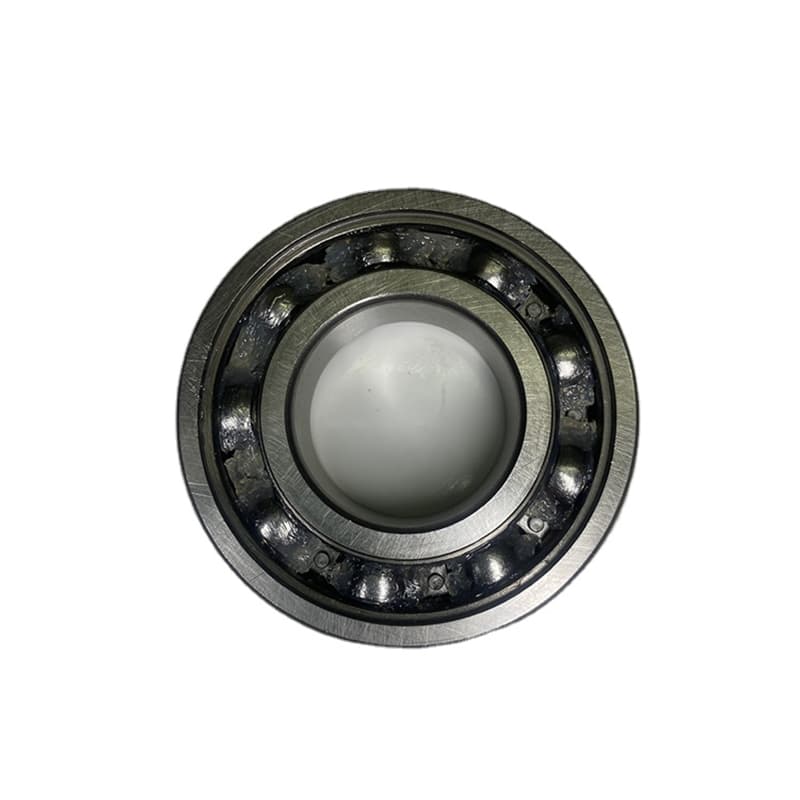
Better precision from modern manufacturing
Old bearings often have wider tolerances. Manufacturing standards have improved a lot over the past 20 years. Today, even a standard P0 bearing from a good factory has better roundness and smoother surface finish than an old bearing from the 1990s. When you retrofit, you get these improvements automatically. I have seen machines that used to produce parts with 0.05 mm runout come down to 0.02 mm after a bearing change. That is a big difference for a small cost.
Lower energy consumption
Friction creates heat and wastes power. Modern deep groove ball bearings use optimized internal geometry. The ball-raceway contact is better. The cage design reduces drag. I have measured the no-load torque on our test rig. A new bearing from our factory runs with 15–20% less friction than a worn bearing of the same size. For a motor that runs 24/7, that saving adds up. One of my customers in Indonesia replaced bearings on 50 conveyor motors. Their monthly electricity bill dropped by 8%. That paid for the new bearings in less than six months.
Longer intervals between maintenance
Old bearings produce more heat. Heat degrades the grease faster. So you need to re-grease more often. New bearings with better seals and synthetic grease can run for 8,000 hours before re-lubrication. That means less labor, less grease cost, and fewer opportunities for contamination to enter the bearing. For a plant with 200 bearings, the maintenance saving is huge.
A practical example from Turkey
A textile mill contacted me last year. Their weaving machines were 25 years old. The original bearings were still running, but the fabric quality was dropping. They had to stop every week to adjust tension. We supplied new deep groove ball bearings with improved clearance and a lower-noise cage. After the retrofit, the machines ran smoother. The fabric quality returned to the original standard. And they extended their replacement interval from weekly to monthly. The mill manager told me: "We should have done this five years ago."
When retrofitting makes more sense than buying new
New machines cost a fortune. Retrofitting bearings is a fraction of that cost. If the frame, motor, and gearbox are still solid, changing the bearings can give you 80% of the performance of a new machine for 10% of the cost. That is a strong business case. I always tell my clients: measure the vibration and temperature of your critical machines. If both are rising, it is time to plan a retrofit. Do not wait for a catastrophic failure.
2. What Measurement Mistakes Ruin Bearing Fits When You Replace Parts in Aged Housings?
I have received many returned bearings from customers who complained about early failure. When I inspected the failed bearings, I found brinelling marks and uneven wear. The cause was almost always a poor fit in a worn housing.
The three most common measurement mistakes are: ignoring housing bore ovality, using a worn micrometer, and failing to measure shaft taper. These errors create excessive internal clearance or preload, both of which shorten bearing life dramatically.
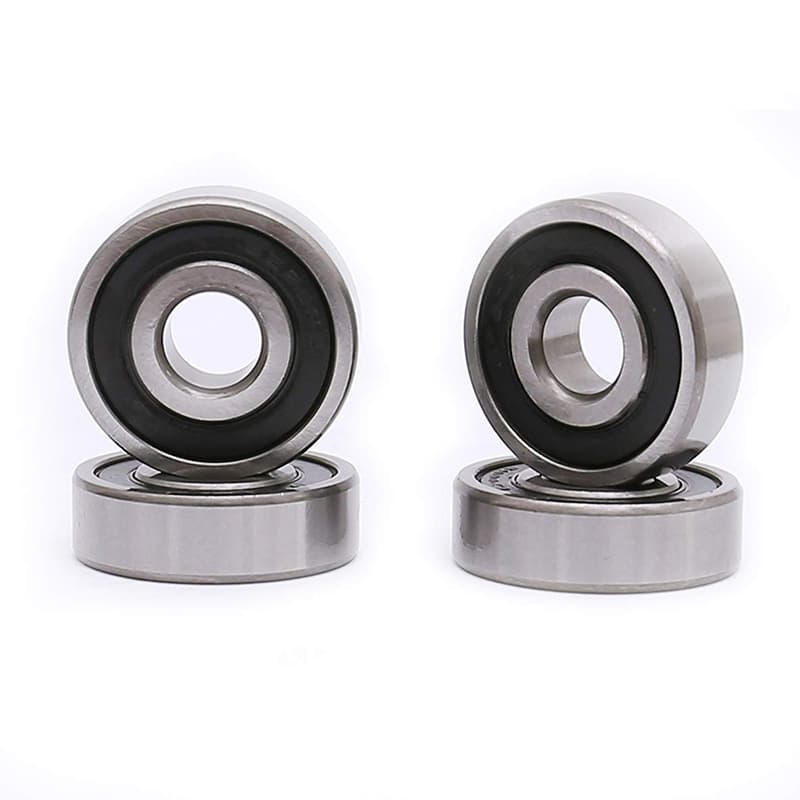
Mistake #1 – Only measuring one diameter of the housing
A housing that looks round can be oval after years of load and temperature cycles. If you measure only at one point, you miss the ovality. The bearing outer ring needs full support around its circumference. If the housing is oval, the ring deforms when you tighten the bolts. That deformation changes the internal clearance. The balls then run in an elliptical path. This creates edge loading and early spalling. I always tell my customers: measure the housing bore at least three angles – 0°, 60°, and 120°. If the difference is more than 0.02 mm for a small bearing or 0.04 mm for a large one, you need to re-bore or use a bearing with a larger clearance (C4) to compensate.
Mistake #2 – Using a worn or uncalibrated measuring tool
I am surprised how many maintenance teams use old calipers that have not been calibrated in years. A worn caliper can read 0.03 mm off. For a bearing fit, that is a big error. The recommended fit for a 6205 bearing in a cast iron housing is a clearance of 0.01–0.03 mm. If your tool reads 0.03 mm low, you might actually have an interference fit. That will overheat the bearing. I recommend using a dial bore gauge for housings and a micrometer for shafts. Calibrate these tools every six months. It costs a little, but it prevents expensive mistakes.
Mistake #3 – Ignoring shaft taper and wear
The shaft is not a perfect cylinder after many years. It may have wear at the old bearing seat, especially under the inner ring. That wear creates a taper. When you push the new bearing onto a tapered shaft, it seats unevenly. One side of the inner ring expands more than the other. This introduces a tilting moment. The bearing then runs with edge loading. I have seen bearings fail in 100 hours because of this. The solution is simple: measure the shaft at three positions along the seat width. If the diameter varies by more than 0.01 mm, you need to build up the shaft with a sleeve or a metal spray coating, then grind it back to the correct dimension.
A quick fit guide for old machines
| Component | Condition | Recommended action |
|---|---|---|
| Housing bore | Ovality < 0.02 mm | Use standard fit |
| Housing bore | Ovality 0.02–0.04 mm | Use C3 clearance |
| Housing bore | Ovality > 0.04 mm | Re-bore or use C4 |
| Shaft seat | Taper < 0.01 mm | Standard fit |
| Shaft seat | Taper 0.01–0.02 mm | Use C3 or adhesive |
| Shaft seat | Taper > 0.02 mm | Repair shaft |
My advice – measure twice, order once
I always tell my customers: send me your measured housing and shaft dimensions, not just the bearing number. I will then recommend the correct internal clearance and even a custom fit if needed. We have saved many retrofit projects with this approach. One customer in Pakistan had a housing that was 0.06 mm oversized. We supplied bearings with an oversized outer ring (custom OD) that fit perfectly. They did not have to re-machine the housing. That saved them a week of downtime.
3. How Do You Adjust Load and Speed Ratings When Your Production Targets Go Up After a Retrofit?
I have seen many factories increase their production speed after a retrofit. They run the machines harder and faster. But they keep the same bearing specification. That is a formula for early failure.
When production targets increase, the bearing load and speed both rise. You must check the adjusted rating life (L10a) and choose a higher load rating, better grease, or improved clearance to match the new duty cycle. Ignoring this step reduces bearing life by 50% or more.
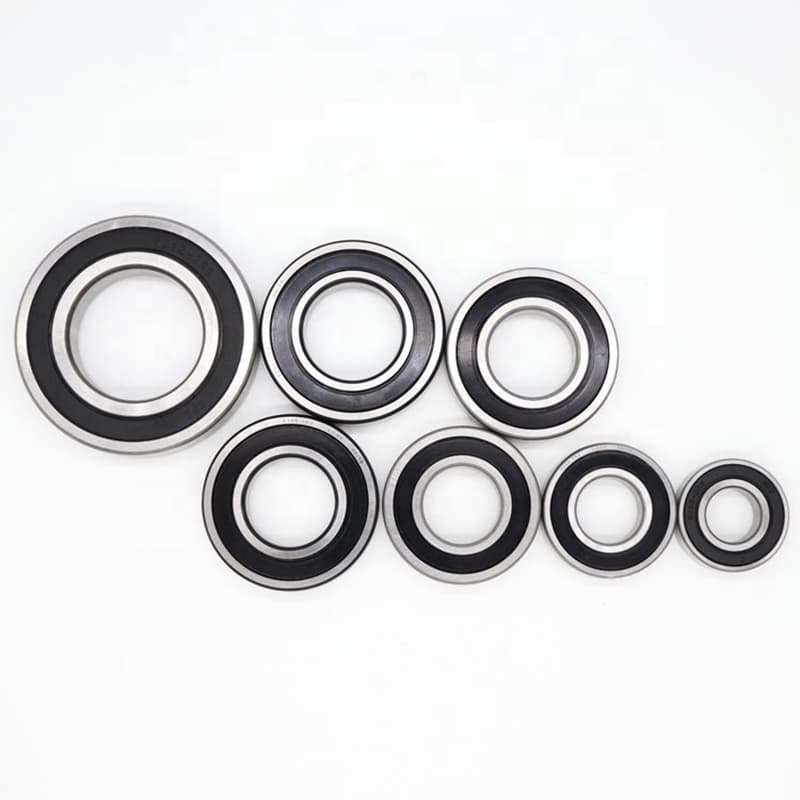
The load goes up when speed goes up
Many people think speed and load are independent. They are not. The centrifugal force on the balls increases with the square of the speed. That adds an extra radial load. Also, the dynamic equivalent load goes up because the vibration and imbalance forces are larger. I calculate this with a simple formula for my customers. If you increase the speed from 1,500 RPM to 2,000 RPM (a 33% increase), the centrifugal load on the balls increases by about 77%. That means the bearing sees a much higher effective load. The fatigue life (L10) drops sharply.
How to adjust the bearing selection
You have a few options:
- Choose a larger bearing – If the housing allows, go up one bore size (e.g., 6205 to 6206). The dynamic load rating increases significantly.
- Use a bearing with more balls – Some designs have a full-complement or a modified internal design with extra balls. This distributes the load better.
- Increase the precision grade – A P6 bearing has better geometry, which means better load sharing among the balls. That extends life at high speeds.
- Change the internal clearance – Higher speed means more thermal expansion. A C3 or C4 clearance prevents internal preload at operating temperature.
- Upgrade the grease – High-speed operation requires a grease with a lower base oil viscosity and better shear stability.
A real example from Brazil
A food processor increased their packaging line speed from 50 packs per minute to 75 packs per minute. The original bearings were 6203-2RS with CN clearance. They failed after three weeks. The plant manager called me. I recalculated the load and speed. The dynamic load rating was adequate, but the grease could not handle the speed. We supplied 6203-2RS bearings with a polyamide cage and a high-speed synthetic grease. We also changed the clearance to C3. The new bearings ran for 14 months. The change cost only 15% more than the original bearing. That is a small price for such a big improvement.
Using the adjusted life formula
The standard L10 life formula assumes stable load and speed. For retrofits with increased production, I use the adjusted rating life (L10a) that includes a reliability factor and a material factor. Most buyers do not want to do the math themselves. That is fine. I do it for them. I just need three numbers: the new operating speed, the radial load, and the expected running temperature. With those, I can recommend the correct bearing variant. We have a life calculator in our factory. I can run a simulation for your specific case in one day. Just email me the details.
Quick comparison for a typical size 6206
| Condition | Standard bearing | Adjusted bearing for higher speed |
|---|---|---|
| Speed (RPM) | 3,000 | 4,500 |
| Calculated load (kN) | 2.0 | 2.8 |
| Recommended clearance | CN | C3 |
| Grease type | Standard lithium | Synthetic high-speed |
| Cage material | Steel | Polyamide |
| Estimated L10 life | 12,000 hrs | 6,500 hrs (with adjusted specs) |
The adjusted bearing gives a shorter calculated life, but it survives the actual conditions. The standard bearing would fail much sooner than its calculated life. So the adjustment is not optional – it is essential.
My rule for retrofits
If you are raising production speed by more than 15%, review your bearing specification. Do not assume that the old number still works. Talk to your supplier and share the new targets. A good supplier will guide you to the right choice.
4. Why Is Supplier Support More Important for Retrofit Projects Than for New Machine Builds?
For a new machine, you have a bill of materials. Everything is clean and standard. For a retrofit, you are working with unknown wear, old drawings, and sometimes missing records. That is where a good supplier proves their value.
A reliable bearing supplier provides technical support, custom modifications, and fast response for retrofit projects. They help you measure worn parts, recommend modified clearances, and supply special variants that standard distributors cannot offer.
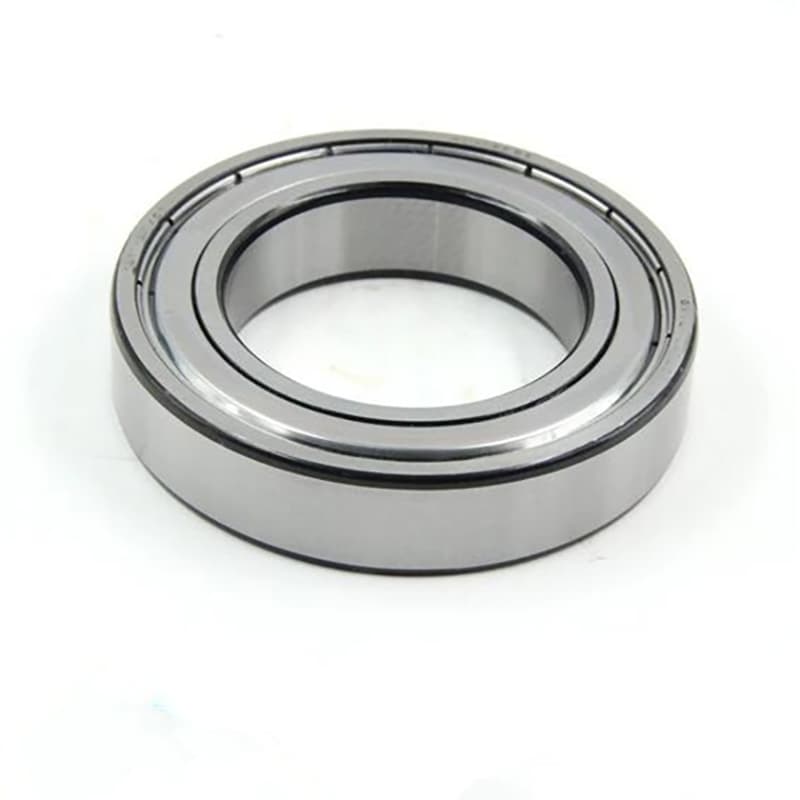
Most distributors are order-takers, not problem-solvers
Many bearing distributors just take your order and ship the product. They do not ask about your shaft condition or housing temperature. They do not ask about your production speed. They just fill the box. For a standard replacement, that might be okay. But for a retrofit, that approach is dangerous. The old machine may need a different clearance. It may need a seal with better chemical resistance. It may need a custom bore tolerance because the housing is worn. A good supplier will ask these questions before you order.
What I do differently for retrofit customers
When you contact me about a retrofit, I start with questions. I ask about the machine age, the previous bearing life, the operating temperature, and the shaft measurement. I ask for photos of the old bearing and the housing. I ask about the production target after the retrofit. I do this because I want you to get the right bearing the first time. We have a small engineering team that works on retrofits every week. We have seen almost every type of wear and damage. That experience is valuable for you.
Custom modifications – our specialty
Because we are a factory, not just a trading company, we can do custom work easily. If you need a bearing with a special internal clearance that is not in the catalog, we can make it. If you need a special seal material, we have it. If you need a different grease fill, we do it. For a retrofit, these small changes are often the key to long life. I have supplied bearings with a 0.5 mm oversize outer diameter to fit worn housings. I have supplied bearings with a tighter internal clearance to compensate for a loose shaft fit. All these are possible because we control the whole production line.
Speed of response matters
Retrofits are often urgent. The machine is already down, or it will be down next weekend. You cannot wait six weeks for a special bearing. We stock a wide range of sizes in our warehouse. For custom orders, our production lead time is shorter than most because we have our own heat treatment and grinding lines. I have shipped rush orders to Brazil and South Africa in under 10 days. That speed helps our customers minimize downtime.
A story from a Russian customer
A steel pipe manufacturer had a 20-year-old straightening machine. The original bearing manufacturer was out of business. No one had drawings. The machine was down, and production was losing $5,000 per hour. The plant manager sent me photos of the housing and the old bearing halves. I measured them on my screen (using the scale in the photo) and made an educated guess. We shipped a trial set of bearings with a modified clearance and a special coating. They fitted perfectly and ran for two years. That customer now sends us all their retrofit orders. They trust us because we listened and we delivered.
When to involve your supplier early
Do not wait until the machine is disassembled to call your supplier. Contact them during the planning phase. Send them the project scope and the target performance. They can advise on lead times, custom options, and even suggest bearing upgrades you had not considered. I have helped many customers plan retrofits months in advance. That gives us time to engineer the best solution and ship it on schedule.
Supplier support checklist for your retrofit
- Do they ask about operating temperature? (Yes → good)
- Do they ask about shaft and housing measurements? (Yes → good)
- Can they offer modified clearance or custom seals? (Yes → good)
- Do they have a short lead time for custom orders? (Yes → good)
- Do they provide photos or videos of similar projects? (Yes → excellent)
Conclusion
Retrofitting old machines with new deep groove ball bearings can boost performance and cut costs. But you must measure carefully, adjust ratings for new loads, and work with a supportive supplier.