
I have met many procurement managers who only compare prices on a spreadsheet. They save a few cents per bearing, but they lose thousands in production downtime later.
The smart way to choose a cost-effective deep groove ball bearing is to evaluate the total cost of ownership. That includes precision grade, steel quality, heat treatment, and whether a custom design fits your actual load and speed conditions. Price alone never tells the full story.
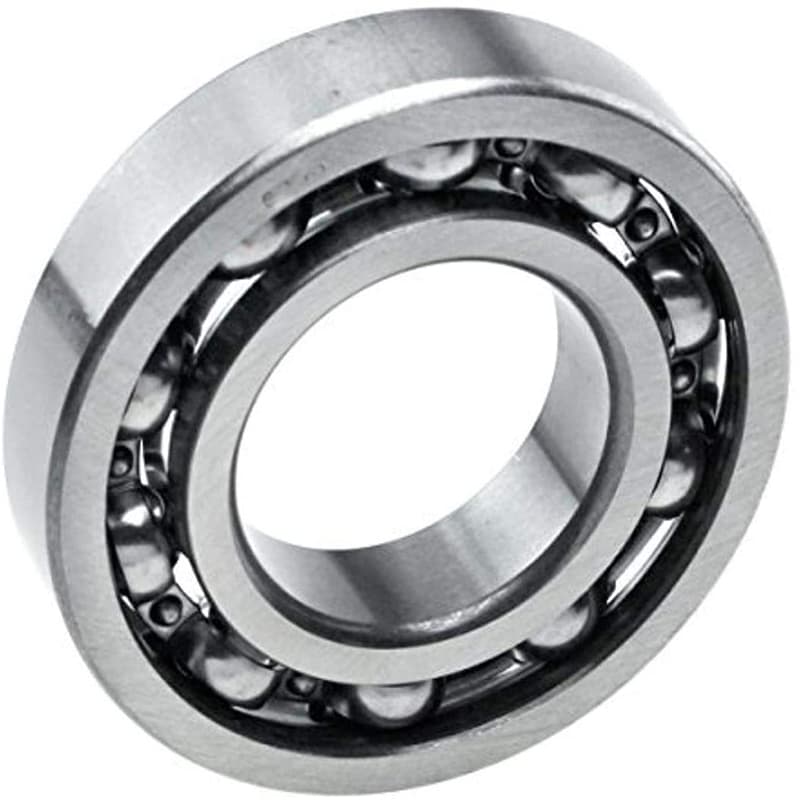
You might think all bearings that look the same are the same inside. But I can tell you from years of factory testing – they are not. The difference shows up after a few thousand hours. So let me walk you through four questions that every buyer should ask before placing an order. I will share real examples from our customers in India, Turkey, and Brazil. These questions will save you money and headaches.
1. What Makes a Deep Groove Ball Bearing “Cost-Effective” in Real Production Terms?
I often hear buyers say: “This bearing is cheaper, so I will buy it.” But cheaper at purchase is not cheaper in production. I have seen that mistake too many times.
A cost-effective bearing is one that gives you the lowest total cost per operating hour. That means longer life, fewer replacements, less downtime, and lower maintenance labor. It is never about the unit price alone.
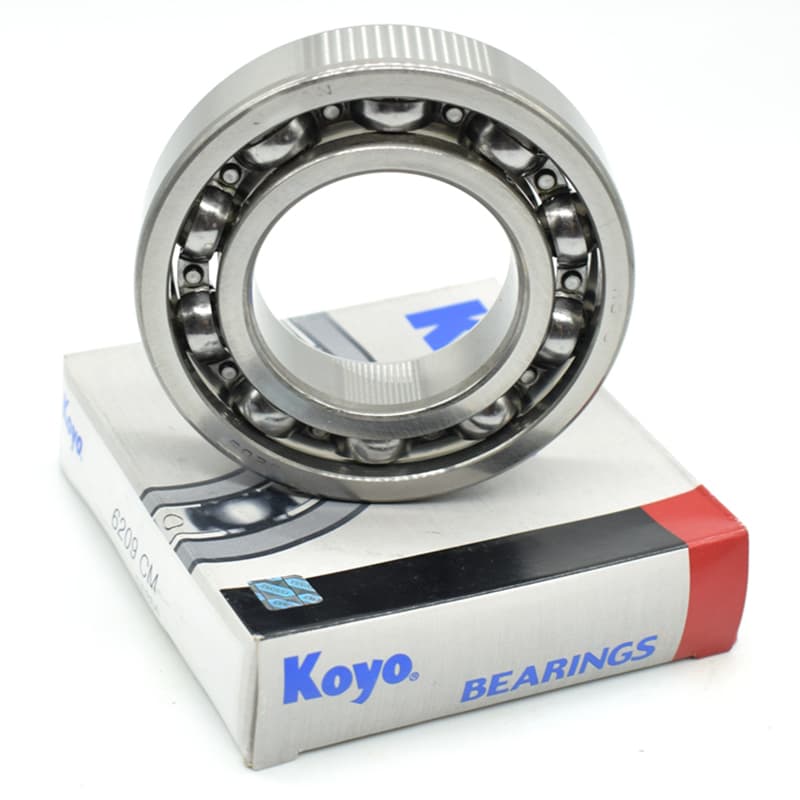
Total Cost of Ownership – the only number that matters
Let me break down the real cost of a bearing. You pay for the part. But you also pay for the installation time, the production loss during replacement, the new grease, and the risk of secondary damage if the bearing fails catastrophically. I have calculated this with many of my clients. For a standard 6205 bearing used in a conveyor motor, the part price might be $2. But if it fails after 3 months, you spend 1 hour of labor ($30), lose 2 hours of production ($500), and maybe damage the shaft ($100). That makes the true cost over $600. Now if you buy a better bearing for $3.50 that lasts 18 months, you replace it once every 1.5 years. The total cost is much lower.
Downtime costs more than the bearing itself
I remember a customer in Egypt who ran a bottling line. They used cheap bearings from a local trader. Each bearing cost $1.80. But every month, they had to stop the line for 45 minutes to change a failed bearing. The line produced 12,000 bottles per hour. That 45-minute stop cost them $900 in lost output. They called me for help. We supplied a bearing with better steel and proper seals at $2.80 each. The failure interval went from 1 month to 14 months. In one year, they saved over $10,000 in downtime. That is what I call cost-effective.
Lifetime value vs. purchase price
I always tell my customers: compare the lifetime hours. A bearing rated for 8,000 hours at a given load will outlast one rated for 3,000 hours, even if it costs 50% more. Do the math. If a $2 bearing runs 3,000 hours, you pay $0.00067 per hour. If a $3 bearing runs 8,000 hours, you pay $0.000375 per hour. The second is cheaper in the long run. And it gives you peace of mind. That is the real meaning of cost-effective.
A simple table to guide your decision
| Cost Factor | Cheap Bearing | Quality Bearing |
|---|---|---|
| Unit price | $2.00 | $3.50 |
| Expected life (hours) | 3,000 | 12,000 |
| Replacement labor per year | $120 | $30 |
| Downtime loss per year | $600 | $150 |
| Total annual cost | ~$730 | ~$185 |
You can see the difference. So next time you evaluate a supplier, ask them for the L10 life at your actual load. That number tells you more than any price quote.
2. Which Precision Grade (P0, P6, or P5) Gives You the Best Return for Your Money?
Every bearing catalog shows the tolerance class. But many buyers ignore it. They just order the cheapest grade. That can be a costly shortcut.
For most industrial applications like conveyors, fans, and agricultural machinery, P0 (normal) is sufficient. For higher speeds or lower vibration requirements, P6 gives a clear improvement without a big price jump. P5 is only necessary for precision spindles or high-speed motors.
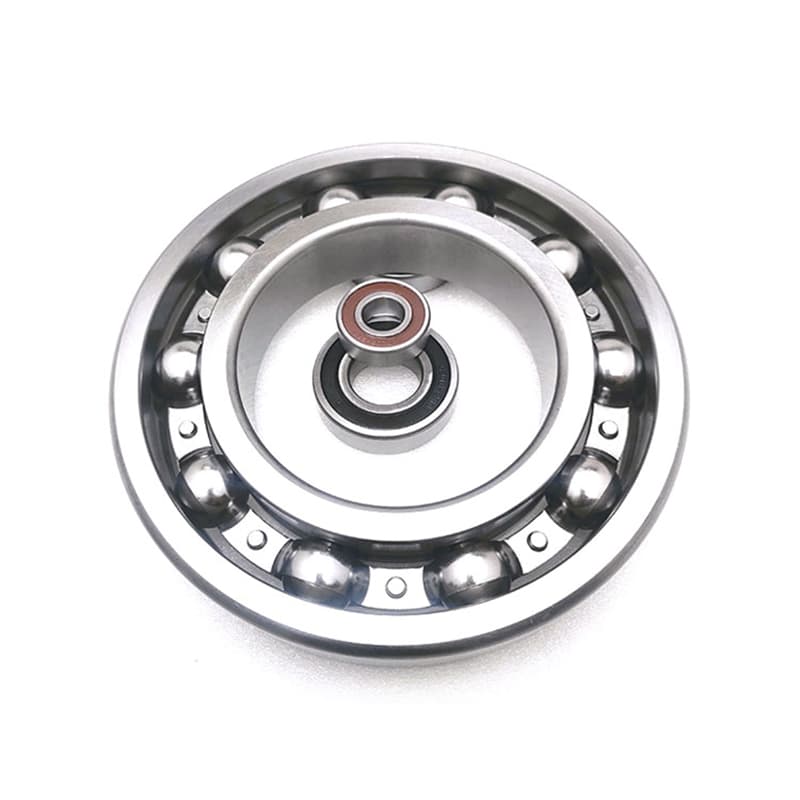
What do the grades actually mean?
The ISO standard defines tolerance grades: P0, P6, P5, P4, and P2. Each grade has tighter limits on inner diameter, outer diameter, runout, and width. P0 is the standard commercial grade. P6 has about half the allowable runout of P0. P5 is even tighter. But tighter tolerances require more grinding steps and more expensive measuring equipment. That raises the cost. The question is: do you need that extra precision?
Where P0 works perfectly
I have supplied P0 bearings to many cement plants, textile mills, and food packaging lines. These machines run at moderate speeds (under 3,000 RPM) and have generous bearing housings. The load is steady. In these cases, P0 bearings give reliable service and the lowest cost. I often recommend P0 for pillow block units and standard conveyor rollers.
When P6 makes sense
If your equipment runs at 5,000–8,000 RPM, or if you have vibration-sensitive devices like pumps or small motors, P6 is a good step up. The tighter runout reduces vibration and noise. It also improves load distribution among the balls. This can extend fatigue life by 10–15%. The price increase from P0 to P6 is usually around 15–20%. That is a small premium for a noticeable performance gain. Many of our customers in Turkey prefer P6 for their electric motor bearings.
P5 and above – only for special needs
I only recommend P5 for CNC spindles, high-speed dental drills, or measuring instruments. These run at over 15,000 RPM and need extreme balance. For most bottling lines, agricultural equipment, and automotive repairs, P5 is overkill. You pay 50–100% more but you do not see any benefit in daily operation. So my rule: choose P0 for general use, choose P6 if speed or noise is a concern, and choose P5 only if the original equipment manufacturer specifies it.
Quick comparison table
| Grade | Radial runout (max) | Typical speed range | Recommended use | Cost factor |
|---|---|---|---|---|
| P0 | Normal | Up to 4,000 RPM | General machinery | 1.0x |
| P6 | ~50% of P0 | 4,000 – 8,000 RPM | Motors, pumps, fans | 1.2x |
| P5 | ~30% of P0 | Above 10,000 RPM | Spindles, precision tools | 1.6x |
In my experience, most importers and distributors like you (Rajesh) stock P0 and P6 in large volumes. That covers 90% of your customer needs.
3. How Do Steel Quality and Heat Treatment Affect Long-Term Durability Without Raising Costs?
I have opened bearings from different suppliers and looked at the raceways under a microscope. The ones with poor steel show non-metallic inclusions and uneven hardness. Those are the ones that fail early.
High-quality bearing steel (like GCr15 or SAE 52100) with proper through-hardening and stable tempering gives consistent hardness (HRC 60–64) and fine grain structure. This doubles the fatigue life compared to low-grade steel with poor heat treatment, while the material cost difference is only 5–10%.
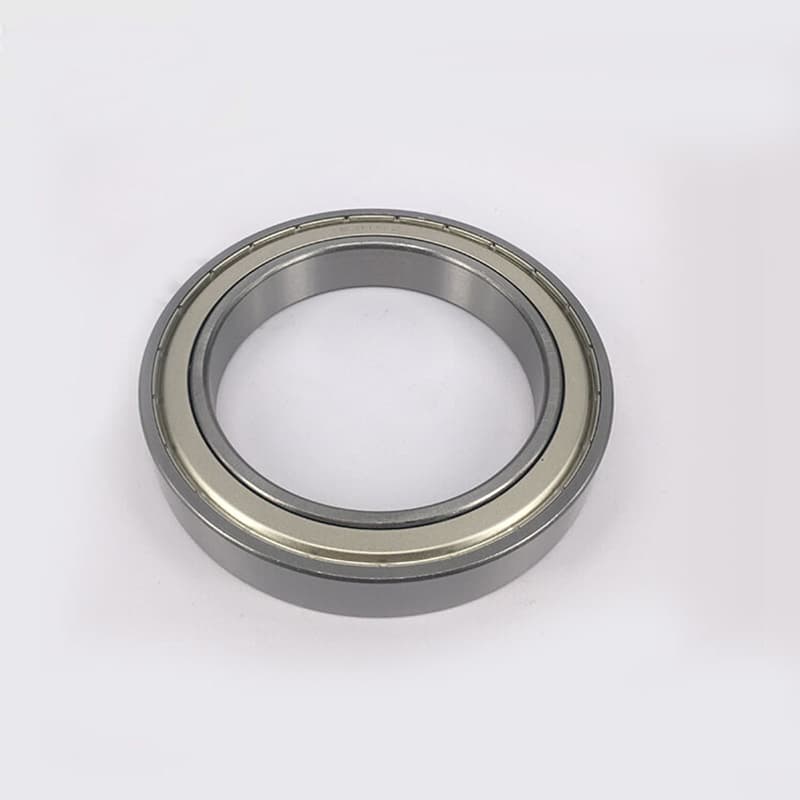
Steel cleanliness matters more than you think
The raw steel must have low oxygen content and few inclusions. Inclusions are tiny bits of oxide or sulfide that act as stress concentrators. Under rolling contact, a crack starts at an inclusion and spreads. I have seen bearings fail after 500 hours because of a single large inclusion. Good steel suppliers use vacuum degassing and continuous casting to reduce inclusions. We test every batch with a scanning electron microscope. We also check the carbide size – fine, spheroidized carbides are best for rolling contact.
Heat treatment – the make-or-break step
Even the best steel is useless if the heat treatment is wrong. The bearing rings and balls go through quenching and tempering. The target hardness is 60–64 HRC for the rings and 62–66 HRC for the balls. If the hardness is too low, the raceway will indent under load. If it is too high, the ring becomes brittle and may crack. The tempering process must be stable to relieve internal stresses. We use continuous furnaces with precise temperature control. Each batch undergoes a hardness test on three positions – top, middle, bottom. We also run a microstructure check to ensure the martensite structure is fine and uniform.
The cost difference is surprisingly small
Many buyers think good steel and proper heat treatment are expensive. In reality, the extra cost per bearing is pennies. The steel itself costs about 5–8% more for a premium grade. The heat treatment process is the same – it just needs better monitoring. A supplier who cuts corners on heat treatment might save $0.10 per bearing. But they will pay for it in warranty claims and lost reputation. I always advise my customers to ask for the hardness certificate and the inclusion rating. If the supplier cannot provide these, walk away.
Real example from our production
We once had a customer in South Africa who complained about our price being 12% higher than a competitor. We sent him samples from both suppliers. He ran them on a life test machine with a radial load of 5 kN at 3,600 RPM. Our bearings ran for 1,200 hours before the first sign of spalling. The competitor’s bearings failed at 700 hours. He calculated the cost per hour and chose us. That is because our heat treatment produces a deeper effective case depth and a more uniform residual stress profile. I have the test data in our lab. You are welcome to visit our factory and see for yourself.
Quick summary table
| Quality factor | Premium steel + good HT | Low-grade steel + poor HT |
|---|---|---|
| Hardness (HRC) | 61–63 stable | 58–62 uneven |
| Inclusion level | < 1.0 (fine) | > 2.0 (large) |
| Fatigue life (relative) | 1.0 | 0.4–0.6 |
| Cost increase per bearing | +5–10% | base |
The investment in quality steel and heat treatment is the cheapest insurance you can buy.
4. When Should You Choose a Custom Bearing Instead of a Standard One for Bulk Orders?
Many buyers assume custom bearings are always more expensive. But sometimes, a small modification can solve a recurring problem and save money in the long run.
Choose a custom bearing when your operating conditions – like high temperature, frequent washdown, heavy shock loads, or special mounting – are not covered by standard catalog options. A custom seal, internal clearance, or lubrication can extend life by 2–3 times with minimal extra cost.
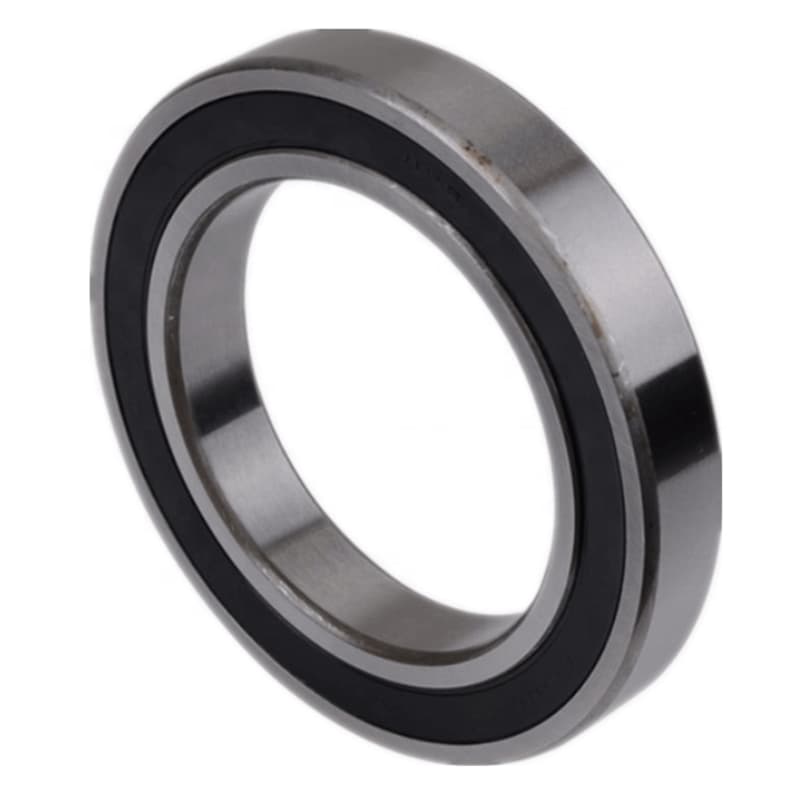
What can be customized?
The most common custom requests I handle are:
- Internal clearance – C3, C4, or even C5 for high interference fits or thermal expansion.
- Seal type – change from RS to FKM seals for chemical resistance, or to non-contact seals for high speed.
- Grease fill – choose a high-temperature or food-grade grease.
- Coating – zinc-nickel or black oxide for extra corrosion protection.
- Dimension – non-standard outer diameter, inner diameter, or width to fit older equipment.
These changes do not require a complete redesign. They are small adjustments in our production line. The cost increase is usually 10–30%, depending on the complexity.
When custom is cheaper than frequent replacement
Let me give you a real story. A juice producer in Vietnam had frequent failures on a filler head bearing. The standard 6204-2RS with CN clearance died every two months because of high temperature and moisture. We suggested a custom version: 6204-2RS with C4 clearance, FKM seals, and high-temp synthetic grease. The unit price went from $2.10 to $2.80. But the bearing now runs for over 16 months. That is a 700% life increase for a 33% price increase. The customer saved a fortune on labor and downtime. So in that case, custom was far more cost-effective.
Bulk orders make custom even more attractive
If you order a full container (say 5,000 pieces), the setup cost for a custom modification is spread over many units. The per-piece increase becomes very small. I have worked with distributors who place annual orders of 3–5 containers. They often ask for a custom clearance or seal on a specific size that their local repair shops need. That gives them a competitive advantage because no other supplier stocks that exact variant.
How to decide – a simple checklist
Before you go custom, ask yourself these questions:
- Is the standard bearing failing too soon in my application? (Yes → consider custom)
- Does the failure happen consistently in the same way? (Yes → we can target that cause)
- Am I ordering at least a few hundred pieces? (Yes → custom cost is manageable)
- Can the supplier provide engineering support? (Yes → talk to them)
If you answer yes to all four, custom is the right path. I encourage you to send me your drawings and failure photos. Our engineering team will propose a modified design and run a sample test. That service is free for our B2B customers.
Standard vs. custom – a quick cost-benefit table
| Factor | Standard bearing | Custom bearing (moderate) |
|---|---|---|
| Unit price | $2.00 | $2.40–$2.60 |
| Expected life | 4,000 hours | 12,000 hours |
| Replacement frequency | 3 times/year | 1 time/year |
| Annual downtime cost | $900 | $300 |
| Net annual savings | – | $600+ |
So do not dismiss custom without calculating the numbers.
Conclusion
Choosing a cost-effective bearing means looking beyond the price tag. Evaluate total cost, pick the right precision grade, insist on good steel and heat treatment, and consider custom options when needed.