
Your roller beds keep jamming. Your transfer tables break down too often. I see this problem every day with my customers.
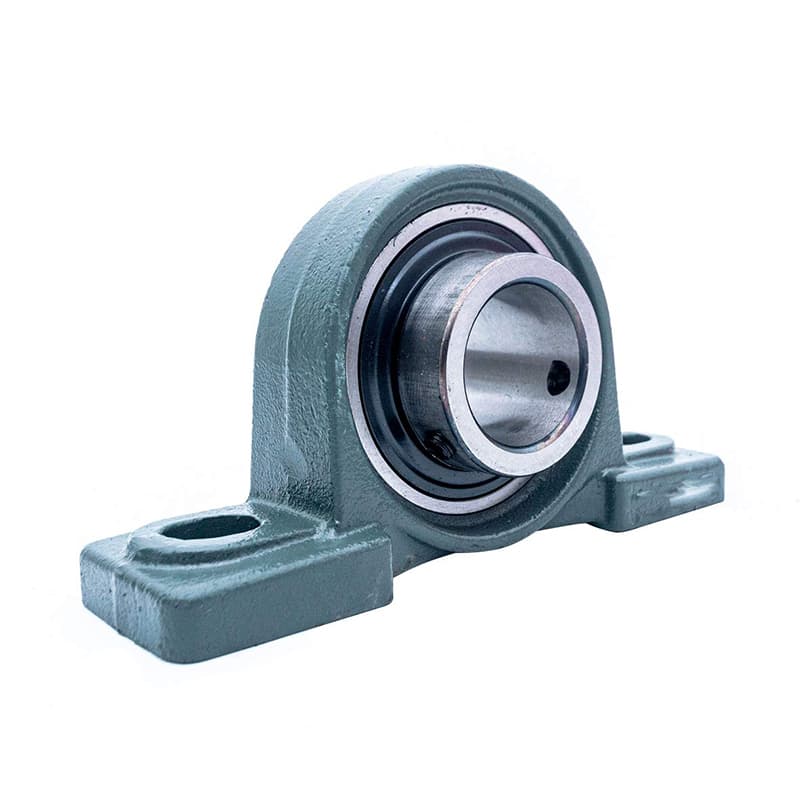
Pillow block bearings support rotating shafts in heavy-duty conveyor systems. They handle radial and axial loads. They also keep your roller beds running smoothly for years.
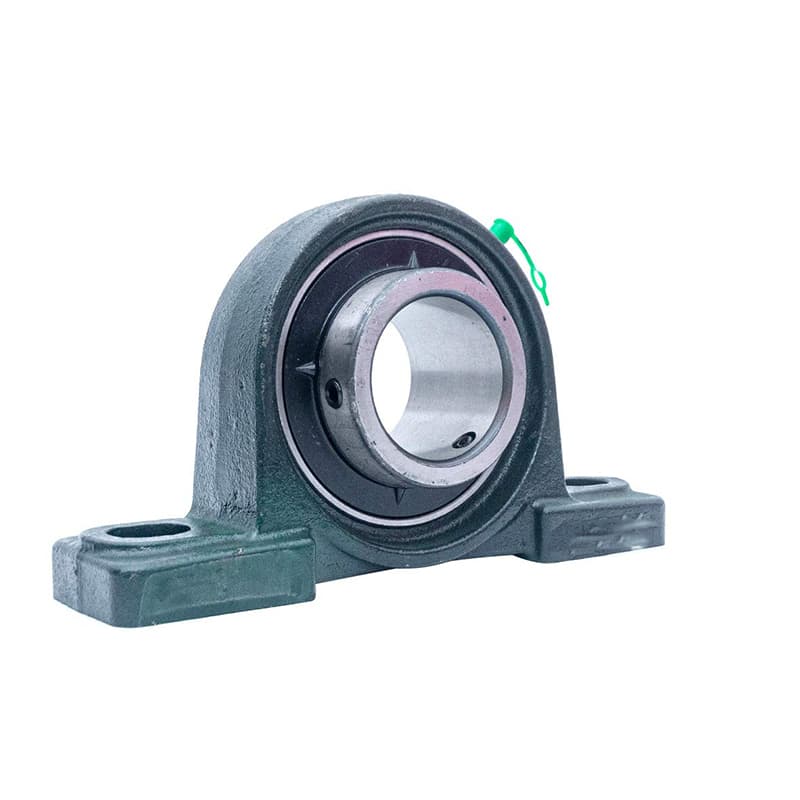
Let me explain why these bearings work so well for material handling. I have sold thousands of them to factories in India, Turkey, and Brazil. My name is Leo from FYTZ Bearing. We make these bearings in our own factory in China. Today I will share what I have learned from working with buyers like Rajesh from Mumbai.
What Are the Key Benefits of Pillow Block Bearings in Roller Bed Conveyors?
Your conveyor stops working. That means your whole production line stops. You lose money every minute.
Pillow block bearings reduce downtime. They are easy to replace. They also take heavy loads without failing. That is why most roller bed makers choose them.
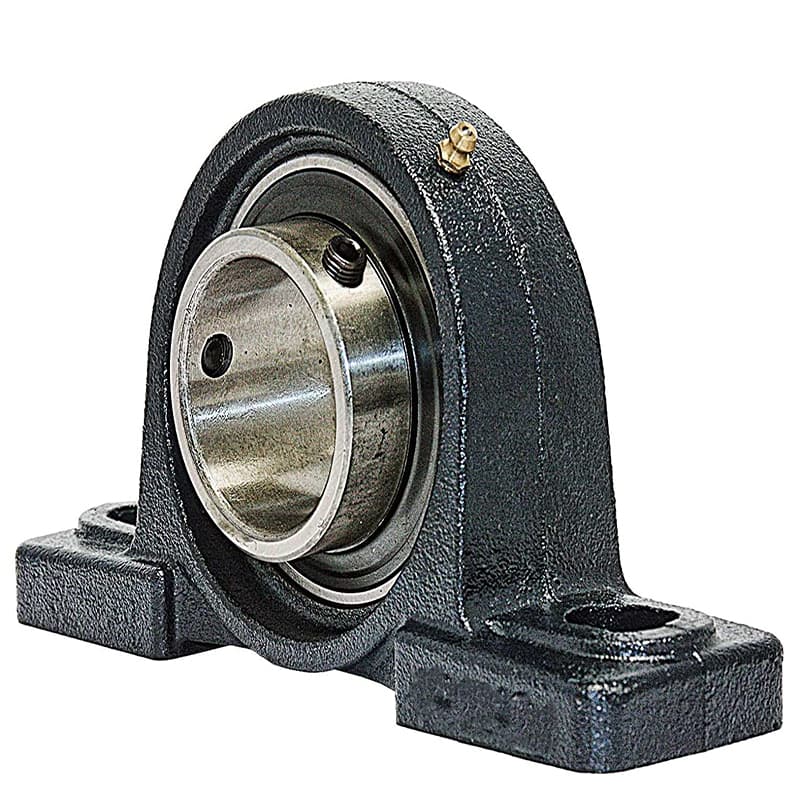
Three Main Advantages for Your Roller Beds
Let me break this down simply. I have supplied pillow block bearings to over 50 roller bed manufacturers. Here is what they care about most.
| Benefit | What It Means for Your Roller Bed | Real Example |
|---|---|---|
| High load capacity | The bearing can take heavy boxes or pallets without bending | One customer in Egypt runs 20 hours a day with 500 kg per roller |
| Self-alignment | The bearing adjusts if your shaft is a little crooked | Saves you from perfect alignment every time |
| Easy mounting | You just bolt the housing onto the frame | No special tools needed. My team in Russia loves this |
Load capacity matters most. Your roller beds might carry cement bags or steel pipes. A standard deep groove ball bearing will fail fast. But a pillow block bearing has a strong cast iron housing. It protects the inner bearing from shock loads. I once worked with a buyer in Vietnam. His old bearings broke every two weeks. After switching to our FYTZ pillow block units, he got six months of non-stop work.
Self-alignment saves you money. Shafts are never perfectly straight. That is just the truth. A rigid bearing will overheat. It will make noise. Then it will seize. But a spherical insert inside the pillow block housing can tilt up to 2 degrees. That small movement keeps everything running cool. One of my distributor partners in Indonesia told me: “Leo, we cut our maintenance time by half after using your self-aligning units.”
Easy mounting helps your workers. You do not need a press or a heater. Just slide the bearing onto the shaft. Then bolt the housing down. That is it. I remember visiting a workshop in Pakistan. The mechanic replaced a pillow block bearing in 15 minutes. He said: “The old type took me an hour.” Time is money. Your team will thank you.
These three benefits work together. High load capacity keeps the bearing alive. Self-alignment reduces stress. Easy mounting speeds up repairs. So if you run roller beds with heavy or continuous loads, pillow block bearings are the smart choice.
How Do You Select the Right Pillow Block Bearing for Material Transfer Tables?
You look at a catalog. You see hundreds of options. Which one fits your transfer table? You feel lost.
Start with the shaft diameter and load type. Then check the housing material and sealing. For most transfer tables, a standard cast iron unit with a triple-lip seal works best.
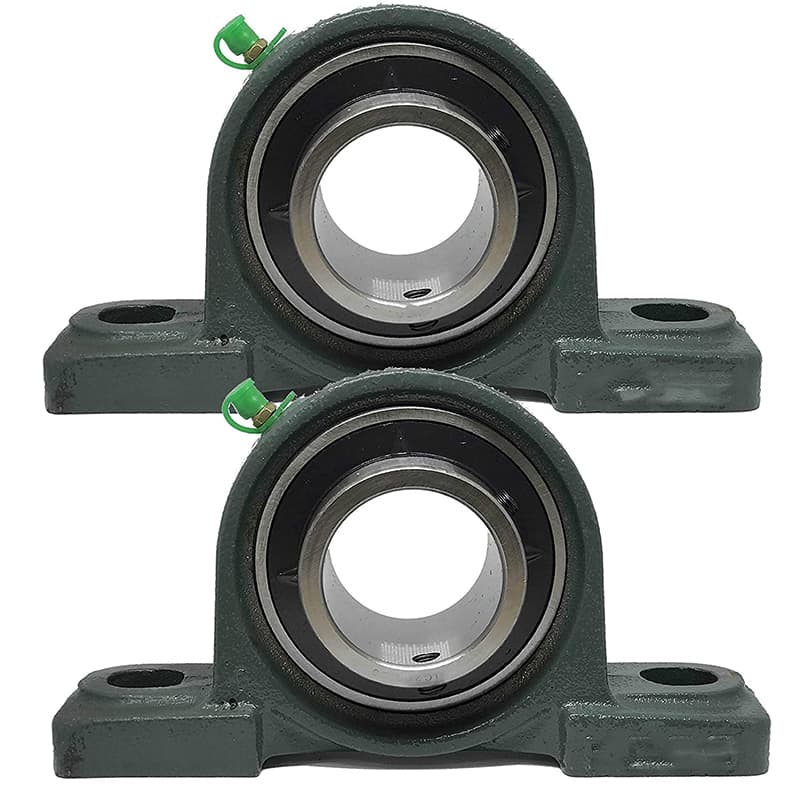
A Simple Selection Guide for Procurement Managers
I talk to buyers like Rajesh every week. They ask: “Leo, which model should I buy?” Here is my step-by-step method. I will use a table to make it clear.
| Selection Factor | What to Check | My Recommendation for Transfer Tables |
|---|---|---|
| Shaft diameter (d) | Measure your existing shaft in mm | Common sizes: 20mm, 25mm, 30mm, 40mm |
| Load direction | Radial (downward) or axial (side) | Transfer tables mostly need radial load capacity |
| Speed | How fast your table moves | Low speed (under 500 RPM) is typical |
| Environment | Dust, water, heat? | Use rubber seals for dusty areas |
| Housing type | Take-up, flange, or standard pillow block | Standard pillow block is easiest for tables |
Step one: measure your shaft. This is the most common mistake. Buyers order a bearing with the wrong inner diameter. Then it does not fit. Use a caliper. Measure in millimeters. For most transfer tables, shafts are 25mm or 30mm. Our FYTZ stock includes sizes from 12mm to 100mm. But I suggest you measure twice before ordering.
Step two: understand your load. A material transfer table usually has boxes or parts moving across it. The weight pushes straight down. That is a radial load. Pillow block bearings handle radial loads very well. But some tables also have side pushes from guides. That is an axial load. If your table has side forces, choose a bearing with a wider inner ring. It can take more axial force.
Step three: check your environment. I have seen transfer tables in cement factories. Dust gets everywhere. In that case, you need good seals. A triple-lip rubber seal keeps dust out. For wet areas like food processing, use a stainless steel housing. For normal workshops, a cast iron housing with a standard seal is fine. My customer in Brazil washes his tables every day. He uses our contact seal bearings. No water gets inside.
Step four: decide on precision class. Most transfer tables do not need high precision. Class P0 or P6 is enough. P5 is for high-speed machines like spindles. Do not pay extra for precision you do not need. I always tell my customers: “Buy what fits your real use.” That saves money.
Follow these four steps. You will get the right bearing. And if you are not sure, email me at sales@fytzbearing.com. I will help you match the model.
What Are the Common Mounting Configurations for Roller Bed Applications?
You have the bearing. Now you need to put it on the roller bed. But where does it go? On the side or under the roller?
Most roller beds use two bolt holes on the housing feet. You bolt the bearing to the side frame. The shaft goes through the roller. Then you lock the bearing with a set screw.
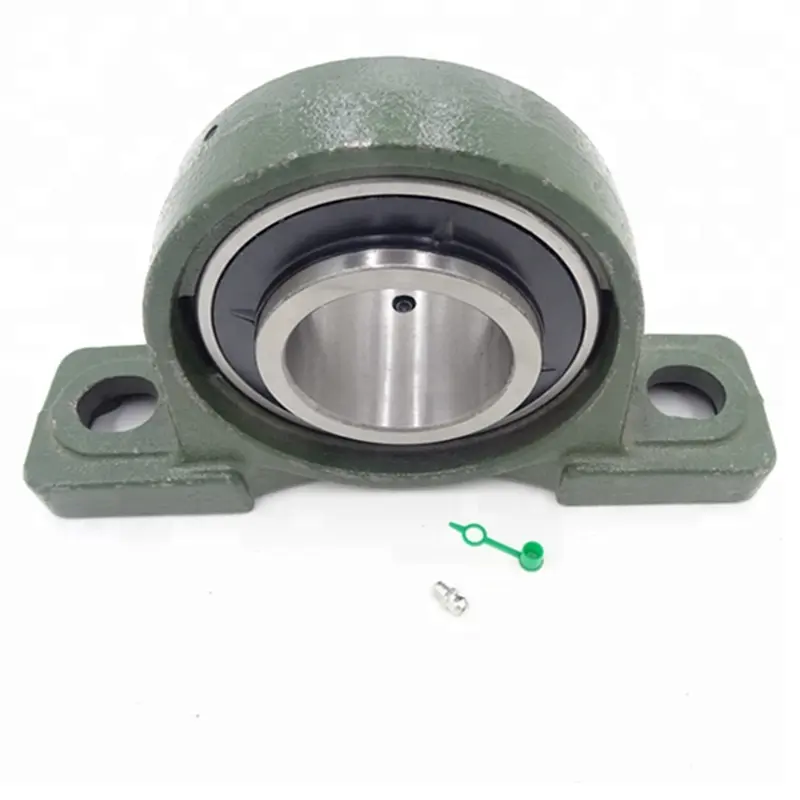
Four Mounting Setups for Different Roller Beds
I have visited many factories. Each one mounts bearings a little differently. But most fall into four types. Let me explain each one with a simple table.
| Mounting Type | Where the Bearing Sits | Best For | Locking Method |
|---|---|---|---|
| Side mount | Bolted to the vertical side frame | Standard roller beds with long shafts | Eccentric locking collar |
| Top mount | Bolted to a flat plate above the roller | Heavy-duty tables with large rollers | Set screw on inner ring |
| Flanged mount | Bolted through a flange plate | End rollers or transfer tables with limited space | Taper sleeve adapter |
| Take-up mount | Slots for tension adjustment | Belt-driven roller beds or chain conveyors | Grease fitting and sliding base |
Side mount is the most common. You see this on almost every roller bed. The pillow block housing has two bolt holes on its base. You bolt it to the angle iron or channel on the side. The shaft goes from one bearing to the roller, then to the next bearing. I recommend this for straight roller beds. It is simple. Your workers can replace a bearing without removing the whole roller.
Top mount gives more strength. Some heavy-duty tables have big rollers. The weight pushes down hard. A side mount might bend over time. So you put the bearing on top of a flat bar. The load goes straight down into the frame. I supplied this setup to a steel mill in Turkey. Their rollers weighed 200 kg each. Top mount bearings lasted three times longer than side mount.
Flanged mount saves space. Sometimes your roller bed has a tight design. There is no room for a standard foot. Then you use a flanged pillow block. The housing has four bolt holes on a square flange. You bolt it directly to a cross member. This works well for the ends of transfer tables. One of my Egyptian customers used flanged units on a packaging line. It fit perfectly into a small corner.
Take-up mount adjusts tension. If your roller bed uses a belt or chain, the shafts need to move. A take-up bearing sits in a slotted frame. You turn a screw to push the bearing forward. This tightens the belt. Many material transfer tables with side guides use this. I remember a buyer from South Africa. His chain kept falling off. We sold him take-up pillow blocks. He adjusted the tension once a week. No more chain problems.
Choose your mounting based on your frame design. If you are still unsure, send me a photo of your roller bed. I will tell you which mount works best.
How Can You Prevent Downtime with Maintenance Tips for High-Throughput Transfer Tables?
Your transfer table runs 16 hours a day. Then one bearing fails. You stop the whole line. Your boss gets angry.
Check your bearings every month. Listen for noise. Feel for heat. Add grease every 500 hours. Replace the bearing when you hear grinding sounds.
A Simple Maintenance Schedule for Busy Workshops
I learned these tips from my own customers. They run high-throughput tables in India, Russia, and Brazil. Here is what works.
| Maintenance Task | How Often | What to Look For | Action Needed |
|---|---|---|---|
| Visual check | Every day | Rust, cracks in housing, loose bolts | Tighten or replace immediately |
| Listening test | Twice a week | Squeaking, rumbling, clicking | Add grease. If noise stays, replace bearing |
| Temperature check | Weekly | Housing feels too hot to touch (over 70°C) | Check alignment and lubrication |
| Re-greasing | Every 500 hours | Old grease color (black means contamination) | Pump new grease until old comes out |
| Full replacement | Every 12-18 months | End of service life for standard units | Order spare bearings in advance |
Listen to your bearings. This is the easiest method. Walk past your transfer table. Do you hear a steady hum? That is good. Do you hear a squeak or a rumble? That is bad. One of my distributor partners in Vietnam told me: "Leo, we trained our workers to use their ears. Now they spot problems two weeks before failure."You do not need fancy tools. Just your ears [web:156].
Feel the heat. A healthy pillow block bearing runs warm but not hot. If you cannot keep your hand on the housing for five seconds, it is too hot. That means too much friction. The cause is often bad alignment or old grease. Fix it fast. Heat kills bearings quickly. Operating temperature should be from 50-75°C [web:156]. I once had a customer in Pakistan who ignored a hot bearing. Three hours later, the shaft seized. He lost a full day of production.
Grease the right way. Many people put too much grease. That is also bad. Extra grease creates pressure. It pushes past the seals. Then dust gets in. So use a grease gun. Pump slowly. Stop when you see fresh grease coming out of the seal. For most transfer tables, use a lithium-based grease with NLGI grade 2. That works in normal temperatures from -20°C to +120°C [web:155].
Keep spares on hand. This is the most practical tip. High-throughput tables cannot wait for a bearing to ship from China. I always tell my buyers: "Order one extra set for every five bearings you use."Keep them in a clean, dry box. When a bearing fails, you replace it in 15 minutes. No waiting. No expensive air freight. Rajesh from Mumbai follows this rule. He told me it saved him from three production stops last year.
Follow these four maintenance steps. Your transfer table will run longer [web:156]. Your boss will be happy. And you will save money.
Conclusion
Pillow block bearings keep roller beds and transfer tables working. Pick the right type, mount it correctly, and check it often.