
Your plant stops too often. A broken bearing shuts down a whole line. You wait hours for the right replacement.
Standardizing pillow block bearing models cuts downtime by up to 60%. You keep fewer spare parts. Your workers fix any machine faster. And you never guess which bearing goes where.
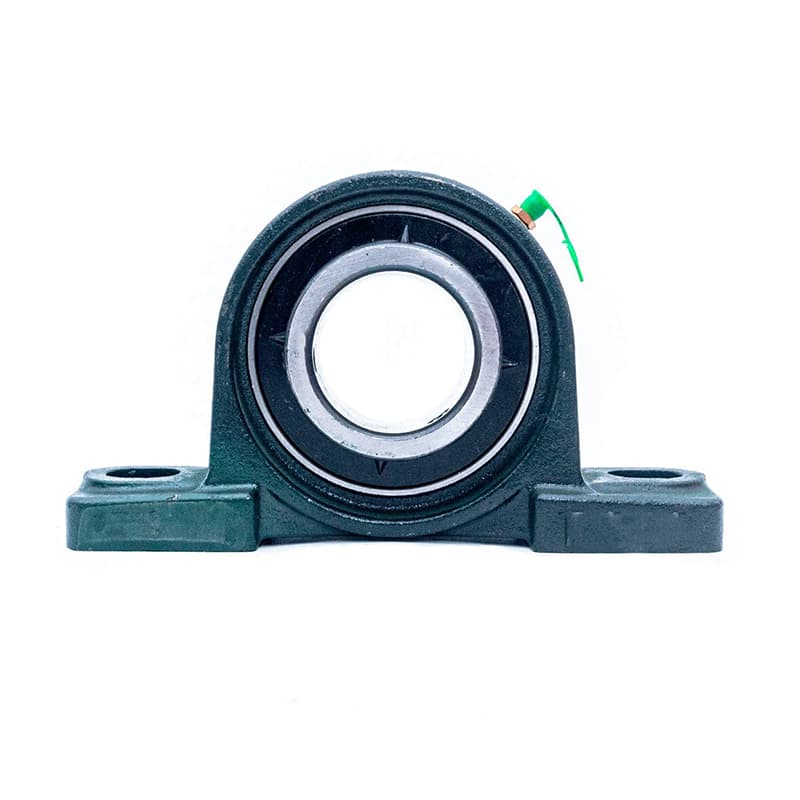
I see this problem every week. A customer calls me. He says: “Leo, my production line stopped. The bearing failed. But I have ten different pillow block models in my warehouse. I do not know which one fits.” That is a mess. I am Leo from FYTZ Bearing. We make bearings in China. I have helped factories in India, Turkey, and Russia fix this problem. Today I will show you how to standardize your pillow block bearings. You will save money and time.
Why Too Many Bearing Models Hurt Your Production Line?
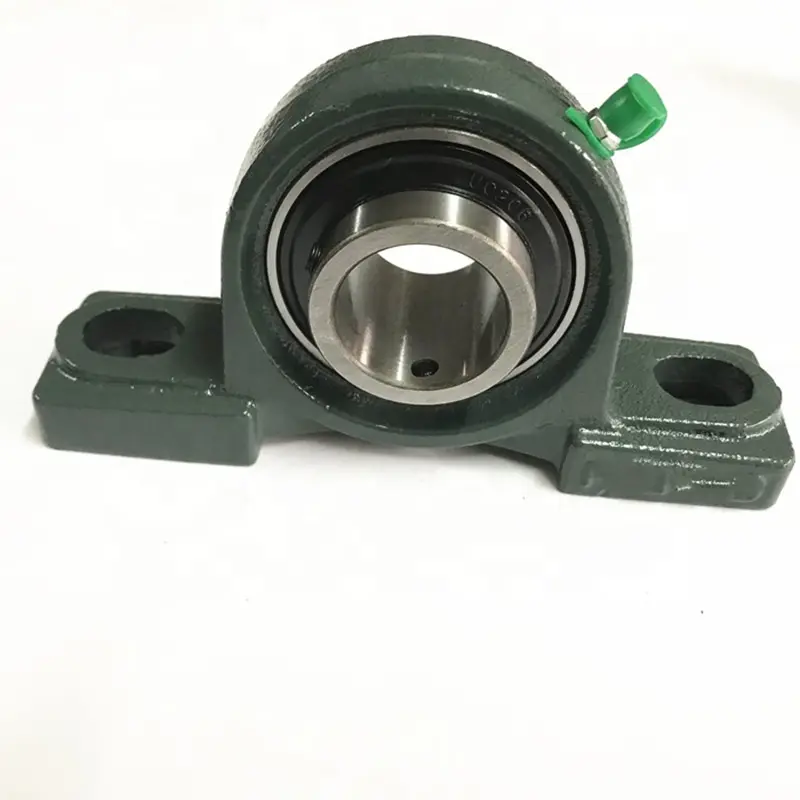
You open your spare parts cabinet. You see 15 types of pillow block bearings. Some are from different brands. Some have different bolt holes. Some use different locking methods. You feel confused.
Too many models create slow repairs, high inventory costs, and more mistakes. Your workers grab the wrong bearing. Then the machine stays broken for hours longer than needed.
Three Ways a Large Bearing Variety Hurts You
I have walked through many factory warehouses. I see the same problems again and again. Let me break them down with a simple table.
| Problem | What Actually Happens | Real Cost to Your Plant |
|---|---|---|
| Slower repairs | Workers search for the right model. They test fit three wrong ones first. | 45 extra minutes of downtime per breakdown |
| Higher inventory | You keep safety stock for every model. That ties up your money. | 30% more money stuck on the shelf |
| More ordering errors | Your purchase team orders the wrong replacement. Then you wait for new shipment. | One week of extra delay from a simple mistake |
Slower repairs hurt you the most. I remember a factory in Egypt. They made cement bags. A pillow block bearing failed on a roller bed. The maintenance man went to the warehouse. He pulled out a bearing. It did not fit. He went back. He pulled out another. Same problem. He wasted two hours just finding the right part. The whole line stayed down. That is lost production. If they had only one or two models, he would have fixed it in 20 minutes.
Higher inventory costs sneak up on you. Let me explain with numbers. Suppose you need 100 pillow block bearings in total for all your machines. If you use 10 different models, you must keep spares for each one. That means you might have 10 to 20 bearings per model. That adds up to 100 to 200 bearings in stock. But if you standardize down to 2 models, you only keep spares for those two. Your total stock drops to maybe 40 bearings. You free up warehouse space. And you free up cash.
More ordering errors happen all the time. A buyer like Rajesh from India gets a rush order. He looks at a worn bearing. The number is scratched off. He guesses the model. He orders ten pieces. They arrive. They do not fit. Now he has useless bearings. He must order again. The machine stays down another week. That is why I tell all my customers: simplify your models. It makes purchasing much easier.
So here is my advice. Take a full inventory of all your pillow block bearings. Write down every model number. Then find out which ones cover 80% of your machines. Keep only those. Get rid of the rest. You will see a big difference.
A Simple 4-Step Plan to Standardize Your Pillow Block Bearings?
You want to standardize. But you do not know where to start. The job feels too big. You think it will take months.
Follow four steps. First, list all your machines. Second, group bearings by shaft size. Third, pick one housing type. Fourth, choose one locking method. That is it.
The Step-by-Step Method I Use with My Customers
I have helped over 30 factories reduce their bearing types. Here is my exact process. I will use a table to show each step clearly.
| Step | Action | Tools You Need | Typical Time |
|---|---|---|---|
| Step 1 | Walk your plant. Write down every machine that uses pillow block bearings. | Notebook, camera, measuring tape | One day |
| Step 2 | Measure shaft diameter on each machine. Group by common sizes (20mm, 25mm, 30mm, 40mm). | Caliper | Half a day |
| Step 3 | Look at housing mounting holes. Pick the most common bolt pattern (usually 2-bolt or 4-bolt). | Ruler, bolt gauge | Half a day |
| Step 4 | Check locking method. Choose either set screw or eccentric collar. Stick with one. | Visual check | Two hours |
Step one is simple but important. I tell my customers: "Do not guess. Go look."Take your maintenance team. Walk to every conveyor, every transfer table, every roller bed. Write down the bearing model if you can read it. If not, measure the shaft. Take photos. One of my buyers in Pakistan did this. He found he had bearings from four different countries. Some were metric. Some were inches. No wonder his repairs were slow.
Step two focuses on shaft size. This is the most critical measurement. Most industrial machines use metric shafts. Common sizes are 20mm, 25mm, 30mm, and 40mm. You might also see 15mm or 50mm. Count how many machines use each size. Then decide on two or three sizes to keep. For example, keep 25mm and 40mm. For any machine with a different size, plan to change the shaft or the bearing housing next time you do a major rebuild.
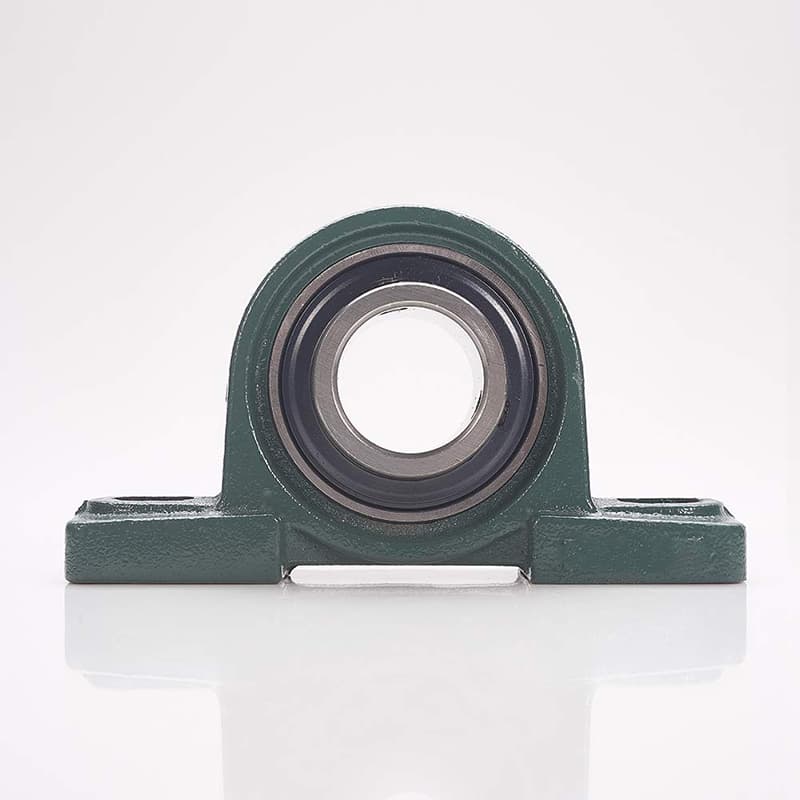
Step three simplifies the housing. Pillow block bearings come with different bolt hole patterns. The standard one is two bolt holes on the base. The holes are usually 10mm to 16mm in diameter. Some heavy-duty bearings have four bolt holes. Pick the type that covers most of your machines. For a typical factory, the two-bolt standard housing works fine. I supplied these to a factory in Vietnam. They replaced all odd types over six months. Now every bearing fits every machine.
Step four locks it down. There are two common ways to lock a pillow block bearing onto the shaft. One is a set screw. You tighten one or two screws into the shaft. The other is an eccentric locking collar. You turn a collar that grabs the shaft. I personally prefer set screws for most roller beds. They are easier for your workers to understand. Tell your team: "We use set screw bearings only."Then buy only that type.
Follow these four steps. You will cut your bearing types by at least half. Do it within one month. Then enjoy faster repairs.
Which Bearing Sizes and Types Should You Keep in Stock?
You decide to standardize. But now you must choose. Which sizes do you buy? How many of each? You do not want to run out. But you also do not want too much stock.
Keep three shaft sizes that cover 90% of your machines. For each size, stock 5 to 10 units. Choose a standard-duty housing with set screw locking. That is enough for most plants.
A Practical Inventory Guide for Plant Managers
I work with many procurement managers. They ask me: "Leo, give me a simple rule."Here it is. I will use a table to show recommended stock levels for a medium-sized plant.
| Shaft Size (mm) | Where It Is Used | Recommended Stock Quantity | Reorder Point |
|---|---|---|---|
| 20 mm | Small roller beds, light transfer tables | 5 units | When down to 2 units |
| 25 mm | Most common size for medium conveyors | 10 units | When down to 4 units |
| 30 mm | Heavy-duty roller beds, large tables | 8 units | When down to 3 units |
| 40 mm | Very heavy loads, steel mills | 4 units | When down to 1 unit |
Why three sizes are enough. I learned this from a factory in Russia. They made car parts. They had 12 different bearing sizes. After analysis, they found that 25mm and 30mm covered 85% of their machines. The other sizes were rare. So they kept only 25mm and 30mm in stock. For the rare machines, they ordered bearings only when needed. That saved them 40% on inventory costs. You can do the same.
How many to keep in stock. Let me give you a simple formula. For each size, take the number of machines that use that size. Then divide by 10. That is how many spares you need. For example, if you have 50 machines with 25mm shafts, keep 5 spare bearings. That covers most sudden failures. Why? Because bearings usually fail slowly. You will hear noise or feel heat before they break. That gives you time to order more.
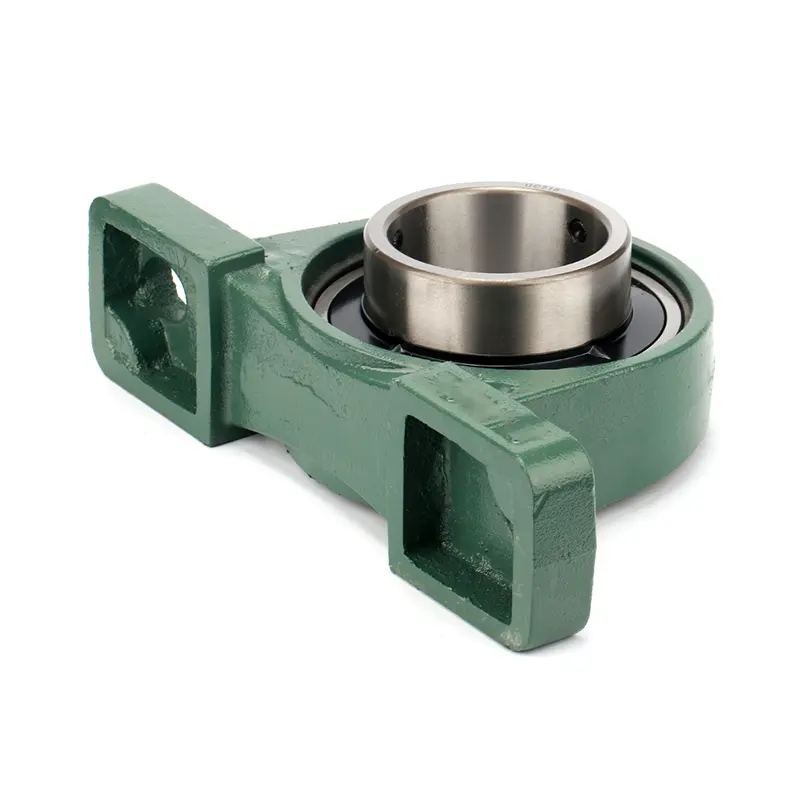
Choose standard-duty housing. Some buyers think they need heavy-duty for everything. That is not true. A standard cast iron housing with a UC series bearing works fine for 90% of roller beds and transfer tables. Only use heavy-duty if you have shock loads or very high temperatures. One of my customers in Brazil used standard units on all his conveyors. They lasted two years. He saved 30% compared to heavy-duty models.
Set screw locking is the best for standardization. Eccentric collars are also good. But they need more skill to install. A new worker might put them on the wrong way. Set screws are simple. Just tighten them with an Allen key. That is it. I recommend set screw locking for almost all material handling equipment. It is reliable and easy.
Here is a final tip. Label your storage bins clearly. Write: "Pillow Block – 25mm – Set Screw – Standard Duty."Include a picture. That way anyone can pick the right bearing. This small step saves many mistakes.
Real Savings: Less Inventory, Faster Repairs, and Lower Downtime?
You wonder: is all this work worth it? Will standardization really save me money? Or is it just another management fad?
Real savings come from three places. You cut inventory value by 30% or more. You reduce repair time by half. And you stop unplanned downtime almost completely.
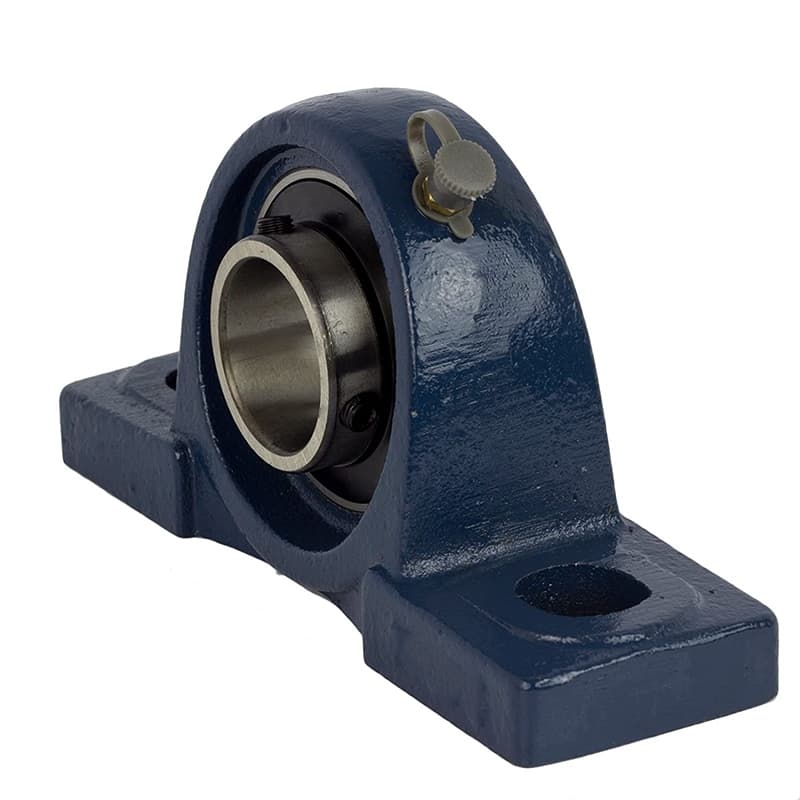
Three Ways Standardization Puts Money Back in Your Pocket
I have seen the results with my own eyes. Let me share real numbers from a customer in Indonesia. They make palm oil processing equipment. Before standardization, they had 14 pillow block models. After working with me, they cut down to 3 models. Here is what changed.
| Area | Before Standardization | After Standardization | Savings |
|---|---|---|---|
| Total inventory value | $12,000 | $3,500 | 71% less money tied up |
| Average repair time | 2.5 hours per breakdown | 0.75 hours | 1.75 hours saved each time |
| Unplanned downtime per month | 8 hours | 2 hours | 6 hours of extra production |
| Ordering mistakes per year | 12 wrong orders | 1 wrong order | 11 less headaches |
Less inventory means more cash. When you stock many different models, you pay for all of them. That cash sits on your shelf. It does not work for you. After standardization, you hold less stock. That money goes back to your bank account. One of my distributor partners in India, Rajesh, did this. He reduced his bearing inventory from $50,000 to $25,000. He used the freed cash to buy other fast-moving parts. His business grew faster.
Faster repairs mean more production. Every hour your line is down, you lose money. How much? For a typical factory, lost production can be $500 to $5,000 per hour. If you save 1.75 hours per breakdown, and you have 4 breakdowns per month, that is 7 hours saved. At $1,000 per hour, that is $7,000 per month. Over a year, that is $84,000. That is real money. And it comes from a simple change.
Less unplanned downtime means happier customers. Your customers do not care about your bearing problems. They care about getting their orders on time. When your plant stops without warning, you miss delivery dates. You lose trust. After standardization, your breakdowns become predictable. You change bearings on a schedule. No more sudden stops. A factory in Turkey told me: "Leo, we went from three emergency calls per week to zero."That is peace of mind.
Ordering mistakes disappear. When you have only three models, your purchasing team cannot mess up. They order the same thing every time. You never get a wrong bearing again. I remember a customer in Bangladesh. He ordered 50 pillow blocks from me. He meant to order 25mm. But he typed 20mm by mistake. That wasted $500. After standardization, he only orders three sizes. He double-checks each time. No more mistakes.
So yes, standardization is worth it. The savings are real. And the work is simple. Just follow the four steps I gave you. You will see results in three months.
Conclusion
Standardize your pillow block bearings now. Pick three sizes. Train your team. Watch downtime drop and savings grow.