
You know that sudden grinding noise from your packing line? That is often a failing bearing.
Pillow block bearings support the rotating shafts in carton sealers, packing conveyors, and end-of-line machines. They keep your equipment running without unplanned stops.
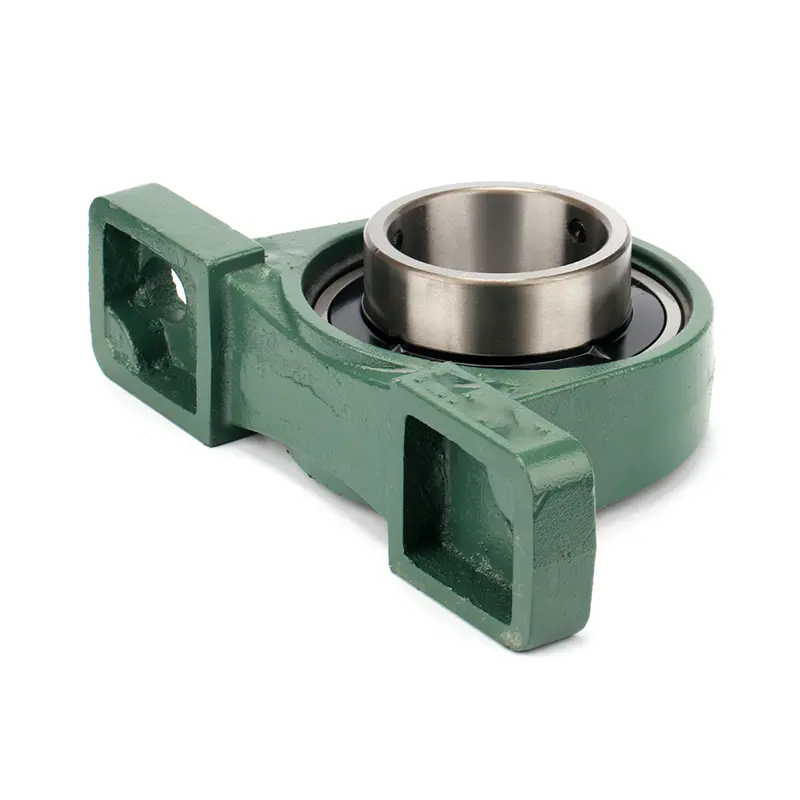
Let me be honest with you. I run a bearing factory in China. Our brand is FYTZ Bearing. I have talked to hundreds of packaging machine owners and distributors over the past ten years. The number one problem they tell me about is downtime. A small bearing failure can stop your whole end-of-line operation for hours. And that hurts your profit. So in this post, I will walk you through why pillow block bearings matter so much. I will also show you what features to look for, how they fail, and how to pick the right one for dusty or wet environments. This is not just theory. This is what I learn every day from our customers in India, Turkey, Russia, and Brazil.
Why Are Pillow Block Bearings Critical for Carton Sealing Machines?
You set your carton sealer to run at high speed. Then you hear a loud squeak. The tape head jams. That is a bearing letting you down.
Carton sealing machines rely on pillow block bearings to keep the belt rollers and tape applicators spinning smoothly. Without reliable bearings, the sealing alignment fails and you get open boxes or wasted tape.
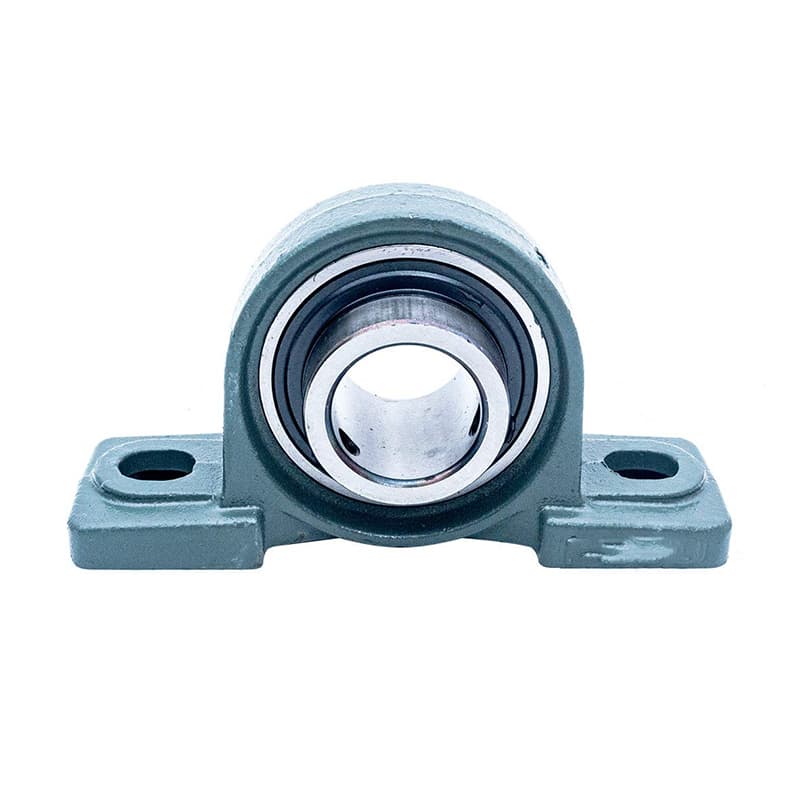
Let me break down why these bearings are so important.
A carton sealing machine has several moving parts. The main ones are the feed belt, the side belt drive, and the tape head rollers. Each of these parts uses a shaft. And each shaft needs support. That is where pillow block bearings come in. They hold the shaft in place. They let it spin with very little friction.
But here is the problem. Carton sealers often run for ten to sixteen hours a day. They work in dusty warehouses. The boxes shed paper dust and glue residue. That dust gets into the bearing housing. If you use a cheap bearing with poor seals, the dust mixes with the grease. Then the bearing heats up. The grease breaks down. The rolling elements start to wear. Soon the shaft wobbles. Your tape head no longer lines up with the box center. The result? Crooked tape, open flaps, or a complete machine stop.
Now think about your production line. One stopped carton sealer creates a bottleneck. The packing tables fill up. Workers wait. The end-of-line palletizer starves. This is why I always tell my customers: do not save fifty cents on a pillow block bearing for your carton sealer. The cost of downtime is much higher.
From my experience selling to bearing distributors in Indonesia and Egypt, the best pillow block bearings for carton sealers have three things: a cast iron housing (not pressed steel), a triple-lip seal, and a set screw locking collar. The cast iron housing absorbs vibration better. The triple-lip seal keeps out dust. The set screw collar holds the shaft tight even when the machine starts and stops many times a day.
I remember one customer in Mumbai. Mr. Rajesh Kumar – a procurement manager I work with. He told me his carton sealers kept breaking down every two months. The bearings were cheap local ones. I sent him samples of our FYTZ UCP205 bearings with better seals. He tested them for six months. The failure rate dropped by 80%. His maintenance team was happy. And he started ordering more for his other packing lines. That is the difference the right bearing makes.
So when you look at your carton sealing machines, check the pillow block bearings first. If they are hot to the touch or noisy, replace them. And choose ones made for dusty conditions.
What Key Features Should You Look for in Bearings for High-Speed Packing Lines?
You run your packing line at 30 boxes per minute. Then a bearing seizes. Now you lose 200 boxes of output. That is money gone.
For high-speed packing lines, look for bearings with high precision (P5 or P6), low noise, good heat dissipation, and sealed or shielded designs. Also check the dynamic load rating and the lubrication type.
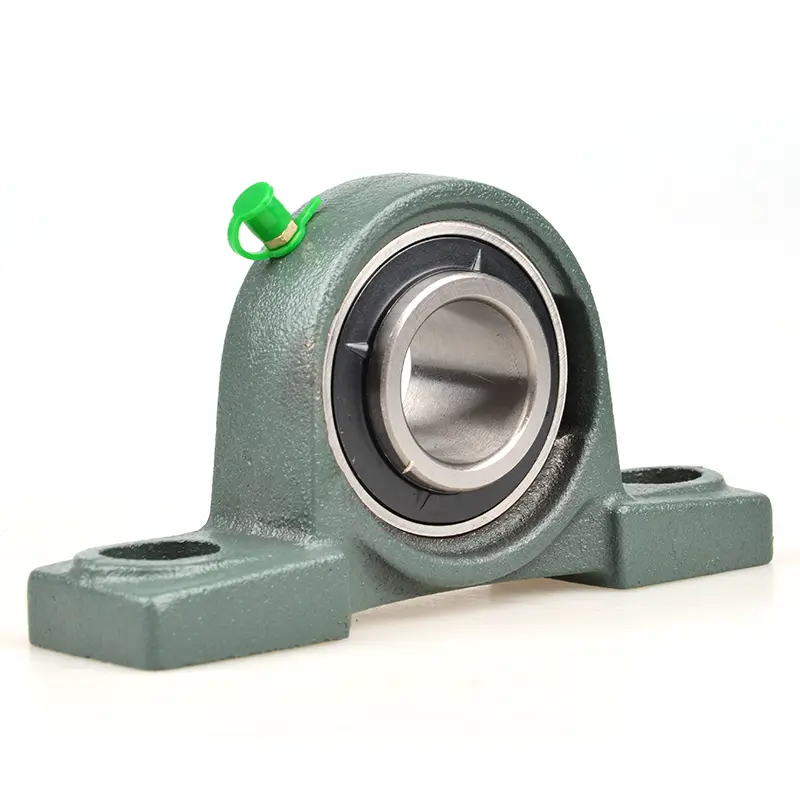
Here is a deeper look at each feature.
High-speed packing lines put a lot of stress on bearings. The shaft turns fast. The load changes every time a box moves onto the roller. Heat builds up. If the bearing cannot handle this, it will fail quickly.
I will go feature by feature.
1. Precision class
Bearings come in different precision levels. The most common are P0 (normal), P6, and P5. For high-speed packing lines, you want at least P6. P5 is even better. Why? Because higher precision means the bearing parts are made to tighter tolerances. The balls are rounder. The raceways are smoother. This reduces vibration and heat at high speeds. I sell many P5 bearings to customers in Brazil and Vietnam who run fast packing lines. They tell me the machines run quieter and need less maintenance.
2. Dynamic load rating (C)
This number tells you how much load the bearing can take while spinning. You can find it in the bearing catalog. For a packing line conveyor, you need a bearing with a C rating high enough for the weight of the boxes plus the belt tension. If you pick a bearing that is too small, the rolling elements will dent the raceways. That is called brinelling. Then you get noise and early failure. My rule of thumb: choose a bearing with a dynamic load rating at least 30% higher than your calculated load. That gives you a safety margin.
3. Heat dissipation
High speed means high heat. Heat makes the grease thin out. Thin grease does not protect the metal parts. So look for bearings with good heat dissipation. Cast iron housings are better than plastic or pressed steel because iron pulls heat away from the bearing. Also check the housing design. Some have cooling ribs. Others have extra space for air to flow. I recommend asking your supplier for the maximum operating temperature of the bearing. A good pillow block bearing for packing lines should work up to 100°C (212°F) without losing grease.
4. Seals and shields
This is a big one. On high-speed lines, you cannot use a rubber seal that touches the inner ring if the speed is very high – that creates friction and heat. So for very fast lines (over 3000 RPM), you may need a metal shield instead of a contact seal. But a metal shield does not keep out dust as well. So you have to balance speed and protection. For most packing lines running under 2000 RPM, a contact rubber seal like 2RS is fine. I often suggest the 2RS-H (high temperature rubber) seal for our customers in hot countries like Egypt and India.
5. Lubrication type
Grease is not just grease. High-speed bearings need a grease with a low base oil viscosity (like ISO VG 68 or 100) and a thickener that does not separate at high temperatures. Lithium complex grease is a good choice. Do not use standard automotive grease. It will melt and run out. At our factory, we use a special high-speed bearing grease from a German supplier. We test every batch on a high-speed rig. If you order from us, we can pack the bearings with your preferred grease.
Let me put this in a simple table.
| Feature | What to look for | Why it matters |
|---|---|---|
| Precision | P6 or P5 | Less vibration at high speed |
| Dynamic load rating | 30% above your actual load | Prevents denting and early failure |
| Housing material | Cast iron with cooling ribs | Better heat dissipation |
| Seal type | 2RS contact seal for below 2000 RPM; metal shield for above | Balances speed and protection |
| Grease | Lithium complex, ISO VG 68-100 | Stays in place at high temperature |
So next time you buy bearings for a high-speed packing line, do not just look at the price. Ask the supplier for these five specs. If they cannot give you an answer, find another supplier. At FYTZ Bearing, we give you a full data sheet for every bearing we ship.
What Are Common Failure Modes of Bearings in End-of-Line Equipment?
You walk in on Monday morning. Your palletizer is down. The arm won’t rotate. Your maintenance guy says the bearing is welded to the shaft.
The most common failure modes for bearings in end-of-line equipment are contamination, improper lubrication, fatigue spalling, misalignment, and false brinelling from vibration during transport or idle periods.
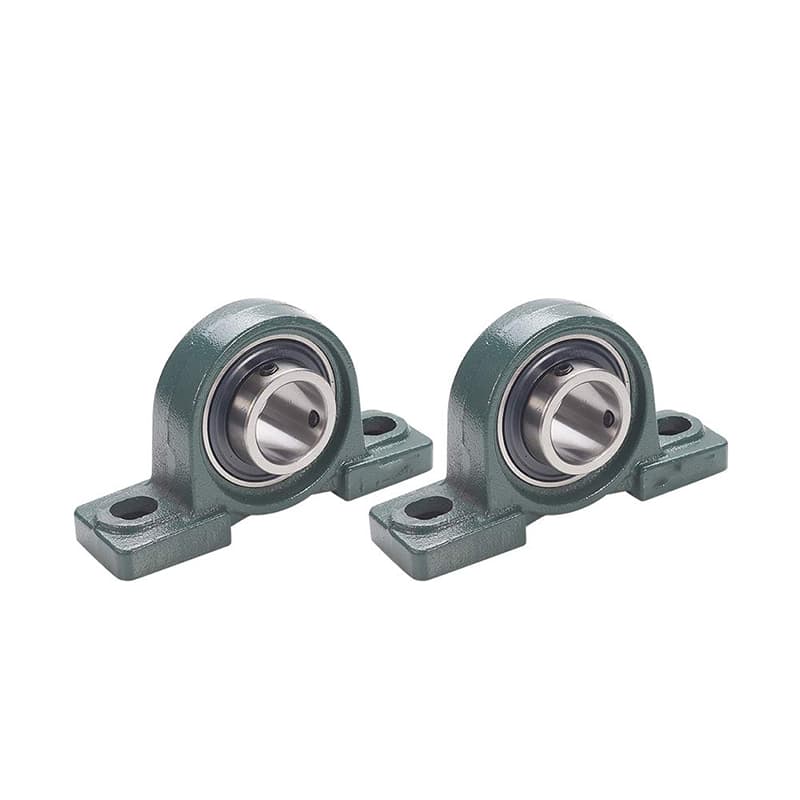
Let me explain each failure so you can spot them early.
End-of-line equipment includes palletizers, stretch wrappers, case erectors, and checkweighers. These machines often work in harsh conditions. They see dust, moisture, and heavy loads. And they stop and start a lot. That is hard on bearings.
Failure 1: Contamination
This is the number one killer. Dirt, dust, water, or glue gets into the bearing. The contaminant mixes with the grease. It acts like sandpaper. The rolling elements and raceways get scratched. Then the bearing gets noisy. Soon it seizes. How do you spot it? Take off the seal. Look at the grease. If it is black or gray, you have contamination. The fix is better seals and a housing with a tight fit. In very dusty environments like cement packing lines, I recommend a pillow block with a labyrinth seal. It does not touch the inner ring, so it keeps dust out without adding friction.
Failure 2: Improper lubrication
Too little grease and the bearing runs dry. Too much grease and it churns and overheats. Wrong grease type also causes failure. For end-of-line equipment that runs only a few hours a day, you need a grease that does not harden when cold. For machines that run 24/7, you need a grease that does not bleed oil. I see many maintenance teams just pump grease until it pushes out the seal. That is wrong. You need to follow the bearing manufacturer’s re-greasing interval and amount. For our FYTZ pillow block bearings, we put the re-greasing schedule on the box. If you lost it, email me at sales@fytzbearing.com and I will send you a PDF.
Failure 3: Fatigue spalling
This is when small pieces of metal break off the raceway or the balls. It happens after many stress cycles. You see a rough, pitted surface. The bearing starts to vibrate. Then it makes a grinding sound. Spalling is normal at the end of a bearing’s life. But if it happens too early, it means the bearing was overloaded or had poor material quality. At our factory, we use vacuum-degassed bearing steel (GCr15) and do 100% ultrasonic testing on every batch of raw material. That reduces early spalling. We also offer P6 precision bearings that spread the load better.
Failure 4: Misalignment
The shaft is not perfectly aligned with the bearing housing. The bearing tries to correct it, but it cannot. So the balls run on the edges of the raceways. This creates high stress on one side. The bearing heats up and fails quickly. How do you know? Look at the wear pattern on the outer ring. If it is not centered, you have misalignment. The solution is to use a self-aligning pillow block bearing. These have a spherical outer ring and a matching housing. They can handle up to 2 to 3 degrees of misalignment. I always recommend self-aligning bearings for conveyor systems where the frame is not perfectly straight.
Failure 5: False brinelling
This one surprises many people. The machine is not even running. But the bearing still fails. False brinelling happens when the machine vibrates while standing still. For example, a palletizer sitting next to a heavy stamping press. The vibration makes the balls rub against the raceways in the same spot. Over time, that wears away the grease and creates small dents. When you start the machine, you hear a rhythmic thumping sound. The fix is to isolate the equipment from vibration or to rotate the shafts periodically during long idle periods. Also, a bearing with a thicker grease film (like using a grease with a higher base oil viscosity) resists false brinelling better.
Here is a quick guide to tell failures apart:
| Failure mode | Sound | What you see | Common cause |
|---|---|---|---|
| Contamination | Grinding, rough | Black grease, scratches on raceway | Poor seals, dusty environment |
| Lubrication issue | Squealing or quiet then hot | Brown or caked grease, blue color on metal | Wrong grease amount or type |
| Spalling | Thumping, vibration | Pitted raceway, metal flakes in grease | Overload, low-quality steel |
| Misalignment | Irregular noise, heat on one side | Uneven wear on raceway | Bent shaft, bad mounting |
| False brinelling | Rhythmic thumping at startup | Dents spaced like balls | External vibration during idle |
If you see any of these signs, do not wait. Replace the bearing. And then figure out the root cause. Otherwise, the new bearing will fail the same way.
How to Select the Right Mounted Bearing for Dusty or Humid Environments?
Your packing line works near a dock door. Rain blows in. Or your carton sealer is next to a cement bagging station. Dust is everywhere. Standard bearings die in weeks.
For dusty or humid environments, choose a pillow block bearing with a cast iron housing, a multi-lip rubber seal (or labyrinth seal for fine dust), a corrosion-resistant coating or stainless steel insert, and a water-resistant grease like aluminum complex or polyurea.
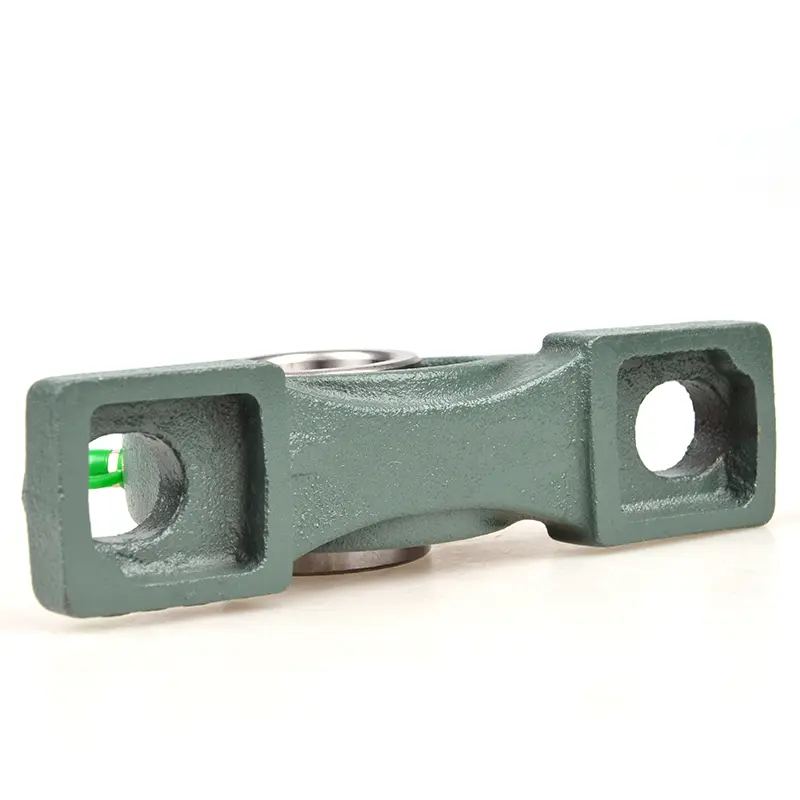
Let me help you make the right choice step by step.
I have sold bearings to customers in very tough places. For example, a rice mill in Bangladesh. The air was full of fine husk dust. Their old bearings failed every three weeks. Or a bottling plant in Brazil. High humidity, plus washdown every night. Rust was the big problem. So I learned what works and what does not.
Step 1: Choose the housing material
For dry dust, a cast iron housing with a good paint coating is fine. For wet or corrosive environments, you need a housing with electroplated zinc or a stainless steel housing. Cast iron can rust in high humidity. Rust flakes off and gets into the bearing. Stainless steel housings cost more but last much longer. I have a customer in Indonesia who packs shrimp for export. Their machines are washed with chlorine water every day. They switched to our stainless steel pillow block bearings. The life went from 2 months to 18 months.
Step 2: Pick the right seal system
This is the most important step for dusty environments. There are three common seal types:
-
Contact rubber seal (2RS): Good for coarse dust and occasional water splash. The seal lip touches the inner ring. It keeps out most dirt. But it creates some friction. Fine dust can still get past if the pressure is high.
-
Labyrinth seal: No contact. The seal has a zigzag path. Air and dust try to go through, but the sharp turns trap the dust. This is best for very fine dust like cement or flour. The downside is it does not stop water as well as a contact seal.
-
Triple-lip seal: A combination of contact and labyrinth. Three rubber lips touch the inner ring at different angles. This gives the best protection for mixed dust and moisture. I recommend this for most packing lines.
For humid environments, also look for a seal with a stainless steel slinger. The slinger throws water away before it reaches the seal.
Step 3: Consider the bearing insert material
Standard bearing steel (52100 chrome steel) rusts quickly in humidity. For wet conditions, you need either:
- A bearing with a black oxide coating on the rings and balls. This is cheap and helps a little.
- A bearing made of AISI 440C stainless steel. This is fully rust resistant. It costs more, but it is the right choice for food and beverage packing where washdown is daily.
For dusty but dry environments, standard steel is fine as long as the seals are good.
Step 4: Choose the lubricant
Water washes away ordinary grease. Dust turns grease into grinding paste. So you need a specialty grease. My top picks:
- For high humidity but no direct water: Aluminum complex grease. It sticks to metal very well and resists water washout.
- For dusty and dry: Polyurea grease with a high base oil viscosity. It stays thick and does not let dust migrate into the bearing.
- For washdown with water jets: A food-grade grease (NSF H1) plus stainless steel bearings. We supply this to many packaging equipment makers.
Step 5: Decide on housing design
Some pillow block bearings have a grease fitting (nipple) on the housing. For dusty environments, a grease fitting is good because you can purge old grease and push out dirt. But you need to be careful. If you over-grease, the pressure can push the seal open. Then dust gets in. So use a slow grease gun and add just 2-3 pumps every month. For very fine dust, consider a bearing with a "vented" seal – a small hole that lets out extra grease without opening the main seal.
Let me summarize the selection in a simple matrix.
| Environment | Housing | Seal | Insert material | Grease |
|---|---|---|---|---|
| Dry, coarse dust | Cast iron, painted | Contact rubber (2RS) | Chrome steel | Lithium complex |
| Dry, fine dust (cement, flour) | Cast iron | Labyrinth | Chrome steel with vent | Polyurea, high viscosity |
| High humidity, no washdown | Zinc-plated cast iron | Triple-lip with slinger | Chrome steel with black oxide | Aluminum complex |
| Wet, daily washdown | Stainless steel | Triple-lip | 440C stainless steel | Food grade (NSF H1) |
I have used this matrix with dozens of buyers in Russia (cold, humid warehouses) and Turkey (hot, dusty factories). It works. If you are still not sure, send me an email at sales@fytzbearing.com. Tell me about your environment. I will recommend a specific bearing model for you. That is what a factory partner does.
Conclusion
Choose the right pillow block bearing for your carton sealer, packing line, and end-of-line machines. It cuts downtime and saves you money.