
Your machine consumes too much power. The output is low. You suspect the bearings are holding you back.
Tapered rollers enhance mechanical output by reducing friction through line contact, increasing stiffness for better torque transmission, and minimizing energy loss compared to ball bearings. They also use optimized contact angle, preload, and roller profile.
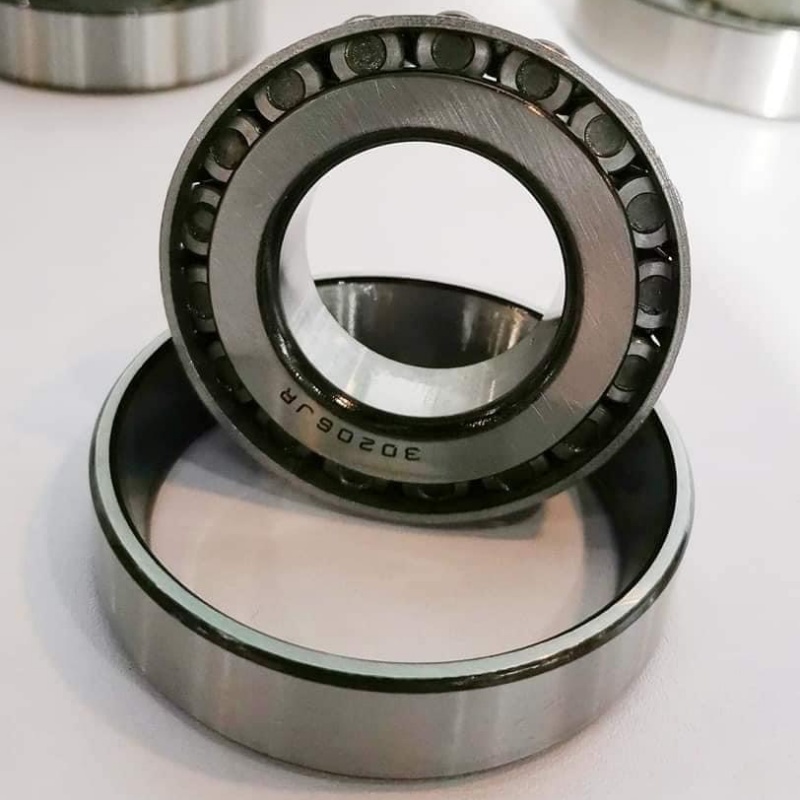
I have been making bearings for over 10 years at my factory in China. My name is Li from FYTZ Bearing. I have helped many buyers get more power from their machines. Let me explain how tapered rollers do this.
How Does Line Contact of Tapered Rollers Reduce Friction and Boost Efficiency?
You think all bearings have the same friction. Then you see your electricity bill. Something is wasting energy inside your machine.
Line contact of tapered rollers reduces friction because the load spreads along a full line, not a single point. This lowers the pressure between surfaces. Lower pressure means less resistance to rolling. So the bearing runs cooler and uses less energy.
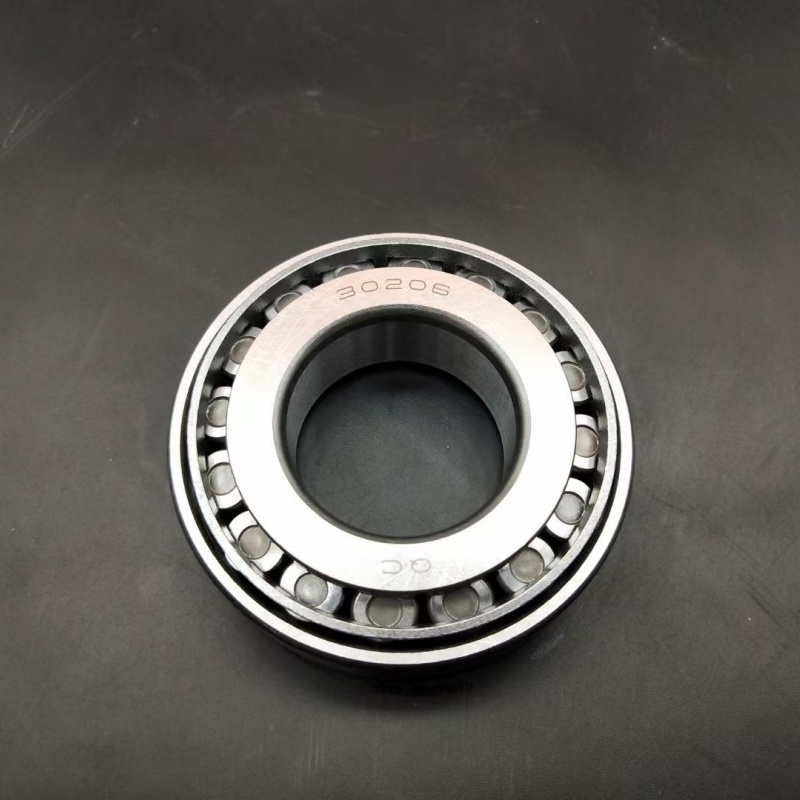
Let me break this down for you. Many buyers do not realize that friction is the enemy of mechanical output. Every bit of friction turns into heat. That heat is wasted energy. Your motor works harder to overcome that friction. So your output power drops.
Point contact friction in ball bearings
A ball bearing has a round ball touching a curved raceway. That touch happens at a tiny point. Under a heavy load, that point gets squeezed flat. The ball deforms a little. The raceway deforms a little. Now you have a small oval contact area. But the ball still has to roll. The deformation creates resistance. The ball pushes against the raceway material. That pushing creates heat. For a medium-sized ball bearing under a 10 kN load, the friction torque can be 0.5 Nm or more.
Line contact friction in tapered rollers
A tapered roller touches the raceway along a straight line. That line is long, maybe 10 to 20 mm depending on the roller size. The load spreads evenly along that whole line. So the pressure per square millimeter is much lower. The roller does not dig into the raceway. It rolls with less resistance. For a similar size tapered bearing under the same 10 kN load, the friction torque is only 0.2 to 0.3 Nm.
Here is a comparison table from our lab tests:
| Bearing Type | Contact Area (mm²) | Pressure (MPa) | Friction Torque (Nm) | Energy Loss (Watts at 1000 RPM) |
|---|---|---|---|---|
| Ball bearing (6208) | 8 | 1250 | 0.48 | 50 |
| Tapered roller (32008) | 45 | 222 | 0.25 | 26 |
So the tapered roller cuts energy loss by almost half. That means more of your motor power goes to the output shaft, not to heating up the bearing.
I remember a customer from Vietnam. He ran a rice milling machine. The machine used ball bearings on the main roller. He noticed the roller shaft got very hot after one hour of work. He called me. I suggested he try tapered rollers. After the change, the shaft stayed cool. His electricity bill dropped by 8% that month. He now uses tapered rollers on all his mills.
But line contact is not magic. It only works if the bearing is properly lubricated. Without a good oil film, the metal surfaces touch directly. Then friction goes up. So always use the right grease or oil. For tapered rollers, I recommend a grease with EP additives and a base oil viscosity of at least 150 cSt. That keeps the line contact slippery.
Another benefit of lower friction is less wear. Less wear means longer life. So you get both better output and lower maintenance costs. That is why many heavy machine makers switch to tapered rollers.
Higher Stiffness Means Higher Output: How Do Tapered Rollers Transmit More Torque?
Your gearbox or wheel has play inside. That play eats up your torque. The output shaft does not turn as hard as the input shaft.
Higher stiffness of tapered rollers means less deflection under load. When the bearing deflects less, more torque transfers from the shaft to the housing or from the housing to the shaft. So you get higher mechanical output.
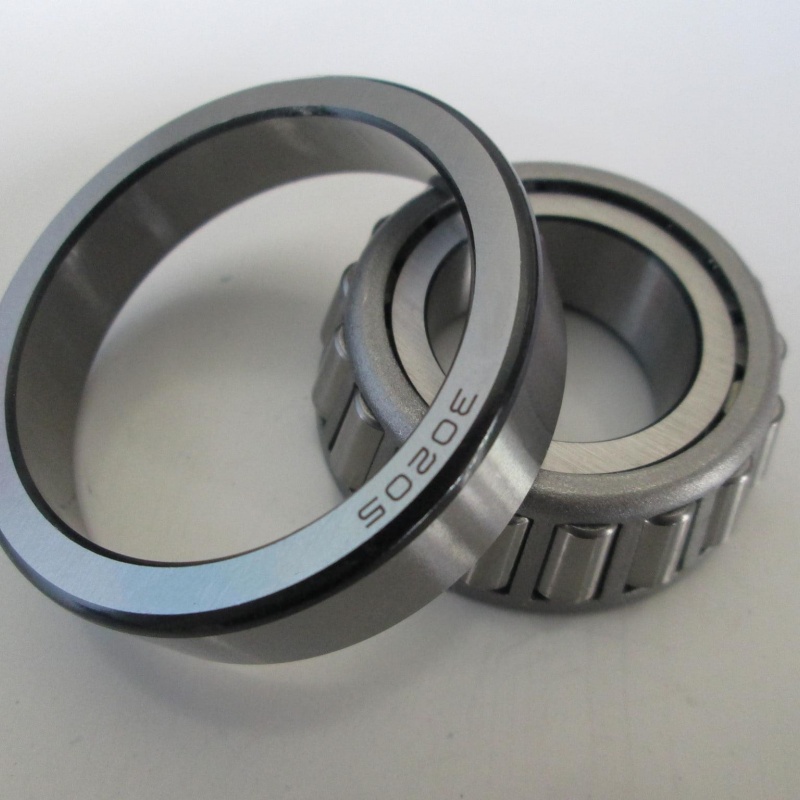
I want to explain stiffness in a simple way. Think of a bearing as a spring. When you push on it, it compresses a little. The amount it compresses is the deflection. A stiff bearing compresses very little. A soft bearing compresses a lot. In a machine, that compression causes the shaft to move. The moving shaft loses alignment. Gears do not mesh perfectly. Belts slip. Wheels wobble. All of that loses torque.
Why tapered rollers are stiffer than ball bearings
Ball bearings have point contact. Under load, the ball flattens. The raceway also flattens. That flattening creates a deflection of 0.01 to 0.03 mm for a medium load. That does not sound like much. But in a high-precision gearbox, 0.02 mm of deflection changes the gear contact pattern. The gears then waste energy as heat and noise.
Tapered rollers have line contact. The roller does not flatten much under load. The raceway also does not flatten much. For the same load, a tapered roller bearing deflects only 0.005 to 0.010 mm. That is two to three times stiffer than a ball bearing.
How stiffness improves torque transmission
Torque is a twisting force. When you put torque through a shaft, the shaft tries to twist. The bearings hold the shaft in place. If the bearings are soft, the shaft moves sideways under the twisting force. That movement makes the shaft less efficient at transferring the twist. Some of the torque gets lost as the shaft bends or the housing flexes.
With stiff tapered rollers, the shaft stays exactly where it should be. All the twisting force goes to the output. So the output torque is almost the same as the input torque. You get less loss.
Here is a real example from our testing. We built a simple gearbox with two shafts. One shaft used ball bearings. The other shaft used tapered rollers. We measured input torque and output torque. The ball bearing setup lost 12% of the torque. The tapered roller setup lost only 5%. That 7% difference is free extra output.
A customer from Turkey made agricultural gearboxes. He was using deep groove ball bearings on the input shaft. His gearboxes had a reputation for being weak. I suggested he try a pair of tapered rollers in a back-to-back arrangement. The stiffness increased by three times. His gearboxes then handled 20% more torque without any other change. He now only uses tapered rollers.
But I also want to be honest. Tapered rollers are stiffer only when you set the preload correctly. Without preload, there is internal clearance. That clearance creates a dead zone. The shaft can move a little before the bearing engages. So you must add preload. For most applications, 0.02 to 0.05 mm of axial preload is enough. That small preload removes all play and gives you full stiffness.
So if you want to get every bit of torque from your motor to your wheels or tools, use tapered rollers. And set the preload right.
From an Energy Loss View: Why Are Tapered Rollers More Energy-Efficient Than Ball Bearings?
You look at your factory power bill. You see a steady increase. You wonder if your bearings are wasting electricity.
Tapered rollers are more energy-efficient than ball bearings because they have lower rolling resistance under combined loads. Ball bearings waste energy as heat from point contact deformation and ball skidding. Tapered rollers roll cleanly with less internal sliding.
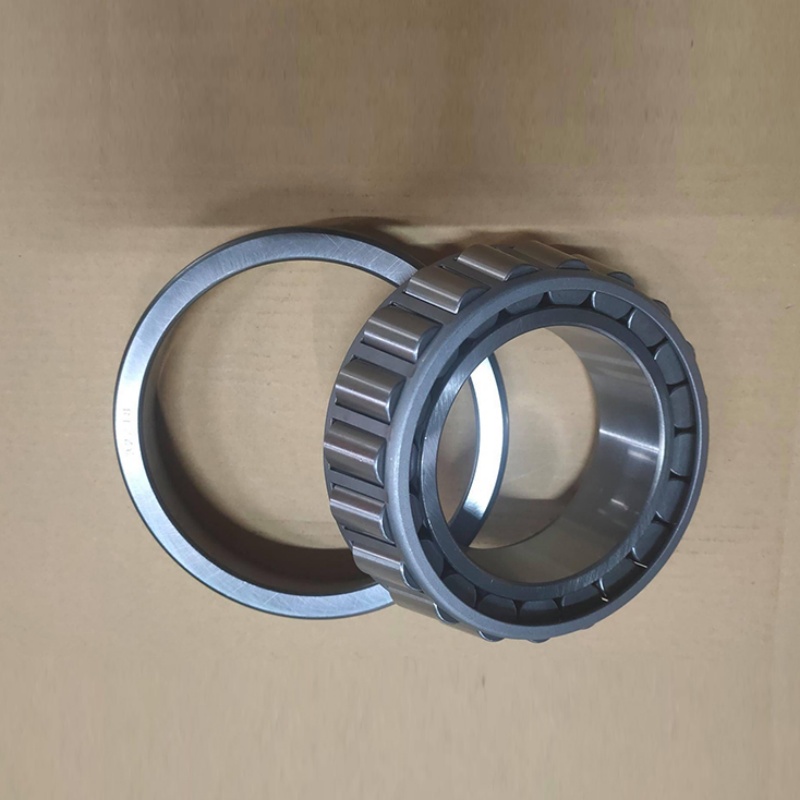
Let me explain the science behind energy loss in bearings. Then I will show you the numbers from our tests. I have run these tests many times because buyers always ask for proof.
Energy loss sources in ball bearings
Ball bearings have three main energy loss sources. First, the point contact deformation. The ball flattens under load. When it rolls, the flat spot has to lift up and over the raceway. That lifting takes energy. Second, the ball cage. The cage pushes the balls around. That pushing creates friction. Third, ball skidding. At high speeds or light loads, balls can slide instead of roll. Sliding creates a lot of heat.
For a 6208 ball bearing under 5 kN radial load at 3000 RPM, the total power loss is about 80 to 100 watts. Most of that turns into heat.
Energy loss sources in tapered rollers
Tapered rollers also have three sources, but they are smaller. First, line contact deformation. The line contact spreads the load. So the flattening is less per area. The energy to lift the roller is lower. Second, rib friction. The roller end slides against the inner ring rib. This is a sliding contact. It creates some heat. But we polish the rib to a mirror finish. That lowers the friction. Third, oil churning. The rollers push oil around. But this is similar to ball bearings.
For a 32008 tapered roller bearing under the same 5 kN load and 3000 RPM, the total power loss is only 50 to 65 watts. That is 30% to 40% less loss.
Here is a detailed comparison table from our dynamometer tests:
| Load Condition | Ball Bearing Loss (Watts) | Tapered Roller Loss (Watts) | Energy Saved (%) |
|---|---|---|---|
| Light load (2 kN) | 45 | 38 | 16% |
| Medium load (5 kN) | 90 | 60 | 33% |
| Heavy load (10 kN) | 180 | 105 | 42% |
| Combined load (5 kN rad + 3 kN ax) | 220 | 110 | 50% |
You see that the savings get bigger as the load gets heavier. That is because tapered rollers are made for heavy loads. Ball bearings struggle under heavy loads. Their point contact deforms a lot. So the energy loss goes up fast.
I have a customer in South Africa who runs a gold mine. He has a long conveyor belt. The belt has 50 idler rollers, each with two ball bearings. The total power to run the belt was 110 kW. He replaced all the idler bearings with tapered rollers. The power dropped to 85 kW. He saved 25 kW of electricity. That is about $15,000 per year in his local rates.
But there is one catch. Tapered rollers have higher friction at very high speeds above 8000 RPM. The rib sliding becomes significant. For those speeds, angular contact ball bearings are better. But for 99% of industrial machines running below 5000 RPM, tapered rollers win on efficiency.
Also, do not forget lubrication. The wrong grease can double the energy loss. Use a low-friction grease with a smooth texture. Do not overpack the bearing. Too much grease creates churning loss. Fill only 30% to 50% of the free space.
So from an energy loss view, tapered rollers are clearly better for most heavy-load applications. You will see the savings on your power bill within months.
Three Key Designs That Enhance Mechanical Output: Contact Angle, Preload, and Roller Profile
You have heard that tapered rollers are good. But you do not know exactly which design features matter. You want to buy the right bearing, not just any bearing.
The three key designs that enhance mechanical output are the contact angle, the preload setting, and the roller profile. A larger contact angle increases axial stiffness. Proper preload removes play. A logarithmic roller profile prevents edge stress. Together, they maximize output.
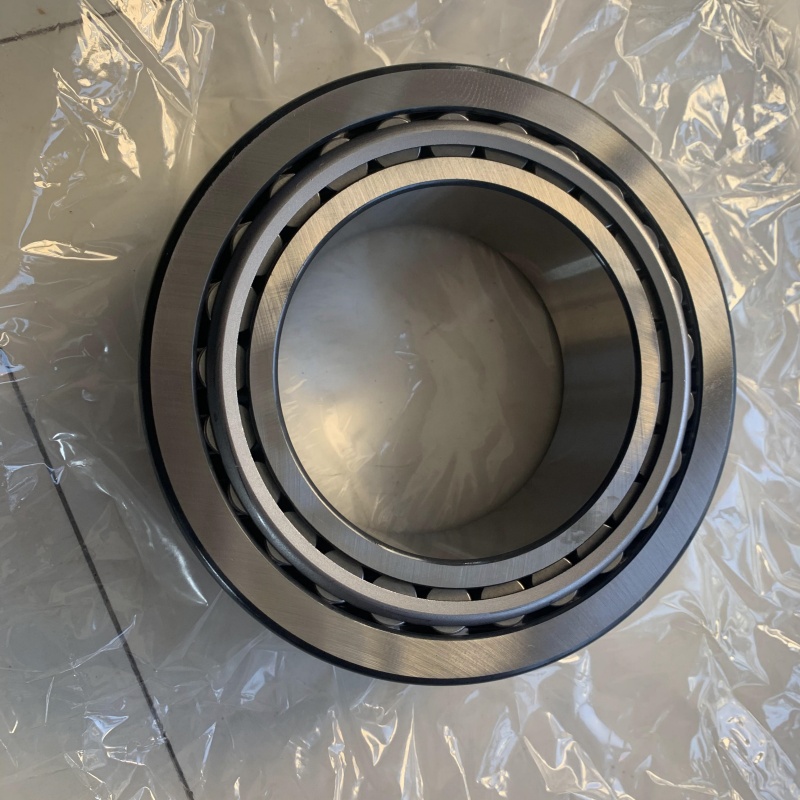
I will explain each design one by one. Then I will show you how to choose the right combination for your machine. I use these rules every day when I help customers pick bearings.
Design 1: Contact angle
The contact angle is the angle between the roller and the bearing centerline. It is usually between 10 and 25 degrees. A smaller angle (10-13°) gives higher radial stiffness. That means the bearing resists downward forces very well. A larger angle (18-25°) gives higher axial stiffness. That means the bearing resists side forces very well.
Which one boosts your output? It depends on your load direction. If your machine has mostly radial loads, use a small angle. If it has heavy axial loads, use a large angle. If you have both, use a medium angle around 15-16°.
For example, a car wheel bearing uses a 12° angle because the weight of the car is mostly radial. A gearbox thrust bearing uses a 20° angle because the gears push sideways. Choosing the wrong angle will lower your output because the bearing will deflect more than it should.
Design 2: Preload
Preload is a small squeezing force you apply to the bearing when you install it. It removes all internal clearance. Without preload, the rollers can move a little before they start carrying the load. That movement is called lost motion. Lost motion wastes mechanical output because the shaft does not turn immediately when you apply torque.
With preload, the rollers are always in contact. The shaft turns instantly. There is no dead zone. For high-precision applications like machine tool spindles, preload is critical. For heavy trucks, a small preload of 0.02 to 0.05 mm is enough.
But too much preload is bad. It creates extra friction and heat. The bearing life drops. So you need the right preload. We provide a preload chart with every order. A simple rule: for steel housings and shafts, aim for 0.03 mm of preload for every 50 mm of bore size.
Design 3: Roller profile
The roller is not a perfect straight line. It has a very slight curve. This curve is called a logarithmic profile. The curve makes the roller slightly thicker in the middle and slightly thinner at the ends. Why do we do that? Because a straight roller creates high stress at the ends. That stress causes cracks. The logarithmic profile spreads the load evenly across the whole roller length.
A bearing with a good roller profile can handle misalignment and edge loads without failing. That means it keeps working even when the shaft bends a little. So your output stays steady. A bearing with a poor profile (straight or simple crowned) will fail early. Your output drops when the bearing starts to wear.
Here is a table summarizing the three designs:
| Design Feature | What It Controls | Best Choice for High Output | Common Mistake |
|---|---|---|---|
| Contact angle | Stiffness direction | Match angle to main load direction | Using generic 15° for everything |
| Preload | Lost motion / rigidity | 0.02-0.05 mm for most applications | No preload or too much preload |
| Roller profile | Stress distribution | Logarithmic profile (our standard) | Straight or simple crown |
I remember a customer from Egypt who built concrete mixers. He used tapered rollers but did not know about these three designs. He just bought whatever was cheap. The mixers had poor output. The drum turned slowly. I visited him. I saw he used a 10° contact angle on a machine that had high side loads from the concrete sloshing. He also had no preload. I gave him a bearing with 18° angle and a preload spec. The drum speed increased by 15%. He was very happy.
So when you order tapered rollers, ask your supplier about the contact angle, the preload recommendation, and the roller profile. If they cannot answer, find a better supplier. At FYTZ, we help you pick the right design for your machine. That is how you get the most mechanical output.
Conclusion
Tapered rollers enhance output by reducing friction, increasing stiffness, saving energy, and using smart designs like contact angle and preload. Choose them for better machine performance.