
You buy taper roller bearings that fail after three months. That means lost money and angry customers.
High-strength bearings with precision tapered components combine optimized geometry, tight tolerances, advanced materials, and strict heat treatment. This gives you longer life under heavy loads and higher shock resistance.
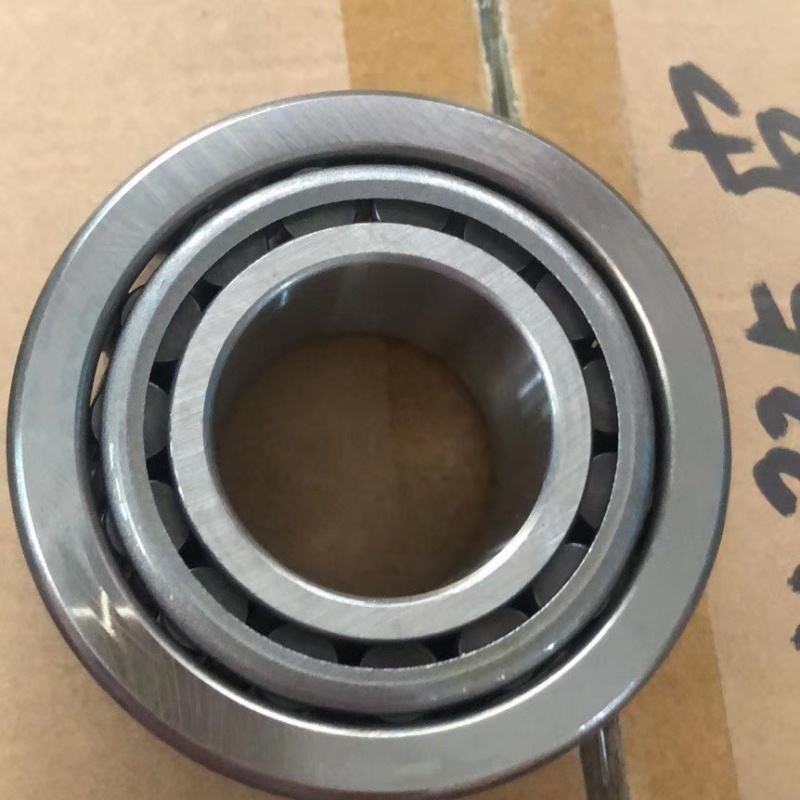
I run a bearing factory in China. My name is Li from FYTZ Bearing. Over the past 10 years, I have helped buyers from India, Turkey, and Brazil fix their bearing failure problems. Let me show you what really works.
What Is the Design Core of High-Strength Tapered Bearings?
You see cracked bearing races on your production line. Your machines stop. Your maintenance team works overtime.
The design core of high-strength tapered bearings is the contact angle between rollers and raceways. A well-designed angle spreads the load evenly. It also reduces edge stress and prevents early fatigue.
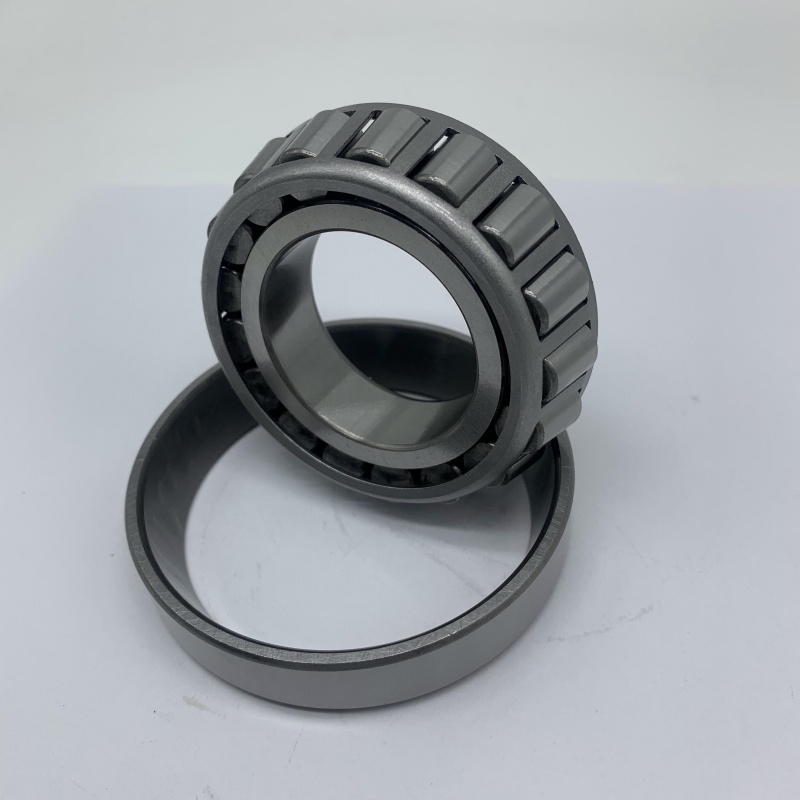
I have seen many importers buy cheap bearings from unknown suppliers. They look at the price first. Then the bearings fail under heavy loads. The real problem is not the steel. It is the design geometry.
Let me break down the three most important design features.
1. Contact angle optimization
The contact angle decides how much axial load and radial load the bearing can take. A bigger angle handles more thrust. A smaller angle gives higher speed. Most heavy truck wheel bearings use an angle between 10 and 15 degrees. For industrial gearboxes, you might need 20 to 25 degrees. There is no one-size-fits-all. That is why we ask for your exact working conditions before making the design.
2. Roller profile correction
Straight rollers create high stress at the ends. That is a known weak point. We use a logarithmic profile. This means the roller is slightly curved along its length. The curve spreads the load from the center to the edges. No more stress peaks. This single change can double the bearing life in dirty or misaligned conditions.
3. Rib design and roller end shape
The large rib on the inner ring guides the roller. If the rib is too steep, friction goes up. If it is too flat, the roller slides sideways. We match the roller end shape to the rib surface. A spherical roller end works best for most applications. It allows a small amount of misalignment without creating edge contact.
Here is a quick comparison table:
| Design Feature | Bad Design Result | Good Design (Our Standard) |
|---|---|---|
| Contact angle | Wrong angle = premature wear | Custom angle for your load |
| Roller profile | Straight = edge stress | Logarithmic = even load |
| Rib contact | Point contact = high friction | Spherical end = smooth rolling |
| Surface finish | Rough > 0.2 Ra | Fine-ground < 0.1 Ra |
I remember a customer from Russia. He bought taper roller bearings from a cheap trader. Those bearings lasted only 800 hours in his mining conveyor. Then he came to us. We changed the contact angle from 12 to 18 degrees. We added a logarithmic profile. The new bearings ran for 4,200 hours. That is real design value.
How Does Precision Manufacturing Go from Tapered Geometry to Micron-Level Tolerances?
Your current supplier promises "high precision" but delivers parts that wobble. You lose trust and time.
Precision manufacturing of tapered components starts with super-finished raceways and matched sets. We control the taper angle to within ±0.5 arc minutes. We also sort rollers into micron-level classes before assembly.
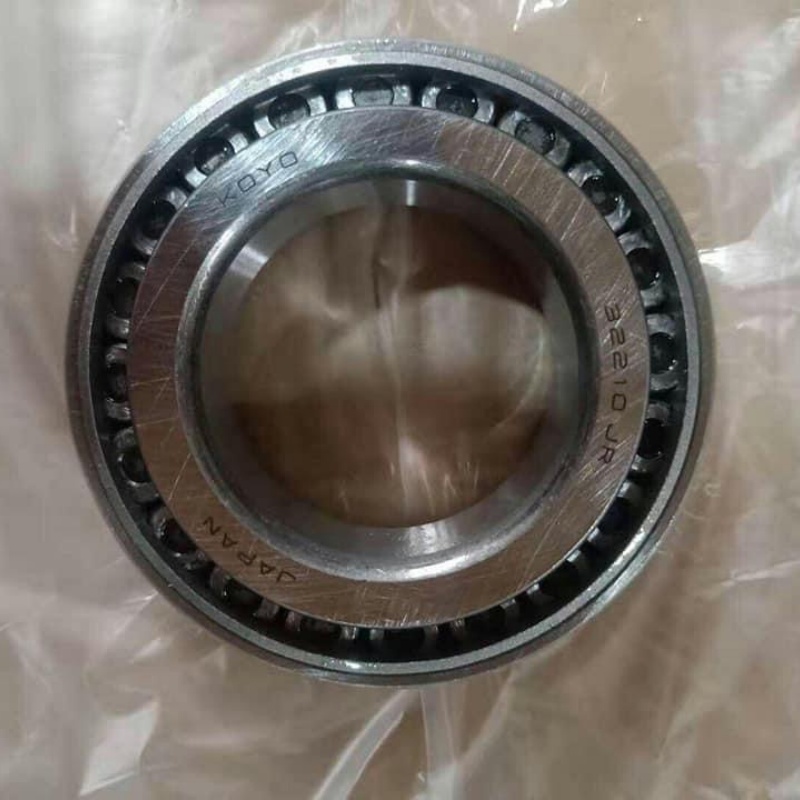
Many buyers think precision only means the final tolerance class, like P5 or P6. That is not enough. The real work happens step by step. I will show you how we control three critical areas.
Step 1: Raw material pre-treatment
We start with high-carbon chromium steel (GCr15 or equivalent). The steel comes with a material certificate. Then we cut tubes or bars into rings. But the shape changes during heat treatment. So we leave 0.3 to 0.5 mm extra material for final grinding. If a factory skips this pre-treatment planning, the final dimensions will never be stable.
Step 2: Taper angle grinding
This is the hardest part. The inner ring raceway and outer ring raceway must have exactly the same taper angle. Otherwise, the roller touches only at one line. We use a CNC grinding machine with in-process gauging. The machine measures the angle every few seconds. If it drifts, the machine adjusts automatically. Our standard is ±0.5 arc minutes. For high-precision orders, we go to ±0.2 arc minutes.
Step 3: Roller sorting by size
Rollers are never all exactly the same. Even from the same batch, there are small differences. We measure every roller’s diameter to 0.5 microns. Then we sort them into groups of 0.002 mm range. For one bearing, we only use rollers from the same group. This keeps the load balanced. A 0.005 mm difference between rollers can cut bearing life by 30%.
I also want to talk about the measuring tools. Some factories use old dial gauges. We use [laser micrometers](https://en.wikipedia.org/wiki/Laser micrometer) and [air gauges](https://en.wikipedia.org/wiki/Air gauge). The air gauge can detect a 0.1 micron bump on the raceway. That bump is smaller than a bacteria. But it can start a crack under heavy loads.
Let me give you a real example. A gearbox manufacturer from Turkey called me. He had vibration problems with his output shafts. We asked him to send a sample bearing. We measured the taper angle difference between inner and outer rings. It was 3 arc minutes off. That is huge. We made him a new set with 0.3 arc minutes difference. The vibration went away. Now he orders 2,000 bearings every six months.
How Do Advanced Materials Enhance Bearing Strength and Service Life?
Your bearings break from fatigue and corrosion. You replace them too often. Your customers complain.
Advanced materials improve bearing strength by adding alloying elements like manganese, chromium, and molybdenum. They also include special heat treatments like carburizing or induction hardening. This makes the surface hard and the core tough.
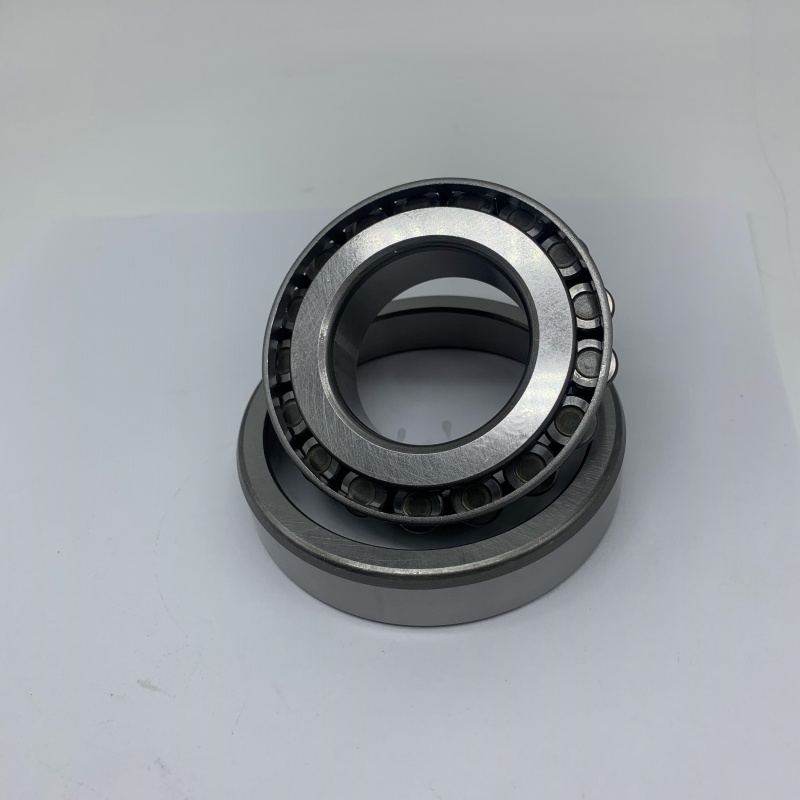
I often hear buyers say "we use good steel." But good steel means different things in different countries. In China, we have many steel grades. For high-strength tapered bearings, I never use standard GCr15 for heavy shock loads. Instead, I recommend one of three material options.
Option 1: Through-hardened GCr15 with fine grain
This is the most common choice. It works well for normal loads and speeds. The hardness is 60 to 64 HRC all the way through. But it can be brittle. If your machine has shock loads, like a crusher or a hammer mill, this steel may crack. I only suggest it for steady loads.
Option 2: Carburized steel (20Cr2Ni4A)
This steel has low carbon at the start. We heat it in a carbon-rich atmosphere. The surface gets hard (60 HRC) but the core stays soft (35 HRC). So the surface resists wear and the core absorbs shocks. This is my first choice for mining and construction equipment. The cost is about 20% higher, but the life is 2x longer.
Option 3: Stainless bearing steel (9Cr18Mo)
Corrosion is a big problem in food processing and marine equipment. Normal bearing steel rusts in one week. 9Cr18Mo has 18% chromium. It stays clean in wet environments. It is not as hard as GCr15 (only 58 HRC), but it does not rust. I recently helped a seafood processing plant in Vietnam switch to this material. Their bearing failure rate dropped by 80%.
Now let me talk about heat treatment. This is where many small factories fail. They use old furnaces without temperature control. We use sealed quench furnaces with computer control. The process has three steps:
- Austenitizing – heat to 840°C and hold for 30 minutes.
- Quenching – oil bath at 60°C. The cooling rate must be 30°C per second. Too slow and the hardness is low. Too fast and the parts crack.
- Tempering – heat again to 160°C for 2 hours. This reduces brittleness.
I also add a deep-freeze treatment for high-precision bearings. We cool the parts to -70°C after quenching. This turns any leftover soft phase into hard phase. The result is a more stable dimension and higher wear resistance.
A buyer from Brazil asked me why his bearings always failed after 6 months. I visited his factory. He used bearings from a trader who mixed different steel grades in one box. Some were GCr15. Some were cheap carbon steel. I showed him the difference with a portable hardness tester. Now he only buys direct from us with a certificate for each batch.
What Are Typical Applications and Performance Under Heavy Loads and High Speeds?
You want to use tapered bearings in a new machine. But you are not sure if they can handle the speed and load together.
Typical applications for high-strength tapered bearings include truck wheel ends, gearboxes, mining conveyor rollers, and agricultural machinery. Under heavy loads, they perform best at moderate speeds. For high speeds, you need lighter preload and better lubrication.
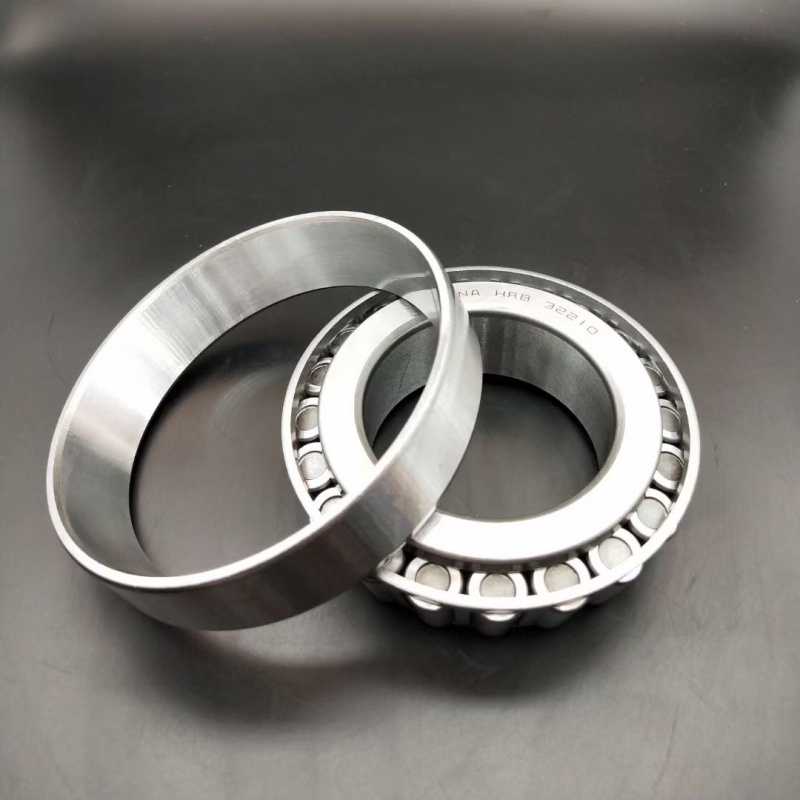
I get many calls from buyers who mix up bearing types. They try to use a deep groove ball bearing for a heavy truck wheel. That fails quickly. Or they use a tapered bearing for a high-speed spindle. That overheats. So let me show you where tapered bearings really shine, and where they struggle.
Application 1: Heavy truck wheel ends
This is the most common use. Each wheel has two tapered bearings back to back. They take the weight of the truck and the cornering forces. The typical load per bearing is 5,000 to 10,000 newtons. Speed is low, around 500 to 800 RPM. Our bearings in this application last 500,000 km with proper grease. But I often see failures because of incorrect preload. Too tight and the bearing overheats. Too loose and the wheel wobbles. We provide a preload specification with each order.
Application 2: Industrial gearboxes
Gearboxes have both high speed (3,000 RPM) and high thrust loads. Tapered bearings work well here if you use oil lubrication. The oil must flow through the bearing to remove heat. A common mistake is using grease in a high-speed gearbox. The grease gets pushed away and the bearing runs dry. We recommend ISO VG 68 to 220 oil depending on the temperature. Also, we often use a matched pair of bearings with a spacer to set the internal clearance.
Application 3: Mining conveyor rollers
These rollers run 24 hours a day. The load is steady but heavy. Dust and dirt are everywhere. For this application, we use a special seal – a three-lip rubber seal with a steel insert. The seal keeps out particles as small as 50 microns. We also increase the internal clearance from C3 to C4. This allows the bearing to expand when it gets hot. Without this extra clearance, the bearing would seize.
Performance trade-offs
Let me be honest. Tapered bearings are not perfect for every job. Here is a simple table to help you decide:
| Condition | Tapered Bearing Performance | Better Alternative |
|---|---|---|
| Very high speed (>10,000 RPM) | Poor – high friction | Angular contact ball bearing |
| Pure radial load only | Acceptable but overkill | Cylindrical roller bearing |
| Extreme shock loads (crusher) | Good with carburized steel | Spherical roller bearing |
| Low noise for home appliances | Too noisy | Deep groove ball bearing |
| Combined heavy radial + axial | Excellent – best choice | None needed |
I helped a customer from Indonesia who runs a palm oil mill. He had a worm gearbox that failed every month. The gearbox used a tapered bearing on the output shaft. The speed was low but the load was very high. The bearing kept burning because the oil level was too low. We changed the housing design to add an oil slinger. Then we used a bearing with a special cage that allows more oil flow. The last set I sold him has been running for 14 months with no failure.
Conclusion
High-strength tapered bearings need the right design, tight precision, good steel, and correct application. Choose wisely, and they will last for years.