
Your current bearings keep failing under heavy loads. You waste money on replacements and lose production time.
Upgrading to tapered roller bearings gives you higher load capacity, longer life, and better shock resistance than standard ball bearings. They handle both radial and axial forces at the same time.
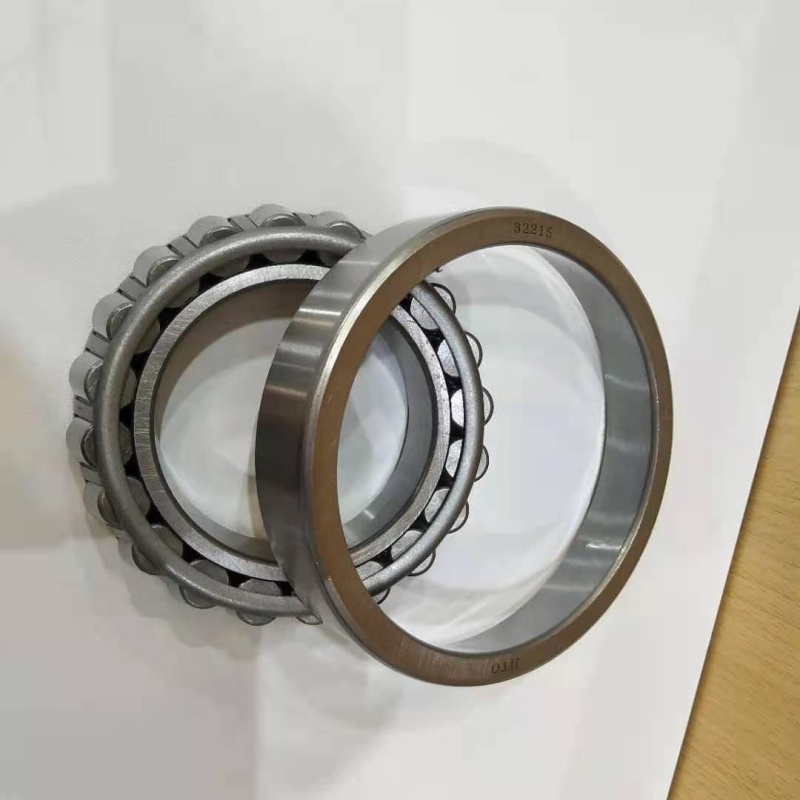
I have been selling bearings for over 10 years from my factory in China. My name is Li from FYTZ Bearing. I have helped buyers in India, Turkey, and Brazil fix their bearing problems. Let me show you why tapered rollers are the right choice for your upgrade.
Why Are Tapered Rollers More Reliable Than Ball Bearings When Upgrading Your Bearing System?
Your ball bearings get noisy after a few months. Then they seize. Your customers start asking for refunds.
Tapered rollers are more reliable because they have line contact instead of point contact. The roller touches the raceway along a full line. This spreads the load over a bigger area. So the bearing handles higher stress without breaking.
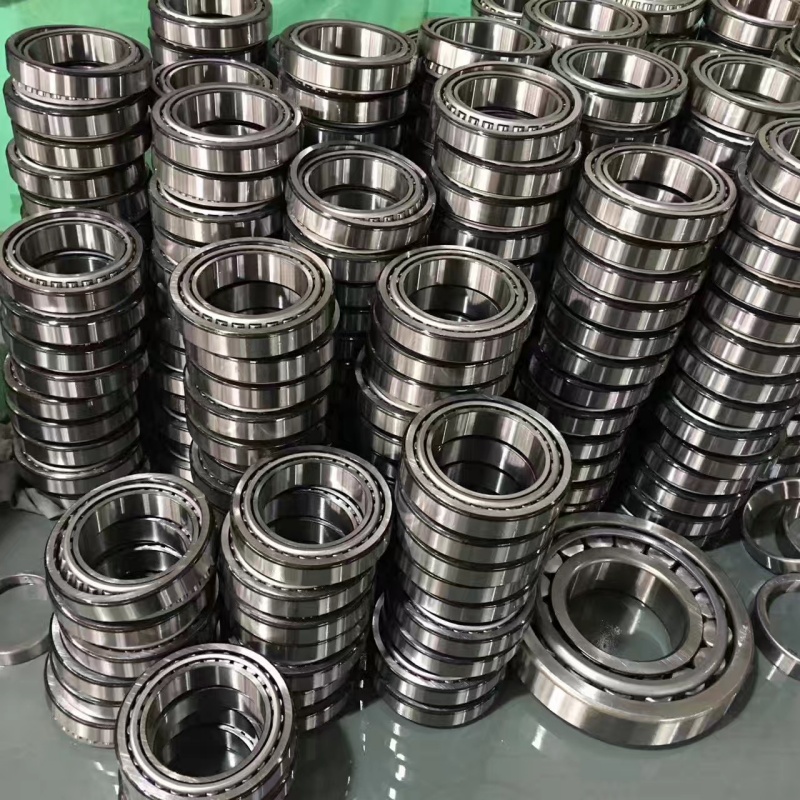
Let me explain why this matters for your upgrade. I have seen many buyers stick with deep groove ball bearings because they are cheap and easy to find. But that low price comes with a hidden cost. Ball bearings have a round ball touching a curved groove. That touch happens at one tiny point. Even with good lubrication, that point gets squeezed under heavy loads. The stress goes up very fast. The ball flattens. The raceway pits. Then the bearing fails.
Tapered rollers work differently. The roller is shaped like a small cone. It sits between the inner ring and outer ring. The whole side of the roller touches the raceway. That is a line, not a point. The load spreads out along that line. So the pressure per square millimeter drops by 10 to 20 times compared to a ball bearing.
Here is a simple comparison table:
| Feature | Ball Bearing | Tapered Roller Bearing |
|---|---|---|
| Contact type | Point contact | Line contact |
| Load spread | Very small area | Long line area |
| Stress under heavy load | High – causes early failure | Low – extends life |
| Ability to take shock | Poor – balls crack | Good – rollers absorb |
| Typical life in heavy use | 1,000–2,000 hours | 5,000–10,000 hours |
I remember a customer from Pakistan. He ran a textile mill. His machines used ball bearings on the main drive shafts. Those bearings failed every three months. He called me and asked for help. I suggested he try tapered roller bearings instead. He was worried about the cost difference. But I told him to test just one machine. We sent him a sample set. Those bearings ran for 11 months. He replaced all his bearings with our tapered rollers. Now he orders twice a year instead of four times.
Another reason tapered rollers are more reliable is their ability to handle misalignment. No machine is perfectly aligned. Shafts bend a little. Housings shift. Ball bearings get angry when they see misalignment. The balls run to one side and create edge loading. Tapered rollers can take a small amount of misalignment because the roller can tilt slightly inside the raceway. Our standard bearings allow up to 0.5 degrees of misalignment without losing performance.
So if you are upgrading a system that has heavy loads, shocks, or alignment issues, tapered rollers are the safer choice. Do not let the low price of ball bearings fool you. They cost more in the long run.
From a Load Capacity View: How Do Tapered Rollers Handle Both Radial and Axial Forces?
Your machine pushes in two directions at once. One force goes down. Another force goes sideways. Your old bearings cannot handle both.
Tapered rollers handle both radial and axial forces because of their angled design. The roller sits at an angle. That angle lets the bearing take a downward push (radial) and a side push (axial) at the same time. You do not need two separate bearings.
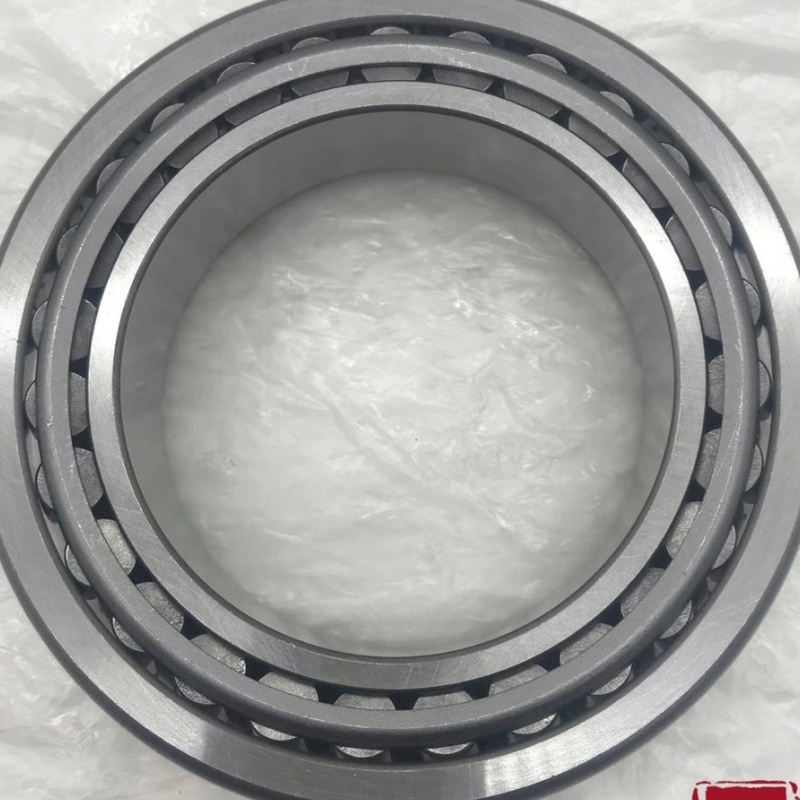
I want to explain this clearly because many buyers get confused. Think of a car wheel. The weight of the car pushes straight down on the axle. That is a radial load. But when you turn a corner, the wheel also gets a side force. That is an axial load. A ball bearing in that wheel can only take a small amount of side force. It will wear out quickly. A tapered roller bearing is made for this job.
The secret is the contact angle. Every tapered roller bearing has a number that tells you the angle between the roller and the bearing centerline. That number is usually between 10 and 25 degrees. A smaller angle gives better radial capacity. A larger angle gives better axial capacity. We can choose the angle based on your machine’s needs.
Let me break down the forces step by step.
Radial load (downward force)
The radial load pushes the roller against the outer ring raceway. The line contact spreads this load evenly. The roller does not deform much because the load is spread out. A ball under the same radial load would flatten at the contact point.
Axial load (side force)
The axial load pushes the roller against the large rib on the inner ring. That rib is very strong. We grind it to a smooth surface. The roller end touches the rib. This contact creates a small amount of friction, but it is controlled. The bearing can take an axial load that is up to 70% of the radial load for standard designs.
Combined load
Here is the real advantage. When both loads happen at the same time, the roller finds a balance point. It rolls along the raceway while the rib guides it. The angle keeps the roller stable. There is no sliding or skidding. This is why trucks, gearboxes, and mining equipment all use tapered rollers.
Here is a table showing load ratios for different bearing types:
| Bearing Type | Max Radial Load (kN) | Max Axial Load (kN) | Combined Load Efficiency |
|---|---|---|---|
| Deep groove ball bearing | 30 | 10 | Poor – needs two bearings |
| Cylindrical roller bearing | 50 | 0 (needs separate thrust bearing) | Very poor |
| Tapered roller bearing (12°) | 45 | 20 | Excellent |
| Tapered roller bearing (20°) | 35 | 35 | Excellent for high thrust |
I worked with a gearbox manufacturer in Turkey. They used a cylindrical roller bearing for the radial load and a thrust ball bearing for the axial load. That meant two bearings, more space, and more cost. I showed them how one tapered roller bearing could do both jobs. They changed their design. Now their gearbox is smaller, cheaper, and more reliable.
So when you upgrade your bearing system, ask yourself: Do I have forces from two directions? If yes, then tapered rollers are the smart answer.
How Much Service Life and Precision Can You Expect After Upgrading to Tapered Roller Bearings?
You want numbers. How many hours will the new bearings run? How accurate will your machine stay? You need real answers.
After upgrading to our tapered roller bearings, you can expect 3 to 5 times longer service life compared to ball bearings. Precision stays within P5 class (ISO grade 5) for most applications. That means runout below 0.008 mm for a 50 mm bore bearing.
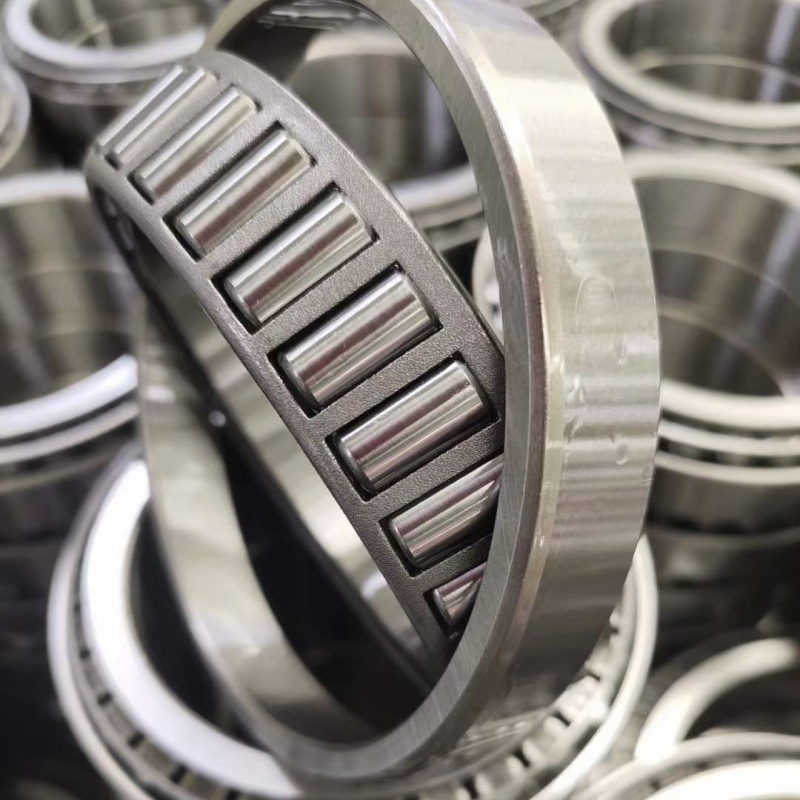
I do not like guessing. So I will give you real data from our factory tests and customer feedback. First, let us talk about service life. The bearing industry uses a standard formula called L10 life. That is the time when 90% of bearings in a group are still working. For a deep groove ball bearing under moderate load, the L10 life might be 5,000 hours. For the same shaft size and load, a tapered roller bearing often shows an L10 life of 20,000 hours. That is four times longer.
Why the big difference? The line contact reduces stress. Lower stress means less metal fatigue. The rolling elements also have more material. A ball is small. A roller has more volume. It takes longer for cracks to grow through a roller.
But life also depends on three things you control.
Lubrication quality
Good lubrication doubles the life. Bad lubrication cuts it by 90%. We recommend clean oil or grease with a viscosity of at least 100 cSt at operating temperature. For heavy loads, use EP (extreme pressure) additives.
Operating temperature
Every 15°C above 70°C cuts the life in half. If your bearing runs at 100°C, the life drops to 25% of the rating. We can supply bearings with special heat-stabilized steel for high-temperature applications.
Contamination control
Dirt is the biggest killer. One grain of sand inside the bearing can scratch the raceway. That scratch starts a crack. Our bearings come with good seals, but you also need clean housing and fresh grease.
Now let me talk about precision. Many buyers think tapered rollers are only for heavy, slow machines. That is not true. We make precision grades P6, P5, and even P4 for special orders. A P5 tapered bearing has a bore tolerance of 0 to -0.010 mm for a 50 mm shaft. The runout (how much the inner ring wobbles) is less than 0.008 mm. That is eight microns. For comparison, a human hair is about 70 microns.
Here is a real example. A printing machine maker from Egypt needed bearings for a high-speed roller. The roller had to stay straight within 0.01 mm or the print would blur. He tried ball bearings, but they had too much play. We gave him a matched set of two tapered bearings with a ground spacer. We set the preload at the factory. The runout was 0.006 mm. He has ordered 500 sets from us.
I also want to be honest about the trade-off. Tapered bearings are not as good for very high speeds above 10,000 RPM. They create more heat than angular contact ball bearings at those speeds. But for 99% of industrial machines running below 5,000 RPM, tapered rollers are fine.
So here is my advice. Upgrade to tapered rollers if you want longer life and good precision. Tell us your speed, load, and temperature. We will pick the right grade and internal clearance. Do not expect miracles from cheap tapered bearings from unknown traders. Buy from a factory like ours that controls every step.
Installation and Adjustment: Three Details Most Easily Overlooked When Switching to Tapered Rollers
You bought the new tapered bearings. You open the box. You want to install them quickly. But you make small mistakes that kill the bearings in one week.
When switching to tapered rollers, the three most overlooked details are: preload setting, lubrication type, and housing fit. Get these wrong and your upgrade fails.
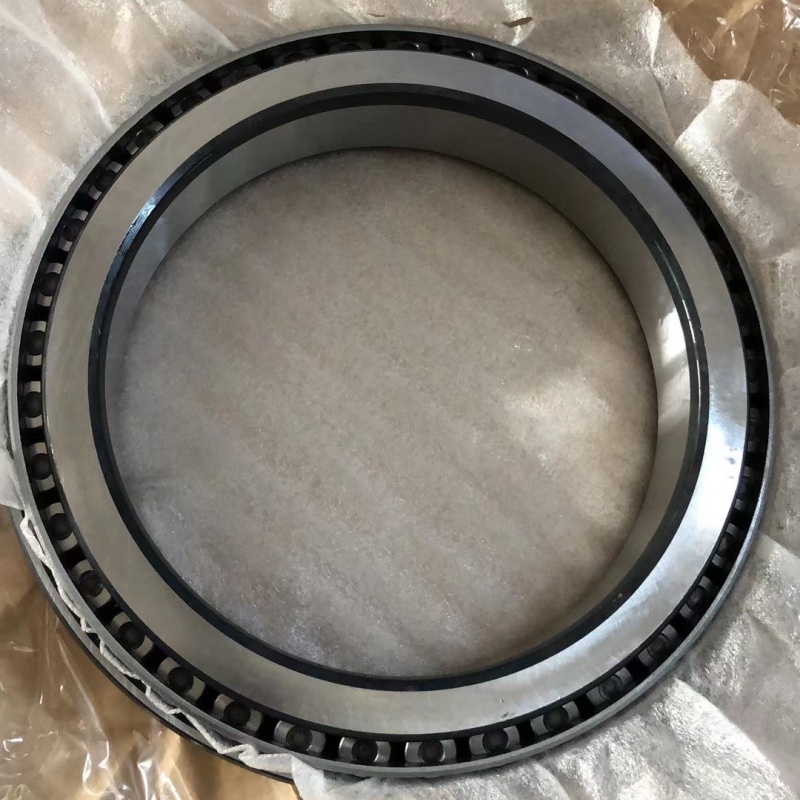
I have visited many customers who complained about our bearings failing. Every time I went to their workshop, I found the same mistakes. The bearings were good. The installation was bad. So let me save you from those problems.
Detail 1: Preload setting
Tapered roller bearings never work properly with loose clearance. They need a small amount of preload. That means you push the inner ring and outer ring together slightly before you run the machine. The preload takes out all internal play. It keeps the rollers in constant contact with the raceways.
How much preload? Too much preload overheats the bearing. Too little preload lets the rollers slide and skid. For a typical 50 mm bore bearing, the right preload is 0.02 to 0.05 mm of axial compression. We measure this by tightening the locknut and checking the drag torque. You should feel a smooth resistance when you turn the shaft by hand.
Many mechanics just tighten the nut hard. That is wrong. I saw a factory in India that broke three bearings in one month. They used an impact wrench on the locknut. The preload was 10 times too high. The bearings ran hot and seized. I taught them to use a torque wrench. Now they set the preload correctly and the bearings last two years.
Detail 2: Lubrication type
Tapered rollers need different grease than ball bearings. Because there is more sliding at the rib contact, you need a grease with high film strength. Look for a grease with NLGI grade 2, base oil viscosity of 150 to 220 cSt, and EP additives. Lithium complex or polyurea thickeners work well.
Do not use thin oil without a pump. And never mix greases from different brands. The thickeners can react and turn into hard soap. I once saw a customer mix a lithium grease with a calcium grease. The mixture became solid like wax. The bearing locked up in two hours.
For oil-lubricated systems, use ISO VG 150 to 220 oil. Make sure the oil level reaches the lowest roller. A sight glass helps you check the level.
Detail 3: Housing fit
The outer ring of a tapered bearing needs a tight fit in the housing. But not too tight. For a steel housing, we recommend an interference fit of 0 to +0.015 mm for the housing bore. That means the housing is slightly smaller than the bearing outer ring. You need a press to push it in.
If the housing is aluminum or plastic, the fit must be tighter because aluminum expands more with heat. For aluminum, use +0.015 to +0.030 mm interference.
A loose fit lets the outer ring spin in the housing. That wears out the housing bore and destroys the bearing. A too-tight fit crushes the outer ring and changes the internal clearance. We provide a fit chart with every order.
Here is a quick checklist table for installation:
| Step | What to Check | Common Mistake | Our Recommendation |
|---|---|---|---|
| Preload | Axial compression | Over-tightening with impact wrench | Use torque wrench; measure drag torque |
| Grease | Viscosity and EP additives | Using general-purpose grease | NLGI 2, 150-220 cSt, EP |
| Housing fit | Bore tolerance | Loose fit for easy assembly | Interference fit per our chart |
| Cleanliness | No dust or metal chips | Blowing parts with compressed air | Wash with solvent; dry with clean cloth |
| Lubricant amount | 30% fill of free space | Packing full of grease | 1/3 to 1/2 of cavity |
I also want to tell you about a common shortcut that fails. Some mechanics tap the bearing into place with a hammer and a pipe. That damages the raceway. Always use a proper fitting tool or an induction heater for the inner ring. Heat the inner ring to 100°C. It expands and slides onto the shaft easily. No hammer needed.
So please remember these three details. They take an extra 10 minutes during installation. That small time saves you months of failure later.
Conclusion
Upgrading to tapered rollers gives you better load handling, longer life, and higher reliability. Just install them correctly and they will serve you well.