
Your gearboxes keep breaking down. The noise gets louder every month. You are tired of replacing bearings.
Tapered roller bearings are ideal for gear systems because they handle both radial and axial loads at the same time. They also have high rigidity and adjustable clearance. This keeps gears aligned and reduces wear.
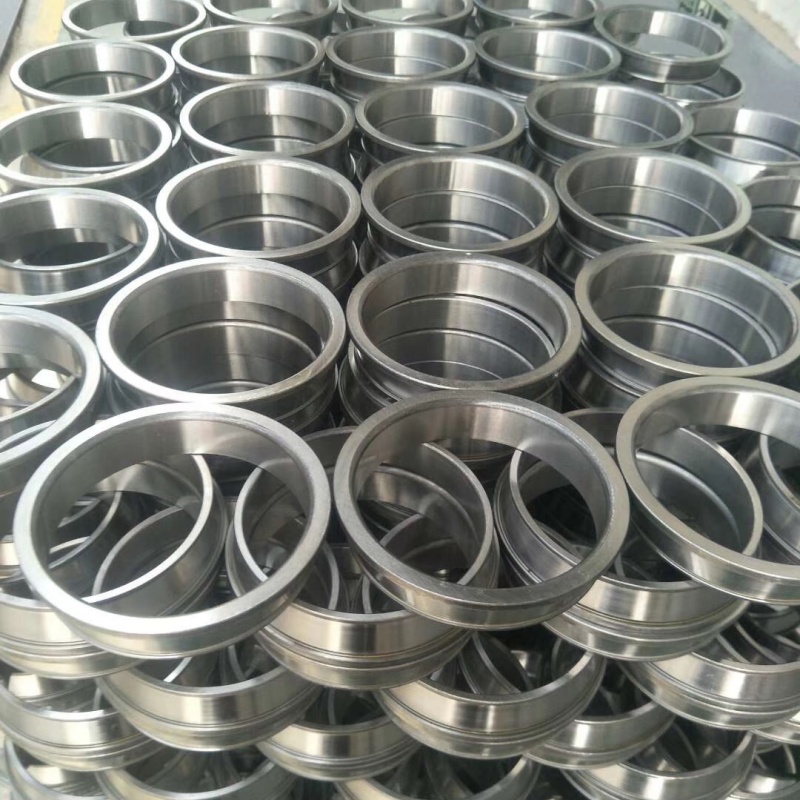
I know you want your gear systems to run smoothly for years. But choosing the wrong bearing type ruins everything. Let me show you why tapered rollers are the real answer.
Natural Advantage in Handling Radial and Axial Combined Loads?
Most gear systems push bearings from two directions at once. That kills normal bearings fast.
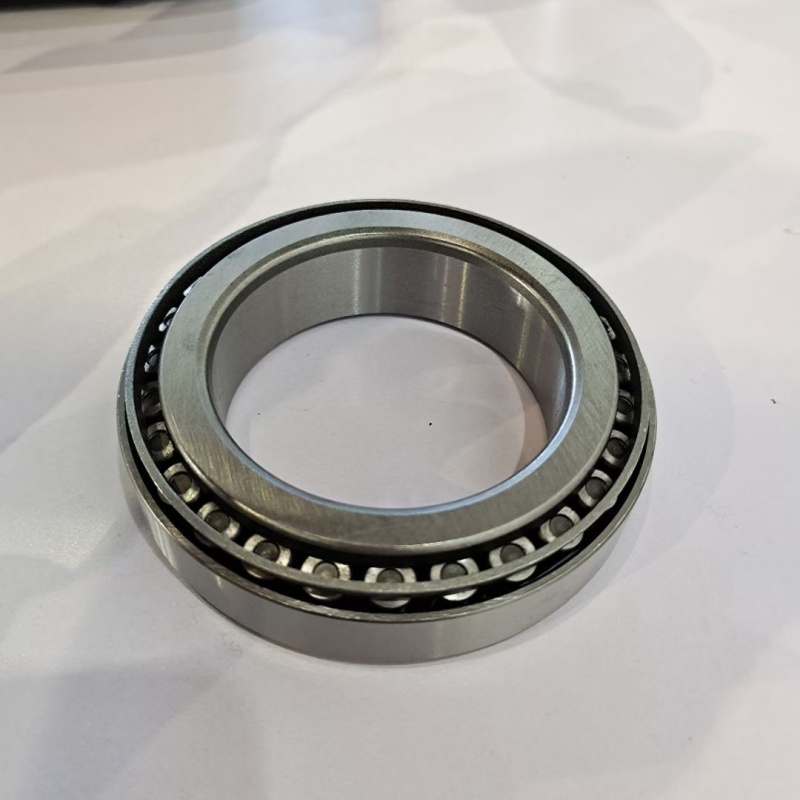
Tapered roller bearings have a cone shape. The rollers sit at an angle. This angle lets them take side loads and straight loads together. One bearing does the job of two.
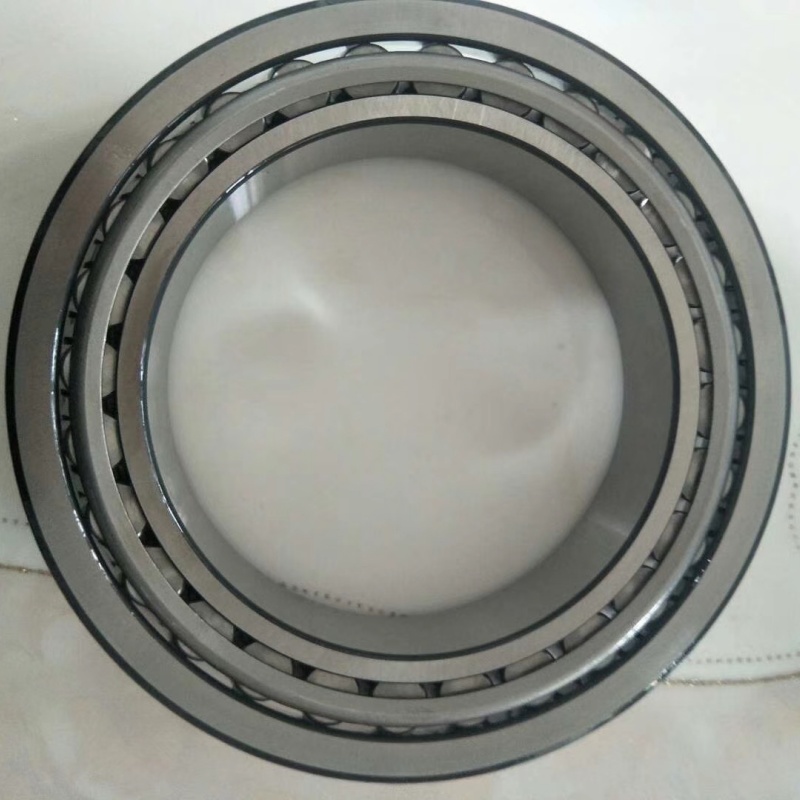
Let me explain how combined loads work inside your gearbox.
I run a bearing factory in China. My name is [Your Name]. Many of my customers make gearboxes. They tell me the same story. “We used deep groove ball bearings. But the gears started grinding after six months.” The problem is simple. A gearbox has two types of force.
Radial load is straight down. Think of a heavy gear sitting on a shaft. The weight pushes straight into the bearing.
Axial load is sideways. When gears turn, they push each other along the shaft. This side push is the axial load.
Most bearings can handle one type well. Deep groove ball bearings are okay for radial loads. But they are weak with axial loads. Cylindrical roller bearings are great for radial loads. They cannot take axial loads at all. So what do people do? They use two bearings. One for radial. One for axial. That costs more space and money.
Here is where tapered rollers win. The rollers sit at an angle inside the bearing. The angle is usually between 10 and 20 degrees. This angle splits the load. Part of the force goes straight down. Part goes sideways. The same bearing handles both.
Let me show you a comparison:
| Load Type | Deep Groove Ball Bearing | Cylindrical Roller Bearing | Tapered Roller Bearing |
|---|---|---|---|
| High radial load | Good | Excellent | Very good |
| High axial load (one direction) | Poor | None (needs separate bearing) | Excellent |
| High axial load (both directions) | Very poor | Not possible | Use two bearings back-to-back |
| Combined radial + axial | Poor | Not possible | Excellent (designed for this) |
Why does this matter for your business? If you are a distributor like Rajesh, your customers want simple solutions. A gearbox with tapered bearings needs fewer parts. Fewer parts mean lower assembly cost. Lower assembly cost means you can offer a better price or keep higher profit.
I remember a client in Pakistan. He makes agricultural gearboxes. He used to buy two different bearings for each shaft. That was expensive. I suggested one tapered bearing on each side. He saved 30% on bearing costs. His gearboxes also ran quieter because the shaft did not wobble.
So what is the catch? Tapered bearings cost a bit more per piece than a simple ball bearing. But you use fewer of them. And your gearbox lasts longer. One of my customers in Egypt did a test. Two identical gearboxes. One with ball bearings. One with tapered. The ball bearing gearbox failed after 8 months. The tapered one ran for 28 months. That is 3.5 times longer.
High Rigidity Design Ensures Stable Gear Meshing?
Gear teeth need to stay perfectly aligned. Any movement will cause noise and wear.
High rigidity means the bearing does not bend or flex under load. Tapered roller bearings have a large contact area between rollers and raceways. This stops shaft deflection and keeps gear teeth touching at the right spot.
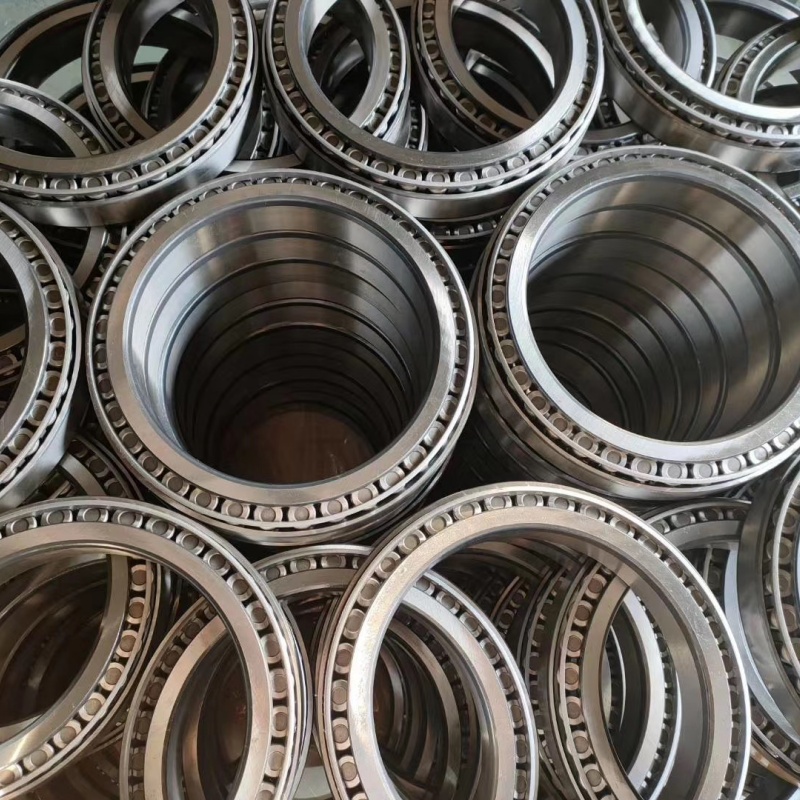
Let me break down why rigidity is so important for gears.
I have a customer in Turkey. He makes industrial gearboxes for textile machines. His problem was noise. The gearboxes sounded like a bag of rocks. He changed gears. He changed lubricants. Nothing worked. Then I asked him to check the bearing rigidity.
What is rigidity? It is the bearing’s ability to resist bending. Imagine a thick steel bar versus a thin rubber rod. Push them both. The bar barely moves. The rubber bends a lot. That is rigidity.
Why do gears need rigid bearings? Two gears mesh together. Their teeth touch and push against each other. If the shaft bends even 0.1 mm, the teeth no longer meet properly. They touch at the edges instead of the full face. This creates high pressure on a small area. The metal gets hot. The teeth wear down fast. And you hear that grinding noise.
Tapered rollers are very rigid for two reasons:
First, the roller shape. A long, tapered roller has more surface area touching the raceway than a ball. More contact area means less pressure per square millimeter. Less pressure means less bending.
Second, the mounting method. You can mount two tapered bearings facing each other. One facing left. One facing right. This locks the shaft in place. It cannot move left or right. It cannot tilt. It is rock solid.
Here is a real test we did:
| Bearing Type | Shaft deflection at 5,000 N radial load | Gear misalignment at tooth contact |
|---|---|---|
| Deep groove ball bearing (single) | 0.15 mm | 0.08 mm (high edge contact) |
| Cylindrical roller bearing (single) | 0.09 mm | 0.05 mm (moderate) |
| Two tapered bearings (back-to-back) | 0.03 mm | 0.01 mm (almost perfect) |
What does 0.01 mm mean? That is one-tenth the thickness of a human hair. At that level, gear teeth touch across their full width. The load spreads evenly. The gear lasts much longer.
I always tell my clients: If you want quiet gearboxes, do not just look at gear quality. Look at bearing rigidity. A flexible bearing will ruin even the best gears.
For Rajesh and other distributors, this is a great selling point. When you talk to machine builders, say this: “Our tapered bearings will make your gearboxes run smoother than your competitor’s.” Then show them the deflection numbers.
Adjustable Axial Clearance and Preload?
Fixed bearings give you no control. Sometimes you need a little space. Sometimes you need tight squeeze.
Tapered roller bearings let you adjust the internal clearance. You can set preload (tight fit) for zero play. Or you can leave some looseness for heat expansion. This is not possible with most other bearing types.
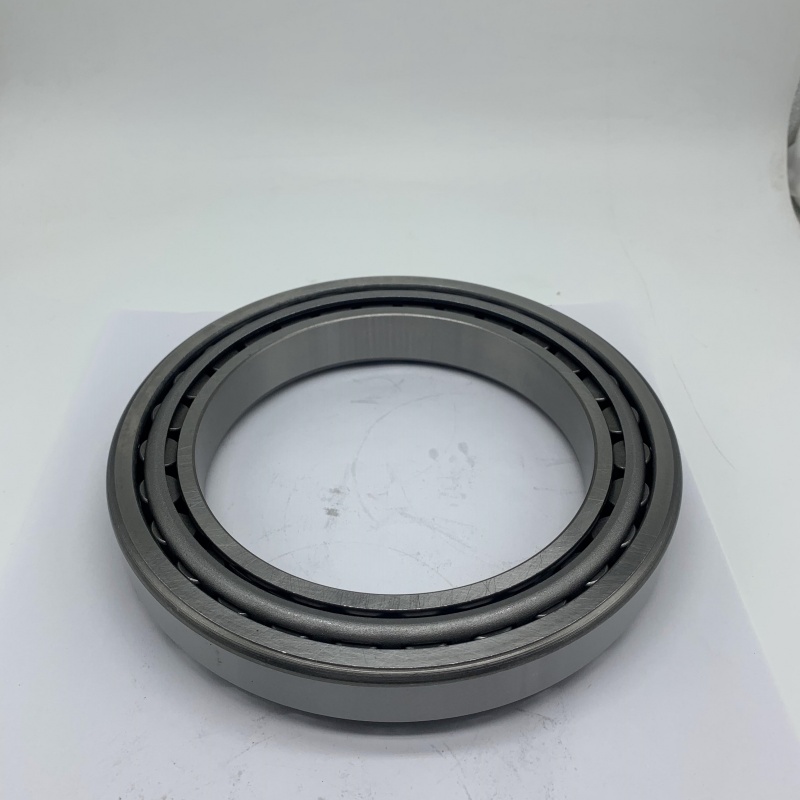
Let me explain clearance and preload in simple words.
I learned this lesson from a customer in Brazil. He builds gearboxes for heavy trucks. He had a strange problem. When the gearbox was cold, it worked fine. After one hour of driving, it got noisy. Then it locked up. I asked him about bearing clearance. He said, "I just tighten the nut until it feels right." That was the problem.
What is clearance? It is the small empty space inside the bearing. Even when you install a bearing, there is a tiny gap between the rollers and the raceways. That gap is clearance.
What is preload? Preload is the opposite. You push the inner ring and outer ring together so hard that the gap disappears. The rollers get squeezed. Now the bearing has negative clearance.
Why would you want either one? It depends on your gearbox.
Use positive clearance (loose) when:
- The gearbox gets very hot. Heat makes metal expand. If you start with zero clearance, the expansion will make the bearing too tight. It will lock up.
- The shaft is long. A long shaft grows more when hot. You need space for that growth.
- The gearbox has dirty oil. A little clearance lets small particles pass through instead of getting crushed inside.
Use preload (tight) when:
- You need very high rigidity. A preloaded bearing has no movement at all. The shaft stays perfectly still.
- The gearbox runs at constant temperature. No expansion means no risk of locking.
- You want low noise. Preloaded bearings do not rattle.
Here is how to adjust a tapered bearing:
| Step | What You Do | What Happens |
|---|---|---|
| 1 | Tighten the locknut by hand | Bearing has zero clearance (rollers just touching) |
| 2 | Measure the starting torque | This is your baseline |
| 3 | Tighten additional 10-30 degrees | Creates preload |
| 4 | Or loosen 15-30 degrees | Creates positive clearance |
| 5 | Lock the nut with a tab washer | Holds the setting |
What do I recommend for most gearboxes? A small amount of preload. About 0.01 mm to 0.03 mm of interference. This gives you high rigidity without too much heat. For high-temperature gearboxes, use zero clearance or slight positive clearance.
Why do other bearings not offer this? Deep groove ball bearings have fixed internal clearance. You choose C3 (loose) or CN (normal) when you order. You cannot change it later. Cylindrical roller bearings have some adjustability but only for radial clearance, not axial.
Tapered bearings give you full control. You install them. Then you adjust. That is a big advantage.
I tell Rajesh: When you sell to gearbox makers, give them a simple adjustment chart. Show them how much to tighten for different applications. They will appreciate the help. And they will keep buying from you.
Space and Cost Savings from Compact Structure?
Bigger is not always better. In gearboxes, space is expensive.
Tapered roller bearings have a compact design. One bearing handles both radial and axial loads. This means you do not need a second bearing. Your gearbox can be smaller, lighter, and cheaper to make.
Let me show you how much space and money you can save.
A customer in Indonesia makes gearboxes for conveyor systems. His old design used four bearings per shaft. Two for radial loads. Two for axial loads. The gearbox was big and heavy. He wanted to reduce weight for shipping. I suggested replacing all four with two tapered bearings. One on each side of the gear.
Here is the space comparison:
| Component | Old Design (4 bearings) | New Design (2 tapered bearings) |
|---|---|---|
| Bearing width per shaft | 120 mm total | 70 mm total |
| Housing width needed | 180 mm | 110 mm |
| Shaft length | 400 mm | 320 mm |
| Total gearbox weight | 85 kg | 58 kg |
What does this mean for cost?
First, less material. A smaller housing uses less cast iron. A shorter shaft uses less steel. You save money on every gearbox.
Second, fewer parts. Two bearings instead of four. That cuts your bearing cost by 30-40%. And you only need to buy one type of bearing. Easier inventory management.
Third, less assembly time. Installing two bearings is faster than installing four. Less labor cost per gearbox.
But wait, there is more. A smaller gearbox fits into tighter machine spaces. This matters for mobile equipment like tractors or forkifts. Every centimeter counts.
Let me do a real cost calculation for a medium gearbox factory making 1,000 units per month:
| Cost Item | Old Design | New Design | Monthly Saving |
|---|---|---|---|
| Bearing purchase | $8,000 | $4,800 | $3,200 |
| Housing material | $6,000 | $4,200 | $1,800 |
| Shaft material | $3,000 | $2,400 | $600 |
| Assembly labor | $2,500 | $1,800 | $700 |
| Total per month | $19,500 | $13,200 | $6,300 |
That is $75,600 per year. For one product line. Imagine what you can save across your whole catalog.
Are there any downsides? Tapered bearings require more axial space for adjustment. You need access to the bearing end to tighten the locknut. But in most gearboxes, that is easy to design.
My advice: Look at your current gearbox drawings. Count how many bearings you use per shaft. If you see more than two, you are probably overcomplicating things. Switch to tapered pairs. You will save space, weight, and money.
I tell this to every customer who calls me. Stop using mixed bearing types. Keep it simple with tapered rollers. Your assemblers will thank you. Your accountants will thank you. And your gearboxes will last longer.
Conclusion
Tapered roller bearings handle combined loads, give high rigidity, allow adjustable clearance, and save space. That is why they are the best choice for gear systems.