
Your greenhouse fans keep seizing. Cooling pads stop working. You replace bearings every month.
That costs time and money. The right pillow block bearing solves this.
Short answer: Greenhouse fans run in wet, dirty, and corrosive air. Standard bearings rust and fail fast. You need bearings with stainless steel housings, triple seals, and moisture-resistant grease.
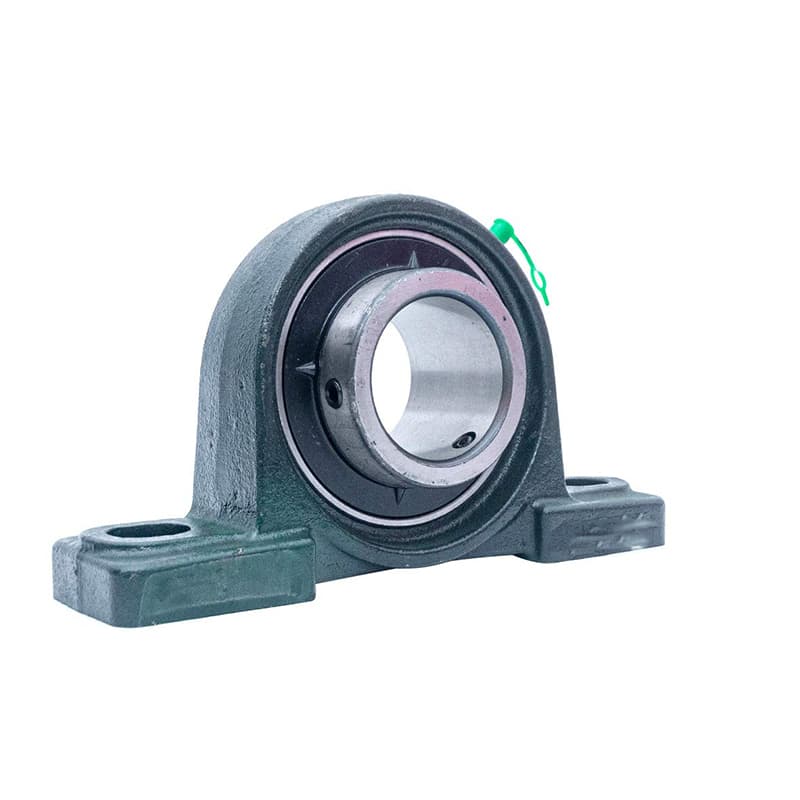
You might think a fan is a fan. But I have supplied bearings to farms in Vietnam and Egypt. The greenhouse environment is brutal. Let me show you what works and what fails.
Why Greenhouse Fans and Cooling Pads Destroy Standard Bearings Fast?
You install a new bearing. Three weeks later, it makes grinding noises. The fan wobbles. What went wrong?
Short answer: Greenhouse fans pull in humid air full of dust, fertilizer particles, and moisture. Cooling pads spray water continuously. That water gets into bearings. Standard bearings have weak seals. Water washes away the grease. Then rust starts.
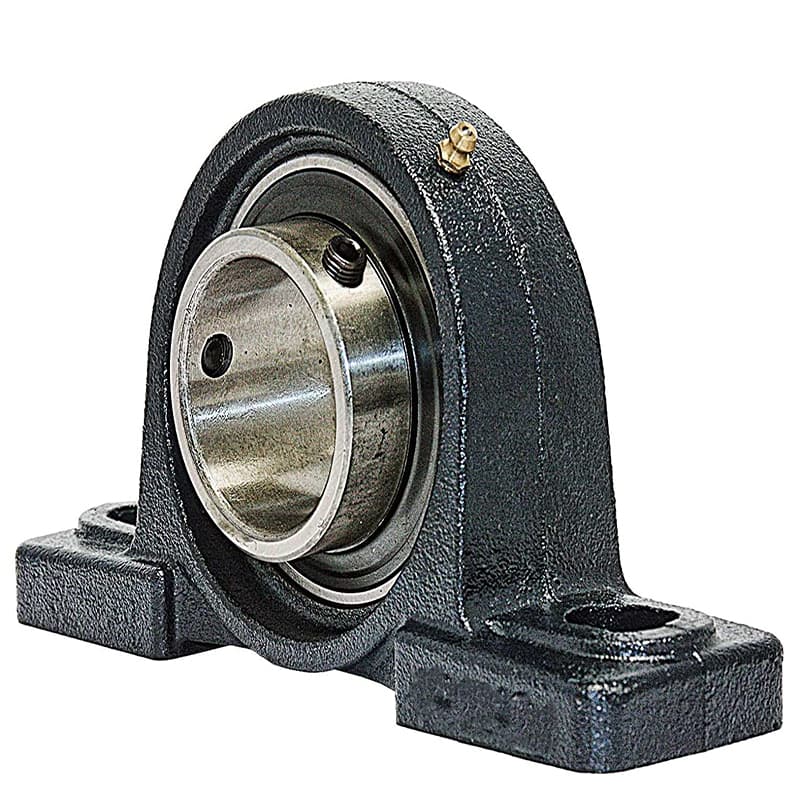
The real reasons standard bearings die quickly
I remember a customer in Turkey. He ran a large tomato greenhouse. His exhaust fans used standard pillow block bearings. Each bearing lasted one month. He called me angry. I asked him about the environment. He said "the fogging system runs every hour." That mist goes everywhere. The bearings were not designed for that. Let me break down the three killers.
Killer 1: High humidity
Greenhouses often run at 70% to 90% relative humidity. That means water vapor is in the air all the time. When warm air hits a cooler bearing housing, water condenses on the metal. That water seeps past poor seals. Inside the bearing, it mixes with grease. The grease turns into a milky mess and loses its ability to lubricate.
Killer 2: Cooling pad water spray
Evaporative cooling pads pump water constantly. Some of that water turns into mist. Fans pull that mist across the bearings. Direct water contact is even worse than humidity. A bearing with a standard single lip seal will let water in within days.
Killer 3: Fertilizer and chemical residue
Greenhouses use liquid fertilizers and pesticides. These chemicals get into the air. They settle on bearings. Many fertilizers are salts. Salts attract more moisture. They also cause electrochemical corrosion. Aluminum housings can pit and crumble. Steel rusts even faster.
Here is a comparison of bearing life in greenhouse conditions:
| Bearing type | Typical life in greenhouse fan | Cause of failure |
|---|---|---|
| Standard chrome steel + pressed steel housing | 2-4 weeks | Rust and seal failure |
| Chrome steel with rubber seals | 1-3 months | Water ingress, grease washout |
| 304 stainless housing + chrome insert | 4-6 months | Insert rusts, housing okay |
| Full 316 stainless + Viton seals | 12-24 months | Minimal corrosion |
What you can do right now
If you already have standard bearings, add a rubber or plastic shield over the bearing. A simple cover can block direct water spray. But the real fix is to switch to bearings made for wet environments. I always tell my farm customers: spend a little more upfront, save a lot on labor and downtime.
Moisture and Ammonia – The Two Hidden Threats to Bearings in Agricultural Cooling?
Water is bad. But water with ammonia is worse. Poultry and pig farms have high ammonia levels. Greenhouses near animal barns also get ammonia.
Short answer: Ammonia gas mixes with moisture to form a corrosive solution that attacks copper, brass, and standard steel. It also degrades nitrile rubber seals. You need stainless steel bearings with fluorocarbon (Viton) seals.
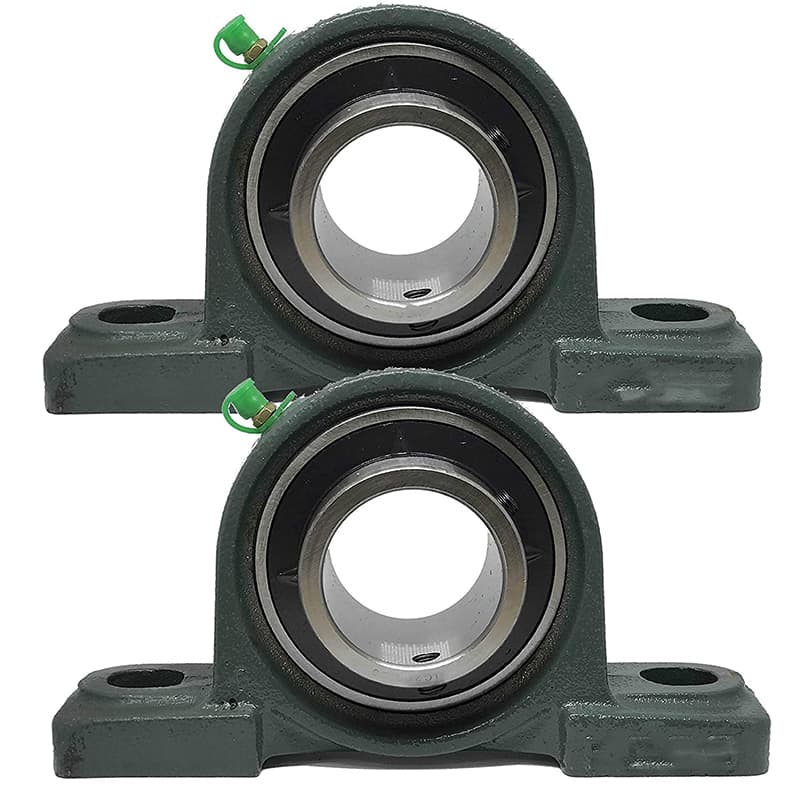
How ammonia destroys bearings from the inside out
A customer in Brazil called me. He had cooling fans on a chicken farm. The bearings failed every two weeks. The housings looked fine from outside. But inside, the bearing races were pitted and dark. I asked about ammonia. He said the ammonia level was high because of bird droppings. That was the answer. Let me explain the chemistry.
What ammonia does
Ammonia gas (NH3) is released from animal waste and decaying plant matter. When ammonia meets water vapor, it forms ammonium hydroxide. That is a mild base with pH around 11 to 12. This solution attacks several materials:
- Copper and brass – Used in some bearing cages and grease thickeners. Ammonia causes stress corrosion cracking.
- Standard chrome steel – The surface reacts and forms dark spots. These spots are weak points where rust starts.
- Nitrile rubber (NBR) – Common seal material. Ammonia makes NBR hard and brittle. The seal cracks and leaks.
Materials that resist ammonia
| Material | Resistance to ammonia | Good for greenhouse/poultry |
|---|---|---|
| Chrome steel (GCr15) | Poor | No – will corrode |
| 304 stainless steel | Good | Yes – but can stain |
| 316 stainless steel | Very good | Yes – best choice |
| Nitrile rubber (NBR) | Poor | No – seals fail |
| Viton (FKM) rubber | Excellent | Yes – use for all seals |
| Polypropylene or nylon cage | Good | Yes – better than brass |
How to know if ammonia is your problem
Look at a failed bearing. If the races have dark gray or black spots, that is ammonia corrosion. Also check the grease. If it smells like ammonia and has turned dark, the chemical has gotten inside. Another sign: the seal lips feel hard and cracked, not soft and flexible.
My recommendation for high-ammonia environments
Use bearings with 316 stainless steel housing and insert. Use Viton (FKM) seals. Use a polyamide (plastic) bearing cage instead of brass. Also use a grease that is ammonia-resistant – look for aluminum complex or barium complex greases. I have supplied these to poultry farms in Egypt and South Africa. They last over two years.
Corrosion-Resistant Housing Materials for Humid Greenhouse Environments?
You see rust on the bearing housing. You think it is just surface rust. But that rust spreads to the inside.
Short answer: For greenhouses, choose 316 stainless steel or high-grade polymer (composite) housings. Cast iron with epoxy paint works for dry areas but fails in wet greenhouses. Aluminum is the worst – it pits and corrodes fast.
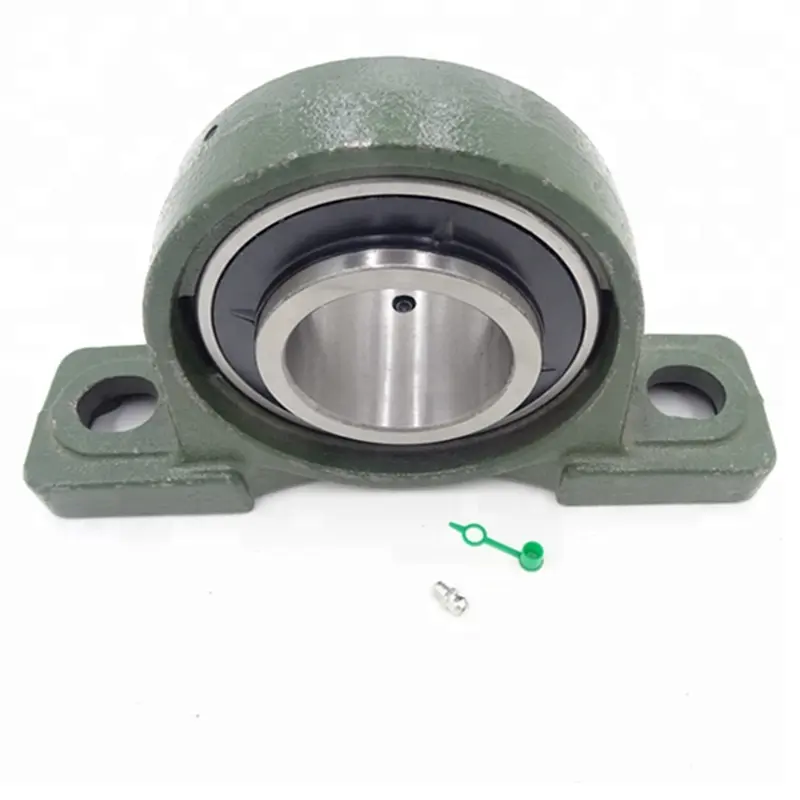
Comparing housing materials side by side
I learned this from a customer in Indonesia. He ran a tropical greenhouse. Humidity was 95% year-round. He used cast iron housings with paint. The paint bubbled and peeled in six months. The cast iron underneath turned into red dust. The bearings fell off. He replaced everything with 316 stainless. That was five years ago. No failures since. Let me compare the options.
Housing material 1: Cast iron with paint
This is cheap and strong. But paint is not perfect. One scratch exposes raw iron. Rust starts under the paint and spreads. For dry greenhouses (desert areas), it can work. For humid or wet greenhouses, avoid it.
Housing material 2: Aluminum
Aluminum does not rust like iron. But it suffers from pitting corrosion. Fertilizer salts and acidic sprays eat holes in aluminum. The surface becomes rough and white. Aluminum is also soft. Bolts can strip the threads. I do not recommend aluminum for greenhouses.
Housing material 3: 304 stainless steel
This is the standard food-grade stainless. It resists rust well. But chlorine from water treatment can cause pitting over time. For most greenhouses, 304 is good enough. It costs about 3-4 times more than cast iron.
Housing material 4: 316 stainless steel
This has molybdenum added. That makes it resist chlorides and acids much better. 316 is the top choice for wet greenhouses, poultry farms, and anywhere with chemicals. It costs about 5-6 times more than cast iron.
Housing material 5: Polymer (composite) plastic
This is a glass-filled nylon or similar material. It never rusts. It is lightweight. It absorbs vibration. The downside: it cannot handle high heat (above 100°C). It also has lower load capacity. For small greenhouse fans, polymer works great. It costs about the same as 304 stainless.
Here is a summary table:
| Material | Corrosion resistance | Cost factor | Best for |
|---|---|---|---|
| Cast iron + paint | Poor | 1x | Dry greenhouses, low humidity |
| Aluminum | Fair | 1.5x | Not recommended |
| 304 stainless | Good | 4x | Most greenhouses |
| 316 stainless | Excellent | 6x | Wet, chemical, or coastal greenhouses |
| Polymer/composite | Excellent | 4x | Small fans, low load, no high heat |
One more tip: bolts and hardware
Do not use standard zinc-plated bolts on stainless housings. Zinc and stainless together cause galvanic corrosion. Use stainless steel bolts (A2 for 304, A4 for 316). Also use anti-seize compound on the bolt threads. This stops galling – a common problem where stainless bolts seize and break.
Sealed-for-Life vs. Relubricatable Bearings – Which One Works Better on Ventilation Shafts?
Some bearings say “no maintenance needed.” Others have a grease fitting. You wonder which is better for your greenhouse fans.
Short answer: For greenhouse ventilation shafts, choose relubricatable bearings. Humidity and dust mean you need fresh grease often. Sealed-for-life bearings work only in clean, dry, low-speed applications. That is not a greenhouse.
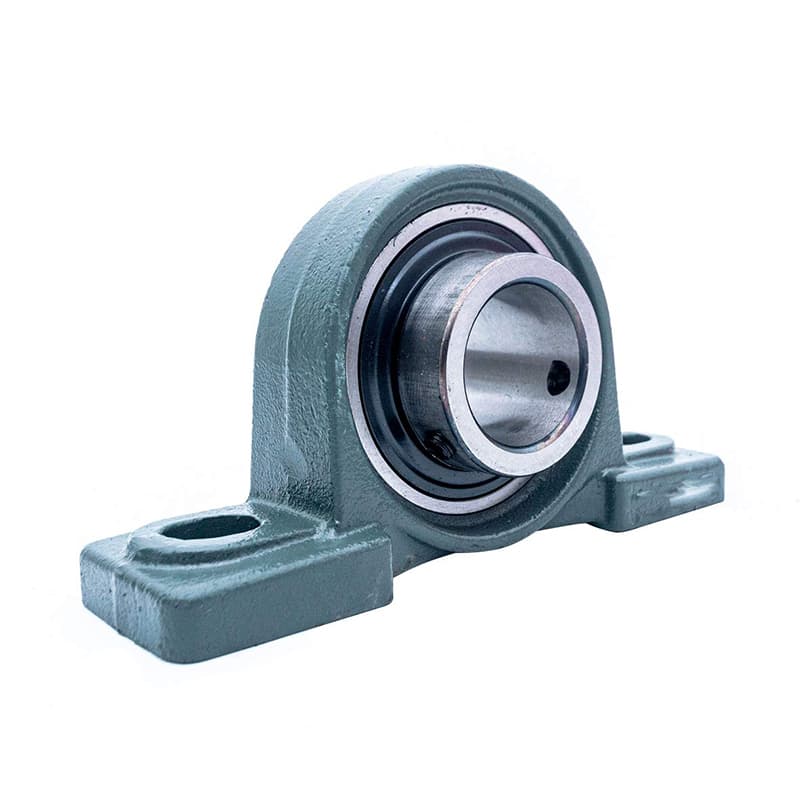
Why sealed bearings fail in greenhouses
A customer in India asked me for sealed-for-life bearings. He did not want to pay workers to grease fans. I warned him. He bought them anyway. Six months later, he called me. All 50 fans had seized. The sealed bearings could not keep water out. The grease inside washed away. Now he buys only relubricatable bearings from me. Here is the full story.
What “sealed-for-life” really means
These bearings come pre-greased from the factory. They have good seals. But the grease will eventually dry out or get contaminated. The “life” is the bearing’s expected life under ideal conditions. In a greenhouse, conditions are not ideal. The seals are not perfect. Water always finds a way in. Once the grease is gone, you cannot add more. The bearing is finished.
When sealed bearings can work
- Fans that run only a few hours per day
- Very dry greenhouses (desert regions)
- Small, cheap fans that are easy to replace
- Speeds below 500 RPM
Why relubricatable bearings are better for most greenhouses
These bearings have a grease fitting (also called a zerk fitting). You pump fresh grease into the bearing. The old grease gets pushed out, carrying dirt and moisture with it. This flushing action is very valuable in wet environments. You can also choose the right grease for your conditions – high-temperature, water-resistant, or ammonia-resistant.
How often to relubricate greenhouse fan bearings
| Fan run time per day | Humidity level | Relubrication interval |
|---|---|---|
| 8 hours | Low (<50%) | Every 6 months |
| 8 hours | High (>80%) | Every 2 months |
| 24 hours | Low | Every 3 months |
| 24 hours | High | Every month |
How much grease to add
Too much grease is bad. It causes churning and heat. For a typical greenhouse fan with a UC208 bearing (40 mm shaft), add about 3-5 grams of grease. That is roughly the size of a large grape. Pump slowly. Stop when you see a small amount of old grease coming out of the seal.
My recommended grease for greenhouse fans
Use a lithium complex grease with NLGI grade 2. Look for water resistance rating (ASTM D4049) above 1 kg. Polyurea grease also works well. Avoid standard lithium grease – it washes off easily. And never use grease with graphite or molybdenum disulfide in wet environments. Those solid additives can absorb water and make things worse.
One last thing: Make sure the grease fitting is clean before you pump. Wipe off dirt with a rag. If dirt gets inside the fitting, you push it straight into the bearing. I have seen bearings fail from dirty grease fittings more times than I can count.
Conclusion
Pick stainless or composite housings, add Viton seals, and relubricate often. Your greenhouse fans will run for years.