
You pick a bearing. It fails after three months. The speed is not high. The load is not heavy. So why does it die so fast?
Short answer: Medium-speed equipment runs between 500 and 2,000 RPM. At this range, heat and lubrication are the real killers. Pick a bearing with the right internal clearance and high-temperature grease.
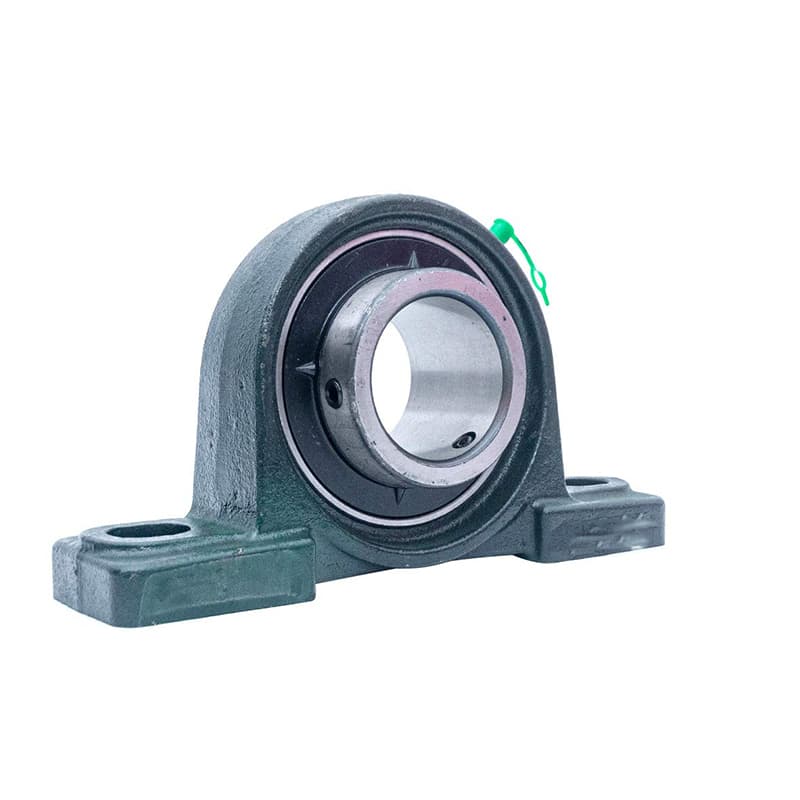
You might think medium speed is safe. But I have seen too many bearings fail at 1,200 RPM. The problem is not speed alone. It is how heat builds up. Let me walk you through the right way to choose bearings for this tricky range.
What Is “Medium-Speed” for Pillow Block Bearings – And Why It Matters?
Every supplier says “high speed” or “low speed.” No one defines medium speed. So you guess. And then the bearing fails.
Short answer: For pillow block bearings, medium speed is 500 to 2,000 RPM. Below 500 RPM, heat is not a big problem. Above 2,000 RPM, you need precision bearings. In the middle, you need special attention to grease and clearance.
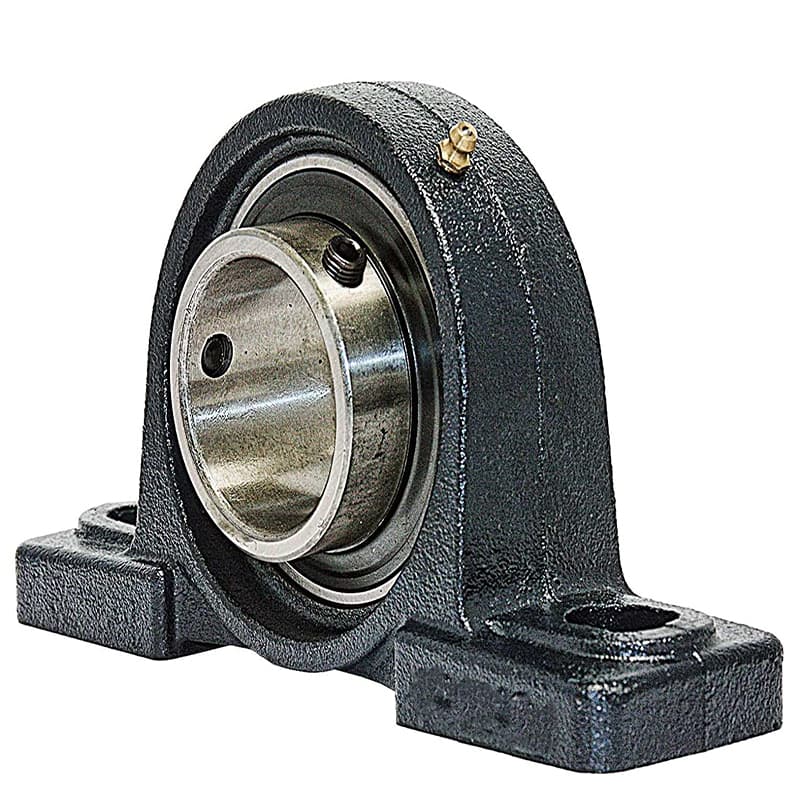
Why the medium range is tricky
I remember a customer in India. Mr. Rajesh called me. He said, “I bought your bearings for a bottling line. They run at 1,800 RPM. They lasted only two months.” I asked him about the grease. He used standard lithium grease. That was the mistake. At 1,800 RPM, standard grease melts and runs out. The bearing overheats and seizes.
Three speed zones you need to know
-
Low speed (0 to 500 RPM) – Heat is small. Any grease works. You can use set screw locking. The main worry is shock loads, not speed.
-
Medium speed (500 to 2,000 RPM) – Heat starts to build. Grease must resist high temperature. You also need proper internal clearance (C3 or higher). Misalignment becomes a bigger problem.
-
High speed (2,000 to 5,000+ RPM) – You need precision grades (P5 or P6). Oil lubrication is better. The bearing must have light preload or special cage design.
How to know your speed zone
Look at your motor or gearbox output. Calculate the shaft RPM. For a conveyor, measure the roller diameter and belt speed. Use this formula:
RPM = (Belt speed in meters per minute) ÷ (Roller diameter in meters × 3.14)
For example, a belt moving at 60 meters per minute on a 0.05 meter roller:
60 ÷ (0.05 × 3.14) = 60 ÷ 0.157 = 382 RPM. That is low speed.
Here is a simple guide for common medium-speed equipment:
| Equipment type | Typical RPM | Speed zone |
|---|---|---|
| Grain elevator | 200-400 | Low |
| Bottling conveyor | 800-1,500 | Medium |
| Air handling fan | 1,000-1,800 | Medium |
| Mixer or agitator | 600-1,200 | Medium |
| Centrifuge | 2,500-4,000 | High |
So why does medium speed matter? Because most general-purpose bearings are designed for low speed or very high speed. The medium range is a gap. You need bearings with C3 clearance and polyurea grease. I always ask my customers for their exact RPM. Then I recommend a bearing that matches that speed.
Heat Generation at Medium Speeds – Why Standard Bearings Can Overheat?
You touch the bearing housing. It burns your hand. That heat is killing your bearing from the inside.
Short answer: At medium speeds, friction inside the bearing turns into heat faster than the housing can cool it. Standard bearings have tight internal clearance. When they get hot, they expand and squeeze the balls. Then friction goes up even more.
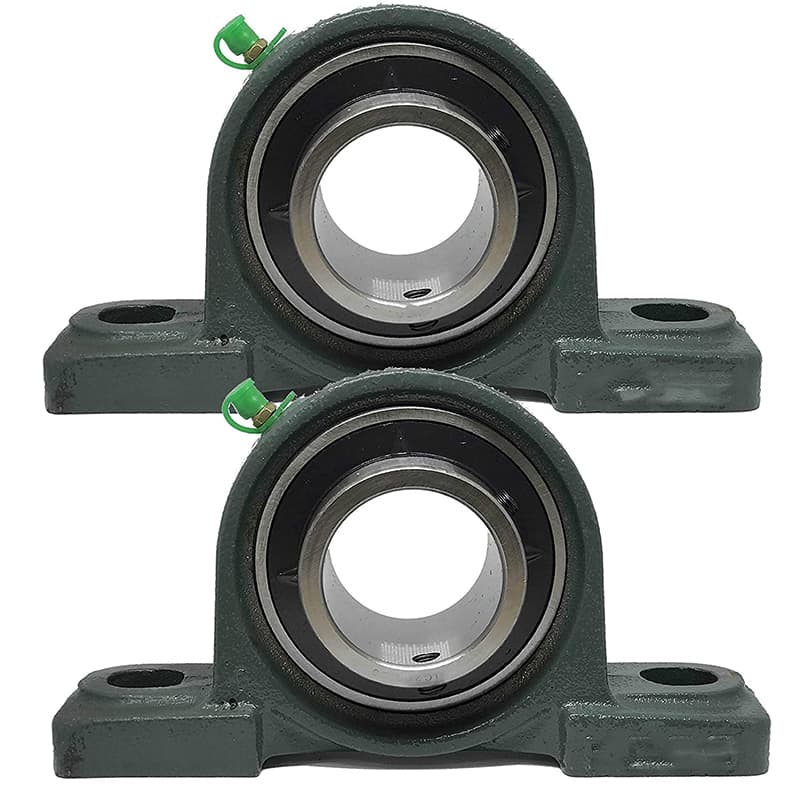
The heat spiral and how to break it
I learned this lesson from a fan manufacturer in Egypt. They used standard bearings with CN (normal) clearance. The fans ran at 1,500 RPM. After one hour, the bearings were too hot to touch. After one week, they seized. We switched to bearings with C3 clearance. The temperature dropped by 25°C. Here is the full explanation.
Step by step: how heat kills a bearing
- Friction starts – Every bearing has some friction from balls rolling and grease shearing.
- Heat expands parts – The inner ring gets hot faster than the shaft. It expands and grips the shaft tighter.
- Internal clearance shrinks – The tight inner ring pushes the balls outward. The outer ring also expands but slower. The gap between balls and races gets smaller.
- More friction – With less gap, the balls rub harder. This creates even more heat.
- Grease breaks down – Hot grease oxidizes. It becomes hard or runny. It stops lubricating.
- Seizure – Metal touches metal. The bearing locks up.
How much clearance do you need at medium speed?
| Bearing clearance class | Operating temperature limit | Best for RPM range |
|---|---|---|
| CN (normal) | Up to 70°C | Below 500 RPM |
| C3 | Up to 100°C | 500 – 2,000 RPM |
| C4 | Up to 120°C | Above 2,000 RPM or very hot environment |
Other ways to manage heat
- Use a cooling fan – Mount a small fan to blow air over the bearing housing. This can lower temperature by 10-15°C.
- Choose a larger bearing – A bigger bearing has more surface area to shed heat. It also has more grease volume.
- Shorten relubrication intervals – For medium speed, relube every 500 hours instead of 2,000 hours.
- Use synthetic grease – Synthetic base oil withstands higher temperatures than mineral oil.
My rule of thumb: If the housing is too hot to hold your hand on for 10 seconds, the temperature is above 70°C. That is a warning sign. Check your clearance and grease immediately.
Balancing Load Capacity and Speed Rating – The Trade-Off You Must Know?
A bearing that handles heavy load is usually not good for medium speed. A bearing that runs fast cannot take heavy load. You have to choose.
Short answer: Load capacity and speed rating fight each other. Bigger balls handle more load but create more friction at speed. For medium speed, pick a bearing one size bigger than your load calculation. That gives you both load and speed margin.
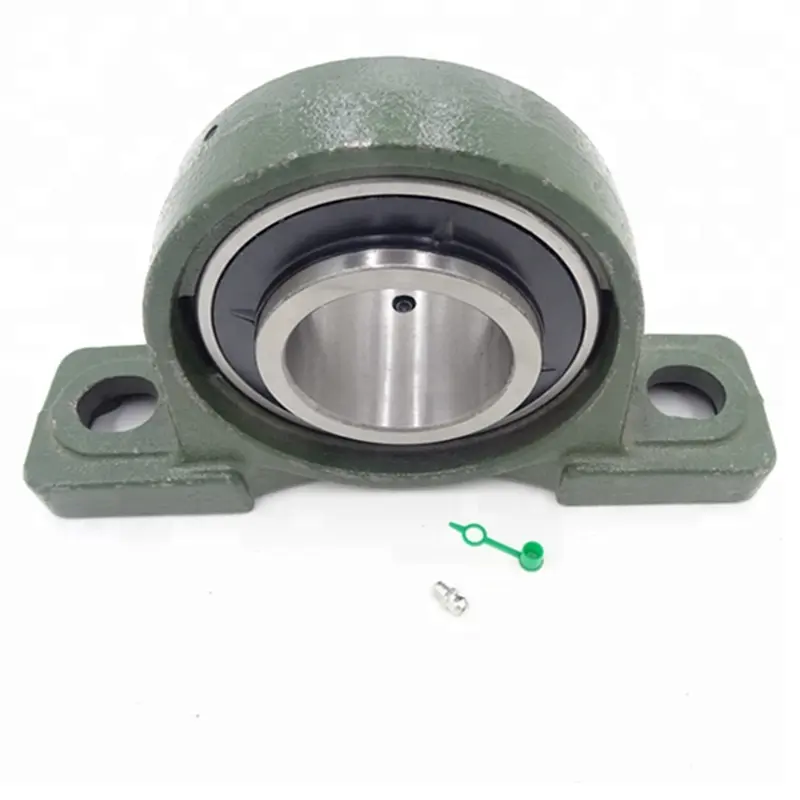
How to find the sweet spot for your machine
A customer in Turkey had a problem. His conveyor carried heavy bottles. The bearings failed from overload. He went one size bigger. Then the same bearings failed from heat. Why? Because bigger bearings have higher friction at the same speed. He needed a different bearing series, not just a bigger size. Let me explain.
Two bearing series for medium-speed
-
UC series (wide inner ring) – These are common for pillow blocks. They have good load capacity. But they have more friction. The balls are larger. The cage is basic. Best for speeds under 1,000 RPM.
-
UK series (tapered bore with adapter sleeve) – These have a different internal design. The friction is lower. They run cooler at medium speeds. But they cost more. Best for 1,000 to 2,000 RPM.
The load-speed curve
Every bearing has a maximum load rating (C) and a maximum speed rating (n). You cannot use both at the same time. Here is the rule:
- If you run at 70% of max speed → you can only use 60% of max load.
- If you run at 80% of max load → you can only use 50% of max speed.
A practical example
Let us take a UC208 bearing. Its basic load rating is 29 kN. Its grease speed limit is 3,600 RPM.
You want to run at 1,500 RPM. That is 42% of max speed. So you can use nearly full load capacity.
Now take a heavier bearing like UC210. Load rating is 35 kN. Speed limit is 3,200 RPM. At 1,500 RPM (47% of max), you still have good load margin. But the heavier bearing has larger balls. It will run hotter than the UC208 at the same speed.
My selection table for medium-speed equipment
| Required load (kN) | Shaft size (mm) | Recommended bearing | Max safe RPM |
|---|---|---|---|
| Up to 15 | 25-30 | UC206 or UK206 | 2,000 |
| 15-25 | 30-40 | UC208 or UK208 | 1,800 |
| 25-35 | 40-50 | UC210 or UK210 | 1,500 |
| 35-50 | 50-60 | UC212 (with C3 clearance) | 1,200 |
One more tip
Do not oversize the bearing too much. A bearing that is too big will generate more heat from its own mass and friction. I usually add 20-30% to the calculated load and then pick the smallest bearing that meets that number. That gives you a safety margin without killing speed performance.
Lubrication Choices for Medium-Speed Equipment – Grease vs. Oil?
You put grease in the bearing. Two months later, the grease is hard or watery. Did you choose wrong?
Short answer: For medium speed (500-2,000 RPM), grease works fine if you use the right type. Use NLGI 2 polyurea or lithium complex grease. For the top end (above 1,500 RPM), consider oil mist lubrication for longer life.
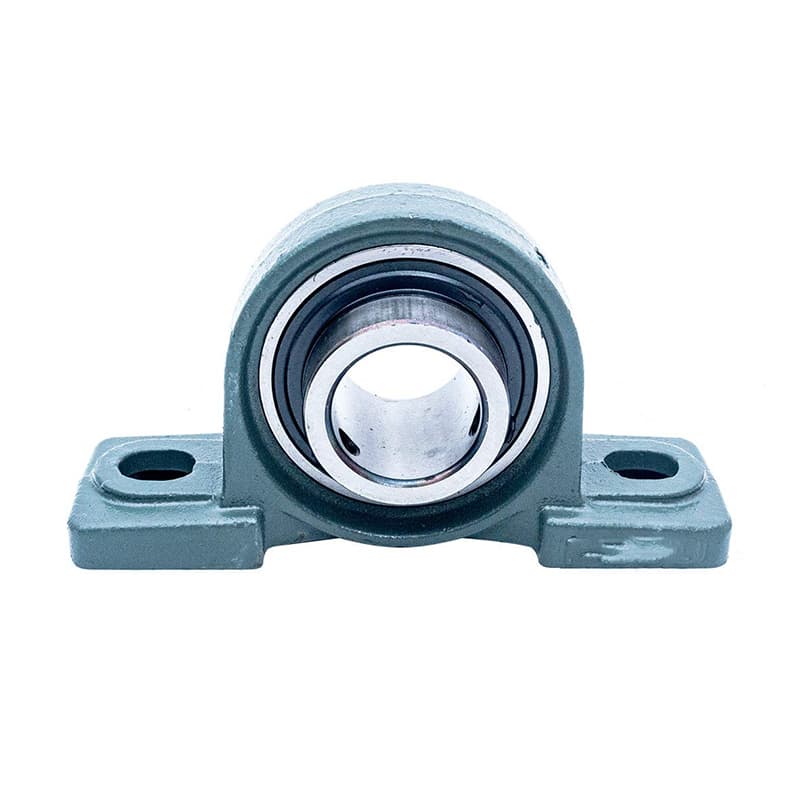
Why most medium-speed failures start with bad lubrication
I visited a factory in Vietnam. Their bearings failed every month. The maintenance man showed me the grease he used. It was a cheap general-purpose grease from a local store. That grease had a dropping point of only 120°C. At 1,600 RPM, the bearing ran at 90°C. The grease melted, ran out, and the bearing seized. He switched to our recommended polyurea grease. The bearings lasted over a year.
Grease types and their speed limits
| Grease type | Dropping point | Max RPM for pillow block | Best for |
|---|---|---|---|
| Lithium (standard) | 180°C | Up to 1,000 RPM | Low speed, cheap |
| Lithium complex | 260°C | Up to 1,800 RPM | Medium speed, good value |
| Polyurea | 240°C | Up to 2,500 RPM | Medium to high speed, long life |
| Synthetic (PAO) | 280°C | Up to 3,600 RPM | High speed, wide temperature |
How often to relubricate at medium speed
Too much grease is as bad as too little. Overgreasing causes heat build-up from churning. Here is my guideline for medium-speed:
| RPM | Relubrication interval (hours) | Grease amount (grams for UC208) |
|---|---|---|
| 500 | 2,000 hours | 5 grams |
| 1,000 | 1,000 hours | 4 grams |
| 1,500 | 500 hours | 3 grams |
| 2,000 | 250 hours | 2 grams |
When to choose oil instead of grease
Oil lubrication is better for very clean environments or very high speeds. But for most medium-speed equipment, grease is easier. Use oil only if:
- The speed is above 2,000 RPM consistently.
- The bearing runs hotter than 100°C.
- You cannot access the bearing for relubrication.
- The machine has an existing oil circulation system.
Oil mist lubrication
This is a special system. It sprays a fine oil mist into the bearing. The oil carries heat away. It also keeps the bearing clean. Oil mist can double bearing life at 1,800 RPM compared to grease. The downside: the system costs money. Only worth it for critical equipment that runs 24/7.
My personal advice for most medium-speed applications: Use NLGI 2 polyurea grease. Relube every 500 hours. Use a bearing with a grease fitting. And always clean the fitting before adding new grease. Dirt on the fitting goes straight into your bearing.
Conclusion
Match your bearing clearance, lubricant, and size to the actual RPM. That stops heat failure and doubles bearing life.