
Noise from a bearing can ruin your machine’s reputation. One bad batch, and your customers start complaining.
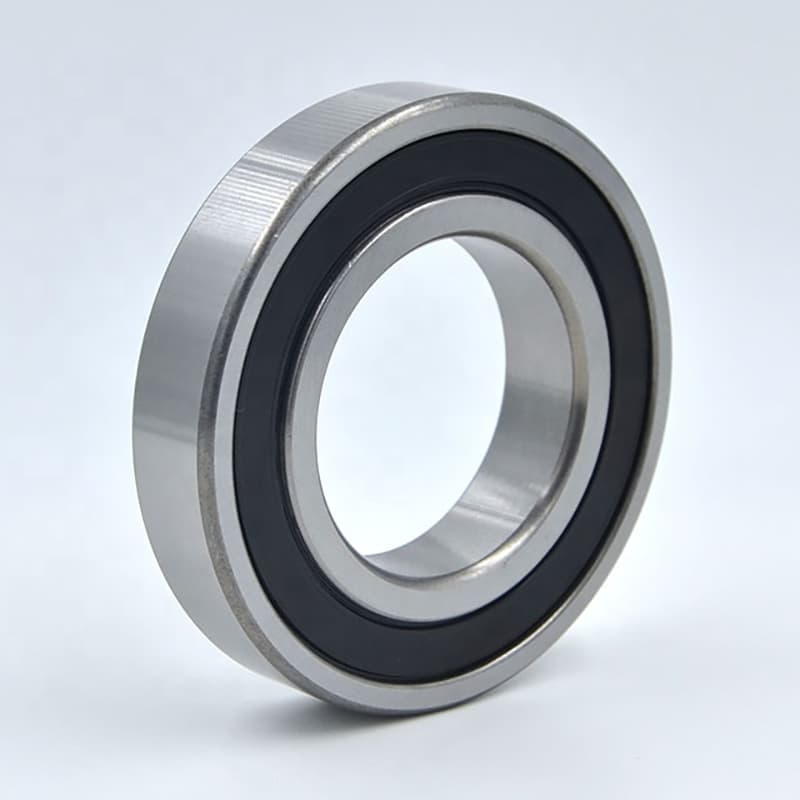
To optimize bearing selection for quiet-running deep groove ball bearings, focus on internal clearance, raceway waviness, cage material, lubricant type, and precision class. Lower noise means tighter control of these five factors.
I have worked with bearing noise for over ten years at FYTZ Bearing. Our factory in China produces millions of deep groove ball bearings every year. Many of our clients – like Rajesh from India – came to us because their existing suppliers could not fix the noise problem. Let me walk you through what actually works.
Understanding the Main Sources of Noise in Deep Groove Ball Bearings?
You hear a squeal or rumble. You think it is the motor or the housing. But most of the time, the bearing is the real culprit.
The main noise sources in deep groove ball bearings are raceway waviness, ball surface irregularities, cage collisions, and improper internal clearance. Each source produces a different sound signature.
I remember one of my Turkish customers who sells pillow block bearings to textile mills. They sent me a video of a running fan, and it sounded like a grinding coffee machine. The bearing supplier before us said it was “normal running noise,” but it was not normal. We stripped the bearing and found the problem right away.
So let me break down the four real noise sources. You can use this to diagnose your own returned bearings or to set better specifications for your next order. [web:21][web:23][web:30]
1. Raceway Waviness
This is the number one enemy of quiet bearings. waviness means tiny waves on the inner or outer raceway. These waves are not visible to your eyes. But the balls roll over them and create vibration. The frequency of the noise depends on how many waves exist. A few big waves make a low rumble. Many small waves make a high-pitched whine.
Most cheap bearings have poor grinding and finishing. The manufacturer saves money by skipping the final superfinishing step. At FYTZ, we use superfinishing machines that remove these micro-waves. The difference is clear on a noise tester (we use S0910-3 for our deep groove ball bearings).
2. Ball Surface Irregularities
The balls themselves matter more than people think. A single ball with a tiny dent or flat spot will hit the raceway at every revolution. This creates a periodic “thump – thump – thump” sound. It is easy to identify.
Grade 100 balls are fine for noisy applications like conveyor rollers. But for quiet running, you need Grade 10 or better. Grade 3 balls are even better but expensive. For most of my clients in India and Brazil, Grade 10 gives the best balance of cost and silence.
3. Cage Collisions
The cage (or retainer) holds the balls apart. When the bearing spins, the cage moves a little. If the cage is too loose, it slaps against the balls or the raceway shoulders. That gives you a metallic clicking or rattling sound.
Steel cages are strong but noisy. Nylon or polyamide cages are much quieter because they absorb the impacts. Riveted steel cages – often found on very cheap bearings – are the worst. For quiet applications, I always recommend a molded nylon cage. Just be careful with high temperatures. Nylon cages work up to 120°C. Above that, you need a different material.
4. Internal Clearance
This is the most misunderstood factor. Internal clearance is the empty space inside a bearing when it is not mounted. A large clearance (C3 or C4) allows the balls to move more freely. That sounds good, right? But more movement means more opportunities for impact noise. For quiet operation, you want the smallest clearance possible – but not zero clearance. Zero clearance would overheat and fail.
Here is a simple table I share with my distributors:
| Clearance Code | Noise Level | Best For | Risk |
|---|---|---|---|
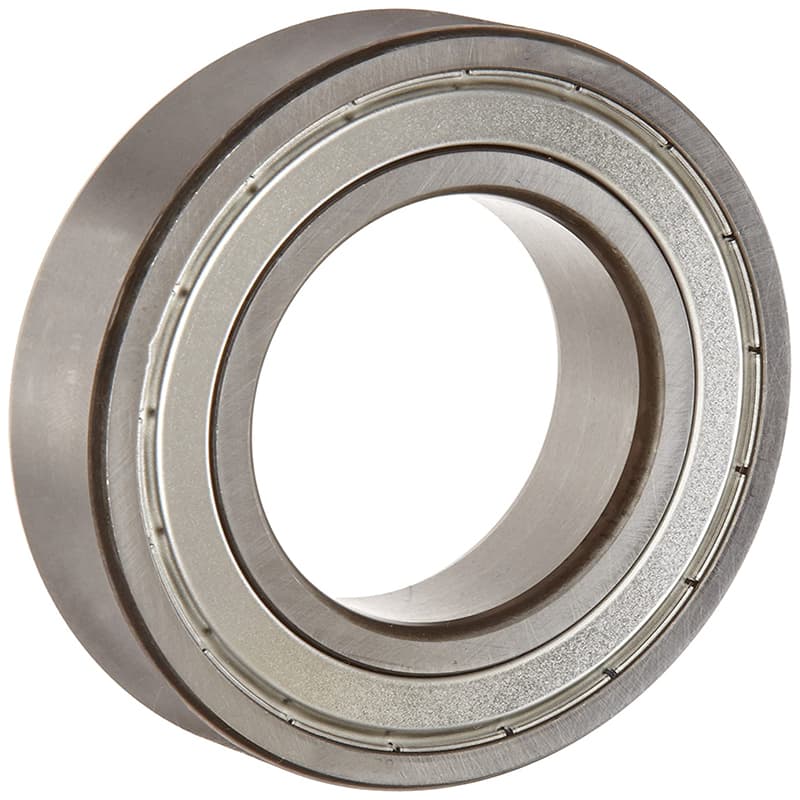
| C2 (smaller than normal) | Very low | Small motors, fans, quiet equipment | Overheating if tight fit |
| CN (normal) | Low | General purpose, moderate speed | None for most cases |
| C3 (larger than normal) | Medium | High temperature or heavy press fits | Noise complaints |
| C4 (very large) | High | Very high speed or thick shafts | Not for quiet applications |
So for a quiet-running deep groove ball bearing, start with CN clearance. Only move to C2 if you have a very stable housing fit and low temperature.
Now you know the four sources. Next time you hear a bad bearing, you can guess the cause by the sound. And when you order from a factory, ask them for their waviness control and ball grade. A good supplier will answer without hesitation.
Key Design Parameters for Low-Noise Bearings: Clearance, Waviness, and Cage?
You have three levers to pull. Pull the wrong one, and noise gets worse. Pull them together, and your bearing runs like a whisper.
The three critical design parameters for low-noise deep groove ball bearings are radial internal clearance (C2 or CN), raceway waviness (controlled by superfinishing), and cage type (molded nylon over steel). Each must be optimized together.
Let me tell you a story. Two years ago, a Russian importer came to me. They were buying P6 precision deep groove ball bearings from a European brand. The noise was acceptable but the price was too high. They asked if our FYTZ bearings could match the noise level at half the price. I said yes, but only if they let me control all three parameters at once.
Here is what most buyers get wrong. They focus on one parameter – usually precision class – and ignore the others. I have seen buyers order P5 bearings with a steel cage and C3 clearance. Then they wonder why the bearing is still noisy. That is like buying a luxury car but putting cheap tires on it.
So let me explain each parameter in the order of importance.
Clearance First
Clearance affects noise more than any other single factor. But you cannot just pick any clearance. You have to consider the mounting fit and operating temperature.
For quiet applications:
- If your shaft is steel and housing is aluminum, the housing will expand faster. Use CN or even C3 to avoid preload at high speeds.
- If both shaft and housing are steel, use CN for most cases. Use C2 only if the temperature stays under 50°C and the fits are loose.
- Never use C4 for quiet applications. It will rattle like a bucket of bolts.
I made a mistake once. A Brazilian customer asked for quiet bearings for electric motors. I sent them CN clearance bearings. They mounted them on a thick shaft with an interference fit. The internal clearance dropped to negative. The bearings overheated and seized. Now I always ask for the exact shaft and housing dimensions before recommending clearance.
Waviness Second
Waviness is measured in micro-inches or nanometers. Most catalogs do not even list a waviness value. That is because most factories do not control it tightly. They only control roundness (a larger shape error).
At FYTZ, we use a Talyrond machine to measure waviness. Our standard for quiet bearings is less than 0.08 µm for the inner ring and 0.1 µm for the outer ring. To achieve that, we superfinish every raceway with a fine stone. The process adds about 15 seconds to each ring. But it cuts noise by 3–5 decibels.
When you talk to a bearing factory, ask them: “What is your maximum raceway waviness for P6 bearings?” If they cannot answer, find another supplier.
Cage Type Third
I already mentioned nylon cages are quieter. But let me give you numbers. On the same bearing size (6204), a steel cage produces 48 dB of noise at 1800 RPM. A nylon cage produces 42 dB. That is a huge difference because decibels are logarithmic. A 6 dB drop means the noise is half as loud.
But nylon has limits. It cannot handle high heat (above 120°C) or aggressive lubricants (like those with ester oils). For those cases, use a steel cage but with a special design – like a crown cage with larger pockets to reduce impact.
Also, the cage guide matters. A cage that runs on the inner ring (inner guided) is quieter than a cage that runs on the outer ring. The inner guided cage stays more centered at low speeds.
So here is my rule for my customers: Use molded nylon cages for any quiet application below 120°C. Only switch to steel if temperature forces you.
One more thing. Do not change just one parameter at a time. If you switch from steel to nylon but keep C3 clearance, the noise improvement will be small. Change clearance to CN at the same time. Then you will hear the real difference.
Impact of Lubricant Type and Fill Level on Acoustic Performance?
A silent bearing with bad grease will scream in three months. And you will blame the bearing – not the lubricant.
Lubricant affects bearing noise through base oil viscosity, thickener type, and fill level. Low-noise bearings need smooth, homogeneous grease with 30–40% fill volume. Too much grease causes churning noise. Too little grease causes metal-to-metal contact.

I learned this lesson the hard way. An Egyptian distributor ordered 10,000 deep groove ball bearings (6302ZZ) for ceiling fans. We sent them with our standard lithium grease. The customer reported “excessive noise after 100 hours.” I flew to Cairo with our engineer. We opened the bearings. The grease had turned into a hard lump. It was not lubricating anymore. It was acting like a solid barrier.
Why? Because ceiling fans run at low speed (300–500 RPM) with a very small oscillating motion. Most greases are designed for continuous rotation. Under small oscillations, the thickener fibers break down and clump together. The fix was simple: a different grease with a polyurea thickener and a lower base oil viscosity.
So let me break down the three factors you must control.
Base Oil Viscosity
The base oil is what actually separates the rolling elements. If the oil is too thick, it creates drag and noise. If it is too thin, the metal surfaces touch and create friction noise.
For small deep groove ball bearings (size 60xx to 62xx) running below 3000 RPM, use ISO VG 68 to 100. For high-speed spindles (above 8000 RPM), use ISO VG 22 to 46. For large bearings (63xx and above), use ISO VG 150 to 220.
I keep a simple chart on my office wall. Here is the version I share with my customers:
| Bearing Size Range | Speed (RPM) | Recommended ISO VG |
|---|---|---|
| 6000–6204 | < 2000 | 68 |
| 6000–6204 | 2000–5000 | 46 |
| 6205–6306 | < 1500 | 100 |
| 6205–6306 | 1500–4000 | 68 |
| 6307 and larger | < 1000 | 150 |
If you are not sure, ask your bearing supplier to run a noise test with different greases. We do this for free for our container buyers.
Thickener Type
The thickener is like a sponge that holds the oil. Different thickeners have different noise characteristics.
Lithium grease is the most common. It is cheap and works well for general purposes. But it can make noise at low temperatures or under vibration.
Polyurea grease is my top choice for quiet bearings. It is smooth, stable, and does not harden over time. The downside? It costs about 30% more than lithium.
Calcium sulfonate grease is excellent for wet environments. But it is too thick for quiet operation – it will rumble.
For quiet running, I recommend a lithium-complex grease with a smooth texture. Or polyurea if the budget allows. I have sent over 200,000 quiet bearings to Vietnam with polyurea grease. Not one noise complaint.
Fill Level
This is where most people get it wrong. They think more grease means more protection. But too much grease is one of the main causes of noise.
When you overfill a bearing, the grease has no space to move. The balls have to push through a solid mass of grease. That creates churning noise. You can hear it as a low-frequency rumble that gets worse as speed increases.
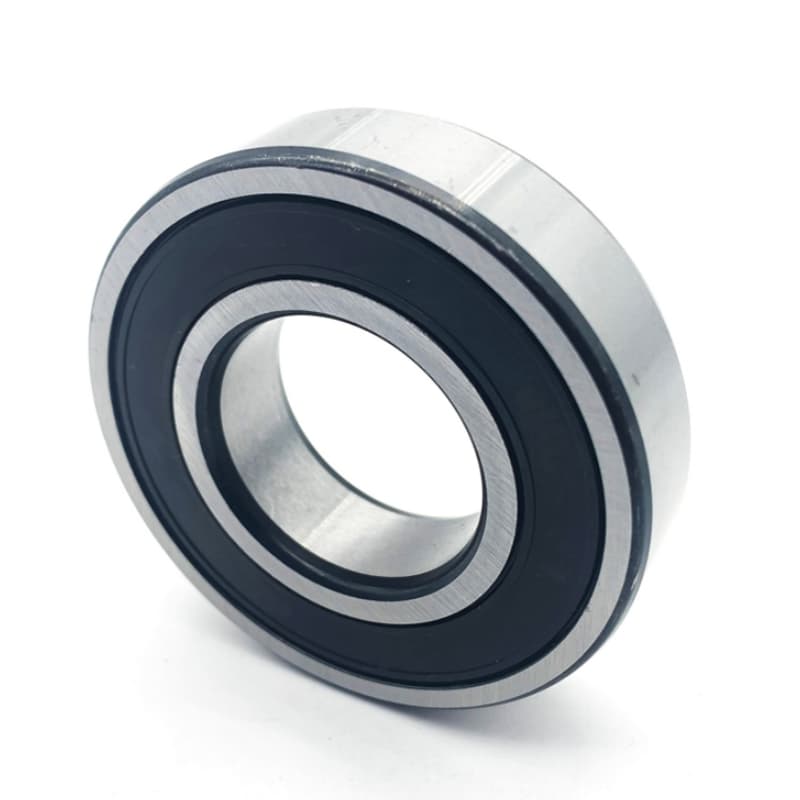
The correct fill level for quiet operation is 30–40% of the free internal volume. For shielded bearings (ZZ), use 30%. For sealed bearings (2RS), use 35–40% because the seals keep the grease inside better.
How do you measure that? In our factory, we use a grease dosing machine that dispenses by weight. For a 6204 bearing (ZZ), the free volume is about 0.6 cm³. 30% fill means 0.18 cm³ of grease. That is about 0.16 grams for lithium grease.
One more tip: Homogenize the grease before filling. If the grease sits in a drum for months, the oil separates from the thickener. You end up filling with thickener on top and oil at the bottom. The result? Some bearings are too dry, some are too oily. Both are noisy.
I tell my customers: Do not assume your current grease is good enough. Send me a sample of your grease. Our lab will test it for noise on an S0910 machine. We have done this for distributors in Pakistan and Bangladesh. More than half of them changed their grease after seeing the results.
Optimizing Tolerance Classes and Preload for Quiet Operation?
You order P5 bearings. You pay extra. But the noise is still there. Why? Because tolerance and preload work together – not alone.
For quiet deep groove ball bearings, choose P6 or P5 tolerances combined with a light preload (EL or L). P0 bearings have too much runout. Heavy preload increases noise. The right match is tighter tolerance plus minimal preload.
A customer from Indonesia called me last month. He sells pillow block bearings to rice mill equipment makers. He had been buying P5 bearings from a German brand. The bearings were silent – but expensive. He tried a cheaper P5 bearing from another Asian supplier. The noise came back. He assumed the cheaper bearing was fake. But when we measured both bearings on our gauges, the dimensions were almost identical.
What was the difference? Preload.
The German bearing came with a factory-set light preload. The cheaper bearing came with no preload. That tiny extra axial pressure made all the difference in noise.
So let me walk you through tolerance class and preload. They are not difficult, but you have to get the combination right.
Tolerance Class (Precision Grade)
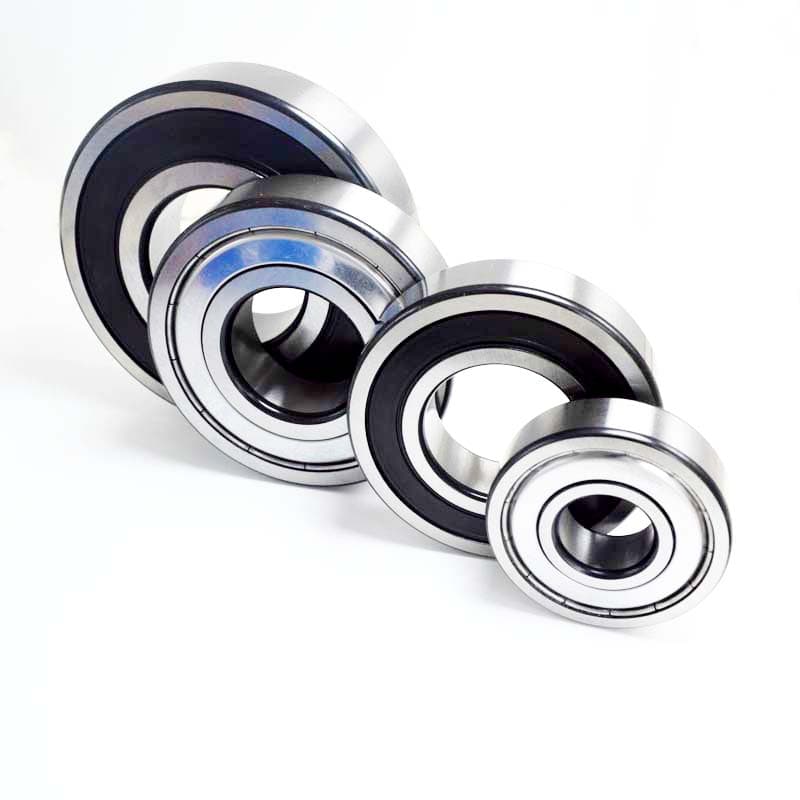
The ISO tolerance classes for radial bearings are P0 (normal), P6, P5, P4, and P2. Higher number means tighter precision.
For quiet running:
- P0 is acceptable only for very slow, non-critical applications like agricultural equipment.
- P6 is the minimum for any machine that should be “quiet.” Most of my customers in Turkey and Russia use P6 for standard quiet bearings.
- P5 is better, but the cost jumps by 30–50%. Use P5 for fans, pumps, and small electric motors that run all day.
- P4 and P2 are overkill for noise. They are for spindle precision, not noise reduction.
Here is the tricky part: A P6 bearing from a good factory can be quieter than a P5 bearing from a bad factory. Why? Because P5 only controls dimensional tolerances, not waviness or finish. I have seen P5 bearings with rough raceways that sang like a violin. And I have seen P6 bearings from our line that run almost silent because we control waviness separately.
So do not chase high precision classes blindly. Ask your supplier: “What is your bore and OD roundness for P6?” A good roundness for a P6 bearing is under 2 µm. For P5, it should be under 1.5 µm.
Preload
Preload means applying a small, constant axial force to the bearing. This force pushes the balls against the raceways in a controlled way. It removes the internal clearance (not completely, but it takes up the looseness).
When you have no preload, the balls can move slightly between the raceways. That movement creates impact noise at every change of direction or load. With a light preload, the balls stay in contact all the time. The result is a smoother, quieter run.
But too much preload is bad. Heavy preload increases friction, heat, and noise. The bearing will hum or whine under heavy preload.
Preload levels are often marked as EL (extra light), L (light), M (medium), and H (heavy). For quiet operation, use EL or L only.
How do you apply preload? There are three common methods for deep groove ball bearings:
- Spring preload – A wave spring or coil spring pushes the outer ring. This is the simplest and most common for quiet fans and small motors.
- Fixed preload – You grind the inner or outer rings to specific widths so that when you tighten the locknut, you get a precise preload. This is more expensive but more stable.
- Spacer preload – You use matched bearings with a spacer between them. This is for pairs of bearings.
For a single deep groove ball bearing in a fan or pump, a wave spring washer is usually enough. The spring provides a consistent preload even with thermal expansion.
I recall a Vietnamese fan manufacturer who kept getting noise complaints. They used no preload at all. The fan blades would cause axial vibration. The bearing balls rattled in the raceway. We sent them samples with a simple wave spring washer. The noise dropped by 40%. They now order all their bearings with that spring included.
Putting It All Together
Here is a quick reference table for my customers:
| Application | Recommended Tolerance | Preload Type | Expected Noise Level |
|---|---|---|---|
| Ceiling fan | P6 | Spring (EL) | Very low |
| HVAC blower | P6 or P5 | Spring (L) | Low |
| Electric motor (small) | P5 | Fixed (L) | Very low |
| Industrial pump | P6 | Spring (EL) | Low |
| Textile machine | P5 | Fixed (EL) | Extremely low |
One final warning: Do not assume that preload is always good. If your bearing runs at very high speed (above 10,000 RPM), preload increases temperature. In that case, use a P5 bearing with no preload but with a nylon cage and superfinished raceways. The speed will keep the balls in contact naturally.
When you order from FYTZ, just tell me your speed, load, and mounting style. I will recommend the exact tolerance and preload combination. That is what a factory should do – not just take an order, but solve a problem.
Conclusion
Optimize clearance first, then cage, lubricant, and preload. Test with your actual assembly. That is how you get quiet deep groove ball bearings.