
You picked the perfect spherical roller bearing. But a wrong housing arrangement can ruin its life. Frustrating, right?
To select the right housing, match it to your load direction, misalignment needs, housing type (split or solid), and sealing system. Always consider your operating environment and maintenance access.
I have helped many buyers like Rajesh from India pick the right housing. Let me break down each factor step by step. Keep reading. And at FYTZ Bearing, we see these mistakes every day. So let me share what really works.
Why must you understand load types and directions?
Imagine your bearing fails in just three months. That often happens when you ignore how loads push and pull on the housing.
Load types (radial, axial, or combined) decide if you need a fixed or floating housing. Load direction tells you how to position the bearing. Get this wrong, and your bearing overheats or breaks.
Let me share a real case. A customer from Turkey once ordered spherical roller bearings for a conveyor. He picked a standard housing without checking load direction. The conveyor had heavy axial loads. The housing could not handle the thrust. So the bearing failed in weeks. That cost him time and money.
At FYTZ Bearing, we see this often. So let’s break down load types.
Radial loads vs. axial loads
Radial loads act perpendicular to the shaft. For example, the weight of a rotating drum. Spherical roller bearings handle radial loads very well. But the housing must support the bearing outer ring evenly. A standard pillow block housing works fine for pure radial loads.
Axial loads act parallel to the shaft. Like a propeller pushing water. Spherical roller bearings can take some axial load. But the housing arrangement changes. For heavy axial loads in one direction, you need a locating housing. That housing locks the bearing in place. For axial loads in both directions, you need a different setup. [web:313][web:302][web:317]
Combined loads are the most common. Most machines have both radial and axial loads. For example, a gearbox. The housing must allow one bearing to locate (fixed) and another to float. The floating housing lets the bearing move axially. This stops extra stress from thermal expansion. [web:313][web:307][web:302][web:318]
Here is a simple table to help you decide:
| Load Type | Recommended Housing Arrangement | Example Application |
|---|---|---|
| Pure radial | Floating housing (free axial movement) | Fan, conveyor roller |
| Axial (one direction) | Locating housing on the side opposing the load | Ship propeller shaft |
| Axial (both directions) | Two bearings with locating housings | Wind turbine main shaft |
| Combined high radial + moderate axial | One locating, one floating housing | Industrial gearbox |
Remember: The housing must also fit the bearing’s internal clearance. P5 and P6 precision classes need tighter housing tolerances. At my factory, we always ask customers for load diagrams. That small step saves big headaches. Also, do not forget about shock loads. If your machine has sudden impacts, add a safety factor. Choose a housing that is one size bigger than the steady load calculation shows.
How to evaluate misalignment requirements?
Shafts are never perfectly aligned. Even new machines have small bends. Ignoring this causes uneven load and early failure.
Measure the expected angular misalignment between shaft and housing. Spherical roller bearings can self-align up to 1.5 to 2 degrees. Choose a housing that does not restrict this natural tilting.
I once worked with a buyer from Indonesia. His rock crusher had frequent bearing failures. The shaft had a 1.8-degree bend. He used a rigid housing that locked the bearing straight. That caused high edge stresses. After switching to a standard pillow block housing with spherical seats, the bearing lasted three times longer.
What causes misalignment?
- Shaft deflection under load
- Poor mounting surface flatness
- Thermal expansion differences
- Wear in machine frames
- Incorrect installation of bearing on shaft
How much misalignment can spherical roller bearings handle?
Most standard spherical roller bearings allow up to 1.5 degrees of static misalignment. For dynamic misalignment (while spinning), it is lower – about 0.5 degrees. But check the bearing catalog. FYTZ bearings can handle 2 degrees for some series. However, pushing the limit every day will shorten bearing life. So always aim for less than 1 degree if possible.
Housing role in misalignment
A simple pillow block housing with a spherical outer diameter on the bearing lets the bearing tilt. That is the self-aligning feature. But some housings are designed to be rigid. For example, flange housings with two bolts. They still allow self-alignment if the bearing has a spherical outer ring. However, split housings sometimes limit tilting because of the cover design. So you need to check the housing datasheet.
Here is a quick guide:
| Misalignment Level | Housing Type to Use | Special Notes |
|---|---|---|
| Less than 0.5 degree | Any housing works | No special action needed |
| 0.5 to 1.5 degrees | Pillow block with spherical seat | Standard choice |
| 1.5 to 2.5 degrees | Custom or extra clearance housing | Check with manufacturer |
| Above 2.5 degrees | Not recommended | Use a different bearing type or realign shaft |
If your machine has high misalignment, do not just rely on the bearing. Fix the root cause. But for most applications, a good spherical roller bearing and a standard housing will handle normal misalignment. At my factory, we test each batch for alignment tolerance. So you get consistent quality. Also, remember that misalignment changes over time. As the machine wears, the misalignment can get worse. So leave some margin in your initial selection.
Split vs. solid housings: which one to choose?
Replacing a bearing on a long shaft is a nightmare. You have to remove everything. A split housing can save you days of downtime.
Choose split housings when you need easy bearing replacement without removing the shaft. Choose solid housings for highest rigidity and lower cost. Your maintenance access decides the winner.
Let me tell you about a customer in Pakistan. He runs a steel mill. His conveyor shafts are 4 meters long. Changing a solid housing bearing meant taking the whole shaft out. That took two days. After switching to split housings, he changed the bearing in four hours. That is a huge saving. His maintenance team now loves split housings for all hard-to-reach places.
Solid housings
Solid housings are one piece. You slide the bearing onto the shaft, then mount the housing over it. These are cheaper and more rigid. They work great for new machines or short shafts. But if you need to replace the bearing, you must remove the shaft coupling, pulley, or even the whole shaft. That is a lot of work. For long shafts with many bearings, this can mean shutting down the whole production line.
Split housings
Split housings come in two halves (top and bottom). You place the bearing in the bottom half, then put the top half on. You do not need to remove the shaft. This saves time and labor. The downside? Split housings cost more. They also have slightly lower load capacity because of the split line. But for most applications, the difference is small. Also, split housings need more careful bolt tightening. If you do not tighten the bolts evenly, the housing can deform.
Here is a comparison table:
| Feature | Solid Housing | Split Housing |
|---|---|---|
| Cost | Lower | Higher (30-50% more) |
| Rigidity | Higher | Good, but slightly less |
| Bearing replacement | Requires shaft removal | No shaft removal needed |
| Installation time | Longer for repairs | Fast for repairs |
| Best for | New equipment, short shafts | Hard-to-reach shafts, long shafts |
| Sealing | Simpler | More complex (split seals needed) |
| Availability | Very common | Common but fewer sizes |
At FYTZ Bearing, we stock both types. For distributors like Rajesh, I recommend split housings for customers with heavy maintenance schedules. For OEMs building new machines, solid housings are usually better. Also consider your warehouse space. Split housings come as two parts, so they take more shelf space. But that is a small price for less downtime. One more tip: If you choose split housings, buy spare seal kits. The split seals wear out faster than solid ones.
What to consider for sealing and lubrication systems?
Dust and water find their way into bearings. Once inside, they grind down the rolling elements. Bad seals can kill a bearing faster than overload.
Choose seals based on your contamination level (dust, water, or clean). Match lubrication type (grease or oil) to speed and temperature. A good housing has proper seal grooves and lube ports.
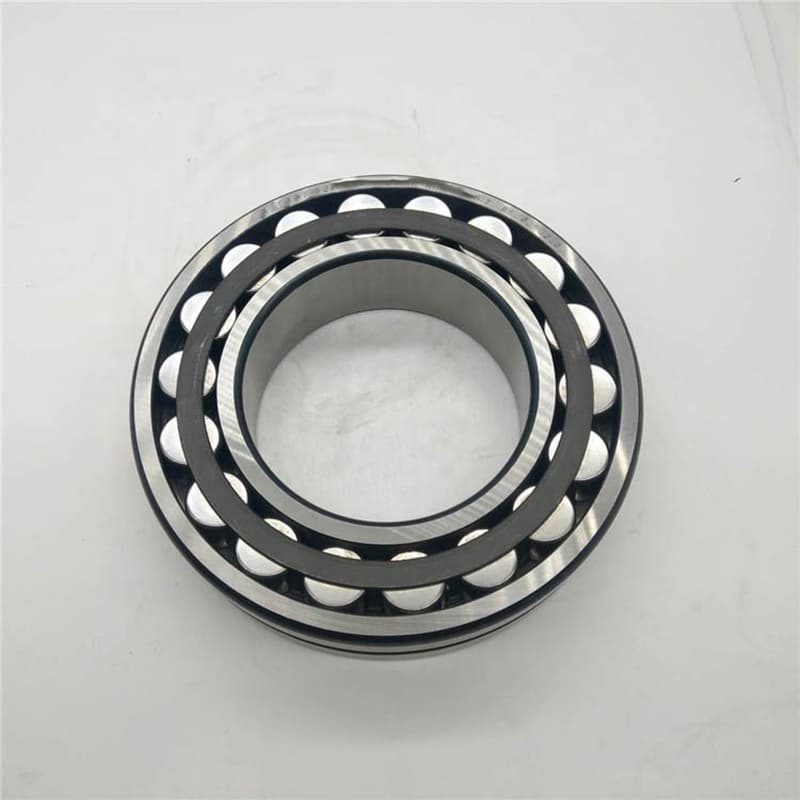
I remember a customer from Russia. He used spherical roller bearings in an outdoor conveyor. Snow and ice melted into the housing. He had no seal. The bearings rusted in two months. After we added a triple lip seal and a grease fitting, the bearings lasted two years. That small change saved him thousands of dollars.
Seal types for housings
- Contact seals (rubber lip): Good for dusty or wet areas. They touch the shaft. But they create friction and heat. Use for low to medium speeds.
- Non-contact seals (labyrinth): No friction. Best for high speeds. They stop dirt with a zigzag path. But they do not stop fine dust or water spray.
- V-ring seals: A rubber ring that seals axially. Good for moderate contamination.
- Felt seals: Cheap but only for very clean, dry environments.
Your housing must have the right groove for these seals. Some housings come with seal kits. At FYTZ, we can customize seal grooves for your shaft size. Also, for split housings, you need split seals. These are special and cost more. So plan ahead.
Lubrication systems
Most spherical roller bearings use grease. Grease is easy and clean. For high speed or high heat, oil lubrication is better.
Here is a simple table:
| Condition | Lubrication Type | Seal Type Recommended |
|---|---|---|
| Clean, dry, low speed | Grease (NLGI 2) | Felt or V-ring |
| Dusty, moderate speed | Grease (with EP additives) | Contact lip seal |
| Wet or washdown | Grease (water-resistant) | Double lip or triple lip |
| High speed (>3000 rpm) | Oil circulation | Labyrinth seal |
| High temperature (>100°C) | Synthetic oil or grease | Non-contact seal |
Also check the lube ports. The housing should have a grease fitting (zerk) or an oil inlet. Some housings have a groove to spread grease evenly. Without that, the grease stays in one spot. That leads to poor lubrication. So when you buy housings, ask if they have a circumferential grease groove.
In my experience, many failures come from over-greasing. People pump too much grease. That pushes seals open and lets dirt in. So follow the bearing maker’s schedule. For FYTZ bearings, we recommend relubrication every 2,000 hours for normal conditions. But for dirty environments, do it every 500 hours with small amounts. Also, use the right grease type. Lithium-based grease works for most cases. But for high heat, use polyurea or synthetic grease.
Conclusion
Match load, misalignment, housing type, seals, and lube. That’s how you pick the right housing for spherical roller bearings.