
Your paper machine stops without warning. The bearings on a support roll failed again. That means lost production and angry customers.
For paper machine support rolls and drive sections, use spherical roller bearings. They handle heavy loads, alignment errors, heat, and moisture. Pick the right internal clearance and seals for long life.
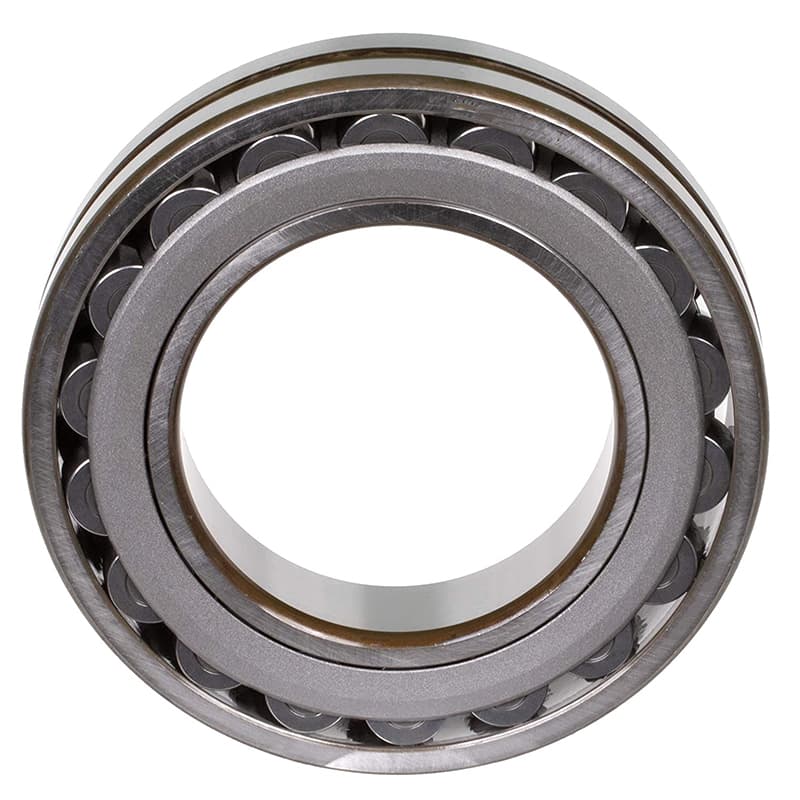
I have supplied bearings to many paper mills in Indonesia and Brazil. Their biggest headaches are always on the wet end and the drive side. Let me walk you through what actually works. And remember, at FYTZ Bearing, we make these bearings with P5 and P6 precision. So I know the details matter.
Understand the Load Differences Between Support Rolls and Drive Sections?
A support roll carries the weight of the wet paper web. A drive section transmits torque through gears or chains. Mix them up and your bearing overheats or cracks.
Support rolls need bearings that handle heavy radial loads with some misalignment. Drive sections need bearings that take both radial and axial loads from the drive forces. Choose based on where the power comes from.
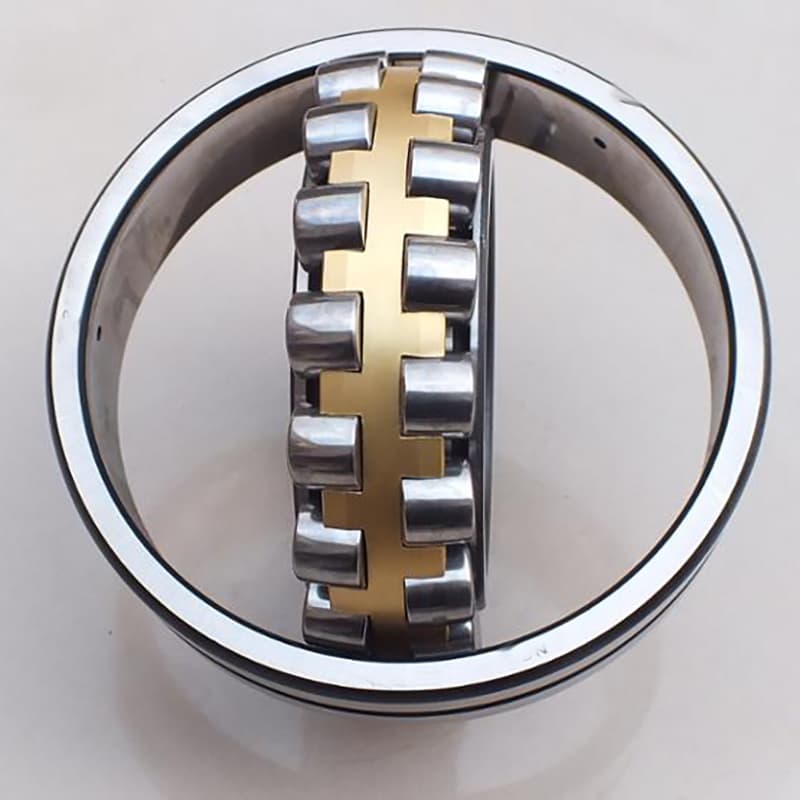
Let me share a story. A customer in India called me about his paper machine. He used the same bearing for all positions. The drive section bearings failed every six months. After we checked, the axial load from the gear was too high for a standard spherical bearing. We switched to a bearing with a tighter axial clearance and a locating housing. The problem went away.
Support rolls: pure radial loads with deflection
Support rolls are passive. They just hold up the felt or the paper. The main force is radial – the weight of the roll plus the web tension. But here is the tricky part. Long rolls bend in the middle. That bending creates a small angle between the roll and the housing. Spherical roller bearings love this because they self-align. So a standard spherical bearing with a normal clearance (C3) works fine.
The real challenge is the speed. Support rolls turn slowly, maybe 50 to 200 rpm. So heat is not a big problem. But the loads are steady and heavy. So you need a bearing with a high dynamic load rating. Also, the housing must be rigid enough to hold the bearing outer ring without deforming.
Drive sections: combined loads and higher speeds
Drive sections are active. They connect to motors, gears, or chains. So they get radial load from the roll weight plus axial load from the drive. The axial load can be big – especially when starting or stopping. That means you need a bearing that can take thrust in one direction. A floating housing will not work here. You need a locating housing that locks the bearing axially.
Also, drive sections turn faster. Maybe 500 to 1500 rpm. That creates more heat. So internal clearance matters more. Too little clearance and the bearing seizes. Too much and it rattles. We will talk about clearance later.
Here is a comparison table:
| Feature | Support Roll | Drive Section |
|---|---|---|
| Main load | Radial (heavy) | Radial + axial (combined) |
| Speed | Low (50-200 rpm) | Medium to high (500-1500 rpm) |
| Misalignment | High (roll deflection) | Low (shorter shaft) |
| Housing type | Floating (free axial movement) | Locating (fixed axial position) |
| Recommended clearance | C3 or C4 | C3 (tighter) |
| Seal priority | Keep out water | Keep out dust and grease leakage |
From my experience, many buyers just order the same bearing for both positions. That is a mistake. At FYTZ, we always ask for a drawing of the machine. Then we recommend different bearings for support and drive sections. That small step doubles the bearing life in many cases.
Handle High Misalignment from Roll Deflection?
Long paper rolls bend under their own weight. That bend forces the bearing to tilt. If your bearing cannot tilt, the inner ring digs into the outer ring. Then you get vibration and heat.
Spherical roller bearings can self-align up to 1.5 to 2 degrees. That handles normal roll deflection. But for very long or heavy rolls, you may need extra clearance or a special housing.

I remember a paper mill in Russia. Their support rolls were 8 meters long. The deflection at the center was almost 2 degrees. They used standard cylindrical roller bearings first. Those failed in one month. Then they switched to FYTZ spherical roller bearings with a C4 clearance. The bearings lasted two years. That is the power of self-alignment.
How much misalignment is normal?
A typical paper machine roll has a small bend. For a roll that is 6 meters long and 300 mm in diameter, the deflection can be 5 to 10 mm at the center. That creates an angle of roughly 0.2 to 0.5 degrees at the bearing. That is easy for spherical roller bearings.
But some machines have worn frames or uneven foundations. Then the misalignment can reach 1 degree or more. Also, when you install a new roll, the bearing housings might not be perfectly aligned. So a safety margin is good.
What happens when misalignment is too high?
If the misalignment goes above the bearing’s limit, you get edge loading. That means the rollers press hard on one edge of the raceway. The results are:
- High friction and heat
- Premature fatigue spalling
- Cage damage
- Noise and vibration
The fix is not always a bigger bearing. Sometimes you can use a spherical roller bearing with a wider internal clearance (C4 or C5). That gives more room for the rollers to tilt. But the best solution is to realign the machine. At FYTZ, we can also machine custom housings with a tilted seat to compensate.
Table of misalignment limits by bearing series
| FYTZ Bearing Series | Static Misalignment Limit | Dynamic Misalignment Limit |
|---|---|---|
| 213 series | 1.5 degrees | 0.5 degrees |
| 222 series | 2.0 degrees | 0.7 degrees |
| 223 series | 2.0 degrees | 0.7 degrees |
| 230 series | 1.5 degrees | 0.5 degrees |
| 231 series | 1.5 degrees | 0.5 degrees |
| 232 series | 1.5 degrees | 0.5 degrees |
Note: These are maximum values. Running at the limit every day will shorten life. So aim for less than half of the limit if possible.
For paper machine support rolls, I recommend the 222 or 223 series. They have the highest misalignment tolerance. Also, use a split housing if you need to adjust alignment later. That lets you shim the housing base to correct roll angle. Do not ignore misalignment. It is the number two cause of failure after lubrication problems.
Select the Right Internal Clearance for Thermal Expansion?
A paper machine runs hot. The drying section can reach 100°C. The bearing gets even hotter from friction. If your clearance is too tight, the bearing expands and locks up.
Choose internal clearance C3 or C4 for most paper machine positions. Use C4 for drying rolls or high-speed drive sections. C3 works for wet end support rolls.
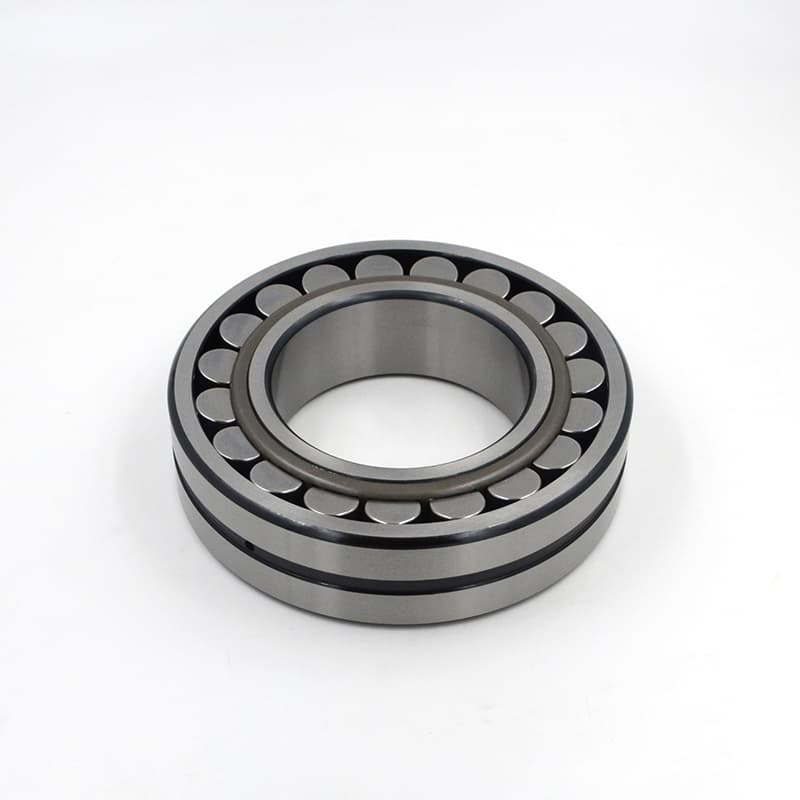
I once helped a buyer in Egypt. He ordered spherical roller bearings with normal clearance (CN) for his drying rolls. The rolls were at 90°C. After two hours of running, the bearings seized. The inner ring expanded more than the outer ring. The rollers had no room. We replaced them with C4 clearance bearings. No more seizures. That lesson stuck with me.
What is internal clearance?
Internal clearance is the loose space inside a bearing. It is the gap between the rollers and the raceways. When you mount a bearing, that gap gets smaller. The inner ring stretches when you press it onto a shaft. The outer ring shrinks when you press it into a housing. Then heat makes it even smaller.
So the clearance you order is the starting point. The final clearance after mounting and heating is much less. That is why paper machines need extra clearance.
How to choose clearance for paper machine sections
Here is a simple guide:
| Machine Section | Operating Temperature | Recommended Clearance | Reason |
|---|---|---|---|
| Wet end support rolls | 30-50°C | C3 | Moderate heat, moderate speed |
| Press section | 50-80°C | C3 or C4 | Higher load and moisture |
| Drying rolls | 80-120°C | C4 | High heat, risk of seizure |
| Drive sections (cool area) | 40-70°C | C3 | Combined loads, good for C3 |
| Calender rolls | 60-90°C | C4 | High precision and heat |
At FYTZ, we mark the clearance class on the box. C3 is the most popular for paper machines. But for drying rolls, do not use less than C4. I have seen too many failures from CN or C2.
A common mistake
Many buyers think a bigger clearance is always better. That is not true. Too much clearance lets the rollers bounce. That creates noise and shortens life. So do not use C5 unless the machine is very hot or very fast. Also, check the housing fit. If your housing is loose, the bearing outer ring can spin. That wears out the housing. So match the clearance to the housing tolerance. For paper machines, we recommend a tight housing fit (P6) with a C3 or C4 bearing. That gives the best balance.
Pick Proper Seals and Lubrication for Wet and Hot Conditions?
Water and steam attack your bearings every day. Paper machines spray water on the wet end. Dryers send hot vapor. One drop of water inside a bearing kills the grease fast.
Use triple lip seals for wet areas. Use labyrinth seals for high speed and high heat. Pick water-resistant grease with EP additives. And relubricate often.
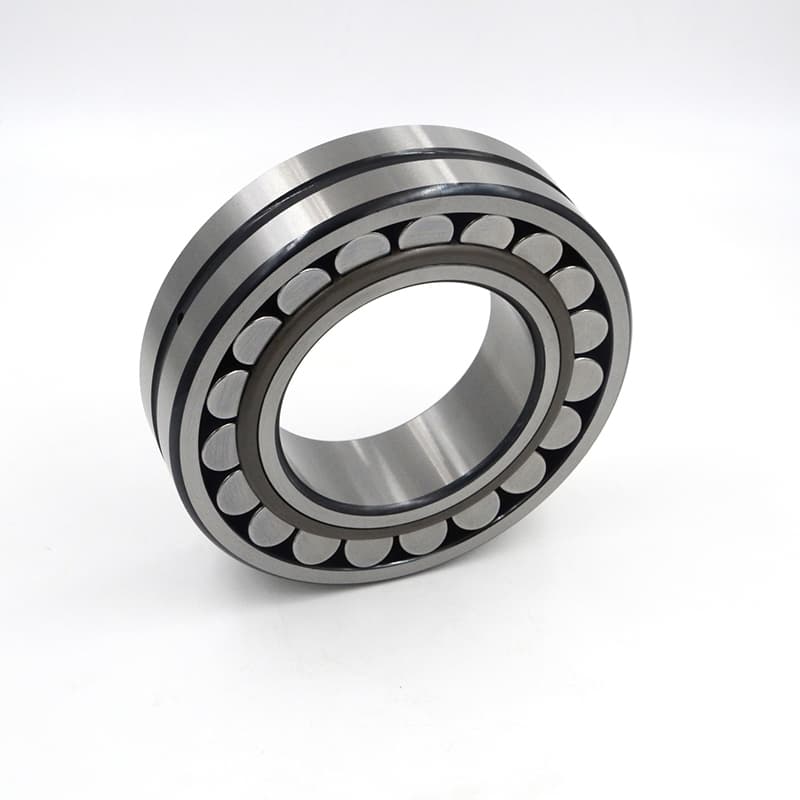
I have a customer in Vietnam. His wet end bearings failed every three months. The factory had high pressure water spray for cleaning. Water got past the cheap seals. After we installed double lip seals with stainless steel slingers, the bearings lasted 18 months. That is a huge saving in downtime and parts.
Seal types for paper machine environments
- Single lip contact seal: Good for dry areas only. Do not use on wet end.
- Double lip seal with spring: Much better for water splash. The spring keeps pressure on the shaft.
- Triple lip seal with flinger: Best for wet end. The flinger throws water away before it reaches the lip.
- Labyrinth seal (non-contact): Best for high speed and high heat. No friction. But it needs clean grease to keep the gap filled.
- V-ring with slinger: A cheap option for moderate moisture. Works well on drive sections.
For paper machines, I always recommend a combination. A contact lip seal on the inside stops water. A labyrinth seal on the outside stops dust. And a slinger (a rotating metal ring) throws water off. At FYTZ, we can supply housings with pre-installed seal kits. That saves you assembly time.
Lubrication choices
Grease is the standard for paper machine bearings. But not any grease. You need:
- Base oil viscosity: ISO VG 150 to 220 for low speed. ISO VG 320 for high load.
- Thickener: Lithium complex or polyurea. Both handle water well.
- Additives: EP (extreme pressure) for heavy loads. Anti-rust for wet conditions.
- Water resistance: Look for a grease with a high water washout test rating.
For high speed drive sections, oil lubrication might be better. Oil carries heat away. But it also leaks more easily. So only use oil if you have a closed system.
Relubrication schedule
Do not just add grease once and forget it. Water washes grease out. Heat dries it out. Here is my rule of thumb:
| Condition | Relubrication interval | Amount per bearing |
|---|---|---|
| Dry end, cool | Every 2000 hours | 5-10 grams |
| Press section | Every 1000 hours | 10-15 grams |
| Wet end | Every 500 hours | 15-20 grams |
| Drying rolls | Every 800 hours (high temp grease) | 10-15 grams |
Over-greasing is as bad as under-greasing. Too much grease pushes seals open. Then water gets in. So use a grease gun with a meter. And purge the old grease out through a relief valve. At FYTZ, we mark the recommended grease volume on each bearing box. That helps your maintenance team.
One last tip: For the wet end, use a positive pressure seal. That means you pump fresh grease in until old grease comes out the drain. That pushes water out too. It works very well. Many paper mills in Turkey and South Africa use this method with our bearings.
Conclusion
Match load type, misalignment, clearance, seals, and lubrication. That is how you select spherical roller bearings for paper machines.