
Your machines stop too often. Each stop eats your profits and annoys your customers.
Our long-life tapered roller bearings reduce unplanned downtime by more than half. We use better steel, tighter precision, and smarter heat treatment. You get longer running hours and fewer replacement cycles.
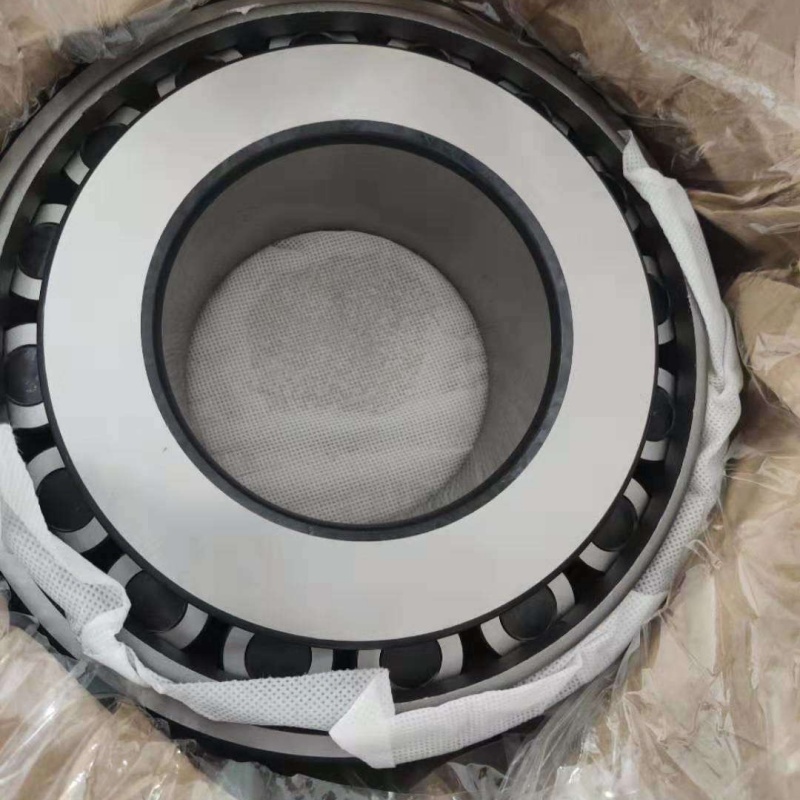
I talk to procurement managers like Rajesh every week. They tell me the same problem. Their bearings fail earlier than expected. Their customers complain about machine breakdowns. And they spend too much time managing returns and urgent orders. That is exactly why I want to show you what makes our bearings different. Not just on paper. But in real factories running long shifts every day.
What Happens Inside a Bearing After 10 Hours of Continuous Running?
You might think a bearing runs the same way at hour one and hour ten. That is not true at all.
After 10 hours of continuous running, heat builds up inside the bearing. The metal expands. The internal clearance gets smaller. Friction increases. And the lubrication film starts to break down. That is the beginning of the end for a standard bearing.

The hidden changes that happen inside your bearing
Let me walk you through what really happens inside a bearing during a long shift. Most people never see this. But once you understand it, you will never look at bearings the same way.
Hour 1 to 3: The warm-up phase
The bearing starts at room temperature. The grease is thick. The internal clearance is at its maximum. Everything feels smooth and quiet. The rolling elements move easily over the raceway. So far, so good.
Hour 3 to 6: The heat builds
Friction creates heat. Even good bearings create some friction. The temperature inside the bearing goes up by 20 to 40 degrees Celsius. The steel rings start to expand. The internal clearance gets smaller. The grease gets thinner. This is normal to some extent. But here is the danger point.
Hour 6 to 10: The danger zone
This is where weak bearings die. The internal clearance becomes too small. The rollers get squeezed between the inner and outer rings. Friction jumps up. Heat jumps up even more. The lubrication film breaks down. Metal touches metal. Tiny wear particles start to form. Those particles get into the grease and cause even more wear. By hour 10, a standard bearing is in real trouble.
What we do differently
Our bearings use C3 or C4 internal clearance. That extra space gives the bearing room to expand. Even after 10 hours, the internal clearance is still correct. The rollers are not squeezed. The lubrication film stays intact. The bearing keeps running smoothly while others start to fail.
I remember a customer in Indonesia who ran a palm oil processing plant . His machines ran 12-hour shifts. Standard bearings failed every 4 to 5 months. He switched to our C4 clearance bearings. The first set ran for 11 months. He called me and said, "I did not know a bearing could last that long."
3 Design Features That Prevent Heat Build-Up During Long Shifts
Heat is the real killer of bearings. But not all bearings handle heat the same way.
Our bearings use three specific design features to control heat. First, a superfinished raceway that creates less friction. Second, an optimized cage that improves oil flow. Third, a controlled heat treatment that keeps the geometry stable. Less heat means longer life.
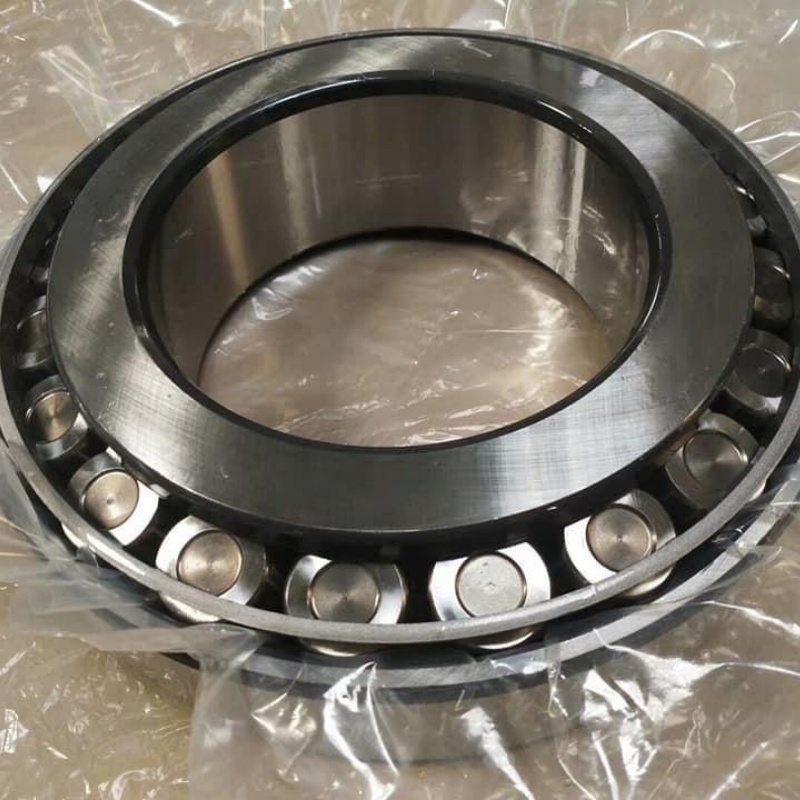
Feature 1: Superfinished raceway surface
Let me explain this in simple terms. Take your finger and rub it on a piece of glass. It feels smooth, right? Now rub it on a piece of rough concrete. That is the difference between a standard ground surface and our superfinished surface.
A standard bearing has tiny peaks and valleys on the raceway. You cannot see them with your eyes. But the rollers feel them. Each time a roller passes over a peak, it creates a tiny bump of friction. Do that millions of times per hour, and the friction turns into heat.
Our superfinishing process removes those tiny peaks. The surface is much smoother. The rollers glide instead of bumping. Less friction means less heat. It is that simple.
Here is a number for you. Superfinishing reduces the friction coefficient by about 30 to 40 percent compared to standard grinding. That is a huge difference when your machine runs for 10 or 12 hours straight.
Feature 2: Optimized cage design with better oil flow
The cage holds the rollers in place. But it also affects how oil or grease moves through the bearing. A bad cage blocks the flow. Lubrication gets stuck in one area. Other areas run dry. Dry metal creates heat fast.
Our cages have larger gaps and specially shaped pockets. The grease can flow freely around each roller. The oil can reach every part of the bearing. This is not a fancy feature. It is simple engineering. But many factories ignore it because it costs a little more to make a good cage.
We do not ignore it. Our customers run long shifts. They need every part of the bearing to stay lubricated. So we spend the extra money on a better cage.
Feature 3: Stable geometry from controlled heat treatment
I mentioned heat treatment earlier. But let me go deeper here. When a bearing gets hot during operation, the steel wants to change its shape. This is called thermal distortion. Even a tiny distortion changes the internal geometry. The rollers do not line up perfectly anymore. Then the bearing creates even more heat.
Our heat treatment process is carefully controlled. We use a combination of carburizing and through-hardening. The result is a bearing that stays stable even at high temperatures. The geometry does not drift. The rollers stay in alignment. The bearing runs cooler from start to finish.
I have tested this side by side with standard bearings. After 8 hours of running, our bearing runs 8 to 12 degrees Celsius cooler. That does not sound like much. But in bearing terms, that is a huge difference. It can mean thousands of extra hours of life.
Why Standard Bearings Fail in 24/7 Operations (And Ours Don’t)
Some factories never stop. They run 24 hours a day, 7 days a week. Standard bearings simply cannot handle that.
Standard bearings fail in 24/7 operations because they are not designed for continuous heat and stress. Their internal clearance is too tight. Their surface finish is too rough. Their cages block lubrication. Our bearings fix all three problems with purpose-built designs.
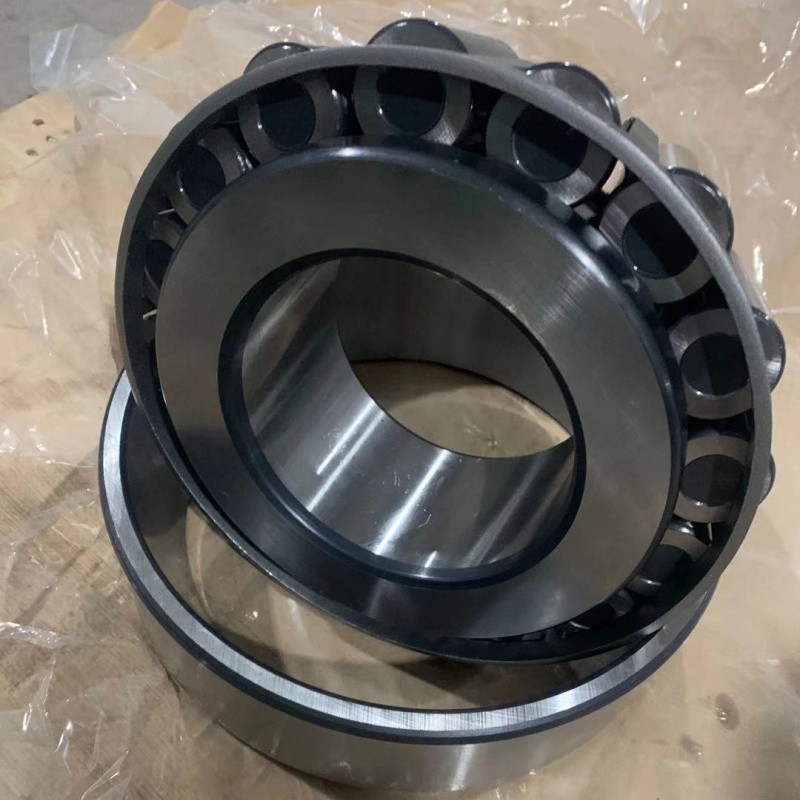
Four reasons standard bearings die young
Let me list the most common failure modes I see in continuous operations. Then I will show you how we solve each one.
| Failure Mode | What Happens | Why Standard Bearings Fail | How Our Bearings Solve It |
|---|---|---|---|
| Thermal seizure | Bearing locks up from heat | CN clearance too tight for continuous running | C3 or C4 clearance provides room for expansion |
| Surface fatigue | Raceway peels or pits | Rough surface creates stress points | Superfinished surface spreads load evenly |
| Lubrication starvation | Metal touches metal | Cage blocks grease flow | Open cage design allows free lubrication |
| Contamination wear | Dirt grinds the surfaces | Poor seals or no seal options | Multiple seal choices for different environments |
Thermal seizure
This is the most dramatic failure. The bearing gets so hot that it literally welds itself together. The rollers stop rolling. The shaft stops turning. Your machine stops working. Standard bearings with CN clearance have no room for thermal expansion. After 16 or 18 hours of continuous running, the internal space becomes zero. Then seizure happens.
Our solution is simple. We use C3 or C4 internal clearance. That extra space gives the bearing room to grow. No squeezing. No seizure. Just continuous running.
Surface fatigue
This failure happens slowly. You might not notice it at first. The raceway develops tiny cracks. Those cracks grow into pits. The pits create vibration. The vibration creates more cracks. Eventually, the bearing fails. Standard bearings have rough surfaces that create stress points. Those stress points are where the cracks start.
Our superfinished surface has fewer stress points. The load spreads evenly across the whole raceway. Cracks take much longer to start and grow.
Lubrication starvation
This one is common in continuous operations. The grease in a standard bearing gets pushed to the sides. The center runs dry. Dry metal creates heat and wear. Our cage design prevents this. The grease can move freely and stay where it is needed.
What this means for you
If you run 24/7 operations, you have two choices. You can keep replacing standard bearings every few months. Or you can switch to our bearings and change them once or twice a year. The math is not hard. Less downtime. Less labor. Fewer emergency orders. That is real savings.
The Role of Internal Clearance (C3/C4) in Extended Running Time
Internal clearance is one of the most misunderstood topics in bearings. But it is also one of the most important for long operation.
Internal clearance is the small gap between the rolling elements and the raceways. C3 means a larger gap than standard. C4 means an even larger gap. For extended running time, you need C3 or C4. The gap gives the bearing room to handle heat expansion without squeezing the rollers.
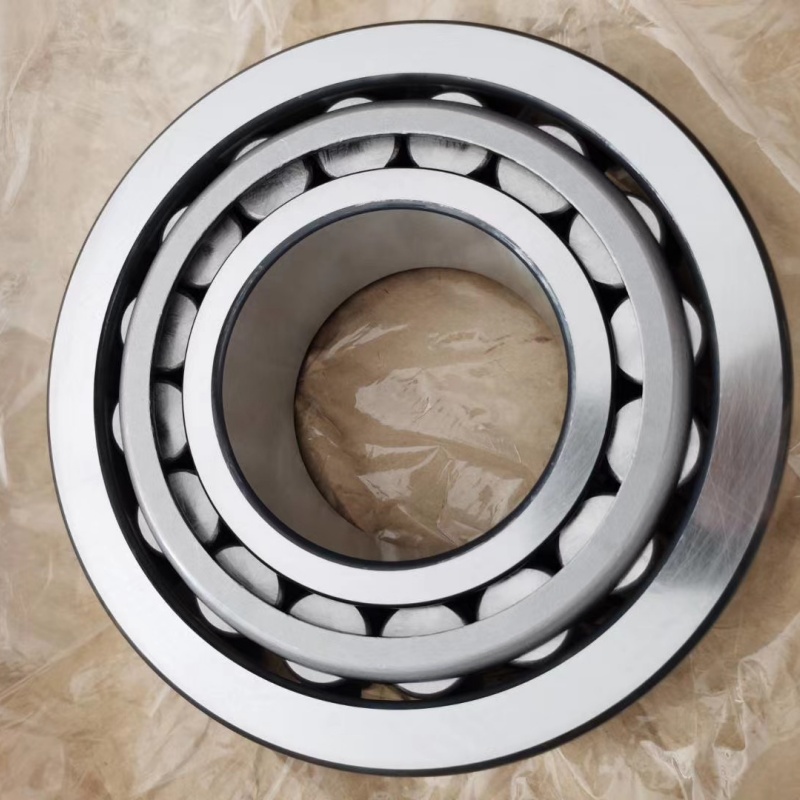
Why bigger is better for long hours
Let me explain this with a simple example. Put on a ring that fits perfectly when your hand is cold. Now go run for an hour. Your hand will swell a little. The ring will feel tight. That is exactly what happens inside a bearing. But the bearing cannot take off the ring. It has to keep running.
Here is the difference between the three common clearance classes.
CN (Normal) clearance
This is the standard clearance. It works fine for light loads and short running times. But for long shifts, it is too tight. The heat expansion eats up the small gap. Then the bearing runs in a squeezed condition. Friction goes up. Heat goes up. Life goes down.
C3 clearance
This is the first step up. The gap is larger than CN. Most of our customers for long-hour operations start with C3. It handles moderate heat expansion well. It works for 8 to 12 hour shifts in normal temperatures.
C4 clearance
This is the largest standard clearance. We recommend C4 for extreme conditions. Very long shifts (16 to 24 hours). High ambient temperatures. Heavy loads. Machines that run in hot countries. C4 gives you the most room for expansion.
How to choose the right clearance for your operation
Let me give you some practical guidelines. I use these with my own customers every week.
| Your Operation | Recommended Clearance | Why |
|---|---|---|
| 8-hour shifts, normal temperature | CN or C3 | CN is usually enough for short shifts |
| 10-12 hour shifts, normal temperature | C3 | Extra room for longer heat buildup |
| 12-16 hour shifts, warm environment | C3 or C4 | Depends on your specific load and speed |
| 24/7 operation, hot environment | C4 | Maximum room for continuous heat |
| High load + long hours | C4 | Load creates extra heat on top of running time |
I once had a customer in Pakistan who ran textile machines for 20 hours a day. The factory was hot. The machines were old. He tried CN clearance bearings from three different suppliers. None lasted more than 6 months. I recommended C4 clearance. The first set lasted 14 months. He called me and said, "Why did no one tell me about clearance before?"
That is a good question. Many suppliers do not want to talk about clearance because they only stock CN. They want to sell you what they have, not what you need. We stock C3 and C4 because our customers need them. That is the difference between a box mover and a real partner.
One more thing about clearance
Bigger clearance is not always better for every application. If your machine runs at very high speed, too much clearance can cause vibration. But for most industrial machines running long hours at normal speeds, C3 or C4 is the right choice. If you are not sure, just send me your operating conditions. I will help you pick the right clearance for your specific machines.
Conclusion
Long operation needs the right clearance, the right surface finish, and the right cage design. Our bearings have all three.