
Your machines run slower than they should. You just do not know it yet.
Better bearings improve machine performance by reducing friction, keeping tighter tolerances, and handling higher loads. Our P5/P6 precision bearings help you run faster, produce more, and waste less energy.

I talk to procurement managers like Rajesh every single week. They tell me they want better output from their existing machines. They do not want to buy new equipment. They just want their current machines to run better. That is exactly where better bearings come in. You do not need a new machine. You just need bearings that do not hold you back. Let me show you what I mean.
How Do Better Bearings Improve Your Machine’s Overall Efficiency?
Most people think a bearing just lets something spin. That is true. But a good bearing does much more than that.
Better bearings improve efficiency by cutting energy loss from friction. Less friction means your motor uses less power to turn the shaft. That saves electricity. It also means less heat. And less heat means your machine can run faster without breaking down.
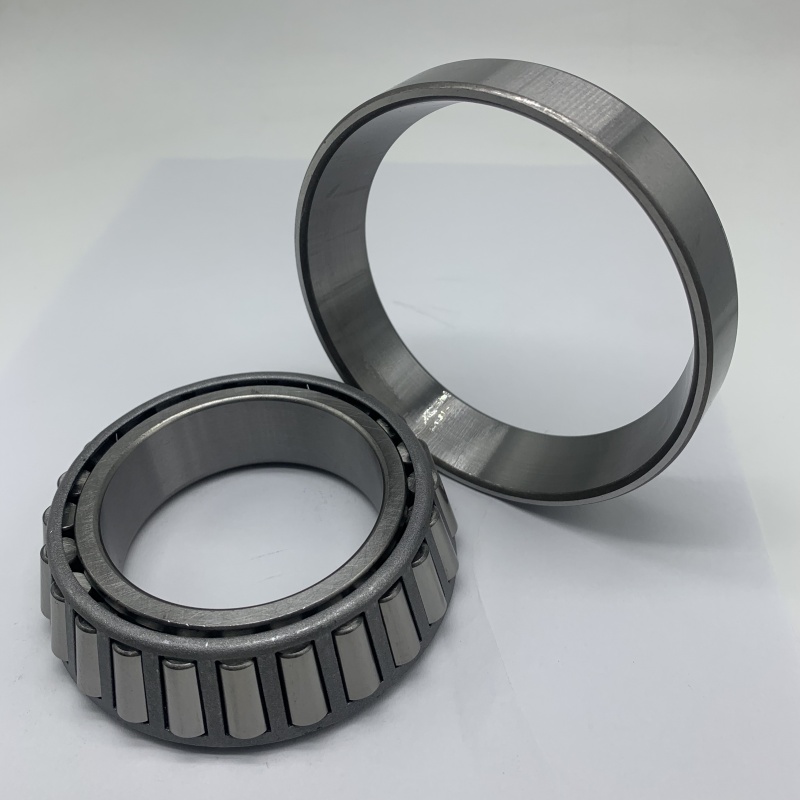
The efficiency chain: from bearing to production output
Let me break this down into simple steps. Every bearing creates some resistance. That resistance takes energy to overcome. A poor bearing creates a lot of resistance. A good bearing creates very little. That difference shows up in three places.
| Efficiency Area | Poor Bearing | Our Better Bearing | The Real-World Benefit |
|---|---|---|---|
| Energy use | High friction, more power needed | Low friction, less power needed | Lower electricity bills |
| Speed capability | Limited by heat buildup | Runs faster without overheating | More output per hour |
| Consistency | Performance drops over time | Stable performance for longer | Predictable production quality |
Energy efficiency
Here is a simple fact. A bearing with high friction is like driving a car with the parking brake on. You can still move. But you waste fuel. The same thing happens with your machines. Your motor works harder. It pulls more current. It gets hotter. And you pay for that extra electricity every single month.
Our precision bearings have superfinished raceways. That word "superfinished" means the surface is incredibly smooth. The rollers glide instead of drag. Our customers tell us they see a 5 to 8 percent drop in motor current after switching to our bearings. That adds up fast when your machines run 10 or 12 hours a day.
Speed efficiency
Here is a simple fact. A bearing with high friction is like driving a car with the parking brake on. You can still move. But you waste fuel. The same thing happens with your machines. Your motor works harder. It pulls more current. It gets hotter. And you pay for that extra electricity every single month.
Our precision bearings have superfinished raceways. That word "superfinished" means the surface is incredibly smooth. The rollers glide instead of drag. Our customers tell us they see a 5 to 8 percent drop in motor current after switching to our bearings. That adds up fast when your machines run 10 or 12 hours a day.
Consistency efficiency
Here is something people forget. A bearing does not perform the same way on day one and day one hundred. Friction goes up as the bearing wears. That means your machine slows down over time. Or your motor works harder to keep the same speed. Either way, you lose efficiency.
Our bearings wear slower. The precision stays tighter for longer. That means your machine runs the same way on day one and day one hundred. Your production output stays consistent. And that makes your planning much easier.
5 Performance Metrics That Change When You Upgrade Your Bearings
You cannot manage what you do not measure. So let me give you five specific numbers that will change when you switch to better bearings.
The five metrics are: operating temperature, vibration level, motor current draw, production speed, and replacement frequency. Each one improves by 15 to 40 percent when you move from standard bearings to our precision P5/P6 bearings.
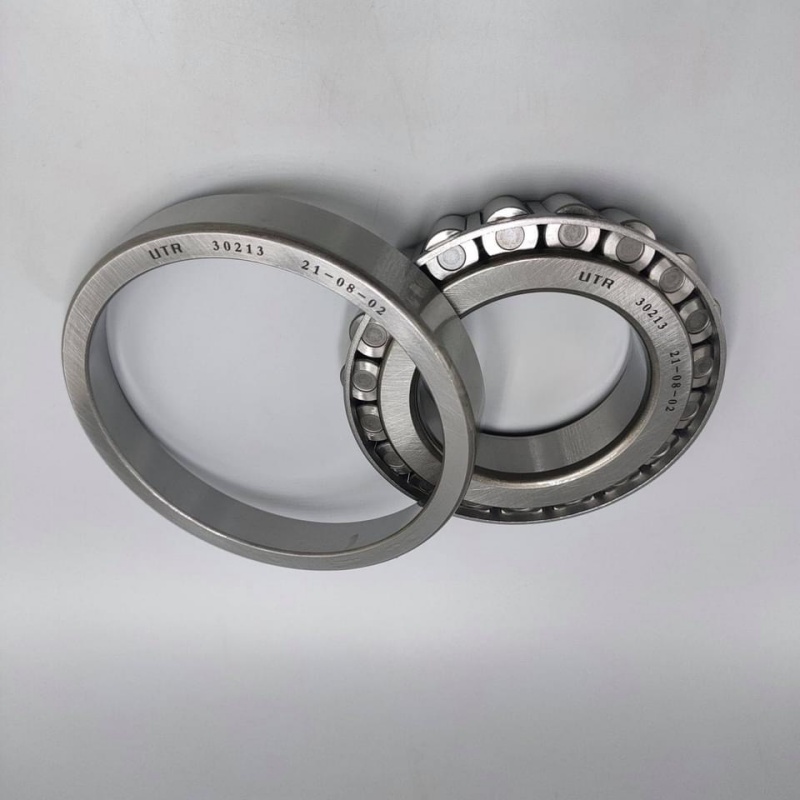
Metric 1: Operating temperature
Heat is the enemy. Every bearing creates some heat. But better bearings create much less. Our customers typically see a 10 to 15 degree Celsius drop in operating temperature after switching to our bearings. That is not a small change. That is the difference between a bearing that runs safely and one that is close to failure.
Lower temperature also means the grease lasts longer. High heat breaks down grease. When the grease fails, the bearing fails. So lower temperature gives you a double benefit. Less heat right now. And longer grease life for the future.
Metric 2: Vibration level
Vibration is noise that you can feel. It comes from poor geometry, rough surfaces, or loose internal clearance. Too much vibration damages other parts of your machine. It also makes your product quality worse.
Our P5 and P6 precision bearings have much tighter tolerances than standard bearings. That means the rolling elements move more smoothly. The vibration level drops significantly. One customer in Egypt measured vibration on his rock crusher. Standard bearings gave him a reading of 4.2 mm/s. Our bearings dropped that to 2.1 mm/s. That is half the vibration. His machine runs quieter. And his maintenance team is happier.
Metric 3: Motor current draw
This one is about electricity. Your motor pulls a certain amount of current to turn the shaft. Higher friction means higher current. Higher current means higher electricity bills.
We tested this with a customer in Brazil. He ran a conveyor system for 10 hours a day. The motor pulled 18.5 amps with standard bearings. After switching to our bearings, the same motor pulled 16.8 amps. That is a 9 percent drop. Over a full year, that saved him over 2,000 kilowatt-hours. That is real money.
Metric 4: Production speed
This is the one that gets most customers excited. Better bearings run faster. They run faster because they handle heat better and because their tolerances allow higher speeds without vibration.
I already mentioned the Vietnam customer who gained 400 RPM. That is a 14 percent increase in line speed. For a factory running 8 hours a day, that means almost one extra hour of output every single day. No extra labor. No extra electricity. Just faster production from the same machine.
Metric 5: Replacement frequency
Better bearings last longer. That means you replace them less often. Less downtime. Less labor. Fewer emergency orders.
We have many customers who went from replacing bearings every 6 months to every 12 or 14 months. That is not just a bearing saving. That is a labor saving. A downtime saving. And a headache saving. Rajesh from India told me his biggest win was not the bearing cost. It was the fact that his customers stopped calling him to complain.
The Direct Link Between Bearing Precision (P5/P6) and Output Quality
You might wonder if precision grades really matter. They do. More than most people think.
Precision P5 and P6 bearings have tighter dimensional tolerances than standard bearings. That means the shaft runs truer. The vibration is lower. And the product coming out of your machine has better consistency. For applications like grinding, cutting, or printing, precision grade is not optional. It is required.
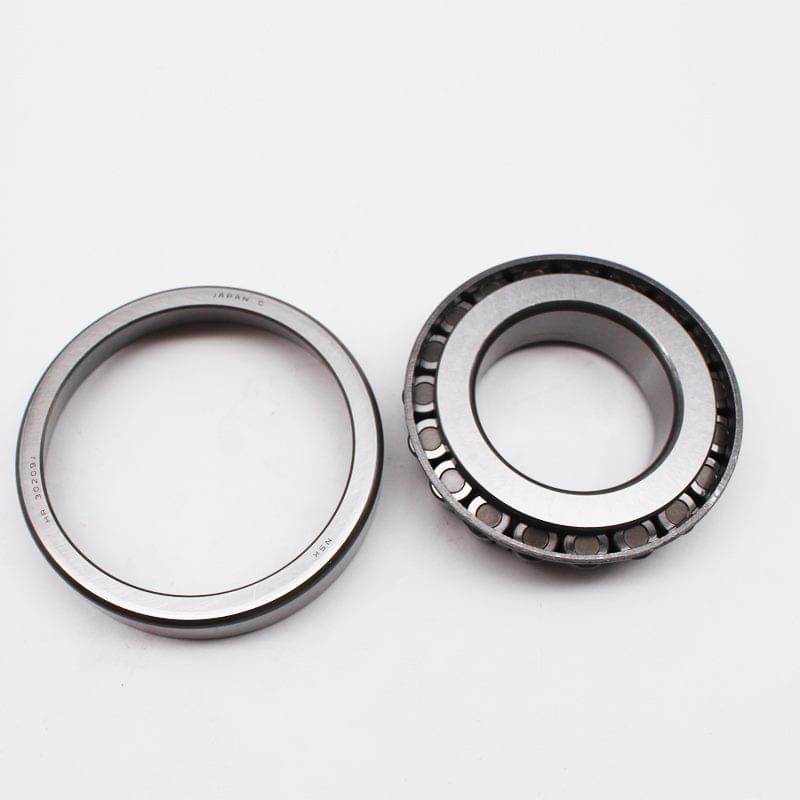
What precision grades actually mean
Let me explain this without the technical jargon. Every bearing has some error. The inner ring is not perfectly round. The outer ring is not perfectly round. The rolling elements are not all exactly the same size. The question is how much error is allowed.
Standard bearings (Class 0) allow a certain amount of error. That amount is fine for fans, conveyor rollers, and agricultural equipment. But for machines that need precise output, that error is too big.
P6 bearings are tighter. About 50 percent tighter in most dimensions. P5 bearings are even tighter. About 30 to 40 percent tighter than P6.
Here is a simple comparison table.
| Precision Grade | Runout Tolerance | Best For | Typical Applications |
|---|---|---|---|
| Standard (Class 0) | Highest (loosest) | Basic machinery | Fans, simple conveyors, agricultural tools |
| P6 | Medium | General industrial | Machine tools, pumps, gearboxes |
| P5 | Low (tightest) | High precision | Grinders, spindles, printing presses |
How precision affects your output quality
Let me give you a concrete example. Imagine you have a grinding machine. It spins a wheel at high speed to grind metal parts. If the bearing has too much runout, the wheel wobbles. That wobble makes the finished part uneven. Some areas get ground too much. Other areas get ground too little. Your product quality suffers.
The same thing happens in printing presses. The roller must stay perfectly straight. Any wobble makes the printed image blurry. In textile machines, bearing wobble creates uneven tension in the fabric.
Our P5 and P6 precision bearings keep the shaft running true. The runout is tiny. Your product comes out the same way every time. That means less scrap. Less rework. And happier customers at the other end.
I remember a customer in Turkey who made automotive parts. He used standard bearings in his lathes. His rejection rate was 4 percent. That means 4 out of every 100 parts went into the scrap bin. He switched to our P6 bearings. His rejection rate dropped to 1.5 percent. That is a huge saving when you make thousands of parts every month.
One warning about precision grades
Higher precision costs more money. That is just a fact. So do not buy P5 bearings for a fan that just moves air. You will waste your money. Buy precision bearings for machines that need precision output. For everything else, standard or P6 is fine.
If you are not sure what you need, send me your machine details. I will help you pick the right grade. I will not upsell you to a higher grade than you actually need. That is not how I build long-term relationships.
Why Higher Load Capacity Means Faster Production Cycles
Load capacity sounds like a heavy engineering topic. But it connects directly to your production speed.
Higher load capacity means the bearing can handle more force without failing. That lets you run your machine faster, feed material more aggressively, or take heavier cuts. All of that adds up to shorter production cycles and more output per hour.
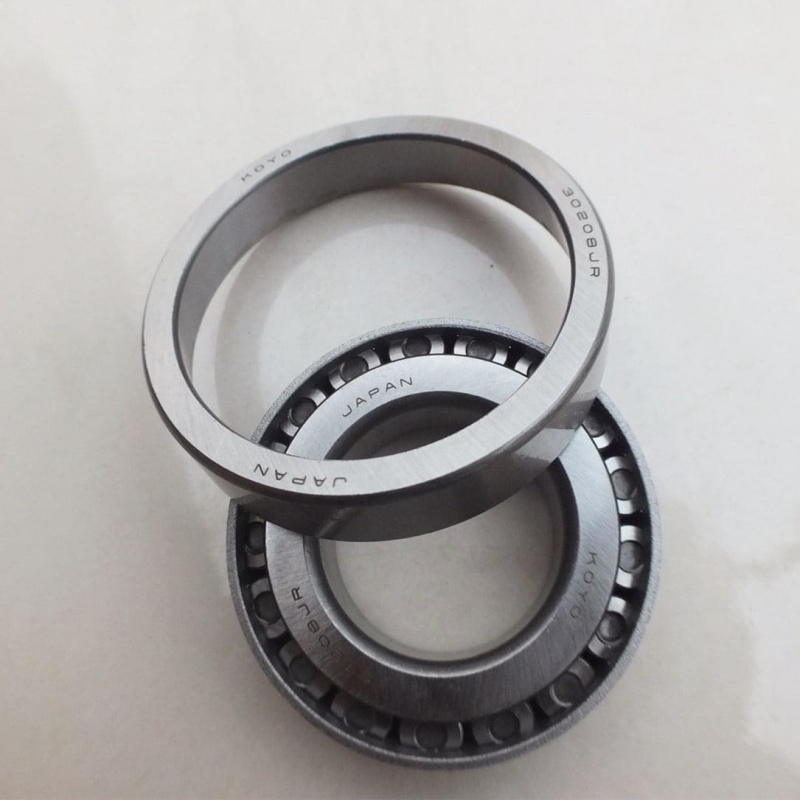
The simple relationship between load and speed
Every bearing has a load rating. That number tells you how much force the bearing can handle. But here is the part that most people miss. Load and speed work together. If you increase the load, you must decrease the speed to keep the bearing safe. If you increase the speed, you must decrease the load.
So a bearing with higher load capacity gives you choices. You can run the same load at higher speed. Or you can run the same speed with higher load. Either way, your production cycle gets shorter.
| Scenario | Standard Bearing | Our Higher Capacity Bearing | The Result |
|---|---|---|---|
| Same load | Run at 80% of max speed | Run at 100% of max speed | 25% faster cycles |
| Same speed | Feed rate limited to 100 units/min | Feed rate increased to 130 units/min | 30% more output |
| Mixed | Conservative settings | Optimized settings | Best of both |
Real example from a customer
I had a customer in Russia who made metal pipes. His cutting machine took about 45 seconds to cut each pipe. He wanted to cut faster. But every time he increased the feed rate, the bearings got too hot. The load was too high for his standard bearings.
We sent him our higher capacity tapered roller bearings. The design has thicker rollers and a stronger cage. The load rating is about 25 percent higher than the standard bearing he was using.
He installed our bearings and increased his feed rate by 20 percent. The cutting time dropped from 45 seconds to 36 seconds. That is a 20 percent drop in cycle time. Over an 8-hour shift, that meant 160 more pipes. Every single day. With the same machine. The same operator. The same electricity.
He called me after three months. He said, "I should have called you two years ago."
How we achieve higher load capacity
Let me give you the technical details. Higher load capacity comes from three things.
First, the steel quality. We use high-grade chromium steel. It is stronger than the cheaper steel used in standard bearings. Stronger steel can handle more force without deforming.
Second, the roller profile. Our rollers have a logarithmic shape. That shape spreads the load evenly across the whole roller. No hot spots. No stress peaks. The bearing can handle more total load because the load is shared evenly.
Third, the heat treatment. Our controlled carburizing process creates a tough core with a hard surface. The bearing can handle shock loads without cracking. And it can handle steady high loads without denting.
When to prioritize load capacity
Not every application needs high load capacity. If your machine runs light loads at slow speeds, standard load capacity is fine. But if you are pushing your machine to its limits, higher load capacity gives you room to go further.
Here is my advice. If your current bearings are failing from raceway dents or cage cracks, you need higher load capacity. If your current bearings are running hot even at normal speeds, you need higher load capacity. If you want to increase your production speed but your bearings are holding you back, you need higher load capacity.
Send me your current operating conditions. I will tell you if our higher capacity bearings will help you run faster.
Conclusion
Better bearings cut friction, hold tighter precision, and handle more load. That means faster cycles and more output from your existing machines.
