
Your machine starts and stops all day. It runs hot. It takes shock loads. Standard bearings die fast. What kind of bearing can survive this?
Bearings for extreme working cycles need special design features. They need tougher steel. They need crowned rollers to stop edge loading. They need heat-stabilized rings. They also need better grease. Standard bearings are not made for this. Do not use them for extreme cycles.
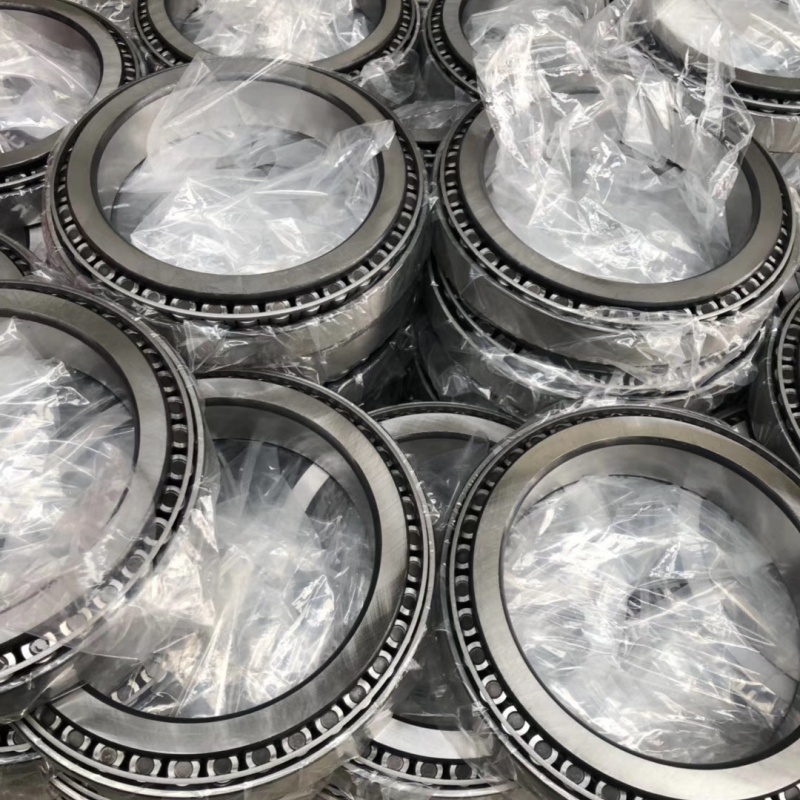
I have sold bearings to factories in Russia, Brazil, and Indonesia for over ten years. One question comes up from customers with tough machines. "Why do my bearings fail so fast when my machine keeps stopping and starting?" Let me explain what is happening.
What Are Extreme Working Cycles and Why Do They Kill Standard Bearings?
You think a bearing that runs all day is working hard. But a bearing that starts and stops all day works even harder. Why is that? And what counts as an extreme cycle?
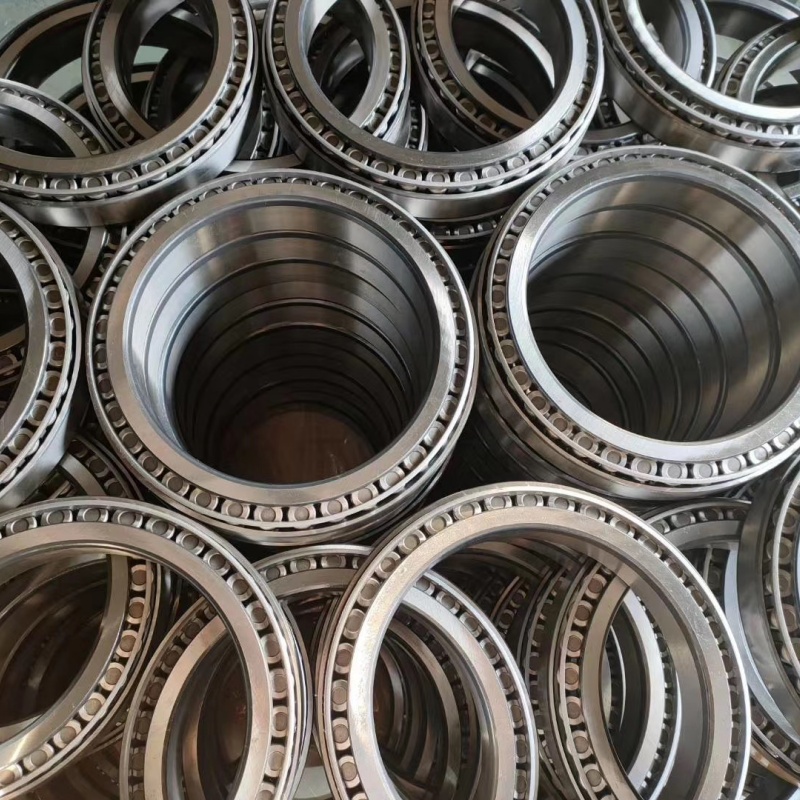
An extreme working cycle means frequent starts and stops, direction changes, shock loads, or high heat. One start-stop cycle can cause more wear than one hour of steady running. Standard bearings are made for steady running. Extreme cycles create different stresses. Those stresses kill standard bearings fast.
Dive deeper Paragraph:
I remember a customer in Turkey. He makes packaging machines. His machines start and stop 20 times per minute. He used standard deep groove ball bearings. They failed every two weeks. He thought the bearings were bad. The real problem was his working cycle.
Let me explain what extreme cycles really mean.
What is a working cycle?
A working cycle is one complete sequence of your machine. It might be a start, a run, a stop. It might be a forward movement then a reverse movement. It might be a load then no load.
For a normal conveyor, one cycle might last 10 minutes. The bearing runs steady most of that time.
For an extreme cycle machine, one cycle might last 2 seconds. The bearing starts, stops, or changes direction constantly.
Types of extreme cycles
Here are the most common extreme cycle patterns:
| Cycle type | What happens | Example machine |
|---|---|---|
| High frequency start-stop | Starts and stops many times per minute | Packaging machine, pick-and-place robot |
| Oscillating | Spins back and forth without full rotation | Solar tracker, antenna positioner |
| Shock load cycle | Sudden impact at each cycle | Rock crusher, forging press |
| Direction reversal | Changes spin direction at each cycle | Rolling mill, winder |
| Partial rotation | Never completes a full turn | Valve actuator, robot joint |
Why standard bearings die from extreme cycles
Standard bearings are designed for steady rotation. The oil film forms between the balls and raceway. That film protects the metal.
When you start and stop, the oil film breaks. Then metal touches metal. That creates wear.
Here is what happens inside a bearing during extreme cycles:
- Startup: The bearing has no oil film yet. Metal touches metal.
- Running: The oil film forms. Good protection.
- Stop: The oil film breaks. Metal touches metal again.
- Vibration while stopped: If the machine vibrates when stopped, the balls bounce on the raceway. This creates small dents. This is called false brinelling.
The damage from false brinelling
False brinelling is a big problem for extreme cycle machines. The bearing sits still. The machine vibrates. The vibration makes the balls rub against the raceway. Over time, this rubs small dents into the raceway.
You can see false brinelling as shiny, worn spots in the raceway. The spots are exactly spaced at the ball pitch.
Once false brinelling starts, the bearing makes noise. The dents also create stress points. Cracks start there. The bearing fails.
Comparison of wear patterns
| Condition | Wear pattern | Failure time (relative) |
|---|---|---|
| Steady running | Even wear across raceway | 1x (baseline) |
| Frequent starts and stops | More wear at startup and stop positions | 0.3x to 0.5x |
| Oscillation (back and forth) | Wear only in the oscillated zone | 0.2x to 0.4x |
| Vibration while stopped | Dents (false brinelling) | 0.1x to 0.3x |
Real example from my work
A customer in India makes solar panel trackers. The trackers move back and forth slowly. They never complete a full rotation. The movement is small and constant.
He used standard deep groove ball bearings. They failed in three months. The raceways had wear only in one small zone. The rest of the raceway looked new.
He switched to bearings with special grease and crowned rollers. The new bearings have been running for 18 months. The design change made all the difference.
The Key Design Features That Make a Bearing Survive Extreme Cycles?
You know extreme cycles kill standard bearings. So what should you look for in a bearing that can survive? What design features actually make a difference?
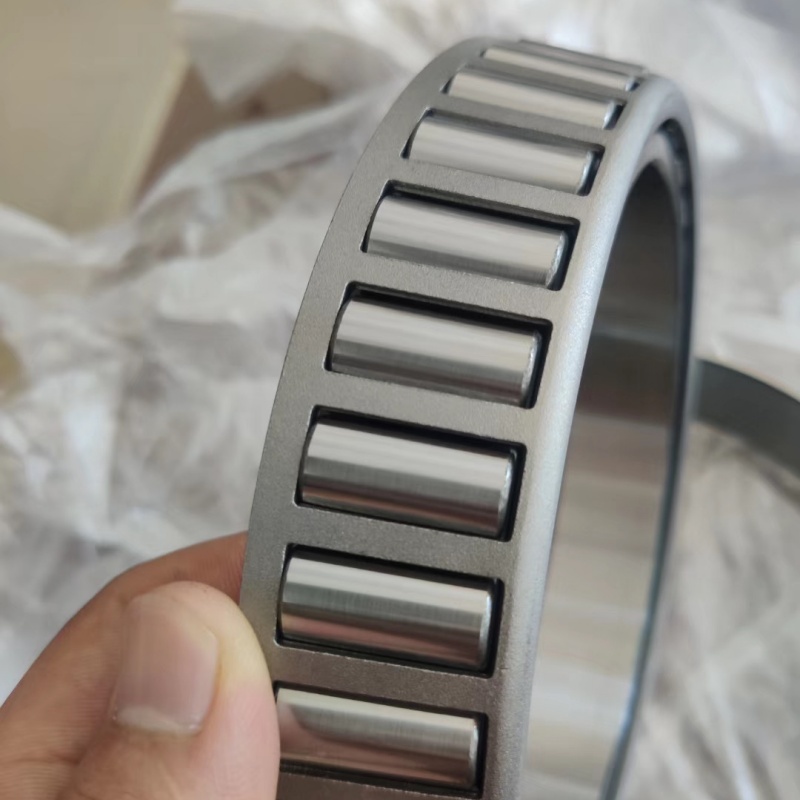
Five design features help bearings survive extreme cycles. First, crowned rollers or balls to spread the load. Second, heat-stabilized rings for temperature changes. Third, special grease for start-stop conditions. Fourth, tighter internal clearance. Fifth, stronger cage materials. Each feature adds life under extreme cycles.
Dive deeper Paragraph:
I work with a customer in Russia. He makes mining equipment that starts and stops constantly. He asked me to design a bearing that would last. We added three of these features to his bearings. His bearing life tripled.
Let me explain each feature in detail.
Feature 1: Crowned rollers or balls
Standard rollers are straight. Under load, the ends push harder than the middle. This is edge loading. Edge loading creates hot spots.
Under extreme cycles, edge loading is worse. The constant starting and stopping makes the rollers skid. Skidding plus edge loading is a killer.
Crowned rollers have a slight curve. The middle is thicker than the ends. This spreads the load evenly. No hot spots. No edge loading.
For ball bearings, the same idea applies. A better ball-raceway match spreads the load.
Feature 2: Heat-stabilized rings
Extreme cycle machines often run hot. The heat comes from frequent starts and stops. The bearing expands when it gets hot.
Standard bearings are heat stabilized to 120°C. For extreme cycles, you need 150°C or 200°C stabilization. This costs more. But it stops the bearing from losing hardness when hot.
Feature 3: Special grease for start-stop conditions
Grease for steady running is different from grease for extreme cycles.
For start-stop cycles, you need:
- Higher base oil viscosity: ISO VG 220 instead of ISO VG 150. Thicker oil stays on the surfaces better.
- Better anti-wear additives: These protect the metal when the oil film breaks.
- Higher thickener stability: Frequent starts and stops stress the grease structure.
I tested two greases on the same extreme cycle machine. Standard grease lasted 3 months. Extreme cycle grease lasted 14 months.
Feature 4: Tighter internal clearance
Internal clearance is the small gap inside the bearing. For steady running, you want normal clearance (CN). For extreme cycles, you want C3 (larger clearance) or sometimes C4.
Why? Because extreme cycles create more heat. More heat means more expansion. More expansion needs more clearance. Without enough clearance, the bearing binds.
Here is my clearance guide for extreme cycles:
| Machine condition | Recommended clearance |
|---|---|
| Normal steady running | CN (normal) |
| Frequent start-stop, low heat | CN or C3 |
| High heat from frequent cycles | C3 |
| Very high heat or heavy preload | C4 |
| Oscillating (never full rotation) | C3 with special grease |
Feature 5: Stronger cage materials
The cage holds the rollers or balls apart. Under extreme cycles, the cage gets stressed more.
Standard cages are made of steel or brass. Steel is strong. Brass is good for high speed.
For extreme cycles, I recommend:
- Machined brass cage: Stronger than pressed steel. Handles shock better.
- Polyamide cage with glass fiber: Good for oscillating movements. Lighter than metal.
- Steel cage with reinforced design: For very heavy shock loads.
Feature comparison table
| Feature | Standard bearing | Extreme cycle bearing | Benefit |
|---|---|---|---|
| Roller profile | Straight | Crowned | Stops edge loading |
| Heat stabilization | 120°C | 150°C or 200°C | Keeps hardness when hot |
| Grease | Standard lithium | High viscosity + anti-wear | Protects at start-stop |
| Clearance | CN | C3 or C4 | Room for heat expansion |
| Cage | Pressed steel | Machined brass or reinforced | Handles shock and start-stop |
What I tell my customers
If your machine has extreme cycles, do not buy standard bearings. You will waste money on replacements. Ask for these five features. The extra cost is 20% to 40%. The extra life is 200% to 500%. That is a good deal.
Heat, Shock, and Speed: Which One Is Actually Killing Your Bearings?
You have three problems. Heat. Shock. Speed. All three are bad for bearings. But which one is the real killer for your machine? And how do you fix it?
For most extreme cycle machines, heat and shock kill bearings faster than speed. Speed is usually low in extreme cycle machines. But heat from frequent starts and stops breaks down the grease. Shock loads dent the raceways. Fix heat first with better grease. Fix shock with crowned rollers and stronger cages.

Dive deeper Paragraph:
A customer in Egypt called me last year. His concrete block machine kept losing bearings. He thought the problem was speed. The machine runs at 500 RPM. That is slow. Speed was not the problem.
I visited his plant. I touched the bearing housing after the machine ran for one hour. It was too hot to hold my hand on. The problem was heat. The frequent start-stop cycles created heat. The heat killed the grease. The dead grease killed the bearing.
Let me break down each killer.
Killer 1: Heat
Heat is the most common killer in extreme cycle machines. Here is how heat kills:
- Heat makes the grease thinner. Thinner grease runs off the surfaces.
- Without grease, metal touches metal.
- Friction creates more heat. This is a cycle.
- At high heat, the grease oxidizes and hardens.
- Hard grease blocks new grease from getting in.
How much heat is too much?
| Temperature | Effect on bearing |
|---|---|
| Below 70°C | Normal. No problem. |
| 70°C to 90°C | Grease ages faster. Shortened life. |
| 90°C to 110°C | Grease breaks down quickly. Change grease more often. |
| Above 110°C | Standard grease fails. Need high temp grease. |
| Above 150°C | Bearing steel loses hardness. Bearing is damaged. |
Fix for heat: Use high temperature grease. Use C3 or C4 clearance. Add a cooling fan or heat shield if possible.
Killer 2: Shock
Shock loads happen when your machine suddenly hits something. A rock crusher. A forging press. A conveyor starting with a heavy load.
Shock loads create very high forces for a very short time. Those forces can dent the raceway. The dent is called a brinell mark.
How shock kills:
- The roller or ball hits the raceway with high force.
- The hard steel dents. The dent is permanent.
- Each time the roller passes the dent, it creates a small impact.
- The impact causes more damage. Cracks start.
- The bearing fails.
Fix for shock: Use crowned rollers. Use a larger bearing. Use a bearing with a higher static load rating (C0).
Killer 3: Speed
Speed is usually not the main problem in extreme cycle machines. Most extreme cycle machines run at low to medium speed.
But speed can be a problem in two ways:
- Too fast for the grease: High speed throws the grease off the surfaces.
- Too fast for the cage: The cage can break at very high speed.
For most extreme cycle machines, speed is under 1,000 RPM. That is fine for almost any bearing.
How to identify your killer
| Symptom | Likely killer | What to check |
|---|---|---|
| Black, burnt grease | Heat | Touch the housing. Is it hot? |
| Dents in raceway | Shock | Look at the failed bearing. See dents? |
| Grease thrown off housing | Speed or wrong grease | Check RPM. Is it over 3,000? |
| False brinelling marks | Vibration while stopped | Does your machine vibrate when off? |
| Wear only on one side | Misalignment or shock | Check shaft straightness. |
A real example
A customer in Brazil has a forging press. The press hits metal with 50 tons of force. The bearings take that shock 30 times per minute.
His bearings failed from shock. The raceways had deep dents. He tried a larger bearing. That helped. He also switched to a bearing with crowned rollers. That helped more. He now gets 12 months of life instead of 2 months.
My priority list
If you have an extreme cycle machine, fix problems in this order:
- Heat first. Check the temperature. Fix hot bearings with better grease and more clearance.
- Shock second. Check for dents on failed bearings. Fix shock with larger bearings and crowned rollers.
- Speed third. Check RPM. For most extreme cycles, speed is fine.
How to Calculate Bearing Life for Machines That Start and Stop Constantly?
You know the standard bearing life formula. It works for steady running. But your machine starts and stops all day. That formula does not work. So how do you calculate life for extreme cycles?
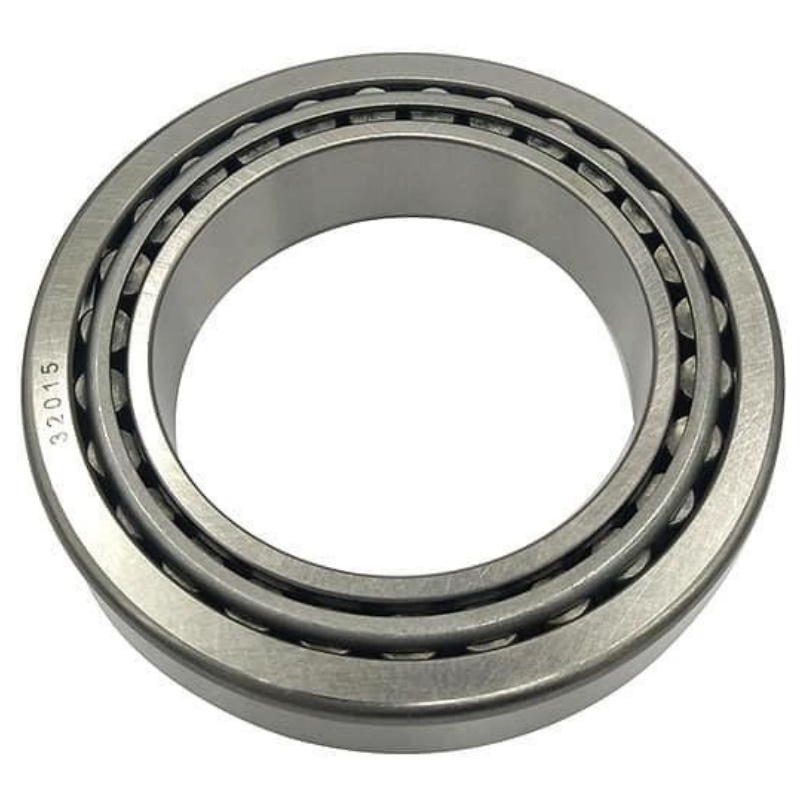
For extreme cycles, use the L10 life formula but adjust for your cycle type. Multiply the standard life by a correction factor. For frequent starts and stops, use 0.3 to 0.5. For oscillation, use 0.2 to 0.4. For vibration while stopped, use 0.1 to 0.3. These factors come from real testing, not just math.
Dive deeper Paragraph:
I get this question from engineers all the time. "How long will this bearing last in my machine?" For steady running, I can give a good answer. For extreme cycles, the answer is harder.
Let me show you how I estimate bearing life for extreme cycles.
The standard L10 formula first
The standard L10 life formula is:
L10 = (C / P)^3 x 1,000,000 revolutions
Where:
- C = dynamic load rating (from catalog)
- P = actual load on the bearing
This gives you life in revolutions. For steady running, you convert revolutions to hours.
But this formula assumes steady load and steady speed. It does not account for starts, stops, or shocks.
Correction factors for extreme cycles
Based on real testing from our factory and field data, I use these correction factors.
| Cycle type | Correction factor | How to use |
|---|---|---|
| Steady running | 1.0 (baseline) | Use standard L10 |
| Frequent starts and stops (low heat) | 0.7 | Multiply L10 by 0.7 |
| Frequent starts and stops (high heat) | 0.5 | Multiply L10 by 0.5 |
| Oscillation (back and forth) | 0.3 | Multiply L10 by 0.3 |
| Oscillation with shock | 0.2 | Multiply L10 by 0.2 |
| Vibration while stopped | 0.2 | Multiply L10 by 0.2 |
| Heavy shock at each cycle | 0.15 | Multiply L10 by 0.15 |
| Multiple extreme conditions | 0.1 | Multiply L10 by 0.1 |
A real calculation example
Let us use a real bearing. A 6206 deep groove ball bearing. C = 19,500 N. Load P = 5,000 N.
Standard L10 = (19,500 / 5,000)^3 x 1,000,000
Standard L10 = (3.9)^3 x 1,000,000
Standard L10 = 59.3 x 1,000,000 = 59,300,000 revolutions
At 1,000 RPM, that is 59,300 minutes. About 988 hours.
Now apply correction factors:
| Cycle condition | Correction | Adjusted life (hours) |
|---|---|---|
| Steady running | 1.0 | 988 hours |
| Frequent start-stop, low heat | 0.7 | 692 hours |
| Frequent start-stop, high heat | 0.5 | 494 hours |
| Oscillation | 0.3 | 296 hours |
| Oscillation + shock | 0.2 | 198 hours |
| Vibration while stopped | 0.2 | 198 hours |
As you can see, extreme cycles cut bearing life by 50% to 80%.
How to get more accurate numbers
The correction factors above are estimates. For better accuracy, do this:
- Measure your actual temperature. Use a temperature gun on the housing. Higher temperature means lower life.
- Measure your vibration. Use a vibration meter. Higher vibration means lower life.
- Keep records. Write down when bearings fail. Over time, you will learn what works for your machine.
A real example from my customer
A customer in Indonesia has a packaging machine. The machine starts and stops 30 times per minute. He used the standard L10 formula. It told him the bearing would last 2,000 hours.
His bearings failed at 400 hours. That is 5 times shorter than the formula.
He applied my correction factor of 0.2 for oscillation. 2,000 x 0.2 = 400 hours. The correction factor was right.
What I tell my customers
Do not trust the standard L10 formula for extreme cycles. It will lie to you. Use my correction factors. They come from real field data.
Better yet, test the bearing in your machine. Keep records. Learn from each failure. Over time, you will know exactly how long your bearings last.
If you want help calculating life for your specific machine, email me at sales@fytzbearing.com. I have done this for hundreds of customers. I can help you too.
Conclusion
Extreme cycles need special bearings. Look for crowned rollers, heat stabilization, and C3 clearance. Use correction factors to calculate real life.
