
Your industrial machine works hard. It pushes, pulls, and crushes all day. But the bearings keep failing. What makes a bearing strong enough for this job?
A superior load-carrying bearing has three things. First, roller elements instead of balls for line contact. Second, high-quality steel with clean chemistry. Third, proper heat treatment for hardness and toughness. These features let the bearing handle heavy loads without failing early.
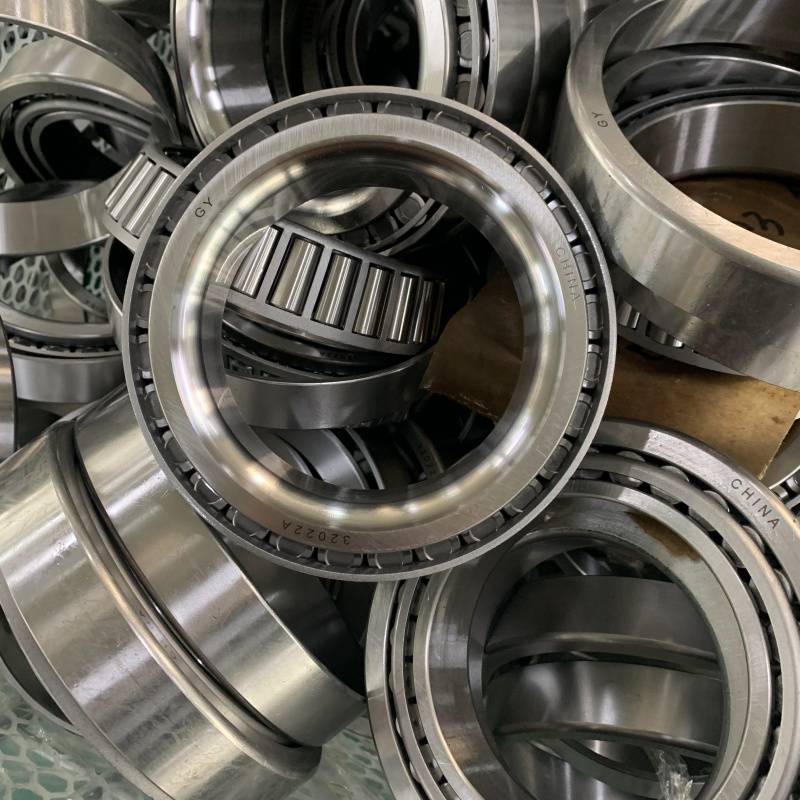
I have sold bearings to factories in Turkey, Brazil, and India for over ten years. One question comes up again and again. "Why do my bearings fail when the load seems normal?" Let me show you the real answer.
What Makes a Bearing Superior for Heavy Industrial Loads?
You look at two bearings. They look the same. But one lasts for years. The other dies in weeks. What is the secret? Is it the design? The steel? Or something else?
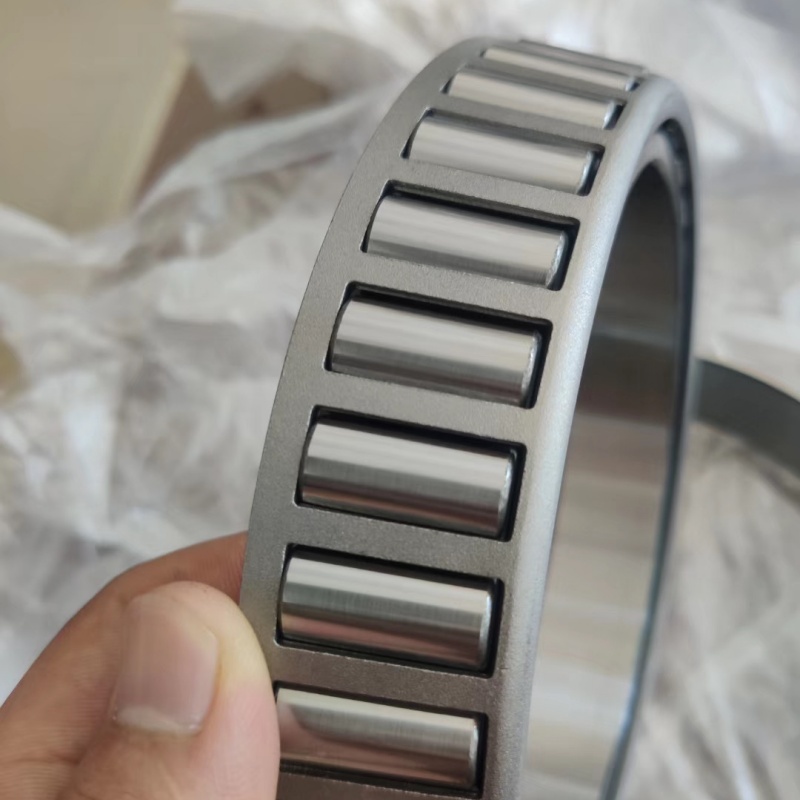
A superior bearing uses roller elements instead of balls. Rollers create line contact. Line contact spreads the load over a bigger area. The steel is vacuum degassed with no impurities. The heat treatment creates a hard surface with a tough core. That combination gives you superior load capacity.
Dive deeper Paragraph:
I remember a customer in Indonesia. He runs a palm oil mill. His press machine had ball bearings. They failed every month. He switched to spherical roller bearings. The same machine now runs for 18 months between changes. The difference was not luck. It was engineering.
Let me break down what makes a bearing superior.
Contact type: Point vs. line
This is the most important difference. A ball touches the raceway at one small point point contact. All the load goes through that point. The pressure is extremely high. That high pressure creates dents and cracks.
A roller touches the raceway along a full line line contact. The load spreads across that line. The pressure is much lower. Lower pressure means less wear. Less wear means longer life.
Here is the math. A 20mm ball has a contact area of about 2 square mm. A 20mm roller has a contact area of about 20 square mm. That is ten times more area. Ten times less pressure.
Steel quality matters
The best design means nothing with bad steel. Cheap bearings use cheap steel. Cheap steel has impurities. Those impurities are tiny rocks inside the metal. They create weak points.
Superior bearings use vacuum degassed steel. This process removes oxygen and impurities from the molten steel. The result is cleaner, stronger steel.
| Steel type | Impurity level | Relative strength | Best for |
|---|---|---|---|
| Standard carbon steel | High | 1x | Cheap tools, no bearings |
| Standard bearing steel (GCr15/52100) | Medium | 3x | Normal bearings |
| Vacuum degassed bearing steel https://www.timken.com/resources/steel-making-process-for-bearings/ | Very low | 4x | Superior bearings |
| Electric arc furnace + vacuum degassed https://www.skf.com/us/products/rolling-bearings/principles/bearing-materials | Extremely low | 4.5x | Aerospace, extreme loads |
Heat treatment: The hidden factor
Steel alone is not enough. The bearing must be heat treated correctly. Heat treatment changes the steel’s internal structure.
A superior bearing has:
- Surface hardness: 58 to 62 HRC. Hard enough to resist wear.
- Core toughness: Not too brittle. Can absorb shock loads.
- Controlled case depth: The hard layer is deep enough to last.
- Stable structure: No retained austenite that changes size over time.
Cheap bearings skip proper heat treatment. They are too soft or too brittle. Either way, they fail fast under heavy loads.
Internal geometry
The shape of the roller and raceway also matters. Superior bearings use:
- Crowned rollers: The roller is slightly curved. This stops edge loading.
- Optimized roller length: Longer than standard for more contact area.
- Precise angle: For tapered bearings, the angle is matched to the load.
I tested two bearings in our factory. Same size. Same load. One had standard rollers. One had crowned rollers. The crowned roller bearing lasted 2.5 times longer.
Real world comparison
| Feature | Standard bearing | Superior bearing |
|---|---|---|
| Contact type | Point (ball) or poor line https://www.sawhneybearings.com/2024/01/what-are-point-contact-and-line-contact.html | Optimized line contact |
| Steel | Standard 52100 | Vacuum degassed 52100 https://www.timken.com/resources/steel-making-process-for-bearings/ |
| Heat treatment | Basic | Controlled, with case depth https://www.skf.com/us/products/rolling-bearings/principles/bearing-materials |
| Roller profile | Straight | Crowned |
| Relative load capacity | 1x | 1.5x to 3x |
| Relative price | 1x | 1.2x to 1.5x |
What I tell my customers
If your machine sees heavy loads, do not buy cheap bearings. The price difference is small. The life difference is huge. Pay 20% more for a superior bearing. Get 100% more life. That is good business.
Deep Groove Ball Bearings vs. Roller Bearings: Which Carries More Load?
You have a choice. Deep groove ball bearings or roller bearings. Both are common. But which one actually carries more load? And when should you use each one?
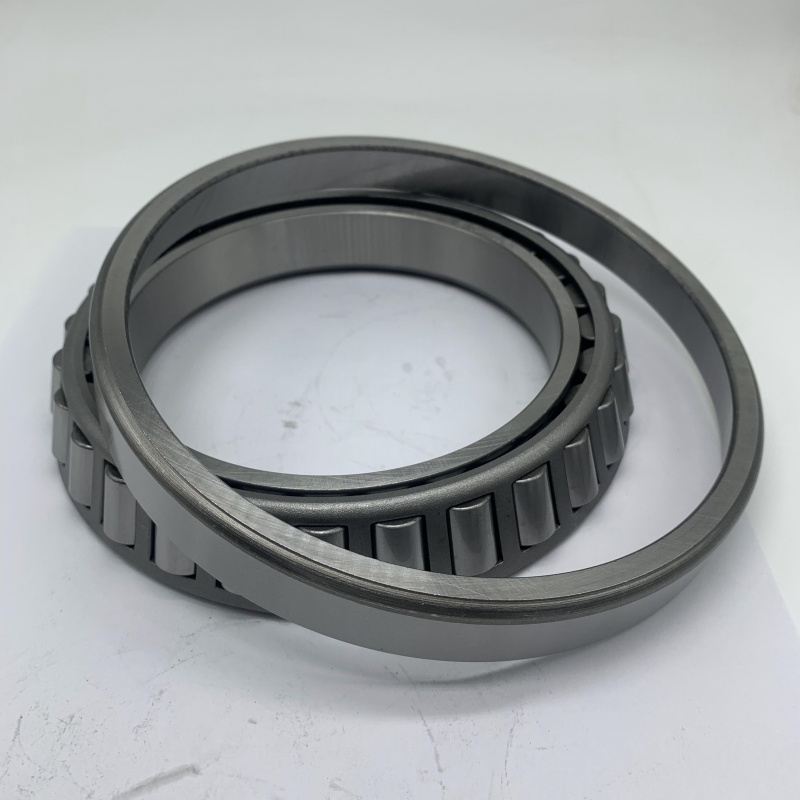
Roller bearings carry more load than ball bearings. For the same size, a roller bearing has 1.5 to 2 times higher load rating. But ball bearings run faster and quieter. Pick roller bearings for heavy, slow loads. Pick ball bearings for light, fast loads.
Dive deeper Paragraph:
A customer in Turkey asked me this question last month. He designs conveyor rollers. He wanted the highest load capacity in a small space. I told him to use cylindrical roller bearings. He did. His conveyor now carries 40% more weight.
Let me explain the differences so you can choose correctly.
Load capacity comparison by numbers
Let us look at real numbers. I will use bearings with a 50mm bore size. This makes the comparison fair.
| Bearing type | Dynamic load rating (C) | Static load rating (C0) | Speed limit (grease) |
|---|---|---|---|
| Deep groove ball (6210) | 35,000 N | 23,000 N | 7,000 RPM |
| Cylindrical roller (NU210) | 48,000 N | 45,000 N | 6,000 RPM |
| Tapered roller (30210) | 68,000 N | 72,000 N | 4,500 RPM |
| Spherical roller (22210) | 70,000 N | 64,000 N | 4,000 RPM |
The roller bearings have much higher load ratings. The spherical roller has double the dynamic rating of the ball bearing. For static loads (machine sitting still under load), the difference is even bigger.
Why roller bearings carry more load
The reason is contact area. A ball touches the raceway at a point. A roller touches along a line. The line is much longer than the point.
Think of it this way. A ball bearing is like standing on one finger. A roller bearing is like lying down on a bed. Same weight. Much less pressure.
The speed tradeoff
Roller bearings have a downside. They cannot run as fast as ball bearings. The rollers create more friction. More friction means more heat.
Here are the speed limits for different bearing types:
| Bearing type | Max speed (relative to ball bearing) | Best RPM range |
|---|---|---|
| Deep groove ball | 1x (baseline) | 1,000 to 10,000 RPM |
| Cylindrical roller | 0.8x | 500 to 6,000 RPM |
| Tapered roller | 0.6x | 300 to 4,500 RPM |
| Spherical roller | 0.5x | 200 to 4,000 RPM |
The noise tradeoff
Roller bearings are louder than ball bearings. The rollers slide a little as they move. That sliding makes noise.
For most industrial machines, the noise does not matter. But for medical devices, office equipment, or home appliances, ball bearings are better.
Which bearing for which job?
| Application | Best bearing type | Why |
|---|---|---|
| Electric motor (under 50 HP) | Deep groove ball | High speed, moderate load |
| Conveyor roller | Cylindrical roller | Heavy radial load, low speed |
| Truck wheel | Tapered roller | Heavy radial + axial load |
| Rock crusher | Spherical roller | Very heavy load, shock loads |
| Gearbox | Tapered roller (paired) | Combined loads, moderate speed |
| Fan or blower | Deep groove ball | High speed, light load |
A real example from my work
A customer in Brazil makes steel rolling mills. His mill rollers need to squeeze hot steel. The load is extremely high. The speed is low.
He tried deep groove ball bearings. They failed in two weeks. He switched to spherical roller bearings. The same bearings have been running for eight months.
The ball bearings were the wrong choice for the job. The roller bearings were right.
My simple rule
Ask yourself two questions:
- What is my speed? Over 5,000 RPM? Use ball bearings.
- What is my load? Heavy or with shocks? Use roller bearings.
For most industrial machines, roller bearings are the better choice. The extra load capacity is worth the lower speed limit.
How to Match Bearing Load Capacity to Your Machine’s Real Demands?
You look at a bearing catalog. You see load ratings. But are those numbers real? And how do you know what your machine actually needs?
Catalog load ratings are for ideal conditions. Your machine is not ideal. Multiply your actual load by a safety factor. Use 1.5 for normal machines. Use 2.0 for machines with shocks or vibration. Use 3.0 for crushers, shredders, or mining equipment. Then pick a bearing with a rating above that number.

Dive deeper Paragraph:
I have seen so many customers pick bearings that are too small. They look at the catalog. They see a number that matches their load. They buy that bearing. Then it fails.
The problem is not the catalog. The problem is the real world. Your machine has shocks, vibrations, and misalignment. The catalog assumes none of these.
Step 1: Calculate your actual load
First, you need to know how much force is on the bearing. This takes some math or some measuring.
For a simple conveyor, the load is the weight on the roller divided by the number of bearings.
Example: Your conveyor roller carries 1,000 kg. It has two bearings. Each bearing carries 500 kg. That is about 5,000 Newtons (500 kg x 9.8).
Step 2: Add the safety factor
This is where most people make a mistake. They skip this step. Then their bearings fail.
Here is my safety factor guide:
| Machine type | Safety factor | Examples |
|---|---|---|
| Smooth, steady load | 1.2 to 1.5 | Fans, pumps, light conveyors |
| Normal industrial | 1.5 to 2.0 | Gearboxes, standard conveyors |
| Shock loads | 2.0 to 2.5 | Crushers, presses, shredders |
| Heavy shock + vibration | 2.5 to 3.5 | Mining equipment, rock crushers |
| Extreme conditions | 3.5 to 5.0 | Hammer mills, demolition equipment |
For our conveyor example with 5,000 N per bearing, let us use safety factor 1.8. Required rating = 5,000 x 1.8 = 9,000 N.
Step 3: Check the dynamic load rating (C)
Now open the catalog. Look for the dynamic load rating (C). This number tells you how much load the bearing can handle for 1 million rotations.
Find a bearing with C higher than your required rating.
For our example, we need C above 9,000 N. A 6204 ball bearing has C = 12,800 N. That works. A 6203 has C = 9,500 N. That is too close. Pick the 6204.
Step 4: Check the static load rating (C0)
The static rating matters for machines that sit under load. If your machine stops with weight on the bearings, check C0.
The same 6204 bearing has C0 = 6,600 N. That is less than our required 9,000 N. That means when the machine stops, the bearing might get damaged.
For this reason, I would choose a larger bearing. Maybe a 6205 with C = 14,000 N and C0 = 7,800 N. Still close. Or switch to a roller bearing.
Real world example
A customer in South Africa has a rock crusher. He calculated his load at 25,000 N per bearing.
He added a safety factor of 3.0 for crushers. Required rating = 75,000 N.
He looked at ball bearings. The biggest ball bearing for his shaft size had C = 45,000 N. Too small.
He switched to spherical roller bearings. A 22212 has C = 95,000 N. That works. The bearings have lasted two years.
Common mistakes I see
| Mistake | What happens | How to fix |
|---|---|---|
| No safety factor | Bearings fail fast | Add 1.5 to 2.0 minimum |
| Using C0 instead of C | Bearings fail from fatigue | Use C for rotating loads |
| Ignoring shock loads | Sudden failures | Use factor 2.5+ for shocks |
| Copying old machine | Old machine was wrong | Calculate fresh |
My advice
When in doubt, go bigger. A bearing that is too large costs a little more. A bearing that is too small costs downtime, labor, and lost production.
I have never had a customer complain that a bearing lasted too long.
The Hidden Costs of Undersizing Bearings in Industrial Equipment?
You save $10 on a smaller bearing. It fits. It works for a while. Then it fails. What did that $10 really cost you? Much more than you think.
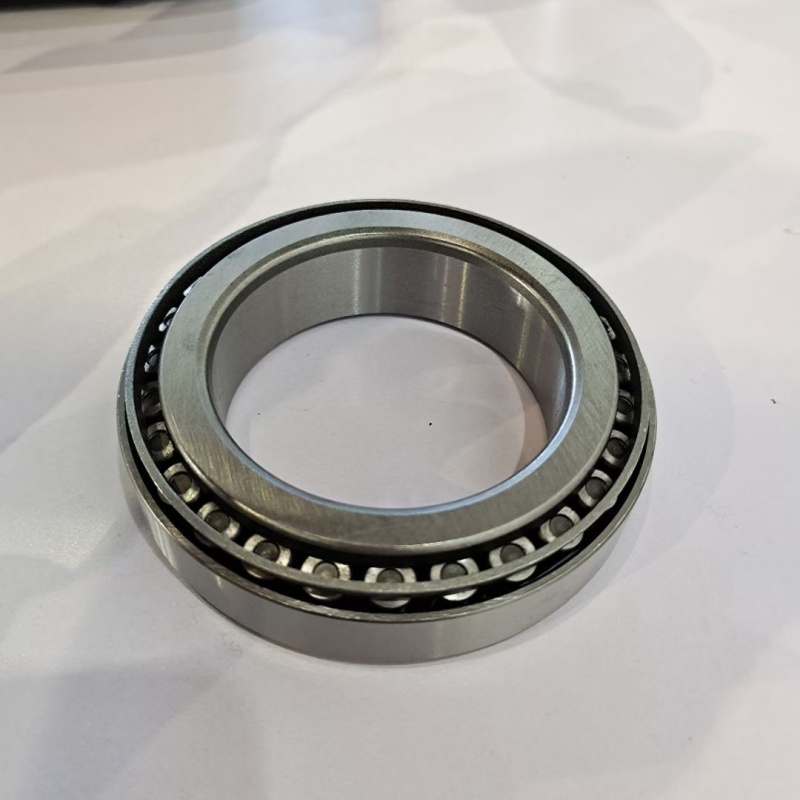
Undersizing bearings has hidden costs. First, the bearing fails early. You pay for a new bearing and labor. Second, the machine stops. You lose production. Third, the shaft or housing might get damaged. That repair costs even more. One undersized bearing can cost you 100 times its price in hidden costs.
Dive deeper Paragraph:
I remember a customer in Vietnam. He bought bearings for his conveyor. He saved $8 per bearing by going one size smaller. He bought 100 bearings. He saved $800.
Six months later, he called me. All 100 bearings had failed. He had replaced them twice. He paid for 300 bearings instead of 100. He also lost production time. His total cost was over $8,000. He saved $800 and lost $8,000.
Let me break down all the hidden costs.
Direct costs
These are the obvious costs. People forget to add them up.
| Cost item | Small bearing (undersized) | Correct bearing |
|---|---|---|
| Bearing price | $10 | $15 |
| Labor to install | $20 | $20 |
| New bearing after failure | $10 | $0 |
| Labor to replace failed bearing | $20 | $0 |
| Total direct cost | $60 | $35 |
That is for one failure. If the bearing fails multiple times, the cost multiplies.
Downtime costs
This is the biggest hidden cost. When your machine stops, you lose money.
For a small factory, downtime might cost $500 per hour. For a large factory, $5,000 per hour or more.
Let us say your machine stops for two hours. That is $1,000 lost. The bearing only cost $10. The downtime cost 100 times more than the bearing.
Damage to other parts
When an undersized bearing fails, it does not die quietly. It often damages the shaft or housing.
A scored shaft needs to be repaired or replaced. A new shaft might cost $200 to $2,000. A damaged housing might cost $100 to $1,000.
These repairs take time. That is more downtime.
The math on undersizing
Let me show you the real cost of saving $5 on a bearing.
| Scenario | Correct size | Undersized (saves $5) |
|---|---|---|
| Bearing cost | $15 | $10 |
| Expected life | 24 months | 4 months |
| Bearings needed over 2 years | 1 | 6 |
| Total bearing cost over 2 years | $15 | $60 |
| Labor cost (6 installs vs 1) | $20 | $120 |
| Downtime (1x vs 6x) | $500 | $3,000 |
| Shaft damage? | No | Maybe ($500) |
| Total 2 year cost | $535 | $3,680 |
The undersized bearing cost almost 7 times more over two years.
Real example from my customer
A customer in Pakistan runs a textile mill. He undersized his bearings to save money. His machines stopped every few weeks. He was losing production. He was paying his workers to sit around.
He finally switched to correctly sized bearings. His downtime dropped by 80%. His maintenance costs dropped by 70%. He told me the extra $2 per bearing was the best money he ever spent.
What I tell my customers
Do not save money on bearings. Bearings are cheap compared to downtime. Pay for the right size. Pay for quality. Your machine will thank you.
If you are not sure about sizing, ask me. I will help you pick the right bearing for your load. It costs nothing to ask. It costs a lot to guess wrong.
Conclusion
Pick roller bearings for heavy loads. Match the rating to your real load with a safety factor. Never undersize to save a few dollars.