
Your machine keeps breaking down. You replace bearings all the time. Is there a way to make everything last longer?
You can extend machine life by using tapered bearings the right way. Pick the right size. Install them correctly. Use good grease. Set the clearance properly. Check them often. Tapered bearings handle heavy loads and last for years when you treat them right.
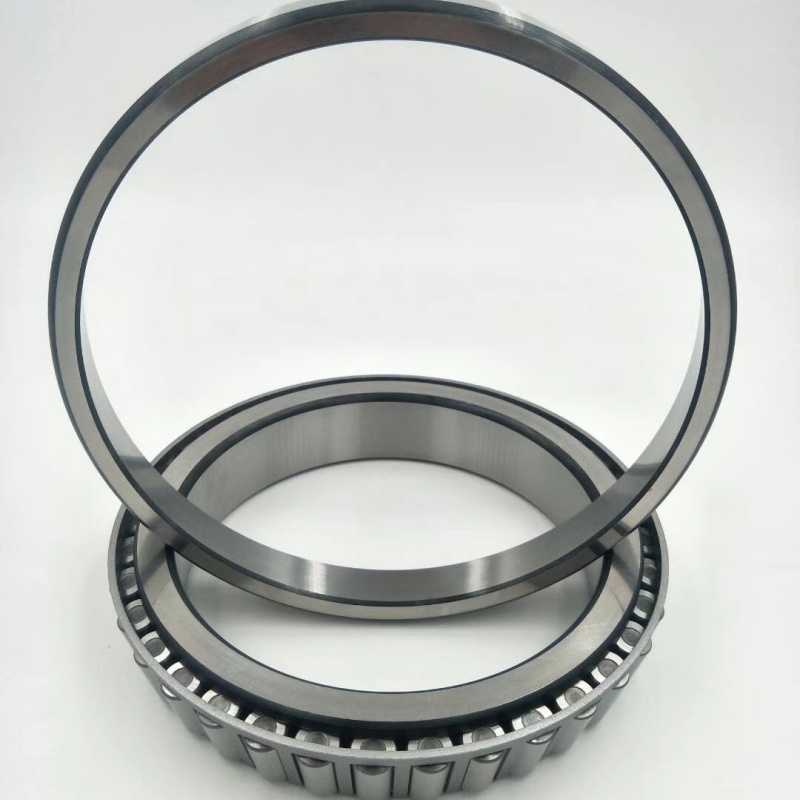
I have sold tapered bearings for over ten years at FYTZ Bearing. I have seen customers get five years from a bearing. I have also seen customers kill the same bearing in five weeks. The difference is not luck. It is knowledge. Let me share what I have learned.
What Makes Tapered Bearings the Best Choice for Long Machine Life?
You have many bearing types to choose from. Ball bearings. Cylindrical rollers. Spherical rollers. So why pick tapered bearings if you want your machine to last longer?
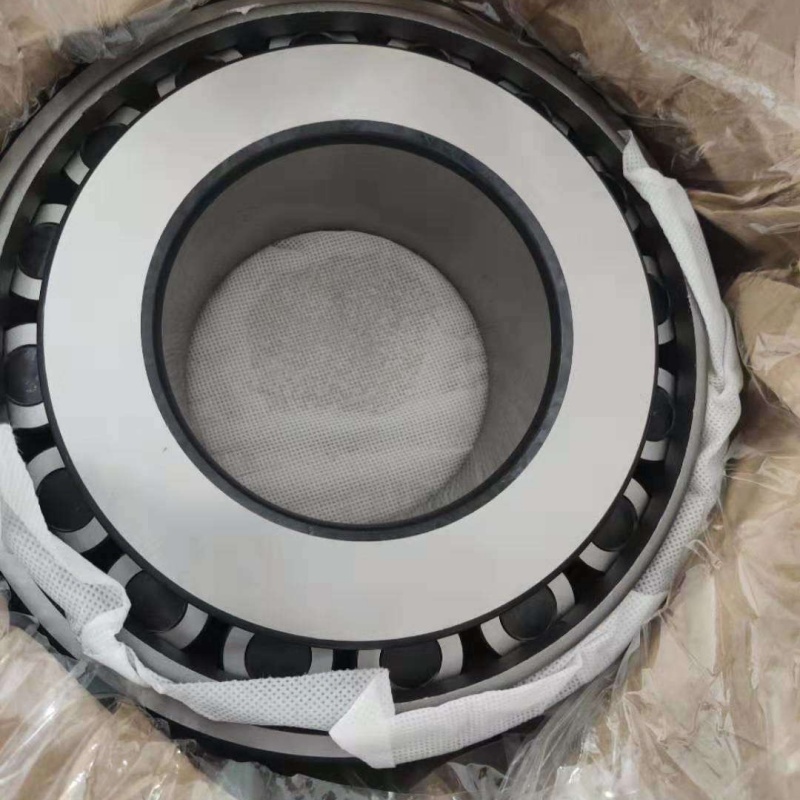
Tapered bearings last longer because they spread loads over a bigger area. The line contact between the roller and raceway reduces stress. They also handle radial and axial loads together. That means fewer bearings in your machine. Fewer parts mean fewer things to break.
Dive deeper Paragraph:
A customer in Russia called me last year. He makes mining equipment. His machines run 20 hours a day. He used to change bearings every two months. He switched to tapered bearings. Now he changes them every 14 months. That is seven times longer.
Let me explain why tapered bearings are different.
The load spreading advantage
A ball bearing touches the raceway at one small point. All the load goes through that point. The pressure is very high. That high pressure creates dents and cracks over time. Point contact bearings sawhneybearings
A tapered roller bearing touches the raceway along a full line. The load spreads across that whole line. The pressure is much lower. Lower pressure means less wear. Less wear means longer life. Line contact bearings sawhneybearings
Here is a simple way to see the difference. Push your finger into sand. That makes a small hole. Push your whole hand into sand. That makes a big shallow dent. Same force. Bigger area. Less pressure. Point and line contact – NTN Bearing Wizard bearingwizard
Handling two loads at once
Most machines have two types of load. Radial load pushes down on the shaft. Axial load pushes along the shaft.
With ball bearings, you need special designs to handle axial loads. Sometimes you need two different bearings. One for radial load. One for axial load.
With tapered bearings, one bearing handles both loads. That means fewer bearings in your machine. Fewer bearings means fewer failure points. It also means a simpler, stronger design.
Load capacity comparison
Let me show you real numbers. These are for bearings with the same 50mm bore size.
The tapered bearing has almost double the load rating of a ball bearing. And it handles axial loads too. That is why it lasts longer in tough jobs.
The forgiving design
Tapered bearings are also more forgiving than other types. They can handle some misalignment. They can handle some contamination better than ball bearings. The big rollers do not get stuck as easily as small balls.
I remember a customer in Indonesia. His conveyor shaft was bent. It was not perfectly straight. Ball bearings failed every three weeks. He switched to tapered bearings. The same bent shaft now runs for six months. The tapered bearings are strong enough to handle the misalignment.
When tapered bearings are NOT the best choice
I want to be honest with you. Tapered bearings are not perfect for every job.
- Very high speed: Over 5,000 RPM, ball bearings are better. Tapered bearings make too much heat.
- Very low noise: Ball bearings are quieter.
- Very low load: If your load is very light, the extra capacity is wasted.
But for heavy loads, low to medium speed, and long life, tapered bearings are the best choice.
Proper Installation: The First Step to Making Tapered Bearings Last?
You buy the best tapered bearings. You spend good money. Then you install them wrong. What happens? They fail fast. So what is the right way to install them?
Proper installation means clean hands, the right tools, and no hammering. Use a bearing heater or an induction heater. Never hit the bearing directly. Press it onto the shaft using the correct ring. Bad installation kills more bearings than bad operation.

Dive deeper Paragraph:
I have seen more bearings killed by bad installation than by anything else. A customer in Egypt sent me photos. His new bearings had dents on the raceways. He asked me what happened. I asked him how he installed them. He said he used a hammer.
That was the problem. He hammered the bearing onto the shaft. The hammer blows created dents in the raceways. Those dents killed the bearing before it even ran.
Let me show you the right way.
The number one rule: No hammering
Never hit a bearing directly with a hammer. The steel is hard but brittle. A hammer blow can crack the raceway. Even if it does not crack, it creates small dents. Those dents will make noise and cause early failure.
If you must hit something, hit a soft metal sleeve. Put the sleeve against the bearing ring. Then hit the sleeve. But even better, do not hit anything at all.
Use heat instead of force
The best way to install a tapered bearing is to heat it. Heat makes the bearing expand. Then it slides onto the shaft easily. No force needed.
Here is how to do it:
| Method | How it works | Good for | Bad for |
|---|---|---|---|
| Induction heater | Electric coils heat the bearing fast | Best method. Clean and fast. https://www.skf.com/us/products/rolling-bearings/maintenance-products/induction-heaters | Cost (needs a machine) |
| Oil bath | Hot oil heats the bearing | Good for shops with oil https://www.timken.com/resources/bearing-installation-maintenance-guide/ | Messy. Fire risk. |
| Oven | Heat the bearing in a clean oven | Good for small bearings https://www.ntn-global.com/en/products/bearing/selection/installation/ | Slow. Not for large bearings. |
| Hot plate | Bearing sits on a heated plate | Simple and cheap https://www.kbc-bearings.com/en/products/maintenance/heating-plates/ | Uneven heating. |
Heat the bearing to 80°C to 100°C (180°F to 210°F). Do not go over 120°C (250°F). Too much heat changes the bearing’s hardness.
The right way to press a bearing
If you cannot use heat, press the bearing on. Use a hydraulic press. Never use a hammer.
Here are the rules for pressing:
- Press on the ring that is tight. For a shaft fit, press on the inner ring. For a housing fit, press on the outer ring.
- Never press through the rollers. Pressing through the rollers dents the raceways.
- Use a clean sleeve between the press and the bearing.
- Go slow. Watch the pressure gauge.
Cleanliness is everything
A piece of dust is big compared to a bearing surface. That dust can scratch the raceway. It can also get between the roller and raceway. Then it acts like a rock in a shoe.
Here is my cleanliness checklist:
- Clean the shaft with a clean rag. No dirt or rust.
- Clean the housing bore the same way.
- Open the bearing package only when you are ready to install it.
- Do not wash the bearing. New grease is already inside.
- Wear clean gloves. Fingerprints have acid that can rust the bearing.
A real example
A customer in Brazil had bearing failures every two months. I visited his shop. I watched his mechanics install a new bearing. They used a hammer and a steel bar. They hit the outer ring to drive the bearing onto the shaft.
I stopped them. I showed them the right way. We used an induction heater. The bearing slid on with no force. That bearing is still running after 10 months. The others lasted two months.
What to check after installation
After the bearing is on, do these checks:
- Spin the shaft by hand. It should turn smooth and easy.
- Listen for any grinding or rough sound.
- Check that the bearing is fully seated against the shoulder.
- Wipe off any extra grease from the outside.
How Lubrication and Sealing Double the Life of Your Tapered Bearings?
You install the bearing perfectly. But you forget about grease. Or you use the wrong grease. Can that really cut the bearing life in half?
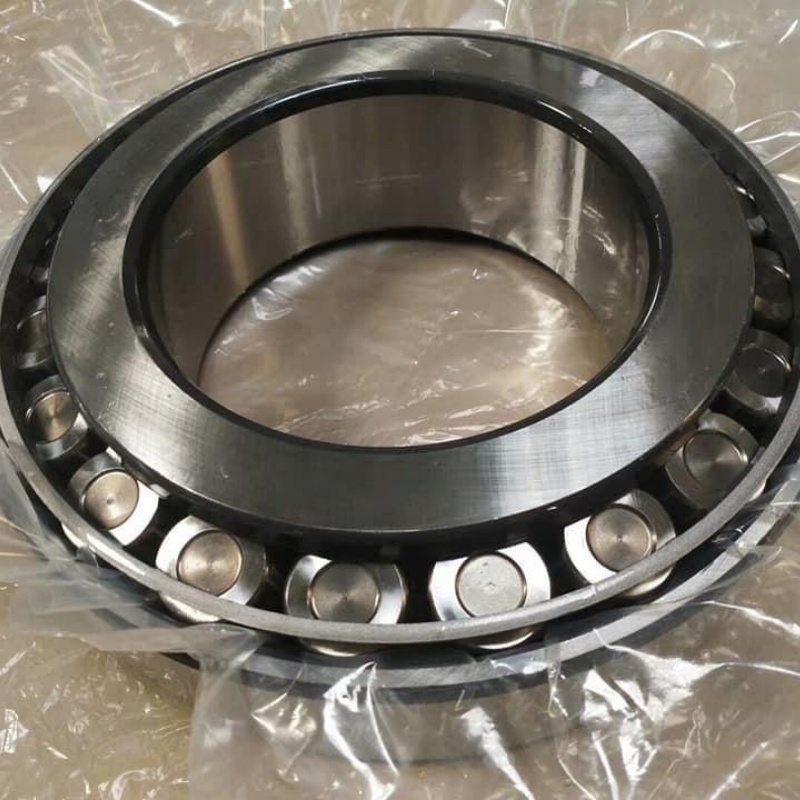
Yes. Bad lubrication is the second biggest killer of tapered bearings. Use the right grease for your speed and temperature. Add fresh grease on a schedule. And use good seals to keep dirt out. Good lubrication and sealing can double or triple bearing life.
Dive deeper Paragraph:
I remember a customer in Turkey. He called me angry. His new bearings failed in two weeks. I asked him about grease. He said he did not add any. He thought new bearings came with enough grease for life.
That is a common mistake. New bearings have a small amount of grease for storage and shipping. That is not enough for heavy work. You need to add grease before you run the machine.
The three jobs of grease
Grease does three things in a bearing. All three are important.
| Job | What it does | What happens without it |
|---|---|---|
| Reduce friction | Creates a film between moving parts | Metal touches metal. Heat and wear. |
| Remove heat | Carries heat away from the contact zone | Bearing gets too hot. Grease melts. |
| Keep dirt out | Seals the bearing from contamination | Dirt gets in. Bearing wears fast. |
How to choose the right grease
Not all grease is the same. Using the wrong grease is almost as bad as using no grease.
Here is what to look for:
Base oil viscosity: This is the most important number. For tapered bearings, choose ISO VG 150 to 220 for normal speeds. For high speed, go lower (VG 68 to 100). For low speed and heavy load, go higher (VG 320 to 460).
Thickener type: Lithium complex is good for most jobs. It works from -20°C to 150°C. Polyurea is better for high heat. Calcium sulfonate is best for wet conditions.
Consistency (NLGI grade): NLGI 2 is standard for most bearings. NLGI 1 is softer. NLGI 3 is harder. Use NLGI 2 for most jobs.
Here is a simple selection table:
| Your condition | Recommended grease |
|---|---|
| Normal factory, normal speed | Lithium complex, NLGI 2, ISO VG 150 https://www.skf.com/us/products/rolling-bearings/principles/rolling-bearing-choice/lubrication/grease-lubrication |
| High temperature (over 100°C) | Polyurea, NLGI 2, ISO VG 220 https://www.timken.com/resources/bearing-lubrication-guide/ |
| Wet or dusty conditions | Calcium sulfonate, NLGI 2, ISO VG 220 https://www.fuchs.com/us/en/products-and-services/lubricants-industries/bearings/greases/ |
| Very low speed, very heavy load | Lithium, NLGI 2 or 3, ISO VG 460 https://www.klueber.com/us/en/products-and-solutions/bearings/ |
How much grease to add
Too little grease is bad. Too much grease is also bad. Too much grease creates heat from churning.
For a tapered bearing in a housing, fill the housing 30% to 50% full. Do not fill it completely. The bearing needs space for the grease to move around.
For a bearing on a shaft with no housing, pack the bearing completely. But wipe off extra grease from the outside.
How often to add grease
This depends on your machine. Here is a simple rule.
| Speed | Temperature | Dust level | Grease interval |
|---|---|---|---|
| Low (under 500 RPM) | Normal | Low | Every 6 to 12 months https://www.skf.com/us/products/rolling-bearings/principles/rolling-bearing-choice/lubrication/grease-lubrication |
| Medium (500 to 1,500 RPM) | Normal | Low | Every 3 to 6 months https://www.timken.com/resources/bearing-lubrication-guide/ |
| Medium | Hot | Low | Every 1 to 3 months https://www.ntn-global.com/en/products/bearing/selection/lubrication/ |
| Any speed | Any temp | High dust | Every 2 to 4 weeks https://www.klueber.com/us/en/products-and-solutions/bearings/ |
When you add grease, add only a few pumps. You want to push out the old grease. But you do not want to overfill. Stop when you see fresh grease coming out of the seal.
The seal matters as much as the grease
Good grease does nothing if dirt gets in. The seal is what keeps dirt out.
For tapered bearings, you have two types of seals:
- Contact seals: Rubber lips that touch the shaft. Good for keeping water out. Bad for high speed (they create heat).
- Labyrinth seals: A maze path that dirt cannot follow. Good for dust. Bad for water.
Pick the seal based on your conditions. For most machines, a contact seal on the dirty side and a labyrinth on the clean side works well.
A real example
A customer in Pakistan runs a flour mill. His tapered bearings failed every two months. The problem was flour dust. The dust was very fine. It got past his standard seals.
He switched to labyrinth seals. He also changed his grease schedule from every six months to every month. His bearing life went from two months to 14 months. The grease and seal change saved him thousands of dollars.
Setting the Right Clearance: Too Tight or Too Loose Both Kill Bearings?
You install the bearing. You add grease. But you forget to set the clearance. Or you set it wrong. Can that really kill a bearing?
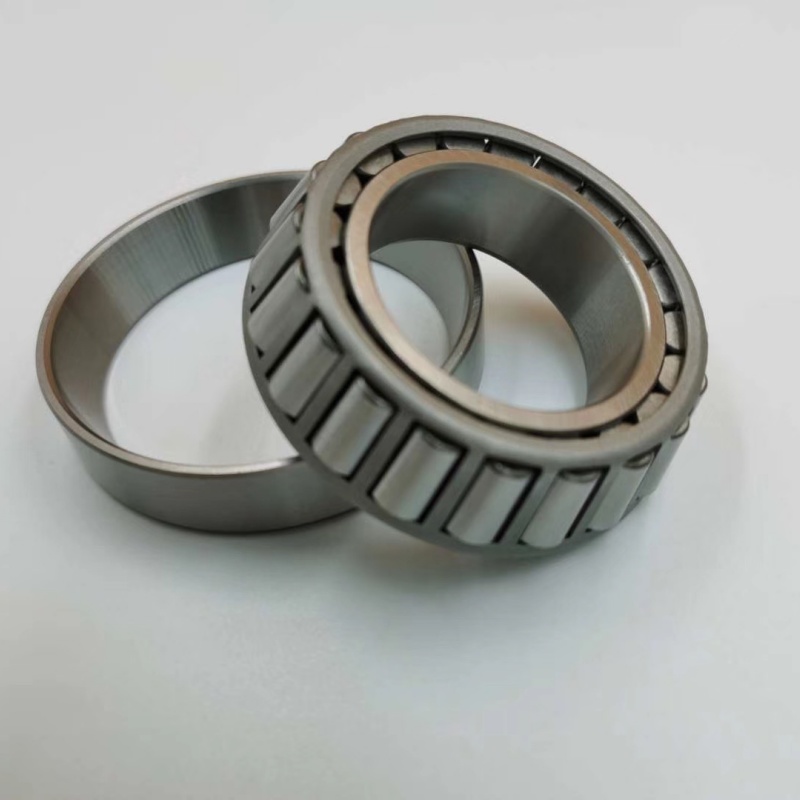
Yes. Wrong clearance is a silent killer. Too tight and the bearing overheats and locks up. Too loose and the shaft wobbles, creating shock loads. Tapered bearings need a small amount of end play. Usually 0.05mm to 0.15mm for most machines.
Dive deeper Paragraph:
I remember a customer in India. He rebuilt a gearbox. He put new tapered bearings in. He tightened them until they were solid. No movement at all. He thought that was good.
The gearbox ran for one hour. Then it got very hot. Then it seized. The bearings were destroyed. The shaft was damaged. The repair cost was huge.
The problem was zero clearance. The bearings had no room to expand when they got hot.
What is bearing clearance?
Bearing clearance is the small gap inside the bearing. It lets the rollers move a tiny amount.
When a bearing runs, it gets hot. The metal expands. If there is no clearance, the expanding parts squeeze each other. That creates more heat. That creates more expansion. That leads to seizure.
How much clearance do you need?
For tapered bearings, you want a small amount of end play. End play is how much the shaft can move back and forth.
Here are the general rules:
| Machine type | Recommended end play | Why |
|---|---|---|
| Small motor (under 10 HP) | 0.02 to 0.05 mm | High speed, low heat https://www.skf.com/us/products/rolling-bearings/principles/rolling-bearing-choice/clearance-and-preload |
| Gearbox, normal load | 0.05 to 0.10 mm | Balance of stiffness and heat https://www.timken.com/resources/bearing-internal-clearance/ |
| Heavy gearbox, high load | 0.10 to 0.15 mm | More room for expansion https://www.ntn-global.com/en/products/bearing/selection/clearance/ |
| Very heavy, low speed | 0.15 to 0.25 mm | Large parts expand more https://www.kbc-bearings.com/en/products/technical-information/clearance-preload/ |
| High precision spindle | Preload (negative clearance) | Needs zero movement https://www.bardenbearings.co.uk/res/barden-bearings/as-a-sector/preload-and-stiffness/ |
For most machines, I recommend 0.05mm to 0.10mm of end play. That is about the thickness of a piece of paper.
How to set clearance on tapered bearings
Tapered bearings come in pairs. You set the clearance by tightening the nut on the shaft.
Here is the step by step method:
- Install both bearings. Tighten the nut lightly by hand.
- Spin the shaft a few times. This seats the rollers.
- Tighten the nut more. Spin the shaft again.
- Keep tightening until the shaft is hard to turn. This is zero clearance.
- Now back off the nut slightly. How much? Use a dial indicator to measure the shaft end play.
- Back off until you have 0.05mm to 0.10mm of end play.
- Lock the nut in place with a lock washer or set screw.
The feel method (no tools)
If you do not have a dial indicator, you can use the feel method. This takes practice.
- Tighten the nut until the shaft just starts to feel tight when you spin it.
- Back off the nut until the shaft spins free.
- Then back off a little more. The shaft should have a tiny click when you push and pull it.
- That click is the end play. It should feel like a very small movement.
Preload: When you want zero clearance
Some machines want negative clearance. That means the bearing is preloaded. The rollers are squeezed tight.
When to use preload:
- Machine tool spindles (need zero runout)
- Precision gearboxes (need zero backlash)
- High speed applications (preload stops skidding)
Do not use preload unless the machine design calls for it. Most heavy machines want a small amount of end play.
What happens with wrong clearance
| Problem | What happens | How to fix |
|---|---|---|
| Too tight (or preload when not needed) | Bearing gets hot. Grease melts. Seizure. https://www.timken.com/resources/bearing-internal-clearance/ | Add more end play. |
| Too loose | Shaft wobbles. Rollers skid. Shock loads. https://www.skf.com/us/products/rolling-bearings/principles/rolling-bearing-choice/clearance-and-preload | Tighten the nut more. |
| Uneven (one side tighter) | Bearing wears on one side only. https://www.ntn-global.com/en/products/bearing/selection/clearance/ | Check alignment. Set both sides the same. |
A real example
A customer in South Africa makes rock crushers. He used to set his bearings with zero end play. He thought tighter was better. His bearings failed every three months from heat seizure.
I told him to add 0.15mm of end play. He was scared at first. He thought the shaft would wobble. He tried it on one machine. That machine ran cooler. The bearings lasted nine months. He now sets all his crushers with end play.
My final advice on clearance
When in doubt, add a little more end play. A little loose is safer than a little tight. A loose bearing makes noise. A tight bearing seizes and destroys everything.
If you are not sure, call me. I have set clearance on thousands of machines. I can help you get it right.
Conclusion
Pick tapered bearings for heavy loads. Install them without hammering. Use good grease and seals. Set the end play right.