
Your machine carries heavy loads. Standard bearings keep failing. You need something stronger. But what makes a bearing strong enough?
Tapered roller bearings handle high loads because of their unique design. The tapered rollers and raceways create a line contact. This spreads the load over a bigger area. They also handle radial and axial loads at the same time. That is why heavy machines use them. https://www.skf.com/us/products/rolling-bearings/roller-bearings/tapered-roller-bearings
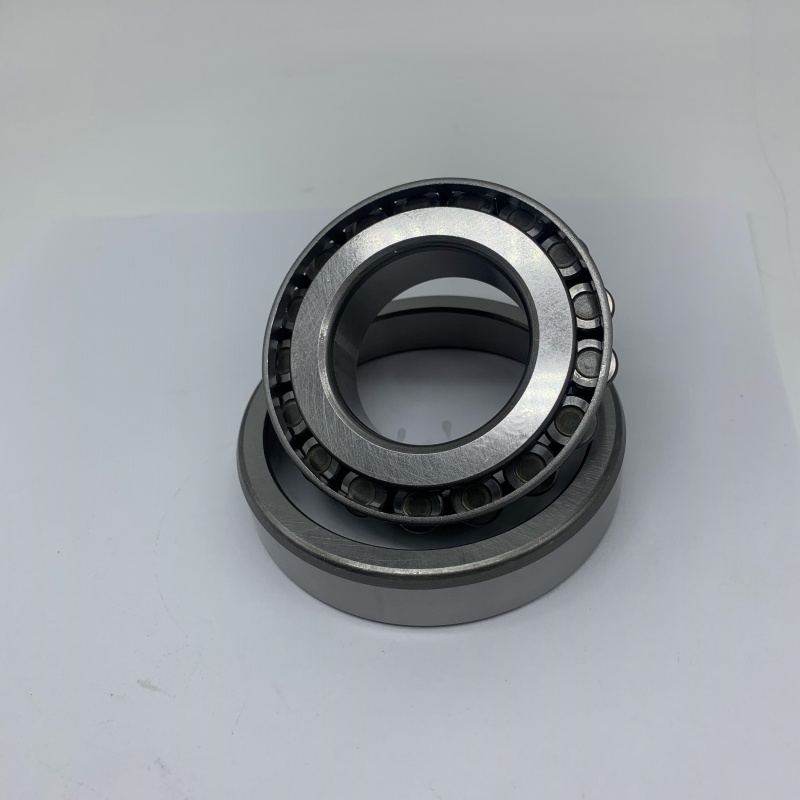
I have sold tapered roller bearings to customers in Russia, Brazil, and India for over ten years. One question always comes up. "Why should I pay more for tapered rollers when ball bearings are cheaper?" Let me give you the real answer.
What Makes Tapered Roller Bearings Different from Other Bearings?
You look at a ball bearing and a tapered roller bearing. They both spin. They both support loads. So what is the real difference? And why does it matter for your machine?
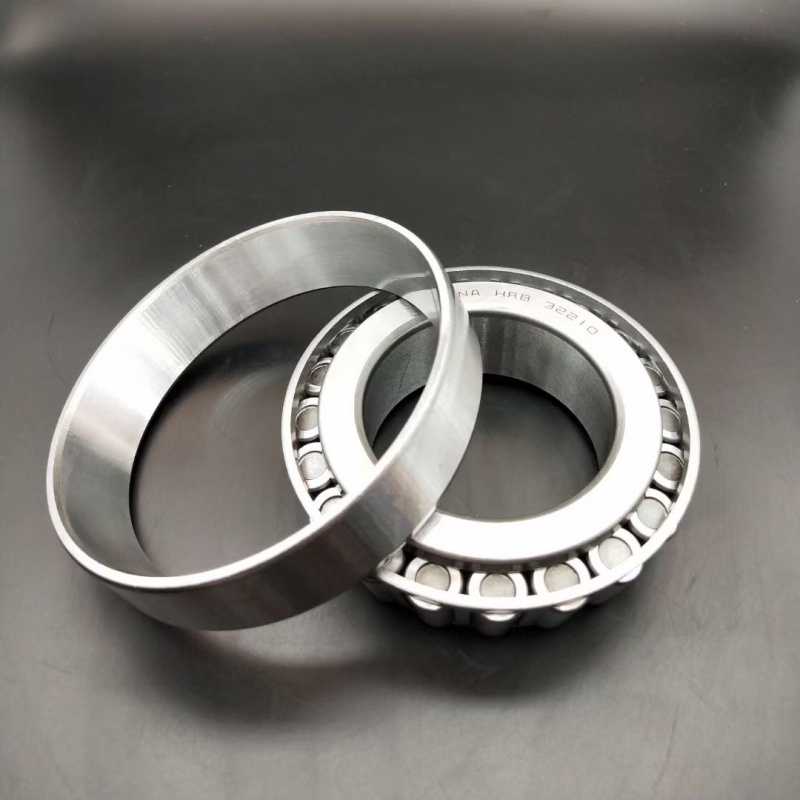
The main difference is the contact shape. Ball bearings have point contact. Tapered roller bearings have line contact. Line contact spreads the load over a larger area. That means less stress on the bearing. That also means higher load capacity and longer life.
Dive deeper Paragraph:
A customer in Turkey called me last year. He makes gearboxes for heavy trucks. He was using deep groove ball bearings. The bearings failed every three months. He switched to tapered roller bearings. The same gearbox now runs for two years without a failure.
Let me explain why.
Point contact vs. line contact
A ball bearing has round balls. The balls touch the raceway at one small point. That point is very small. All the load goes through that tiny point. The pressure is very high. SKF
A tapered roller bearing has rollers. The rollers touch the raceway along a full line. That line is much longer than a point. The load spreads out along the whole line. The pressure is much lower. NSK
Here is a simple way to think about it. Stand on one finger. That hurts. Lie down on a bed. That feels fine. Same weight. Bigger contact area.
Load capacity comparison
| Bearing type | Contact shape | Relative radial load capacity | Relative axial load capacity |
|---|---|---|---|
| Deep groove ball bearing | Point | 1x (baseline) | 0.5x |
| Cylindrical roller bearing | Line | 1.5x to 2x | Very low (almost none) |
| Tapered roller bearing | Line | 1.5x to 2x | 1x to 1.5x |
As you can see, tapered roller bearings give you high radial capacity AND high axial capacity at the same time. That is rare.
How tapered rollers handle combined loads
Here is the special part. Tapered roller bearings can handle radial load (downward force) and axial load (side push) at the same time. The tapered shape creates an angle. That angle splits the force into two directions.
Most other bearings cannot do this well. Deep groove ball bearings can take a little axial load. Cylindrical roller bearings take almost no axial load. Only tapered roller bearings and angular contact ball bearings handle combined loads well.
The separable design
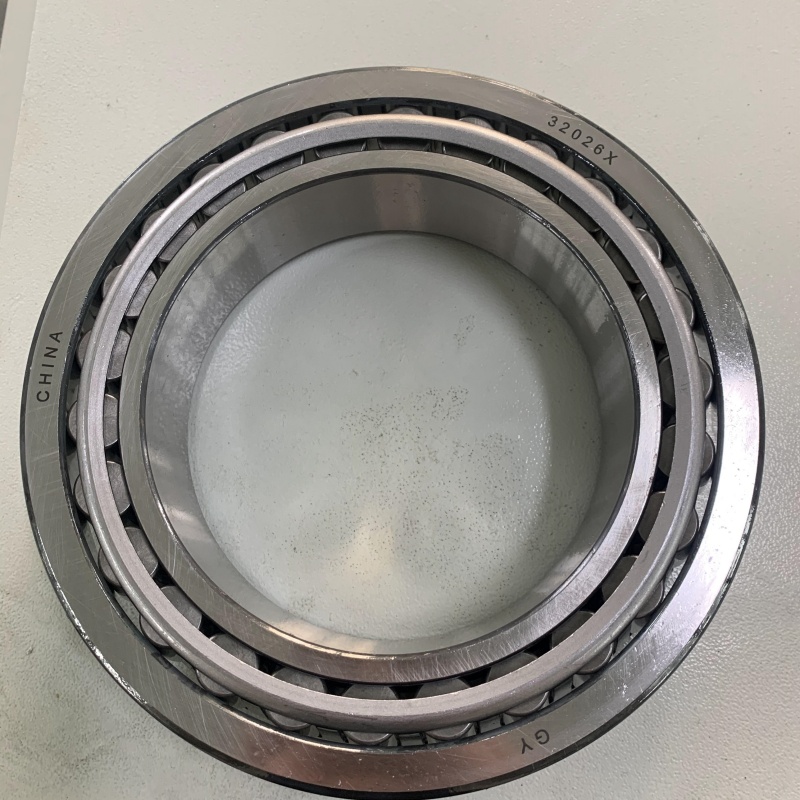
One more difference. Tapered roller bearings come apart. The cone (inner ring with rollers) separates from the cup (outer ring). This makes installation easier. You can put the cone on the shaft first. Then you put the cup in the housing. Then you put them together.
This also means you can adjust the clearance. You can set the bearing tighter or looser. That is very useful for high load applications.
A real example from my work
I work with a customer in Indonesia. He makes conveyor rollers for mining. Each roller carries 5 tons of ore. He tried deep groove ball bearings. They lasted two weeks. He tried cylindrical roller bearings. They lasted one month but the shaft moved sideways.
He switched to tapered roller bearings. The same rollers now run for eight months. The bearings handle the heavy weight AND keep the shaft from sliding.
When NOT to use tapered roller bearings
Tapered roller bearings are not perfect for every job. They have downsides.
- Speed: They cannot run as fast as ball bearings. Over 5,000 RPM, they make too much heat.
- Noise: They are louder than ball bearings.
- Cost: They cost more to make. So they cost more to buy.
- Complexity: You need to set the clearance right. Wrong clearance kills them fast.
For low speed, high load jobs, tapered rollers are the best choice. For high speed, low load jobs, stick with ball bearings.
Why High Load Applications Need Tapered Roller Bearings?
You have a heavy machine. It crushes rock. It moves earth. It presses metal. Standard bearings die fast. So why do tapered roller bearings survive where others fail?
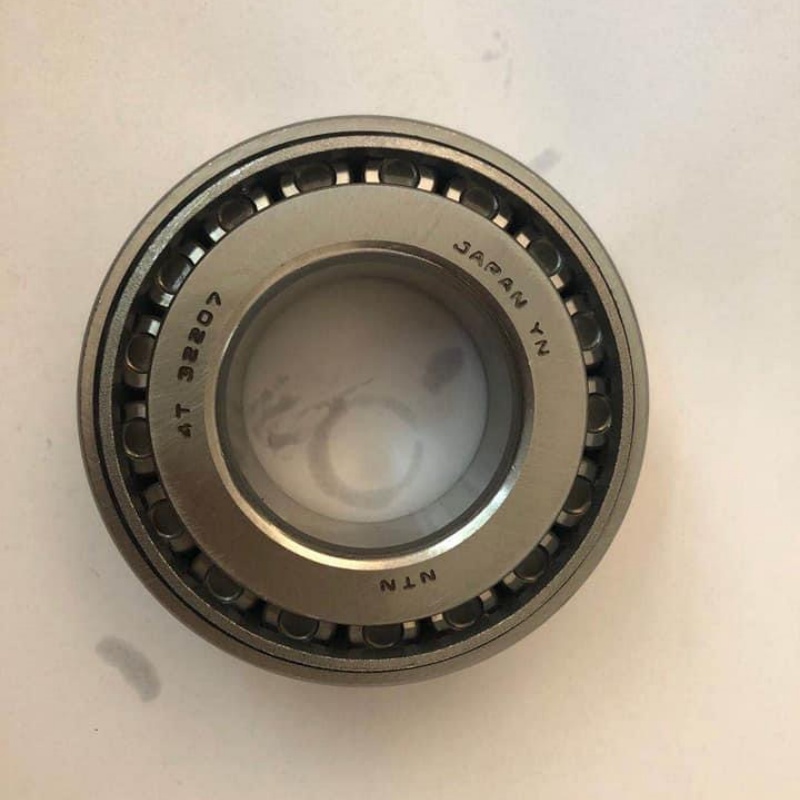
High load applications need tapered roller bearings because of three things. First, line contact spreads the load. Second, the tapered angle handles thrust. Third, the massive rollers take shock loads without cracking. Ball bearings dent and spall under high loads. Tapered rollers keep going.
Dive deeper Paragraph:
I remember a customer in South Africa. He runs a rock crushing plant. His crusher bearings failed every two weeks. The plant stopped. He lost money every time. He called me for help.
I asked him what bearings he was using. He said deep groove ball bearings. I told him that was the problem. He switched to tapered roller bearings. The first set lasted six months. He ordered a full container after that.
What happens to ball bearings under high loads
Put a heavy load on a ball bearing. The balls press hard against the raceway. The contact point is very small. The pressure is extremely high. That pressure causes two problems.
Brinelling: The balls dent the raceway. You see small dents where the balls sit. Once those dents form, the bearing makes noise. The dents also create stress points. Cracks start there.
Spalling: After the dents form, the surface starts to flake off. Little pieces of metal break away. The grease turns gray with metal dust. Then the bearing locks up.
What happens to tapered roller bearings under high loads
Put the same load on a tapered roller bearing. The rollers touch the raceway along a line. The pressure spreads out. No single point takes all the force.
The rollers are also bigger than balls. A 30mm tapered roller bearing has rollers that are 8mm to 10mm wide. A 30mm ball bearing has balls that are 6mm to 7mm wide. More material means more strength.
Load capacity numbers
Let me give you real numbers. This is for bearings with the same bore size (50mm).
| Bearing type | Dynamic load rating (C) | Static load rating (C0) | Price index |
|---|---|---|---|
| Deep groove ball bearing (6210) SKF | 35,000 N | 23,000 N | 1x |
| Cylindrical roller bearing (NU210) SKF | 48,000 N | 45,000 N | 1.3x |
| Tapered roller bearing (30210) NSK | 68,000 N | 72,000 N | 1.4x |
The tapered roller bearing has almost double the load rating of the ball bearing. That is not a small difference. That is a huge difference.
Real world applications that use tapered roller bearings
I see tapered roller bearings in these high load machines:
- Rock crushers: Tons of rock falling from height. Shock loads every second.
- Earth moving equipment: Bulldozers, excavators, wheel loaders. Heavy weight plus vibration.
- Truck wheels: A fully loaded truck puts 3 to 5 tons on each wheel bearing.
- Rolling mills: Steel is squeezed between rollers. The bearings take that squeezing force.
- Wind turbine gearboxes: Big blades push against the gearbox. The bearings take both weight and side push.
- Mining conveyors: Long belts with tons of ore. The drive rollers need strong bearings.
What I tell my customers
If your machine has any of these things, use tapered roller bearings:
- Shock loads (sudden impacts from falling material)
- Heavy static loads (the machine sits loaded for hours)
- Combined loads (weight pushing down AND side push from belts or gears)
- Low speed but high torque (big gears, big forces)
Do not use ball bearings for these jobs. They will fail fast. You will spend more on replacements than you save on the bearing price.
The Secret Behind Advanced Engineering: Raceway Geometry and Surface Finish?
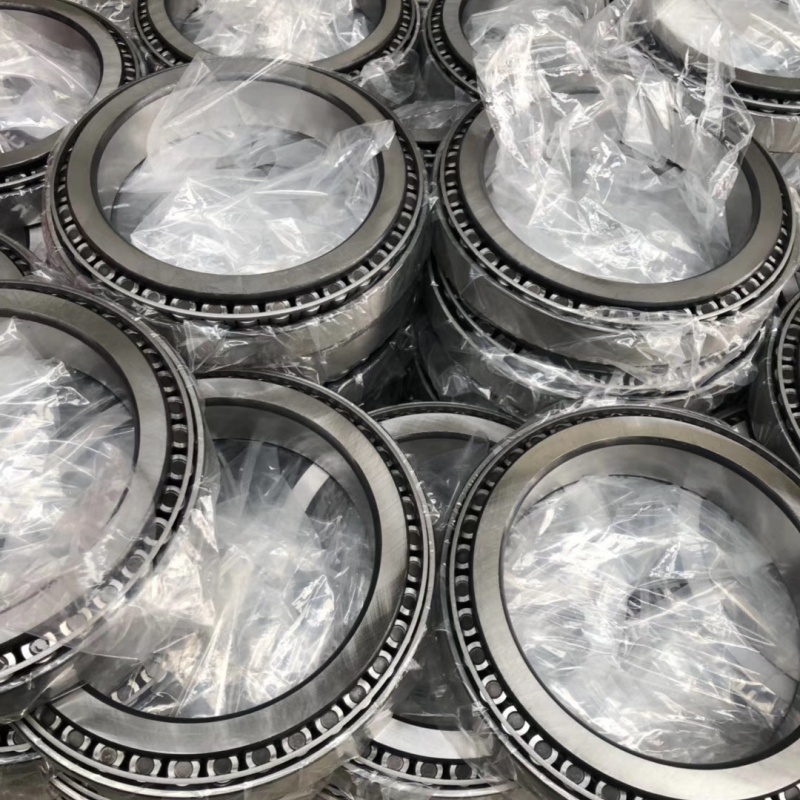
The secret is in the raceway geometry and surface finish. Advanced designs use a crowned roller profile instead of a straight one, which reduces edge stress. A very smooth surface finish also lowers friction and heat. These small improvements can add years of service life. SKF [web:59][web:61]
NSK also notes that optimized surface features for tapered roller bearings help suppress sliding friction and improve performance. NSK [web:63]
Dive deeper Paragraph:
I have visited many bearing factories. I have seen cheap bearings and expensive ones. Under a microscope, the difference is clear. The cheap ones have rough surfaces and straight rollers. The advanced ones have smooth surfaces and special roller shapes.
Let me show you what advanced engineering really means.
The problem with straight rollers
A straight roller looks like a small cylinder. The ends are flat. The middle is straight.
When a straight roller is loaded, the ends push harder than the middle. Why? Because the roller bends slightly under load. The ends dig into the raceway. This is called edge loading. Edge loading creates hot spots. Those hot spots wear out fast.
The solution: crowned rollers
Advanced tapered roller bearings use crowned rollers. The roller is not straight. It is slightly curved. The middle is thicker than the ends by a tiny amount. We measure this in microns (0.001mm).
When a crowned roller is loaded, the middle takes more load. The ends take less. The pressure spreads evenly. No hot spots. No edge loading. Longer life.
Here is the difference:
| Feature | Standard roller | Crowned roller |
|---|---|---|
| Shape | Straight cylinder | Slight curve (crown) |
| Pressure distribution | High at edges | Even across roller |
| Edge loading | Yes | No |
| Sensitivity to misalignment | High | Low |
| Expected life at heavy load | 1x (baseline) | 2x to 3x |
Surface finish matters just as much
Two surfaces slide against each other. If they are rough, they create friction. Friction creates heat. Heat kills the grease. Then the bearing fails.
Advanced bearings have a very smooth surface finish. We measure surface finish in Ra (roughness average). A standard bearing has Ra of 0.2 to 0.4 micrometers. An advanced bearing has Ra of 0.1 micrometers or less.
That difference is hard to see with your eyes. But the bearing feels it. Less friction means less heat. Less heat means the grease lasts longer. The grease lasts longer means the bearing lasts longer.
The numbers behind surface finish
| Surface finish (Ra) | Friction level | Relative heat generation | Grease life |
|---|---|---|---|
| 0.4 µm (rough) | High | 1x (baseline) | 1x |
| 0.2 µm (standard) | Medium | 0.7x | 1.5x |
| 0.1 µm (advanced) | Low | 0.5x | 2.5x |
Heat treatment and material
The steel matters too. Advanced bearings use special steel with cleaner chemistry. There are fewer non-metal inclusions. Those inclusions are tiny rocks inside the steel. They create weak points.
The heat treatment also matters. The bearing must be hard enough to resist wear. But not so hard that it cracks. Advanced bearings have a controlled case depth. The surface is hard. The core is tough.
How to spot advanced engineering
Look at the bearing catalog or ask the supplier these questions:
- Do you use crowned rollers? If no, find a better bearing.
- What is the surface finish (Ra) of your raceways? Under 0.15 µm is good. Under 0.1 µm is excellent.
- What steel do you use? Look for names like SUJ2, 52100, or equivalent vacuum degassed steel.
- What is your heat treatment process? Controlled atmosphere furnaces are better than open furnaces.
What we do at FYTZ Bearing
At FYTZ, we use crowned rollers on all our tapered roller bearings. We grind the raceways to Ra 0.1 µm. We use vacuum degassed 52100 steel. We control our heat treatment in sealed furnaces.
Does this cost more? Yes. About 15% to 20% more than standard bearings. But our customers get double or triple the life. That is worth the extra cost.
How to Select the Right Tapered Roller Bearing for Your Heavy Machinery?
You know you need tapered roller bearings. But there are hundreds of sizes. There are single row and double row. There are metric and inch. How do you pick the right one for your machine?
Match three things: the load size, the load direction, and the speed. Use the bearing catalog to find the dynamic load rating (C). Pick a bearing with C at least double your actual load. For combined loads, check the equivalent load formula. When in doubt, go one size larger.
Dive deeper Paragraph:
A customer in Brazil asked me this last month. He makes gearboxes for agricultural machines. He was not sure which tapered roller bearing to use. He sent me his load and speed numbers. I helped him pick the right size.
Let me teach you how to do this yourself.
Step 1: Measure your actual load
You need two numbers. The radial load (Fr) pushes down on the shaft. The axial load (Fa) pushes along the shaft.
For example, let us say your machine has:
- Radial load (Fr) = 10,000 N (about 1,000 kg)
- Axial load (Fa) = 4,000 N (about 400 kg)
Step 2: Calculate the equivalent load (P)
Tapered roller bearings feel both loads at the same time. You cannot just pick the bigger number. You need to combine them.
The formula is simple: P = (0.5 x Fr) + (1.5 x Fa)
For our example:
P = (0.5 x 10,000) + (1.5 x 4,000)
P = 5,000 + 6,000
P = 11,000 N
This is the equivalent load. This is what you compare to the catalog numbers.
Step 3: Add a safety factor
Heavy machines have shock loads. The actual load can spike much higher than the average load. Multiply your equivalent load by a safety factor.
| Machine type | Safety factor |
|---|---|
| Conveyor, fan, pump | 1.2 to 1.5 |
| Gearbox, agricultural machine | 1.5 to 2.0 |
| Crusher, mining equipment, shock loads | 2.0 to 3.0 |
For our example, let us say it is a gearbox. Use safety factor 1.8.
Required capacity = 11,000 N x 1.8 = 19,800 N
Step 4: Find a bearing with dynamic load rating (C) above that number
Open a tapered roller bearing catalog. Look at the C (dynamic load rating) column. Find bearings with C above 19,800 N.
Here is an example from our FYTZ catalog:
| Bearing number | Bore size | Dynamic load rating (C) | Best for load (P x 1.8) |
|---|---|---|---|
| 30205 | 25 mm | 32,000 N | Up to 17,000 N |
| 30206 | 30 mm | 43,000 N | Up to 24,000 N |
| 30207 | 35 mm | 54,000 N | Up to 30,000 N |
For our required capacity of 19,800 N, the 30206 is the smallest that works. The 30205 is too small.
Step 5: Check the speed
Tapered roller bearings have a speed limit. For most heavy machinery, speed is low. But if your machine is fast, check this.
The speed limit depends on the grease and the bearing size. A 30206 can run up to 6,000 RPM with oil lubrication. With grease, it is about 4,000 RPM. If your machine runs faster than that, you need a different bearing type.
Step 6: Single row or double row?
This is a common question.
| Type | Best for | When to use |
|---|---|---|
| Single row (one pair) | Most applications | One bearing at each end of the shaft https://www.sdtflbearing.com/blog/how-to-select-a-single-row-deep-groove-ball-bearing-a-step-by-step-guide/ sdtflbearing |
| Double row (one bearing) | Very heavy loads, short shafts | When you cannot fit two single bearings https://shop.baartgroup.com/category/ball-bearings/max-capacity-double-row-ball-bearings baartgroup |
| Matched pair (two bearings together) | High precision, high stiffness | Machine tool spindles https://www.bocabearings.com/Files/Files/downloads/Machine-Tool-Spindle-Bearings-University.pdf bocabearings |
For most heavy machinery, single row bearings work fine. You use two bearings. One at each end of the shaft. They face each other (back to back or face to face).
https://www.sdtflbearing.com/blog/how-to-select-a-single-row-deep-groove-ball-bearing-a-step-by-step-guide/
A real selection example
A customer in Vietnam makes rock crushers. His load is 25,000 N radial and 15,000 N axial. Speed is 800 RPM.
Equivalent load P = (0.5 x 25,000) + (1.5 x 15,000) = 12,500 + 22,500 = 35,000 N
Safety factor for crusher = 2.5
Required capacity = 35,000 x 2.5 = 87,500 N
He needed a large bearing. We selected the 32217. It has C = 148,000 N. That is plenty of margin. The bearings have been running for 14 months with no failure.
My final advice
When in doubt, go bigger. A larger bearing costs more. But a failed bearing costs downtime, labor, and lost production. I have never had a customer complain that a bearing lasted too long.
If you are not sure, send me your numbers. Email me at sales@fytzbearing.com. I will help you pick the right tapered roller bearing for your machine.
Conclusion
Tapered roller bearings handle high loads best. The line contact spreads the force. Crowned rollers stop edge stress. Pick the right size for your machine.